

Rajasthan Aheer Community
Explore the rich history and cultural identity of the Rajasthan Ahir community. Delve into their pastoral heritage, Ahirwal connection, and the Ahir-Yadav.
The Ahir Community of Rajasthan
History, Regional Identity, Pastoral Heritage, Culture, Folklore and Contemporary Life
1. Introduction: Who Are the Ahirs of Rajasthan?
The Ahirs are a historically pastoral and agrarian community found across several parts of northern and western India. In Rajasthan, the names “Ahir” and “Yadav” are both used in contemporary community life, with many families using them in combination. Community identities in North India have developed through long histories of migration, occupation, kinship, regional language and twentieth-century social organization.
Rajasthan’s Ahirs are especially important for understanding the cultural zone linking northeastern Rajasthan with southern Haryana and the wider Ahirwal region. Ahirwal is not exclusively a Rajasthan region: its core lies in southern Haryana, while parts of northeastern Rajasthan are included in scholarly descriptions of the wider socio-cultural zone. Alwar and Bharatpur have therefore often been discussed alongside Rewari, Mahendragarh and adjoining areas when studying Ahir/Yadav society.
At the same time, Rajasthan Ahirs should not be reduced to a single occupation or a single village type. Historically, cattle keeping, dairying and cultivation were important, while modern households are also involved in education, government service, business, transport, salaried employment and other occupations. The strongest continuity is not a frozen occupation but a set of cultural memories: pastoral heritage, Krishna devotion, kinship, village life, dairy knowledge, regional speech, songs and changing forms of community organization.
2. Names, Identity and the Ahir–Yadav Relationship
The word “Ahir” is conventionally connected with the ancient term “Abhira,” which occurs in Sanskrit literature and inscriptions. Older ethnographic works also recorded forms such as Ahir, Ahīr, Gwala/Goala and Gaoli in different regions. These historical sources are useful but must be read critically: colonial ethnographers frequently treated flexible social identities as fixed community and sometimes made speculative statements about origins.
In modern Rajasthan, “Ahir” and “Yadav” are widely encountered as community names, and many families use the two names together. The association between Ahir and Yadav is also visible in community organization and in the wider twentieth-century development of Yadav identity. However, the safest historical formulation is that Ahir is an established regional community name and Yadav is a broader identity used by many Ahirs and by other historically pastoral communities in different parts of India.
The Yadav identity is strongly associated with the remembered lineage of Yadu and with Krishna. For many families this is a matter of religious and cultural belonging rather than a claim that can be independently demonstrated as a continuous biological genealogy from an ancient royal lineage. Scholars of Yadav identity have shown how community organization, education, political participation and cultural narratives contributed to the modern consolidation of this identity.
3. Origins and Early Historical Background
Ancient references to the Abhiras are real, but the precise relationship between those ancient populations and every modern Ahir community cannot be established with certainty. The term appears in early Indian literary and epigraphic material, and later historical traditions connect Abhiras with pastoral and cattle-keeping populations. R. V. Russell’s early twentieth-century ethnography, for example, described Ahirs as herdsmen, milkmen and cattle breeders and discussed the older Abhira association. Modern scholarship is more cautious than some colonial accounts: occupational similarity and a shared name do not by themselves prove a single, unchanged descent line across two millennia.
An important and better-supported feature of Ahir history is the long-standing association with cattle, dairying and agriculture. This occupational heritage helps explain the community’s strong relationship with Krishna traditions, in which the god is remembered through the pastoral world of Gokul, Vrindavan and Braj.
Medieval and early-modern North Indian history also contains evidence of Ahir landholders, local chiefs and political actors in different regions. The northeastern Rajasthan–southern Haryana frontier is particularly significant because Ahir ruling families were associated with Rewari and the surrounding Ahirwal region. These local histories should not be generalized into a claim that Ahirs formed a single kingdom or uniform political order across Rajasthan; their political experience varied considerably by locality and period.
4. Rajasthan and the Ahirwal Cultural Region
Ahirwal is best understood as a socio-cultural region rather than a modern territorial unit. Recent academic writing describes it as encompassing southern Haryana, northeastern Rajasthan and adjoining parts of western Uttar Pradesh. The Rajasthan component is particularly associated with the Alwar–Bharatpur belt and neighbouring areas, while the historical centre of the Ahirwal polity and cultural zone was Rewari in present-day Haryana.
The region is historically important because pastoralism, agriculture, military service, village landholding and cross-border kinship linked settlements on both sides of today’s Haryana–Rajasthan boundary. Modern state borders therefore do not fully describe the historical geography of the community.
Within Rajasthan itself, Ahir settlements and family networks are not confined to one district. Local histories and contemporary community records demonstrate the continuing presence of Ahir/Yadav families across the state. Because detailed, recent district-level community population figures are not routinely available in ordinary Census tables, it is safer not to give an exact Rajasthan-wide Ahir population without a dedicated dataset.
5. Social Organization and Community Life
Ahir social life has traditionally been organized through family, kinship, marriage networks and village institutions. Older ethnographies describe systems of exogamy and locally recognized sections or sub-groups, but the exact names and rules differ by region. For Rajasthan, it is therefore preferable to speak of locally maintained kin groups, lineage traditions and marriage circles rather than assume that one pan-Indian list of Ahir subgroups applies everywhere.
Community associations became increasingly important during the late nineteenth and twentieth centuries, especially as education, occupational mobility and the wider Yadav identity expanded. Such organizations have often worked around education, social welfare, community gatherings, historical memory and public representation.
Family structures have also changed. Joint and extended families remain important in many rural settings, but migration, salaried employment, higher education and urban housing have contributed to smaller household units and more geographically dispersed kin networks.
6. Traditional and Contemporary Livelihoods
Historically, the Ahir economy was closely tied to cattle keeping, milk production, animal care and cultivation. These activities were mutually supportive: livestock supplied milk and dairy products, manure and draught power, while agricultural land provided fodder and crop residues. Such agro-pastoral systems were especially important in regions where rainfall was variable and households diversified their sources of subsistence.
Dairying remains a meaningful cultural marker even where it is no longer the principal occupation. Knowledge of milking, cattle care, curd and buttermilk preparation, and the economic value of livestock belongs to a longer pastoral memory that survives alongside mechanized agriculture and commercial dairy markets.
Today, Rajasthan Ahirs work across agriculture, dairy, government employment, private-sector jobs, trade, transport, education, defence services and small business. The community should therefore be described as historically pastoral-agrarian rather than as a community that is uniformly pastoral today.
7. Religion, Krishna Devotion and Sacred Traditions
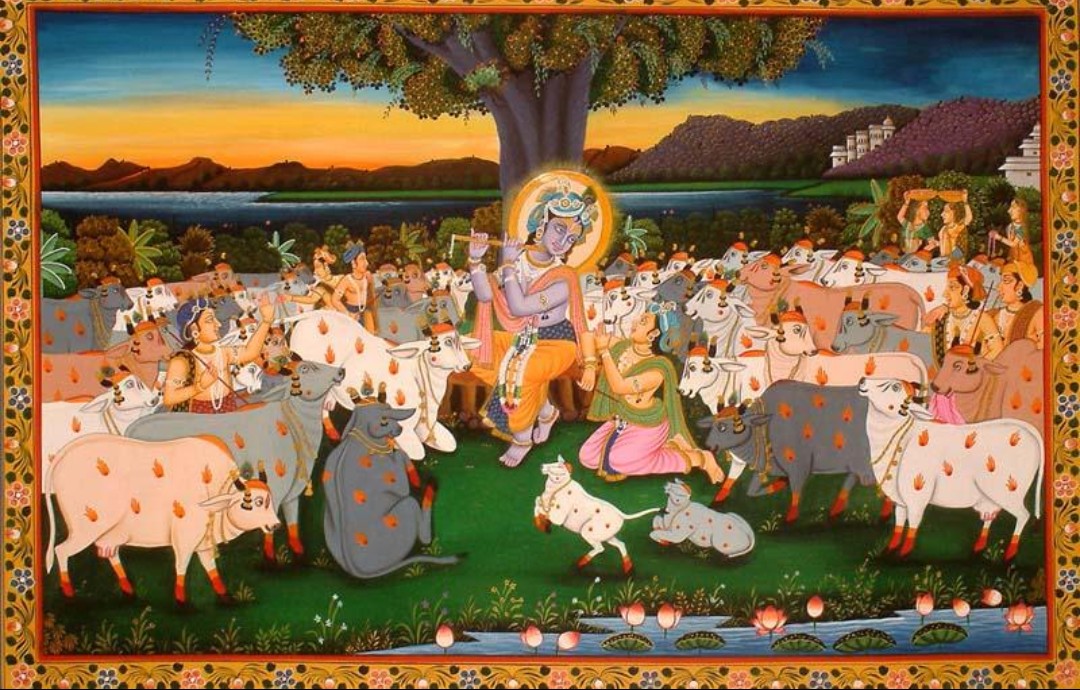
Krishna is central to many Ahir/Yadav cultural narratives. The connection is especially powerful because Krishna’s childhood in the Braj tradition is situated among cowherds, herdswomen and cattle. For communities with a pastoral heritage, this creates a close symbolic relationship between everyday livelihood, family identity and religious storytelling.
Community traditions commonly describe Ahirs/Yadavs as descendants of the Yadu lineage and associate them with Krishna. This should be presented as a religious and community tradition rather than as a settled historical conclusion about biological descent.
Krishna-related observances, especially Janmashtami, are widely celebrated in North India and Rajasthan. Local forms vary: worship, fasting, devotional singing, temple visits, children’s performances, decorated swings or tableaux, and community gatherings may all occur. Not every Ahir family follows the same ritual sequence, and local Hindu traditions overlap with those of neighbouring communities.
8. Festivals and the Ritual Calendar
Rajasthan’s Ahir families participate in the broader festival calendar of the region, while particular households and villages emphasize different observances. Important occasions can include Janmashtami, Holi, Diwali, Navratri, Teej and family-centered ceremonies. Because Rajasthan has strong regional variation, it is more accurate to describe these as shared cultural environments than as festivals exclusive to Ahirs.
- Janmashtami: especially meaningful where Krishna devotion is emphasized; devotional songs, fasting, temple worship and community celebrations are common.
- Holi: a major North Indian spring festival with singing, colour, visiting relatives and community gatherings; local Ahir participation is part of the wider Rajasthan tradition.
- Diwali: associated with household worship, lamps, prosperity rituals and family gatherings; older ethnographies also record Ahir participation in Diwali observances.
- Teej and other women-centered festivals: celebrated in many Rajasthan households, with songs, swings, visits to natal families and ritual observance varying by locality.
- Life-cycle ceremonies: naming, marriage, childbirth and death rituals often generate their own songs and family gatherings.
9. Marriage, Birth, Death and Family Customs
Marriage is traditionally one of the most important settings for kinship, exchange and oral culture. Rules concerning whom one may marry, acceptable kin relationships, and the role of elders have historically been locally specific. Older Ahir ethnographies record forms of clan or lineage exogamy, but contemporary practice varies and should be documented family by family.
Rajasthan’s broader wedding repertoire includes ceremonies such as engagement, haldi, mehndi, the wedding procession, the sacred fire and post-wedding visits. Ahir families participate in these regional forms while retaining family-specific songs and customs.
Birth ceremonies commonly involve naming, blessings, visits by relatives and songs celebrating the child and mother. Death rituals are similarly shaped by the wider Hindu traditions of the region, with cremation, mourning, remembrance and ritual observance varying according to family and locality.
An important cultural feature is that women’s songs frequently carry the emotional and narrative content of life-cycle rituals. Rajasthan’s school-level cultural materials document extensive repertoires of songs connected with marriage, birth and other ceremonies; these belong to the wider folk culture within which Ahir households participate.
10. Language and Oral Expression
Rajasthan Ahirs speak the regional language or dialect of the area in which they live; there is no single language spoken by all Ahirs in Rajasthan. In the Ahirwal region, Ahirwati is a historically recognized speech variety associated with the Ahir community and the southern Haryana–northeastern Rajasthan cultural zone. Historical linguistic descriptions connect Ahirwati with neighbouring Rajasthani/Mewati varieties, while modern descriptions often emphasize its position between neighbouring dialect continua.
Farther west and south, Ahir families may speak varieties of Rajasthani, Hindi or other local speech forms. Language therefore follows region and everyday social environment more closely than community identity alone.
Oral expression includes family stories, devotional narratives, proverbs, wedding songs, seasonal songs and memories of local heroes. These forms are important because they transmit knowledge without requiring a written archive.
11. Folklore, Ballads, Songs and Storytelling
One of the best-known Ahir-linked folk traditions in North India is the story of Lorik. The Lorik cycle appears in several regional forms and has been transmitted through oral performance, ballad traditions and later literary adaptations. It is particularly strong in parts of eastern and central North India, so it should not be presented as an exclusively Rajasthani Ahir tradition.
Rajasthan has its own rich folk-song environment. Songs associated with marriage, childbirth, festivals, separation, migration and everyday labour are often performed by women, relatives or community singers. The Rajasthan Board’s cultural materials document large repertoires of ceremonial songs, including songs for engagement, marriage procession, bride and groom ceremonies, birth and other life-cycle events.
For Ahir cultural research, the most valuable sources may therefore be local rather than pan-Indian: village wedding songs, stories of ancestors, family migration narratives, memories of cattle keeping, devotional songs, and the names of local shrines or heroes. These materials should be recorded with the consent of the singers and with attention to differences between generations.
12. Dress, Embroidery, Material Culture and Domestic Aesthetics
Ahir dress in Rajasthan has historically shared many features with neighbouring rural communities, while particular districts and families have maintained distinctive styles. Women’s dress may include ghagra, choli or related regional forms, with odhnis/veils and jewellery used in ceremonial contexts; men’s dress has included kurta, dhoti or pyjama and turbans, although modern clothing is now widespread.
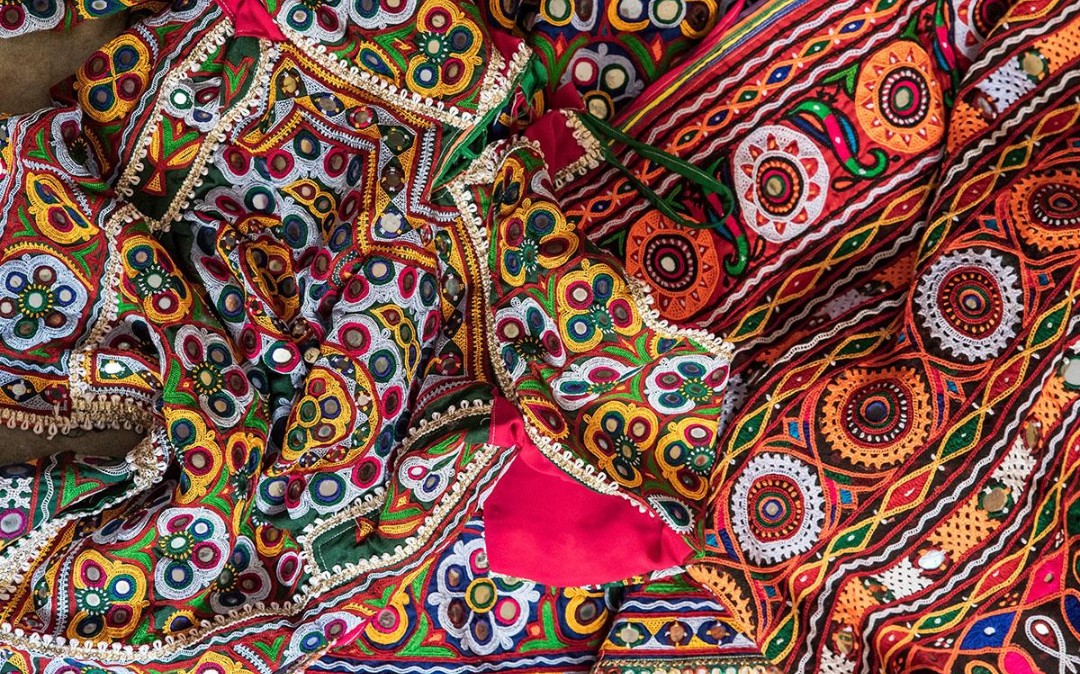
A particularly important caution is necessary regarding Ahir embroidery. Highly documented Ahir embroidery is associated with Kutch and western Gujarat, where the SEWA Hansiba Museum has preserved examples of Ahir women’s embroidered garments and household textiles. That craft tradition is relevant to the wider western Indian Ahir cultural world, but it should not be relabelled as uniquely Rajasthani without local evidence.
In Rajasthan, domestic decoration, torans, wedding textiles, jewellery and clothing should be studied at the district and village level. Material culture often reveals how community identity interacts with the broader visual culture of Rajasthan.
13. Food and Dairy Heritage
Milk and dairy products occupy an important place in the historical image of Ahir life because cattle keeping and dairying were major traditional occupations. Milk, curd, buttermilk, ghee and related preparations formed part of everyday rural diets and local economies.
However, there is no single “Ahir cuisine” shared by every Rajasthan household. Food follows local ecology, religion, income, season and family preference. Rajasthani staples such as bajra-based foods, buttermilk and ghee may coexist with dishes specific to a family’s locality.
Modern dairy cooperatives, commercial milk collection and mechanized agriculture have changed the economics of cattle keeping. Yet dairy knowledge remains a visible part of the community’s historical and cultural memory.
14. Women and the Transmission of Cultural Knowledge
Women have been central to the transmission of domestic and ceremonial knowledge. They preserve songs, wedding sequences, food practices, embroidery or textile knowledge where these remain active, and memories of natal and marital kin networks.
Rajasthan’s wider folk tradition shows how women’s songs accompany marriage, birth and seasonal ceremonies. For community research, this makes women’s oral histories particularly important: they can reveal changes in marriage, migration, household work, education, dress and festival practice that are not always visible in formal records.
It is important not to romanticize this role. Women’s cultural labour has often been unpaid and embedded in domestic responsibilities, while contemporary education and employment are reshaping gender roles in many families.
15. Education, Mobility, Public Service and the Armed Forces
Education and occupational mobility have transformed Ahir society over the twentieth and twenty-first centuries. Community organizations have promoted schooling and higher education, while families have increasingly moved between villages, towns and cities.
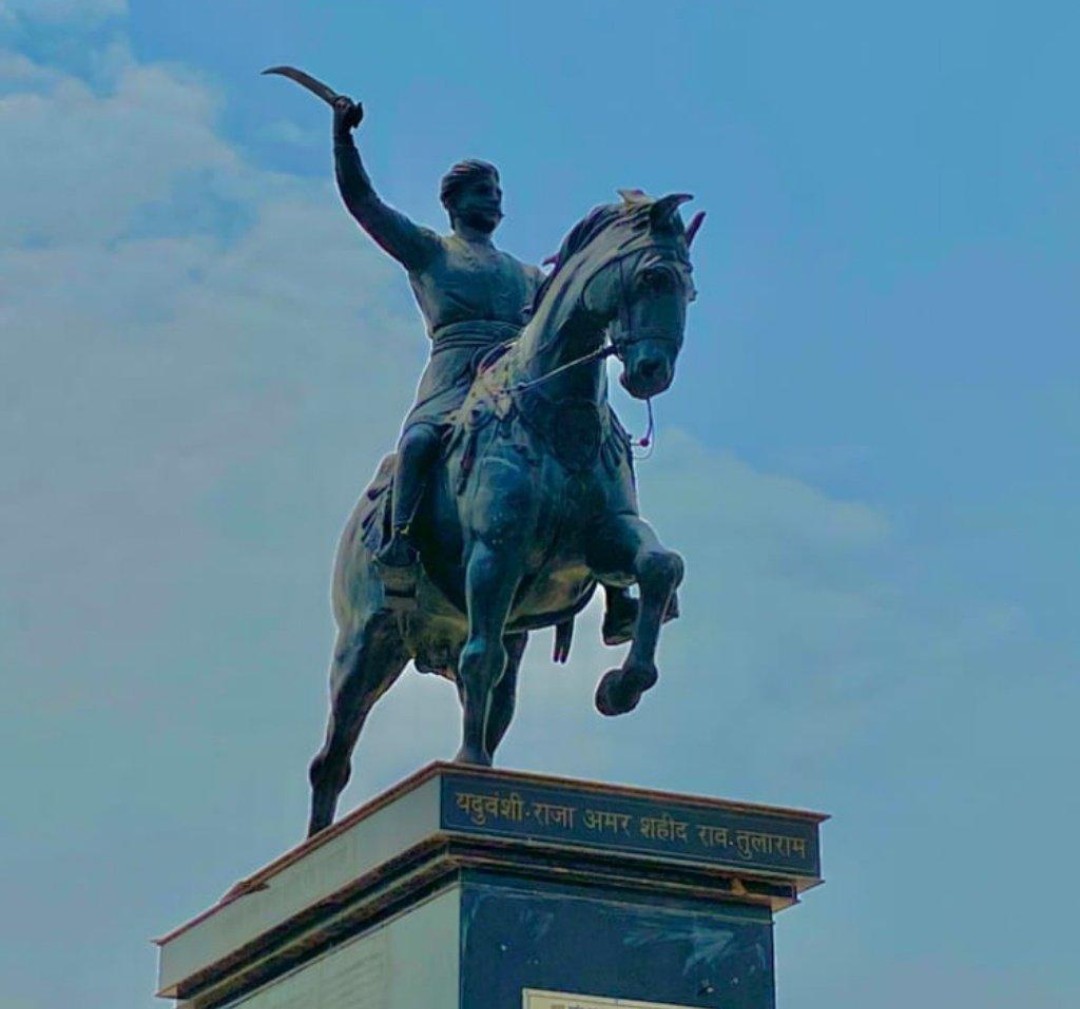
The Ahirwal region has a particularly strong association with military service. Rao Tula Ram’s 1857 legacy is an important part of regional memory, and military recruitment subsequently became a significant feature of the wider Ahirwal economy and identity. However, the idea that all Ahirs are “martial” is too broad; military service is one strand of a much larger occupational history.
Government employment, teaching, medicine, engineering, entrepreneurship, transport, private-sector work and professional education are now part of the community’s contemporary social landscape.
16. Migration and Wider Connections
Ahir families have long moved in response to land, marriage, work, military service, trade and education. The Rajasthan–Haryana borderland is especially significant because family networks frequently cross modern administrative boundaries.
Beyond Rajasthan, Ahir/Yadav populations are widespread across northern and central India. Different regional groups use names such as Gwala, Gopa, Golla and Gavli, but these should not automatically be treated as identical communities. The modern Yadav identity can function as a broader umbrella, while local identities remain important.
International migration has also expanded in the modern period. However, claims about a single global Ahir diaspora should be made cautiously because overseas populations often developed from different regional Yadav/Ahir and related pastoral communities.
17. Important Historical and Public Figures
Rao Tula Ram (1825–1863) is the most important historical figure for the Ahirwal region. He was an Ahir chieftain of Rewari who led a major local resistance during the 1857 uprising. The Government of India’s Azadi Ka Amrit Mahotsav digital repository records that he took control of Rewari in May 1857, established a local administration, raised a force and later fled after the British reconquered the region. He died in Kabul in 1863 while attempting to seek support against British rule.
His significance is regional as well as community-specific: he is remembered in Haryana and the Ahirwal zone as a major figure of the 1857 resistance. Because his political base was in present-day Haryana, he should not be described as a ruler of Rajasthan; rather, his history belongs to the interconnected Haryana–northeastern Rajasthan Ahirwal world.
Beyond historical rulers and freedom fighters, contemporary Ahir/Yadav public figures come from politics, education, the armed forces, business, sport and public administration. A comprehensive Rajasthan-specific list would require district-level biographical research rather than relying on pan-Indian lists.
18. Contemporary Identity and Social Change
Contemporary Rajasthan Ahir identity combines inherited community memory with modern education, mobility and digital communication. Surnames such as Ahir and Yadav may be used in different contexts, and individuals may emphasize village, district, family, regional, occupational, religious or broader Yadav identities.
Urbanization has changed patterns of community interaction. Family networks now operate through WhatsApp groups, social-media pages, community associations and urban gatherings as well as through traditional village institutions.
At the same time, many families continue to value Krishna devotion, ancestral memory, marriage networks, dairy heritage and regional festivals. The result is not a simple replacement of “traditional” culture by “modern” culture but an ongoing combination of old and new forms.
19. What Can Safely Be Said About Ahir Origins and Genetics?
This is an area where caution is especially important. It is reasonable to say that the name Ahir is historically connected with the term Abhira and that modern Ahir communities have a long history in pastoral and agrarian societies. It is not reasonable to claim that every Rajasthan Ahir can be genetically traced in an unbroken line to a single ancient Abhira population or to a particular royal lineage.
Likewise, the religious tradition connecting Ahirs/Yadavs with Yadu and Krishna is culturally important, but it is not the same thing as a scientifically demonstrated genealogy.
Community-level genetic studies of North Indian populations can reveal patterns of relatedness and historical admixture, but there is no basis for assigning a single genetic profile to every Rajasthan Ahir family. Individual ancestry tests also cannot, by themselves, prove community identity or validate a specific historical genealogy.
For this reason, this profile deliberately does not present speculative haplogroup percentages, “purity” claims or biological rankings of communities.
20. Research Gaps and Ways to Study Rajasthan Ahirs Further
A serious research project on Rajasthan Ahirs would benefit from combining archival records with oral history and material culture. Several areas remain especially promising:
- District-level mapping of Ahir settlements and changes in settlement patterns since the nineteenth century.
- Oral histories of cattle keeping, dairy marketing, migration and agricultural change.
- Documentation of wedding songs, birth songs, devotional repertoires and local hero narratives.
- Study of Ahir participation in the Ahirwal region’s political and military history without treating the community as internally uniform.
- Women’s histories of embroidery, dress, household knowledge and ceremonial labour.
- Changes in the use of “Ahir” and “Yadav” in school records, land records, marriage invitations, community organizations and social media.
- Comparative research between Alwar/Bharatpur Ahirs and Ahir communities in neighbouring Haryana.
- Documentation of local shrines, cattle fairs, community temples and festival practices.
Methodologically, researchers should distinguish between three types of evidence: community tradition, historical documentation and modern scholarship. A tradition can be culturally important even when historians cannot independently verify its literal historical details.
21. Conclusion
The Ahir community of Rajasthan is best understood as a historically pastoral-agrarian community whose identity has developed through cattle keeping, dairying, cultivation, kinship, Krishna devotion, regional language and participation in the social history of northeastern Rajasthan and the wider Ahirwal region.
The community’s history is older and more geographically extensive than any single modern territorial boundary. At the same time, Rajasthan Ahirs are not a uniform cultural block: practices differ by district, family, language, occupation and generation.
The strongest and safest account therefore combines history with humility. The Abhira connection is historically significant but should not be turned into an unqualified claim of uninterrupted descent; the Yadu–Krishna connection is a powerful religious and community tradition; pastoralism is a major historical foundation but not the sole modern occupation; and Ahirwal is a shared regional history rather than a Rajasthan-only territory.
Taken together, these features show why the Ahir story is important not simply as a community history, but as a history of pastoral knowledge, rural economy, kinship, religious imagination, oral culture, migration and social change in northern and western India.
References and Further Reading
[1] Government of Rajasthan, Social Justice and Empowerment Department. Government resource consulted for contextual verification of the names “Ahir” and “Yadav” in Rajasthan. Source: https://sje.rajasthan.gov.in/Default.aspx?PageID=67Source
[3] Ministry of Culture, Government of India. Digital District Repository: “Rao Tula Ram,” Rewari. Azadi Ka Amrit Mahotsav. Source
[4] Ministry of Culture, Government of India. Digital District Repository: “1857 First War of Independence at Rewari.” Source
[5] Yadav, Subodh & Sachinder Singh. 2025. Research article discussing Ahirwal as a socio-cultural region including parts of Rajasthan, Haryana and Uttar Pradesh. Maharshi Dayanand University research journal PDF. Source
[6] Michelutti, Lucia. 2008. “‘We are Kshatriyas but we behave like Vaishyas’: Diet and Muscular Politics Among a Community of Yadavs in North India.” South Asia: Journal of South Asian Studies 31(1): 76–95. Source
[7] Russell, R. V., assisted by Rai Bahadur Hira Lal. 1916. The Tribes and community of the Central Provinces of India, Vol. II. Macmillan. See the Ahir article. Historical ethnography; use critically. SourceSource
[8] Rajasthan Board of Secondary Education. History and Culture of Rajasthan: “Folk Songs of Men” and related cultural materials on ceremonial songs. Source
[9] Rajasthan Tourism, Government of Rajasthan. “Customs and Rituals.” Overview of regional life-cycle ceremonies and folk traditions. Source
[10] SEWA Hansiba Museum / Google Arts & Culture. “Hansiba Museum: Ahir Styles.” Documentation of Ahir embroidery, dress and domestic material culture in western India, especially Kutch. Useful comparatively; not to be treated as uniquely Rajasthani. Source
[11] SEWA Hansiba Museum / Google Arts & Culture. “Hansiba Museum and Craft Resource Centre.” Comparative documentation of Ahir, Rabari and other women’s craft traditions. Source
[12] Snodgrass, Jeffrey G. 2004. “The centre cannot hold: tales of hierarchy and poetic composition from modern Rajasthan.” Journal of the Royal Anthropological Institute 10(2): 261–285. Useful for understanding Rajasthan’s wider oral and bardic environment. Source
[13] GenoConnect. “Ahir Community – History, Heritage, Ancestry and DNA.” Used primarily as a structural model and for identifying topics for verification; claims in this profile were independently checked and narrowed where necessary. Source