

Sisodiya Kshatriya Community
Explore the Sisodiya Kshatriyas of Mewar: the Guhila-descended Rajput clan of Chittorgarh and Udaipur, their origins, history, culture, cuisine, diaspora, and genetic ancestry.
THE SISODIYA KSHATRIYAS OF MEWAR
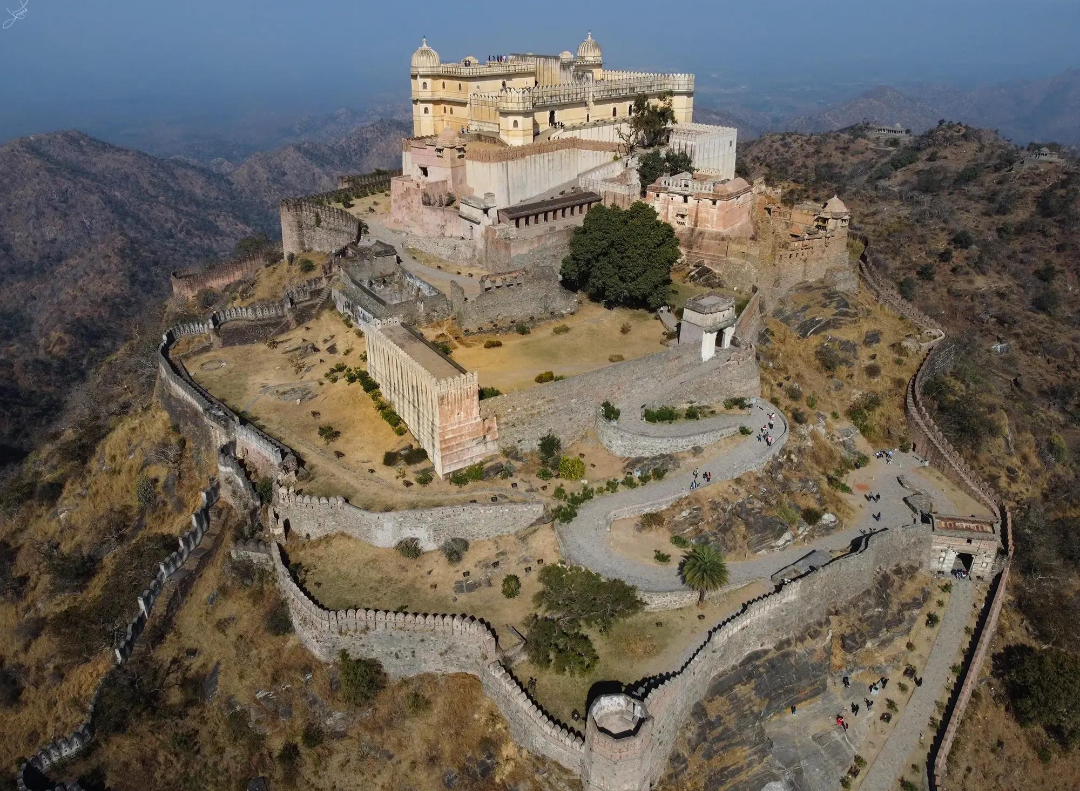
History, Culture, Genetics and Legacy of the House of Mewar
Introduction: Who Are the Sisodiyas?
The Sisodiyas (also written Sisodia or Shishodia) are a Rajput clan of the Suryavanshi (Solar) lineage whose historic homeland is Mewar, the region of southern Rajasthan centred on Chittorgarh, Udaipur, Rajsamand, and Bhilwara. For roughly six centuries, from the recapture of Chittor in the fourteenth century until the merger of princely states with independent India in 1949, the head of the Sisodiya clan ruled Mewar under the title Rana and later Maharana. The clan is remembered across India for figures such as Rana Kumbha, Rana Sanga, and above all Maharana Pratap, and for Mewar's long record of resistance to the Delhi Sultanate and the Mughal Empire.
Although the name Sisodiya is usually associated with a single royal house, the community it describes is much wider. Today Sisodiyas include thousands of landholding, farming, soldiering, and professional families spread across Rajasthan, Madhya Pradesh (especially Malwa), Gujarat, Uttar Pradesh, Haryana, and Maharashtra, as well as a growing diaspora. Several sub-clans, such as the Ranawats, Chundawats, and Shaktawats, trace their descent from specific Sisodiya rulers. This profile treats the Sisodiyas as a community rooted in a particular geography, Mewar, and draws on historical, encyclopaedic, and community sources while noting where accounts differ.
Etymology of the Name "Sisodiya"
The name comes from Sisoda (also Sesoda), a village in the hills of present-day Rajsamand district. In the twelfth century a junior branch of the ruling Guhila family, founded according to tradition by Rahapa, a son of Ranasimha (Karan Singh), received Sisoda as its fief and took its name from the village. When the senior Rawal branch of the Guhilas was extinguished during Alauddin Khalji's siege of Chittor in 1303, it was this Sisoda branch, under Rana Hammir, that recovered Chittor around 1326 and continued the dynasty. From then on, the rulers of Mewar and their kin were known as Sisodiyas, while their earlier name, Guhila or Gehlot, survived in the wider clan.
Geography: The Land of Mewar
Mewar occupies the south-eastern part of Rajasthan. Its western edge is formed by the Aravalli hills, which shelter forts such as Kumbhalgarh and the passes of Haldighati; to the east it opens onto a plateau of black and red soils watered by the Banas and Berach rivers. Unlike the Thar Desert of western Rajasthan, Mewar is comparatively green, with seasonal forests, man-made lakes (Pichola, Fateh Sagar, Jaisamand, Rajsamand), and a long tradition of tank-and-dam irrigation built by its rulers.
The historic heartland includes the modern districts of Udaipur, Chittorgarh, Rajsamand, Bhilwara, and parts of Pratapgarh, Salumbar, and Dungarpur. Neighbouring regions were ruled by related Guhila branches, notably Dungarpur and Banswara (Vagad) and Pratapgarh (Kanthal), whose ruling families also descend from the Mewar line. This geography, a defensible hill frontier with fertile plains behind it, shaped both Mewar's military history and the settlement pattern of Sisodiya families as landholders in hundreds of villages across the region.
Origins and Early History
By their own tradition the Sisodiyas are Suryavanshi Kshatriyas descended from Lord Rama through his son Lava, a genealogy that links them to the Solar dynasty of Ayodhya. Bardic chronicles add that the lineage later ruled from Vallabhi in Saurashtra, and that after Vallabhi fell, a surviving queen gave birth in a cave (guha), naming the child Guhaditya or Guhil, the eponymous founder of the Guhila clan in the sixth century CE.
Historians working from inscriptions offer a more cautious picture. The earliest epigraphic evidence places Guhila rulers in the Mewar region from about the seventh century. Some inscriptions, such as those studied by D. R. Bhandarkar, describe the founder in terms that have led scholars to propose a Nagar Brahmin origin for the family, from whom later rulers took up Kshatriya status. Other colonial-era writers speculated about foreign origins, a view now generally discarded. The most celebrated early ruler is Bappa Rawal (eighth century), credited with establishing the dynasty at Chittor and with resisting Arab raids into western India; his association with the Shaiva shrine of Eklingji at Kailashpuri began the tradition that the true king of Mewar is Shiva, with the Maharana ruling as his regent (Diwan).
After the fall of Chittor in 1303, and Rana Hammir's recovery of it around 1326, the Sisodiya line entered its most prominent phase:
- Rana Kumbha (r. 1433–1468) – built or rebuilt many of Mewar's 84 forts, including Kumbhalgarh, erected the Vijay Stambh (Victory Tower) at Chittor, and was also a scholar of music.
- Rana Sanga (r. 1508–1528) – united a confederacy of Rajput states and fought Babur at Khanwa in 1527.
- Udai Singh II (r. 1540–1572) – founded the city of Udaipur (c. 1559) as a new capital; Chittor fell to Akbar in 1568.
- Maharana Pratap (r. 1572–1597) – refused Mughal suzerainty, fought the Battle of Haldighati in 1576, and recovered much of Mewar through guerrilla warfare.
- Amar Singh I (r. 1597–1620) – concluded a treaty with Jahangir in 1615 on terms that spared the Mewar ruler personal attendance at the Mughal court.
Chittor is also remembered for three jauhars, the mass self-immolation of women during sieges, in 1303, 1535, and 1568. These events, particularly the one linked to Rani Padmini in 1303, occupy a central and emotionally charged place in Sisodiya memory, although historians debate how much of the Padmini story derives from the poet Malik Muhammad Jayasi's Padmavat (1540) rather than contemporary records.
Under British paramountcy Mewar became a 19-gun salute state after an 1818 treaty. In 1948–49 it merged into the United State of Rajasthan, with Maharana Bhupal Singh serving as Maharajpramukh. The royal family continues as custodian of Udaipur's City Palace, the Eklingji temple trust, and several heritage institutions.
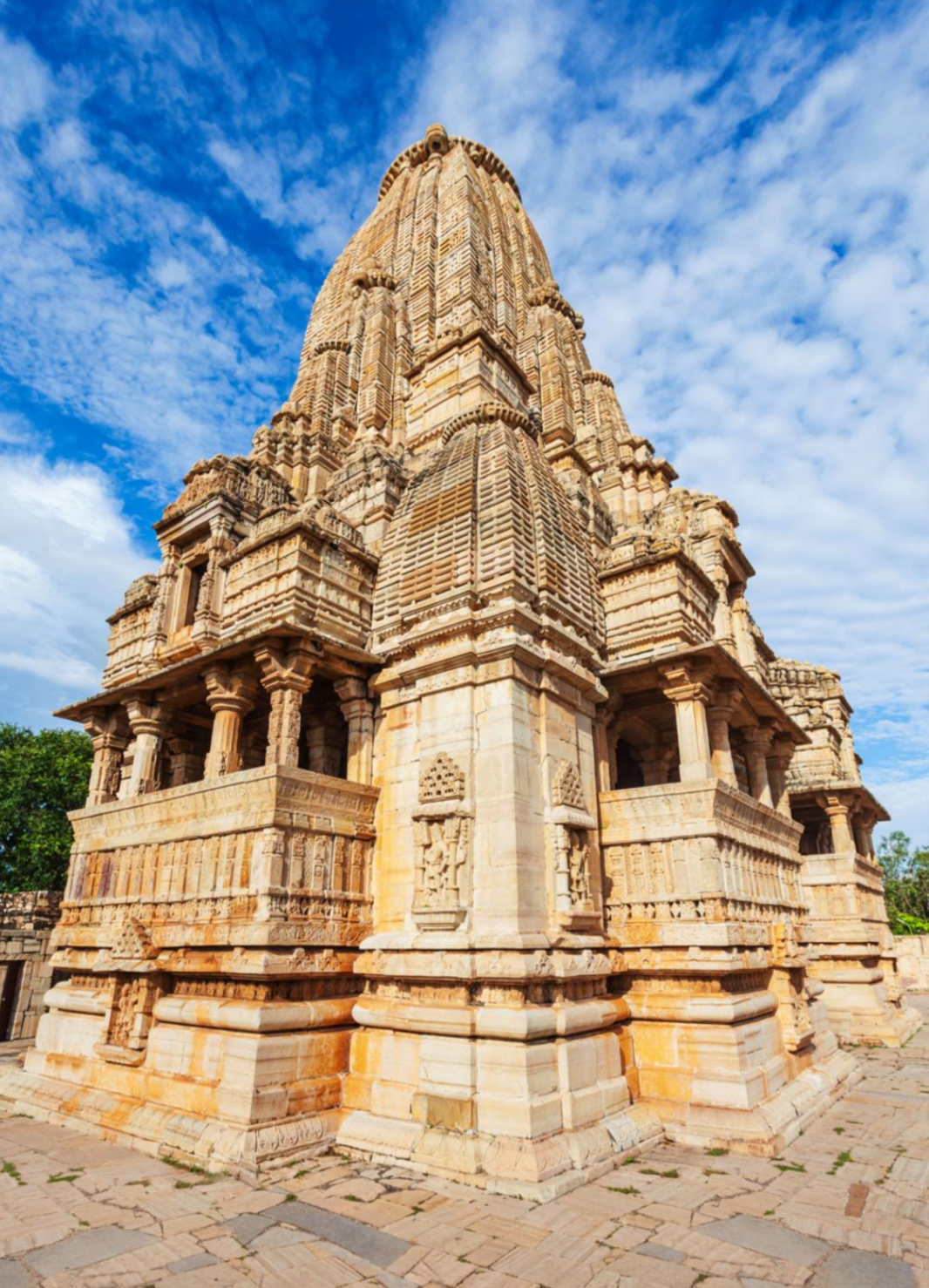
Branches and Sub-clans
Over the centuries, younger sons of Mewar's rulers received estates (thikanas) and founded branches named after them. These sub-clans still shape identity and marriage patterns, because Rajput custom forbids marriage within one's own clan (gotra/kul) and all Sisodiya branches count as one clan for that purpose.
| Branch | Traced to | Notes |
|---|---|---|
| Ranawat | Descendants of various Ranas, especially Rana Udai <a href="/communities/singh">Singh</a>'s sons | One of the largest Sisodiya sub-clans; widespread in Mewar and Malwa |
| Chundawat | Chunda, eldest son of Rana Lakha (15th c.) | Chunda gave up the throne; his line held Salumbar, whose chief had a hereditary role at coronations |
| Shaktawat | Shakti, brother of Maharana Pratap | Estates such as Bhinder; noted in Mewar's military history |
| Sarangdevot | Sarangdev, of the line of Rana Lakha | Held Kanor and nearby estates |
| Kanawat, Jagawat, Bhimawat and others | Various princes of the ruling line | Smaller branches, often village-level |
Several other lineages have historically claimed Sisodiya descent. The Bhonsle family of Chhatrapati Shivaji traced its ancestry to the Sisodiyas of Mewar, and the Rana dynasty of Nepal and some hill families of Himachal and Uttarakhand made similar claims. Historians treat most of these as genealogical traditions rather than proven descent, which is exactly the kind of question genetic testing can help families explore.
Diaspora and Population
There is no reliable population figure for the Sisodiyas. India's census has not counted castes or clans since 1931, and Rajput clans were never enumerated consistently. Community estimates run from a few hundred thousand to over a million people bearing the Sisodiya name or belonging to its branches, but these should be treated as rough guesses.
Within India, Sisodiya families are found well beyond Mewar. Malwa in Madhya Pradesh (Ratlam, Mandsaur, Neemuch, Ujjain, Dewas) has a large population, as do Gujarat (particularly the old Sisodiya-linked states near the Rajasthan border), western Uttar Pradesh, Haryana, Delhi, and Maharashtra. Soldiering, service in princely and colonial armies, and later government and corporate employment carried families across the country. Abroad, Sisodiyas are part of the wider Rajput diaspora in the United Kingdom, the United States, Canada, Australia, and the Gulf states, and the surname is also found in Nepal.
Social Structure and Clan Identity
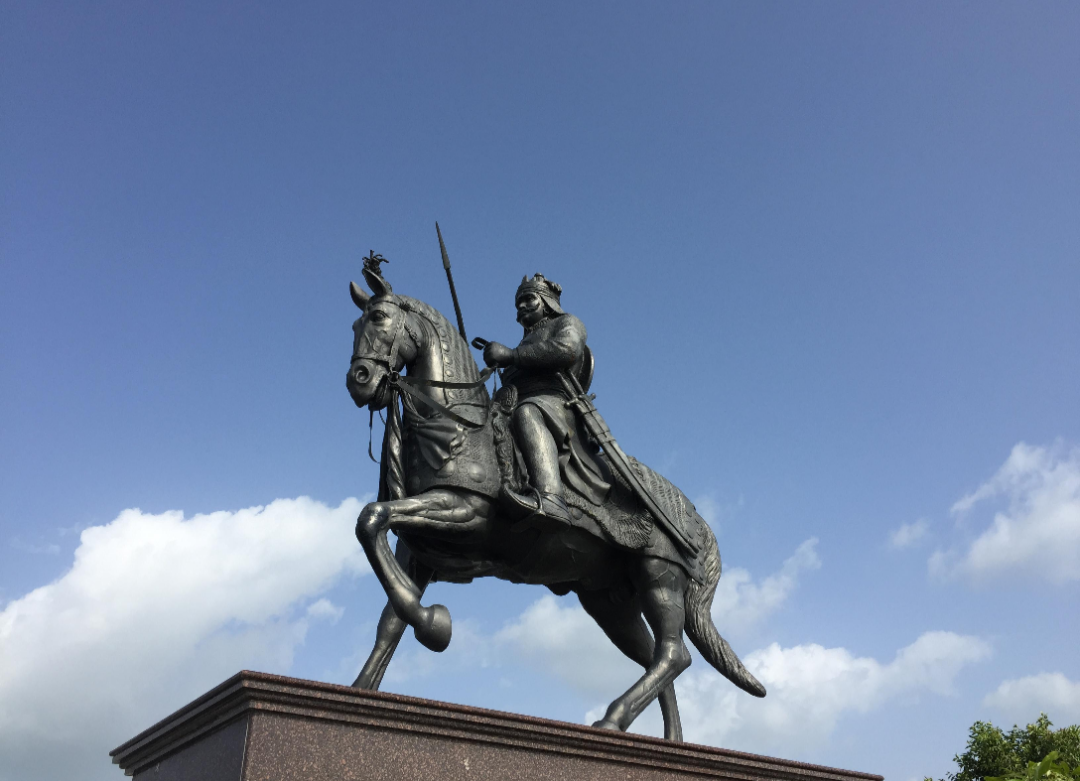
Sisodiya social life has traditionally followed Rajput patterns of clan, lineage, and land. The Maharana stood at the top as clan head; below him were the great nobles of the First Class (the Solah, or sixteen) and the Second Class (Battis, or thirty-two), many of them Sisodiya branches, followed by smaller jagirdars and ordinary Rajput landholding cultivators. Land reforms after 1950 abolished jagirs, and many families shifted into farming on reduced holdings, government service, the armed forces, politics, and business.
Marriage is clan-exogamous: a Sisodiya marries outside the Sisodiya/Guhila clan, traditionally into other Rajput clans such as the Rathores, Kachhwahas, Chauhans, Bhatis, Jhalas, Parmars, and Solankis. This long history of inter-clan marriage means that Sisodiya families are closely interwoven with the wider Rajput community, a point that matters when interpreting genetic results.
Religion, Deities, and Belief
Sisodiyas are overwhelmingly Hindu. Their clan deity is Shiva as Eklingji, whose temple at Kailashpuri near Udaipur has long been the spiritual centre of Mewar. The kuldevi (clan goddess) is Ban Mata (Bayan Mata), and Sisodiya households also revere Shrinathji at Nathdwara, whose image was sheltered in Mewar in the seventeenth century. Local deities, hero-stones, and the veneration of ancestors who fell in battle are also important, as are sati and jauhar memorials in forts such as Chittor. The Bhakti poet-saint Mirabai, married into the Sisodiya royal family in the early sixteenth century, is a revered figure who connects the clan to India's devotional traditions.
Language
The home language of most Mewar Sisodiyas is Mewari, a Rajasthani dialect closely related to Marwari and Malvi. Families who settled in Malwa often speak Malvi, while those elsewhere speak Hindi, Gujarati, or Marathi. Standard Hindi and English are widely used, and older generations may still use the courtly vocabulary, honorifics (hukum, banna, baisa), and forms of address that distinguish Rajput speech.
Customs, Family Life, and Marriage
Sisodiya weddings follow broad Rajput tradition. Common elements include the tilak or sagai (engagement), ban and haldi ceremonies, the groom's procession on horseback wearing a safa and sword, the toran ritual in which the groom strikes a symbolic arch at the bride's door, and the pheras around the sacred fire. Folk songs (geet) sung by women accompany almost every stage. In earlier generations a groom unable to attend in person could be represented by his sword (khanda), a custom recalled in family lore.
Other customs include shastra puja (worship of weapons) on Dussehra, the Gangaur and Teej festivals celebrated especially by women, and the jhula swings of the monsoon. Hospitality (manuhar), in which guests are repeatedly pressed to eat and drink more, is a point of pride. Ghoonghat and purdah were once common in Rajput households; these customs have loosened considerably in towns and among younger generations.
Dress and Appearance
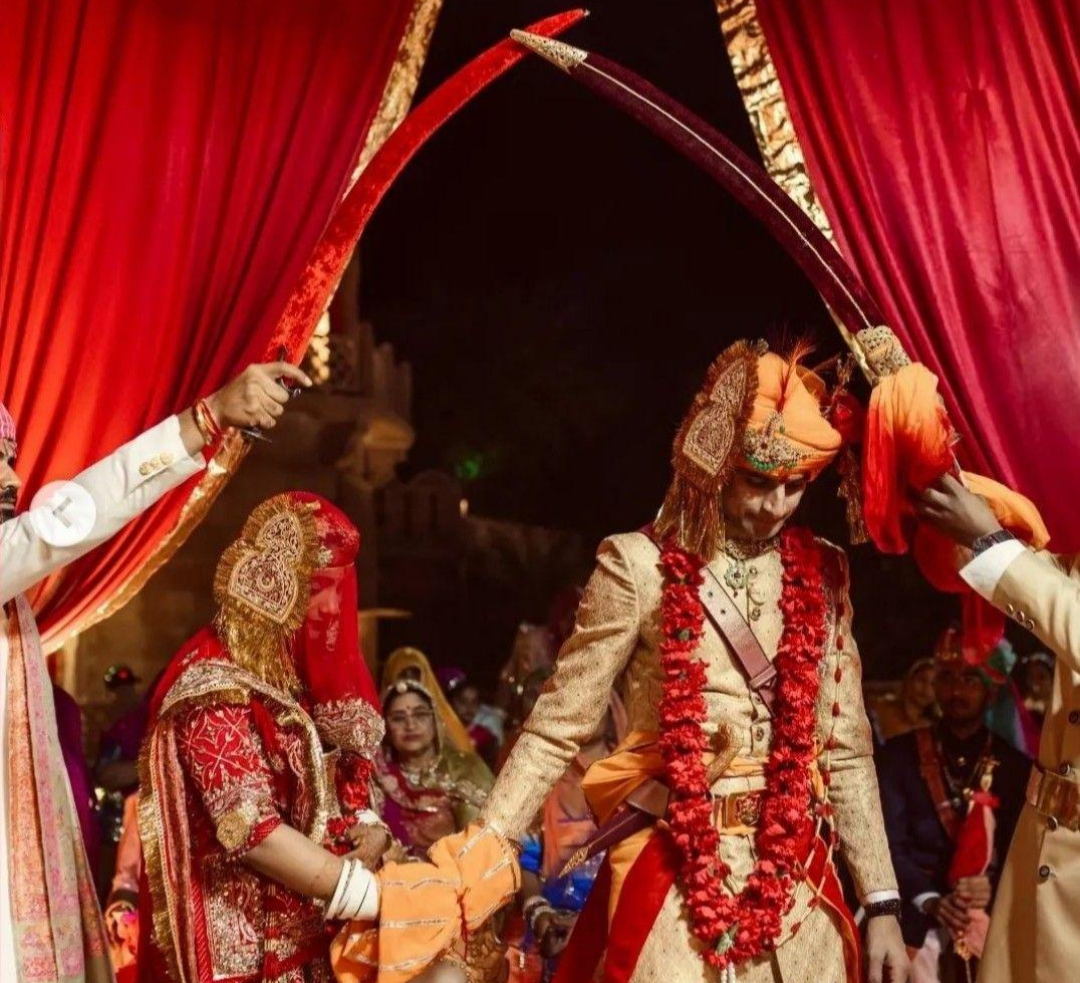
Traditional male dress includes the safa or pagri (turban), whose colour and tying style once signalled region and occasion; the angarkha or bandhgala coat, achkan or sherwani for formal events, dhoti or churidar, and jootis. Moustaches, often worn full and curled, remain a cultural marker. Women traditionally wear the Rajputi poshak: a kurti and kanchli with a flared ghaghra and an odhni (veil-scarf), often in leheriya or bandhej tie-dye, along with the borla (forehead ornament), nath, bangles, and the rakhdi.
Physical appearance varies widely, as in any large community. Sisodiyas, like other Rajasthani Rajputs, commonly have wheatish to fair or medium-brown skin, dark hair, and dark eyes, with lighter eye colours occasionally seen. Such traits are shaped by many genes and by environment, and they are not a reliable guide to ancestry on their own.
Cuisine
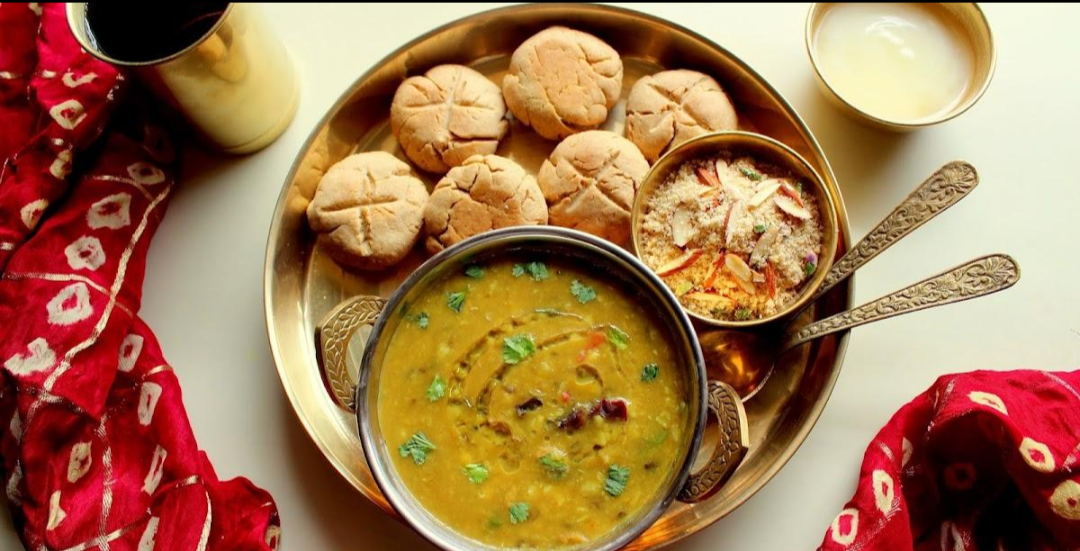
Sisodiya food belongs to the Rajput cuisine of Mewar, shaped by arid conditions, the hunt, and long campaigns. Dishes needed to keep well and use ingredients that grew locally. Well-known elements include:
- Laal maas – mutton cooked with fiery Mathania red chillies, a Rajput signature dish.
- Safed maas – a milder mutton curry in a cashew, curd, and cream sauce, associated with Mewar's court kitchens.
- Jungli maas – a spare hunter's preparation of meat with ghee, salt, and chillies.
- Dal baati churma – baked wheat dumplings with lentils and a sweet crumbled churma.
- Gatte ki sabzi and ker sangri – gram-flour dumplings in curd gravy, and a dish of desert berries and beans.
- Bajra and makki roti – millet and maize flatbreads, eaten with garlic chutney, ghee, and buttermilk.
- Sweets – ghevar at Teej, malpua, moong dal halwa, and lapsi.
Many Sisodiya households, especially those influenced by Vaishnava devotion to Shrinathji, are partly or wholly vegetarian, while others keep the older meat-eating traditions for festivals and hospitality.
Occupations and Public Life
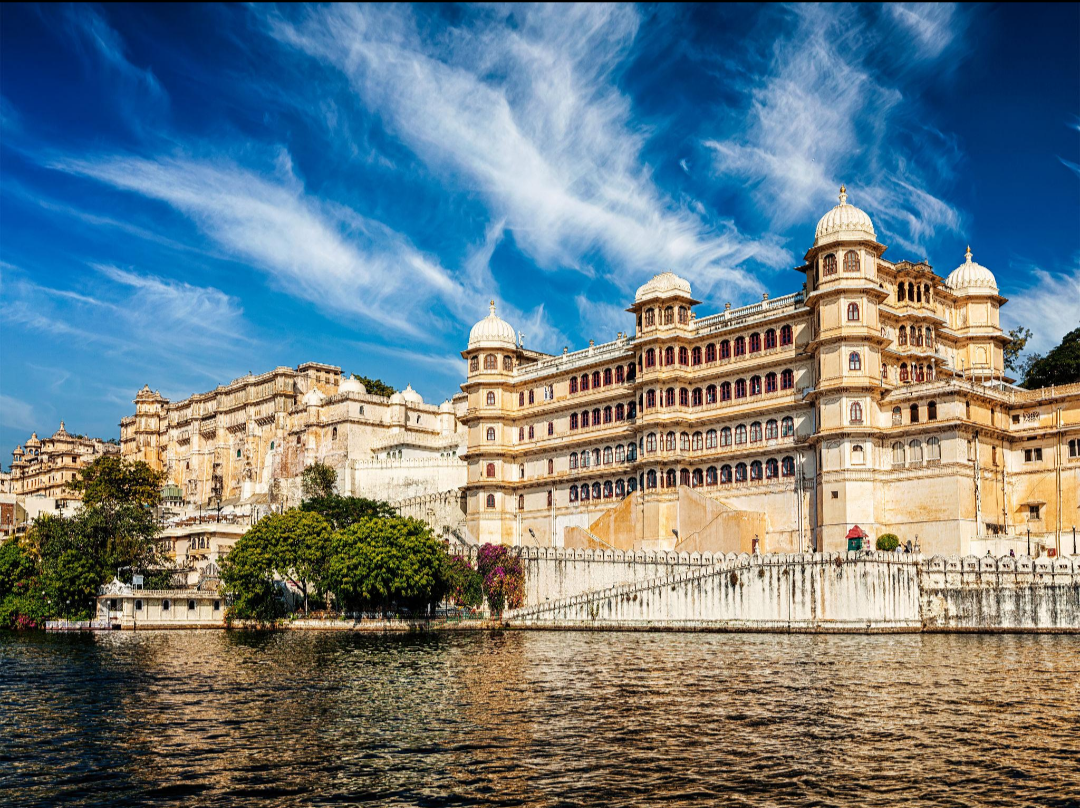
The military remains the defining traditional occupation. Sisodiyas served in Mewar's own forces, in the Mughal and Maratha periods in various capacities, in the British Indian Army, and today in the Indian Army (including the Rajputana Rifles and Rajput Regiment), paramilitary forces, and police. Agriculture and land management are the other historic mainstay. In recent decades families have moved strongly into politics, public administration, law, education, engineering, medicine, and business, with a notable presence in heritage tourism: many former thikana forts and havelis in Mewar now operate as heritage hotels.
Notable Figures
- Bappa Rawal (8th c.) – legendary founder of the Guhila power at Chittor.
- Rana Hammir (14th c.) – recovered Chittor and began the Sisodiya line of Mewar.
- Rana Kumbha, Rana Sanga, and Maharana Pratap – the most celebrated rulers of the clan (see above).
- Mirabai (c. 1498–1547) – Bhakti poet-saint, a Rathore princess by birth, married into the Sisodiya house.
- Panna Dai – the nursemaid who sacrificed her own son to save the infant Udai Singh II; not a Sisodiya herself but central to the clan's story.
- Maharana Bhupal Singh (1884–1955) – last ruling Maharana and Maharajpramukh of Rajasthan.
- Arvind Singh Mewar (1944–2025) – hotelier and custodian of the City Palace, Udaipur, through the HRH Group of Hotels.
- Vishvaraj Singh Mewar – politician and member of the Rajasthan Legislative Assembly from Nathdwara.
- Lakshyaraj Singh Mewar – businessman and philanthropist associated with Udaipur's heritage institutions.
Genetic Ancestry: What We Know and What We Don't
Most Indians today want to know three things about their community's DNA: its balance of Ancient Ancestral South Indian (AASI), Indus Valley–related (Iranian-farmer-related), and Steppe ancestry; its Y-DNA and mitochondrial haplogroups; and which neighbouring communities it is genetically closest to. For the Sisodiyas specifically, published research has very little to say. No peer-reviewed study we are aware of has sampled Sisodiyas as a distinct group. What follows is drawn from studies of broader Rajasthani Rajput and north-west Indian populations, and should be read as context, not as a community-specific result.
Ancestry components
Large genome studies (Reich et al. 2009; Moorjani et al. 2013; Narasimhan et al. 2019) show that nearly all Indian groups are mixtures of Ancestral North Indian (ANI) and Ancestral South Indian (ASI) ancestry, and that ANI itself is a mix of Indus-periphery (Iranian-farmer-related) and Steppe pastoralist ancestry. North-western groups, including Rajputs and other traditionally Kshatriya and Brahmin communities of Rajasthan and Punjab, generally sit towards the higher-ANI, higher-Steppe end of the Indian range, while still carrying a substantial AASI component. Exact percentages depend heavily on the reference populations and methods used, which is why published figures for "Rajputs" vary. We deliberately do not quote a single number for Sisodiyas here: the honest answer is that nobody has measured it yet.
Haplogroups
Studies of Rajasthani Rajput and neighbouring upper-caste samples commonly report Y-chromosome haplogroups R1a (particularly the R1a-Z93 branch associated with Steppe-related ancestry in South Asia), along with H, L, J2, and R2. Maternal (mitochondrial) lineages in north-west India are dominated by South Asian-specific branches of M and U (such as U2 and U7), with some West Eurasian lineages such as H, HV, and W. Because Sisodiya men share a paternal clan identity, their Y-DNA is especially interesting: if the clan genealogy is broadly accurate, many Sisodiya men might be expected to share a common paternal lineage, while their maternal lineages would be as diverse as the Rajput clans they married into.
Closest communities
Given centuries of inter-clan marriage, Sisodiyas are expected to cluster genetically with other Rajasthani Rajputs (Rathores, Kachhwahas, Chauhans, Bhatis, Jhalas) and more broadly with north-west Indian groups such as Jats, Charans, and local Brahmin communities. How closely they relate to Mewar's other historic communities, including the Bhils, who hold an honoured place in Mewar tradition and appear on the state's coat of arms, is an open question.
| Question | What research tells us | What remains unknown |
|---|---|---|
| AASI / Indus / Steppe mix | Rajasthani <a href="/communities/rajput">Rajputs</a> broadly sit in the higher-Steppe range for India | Sisodiya-specific proportions |
| Y-DNA | R1a-Z93, H, L, J2, R2 common in the region | Whether Sisodiya men share one founder lineage |
| mtDNA | M, U2, U7 and some West Eurasian lineages in the region | Sisodiya maternal diversity |
Conclusion
The story of the Sisodiyas is the story of Mewar: a hill kingdom that, for centuries, made its independence a matter of identity. From Bappa Rawal and the shrine of Eklingji to the forts of Chittor and Kumbhalgarh, the lakes of Udaipur, and the field of Haldighati, the clan's history is written into the landscape of southern Rajasthan. Today Sisodiya families live far beyond Mewar, in soldiering, farming, politics, and every modern profession, yet many still trace their story to the same village of Sisoda and the same line of Ranas. Genetic research can now add a new chapter to that story, one that the community itself can help write.
Frequently Asked Questions
Q. Are Sisodiyas and Gehlots the same?
They belong to the same Guhila clan. Sisodiya is the branch that took its name from the village of Sisoda and ruled Mewar from the fourteenth century; Gehlot (Guhilot) is the older and wider clan name, used by many related families today.
Q. Are Sisodiyas Suryavanshi?
By tradition, yes. Sisodiyas claim descent from Lord Rama through his son Lava. Historians note that the earliest inscriptions also allow other interpretations, including a Brahmin origin for the Guhila founder.
Q. Who is the kuldevi of the Sisodiyas?
Ban Mata (Bayan Mata). The clan's principal deity is Eklingji, a form of Shiva, whose temple lies near Udaipur.
Q. Can two Sisodiyas marry each other?
By Rajput custom, no. All Sisodiya branches, including Ranawats, Chundawats, and Shaktawats, count as one clan, and marriage within the clan is traditionally avoided.
Q. Are Ranawats and Chundawats Sisodiyas?
Yes. They are sub-clans descended from specific rulers or princes of the Sisodiya house of Mewar.
Q. Was Chhatrapati Shivaji a Sisodiya?
The Bhonsle family claimed descent from the Sisodiyas of Mewar. The claim is a long-standing genealogical tradition, but historians have not been able to verify it independently.
Q. How many Sisodiyas are there?
No one knows precisely. India has not counted clans in its census since 1931, and community estimates vary widely.
Q. Where do Sisodiyas live today?
Mainly in Rajasthan (especially Mewar) and Madhya Pradesh (Malwa), with significant populations in Gujarat, Uttar Pradesh, Haryana, Delhi, and Maharashtra, and a diaspora in the UK, USA, Canada, Australia, and the Gulf.
Q. What is the typical Steppe ancestry of Sisodiyas?
It has not been measured specifically. Rajasthani Rajputs as a group tend towards the higher end of Steppe ancestry in India, but Sisodiya-specific figures need data from Sisodiya individuals.
Q. What Y-DNA haplogroup do Sisodiyas carry?
This is unknown. R1a-Z93, H, L, J2, and R2 are common among Rajputs of the region. Testing Sisodiya men is the only way to find out whether the clan shares a common paternal lineage.
Q. Which communities are Sisodiyas genetically closest to?
Most likely other Rajput clans of Rajasthan and north-west Indian groups, given centuries of inter-clan marriage. Community-level testing will make this clearer.
Q. How can I learn more about my own Sisodiya ancestry?
Take a GenoConnect DNA test and join the Sisodiya community. Your results show your AASI, Indus, and Steppe composition, your haplogroups, and your genetic matches, and they help build the first genetic profile of the clan.
References
- [1]Wikipedia. "Sisodia." https://en.wikipedia.org/wiki/Sisodia
- [2]Wikipedia. "Kingdom of Mewar." https://en.wikipedia.org/wiki/Kingdom_of_Mewar
- [3]Wikipedia. "Guhila dynasty." https://en.wikipedia.org/wiki/Guhila_dynasty
- [4]Wikipedia. "Maharana Pratap." https://en.wikipedia.org/wiki/Maharana_Pratap
- [5]Wikipedia. "Rajput clans." https://en.wikipedia.org/wiki/List_of_Rajput_clans
- [6]Tod, James. Annals and Antiquities of Rajast'han, Vol. 1 (1829).
- [7]Sharma, G. N. Mewar and the Mughal Emperors (1954).
- [8]Bhandarkar, D. R. "Guhilots." Journal of the Asiatic Society of Bengal (1909).
- [9]Reich, D. et al. "Reconstructing Indian population history." Nature 461 (2009).
- [10]Moorjani, P. et al. "Genetic evidence for recent population mixture in India." American Journal of Human Genetics 93 (2013).
- [11]Narasimhan, V. M. et al. "The formation of human populations in South and Central Asia." Science 365 (2019).
- [12]Sengupta, S. et al. "Polarity and temporality of high-resolution Y-chromosome distributions in India." American Journal of Human Genetics 78 (2006).
- [13]Eternal Mewar (official site of the House of Mewar). https://www.eternalmewar.in