

Tewatia Community
Explore the Tewatia Jat clan of North India: delve into their history, culture, and ancestry. Learn about this prominent gotra's origins, geographic spread.
THE TEWATIA COMMUNITY
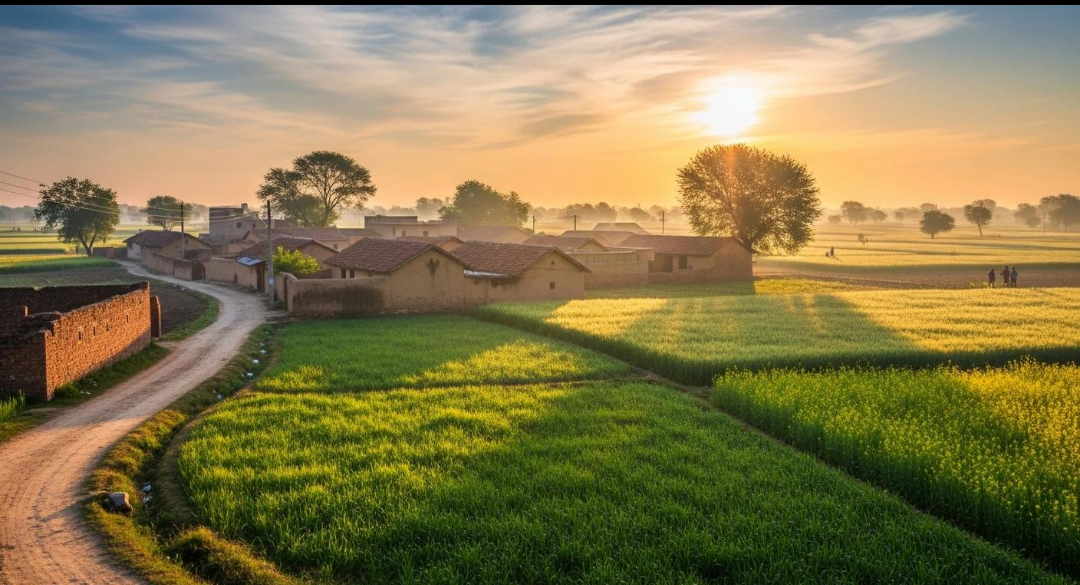
History, Culture, and Genetics of a Jat Clan of North India
| Aspect | Detail |
|---|---|
| Also spelled / known as | Tewatia, Tevatia, Teotia, Tevathiya, Tevathi, Tevatiya |
| Classification | A Jat gotra (patrilineal clan/lineage grouping) |
| Religion | Hinduism |
| Primary states | Haryana, Uttar Pradesh, Rajasthan, with a smaller presence in Delhi and Madhya Pradesh |
| Core historic belt | Faridabad, Ballabgarh and Palwal areas of Haryana; Bulandshahr, Meerut, Ghaziabad, Bagpat, Aligarh and Bijnor districts of western Uttar Pradesh; Bharatpur district of Rajasthan |
| Languages | Haryanvi, Braj Bhasha, Khari Boli / western Hindi, Rajasthani dialects, with standard Hindi as the language of education and administration |
1. Introduction: Who Are the Tewatia Jat?
The Tewatia — also spelled Tevatia, Teotia, Tevathiya, or Tevatiya — are a Jat clan (gotra) of North India, historically concentrated in the modern states of Haryana, Uttar Pradesh, and Rajasthan. A gotra in this context functions as a patrilineal lineage or clan name, tracing descent from a common putative ancestor, and operates alongside surname and regional identity as one of the ways a Jat family situates itself within the wider community.
The Tewatia clan's historical footprint is centred on two main clusters: an eastern Haryana belt around Faridabad, Ballabgarh, and Palwal, and a western Uttar Pradesh belt around Bulandshahr, Meerut, Ghaziabad, and neighbouring districts, with a further, older cluster in the Bharatpur region of Rajasthan. This profile draws on published Jat-history scholarship, clan-history compilations, and genetic and demographic literature on the wider Jat population to describe the Tewatia clan's traditional origins, historical role, social customs, language, cuisine, and notable descendants.
A note on scope: population-genetic and DNA-ancestry studies in India are generally conducted at the level of broad endogamous communities (such as Jats as a whole) rather than individual gotras. Where this profile discusses genetics, it therefore describes findings for the Jat community broadly, which is the most granular level at which reliable published data exists; specific genetic findings for the Tewatia clan alone have not been separately published in the scientific literature.
2. Origins and Early History
2.1 Traditional Origin Accounts
Tewatia oral tradition and clan-history compilations offer several overlapping accounts of the name's origin. One tradition holds that the clan takes its name from an old settlement or river called Tewati or Teoti — a village of that name exists in the Bharatpur region, and another near Ujjain. Clan historians have also proposed a link between the name and the Tapti River, and, more speculatively, between the name and the Teviot, a river in the Scottish Borders, though such transnational etymologies are folk associations rather than established historical fact and should be read as tradition rather than verified linguistics.
Some clan-history writers, drawing on interpretations of ancient coin legends found at Ujjain bearing inscriptions read as Tubathi or Turbathi, have speculated about a connection to older dynastic or tribal names; these readings remain contested among historians and are best treated as one hypothesis among several rather than settled fact. Genealogical tradition within the clan also associates the Tewatia with the wider Shivi gotra grouping, alongside related clans such as the Shivahote and Bhataunia.
According to the Jat historian Ram Swarup Joon, the Tewatia trace a migration from the Multan region during the Mughal period, settling in villages called Tewathi in the Gurgaon (Gurugram) district, where the clan referred to itself as Shavi Jats and where Bhattona (Bhathuna) grew into one of its principal villages. Other clan accounts describe an early settlement pattern in the Kated tract near the Braj region, with the village of Januthar, said to have been founded under the leadership of a clan elder named Jan Pal, serving as an early nucleus from which further Tewatia villages such as Undra and Kumhan were established.
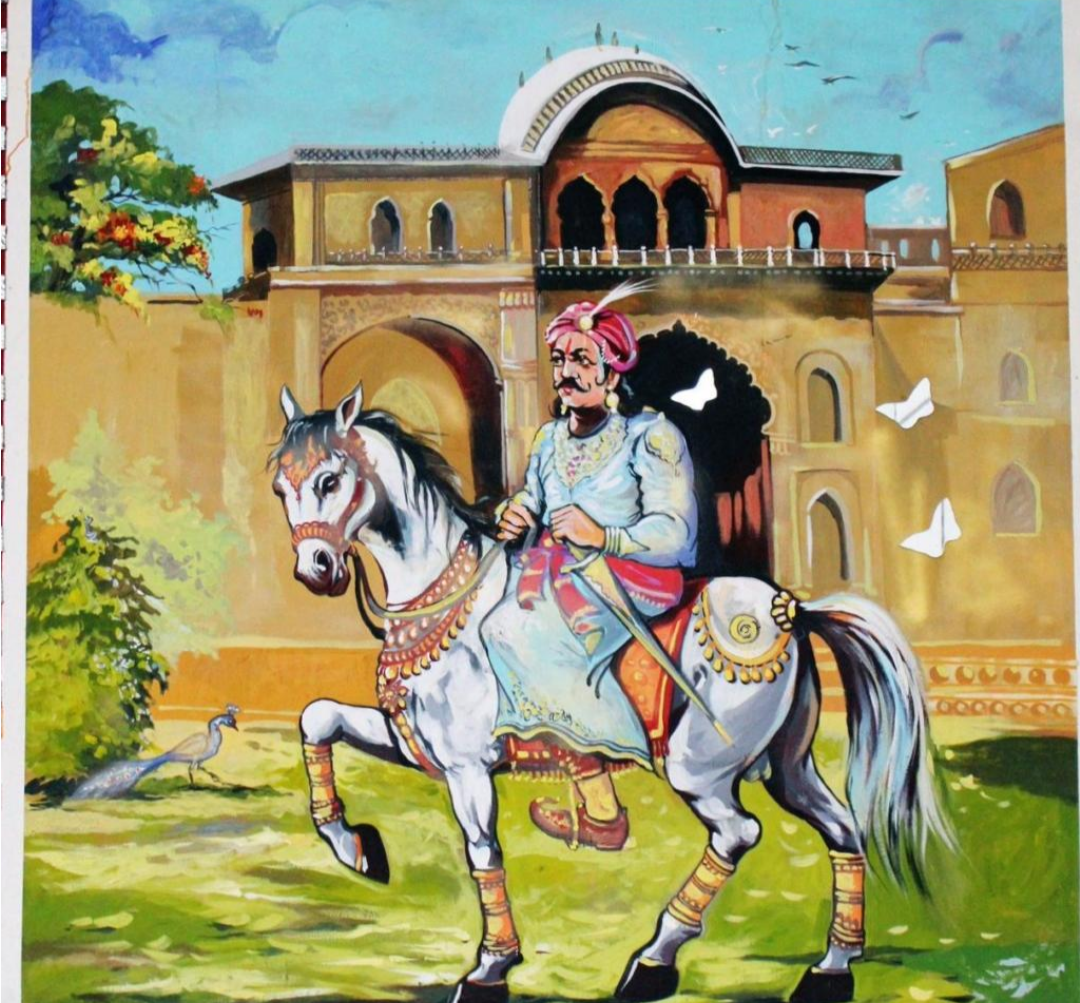
2.2 The Mughal-Era Rise: Revenue Collectors of Gurgaon
The best-documented phase of Tewatia clan history begins in the Gurgaon district of present-day Haryana, where the clan originally held five villages before its role expanded considerably during the Mughal period. Historical accounts describe the Tewatia rising to prominence as revenue collectors (chaudhris) for the Mughal administration, eventually holding responsibility over some 210 villages in the region — a position of substantial local authority and economic importance.
Clan tradition traces an expansion northeast from the Braj-region settlements, where four brothers from Januthar are said to have founded the villages of Janauli and Alawalpur near Palwal, while two others crossed the Yamuna to establish Bhathuna. From these settlements the clan is said to have gone on to found a cluster of twenty-four villages, remembered in local tradition as the "12 Bas of Janauli" and the "12 Bas of Alawalpur." From Palwal, under a leader named Gopal Singh, the clan is said to have established itself at Sihi, a settlement from which the Tewatia presence in the Faridabad area is traditionally traced, and which later gave rise to the princely holding of Ballabhgarh.
2.3 The Rebellion of 1857 and the Move to Bulandshahr
The clan's modern geographic spread was significantly shaped by the events of 1857. Raja Nahar Singh of Ballabhgarh, a Tewatia chieftain, took a prominent role opposing British rule during the Indian Rebellion of 1857, for which he was executed by the British in early 1858. Following the defeat of the rebellion and the loss of the Ballabhgarh estate, a section of the Tewatia clan relocated across the Yamuna into the Bulandshahr district of what is now western Uttar Pradesh, where Tewatia villages remain concentrated to this day, alongside the clan's continuing presence in Faridabad, Palwal, and the Bharatpur region of Rajasthan.
3. Geographic Distribution
Today, Tewatia families and villages are found across a well-defined belt of North India:
- Haryana — principally Faridabad, Ballabgarh, and Palwal districts, the clan's historic core area
- Uttar Pradesh — Bulandshahr, Meerut, Ghaziabad, Bagpat, Aligarh, Bijnor, Moradabad, and Nainital districts
- Rajasthan — the Bharatpur region, one of the clan's older documented settlement areas
- Delhi — smaller pockets, including areas in south Delhi
- Madhya Pradesh — a smaller presence in some clan-history accounts
Villages closely associated with the clan's history include Sihi and Bhathuna (Bhattona) in Haryana and Janauli, Alawalpur, and Januthar in the wider Braj–Faridabad belt, alongside numerous smaller villages founded by later generations across this North Indian corridor.
4. Genetics and DNA Ancestry
Because DNA-ancestry research in India is generally carried out at the level of large, self-identified communities rather than individual gotras, there is no dedicated published genetic study of the Tewatia clan specifically. The material below summarises peer-reviewed findings on the Jat community as a whole — the broader population to which the Tewatia clan belongs — which represents the most relevant and reliable genetic context currently available.
4.1 Paternal (Y-DNA) Lineages
A widely cited 2017 study published in Frontiers in Genetics analysed 302 Y-chromosome samples from Jat individuals in India and Pakistan and found that the community's paternal lineages were not drawn from a single ancestral source. The study identified at least nine distinct Y-DNA haplogroups — labelled E, G, H, I, J, L, Q, R, and T — each associated with a different geographic origin, indicating that the Jats descend from multiple ancestral streams rather than one homogeneous founding population.
Among these lineages, haplogroup R1a, and specifically its R1a-Z93 branch associated with Bronze Age Central Asian steppe migrations into South Asia, is consistently reported as the single largest paternal lineage among Jat populations sampled in Haryana, Punjab, Rajasthan, and western Uttar Pradesh, with reported frequencies in a broad range depending on the specific sample and region studied. Other lineages present in smaller proportions include haplogroups associated with older, indigenous South Asian ancestry and with West and Central Asian populations, consistent with the community's long history at a crossroads of migration into the Indian subcontinent.
4.2 Autosomal Ancestry
At the whole-genome level, Jat populations are reported in population-genetic literature to carry a comparatively high proportion of Ancestral North Indian (ANI) ancestry relative to many other communities of the Indian subcontinent, alongside the Ancestral South Indian (ASI) component shared broadly across South Asian populations. This pattern is consistent with the community's documented historical association with the agrarian belt of Punjab, Haryana, western Uttar Pradesh, and Rajasthan, a region with a long history of successive population movements from Central and West Asia.
4.3 Endogamy, Gotra Exogamy, and Genetic Considerations
Jat social custom, including among the Tewatia, has long observed clan (gotra) exogamy — marriage outside one's own gotra — while marriage is generally arranged within the broader Jat community. This pattern of community-level endogamy combined with clan-level exogamy is a widespread feature of North Indian rural kinship systems and is consistent with the genetic diversity found within the Jat population as a whole, since individual clans continually exchange marriage partners with one another rather than remaining fully genetically isolated.
This section summarises published population-genetics literature on the Jat community broadly; ancestry estimates vary by study, sample, and reference panel, and individual DNA-testing results may differ from community-level averages.
5. Social Structure and Community Organisation
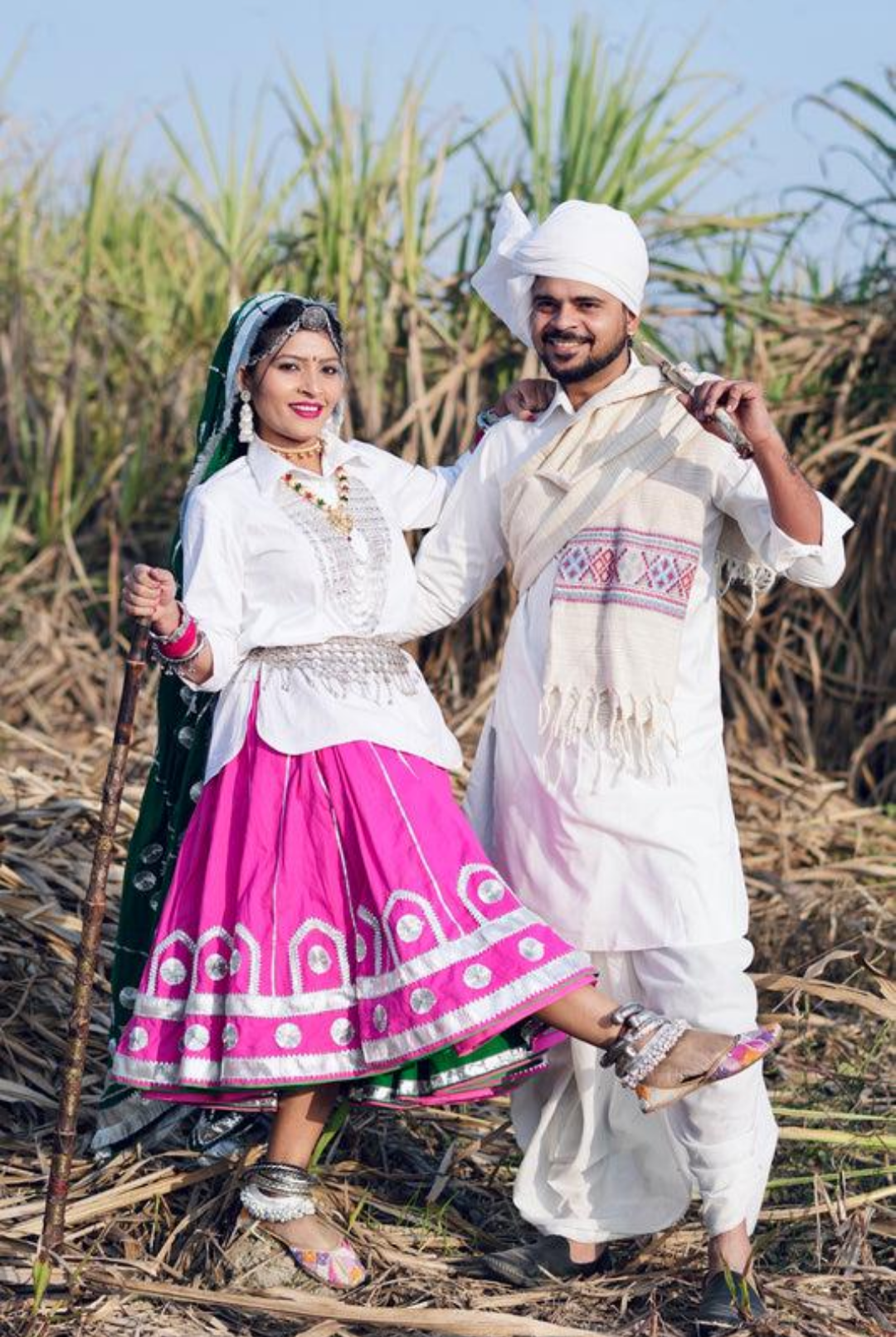
Historically an agrarian, land-holding community, the Tewatia — like Jats more broadly — organised village and clan life around extended patrilineal kin groups, with individual villages often tracing their founding to a common clan ancestor. Village councils and clan elders traditionally played a significant role in settling local disputes and in matters of marriage arrangement, a pattern common across the wider Jat agrarian society of Haryana, western Uttar Pradesh, and Rajasthan.
The honorific Chaudhary (also rendered Choudhary or Chaudhry) is commonly used within the community as a mark of respect for senior or influential men, particularly landholders and community elders, and appears frequently as a title before the names of prominent Tewatia individuals in historical and biographical sources.
6. Language
Members of the Tewatia clan traditionally speak the regional dialects of their home districts: Haryanvi in the Haryana heartland, Khari Boli and Braj Bhasha in the western Uttar Pradesh belt, and Rajasthani dialects in the Bharatpur area of Rajasthan. Standard Hindi serves as the language of education, administration, and wider communication, and English is increasingly used among younger, urban, and diaspora members of the community. As with much of rural North India, oral storytelling, proverbs, and folk song in the local dialect have historically played a central role in transmitting clan history and values across generations.
7. Culture, Customs, and Social Practices
Tewatia cultural life reflects the broader agrarian Jat culture of the Haryana–western Uttar Pradesh–Rajasthan belt, shaped by a farming economy, a strong martial and landholding tradition, and close-knit village and extended-family structures. Key cultural threads include:
- A strong association with agriculture and land, historically the community's principal source of livelihood and social standing
- Respect for elders and hierarchical family structures, with important decisions traditionally made in consultation with senior family and clan members
- A tradition of hospitality (mehmaan nawazi) toward guests and visitors, considered an important social value across Haryanvi and Jat culture generally
- Participation in the region's rich folk-performance culture, including seasonal and devotional folk songs and dances
Folk dances associated with the wider Haryanvi and Jat cultural sphere — including Ghoomar (a graceful, twirling women's dance performed at weddings and festive occasions), Khoria (an energetic circle dance performed by the bride's female relatives before a wedding, accompanied by emotionally expressive folk songs called Khoria Geet), and Jhumar and Phag (seasonal dances associated with harvest and the spring festival of Holi) — are part of the shared cultural repertoire in which Tewatia families historically participated at community celebrations.
8. Marriage and Wedding Traditions
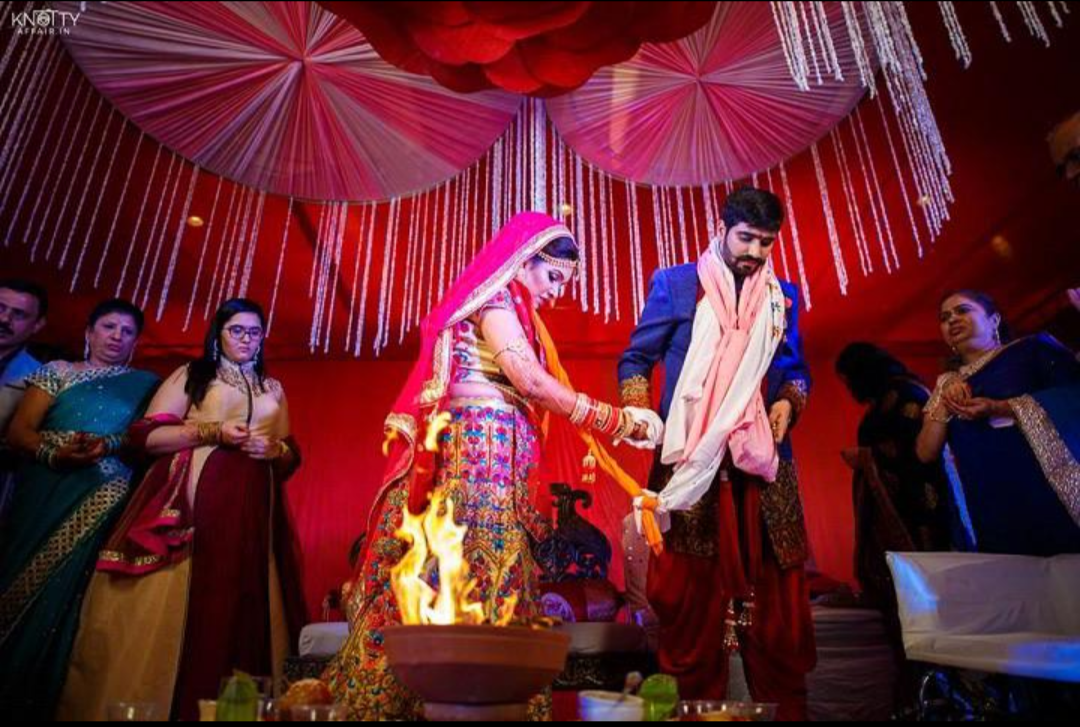
Marriage customs among the Tewatia follow patterns broadly shared across the Jat community of Haryana, western Uttar Pradesh, and Rajasthan. Marriages are traditionally arranged within the wider Jat community but outside one's own gotra, reflecting the principle that individuals sharing a clan name are regarded as kin. Historically, marriage alliances were also generally sought outside one's own village and immediate neighbouring villages, a practice rooted in the idea of village-level fraternity.
A traditional Jat wedding, of the kind historically observed in Tewatia families, unfolds over several days and includes:
- Sagai — the engagement ceremony, traditionally arranged by family elders after considering family reputation, health, and social standing
- Aguthi Pahanana — a ring ceremony in which the groom's family presents an engagement ring to the bride
- Bhat Nutana — a ceremony, held roughly a month before the wedding, in which the maternal uncles of the bride and groom are formally invited and honoured
- Khichai — a community feast hosted by the groom's family, at which relatives and villagers are served a meal traditionally featuring rice and lentils
- The wedding ceremony itself, conducted according to Vedic Hindu ritual, followed by a communal feast for both families and the wider village
Widow remarriage has historically been socially accepted within Jat community custom, a point of distinction noted by scholars of North Indian rural society relative to some other traditional communities of the region. Joint family living, in which married sons and their families remain part of a shared parental household, was historically common, though this pattern, as elsewhere in India, has become less prevalent with urbanisation.
9. Cuisine
Tewatia food culture reflects the wider Haryanvi and Jat agrarian food tradition, characterised by simple, hearty, dairy-rich dishes built around locally grown millets, pulses, and wheat, with an emphasis on ghee (clarified butter) and buttermilk from the community's traditionally strong cattle-rearing economy. Haryana is often described as "the land of rotis" for the range of flatbreads found in its everyday diet.
- Bajra khichdi — a staple dish of pearl millet cooked with moong dal, traditionally prepared with minimal spicing (cumin, ginger, turmeric, and asafoetida) and served with ghee, curd, or buttermilk
- Bajra and besan (gram-flour) rotis — millet and chickpea-flour flatbreads, often served with a dollop of fresh white butter
- Kadhi — a besan-and-yogurt-based curry, sometimes prepared with green chickpeas (hare choley) or seasonal greens such as bathua
- Bathua raita — a yogurt preparation made with the leafy winter green bathua (chenopodium), a distinctive regional ingredient
- Mixed dal — a combination of lentils simmered slowly and finished with ghee
- Alsi ki pinni and other ghee-based sweets — nutrient-dense winter preparations made from flaxseed, wheat flour, and jaggery, traditionally associated with the region's farming calendar and cold-season needs
Meals are traditionally centred on home-grown produce and dairy, reflecting the community's long-standing identity as a farming and cattle-owning population.
10. Traditional Dress and Ornaments
Traditional Tewatia dress mirrors the broader Haryanvi and Jat regional style:
- Men traditionally wore a dhoti-kurta, often paired with a pagri (turban), which carried strong connotations of honour and social standing, along with an angocha (a cloth used as a shoulder drape or head cover)
- Women traditionally wore a ghagra (long skirt), choli (fitted blouse), and an odhni or dupatta (a long veil or scarf), typically in bright colours with detailed embroidery
- Silver jewellery has historically held an important place in women's traditional adornment, including jhumkas (earrings), bangles, and nose ornaments, worn in daily life as well as on festive and ceremonial occasions
Contemporary dress among Tewatia families, as across much of North India, has largely shifted toward mainstream pan-Indian and Western clothing in everyday life, with traditional attire retained chiefly for weddings, festivals, and cultural performances.
11. Folklore and Oral Tradition
Tewatia clan history has been preserved substantially through oral tradition, passed down through generations before being recorded in written clan-history compilations during the 20th century. Village-founding narratives — such as the accounts of Jan Pal establishing Januthar, or of Gopal Singh leading the clan's settlement at Sihi — function within the community as both genealogical memory and origin story, linking present-day villages to named ancestral founders.
The figure of Raja Nahar Singh of Ballabhgarh occupies a particularly prominent place in Tewatia collective memory, remembered as a local ruler who resisted British authority during the events of 1857. Local devotional traditions associated with particular villages, such as reverence for the figure remembered in Bhathuna as Dagde Wale Baba, also form part of the clan's wider folk-religious landscape, alongside the broader stock of Haryanvi folk songs, harvest songs, and wedding songs shared across the region's Jat communities.
12. Festivals
Like other Hindu Jat families of the region, the Tewatia traditionally observe the major festivals of the North Indian Hindu calendar, including Holi (marked in Haryana by the Phag dance and season of folk song), Diwali, Teej (a monsoon-season festival particularly significant for women, marked by swings, folk songs, and the Ghoomar dance), Raksha Bandhan, and Baisakhi-season harvest celebrations tied to the agricultural calendar. Village and clan gatherings, weddings, and seasonal fairs have also historically served as important occasions for community bonding.
13. Education, Livelihoods, and Socioeconomic Profile
Agriculture has been the traditional economic base of the Tewatia community, consistent with the wider Jat association with land ownership and farming across Haryana, western Uttar Pradesh, and Rajasthan. From the late 19th and 20th centuries onward, education became an increasingly important avenue of mobility, and Tewatia families are represented today across law, the judiciary, the armed forces, sports, politics, business, and public administration, alongside continuing involvement in agriculture and rural landholding in the community's core districts.
14. Diaspora
While the Tewatia clan does not have as extensively documented an overseas diaspora as some other Indian communities, individual Tewatia families — like many Jat families from Haryana, western Uttar Pradesh, and Rajasthan — have migrated abroad over recent decades for education, employment, and settlement, with smaller communities present in the Gulf countries, the United Kingdom, North America, and elsewhere. Clan and village ties, along with participation in broader Jat community associations abroad, remain a point of connection for diaspora members with their ancestral region.
15. Notable Figures
The Tewatia clan has produced individuals of note across politics, law, business, sport, and public service. This list is illustrative rather than exhaustive.
15.1 Politics and Public Life
- Chaudhary Charan Singh (1902–1987) — the fifth Prime Minister of India (1979–1980), a leading 20th-century peasant and agrarian leader, and the first Jat to hold the office of Prime Minister; later honoured posthumously with the Bharat Ratna, India's highest civilian award
- Raja Nahar Singh (Nahar Singh Tewatia) — ruler of Ballabhgarh who took a prominent role opposing British rule during the Indian Rebellion of 1857
- Chaudhary Ajit Singh — founder of the Rashtriya Lok Dal political party and son of Charan Singh
- Jayant Chaudhary — Indian politician, son of Ajit Singh, and grandson of Charan Singh
- Harendra Singh Tewatia — member of the Uttar Pradesh Legislative Assembly from Garhmukteshwar and grandchild of Charan Singh
15.2 Law, Business, and Public Service
15.3 Sport
- Rahul Tewatia (b. 1993) — Indian cricketer from Sihi, Haryana; a left-handed batting all-rounder and leg-spin bowler who has represented Haryana in domestic cricket and multiple franchises in the Indian Premier League, and who received his first India call-up in 2021
16. Contemporary Reflections
Like many North Indian agrarian clans, the Tewatia community today navigates the transition from a predominantly rural, land-based identity toward a more urbanised and professionally diverse one, while continuing to value clan history, village ties, and extended-family relationships. Younger generations, including those in urban centres and abroad, increasingly balance participation in modern professional life with an interest in preserving the clan's historical memory — village-founding narratives, the legacy of figures such as Raja Nahar Singh and Chaudhary Charan Singh, and the broader Haryanvi and Jat cultural traditions of language, folk song, and festival that continue to be passed down within families.
Frequently Asked Questions
What is the origin of the Tewatia name?
Clan tradition links the name to an old settlement or river called Tewati or Teoti — villages of that name exist near Bharatpur and near Ujjain — while some clan historians also connect it to the Tapti River. These are oral and folk-historical associations rather than settled linguistic fact. The clan's documented history traces its rise to the Gurgaon district of Haryana, where Tewatia families served as Mughal-era revenue collectors.
Which states are Tewatia Jats found in?
Tewatia families are concentrated mainly in Haryana (Faridabad, Ballabgarh, Palwal), western Uttar Pradesh (Bulandshahr, Meerut, Ghaziabad, Bagpat, Aligarh, Bijnor), and the Bharatpur region of Rajasthan, with smaller numbers in Delhi and Madhya Pradesh.
Is Tewatia a caste or a gotra?
Tewatia is a gotra — a patrilineal clan or lineage name — within the Jat community, not a separate caste. Jat families use gotra names such as Tewatia primarily to identify lineage and to determine who counts as kin for marriage purposes (gotra exogamy), rather than as a marker of social ranking.
Who are some famous people from the Tewatia clan?
Notable Tewatia figures include Chaudhary Charan Singh, the fifth Prime Minister of India; Raja Nahar Singh of Ballabhgarh, who resisted British rule in 1857; Justice Debi Singh Tewatia, former Chief Justice of the Calcutta High Court; Kushal Pal Singh, longtime Chairman of DLF; and cricketer Rahul Tewatia.
What language do Tewatia families speak?
Most Tewatia families speak the regional dialect of their home district — Haryanvi in Haryana, Khari Boli or Braj Bhasha in western Uttar Pradesh, and Rajasthani dialects around Bharatpur — alongside standard Hindi, with English increasingly common among younger and urban members of the community.
What are traditional Tewatia marriage customs?
As with Jat families generally, Tewatia marriages are traditionally arranged within the broader Jat community but outside one's own gotra, and historically outside one's own village as well, since fellow gotra members are regarded as kin. Weddings follow Vedic Hindu ritual over several days, including engagement, ring, and pre-wedding feast ceremonies.
17. Conclusion
The Tewatia are a Jat clan whose documented history runs from Mughal-era revenue administration in the Gurgaon region, through a defining role in the resistance of 1857 under Raja Nahar Singh of Ballabhgarh, to a modern community spread across Haryana, western Uttar Pradesh, and Rajasthan, and represented today in Indian politics, law, business, and sport. Genetic research on the wider Jat population to which the Tewatia belong points to a layered ancestry, combining a dominant Central Asian steppe-associated paternal lineage with a broader, more diverse set of paternal and autosomal ancestral contributions — a genetic picture that mirrors the community's long history at a crossroads of migration, settlement, and cultural exchange in North India. From village-founding legends and the honour accorded to Raja Nahar Singh's memory, to the everyday culture of Haryanvi cuisine, dress, and folk song, and the modern achievements of figures from Chaudhary Charan Singh to Rahul Tewatia, the Tewatia story reflects the broader arc of North India's agrarian Jat communities across the last several centuries.
References
- [1]1. Wikipedia. "Tewatia." https://en.wikipedia.org/wiki/Tewatia
- [2]2. Wikipedia. "Teotia." https://en.wikipedia.org/wiki/Teotia
- [3]3. Jatland Wiki. "Tevatia." https://www.jatland.com/home/Tevatia
- [4]4. Jat Chiefs. "Tewatia." https://jatchiefs.com/history/tewatia/
- [5]5. Jats Legacy. "Tevatia Gotra's Legacy." https://jatslegacy.com/tevatia-gotras-legacy/
- [6]6. Wikipedia. "Debi Singh Tewatia." https://en.wikipedia.org/wiki/Debi_Singh_Tewatia
- [7]7. Wikipedia. "Rahul Tewatia." https://en.wikipedia.org/wiki/Rahul_Tewatia
- [8]8. Wikipedia. "Harendra Singh Tewatia." https://en.wikipedia.org/wiki/Harendra_Singh_Tewatia
- [9]9. Wikipedia. "Charan Singh." https://en.wikipedia.org/wiki/Charan_Singh
- [10]10. Jatland Wiki. "Chaudhary Charan Singh." https://www.jatland.com/home/Chaudhary_Charan_Singh
- [11]11. Mahal, D. G., & Matsoukas, I. G. (2017). "Y-STR Haplogroup Diversity in the Jat Population Reveals Several Different Ancient Origins." Frontiers in Genetics, 8:121. https://doi.org/10.3389/fgene.2017.00121
- [12]12. ESPNcricinfo. "Rahul Tewatia." https://www.espncricinfo.com/cricketers/rahul-tewatia-423838
- [13]13. Remitly. "Haryanvi Cuisine: Rustic North Indian Food Traditions." https://www.remitly.com/blog/food/haryanvi-cuisine/
- [14]14. Sanskruti Restaurant. "Haryanvi Cuisine: Guide To Food From Haryana, India." https://www.sanskrutirestaurant.co.uk/liverpool/haryanvi-cuisine-guide-to-food-from-haryana-india/
- [15]15. BookMyDance. "Dances of Haryana." https://bookmydance.in/haryana/
- [16]16. Ahlawat, N. "Marriage Norms, Notion of Honour and Khap in Haryana." https://serialsjournals.com/abstract/45220_6.pdf
- [17]17. JatMatrimony. "Wedding Customs - Jat." https://www.jatmatrimony.com/articles/wedding-customs-jat.php