

Uttar Pradesh Genome Project Community
Discover your Uttar Pradesh ancestry. Explore the rich genetic tapestry of India's heartland. Trace history, geography & people of UP through DNA.
Uttar Pradesh GENOME PROJECT
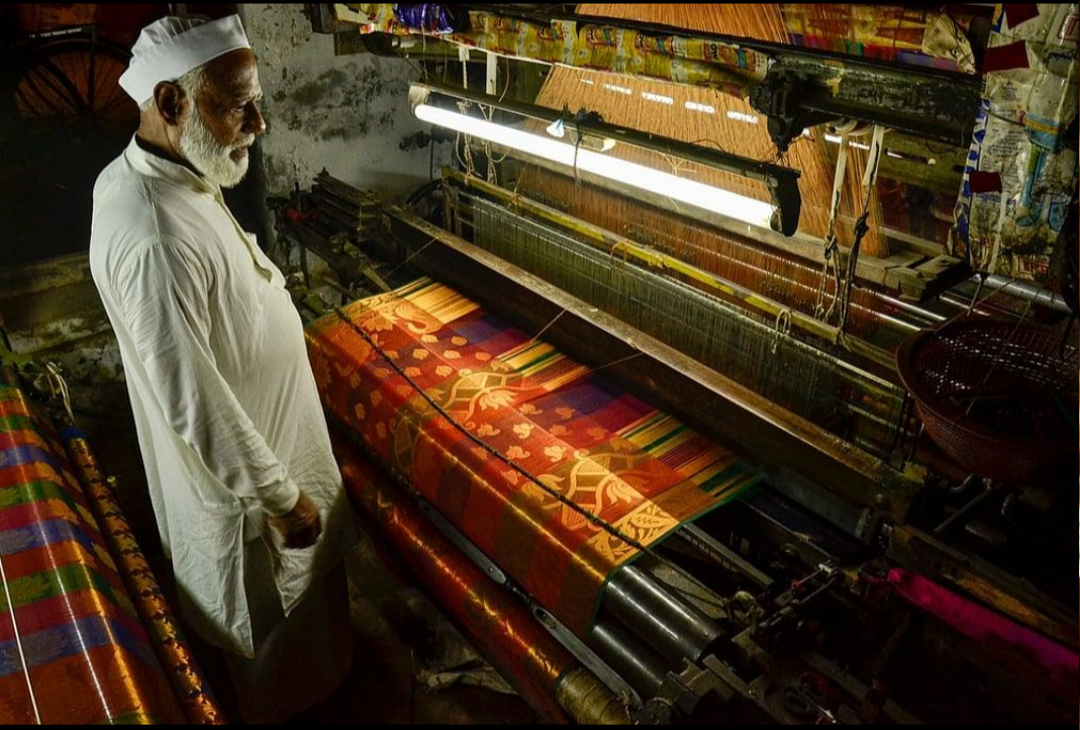
1. Introduction: Who Are the People of Uttar Pradesh?
Uttar Pradesh literally the “Northern Province” is not a single ethnic community in the way a caste or a religious denomination is, but a vast geography-defined population: the inhabitants, past and present, of India's most populous state, spread across the Ganga-Yamuna plain in the heart of North India. With over 241 million residents, Uttar Pradesh alone is more populous than all but a handful of countries in the world, and its people account for roughly one in every six Indians. This profile treats “Uttar Pradesh” as a geography-of-origin community in the genealogical sense: the shared population of a defined territory, encompassing its many castes, sub-regions, religions, and linguistic groups, whose ancestors have lived, farmed, traded, and migrated across this stretch of the Gangetic plain for millennia.
Bordered by Nepal to the north, Bihar to the east, Madhya Pradesh, Chhattisgarh, and Jharkhand to the south, and Rajasthan, Haryana, Himachal Pradesh, and Delhi to the west, Uttar Pradesh sits astride the historic core of the Indo-Gangetic civilisation. Its cities Ayodhya, Mathura, Varanasi (Kashi), Prayagraj (Allahabad), Kannauj, Lucknow, and Agra have, at different points over three thousand years, served as capitals of empires, seats of religious authority, and centres of literary and artistic patronage. The region is at once the traditional homeland of the Ramayana's Kosala and the Mahabharata's Hastinapura, the ground on which the Mauryan and Gupta empires were built, the heartland of the Mughal Empire, and the crucible of the 1857 uprising against British rule.
2. Geography
The Ganga-Yamuna Doab the fertile wedge of land between the state's two great rivers has long been the agricultural and demographic core of the region, and its wheat, rice, and sugarcane harvests have earned Uttar Pradesh, and Awadh in particular, the historic epithet “the granary of India.” The state's capital is Lucknow, while Prayagraj serves as its judicial capital; it is administratively divided into 18 divisions and 75 districts, of which Prayagraj is the most populous.
Cultural-Geographic Sub-Regions
| Region | Approximate Location | Notable Centres | Character |
|---|---|---|---|
| Western UP | Ganga-Yamuna Doab, Saharanpur to Etawah | Meerut, Ghaziabad, Noida, Agra, Aligarh | Most urbanised and industrialised zone; NCR periphery; home to the Taj Mahal |
| Braj | Mathura-Agra tract | Mathura, Vrindavan, Agra | Traditional homeland of Krishna worship and Braj Bhasha literature |
| Rohilkhand | Upper Ganges plain, northern UP | Bareilly, Moradabad, Rampur | Historic Rohilla Afghan settlement area |
| Awadh | Central UP | Lucknow, Ayodhya, Faizabad, Barabanki | Former Nawabi kingdom; “granary of India”; Awadhi language |
| Lower Doab | Southern doab | Kanpur, Prayagraj (Allahabad) | Industrial and pilgrimage centres at the Ganga-Yamuna confluence |
| Bundelkhand | Southwestern UP (extends into Madhya Pradesh) | Jhansi, Chitrakoot, Banda, Mahoba | Hilly, drought-prone Vindhyan tract; Bundeli dialect |
| Purvanchal | Eastern UP | Varanasi, Gorakhpur, Azamgarh, Jaunpur, Basti | Ancient, densely populated region; Bhojpuri-speaking; historically high out-migration |
3. Origins and Early History
3.1 Prehistoric and Vedic Foundations
3.2 Mahajanapadas, Mauryas, and Guptas
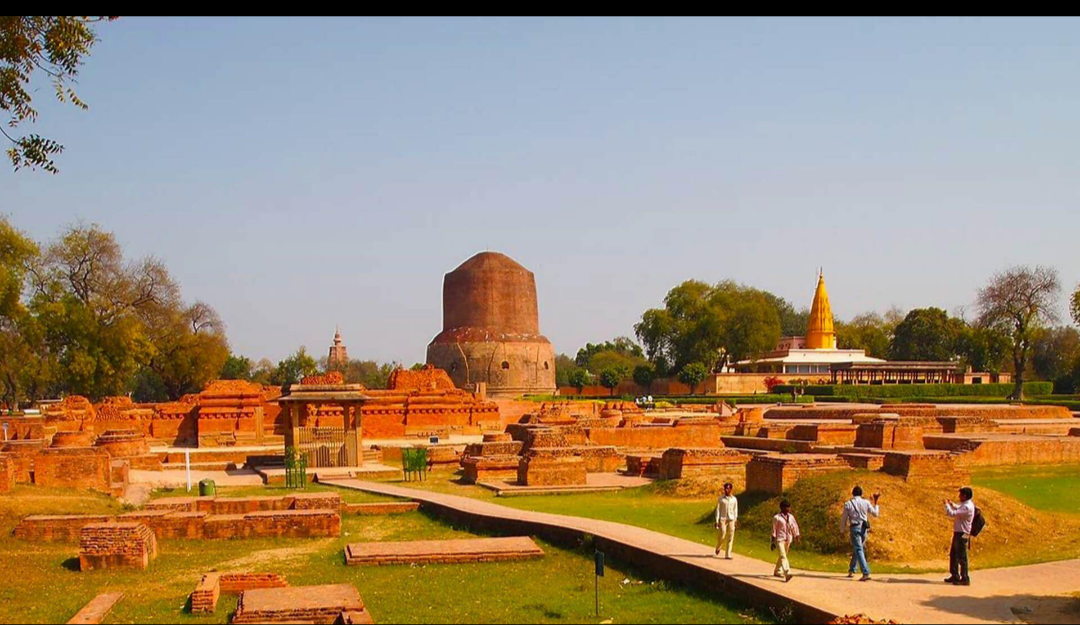
By the 6th century BCE, North India was organised into sixteen Mahajanapadas (great tribal kingdoms and republics); at least two or three of these Kosala (capital Ayodhya, later Shravasti), Kashi (capital Varanasi), and Vatsa (capital Kaushambi) lay substantially within the boundaries of present-day Uttar Pradesh, making the region a principal theatre of the political and philosophical ferment that also produced Buddhism and Jainism. From the 4th century BCE, the region became a core territory of the Mauryan Empire under Chandragupta Maurya and, later, Ashoka, who propagated Buddhism widely from here. The Gupta Empire (4th–6th centuries CE), often called India's classical “Golden Age,” saw a further flourishing of learning, science, and the arts centred on cities such as Prayag (Prayagraj), and the 7th-century ruler Harshavardhana briefly reunified much of North India from his capital at Kannauj.
3.3 The Delhi Sultanate and the Mughal Empire
3.4 The Nawabs of Awadh
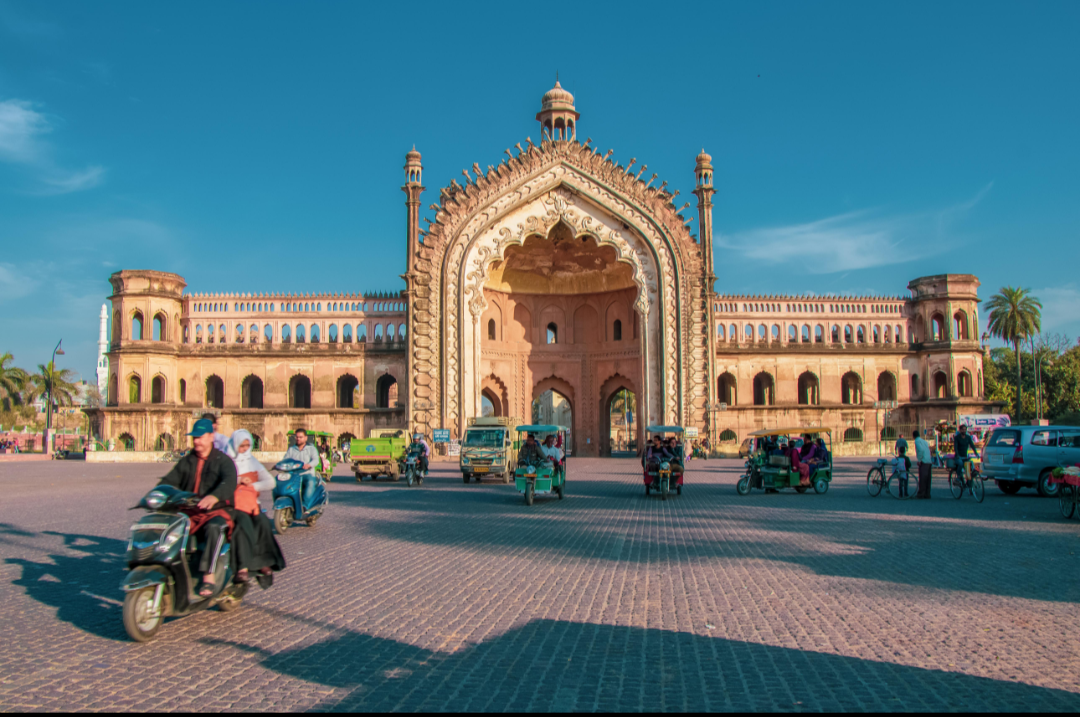
Awadh was established as one of the original Mughal provinces (subahs) under Akbar, and became a hereditary tributary state around 1722 under Saadat Ali Khan, a Persian-origin noble who founded a dynasty of Nawabs styled Wazir al-Mamalik. Initially ruled from Faizabad, the Nawabi capital moved to Lucknow, which developed under Nawabi patronage into one of North India's great centres of literature, music, dance (Kathak), architecture, and cuisine a courtly culture prized for its nazakat and nafasat, delicacy and refinement, that survives today in Lucknow's Awadhi cuisine, chikankari embroidery, and Urdu literary tradition. The British East India Company annexed Awadh in 1856 on the pretext of misgovernance, a move that fed directly into the resentments that erupted the following year.
3.5 The 1857 Uprising and the Colonial Period
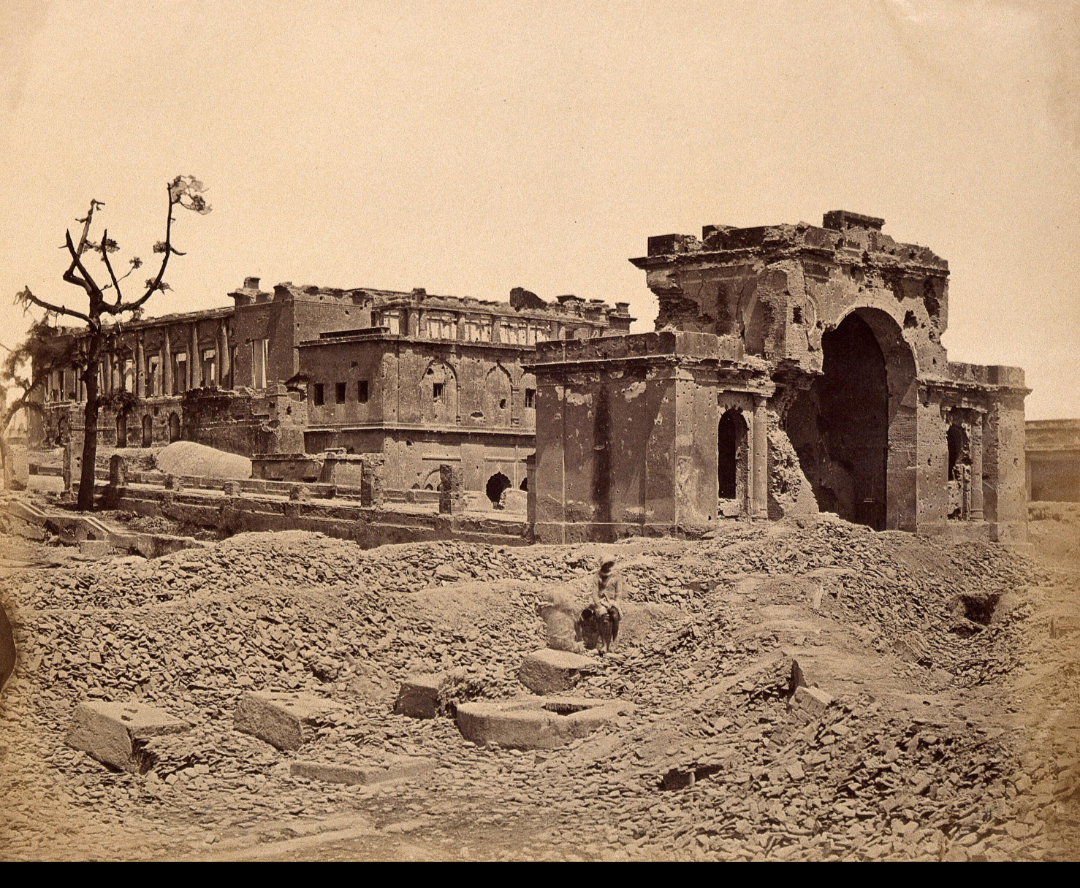
Uttar Pradesh then organised by the British as the North-Western Provinces and, from 1902, the United Provinces of Agra and Oudh was a principal theatre of the Indian Rebellion of 1857, with major uprisings and sieges at Meerut, Kanpur, Lucknow, and Jhansi. Rani Lakshmibai of Jhansi became one of the rebellion's most celebrated leaders. The colonial period thereafter brought railways, canal irrigation, English-medium education, and the beginnings of organised nationalist politics, with the United Provinces producing a disproportionate share of the leadership of the Indian independence movement.
3.6 Post-Independence Uttar Pradesh
4. Demographic Profile
Religiously, the state is predominantly Hindu (around 80 per cent as of the 2011 Census) with a substantial Muslim minority of roughly 19–20 per cent the largest Muslim population, in absolute terms, of any Indian state alongside small Sikh, Christian, Jain, and Buddhist communities. Uttar Pradesh's Muslim population traces its roots to a combination of Turkic, Afghan, and Persian-origin ruling and military elites who settled from the Delhi Sultanate period onward and, in far greater numbers, to the conversion of local populations across the medieval and early modern centuries meaning most UP Muslims and Hindus alike descend substantially from the same regional gene pool that predates Islam's arrival in the subcontinent.
5. Genetics and DNA Ancestry
5.1 The Ancestral North Indian – Ancestral South Indian Gradient
5.2 Regional Genetic Studies
Direct population-genetic surveys of Uttar Pradesh reinforce this picture of a genetically stratified but broadly continuous North Indian population. A 2022 autosomal STR study of individuals from Bareilly, Pilibhit, Shahjahanpur, Gorakhpur, Jhansi, and Varanasi found that the state's population showed the closest genetic affinity to neighbouring Uttarakhand, to the Jat and Jat Sikh communities of Punjab and Delhi, and to the population of Rajasthan a pattern consistent with UP's geographic position astride the historic overland routes connecting the northwestern subcontinent to the Gangetic heartland. Earlier mitochondrial DNA (maternal-line) research comparing Uttar Pradesh with southern Indian states found a lower frequency of the ancient, indigenous East-Asian-linked maternal haplotype in Uttar Pradesh than further south, and a higher, though still modest, presence of Caucasoid-associated maternal lineages a gradient the researchers interpreted as reflecting the greater relative impact of Indo-European-associated migration on the northern and central parts of the subcontinent.
A separate 2007 study of nine endogamous communities within Uttar Pradesh, spanning different social and caste strata, found that even within the state, genetic diversity is structured along endogamous caste and community lines a reminder that “Uttar Pradesh” genetic ancestry is best understood not as a single homogeneous population but as a mosaic of many historically self-marrying communities layered onto a shared regional substrate, each carrying its own degree of distinctiveness.
5.3 Y-Chromosome and Deep Ancestry
Broader studies of North Indian Y-chromosome (paternal) lineages find the Gangetic plain populations, including Uttar Pradesh, carrying a mix of deeply rooted South Asian haplogroups (such as H and L) alongside haplogroups associated with the spread of Indo-Aryan and, in later centuries, Central Asian and West Asian populations (including R1a and, among some Muslim lineages, J and other West Asian-linked haplogroups) again reflecting the region's long history as both an ancient population centre in its own right and a repeated destination for migration and conquest from the northwest.
6. Language and Literature
Hindi (in its standard, Sanskritised register) and Urdu are the state's principal official and literary languages, but everyday speech across Uttar Pradesh is carried by a family of closely related Indo-Aryan vernaculars, each tied to one of the cultural sub-regions described above: Awadhi in the central Awadh tract (the language of Tulsidas's Ramcharitmanas), Bhojpuri across the eastern Purvanchal districts, Braj Bhasha around Mathura and Agra (the classical language of Krishna devotional poetry), Bundeli in Bundelkhand, and Kannauji and Khariboli in the west the last of these forming the historical basis of both modern standard Hindi and Urdu. Lucknow, in particular, developed as one of the great centres of Urdu poetry and prose in the 18th and 19th centuries, home to poets such as Mir Taqi Mir and later masters of the ghazal, and Lucknawi Urdu remains celebrated for its refined courtly idiom.
7. Religion, Festivals, and Pilgrimage
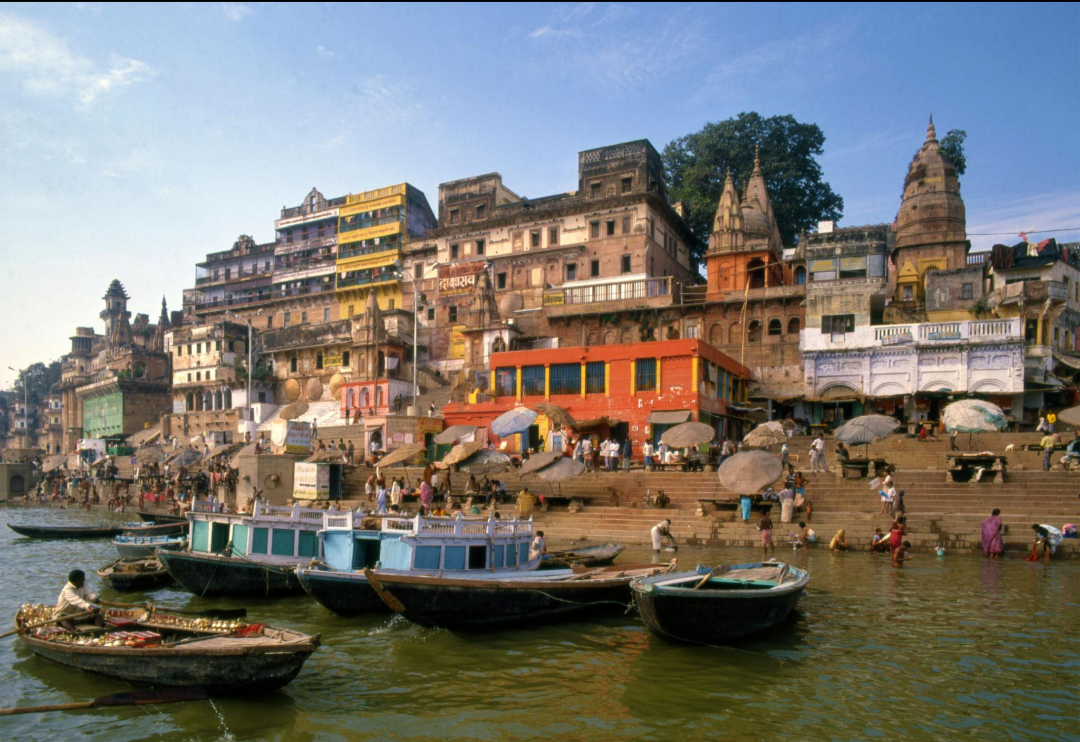
Uttar Pradesh is one of the great sacred geographies of Hinduism: Varanasi (Kashi) is among the oldest continuously inhabited and most sacred cities in the world and a principal centre of Shaivite pilgrimage and cremation ritual; Ayodhya is venerated as the birthplace of Rama; Mathura and Vrindavan are revered as the birthplace and childhood home of Krishna; and Prayagraj, at the confluence of the Ganga, Yamuna, and mythical Sarasvati rivers, hosts the Kumbh Mela, the world's largest periodic gathering of pilgrims. The state is simultaneously central to Buddhist heritage the Buddha delivered his first sermon at Sarnath, near Varanasi and to Jain tradition, with several tirthankaras associated with sites in the region. Major festivals observed across the state include Diwali, Holi (with particularly renowned celebrations in Mathura and Vrindavan, including the Lathmar Holi of Barsana), Dussehra, Ramlila performances (especially at Ayodhya and Varanasi), Chhath Puja (strongest in the Bhojpuri-speaking east), and, for the state's large Muslim population, Eid al-Fitr, Eid al-Adha, and Muharram, alongside a strong regional tradition of Sufi shrine culture.
8. Culture, Customs, and Social Practices
Uttar Pradesh's social fabric historically rested on a dense caste hierarchy layered across its Hindu majority from land-owning and priestly groups such as Brahmins, Rajputs (Thakurs), and Bhumihars, through cultivating and artisan castes including Yadavs, Kurmis, and Jats, to Dalit communities such as Jatavs and Pasis, alongside a large Muslim population encompassing both descendants of earlier Turkic, Afghan, and Persian-origin elites (such as Sayyids, Sheikhs, and Pathans) and, more numerously, the descendants of local converts organised into their own occupational biraderis (kinship groups). Joint or extended-family living, with married sons often remaining in the parental household, has historically been the social norm, particularly in rural areas, and family and clan (khandan or biraderi) identity remains a significant marker of social belonging.
A defining thread of regional culture is the Ganga-Jamuni tehzeeb literally the “Ganga-Yamuna culture,” a term coined for the syncretic Hindu-Muslim courtly and artistic culture that flourished above all in Lucknow and Awadh under the Nawabs, blending Hindu and Islamic devotional practice, Persian and Sanskritic literary forms, and shared participation in festivals, music, and cuisine — a tradition still invoked as an ideal of composite regional identity. Hospitality (mehman-nawazi) is a strongly held cultural value, especially in the erstwhile Awadhi courtly tradition, alongside a marked regional emphasis on courtesy, verbal refinement, and formal modes of address (notably the honorific “adaab” and elaborate forms of Lucknawi Urdu etiquette).
9. Marriage and Wedding Traditions
Hindu weddings across Uttar Pradesh follow the broad North Indian Vedic pattern — including tilak (formal betrothal), haldi (a turmeric-paste ceremony for the bride and groom), mehndi (henna application), the baraat (the groom's ceremonial wedding procession, traditionally on horseback), phere (the couple's seven circuits of the sacred fire), and vidaai (the emotional farewell of the bride from her natal home) but retain distinctive regional inflections shaped by caste and sub-region, from the elaborate multi-day rituals of landed Awadhi and Brajwasi families to the folk wedding songs (byah ke geet) of the Bhojpuri- and Awadhi-speaking countryside, traditionally sung by women of the household. Marriage has historically been arranged within caste and, for much of the rural population, within a defined circle of gotra (clan) exogamy and village exogamy rules. Muslim weddings in the state follow the nikah tradition, with a mehr (dower) settlement, a nikahnama (marriage contract), and a walima (wedding reception), often layered with regionally shared North Indian customs such as mehndi and elaborate multi-day festivities that closely parallel those of Hindu neighbours — one of the clearest everyday expressions of the region's syncretic Ganga-Jamuni social fabric.
10. Cuisine
10.1 Awadhi and Lucknawi Cuisine
10.2 Regional and Everyday Cuisine
- Banarasi cuisine (Varanasi) — strongly vegetarian, temple-town food culture, famous for its chaat, kachori-sabzi, lassi, and the paan (betel leaf preparation) for which the city is renowned across India.
- Braj cuisine (Mathura-Vrindavan) — a devotional, largely vegetarian tradition tied to Krishna worship, known for milk-based sweets such as peda and the layered fried sweet-pastry gujiya.
- Eastern UP / Purvanchal — rice, lentils, and sattu (roasted gram flour) based staples such as litti-chokha, shared with the neighbouring Bhojpuri-speaking districts of Bihar.
- Everyday staple foods across the state's rural Gangetic plain centre on wheat rotis, rice, dal, seasonal vegetables, and dairy (the state is India's largest milk producer), with sugarcane-based jaggery and sweets reflecting the region's historic role as a major sugar-producing belt.
11. Traditional Dress and Ornaments
13. Traditional Housing and Architecture
14. Folklore and Oral Tradition
15. Education, Livelihoods, and Socioeconomic Profile
16. Diaspora
17. Prominent Figures
17.1 Political and Public Life
- Jawaharlal Nehru (1889–1964) — born in Allahabad (Prayagraj); independent India's first Prime Minister and a leading figure of the independence movement.
- Lal Bahadur Shastri (1904–1966) — born in Mughalsarai; India's second Prime Minister.
- Rani Lakshmibai (c. 1828–1858) — Rani of Jhansi and one of the foremost leaders of the 1857 uprising.
- Atal Bihari Vajpayee (1924–2018) — long-serving Member of Parliament from Lucknow and former Prime Minister of India.
- Chandra Shekhar Azad (1906–1931) and Bismil, Ashfaqulla Khan — Uttar Pradesh-based revolutionary freedom fighters.
17.2 Literature, Arts, and Culture
- Tulsidas (c. 1532–1623) — Awadhi poet-saint, author of the Ramcharitmanas, one of the most influential works in North Indian devotional literature.
- Mirza Ghalib and Mir Taqi Mir — though associated with Delhi, both are central to the Lucknow-Delhi Urdu literary tradition that shaped Awadhi courtly culture.
- Premchand (1880–1936) — born near Varanasi; widely regarded as one of the foremost Hindi and Urdu novelists and short-story writers of the 20th century.
- Mahadevi Verma (1907–1987) — Allahabad-based Hindi poet, a leading figure of the Chhayavaad romantic movement in Hindi literature.
- Begum Akhtar (1914–1974) — celebrated ghazal and thumri vocalist closely associated with Lucknow's Awadhi musical tradition.
- Birju Maharaj (1938–2022) — Lucknow Gharana Kathak maestro, among the most influential classical dancers of modern India.
17.3 Science, Sports, and Other Fields
- Satyendra Nath Bose (1894–1974) — the physicist after whom the boson is named studied and began his academic career partly within the wider United Provinces intellectual milieu of the era.
- Sachin Pilot, Sunita Williams, and numerous other public figures trace paternal or family roots to Uttar Pradesh, reflecting the state's role as a demographic wellspring for public life across India.
19. Conclusion
References
- [1]1. Wikipedia. “Uttar Pradesh.” en.wikipedia.org/wiki/Uttar_Pradesh
- [2]3. Wikipedia. “Awadh.” en.wikipedia.org/wiki/Awadh
- [3]6. Reich, D. et al. “Reconstructing Indian population history” and related ANI-ASI admixture studies (MIT/Harvard). dspace.mit.edu
- [4]7. Haque, I. et al. “An evaluation of inter and intra population structure of Uttar Pradesh, inferred from 24 autosomal STRs.” Annals of Human Biology, 2022.
- [5]8. Khan, F. et al. “Genetic affinities between endogamous and inbreeding populations of Uttar Pradesh.” BMC Genetics, 2007.
- [6]9. Passarino, G. et al. “Pre-Caucasoid and Caucasoid genetic features of Indian population revealed by mitochondrial DNA polymorphisms.” 1996.
- [7]10. Physics Wallah. “History of Uttar Pradesh” and “Geography of Uttar Pradesh.” pw.live
- [8]11. AZA Fashions. “The Ultimate Guide to Uttar Pradesh — Heritage, Textiles & Traditional Style.” azafashions.com
- [9]12. Reporting on Awadhi cuisine and dum pukht technique, various regional news sources (KRDO, KEYT), 2026.