

Maurya Community
Explore the Maurya community of Uttar Pradesh and Bihar — Kushwaha, Koeri, Kachhi and Murao cultivators who claim descent from Chandragupta Maurya. History, culture, cuisine, diaspora and ancestry.
THE MAURYA COMMUNITY OF NORTH INDIA
Cultivators of the Gangetic Plain: History, Culture, People and Ancestry
Introduction: Who Are the Mauryas?
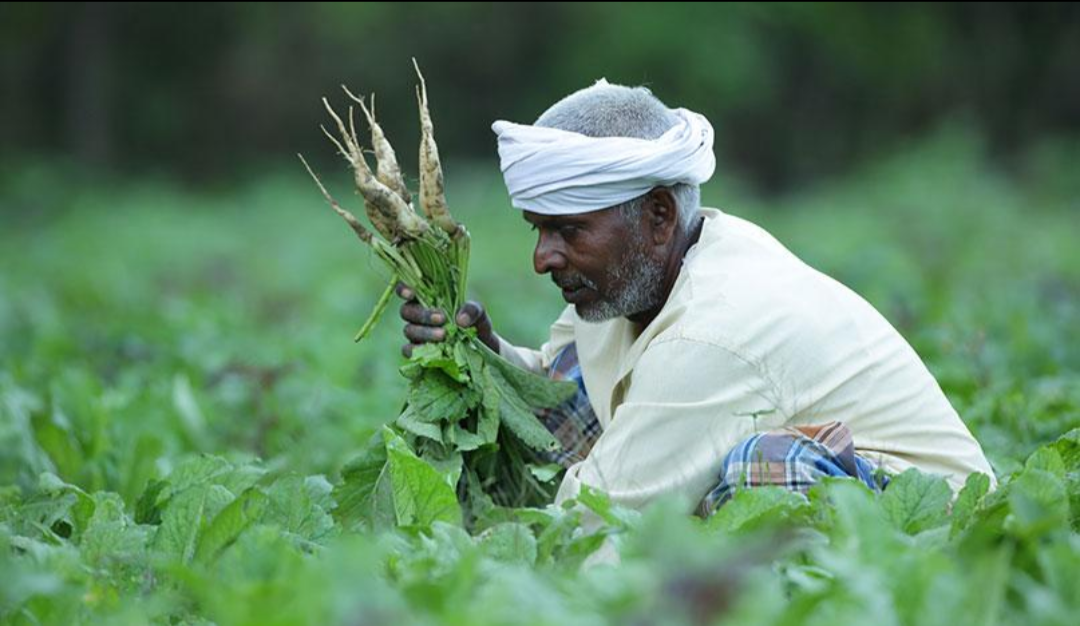
The Mauryas are a large agricultural community of the Gangetic plain, concentrated in eastern and central Uttar Pradesh and spilling over into Bihar, Madhya Pradesh, Uttarakhand and the Terai of Nepal. Today the name "Maurya" works less like a single caste and more like an umbrella identity. It is used as a surname and community title by families who are, in older records and in neighbouring villages, known as Kushwaha, Koeri, Kachhi, Murao, Shakya and, in some regions, Saini. These groups share an occupational past as skilled cultivators — growers of vegetables, opium poppy, indigo, sugarcane and garden crops — and, since the early twentieth century, a shared claim to descent from the ancient Maurya dynasty founded by Chandragupta Maurya in the fourth century BCE.
Because the identity is regional and agricultural rather than tied to one founding event, the Maurya story is best understood as the story of a people of a place: the alluvial villages of Awadh, Purvanchal and Bihar, where generations of market-gardening families built a reputation for hard work on small, intensively farmed plots. This profile brings together what historians, ethnographers and census records say about the community, notes where accounts differ, and points to the questions about ancestry that published research has not yet answered.
Etymology: Why "Maurya"?
As a community name, "Maurya" is relatively modern. Colonial-era censuses recorded these cultivators mainly as Koeri (Bihar and eastern UP), Kachhi (Bundelkhand, Rohilkhand and western UP) and Murao (Awadh). From the 1910s and 1920s onward, caste associations such as the Kushwaha Kshatriya movement petitioned census officials to be recorded under more prestigious names. One strand traced descent from Kusha, son of the god Rama, giving the name Kushwaha; another linked the community to the Buddha’s Shakya clan; and a third claimed descent from the imperial Mauryas of Magadha. Over the twentieth century, and especially after the 1960s, many families in Uttar Pradesh adopted "Maurya" as their surname.
Ancient sources themselves give different accounts of the original Maurya dynasty’s origins. Some Buddhist texts connect the Moriya clan to the Shakyas of Kapilavastu, while certain Brahmanical and later texts describe Chandragupta as of humble birth; one popular folk etymology links "Maurya" to Mura, said to be Chandragupta’s mother, or to mayura, the peacock. Historians regard a direct genealogical link between today’s cultivating community and the ancient dynasty as a claim of identity and dignity rather than a documented lineage — but the claim itself is an important part of modern Maurya history.
Geography: Land of the Mauryas
The heartland of the Maurya community is the fertile middle Gangetic plain. In Uttar Pradesh, Maurya, Kushwaha, Murao and Shakya families are found across Awadh (Lucknow, Barabanki, Sitapur, Lakhimpur Kheri, Hardoi, Rae Bareli, Sultanpur, Pratapgarh), Purvanchal (Prayagraj, Kaushambi, Varanasi, Jaunpur, Azamgarh, Ghazipur, Mirzapur, Gorakhpur, Deoria, Kushinagar, Basti), Bundelkhand (Jhansi, Banda, Hamirpur, Jalaun) and the western districts around Etah, Mainpuri, Farrukhabad, Badaun and Bareilly, where the Shakya and Kachhi names are more common.
In Bihar the community appears mainly as Koeri or Kushwaha, strong in districts such as Patna, Nalanda, Bhojpur, Rohtas, Aurangabad, Siwan, Saran and Samastipur. Smaller related populations live in Madhya Pradesh (Gwalior–Chambal and Bundelkhand), Jharkhand, Uttarakhand’s plains, Delhi, Haryana and the Nepal Terai, where Koeri and Kushwaha cultivators form part of the Madhesi population. The landscape that shaped the community is one of river-fed alluvium, wells and canals, village bazaars and small fields within easy reach of towns — ideal for the vegetable and cash-crop farming the Mauryas became known for.
Origins and History
Ancient claims and medieval cultivators
There is little documentary evidence for the community’s history before the colonial period, which is true of most cultivating castes in North India. What is clear is that groups recorded as Koeri, Kachhi and Murao were established in the villages of the Ganga valley by the early modern period, working as tenant farmers and specialist growers. Their skill with irrigation, manuring and multiple cropping made them valued tenants; colonial settlement reports repeatedly describe them as among the most industrious cultivators of the region.
The colonial era: poppy, indigo and the census
Under British rule, Koeri and Kachhi cultivators were closely tied to two of the most important cash crops of eastern India: opium poppy, grown under the government’s Opium Department in Bihar and Benares, and indigo. Poppy cultivation required careful, labour-intensive work, and these communities supplied much of it. Colonial ethnographers such as H. H. Risley and William Crooke documented the groups in their caste glossaries, often recording origin stories and sub-divisions.
The decennial census, which ranked castes and recorded their claimed status, prompted the rise of caste associations. From around 1910, organisations such as the All India Kushwaha Kshatriya Mahasabha campaigned for recognition of a Kshatriya identity, encouraged members to wear the sacred thread, and promoted education and social reform. This "Sanskritisation" movement, studied in detail by historians of caste, laid the foundation for the shared Kushwaha–Maurya identity that exists today.
Twentieth century: from cultivators to political force
After Independence, the Mauryas benefited from land reforms that turned many tenant farmers into owners. Along with Yadavs and Kurmis, Koeris were part of the "Triveni Sangh" alliance of backward castes in Bihar in the 1930s and later became central to the politics of social justice in Bihar and Uttar Pradesh. The community is classified among the Other Backward Classes (OBC) in Uttar Pradesh and Bihar. The Buddhist dimension of Maurya identity also grew in the late twentieth century, with some families, especially among the Shakya and Maurya groups of UP, reviving Buddhist practice inspired by both Emperor Ashoka and B. R. Ambedkar.
Emperor, Prince or Plough? Discover Your Maurya Roots
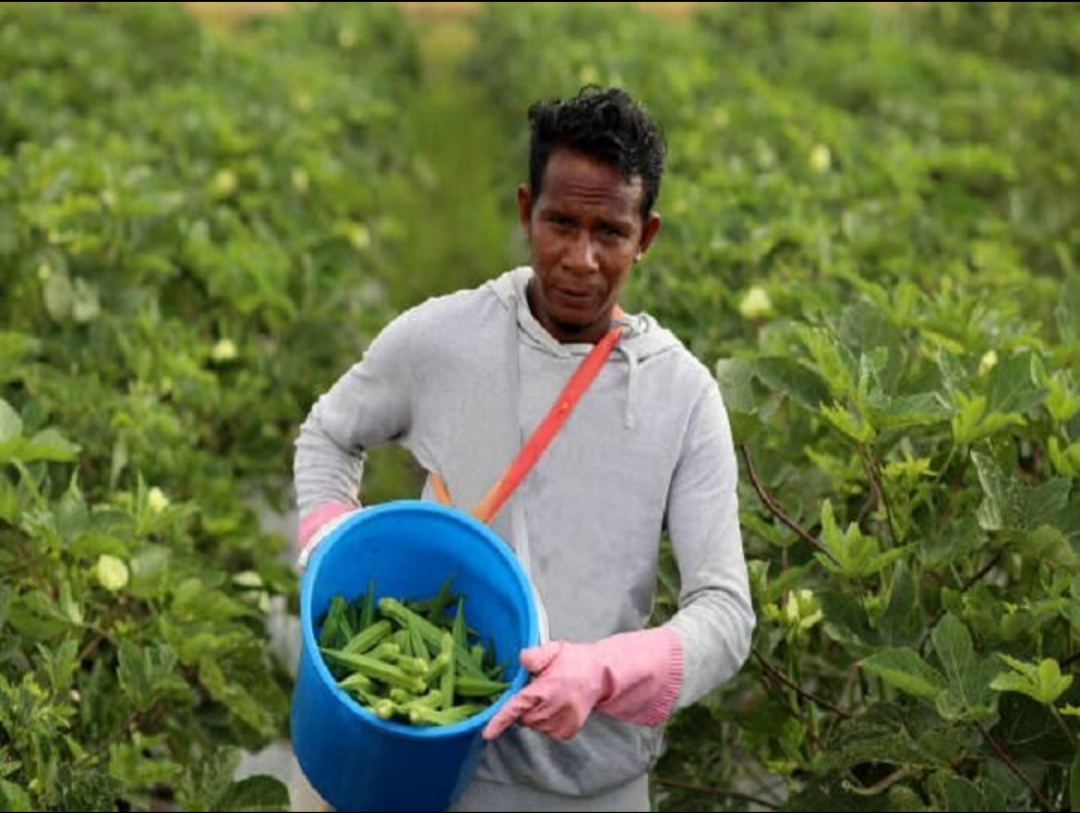
Does your family trace its story to Chandragupta Maurya, to the Shakyas of Kapilavastu, or to generations of cultivators on the Ganga plain? Your DNA can add a new chapter to the family story.
Sub-groups and Related Communities
The Maurya umbrella brings together several regionally named groups that historically married mostly within their own sub-group. Boundaries are loosening, but these names still matter for many families:
- Koeri — the main name in Bihar and eastern UP; historically famed for vegetable and poppy cultivation.
- Kushwaha — the reformist name adopted widely in Bihar, UP and MP; now often used interchangeably with Koeri and Maurya.
- Murao — cultivators of Awadh and central UP, well known as market gardeners supplying towns such as Lucknow and Kanpur.
- Kachhi — common in Bundelkhand, western UP and MP; the name is often linked to kachhar, riverside alluvial land.
- Shakya — concentrated in western UP districts such as Etah, Mainpuri and Badaun; emphasises descent from the Buddha’s clan.
- Saini — in parts of UP, Rajasthan and Haryana some Saini groups align with the Kushwaha–Maurya identity, while Punjab’s Sainis generally maintain a separate history.
Traditional sub-divisions such as Hardiya (turmeric growers), Kachhwaha, Dangi and Mali-linked groups appear in older ethnographies, and many families also keep gotra names that govern marriage rules.
Population Size
India has not published a full caste count since the 1931 Census, so precise numbers are hard to give. The clearest recent figure comes from the Bihar caste survey of 2023, which counted the Kushwaha (Koeri) community at about 4.2 per cent of the state’s population — roughly 55 lakh people. In Uttar Pradesh, no official caste figures exist; political parties and researchers commonly estimate the combined Maurya, Kushwaha, Shakya and Saini population at somewhere between 6 and 8 per cent of the state, which would be well over one crore people. Taken together with Madhya Pradesh, Jharkhand, Delhi and the Nepal Terai, the wider community likely numbers two crore or more, though all such estimates should be treated as approximate.
People and Physical Appearance
Like other Gangetic plain communities, Mauryas show a wide range of appearance. Skin tones range from wheatish to dark brown, hair is typically black and straight to wavy, and builds are often lean and sturdy, reflecting generations of field work. There is no single "Maurya look": a family in Lakhimpur Kheri may resemble their Kurmi or Yadav neighbours more than a Maurya family in Bihar. Physical traits are a poor guide to ancestry in North India, which is why genetic testing tells a more reliable story.
Language
Mauryas speak the language of their region rather than a distinct community dialect. In Awadh, this is Awadhi; in Purvanchal and western Bihar, Bhojpuri; in eastern Bihar, Magahi or Maithili; in Bundelkhand, Bundeli; and in western UP, Braj and Kannauji. Standard Hindi is the language of school, work and formal life, and many younger, urban Mauryas also use English. Rich agricultural vocabulary for soils, seasons, crops and irrigation survives in the speech of older farmers.
Religion and Belief
Most Mauryas are Hindus, following the village Hinduism of the Gangetic plain: worship of Shiva, Rama and Hanuman, Devi shrines, local village deities (dih or gram devta), ancestor rites and seasonal festivals. Holi, Diwali, Chhath (particularly in Bihar and eastern UP), Nag Panchami, Teej and harvest festivals are widely observed. Many families honour Kushwaha and Maurya heroes in community gatherings, and Samrat Ashok Jayanti and celebrations of Chandragupta Maurya have become important community events in recent decades.
A significant and growing minority, especially in western and central UP, identify with Buddhism, connecting their Shakya and Maurya heritage to Emperor Ashoka and to Ambedkarite thought. Kabirpanthi and Raidasi devotional traditions also have followers in some areas.
Customs, Family Life and Marriage
Maurya families have traditionally lived in joint households built around shared land, with authority resting with elders. Marriage is generally arranged within the community, following gotra exogamy — partners must come from different gotras, and often families avoid marriage into the mother’s and grandmother’s lineages as well. Wedding customs follow the regional pattern: tilak, haldi, matkor (the ritual digging of earth by women), baraat, dwarpuja, phere and vidaai, accompanied by folk songs (geet) sung by women of the household. In Bhojpuri and Awadhi areas, the songs of sohar at childbirth and gaari (playful teasing songs) at weddings remain popular.
Community panchayats once settled disputes and enforced social rules; today caste associations, Maurya and Kushwaha mahasabhas, hostels and student organisations play a bigger role, especially in supporting education.
Small cultural things
- The kitchen garden: even in towns, Maurya households are famous for squeezing vegetables onto every patch of land — a living link to their market-gardening past.
- Sabzi mandi networks: in many North Indian towns, vegetable wholesale and retail trade has long had strong Maurya and Kushwaha participation.
- Ashoka symbolism: the Ashoka chakra, lion capital and Buddhist imagery often appear in community calendars, wedding cards and association banners.
- Surnames: common surnames include Maurya, Kushwaha, Koeri, Shakya, Saini, Mehta (in parts of Bihar), Bhagat, Singh and Prasad.
Traditional Dress
Everyday dress follows the regional rural pattern. Older men wear the dhoti and kurta or bandi, with a gamchha (cotton towel) slung over the shoulder or tied around the head in the fields; in winter, a shawl or khes. Women wear the saree, typically in the seedha pallu (front-draped) or regional styles, with sindoor, bangles, payal and bichhiya marking married status. At weddings, brides wear red or yellow saris or lehengas, and the haldi-dyed piyari sari is customary in Bhojpuri and Awadhi areas. Younger people in cities dress in contemporary Indian and Western clothes.
Cuisine
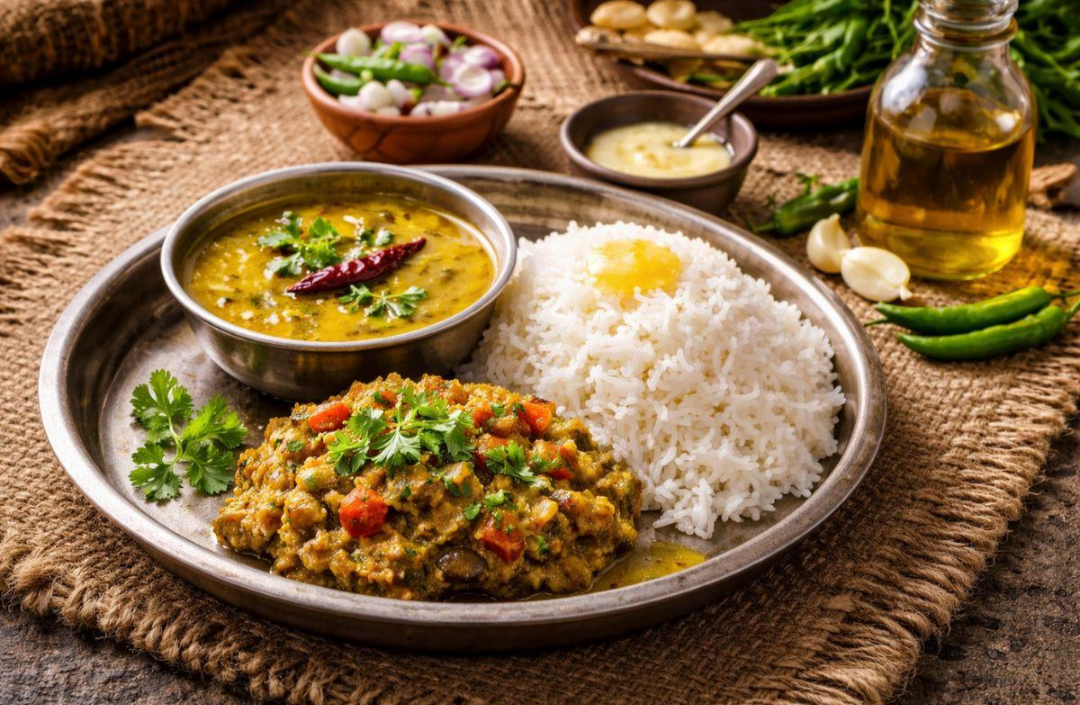
Maurya food is the food of a farming household that grows its own vegetables: simple, seasonal and largely vegetarian, though many families eat meat and fish occasionally. Dishes include:
- Dal-bhat-chokha: lentils, rice and smoky mashed brinjal, potato or tomato — the staple of eastern UP and Bihar.
- Litti-chokha: roasted wheat balls stuffed with sattu, served with chokha and ghee.
- Seasonal sabzis: lauki, tori, kaddu, parwal, bhindi and saag of mustard, bathua and chana, cooked with mustard oil and simple spices.
- Sattu: roasted gram flour, drunk as a summer cooler or eaten with onion, chilli and salt.
- Khichdi on Makar Sankranti: along with til ke laddoo and gur.
- Festive foods: puri-sabzi, kheer, dahi-bada, thekua (especially at Chhath), gujiya at Holi, and rasaj or fara in Bhojpuri households.
Occupations: From Fields to Professions
Farming remains the backbone of the community. Mauryas are known for intensive cultivation of vegetables, potatoes, onions, garlic, sugarcane and, increasingly, fruits and flowers for urban markets. Many families combine farming with vegetable trade, dairy and small businesses. Since Independence, education and reservation have opened new paths: Mauryas today work as teachers, government employees, police and army personnel, doctors, engineers, lawyers and civil servants. Migration to Delhi, Mumbai, Surat, Punjab and the Gulf for work is also common.
Diaspora
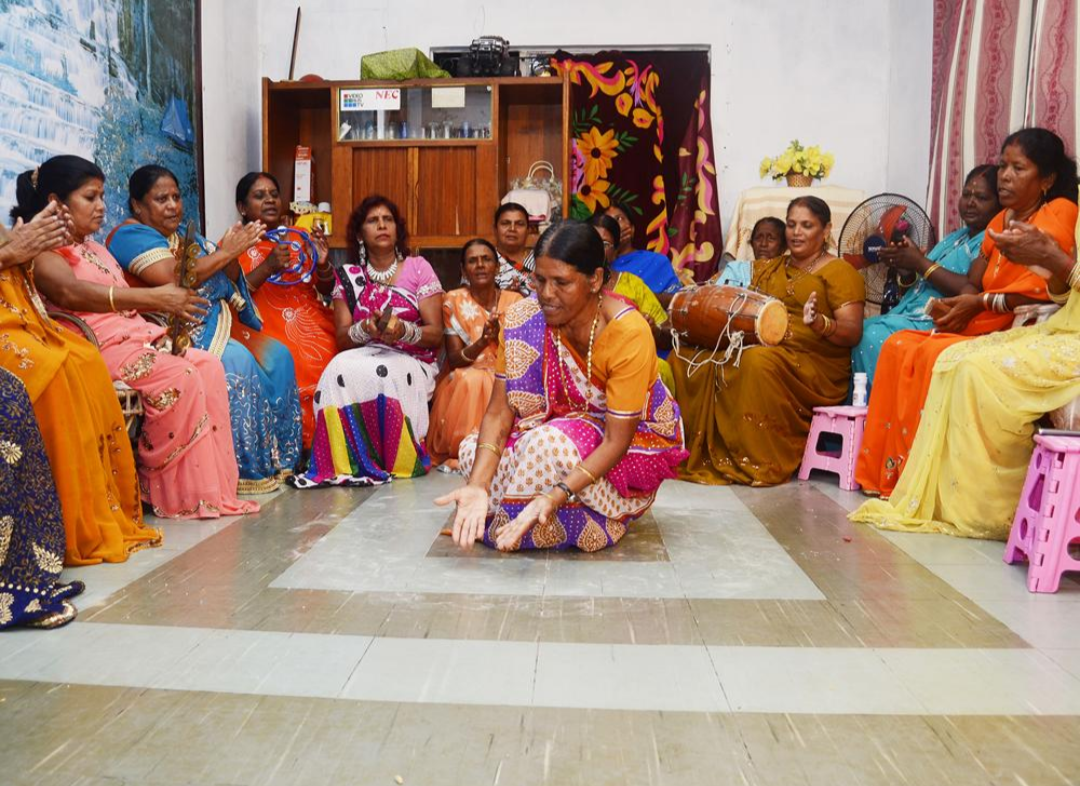
The most remarkable chapter of Maurya migration began in the nineteenth century, when Koeri, Murao and Kachhi labourers from eastern UP and Bihar were recruited as indentured workers (girmitiyas) to the sugar colonies. Their descendants now form part of the Indian-origin populations of Mauritius, Fiji, Trinidad and Tobago, Guyana, Suriname and South Africa. In Mauritius in particular, descendants of Koeri cultivators are an important part of the Bhojpuri-speaking Hindu population. More recent migrants live in the Gulf countries, the United Kingdom, the United States, Canada and Australia, mostly as professionals and skilled workers.
Prominent People
The community has produced many leaders, especially in public life:
- Keshav Prasad Maurya — Deputy Chief Minister of Uttar Pradesh and former state president of the BJP.
- Swami Prasad Maurya — veteran UP politician and former cabinet minister, associated with social-justice politics.
- Baby Rani Maurya — former Governor of Uttarakhand and UP cabinet minister.
- Upendra Kushwaha — former Union Minister of State and founder of the Rashtriya Lok Morcha in Bihar.
- Samrat Choudhary — senior Bihar BJP leader and Deputy Chief Minister of Bihar.
- Jagdeo Prasad — Bihar socialist leader (1922–1974), remembered as "Bihar Lenin" and a champion of backward-class rights.
The Genetic Story of the Mauryas
Indians who take a DNA test usually want answers to three questions: how much of their ancestry comes from the three deep sources of South Asian populations, what their paternal and maternal haplogroups are, and which communities they are most closely related to. For the Mauryas, published research gives only partial answers. Most population-genetics studies have sampled broad groups — "UP OBC", "Bihar middle castes" — rather than named communities like Maurya, Kushwaha or Koeri. What follows is a summary of what can reasonably be expected from regional studies, and where GenoConnect’s community feature can fill the gap.
AASI, Indus Periphery and Steppe ancestry
Modern South Asians are understood to descend from a mixture of three ancient sources: Ancient Ancestral South Indians (AASI), the original hunter-gatherers of the subcontinent; an Iranian-related farmer population associated with the Indus Valley (often called Indus Periphery or "Indus farmer"); and Steppe pastoralists who arrived in the second millennium BCE. Earlier studies summarised this as a mix of ANI (Ancestral North Indian) and ASI (Ancestral South Indian).
Agricultural middle castes of the Gangetic plain typically fall between upper castes and Scheduled Castes of the same region on these measures. The table below gives indicative regional ranges for such groups; it is not a measured profile of the Maurya community.
| Ancestry component | Indicative range for Gangetic middle castes | What it means |
|---|---|---|
| AASI | ~30–40% | Deep indigenous South Asian ancestry |
| Indus Periphery / Iranian farmer | ~40–50% | Ancestry from early farming populations of the northwest |
| Steppe | ~10–18% | Bronze Age pastoralist ancestry, higher in the northwest and among some upper castes |
Haplogroups: paternal and maternal lines
For Y-chromosome (paternal) lineages, North Indian cultivating castes commonly carry R1a-Z93 (linked to Steppe-related ancestry), H1a (an old South Asian lineage), L1 and J2 (associated with western, Indus-related ancestry), with smaller amounts of R2, O-M95 and others, especially toward eastern Bihar and the Terai. For mitochondrial (maternal) lineages, the picture is dominated by South Asia–specific branches of haplogroup M (such as M3, M4, M5, M30 and M2) together with R-derived lineages like U2, R5 and W/H in smaller proportions. As in most Indian communities, maternal lines are more deeply indigenous than paternal lines, reflecting old patterns of marriage and migration.
| Lineage | Likely common haplogroups | Notes |
|---|---|---|
| Y-DNA (paternal) | R1a-Z93, H1a, L1, J2, R2 | Frequencies vary by district and sub-group |
| mtDNA (maternal) | M3, M4, M30, M5, U2, R5 | Mostly South Asian-origin lineages |
Closest genetic neighbours
Given shared geography, occupation and marriage patterns, Mauryas are most likely to cluster genetically with other agricultural OBC communities of the same region — Kurmis, Yadavs, Lodhs, Kahars and Telis — and to show regional differences between Awadh, Purvanchal, Bundelkhand and Bihar groups. An interesting open question is how closely the Koeri, Kachhi, Murao and Shakya sub-groups, which married separately for centuries, resemble each other genetically, and whether Mauritian and Fijian descendants still match their ancestral districts.
Help Write the Maurya Genetic Story
No study has yet mapped the ancestry of the Maurya community directly. Every member who tests helps build the first real community-level picture of AASI, Indus and Steppe ancestry, haplogroups and relatedness.
Conclusion
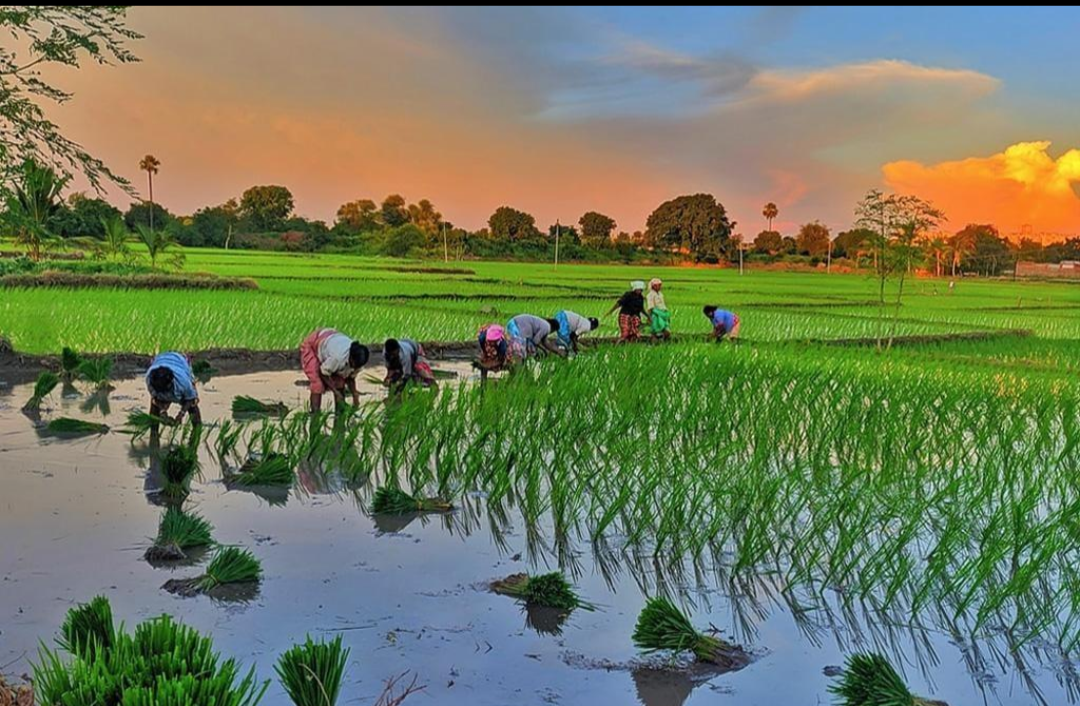
The Mauryas are a people of the Ganga plain: cultivators whose skill turned small plots into productive gardens, who carried their labour across oceans as girmitiyas, and who in the twentieth century reclaimed a proud past by tying their name to one of India’s greatest empires. From Lucknow’s vegetable markets to Mauritian cane fields and the corridors of state politics, the community has travelled far. Yet many questions about its deeper ancestry remain unanswered, and it is the community’s own members who are best placed to answer them.
Frequently Asked Questions
Q. Are Maurya, Kushwaha and Koeri the same community?
They are closely related groups that now largely share a common identity. Koeri is the older name in Bihar and eastern UP, Kushwaha the reformist name adopted widely in the twentieth century, and Maurya a surname and identity especially common in Uttar Pradesh. Some families still marry only within their own sub-group.
Q. Are Mauryas descendants of Chandragupta Maurya?
This is a strong community tradition and an important part of modern Maurya identity, but there is no historical or genetic evidence that proves a direct link to the ancient dynasty.
Q. Which caste category are Mauryas in?
The community is listed among Other Backward Classes in Uttar Pradesh, Bihar and several other states. Readers should check the current state and central lists for specific sub-groups.
Q. Where do most Mauryas live?
Mainly in eastern and central Uttar Pradesh and in Bihar, with significant populations in Madhya Pradesh, Jharkhand, Delhi, Uttarakhand and the Nepal Terai.
Q. What is the traditional occupation of the Mauryas?
Skilled cultivation — especially vegetables, poppy, indigo and other cash crops. Today the community works across farming, trade, government service and the professions.
Q. Are Mauryas Hindu or Buddhist?
Most are Hindu, but a growing number, particularly among Shakya and Maurya families in UP, follow Buddhism.
Q. What are common Maurya surnames?
Q. Are there Mauryas outside India?
Yes. Descendants of indentured labourers live in Mauritius, Fiji, Trinidad, Guyana, Suriname and South Africa, and newer migrants live in the Gulf, UK, USA, Canada and Australia.
Q. What is the genetic makeup of the Maurya community?
There are no published studies specifically on Mauryas. Regional data suggest a mix of AASI, Indus Periphery and Steppe ancestry typical of Gangetic agricultural communities. GenoConnect is building the first community-level picture through member testing.
Q. Which communities are Mauryas genetically closest to?
Q. How can I learn more about my own Maurya ancestry?
Taking a DNA test with GenoConnect can reveal your ancestry components, paternal and maternal haplogroups, and relatives, while also contributing to a better understanding of the whole community.
References
- [1]1. Wikipedia. "Koeri." https://en.wikipedia.org/wiki/Koeri
- [2]2. Wikipedia. "Kushwaha." https://en.wikipedia.org/wiki/Kushwaha
- [3]3. Wikipedia. "Maurya Empire." https://en.wikipedia.org/wiki/Maurya_Empire
- [4]4. Government of Bihar. Bihar Caste-Based Survey Report, 2023.
- [5]5. Risley, H. H. The Tribes and Castes of Bengal. Calcutta, 1891.
- [6]6. Crooke, W. The Tribes and Castes of the North-Western Provinces and Oudh. Calcutta, 1896.
- [7]7. Pinch, W. R. Peasants and Monks in British India. University of California Press, 1996.
- [8]8. Jaffrelot, C. India’s Silent Revolution: The Rise of the Low Castes in North Indian Politics. Permanent Black, 2003.
- [9]9. Reich, D. et al. "Reconstructing Indian Population History." Nature 461 (2009).
- [10]10. Narasimhan, V. M. et al. "The Formation of Human Populations in South and Central Asia." Science 365 (2019).
- [11]11. Lal, B. V. (ed.) The Encyclopedia of the Indian Diaspora. Didier Millet, 2006.