

Yadav Community
Trace your Yadav community roots! Uncover the history, culture, genetics, and identity of this prominent North Indian pastoral-peasant group
The Yadav Community of India
History, Culture, Genetics, and Identity of a North Indian Pastoral-Peasant Community
1. Introduction: Who Are the Yadavs?
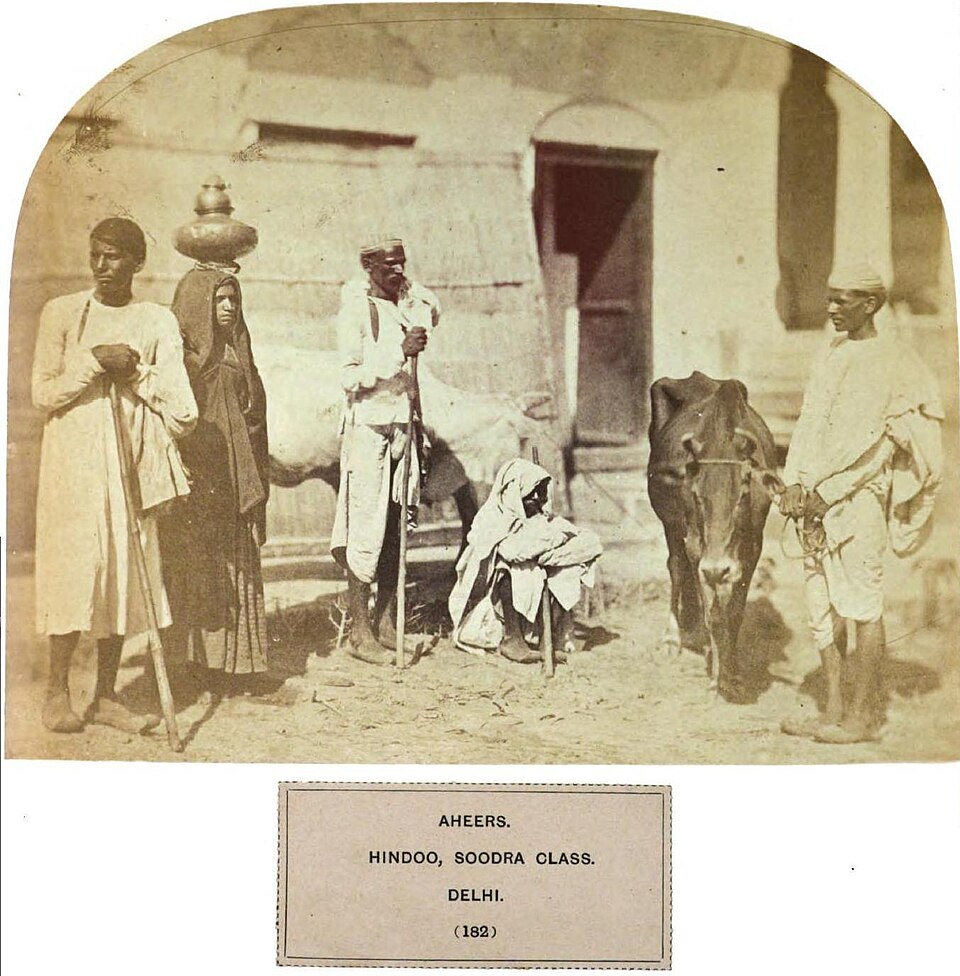
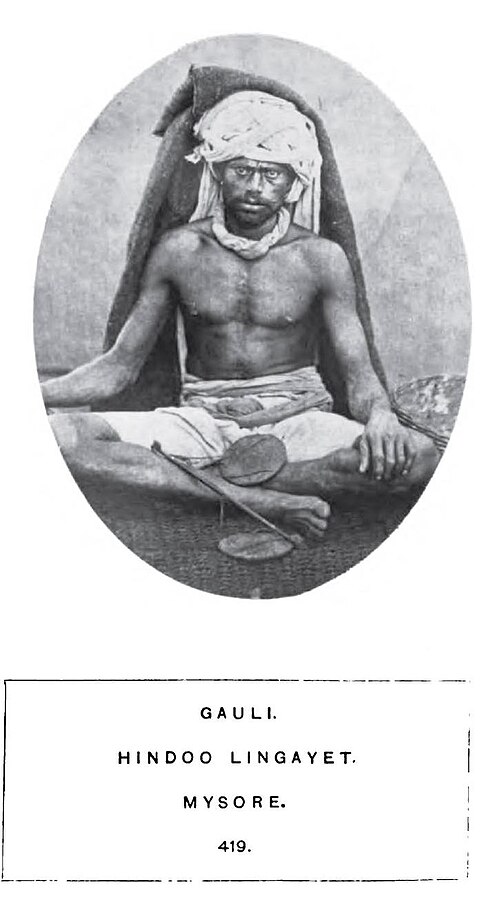
The Yadavs are one of the largest and most widely distributed communities in northern and central India, with significant populations also found in Nepal and in the global Indian diaspora. Rather than a single, uniform caste, "Yadav" is best understood today as an umbrella identity that brings together a cluster of historically pastoral and agrarian communities — most prominently the Ahir of the Hindi-speaking belt, the Gopa and Gwala of the Gangetic plains, the Golla of Andhra Pradesh and Karnataka, and the Gavli of Maharashtra — under a shared name and a shared claim of descent from the legendary king Yadu and, through him, from the god Krishna.
Concentrated most heavily in Uttar Pradesh, Bihar, Haryana, Rajasthan, and the Madhesh region of southern Nepal, with substantial communities across Madhya Pradesh, Maharashtra, Andhra Pradesh, Telangana, Odisha, and West Bengal, Yadavs today number in the tens of millions, making them one of India's most numerically significant communal groups. This profile traces the community's traditional and mythological origins, its historical development from a scattered set of regional pastoral castes into a unified pan-Indian identity, the population-genetics evidence relevant to its ancestry, and the customs, cuisine, dress, and folk culture that continue to define Yadav identity today.
2. Origins and Early History
2.1 Mythological and Puranic Origins: Yadu, Krishna, and the Yadava Dynasties
Yadav communities trace their name and their sense of shared identity to Yadu, a legendary king of the lunar (Chandravanshi) dynasty described in the Puranas and the Mahabharata as an ancestor of Krishna. The term "Yadava" — meaning "descendant of Yadu" — appears in ancient Sanskrit literature in reference to a confederation of clans, including the Vrishni, Andhaka, and Satvata, who are described as having worshipped Krishna and inhabited the region around Mathura and Dwarka in western and northern India.
Community tradition holds that Krishna himself — revered across Hindu India as a cowherd prince and as an incarnation of Vishnu — was born into this Yadava lineage, and it is this association that gives the modern Yadav identity its central religious and cultural anchor. Krishna's own upbringing among the cowherding families of Gokul and Vrindavan, and his epithets as Gopala ("protector of cows") and Govinda, are frequently cited by community members and scholars alike as the symbolic and devotional basis for the group's enduring identification with cattle-keeping and pastoral life.
2.2 The Abhira Connection in Classical and Medieval Records
Historians researching the deeper background of the Yadav communities have pointed to the Abhira, a pastoral people mentioned in classical Sanskrit texts, inscriptions, and the works of the Greek geographer Ptolemy, as plausible ancient forebears of today's Ahir communities, given the close linguistic relationship between the names "Abhira" and "Ahir." Several ruling dynasties in the Deccan and western India between roughly the 3rd and 6th centuries CE, including regional Abhira rulers attested in inscriptions, have been cited by scholars such as P. M. Chandorkar as further evidence of an early historical pastoral aristocracy from which the community's later self-image partly draws.
Across the medieval period, the region's cattle-keeping communities — known by different regional names such as Ahir, Gopa, Gwala, Golla, and Gavli — continued their traditional association with cattle husbandry, dairying, and, over time, increasingly with settled agriculture, while retaining strong devotional ties to Krishna worship (Vaishnavism) that would later become central to the unified Yadav identity.
2.3 The Nineteenth and Twentieth Century Yadav Identity Movement
The modern, pan-Indian "Yadav" identity as it exists today took shape primarily from the late nineteenth century onward, when leaders and intellectuals from the community's various regional branches worked to bring the Ahir, Gopa, Gwala, Golla, and Gavli communities together under the common name and common history of Yadu-vanshi ("of the lineage of Yadu") descent. A landmark moment in this process was the founding of the Ahir Yadav Kshatriya Mahasabha in 1910 by Rao Bahadur Balbir Singh, followed by the founding of the All India Yadav Mahasabha at Allahabad in 1924, which brought together local associations from Bihar, Punjab, and the United Provinces (present-day Uttar Pradesh).
Historian Vithal Krishnaji Khedkar, and later his son Raghunath Vithal Khedkar, produced influential early community histories connecting the modern Yadavs to the ancient Abhira and to the Yadava dynasties of the Puranas, work that was subsequently built upon by later community historians including K. C. Yadav. The twentieth-century movement also promoted education, self-organization, temperance, and expanded participation in the armed forces and public life, and the community subsequently became a significant and organized presence in the politics of Uttar Pradesh, Bihar, and Haryana from the mid-twentieth century onward, a development the anthropologist Lucia Michelutti has described using the term "Yadavisation" — the process by which many regionally distinct pastoral communities came to identify collectively as Yadav.
3. Constituent Communities and Regional Names
Because the Yadav identity draws together communities that developed independently across different regions of the subcontinent, the group is known by a range of regional names, most of which continue to be used alongside or interchangeably with "Yadav":
| Regional Name | Primary Region | Traditional Association |
|---|---|---|
| Ahir | Uttar Pradesh, Bihar, Haryana, Rajasthan, Madhya Pradesh, Gujarat, Punjab | Cattle-keeping, dairying, and cultivation |
| Gopa / Gwala | Gangetic plains, Bihar, eastern Uttar Pradesh | Cowherding and milk trade |
| Golla | Andhra Pradesh, Telangana, Karnataka | Herding, particularly sheep and cattle |
| Gavli | Maharashtra | Dairying and milk supply |
| Rathore Yadav / Ghosi | Rajasthan and parts of North India | Herding and milk trade, with a distinct regional identity |
These groups share the common folk-theory of descent from the Yadu lineage and a strong devotional orientation toward Krishna, which together provide the unifying thread of the pan-Indian Yadav identity, even as customs, dialects, and specific local traditions continue to vary considerably by region.
4. Genetics and DNA Ancestry
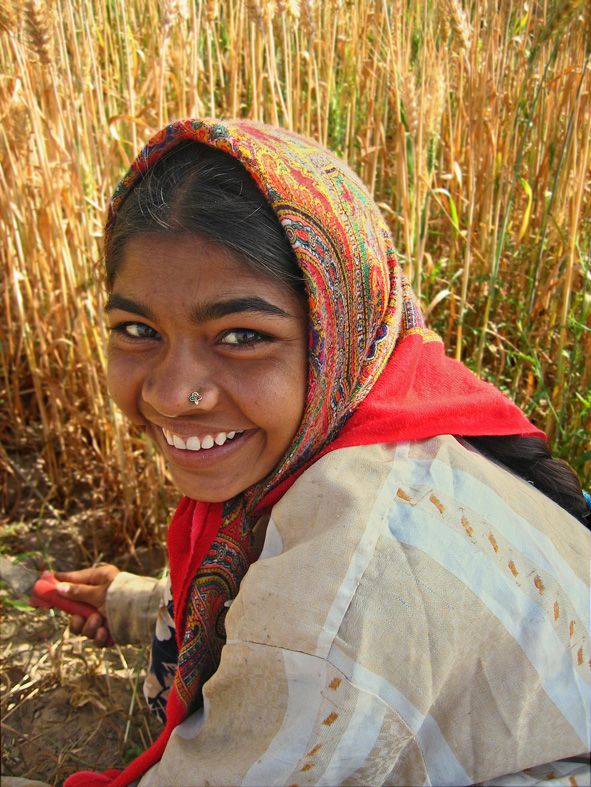
Population-genetic research on Yadav and closely related Ahir populations remains more limited than for some other well-studied Indian communities, but the available studies offer useful insight into the community's deep ancestry and its place within the broader genetic landscape of North India.
4.1 Paternal (Y-DNA) Lineages
Broader Y-chromosome surveys of North Indian populations — the region in which most Yadav and Ahir communities are concentrated — have generally found a mixture of haplogroups reflecting the subcontinent's long and layered demographic history, including haplogroup R1a1 (associated with Indo-Aryan-speaking populations across North India), H (linked to the region's deep indigenous ancestry), and smaller contributions from J2, L, and other lineages found widely across South Asia. Because the Yadav/Ahir community as such has not been the subject of a large, dedicated, published Y-DNA survey, its precise paternal haplogroup profile is best understood as broadly consistent with other agrarian and pastoral castes of the same North Indian regions, rather than as sharply genetically distinct from its neighbors.
4.2 Maternal (mtDNA) Lineages
One of the few population-genetics studies to focus specifically on a Yadav population examined mitochondrial DNA (mtDNA) hypervariable region sequences among the Yadav community of Haryana. This research, aimed at both forensic and anthropological applications, classified the community's maternal lineages into the haplogroups typically found across Indian populations, dominated by South Asian macro-haplogroup M and its subclades, reflecting deep continuity with the maternal ancestry of the wider regional population rather than any distinct or unusual maternal signal.
4.3 Autosomal Ancestry
At the genome-wide (autosomal) level, North Indian agrarian and pastoral castes, including Yadav/Ahir populations, are generally understood by population geneticists to reflect a blend of the two principal ancestral components identified across South Asia: an "Ancestral North Indian" (ANI) component related to West and Central Eurasian populations, and an "Ancestral South Indian" (ASI) component representing the subcontinent's deeper indigenous lineage. Community-level proportions of these two components vary regionally and have not been comprehensively published for Yadav populations specifically, so individual DNA-testing results for community members are best interpreted alongside their specific region of family origin rather than as representing a single, uniform "Yadav" genetic signature.
4.4 Genetic Diversity and Regional Considerations
Because the various Yadav-identifying communities historically developed as regionally distinct, largely endogamous castes before consolidating under a shared pan-Indian identity in the twentieth century, genetic studies suggest that a family's specific regional and sub-group background (for example, Ahir versus Golla versus Gavli) is likely to be at least as informative for ancestry interpretation as the broader Yadav label itself. As with most Indian communities that have practiced long-term group endogamy, carrier screening and awareness of family genetic history can be a useful part of reproductive health planning.
This section summarizes findings from published population-genetics and forensic-genetics literature; ancestry estimates vary by study, sample size, and reference panel, and individual results from consumer DNA testing may differ from community-level averages.
5. Geographic Distribution in India and Nepal
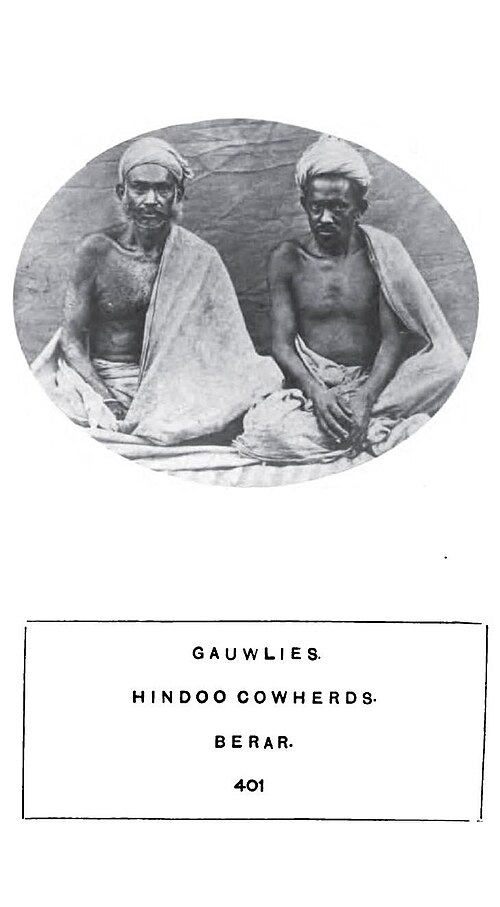
Yadav communities are most heavily concentrated in Uttar Pradesh, Bihar, and Haryana, where they represent one of the largest single communities in the rural population, and are also numerous in Rajasthan, Madhya Pradesh, Delhi, and Punjab. Regional branches of the community are well established further south and east as well, including the Golla in Andhra Pradesh, Telangana, and Karnataka, and the Gavli of Maharashtra, along with smaller populations in Odisha and West Bengal.
In Nepal, Yadavs form a significant part of the Madhesh Province population in the country's southern Terai plains bordering Bihar and Uttar Pradesh, where they are recognized as a distinct group within the broader Madheshi social category and maintain close linguistic and cultural ties with Yadav communities across the border in North India.
6. Language
Yadav communities speak the major regional languages and dialects of the areas in which they live, reflecting the group's wide geographic spread rather than a single distinct community language. In the Hindi belt this includes Hindi and its regional dialects such as Bhojpuri, Awadhi, Maithili, Braj Bhasha, and Haryanvi; in Rajasthan, Rajasthani dialects; in Nepal's Terai region, Maithili and Bhojpuri; and in southern India, Telugu, Kannada, and Marathi among the Golla and Gavli communities respectively. Braj Bhasha in particular carries special cultural significance for the community given its historical association with the Krishna devotional (bhakti) literary tradition centered on Mathura and Vrindavan, the legendary heartland of Krishna's cowherding youth.
7. Religion and Krishna Devotion
The great majority of Yadav community members are Hindu, and the community's religious life is centered distinctively on Vaishnavism and, in particular, on devotion to Krishna as both a divine figure and a claimed ancestral progenitor. Pilgrimage to Mathura and Vrindavan, the traditional sites of Krishna's birth and childhood, carries special resonance for the community, and Krishna-centered festivals occupy a central place in the community's ritual calendar.
Cow veneration, consistent with wider Hindu practice but carrying additional significance for a community with a historical pastoral identity, is widely observed, and Govardhan Puja — the worship of cattle and of Govardhan Hill, linked to a well-known episode in Krishna's mythology — is a particularly important community festival across North India.
8. Culture, Customs, and Social Life
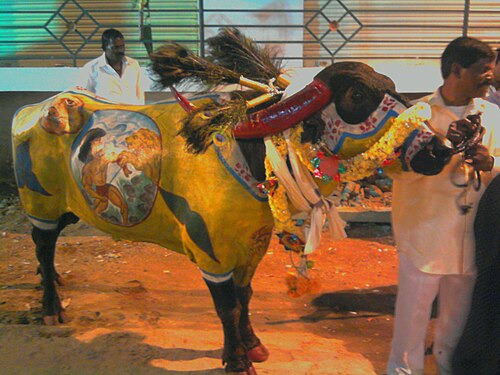
Historically organized around village-based extended families and clan (gotra) affiliations, Yadav social life traditionally centered on cattle-rearing households and agricultural village communities, with a village panchayat (council) customarily responsible for resolving community disputes and coordinating collective decisions. Kinship and clan ties remain socially significant, particularly in matters of marriage, and community gatherings, fairs, and religious festivals continue to serve as important occasions for reinforcing these bonds.
Hospitality, respect for elders, and strong extended-family ties are widely emphasized community values, and rites of passage — birth ceremonies, naming ceremonies, and coming-of-age observances — are typically conducted according to standard North Indian Hindu ritual practice, often incorporating regional folk customs and devotional songs specific to the locality.
9. Marriage and Wedding Traditions
Yadav weddings, particularly in North India, follow the broad structure of a traditional Hindu wedding, unfolding across several days of pre-wedding, wedding-day, and post-wedding ceremonies, richly accompanied by regional folk music and dance:
- Roka and Sagai — the formal engagement ceremony marking the conclusion of the matchmaking process, during which families exchange gifts and sweets.
- Haldi and Mehendi — pre-wedding ceremonies in which turmeric paste is applied to the bride and groom for ritual purification, followed by the application of henna to the bride's hands and feet, both occasions accompanied by singing and dancing among family and friends.
- Sangeet — an evening of music and dance celebrating the upcoming union, a occasion for extended family, especially women, to perform traditional folk songs.
- The wedding ceremony (vivah) itself, conducted around the sacred fire (agni) according to Vedic Hindu ritual, including the saptapadi (seven ceremonial steps) that formalize the marriage.
- Vidaai — the emotionally significant farewell ceremony in which the bride departs her natal home for her husband's family, typically the most poignant moment of the entire wedding.
In Haryana specifically, Ahir/Yadav weddings share the broader Haryanvi tradition of extensive folk-song accompaniment — including Khoria, Sati, and Vidaai songs — performed by women throughout the wedding process, a practice that functions as an important form of oral cultural transmission alongside its ceremonial role.
10. Cuisine
Reflecting the community's historical association with dairying, milk and milk-based foods occupy a central place in Yadav culinary tradition across most regions:
- Dairy staples — fresh milk, ghee (clarified butter), curd (dahi), buttermilk (chaach), and paneer, historically produced and sold by many Yadav/Ahir households as part of the traditional dairy economy.
- Khoya- and milk-based sweets, including varieties of barfi, peda, and rabri, often prepared for festivals and family celebrations.
- Regional staple grain dishes — including wheat-based rotis and parathas in North India, and rice-based dishes among Golla communities of the Deccan and South India — form the everyday backbone of the diet, generally prepared vegetarian or with regional non-vegetarian dishes depending on local and family practice.
- Seasonal and festival foods tied to the agricultural and pastoral calendar, such as sweets and dairy preparations offered during Govardhan Puja and Krishna Janmashtami in honor of Krishna's fondness for milk and butter.
Cuisine otherwise closely follows the regional patterns of the state in which a given Yadav family lives, from Bihari and Awadhi cooking in the Hindi belt to Andhra and Telangana cuisine among Golla communities in the south.
11. Traditional Dress and Ornaments
Traditional Yadav/Ahir dress varies considerably by region but shares a general North and Central Indian rural aesthetic, with some regionally distinctive elements:
- In Gujarat and parts of Rajasthan, Ahir women are known for distinctive, brightly colored embroidered garments — including the kamkho (blouse) and ghagharo (skirt) — decorated with dense mirror-work and vivid thread embroidery, worn especially for festivals such as Janmashtami.
- In North India more broadly, traditional women's dress has historically included the ghagra-choli or, in later periods, the sari, often paired with silver or gold jewelry including bangles, nose rings, and anklets.
- Traditional male dress in rural North India historically included a dhoti or pyjama with a kurta, and a turban (pagri) for formal and ceremonial occasions, a style broadly shared with other agrarian communities of the region.
- Wedding attire for Ahir grooms in some regions has traditionally included a distinctive jacket (mushroo) and an ornamented wedding hat.
As with most Indian communities, everyday dress today has largely converged with mainstream regional and pan-Indian fashion, with traditional attire retained mainly for weddings, festivals, and cultural performances.
12. Folk Music, Dance, and Oral Tradition
The Ahir/Yadav community of North India, particularly Uttar Pradesh, is closely associated with Birha, a distinctive genre of folk song traditionally sung by travelers and agricultural laborers to lighten the burden of long journeys and physical labor, characterized by its poetic, often improvisational verses on themes of separation, valor, and devotion. Ahir folk dance, sometimes called Ahir Nritya or Abhira Nritya, is performed at community fairs, weddings, and festival occasions to the rhythm of the dholak (drum) and manjira (cymbals), and is recognized as one of the traditional folk dances of Uttar Pradesh.
Community festivals such as Krishna Janmashtami are marked by dramatic and musical performances of episodes from Krishna's life (Krishna Leela or Raas Leela), performed by children and young people in many villages, functioning both as devotional practice and as a vehicle for passing down community values and stories across generations.
13. Traditional Occupations and Economic Life
The community's traditional and best-known historical occupation was cattle-rearing, dairying, and the sale of milk and milk products, an association reflected in the very names by which its constituent groups are known across India (Ahir, Gopa, Gwala, Golla, and Gavli all carry cowherding or dairying connotations in their respective regional languages). Over the nineteenth and twentieth centuries, the community's economic base broadened considerably, with the majority of Yadav households across India today engaged primarily in agriculture and cultivation rather than pastoralism alone.
Employment in the armed forces and police has also been a long-standing occupational path for the community in North India, a tradition reinforced by notable service records, including that of Ahir soldiers recognized for their conduct during the 1962 Sino-Indian conflict in the Himalayas. In the twentieth century, community members increasingly diversified into transportation, construction, government service, education, and, more recently, business, medicine, engineering, and public administration.
14. Education and Contemporary Socioeconomic Profile
Investment in education became an increasingly prominent community priority from the early twentieth century onward, promoted actively by organizations such as the All India Yadav Mahasabha, which supported the establishment of schools, scholarships, and community institutions. This emphasis has continued into the present day, with Yadav community members represented across the professions, including medicine, engineering, law, academia, government service, and business, alongside continued strong participation in agriculture, dairying, and public life, particularly in Uttar Pradesh, Bihar, and Haryana.
15. Diaspora
Beyond India and Nepal, Yadav-identifying communities and individuals form part of the broader Indian diaspora across the Gulf Cooperation Council states, the United Kingdom, the United States, Canada, and other countries with significant populations of Indian origin, particularly from Uttar Pradesh and Bihar. In Mauritius and other historically indentured-labor destinations of the nineteenth and early twentieth centuries, descendants of Girmitiya (indentured) migrants from Yadav and allied communities form part of the wider Indo-Mauritian and broader Indian-origin population, maintaining cultural and religious ties, including Krishna devotional practice, alongside their host-country identity. Diaspora Yadav associations in several countries continue to organize cultural, religious, and community events, including celebrations of Janmashtami and community gatherings tied to Yadav Mahasabha-type organizations.
16. Prominent Figures
16.1 Historical, Religious, and Cultural Figures
- Rao Bahadur Balbir Singh — early twentieth-century community leader and founder of the Ahir Yadav Kshatriya Mahasabha (1910), a central figure in the modern Yadav identity movement.
- Vithal Krishnaji Khedkar and Raghunath Vithal Khedkar — pioneering community historians whose early scholarship connected the modern Yadav community to ancient Abhira and Yadava traditions.
- Rajendra Yadav — noted Hindi-language writer and a leading figure of the Nayi Kahani ("New Story") literary movement in modern Hindi fiction.
16.2 Politics and Public Life
- Mulayam Singh Yadav — former Chief Minister of Uttar Pradesh and former Union Defence Minister of India, among the most prominent Yadav political figures of the twentieth century.
- Akhilesh Yadav — former Chief Minister of Uttar Pradesh and national president of the Samajwadi Party.
- Chaudhary Brahm Prakash Yadav — freedom-movement participant and the first Chief Minister of Delhi.
- Ram Baran Yadav — first democratically elected President of Nepal, following the country's transition to a federal republic.
- Bhupender Yadav — Union Cabinet Minister in the Government of India.
- Rao Inderjit Singh — Union Minister and long-serving parliamentarian from Haryana.
16.3 Sports, Arts, and Other Fields
- Santosh Yadav — mountaineer and the first woman in the world to summit Mount Everest twice.
- Shivlal Yadav — former Indian Test cricketer and later Vice-President of the Board of Control for Cricket in India (BCCI).
- Narsingh Yadav — international wrestler and Commonwealth Games gold medalist.
- Dharmendra Yadav — boxer and Commonwealth medal winner.
This list is illustrative rather than exhaustive; the community has produced a large number of public figures, scholars, military personnel, athletes, and civic leaders across India, Nepal, and the diaspora.
17. Contemporary Reflections
Two broad themes stand out in scholarly discussion of Yadav community identity today. The first is the community's transformation over roughly a century from a set of regionally distinct, largely local pastoral castes — the Ahir, Gopa, Golla, and Gavli among others — into one of India's most cohesive and politically organized pan-Indian community identities, a process anthropologists have studied closely as a case of successful large-scale community consolidation around a shared name, shared mythology, and shared devotional tradition centered on Krishna.
The second is the ongoing balance the community navigates between its historical pastoral and agrarian roots and its increasingly diverse modern profile spanning agriculture, business, government, the armed forces, and the professions, a transition that mirrors similar generational shifts underway across many of India's traditionally rural communities as urbanization and access to education continue to reshape occupational patterns nationwide.
18. Conclusion
The Yadav community represents a striking example of how a shared devotional tradition — centered on the figure of Krishna and the legendary Yadu lineage — helped unify a set of regionally dispersed pastoral and agrarian communities into one of modern India's largest and most recognizable social groups. From the cattle-keeping Abhira of ancient inscriptions to the Ahir, Gopa, Golla, and Gavli of more recent centuries, and from the folk ballads of Birha to the devotional dramas of Janmashtami, the Yadav story combines deep historical roots, a rich regional folk culture, and a modern history of organized community identity-building that continues to shape the social and political landscape of North India, Nepal, and the wider Indian diaspora today.
References
- [1]1. Wikipedia. "Yadav." https://en.wikipedia.org/wiki/Yadav
- [2]2. Wikipedia. "Yadava." https://en.wikipedia.org/wiki/Yadava
- [3]3. Wikipedia. "Ahir." https://en.wikipedia.org/wiki/Ahir
- [4]4. Wikipedia. "Abhira tribe." https://en.wikipedia.org/wiki/Abhira_tribe
- [5]5. Wikipedia. "All-India Yadav Mahasabha." https://en.wikipedia.org/wiki/All-India_Yadav_Mahasabha
- [6]6. Wikipedia. "Ahir Yadav Kshatriya Mahasabha." https://en.wikipedia.org/wiki/Ahir_Yadav_Kshatriya_Mahasabha
- [7]7. Wikipedia. "Krishna Janmashtami." https://en.wikipedia.org/wiki/Krishna_Janmashtami
- [8]8. Wikipedia. "Yadavs of Nepal." https://en.wikipedia.org/wiki/Yadavs_of_Nepal
- [9]9. ScienceDirect / NCBI PMC. "Sequence polymorphism data of the hypervariable regions of mitochondrial DNA in the Yadav population of Haryana." https://www.ncbi.nlm.nih.gov/pmc/articles/PMC5996146/
- [10]10. Hindu Sanatan Vahini. "Ahir Community: Their Story of Social Contribution." https://hindusanatanvahini.com/en/ahir-community/
- [11]11. Google Arts & Culture / Hansiba Museum. "Ahir Styles." https://artsandculture.google.com/story/hansiba-museum-ahir-styles-sewa-hansiba-museum/XgURO3EJI1bGJQ
- [12]12. IndiaNetzone. "Ahir Dance." https://www.indianetzone.com/ahir_dance
- [13]13. AgriDots. "UP Regional Folk Dances: Complete List." https://agridots.com/courses/exam-upsssc-agta/up-general-knowledge/10-03-folk-dances-regional
- [14]14. Bhopal Orbit. "Ahiri Dance." https://bhopalorbit.com/music-and-dance/ahiri-dance/ahiri-dance.html
- [15]15. AZA Fashions. "Haryana Wedding Ceremonies: Traditions, Rituals & Cultural Guide." https://www.azafashions.com/blog/haryana-wedding-ceremonies-traditions-rituals-guide-2026/
- [16]16. Medium / weddingculture. "Understanding Yadav Wedding Customs." https://medium.com/@weddingculture/understanding-yadav-wedding-customs-96fff334f861
- [17]17. Incredible India (Government of India). "Janmashtami." https://www.incredibleindia.gov.in/en/festivals-and-events/janmashtami
- [18]18. Bharatpedia. "Yadav (surname)." https://en.bharatpedia.org/wiki/Yadav_(surname)
- [19]19. EverybodyWiki. "List of Yadav politicians." https://en.everybodywiki.com/List_of_Yadav_politicians
- [20]20. Yadav Trust. "Famous Yadavs." https://yadavtrust.wordpress.com/2015/12/20/famous-yadavas/