

CSI Community
Discover your Church of South India ancestry. Explore the CSI community's rich history, geography, and cultural heritage across Tamil Nadu, Kerala & more.
CHURCH OF SOUTH INDIA (CSI)
Geography, People, History, Culture and Ancestry of South India’s United Protestant Community
1. Introduction: Who Are the CSI Christians?
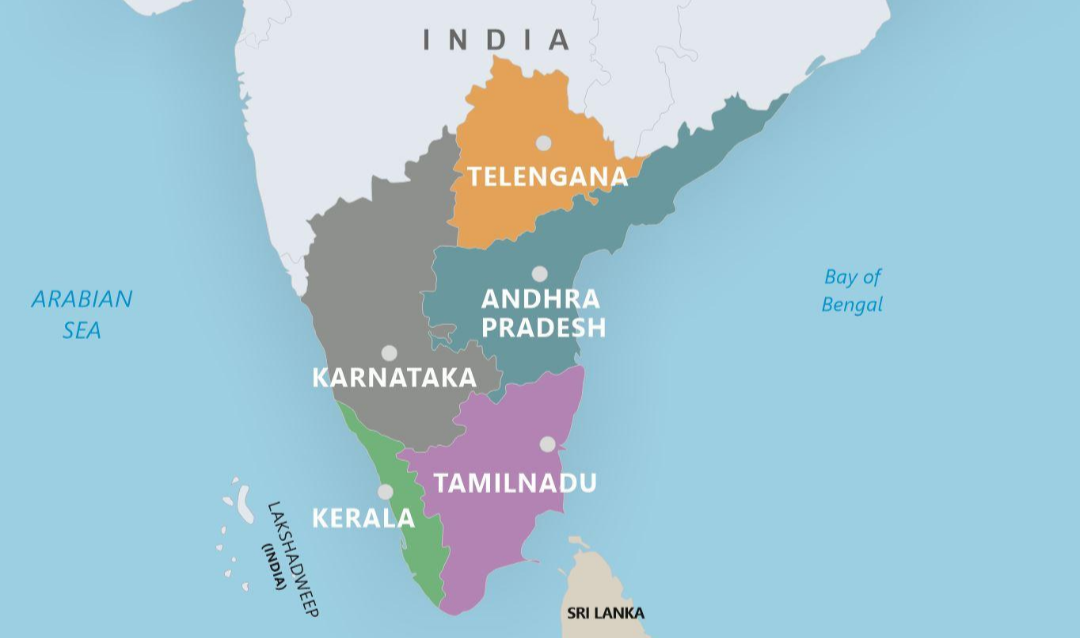
The Church of South India (CSI) is a united Protestant church formed in 1947. It is one of the largest Protestant churches in India. Across Tamil Nadu, Kerala, Karnataka, Andhra Pradesh and Telangana, and among Tamil Christians in northern Sri Lanka, "CSI" is also a social identity. Families describe themselves as "CSI people", marriages are often arranged within CSI circles, and the parish, the mission school and the mission hospital have shaped the life of whole villages and urban neighbourhoods for five or more generations.
This profile therefore treats the CSI community as a community tied to a geography. It means the Protestant Christian families of the southern Indian peninsula who belong to the dioceses of the Church of South India, together with their descendants at home and abroad. Its members are Tamil, Malayali, Telugu and Kannada speakers drawn from many caste and regional backgrounds, united less by a common origin than by a shared missionary history, a shared liturgy, and a shared institutional world of churches, schools, colleges and hospitals.
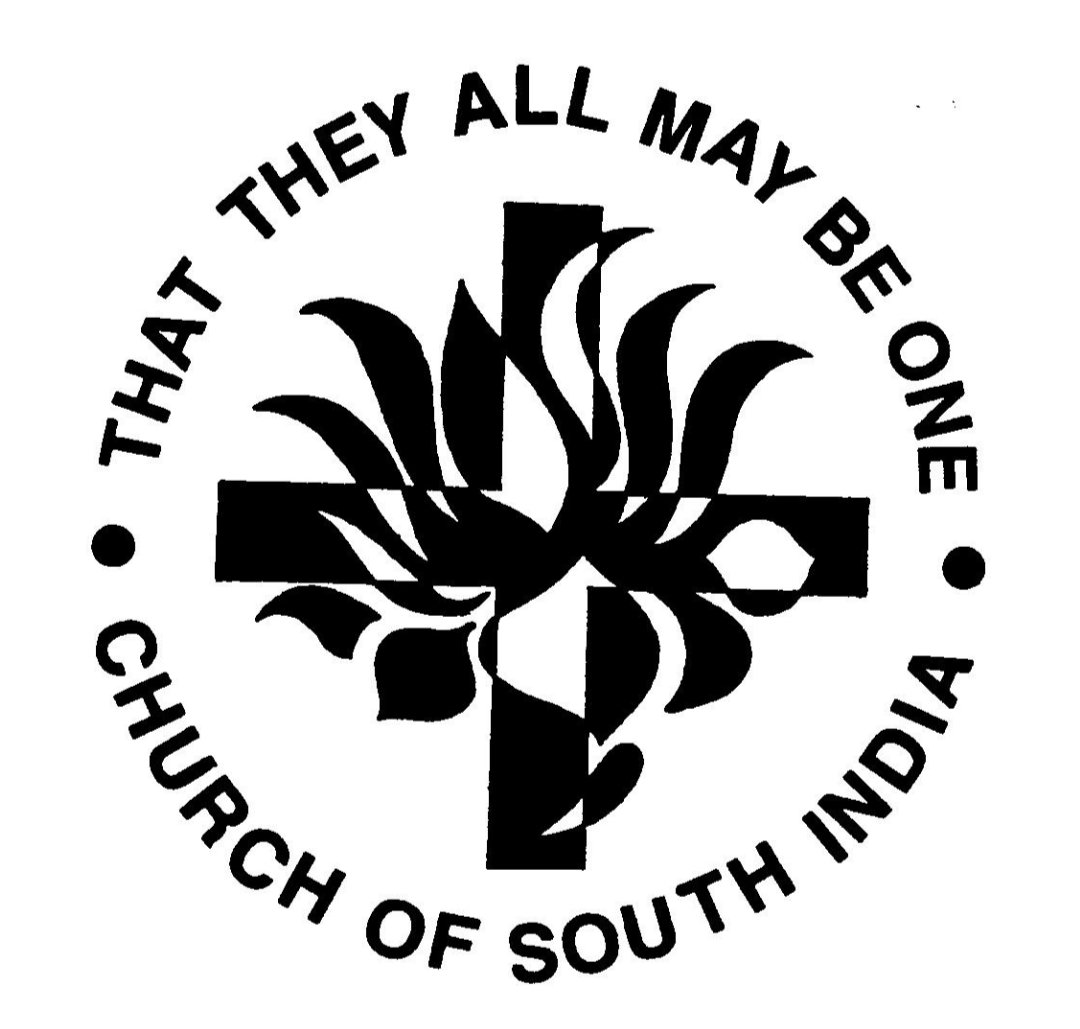
The church’s motto, taken from the Gospel of John, is "That they all may be one", and its emblem places a cross rising from a lotus, a deliberate joining of the central Christian symbol with one of the oldest images of Indian culture. The emblem sums up the story of the community: a faith that came largely through European missions and was then taken up and shaped by South Indian families in their own way.
2. Geography
The CSI heartland is the southern peninsula of India, south of roughly the Godavari river, along with the Jaffna peninsula of Sri Lanka. The church is organised into around two dozen dioceses, each led by a bishop, grouped under a Synod headquartered at the CSI Centre in Chennai. Diocesan boundaries follow the older mission fields rather than modern state lines, so the map of the CSI is also a map of where particular British, American, German and Swiss missions worked in the 18th and 19th centuries.
Christian density is highly uneven. The community is thickest in the far south: Kanyakumari district and the Tirunelveli-Thoothukudi belt of Tamil Nadu, and central and southern Kerala around Thiruvananthapuram, Kollam and Kottayam. Significant populations also live in the Madras (Chennai), Madurai, Tiruchirappalli-Thanjavur and Coimbatore regions, in coastal and interior Karnataka, and in the Telugu-speaking districts of Medak, Karimnagar, Krishna-Godavari and Rayalaseema. Cities such as Chennai, Bengaluru and Hyderabad now hold large migrant CSI congregations drawn from all these older centres.
Cultural-Geographic Sub-Regions
| Region | Main Language | Key Centres | Historic Mission Roots | Character |
|---|---|---|---|---|
| Kanyakumari & South Travancore | Tamil / Malayalam | Nagercoil, Neyyoor, Marthandam | London Missionary Society (LMS), from 1806 | One of the densest Protestant zones in India; strong school and hospital network |
| Tirunelveli & Thoothukudi | Tamil | Palayamkottai, Nazareth, Idaiyangudi, Megnanapuram | Church Missionary Society (CMS) and SPG (Anglican) | Large 19th-century village conversion movements; rich Tamil Christian literature |
| Central Tamil Nadu | Tamil | Thanjavur, Tiruchirappalli, Madurai, Dindigul | Early SPG/Danish-Halle heritage; American Madura Mission | Old urban congregations; Tamil lyric and hymn traditions |
| Madras / Chennai & North Tamil Nadu | Tamil / Telugu | Chennai, Vellore, Kanchipuram | Anglican, Scottish Presbyterian, Methodist | Seat of the Synod; major educational and medical institutions |
| Central & South Kerala | Malayalam | Kottayam, Thiruvananthapuram, Kollam, Tiruvalla | CMS (Kottayam, from 1816) and LMS (south Travancore) | Early colleges and printing; mix of Syrian-heritage and convert families |
| Karnataka | Kannada / Tulu / Tamil | Bengaluru, Mangaluru, Dharwad, Mysuru | Basel Mission, Wesleyan Methodists, LMS | Basel Mission craft industries (tiles, weaving); cosmopolitan Bengaluru parishes |
| Telangana & Andhra | Telugu | Medak, Dornakal, Karimnagar, Machilipatnam, Kadapa | Wesleyan Methodist, Anglican (CMS/SPG), LMS | Mass movements in rural communities; Medak Cathedral |
| Jaffna (Sri Lanka) | Tamil | Jaffna, Vaddukoddai | American Ceylon Mission, Anglican | Only CSI diocese outside India |
3. Origins and Early History
3.1 Christianity in South India Before the Missions
Christianity in South India long predates European Protestantism. The Saint Thomas Christians of Kerala trace their church to the apostle Thomas and are documented from at least the early centuries of the first millennium CE. Catholic missions followed the Portuguese from the 16th century, most famously along the pearl-fishing coast of Tamil Nadu. The Protestant story, which is the direct ancestry of the CSI, begins in the 18th century and grows alongside, and sometimes in tension with, these older Christian communities.
3.2 The First Protestant Missions (1706-1800)
In 1706 the German Lutherans Bartholomäus Ziegenbalg and Heinrich Plütschau arrived at the Danish trading post of Tranquebar (Tharangambadi) on the Tamil coast. Ziegenbalg learned Tamil, set up a printing press and produced the first Tamil translation of the New Testament. Later missionaries of this Danish-Halle tradition, notably Christian Friedrich Schwartz, worked in Thanjavur and Tiruchirappalli under British Anglican sponsorship. These congregations later passed into Anglican hands and form some of the oldest roots of the present CSI in central Tamil Nadu.
3.3 The Great Missionary Century (1800-1900)
The 19th century brought a wave of British and continental societies. The London Missionary Society (Congregationalist) began work in south Travancore in 1806, and the Church Missionary Society (evangelical Anglican) opened its Kottayam mission in 1816 and developed Tirunelveli into one of its most important fields. The Society for the Propagation of the Gospel (high-church Anglican) worked in Tirunelveli and Thanjavur; Robert Caldwell, based at Idaiyangudi, became famous for his Comparative Grammar of the Dravidian languages. The Wesleyan Methodists built up work in Madras, Mysore and Hyderabad State, and the Swiss-German Basel Mission, arriving in Mangalore in 1834, created a distinctive Christian community in coastal Karnataka and northern Kerala centred on weaving and tile manufacture. American Congregationalist and Reformed missions worked in Madurai, Arcot and Jaffna.
Growth came less from individual conversions than from "mass movements": whole kin groups and villages joining the church together, often seeking education, dignity and relief from caste discrimination. In Tirunelveli and Kanyakumari many converts came from the Shanar (later Nadar) community; in Kerala from Pulaya, Paraya and Ezhava communities as well as some Syrian Christian families; and in the Telugu country from Mala and Madiga communities. The mission response was a dense network of village schools, boarding schools, colleges, hospitals and printing presses that still defines the CSI world today.
3.4 Indian Leadership and the Road to Union (1900-1947)
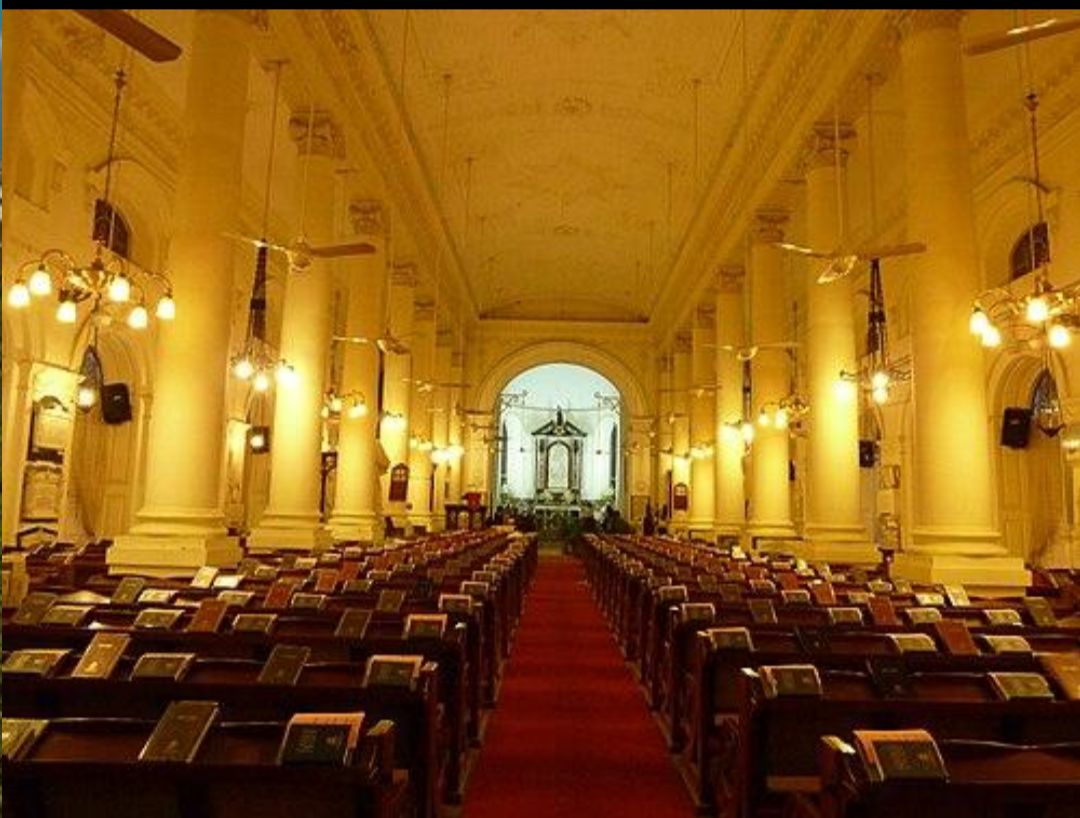
By the early 20th century Indian Christians were pressing for self-governing churches free of denominational divisions imported from Europe. In 1908 Presbyterian and Congregational churches joined to form the South India United Church. In 1912 Vedanayagam Samuel Azariah became Bishop of Dornakal, the first Indian bishop of the Anglican Church in India, and a leading voice for union. After decades of negotiation, the Church of South India was inaugurated on 27 September 1947 at St George’s Cathedral, Madras, a few weeks after Indian independence. It brought together the South India United Church, the southern dioceses of the Anglican Church of India, Burma and Ceylon, and the Methodist Church of South India. It was then the first union in modern times between episcopal (bishop-led) and non-episcopal churches, and it drew worldwide attention.
3.5 The CSI After 1947
Other bodies joined later, most notably the Basel Mission churches of Karnataka in the 1960s. The CSI is a member of the World Council of Churches and is in communion with the Anglican Communion, while also belonging to the World Methodist Council and the World Communion of Reformed Churches. It has close relations with the Church of North India and the Mar Thoma Syrian Church, with which it shares the Communion of Churches in India. New dioceses have been carved out over time as congregations grew, and the church has faced the challenges familiar to large institutions: administrative and legal disputes, debates about caste within the church, and the struggle to sustain its educational and medical institutions.
4. Demographic Profile
Membership figures differ from source to source. The CSI is usually reported to have around four million members, and the church itself has cited figures of four and a half million or more. This makes it one of the largest Protestant churches in India and the second-largest Christian body in the country after the Catholic Church by many estimates. Members are concentrated in Tamil Nadu and Kerala, followed by Karnataka, Telangana and Andhra Pradesh.
The Indian Census records religion but not denomination, so CSI numbers cannot be read directly from it. As context, Christians formed about 2.3 per cent of India’s population in 2011, with far higher shares in Kerala (around 18 per cent) and in Kanyakumari district, where Christians form close to half the population. CSI communities tend to show higher literacy, female education and life expectancy than the regional averages around them, reflecting two centuries of mission schooling and healthcare.
5. Genetics and Ancestry
Because the CSI is a religious community rather than a single lineage, its genetic profile is essentially the profile of the South Indian populations from which its members came. There are no large published genome studies of "CSI Christians" as a group, and none should be expected, since a Tamil Nadar CSI family, a Malayali CSI family of Syrian heritage and a Telugu Madiga CSI family are each most closely related to their non-Christian neighbours of the same caste and region.
5.1 The ANI-ASI Background
Like nearly all Indian populations, South Indians descend from a mix of Ancestral North Indian (ANI) and Ancestral South Indian (ASI) ancestry, with ASI ancestry generally higher in the south than in the Gangetic plain. Dravidian-speaking populations of the peninsula thus sit toward the ASI end of the Indian gradient, with the exact balance varying by caste and community.
5.2 Endogamy Within the Church
Conversion usually happened in kin groups, and marriage often continued within the same community after conversion. As a result, genetic structuring along older caste and regional lines has largely persisted within Christian populations. European missionary families contributed very little ancestry to the wider community; a small number of Anglo-Indian families were linked to CSI congregations in cities such as Chennai and Bengaluru.
5.3 Paternal and Maternal Lineages
South Indian populations commonly carry deep South Asian paternal haplogroups such as H, L and C, alongside R1a and J lineages at varying frequencies, while maternal lineages are dominated by South Asian branches of haplogroup M and U. CSI individuals testing their DNA should expect results reflecting their specific region and ancestral community rather than a signature of the church itself.
6. Language and Literature
CSI worship is conducted in the language of the region: Tamil, Malayalam, Telugu, Kannada, Tulu, and English in cities. Missionaries and Indian scholars together made enormous contributions to these languages through Bible translation, grammars, dictionaries and printing. Hermann Gundert, of the Basel Mission, compiled a landmark Malayalam dictionary and grammar; Caldwell’s comparative grammar established the idea of a Dravidian language family; and the CMS Press at Kottayam was among the earliest Malayalam presses.
Indian Christians also created a literature of their own. Vedanayagam Sastriar of Thanjavur composed hundreds of Tamil Christian songs in Carnatic style, and H. A. Krishna Pillai of Palayamkottai wrote the Tamil epic Rakshanya Yatrigam, a reimagining of Bunyan’s Pilgrim’s Progress in classical Tamil verse. Tamil keerthanaigal (lyrics set to Indian ragas) and Malayalam and Telugu devotional songs remain central to CSI worship.
7. Religion, Worship and Festivals
CSI worship blends its Anglican, Methodist, Presbyterian and Congregational inheritance. Its liturgy is episcopal in structure, with bishops, presbyters and deacons, but allows wide freedom of form. The CSI Book of Common Worship includes a distinctive Holy Communion service that was widely admired by liturgists abroad. Women have been ordained as presbyters in many dioceses, and the church has had women bishops.
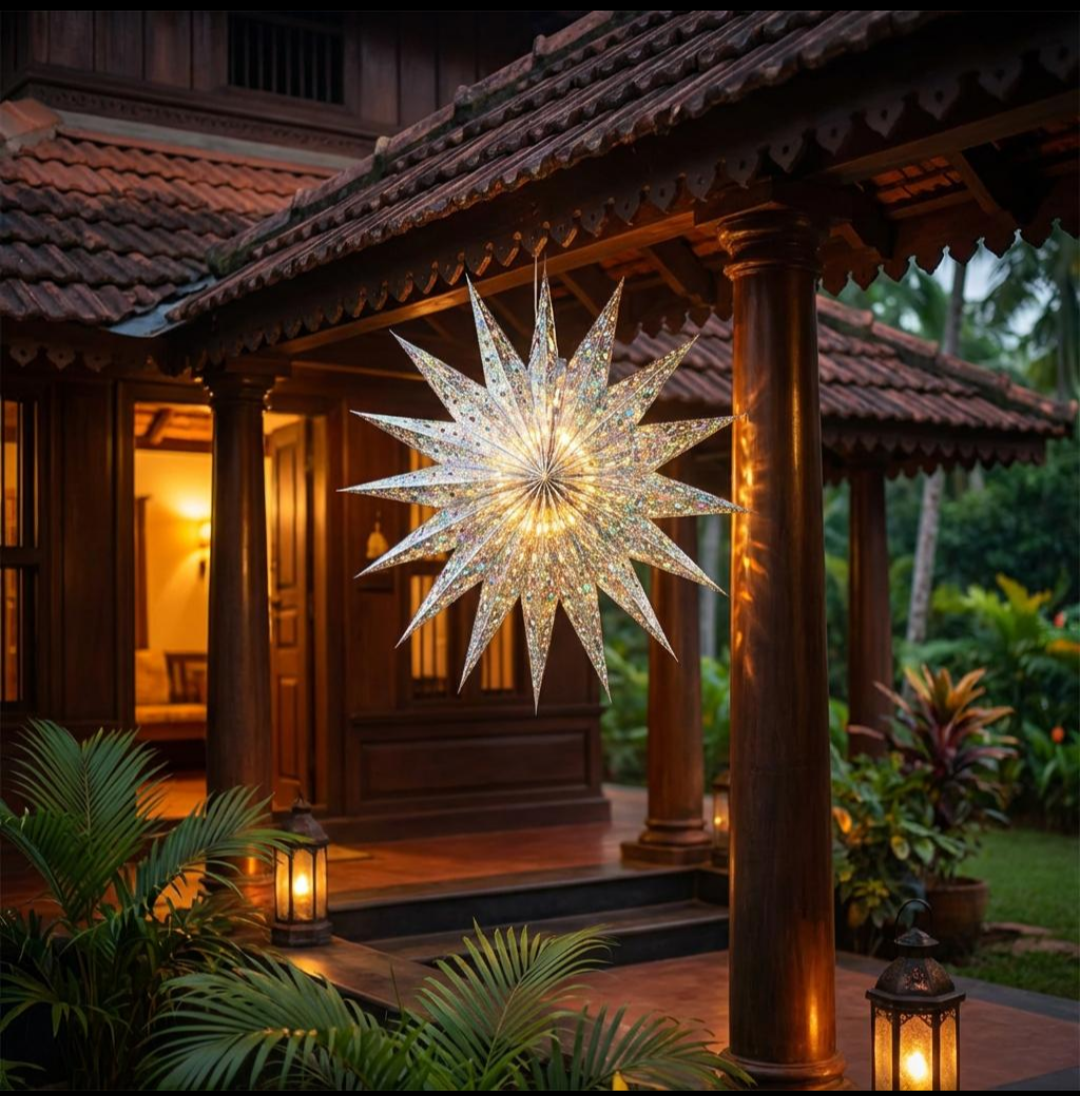
- Christmas: the high point of the year, with house-to-house carol rounds in the weeks before, star lanterns hung from homes, cribs, midnight services and the sharing of cakes and sweets with neighbours of all faiths.
- Watchnight and New Year: a late-night service on 31 December to close the old year and dedicate the new one, followed by family gatherings.
- Lent, Good Friday and Easter: Holy Week services, the three-hour Good Friday meditation, and Easter dawn services.
- Harvest Festival: known as Aruppu Thiruvizha or Sthothra Pandigai in Tamil areas; families bring produce, poultry and gifts to church, which are auctioned to raise funds for the parish. It is among the most distinctive and festive events of the CSI calendar.
- CSI Day: 27 September, marking the inauguration of the church in 1947.
- Conventions and retreats: large gospel conventions, such as the Maramon Convention associated with the neighbouring Mar Thoma Church, have influenced CSI revival traditions, and dioceses hold their own annual conventions.
8. Culture, Customs and Social Life
Parish life organises much of community life: Sunday service followed by Sunday school, youth fellowship, women’s fellowship (often called the Women’s Fellowship or Mathar Sangam), choir practice, cottage prayer meetings in homes, and visits by the presbyter. Many families keep a household routine of evening family prayer with a Bible reading and song.
Education is a core value. The mission school is often remembered as the first school in a village, and CSI families have long invested heavily in schooling for daughters as well as sons. Tithing and giving of a "first fruit" portion of income or harvest are common. Names reflect the community’s blended heritage: biblical names (Samuel, Joseph, Esther, Ruth), English names from the missionary era (Wilson, Gnanadurai, Jebakumar), and Indianised Christian names built from Tamil or Sanskrit roots such as Gnana (wisdom), Jeba (prayer), Selva, Anbu and Devadas.
The question of caste has been a long and painful theme. Although the church teaches the equality of all believers, caste distinctions persisted in some congregations, in marriage, and at times in church leadership. Dalit Christians have organised to press for full equality inside the church and for recognition of their rights in wider society, and this remains an active debate.
9. Marriage and Wedding Traditions
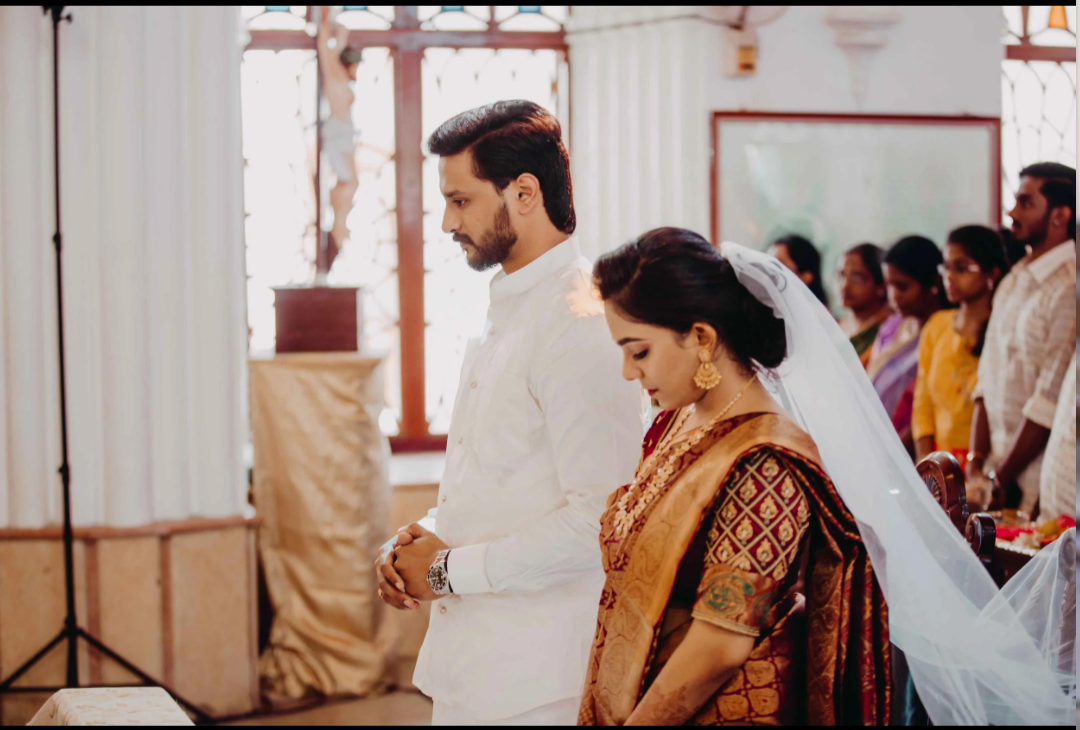
A CSI wedding is a church service conducted by a presbyter, with the reading of banns in the parish beforehand, exchange of vows and rings, and the tying of a pendant that marks the bride as married. In Tamil CSI weddings this is a thaali (thirumangalyam), often with a cross, tied by the groom. In Kerala it is the minnu, a small gold pendant tied on a thread, and the groom also gives the manthrakodi, a new saree presented to the bride. Brides commonly wear a white or cream silk saree with gold border, sometimes with a veil; grooms wear a suit or a white shirt and dhoti.
Pre-wedding customs vary by region and include the betrothal ceremony (nichayathartham in Tamil areas, manasammatham in Kerala) and, in some families, local customs such as a pre-wedding gathering with songs and sweets. The reception after the wedding is a large community feast. Arranged marriages within the CSI or wider Protestant world remain common, with church matrimonial columns serving the community, while love marriages and inter-denominational marriages are increasingly accepted.
10. Cuisine
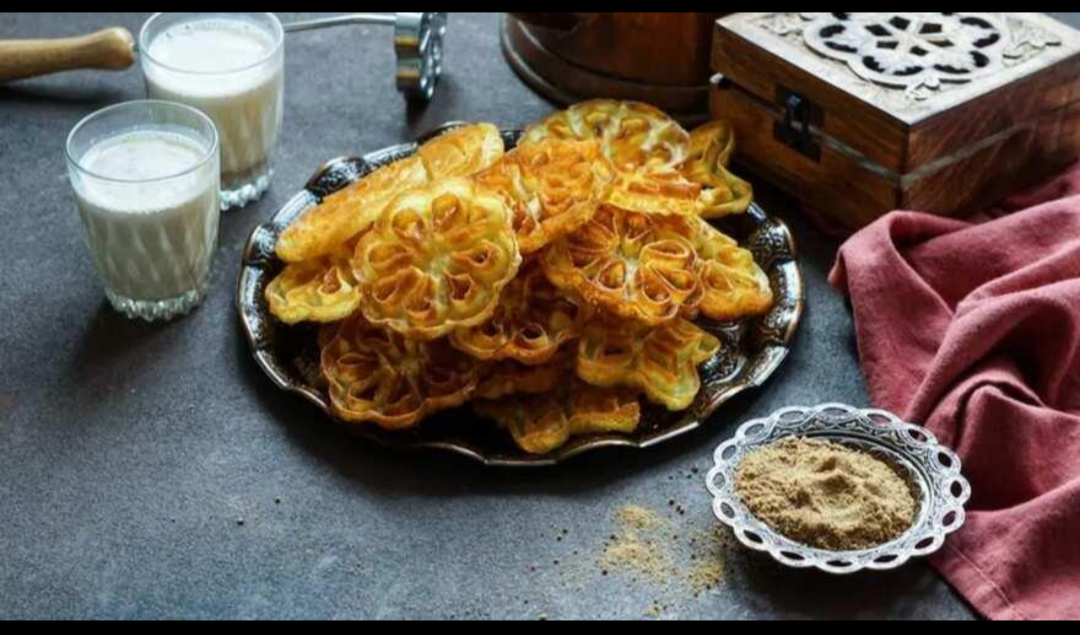
CSI food is essentially regional South Indian food, with a few festive traditions that stand out, especially at Christmas. Unlike some Hindu communities, most CSI families eat meat and fish, and the Sunday or festival meal with mutton, chicken or fish is a well-loved tradition.
10.1 Tamil CSI Cuisine
In Tirunelveli, Kanyakumari and Madurai households, festive tables feature mutton biryani or pulao, chicken curry, mutton chukka and fish kuzhambu. Christmas brings achu murukku (rose cookies), kulkuls (sweet fried dough curls), diamond cuts, and plum or rich fruit cake. The region’s famous Tirunelveli halwa and Kanyakumari-style fish curries with coconut are part of everyday community pride.
10.2 Kerala CSI Cuisine
Malayali CSI families share the celebrated Kerala Christian table: appam with chicken or mutton stew for Christmas and Easter breakfast, duck roast, beef fry, meen (fish) curry cooked with kodampuli, kappa (tapioca) with fish curry, and on Maundy Thursday the pesaha appam in some families.
10.3 Telugu and Kannada CSI Cuisine
In Telangana and Andhra, festive meals feature biryani, gongura mutton and spicy chicken curries, while in coastal Karnataka Christian households draw on Mangalorean traditions with sannas, kori rotti and coconut-rich curries. Cakes, cookies and homemade wine or grape juice for Christmas are common across all regions.
11. Traditional Dress and Ornaments
CSI Christians dress in the same regional styles as their neighbours. Women wear the saree for church, weddings and formal occasions, with Kerala women often favouring the off-white and gold kasavu style, and younger women wearing salwar kameez or churidar for everyday wear. Older traditions in some Kerala communities included the chatta and mundu. Many CSI women traditionally avoided or minimised heavy jewellery and flowers in church, a legacy of 19th-century evangelical simplicity, though practice today varies greatly. The bindi is generally not worn. Men wear shirt and dhoti or veshti (mundu in Kerala), with trousers common in towns and cities. Presbyters wear a white cassock, and bishops a purple cassock with pectoral cross.
12. Architecture and Sacred Places
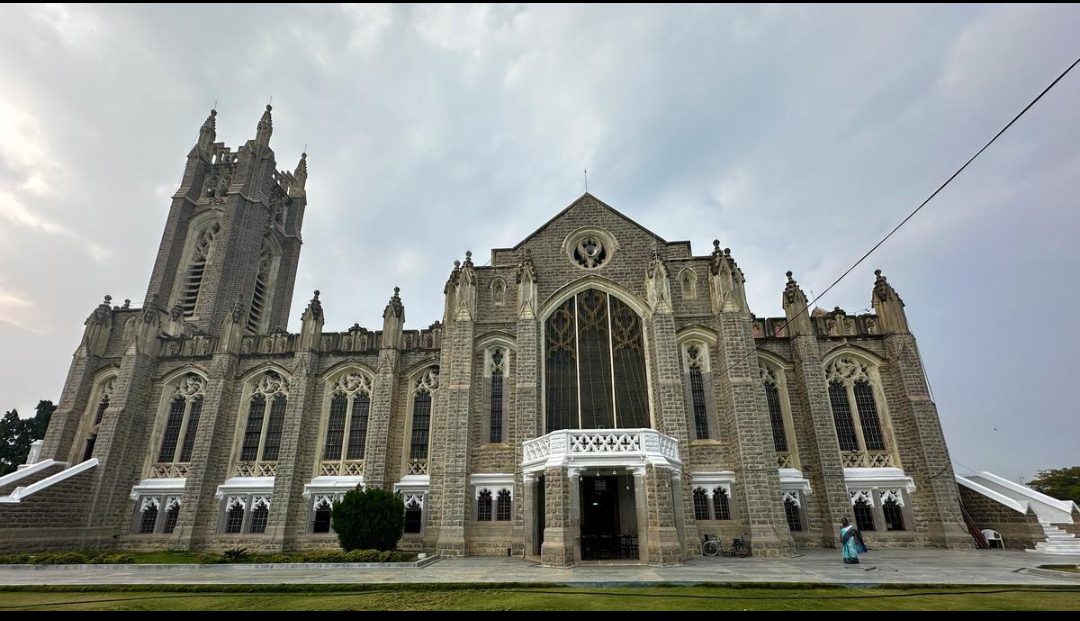
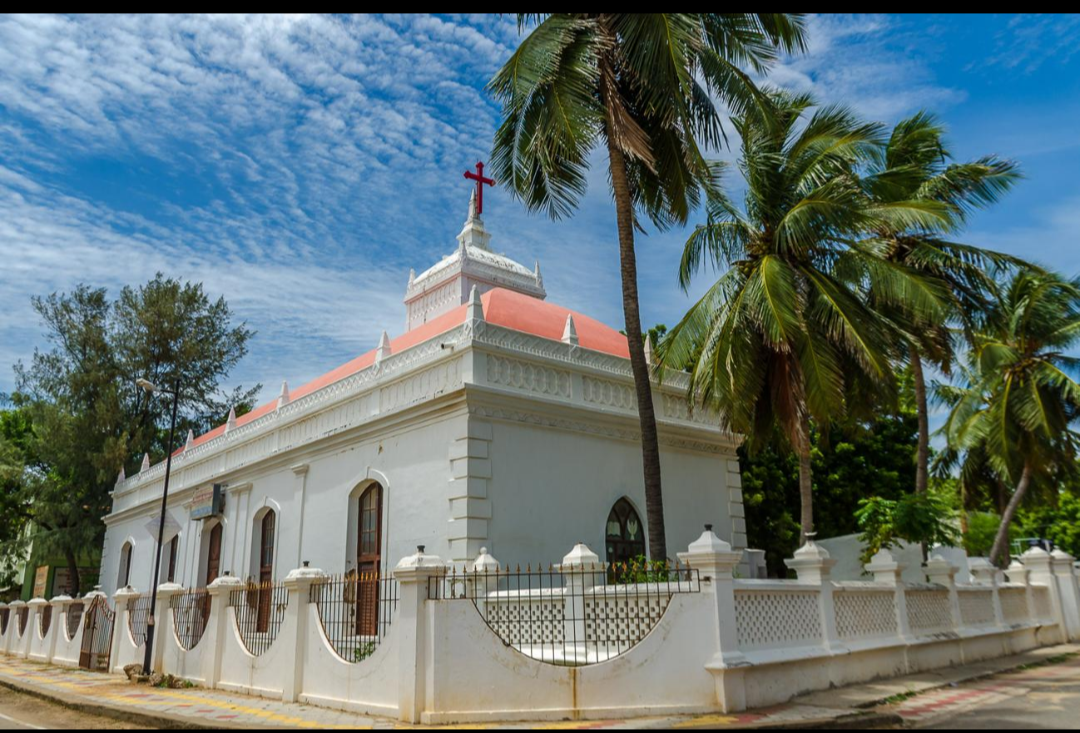
CSI church architecture ranges from simple thatched village chapels to grand Gothic cathedrals. Notable examples include St George’s Cathedral in Chennai, where the church was inaugurated; Medak Cathedral in Telangana, one of the largest churches in Asia, completed in 1924 under Methodist missionary Charles Walker Posnett with local labour during a period of famine; CSI Christ Church in Kottayam and the CMS College campus; the Home Church and LMS buildings of Nagercoil; Holy Trinity Cathedral, Palayamkottai; and St Mark’s Cathedral in Bengaluru. Newer churches often blend Indian design elements such as temple-style towers, Kerala roofs and lotus motifs, reflecting the church’s commitment to Indian expression of faith.
13. Folklore, Music and Oral Tradition
The CSI has a strong oral and musical culture. Christmas carols in Tamil, Malayalam and Telugu are sung by youth groups travelling house to house. Villupattu (bow-song storytelling) and kathakalakshebam (musical discourse) have been adapted in Tamil Christian settings to tell Bible stories. Family memory is also a rich tradition: many CSI families preserve stories of the first ancestor who joined the church, of mission-school teachers and catechists, and of migrations to plantations, cities and abroad.
14. Education, Livelihoods and Socioeconomic Profile
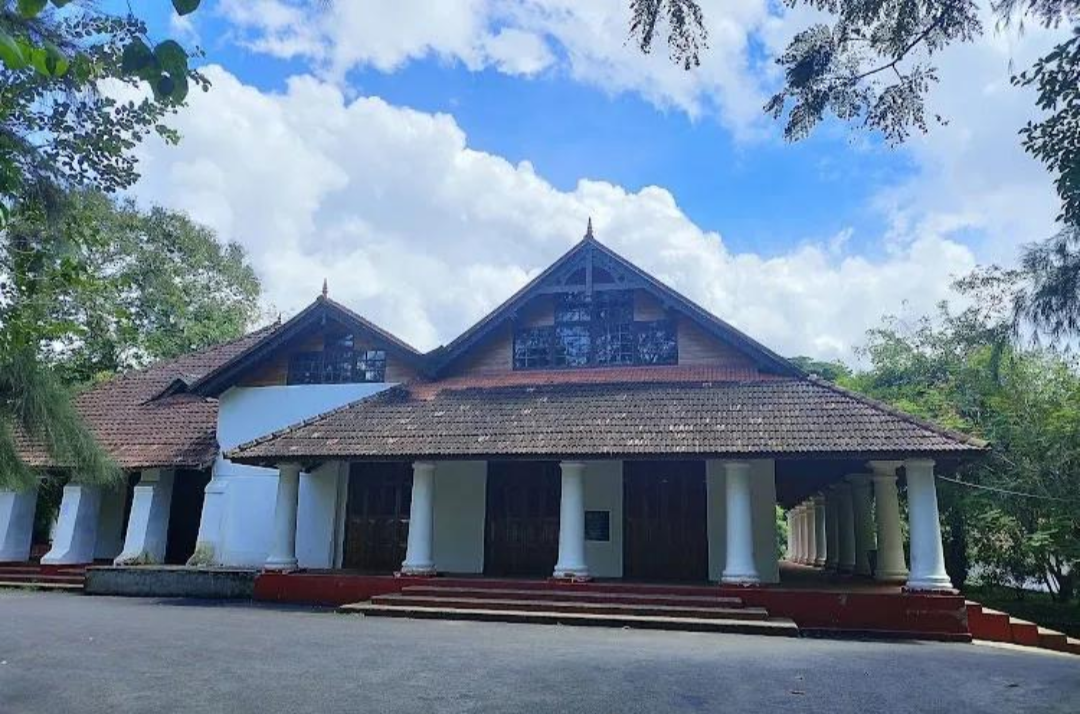
Education is the most visible legacy of the CSI. Institutions associated with the church and its parent missions include CMS College, Kottayam (founded 1817); Madras Christian College, Chennai; Bishop Heber College, Tiruchirappalli; St John’s College, Palayamkottai; Scott Christian College, Nagercoil; Bishop Cotton Boys’ and Girls’ Schools in Bengaluru; and hundreds of schools across the dioceses. In healthcare, the CSI is a partner in Christian Medical College, Vellore, and runs mission hospitals such as the CSI Mission Hospital at Neyyoor.
This educational foundation shaped the community’s occupations. CSI families are strongly represented in teaching, nursing, medicine, government service, banking and the clergy, and in later generations in engineering, information technology and overseas professional employment. Kerala and Kanyakumari in particular produced many nurses who served across India and in the Gulf, the UK, the US and elsewhere. At the same time, a large portion of the community, especially rural Dalit Christians, remains in agriculture, labour and informal employment, and socioeconomic gaps within the church are significant.
15. Diaspora
The CSI diaspora followed two broad waves. The first, colonial-era wave carried Tamil and Telugu Christians to plantations and cities in Sri Lanka, Burma, Malaya, Singapore and South Africa, where some founded churches or joined Anglican and Methodist congregations.
The second, post-1970 wave was driven by Gulf employment and skilled migration. Today there are CSI congregations in the Gulf states, including the UAE, Kuwait, Oman, Bahrain and Qatar, as well as in the United Kingdom, the United States, Canada, Australia, New Zealand, Germany and Singapore. Many belong to the CSI Council in North America or to diocesan networks abroad, and they continue Tamil and Malayalam worship, Christmas carol rounds and Harvest Festivals far from home. Nursing, engineering and IT have been the main occupations of this newer diaspora.
16. Prominent Figures
16.1 Church Leaders and Theologians
- Vedanayagam Samuel Azariah (1874-1945): first Indian bishop of the Anglican Church in India (Dornakal) and a leading architect of church union.
- Michael Hollis: first Moderator of the Church of South India in 1947.
- Lesslie Newbigin (1909-1998): British missionary theologian, a CSI bishop in Madurai and Madras, and one of the most influential mission thinkers of the 20th century.
- A. J. Appasamy (1891-1975): theologian and Bishop of Coimbatore, known for interpreting Christianity through Indian devotional (bhakti) thought.
16.2 Literature, Scholarship and Culture
- Vedanayagam Sastriar (1774-1864): Thanjavur poet whose Tamil Christian songs are still sung.
- H. A. Krishna Pillai (1827-1900): author of the Tamil Christian epic Rakshanya Yatrigam.
- Robert Caldwell (1814-1891) and Hermann Gundert (1814-1893): missionary scholars who shaped the study of Dravidian languages and Malayalam lexicography.
Note: Many public figures in politics, sport, film and science come from CSI families, but personal church membership is often private. Verify individual affiliations from reliable sources before publishing names.
17. Small Cultural Things
- The star lantern: a paper or bamboo star hung outside CSI homes through December signals a Christian household.
- The Sunday "church dress": best clothes kept for worship, and the practice of removing footwear before entering church in many village parishes.
- Harvest auction: bidding for a pumpkin, rooster or bunch of bananas at the Harvest Festival, often with friendly rivalry.
- Blessing before travel or exams: the presbyter or elders praying for a family member leaving for college or a job abroad.
- Anniversary suppers and church feasts: shared meals where the whole congregation eats together.
- Hymnbooks: worn family hymnals, the Tamil Keerthanaigal and Paamalai books, passed through generations.
18. Conclusion
The Church of South India community is a people formed by history. It is made up of South Indian families of many castes and languages who, through the missionary encounter and their own choices, built a shared Christian life over more than two centuries. Its identity is carried by parish and diocese, by schools and hospitals, by Tamil lyrics and Malayalam carols, by Harvest Festival auctions and Christmas stars. Its ancestry remains deeply rooted in the soil of the southern peninsula, while its diaspora now reaches from the Gulf to North America. For many CSI families, tracing their roots means going back to one village, one parish and one first ancestor who joined the church, and then following the family forward through schools, cities and migration abroad.
References and Further Reading
- Church of South India, official Synod website (csisynod.com).
- Sundkler, Bengt. Church of South India: The Movement Towards Union, 1900-1947. Lutterworth, 1954.
- Newbigin, Lesslie. The Reunion of the Church. SCM Press, 1948.
- Frykenberg, Robert Eric. Christianity in India: From Beginnings to the Present. Oxford University Press, 2008.
- Hardgrave, Robert L. The Nadars of Tamilnad. University of California Press, 1969.
- Kooiman, Dick. Conversion and Social Equality in India: The London Missionary Society in South Travancore. Manohar, 1989.
- Webster, John C. B. The Dalit Christians: A History. ISPCK, 1992.
- Harper, Susan Billington. In the Shadow of the Mahatma: Bishop V. S. Azariah and the Travails of Christianity in British India. Eerdmans, 2000.
- Reich, D. et al. "Reconstructing Indian population history." Nature, 2009.
- Census of India 2011, religion tables.
Frequently Asked Questions
What is the Church of South India?
The Church of South India is a united Protestant church formed on 27 September 1947 by bringing together Anglican, Methodist, Presbyterian and Congregational churches in South India. It is one of the largest Protestant churches in India, with around two dozen dioceses across five southern states and Jaffna in Sri Lanka.
Is CSI a caste or an ethnic community?
Neither, strictly. CSI is a Christian denomination, but in South India it also functions as a social identity. Its members come from many caste and language backgrounds, including Nadar, Dalit, Ezhava, Vellalar, Syrian Christian-heritage and other communities.
How many members does the CSI have?
Estimates usually place membership at around four million, and the church has reported higher figures. Exact numbers are difficult because the Indian Census does not record Christian denominations.
Is CSI Anglican?
Partly. The CSI is in communion with the Anglican Communion and keeps bishops and an Anglican-style liturgy, but it also inherited Methodist, Presbyterian and Congregational traditions. It is a united church rather than a purely Anglican one.
What is the difference between CSI, CNI and the Mar Thoma Church?
The CSI serves South India, while the Church of North India (formed 1970) is a similar united Protestant church for the north. The Mar Thoma Syrian Church is a reformed Saint Thomas Christian church of Kerala. All three work together in the Communion of Churches in India.
Where is the CSI headquarters?
The Synod is headquartered at the CSI Centre in Chennai, Tamil Nadu.
What languages do CSI Christians speak?
Tamil, Malayalam, Telugu and Kannada are the main languages, along with Tulu in coastal Karnataka and English in many urban congregations.
What do CSI Christians eat?
CSI food is regional South Indian cuisine. Most families eat meat and fish, and festive highlights include biryani, appam with stew, duck roast, fish curries, rose cookies, kulkuls and Christmas fruit cake.
What do CSI brides wear?
Brides usually wear a white or cream silk saree, often with a gold border and sometimes a veil. Tamil brides receive a thaali and Kerala brides a minnu, tied by the groom during the service.
What is the CSI Harvest Festival?
A thanksgiving festival where families offer produce, animals and gifts to the church, which are auctioned to support the parish. It is known as Aruppu Thiruvizha or Sthothra Pandigai in Tamil areas.
Do CSI Christians share ancestry with their Hindu neighbours?
Yes. Since conversions happened within existing local communities and marriage often stayed within those groups, CSI families are genetically closest to non-Christian South Indians of the same region and caste background.
What physical traits are typical of CSI Christians?
There is no distinct CSI physical type. Members share the wide range of features and skin tones found across South India, varying by region and community of origin.
Where is the CSI diaspora found?
Large CSI congregations exist in the Gulf states, the UK, the US, Canada, Australia, Singapore and Malaysia, with older Tamil Christian communities in Sri Lanka, Myanmar and South Africa.
What is the CSI emblem?
The emblem shows a cross rising from a lotus, symbolising Christian faith rooted in Indian culture, with the motto "That they all may be one."