

Kundrugal Nadu Community
Explore the Urali Gounder community of Tamil Nadu: their nadu system, origin traditions, Manapparai–Viralimalai homeland, customs, cuisine, and genetic ancestry.
THE URALI GOUNDER COMMUNITY OF TAMIL NADU
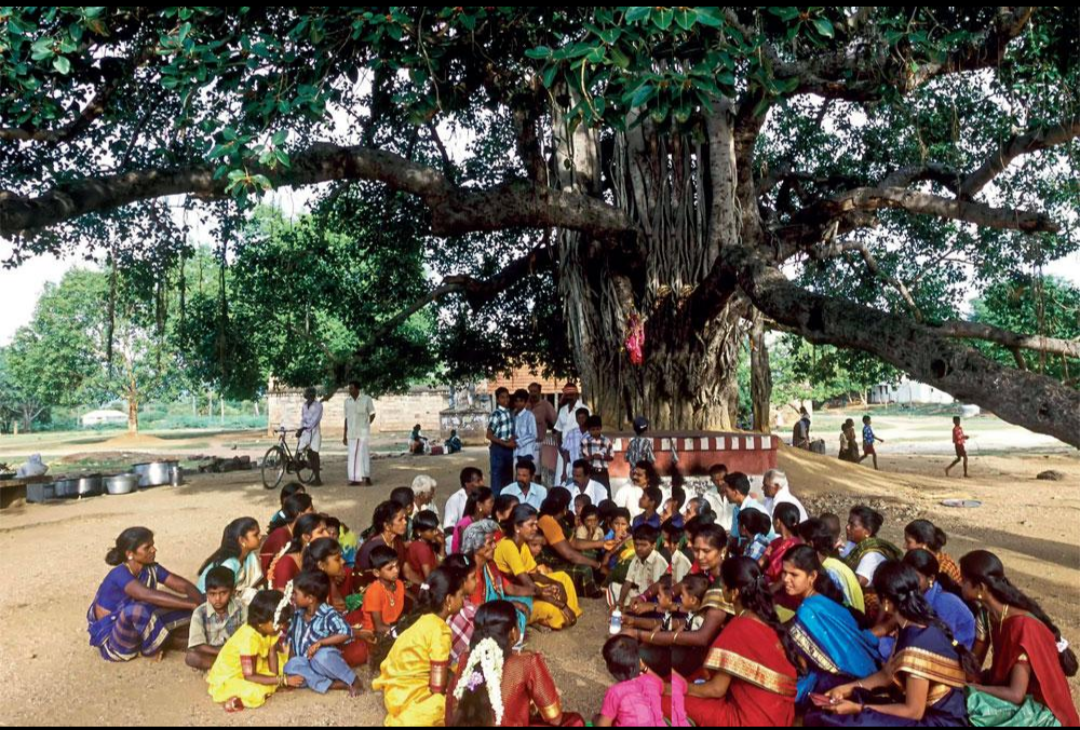
Land, Lineage, and Legacy of the Nadu-Rulers of the Trichy–Pudukkottai Uplands
Urali Gounder, Urali Gounder history, Urali Gounder caste, Oorudaya Gounder, Manapparai, Viralimalai, Tamil Nadu denotified communities, Gounder ancestry, Tamil genetics, AASI ancestry Tamil
Introduction: Who Are the Urali Gounders?
The Urali Gounders are a Tamil-speaking agrarian community whose heartland lies in the dry red-soil uplands where the districts of Tiruchirappalli, Pudukkottai, Karur, and Dindigul meet. The towns of Manapparai and Viralimalai sit near the centre of this country, and it is here that community tradition, colonial ethnography, and present-day settlement patterns all place the Urali Gounder homeland. From this core, families have spread into Perambalur, Ariyalur, Salem, Namakkal, Coimbatore, Madurai, Theni, Sivaganga, and Thanjavur.
Unlike communities defined by a single occupation or a single conversion story, the Urali Gounders are best understood as a people of a region: a set of related lineages bound together by shared territory, a distinctive system of local self-government called the nadu, and a body of customs that colonial observers already recognised as their own by the late nineteenth century. Their name itself describes a political role rather than a trade: they are, in their own understanding, the rulers of the village.
Etymology of the Name
Urali is generally explained as a compound of the Tamil words ur (village, settlement, land) and ali (ruler, one who governs). The 1891 Madras Census Report already glossed the word as "a ruler of a village," and community members today read it in exactly the same way. Gounder (from older Kavundan or Kavundar) is a widely used Tamil honorific for village headmen and landholding chiefs, carried by several distinct communities including Kongu Vellalars, Vanniyars, Vettuva Gounders, and Kurumba Gounders. Colonial records note that the title borne by the Uralis was Kavandan, the older form of the same word.
It is important to note that Gounder here is a title, not a single caste. The Urali Gounders are a distinct, endogamous community and are not a sub-group of the Kongu Vellalar Gounders of western Tamil Nadu, even though both use the same honorific. In some government lists the community also appears in the variant forms Oorudaya Gounder or Orudaya Gounder ("one who owns the village").
Geography and Homeland
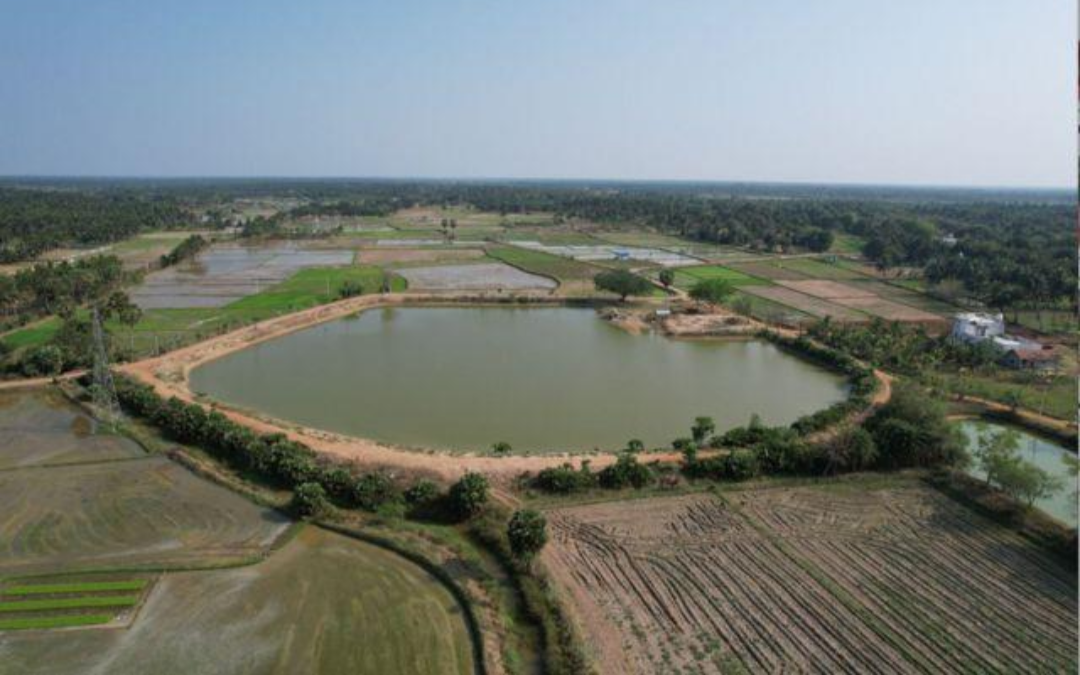
The Urali Gounder homeland is a transitional landscape between the fertile Kaveri delta to the east and the Kongu plateau to the west. It is a country of red laterite soils, scattered rocky hillocks, rain-fed tanks (eri), scrub forest, and dry-land cultivation of millets, pulses, and groundnut, broken by patches of wet paddy where tank irrigation allows. Historically this was frontier land between the Pandya, Chola, and later Nayaka and Pudukkottai Tondaiman spheres of power, which helps explain why strong local self-government took root here.
- Core region: Manapparai and Marungapuri taluks of Tiruchirappalli district; Viralimalai and Kulathur areas of Pudukkottai district; adjoining parts of Karur and Dindigul.
- Wider spread: Perambalur, Ariyalur, Salem, Namakkal, Coimbatore, Madurai, Theni, Sivaganga, and Thanjavur districts.
- Historic nadus: The seven traditional territorial divisions were named after villages such as Vadaseri, Pilluru, Sengudi, Kadavangudi (Virali), Talakka, Paluvinji (Magali), and Marungi; Marungi survives in the place name Marungapuri.
Is Your Family From the Manapparai–Viralimalai Country?
Your grandparents may remember which nadu or karai your family belongs to. Pair that oral memory with your DNA, and see how closely you connect to other Urali Gounder families across Trichy, Pudukkottai, Karur, and Dindigul.
→ Map Your Nadu Roots
Origins and Early History
There is no single agreed account of Urali Gounder origins, and the historical record contains several overlapping traditions. They are best treated as layers of memory rather than competing facts.
The Kshatriya migration tradition
In the early 1900s, Urali Gounders of the Trichinopoly district told the colonial officer F. R. Hemingway that their ancestors were originally Kshatriyas from a place they called "Alipuram near Oudh" who left home in search of adventure or after disputes, came south, and settled there. A later community version locates this Alipuram in Tamil country itself, as Aalipuram or Thiruvali-Thirunagari, the Vaishnava sacred site associated with the poet-saint Thirumangai Alvar. Such migration-from-the-north narratives are common among many South Indian landholding communities and usually express a claim to ruling status rather than a literal genealogy.
The Mutturaja connection
The same colonial records note that Uralis described themselves as belonging to the "Mutturaja kuttam" (the Mutturaja group), and that Muttiriyan appeared as a sub-division among both Uralis and the neighbouring Ambalakkarar community. The Mutharaiyar (Mutturaja) chiefs ruled parts of the Tiruchirappalli–Thanjavur–Pudukkottai region as feudatories of the Pallavas between roughly the seventh and ninth centuries CE, with an important centre at Sendalai near Thanjavur. Whether the Urali Gounders descend from Mutharaiyar warrior lineages, or simply claimed association with the most prestigious local dynasty, cannot be settled from existing sources.
Other colonial theories
Census writers of the 1890s speculated that the Tamil Uralis might be an offshoot of the Kurumbas (an ancient pastoral people of the Deccan and western Tamil Nadu), or of the Valaiyans, a hunting and netting community of the same districts. These were guesses made from similarities of name and region, and modern scholars treat them with caution. What all the sources agree on is that by the nineteenth century the Urali Gounders were a settled cultivating community with an unusually well-developed territorial council system, a hunting tradition, and a remembered warrior past.
Mutharaiyar, Kurumba, or Something Older?
Family stories point in different directions. DNA can't name a dynasty, but it can show which present-day Tamil communities your ancestry overlaps with most. Help us build the first Urali Gounder genetic reference.
→ Trace Your Urali Gounder Origins
The Nadu System and Social Organisation
The defining institution of the Urali Gounders is the nadu, a territorial council covering a cluster of villages. Ethnographic records describe seven nadus that functioned as endogamous units: people married within their own group of nadus, while exogamous clans called karai (among the Vadaseri group) or kaniyacchi (among the Nattu-simai group), each named after a place, regulated who could marry whom. The first three nadus formed the Vadaseri Uralis and the remaining four the Nattu-simai Uralis, though all would eat together.
Each nadu had a headman who exercised authority over all the villages within it, while individual villages were managed by a nattamai (village headman). Community accounts describe an apex figure, sometimes called the jamin, whose word carried weight over the nattamais. The nadu assembly settled disputes, punished offences against custom, and presided over funerals and marriages, and colonial observers noted that it remained the real unit of self-government well into the twentieth century.
| Level | Traditional name | Role |
|---|---|---|
| Endogamous division | Vadaseri / Nattu-simai | Two broad groups within which marriage took place |
| Territorial council | Nadu | Cluster of villages with its own headman and assembly |
| Village | Nattamai | Village headman handling local disputes |
| Clan | Karai / Kaniyacchi | Exogamous clans, named after places, governing marriage |
Colonial Era and Denotified Status
Like several neighbouring communities of the Trichy–Madurai belt, the Urali Gounders were viewed with suspicion by British administrators, who recorded them as cultivators "said sometimes to be given to crime." Under the colonial Criminal Tribes Act framework, many such Tamil communities were brought under surveillance; after independence these groups were "denotified," and today the label survives as an administrative category for reservation purposes rather than as any statement about the people concerned.
In Tamil Nadu's current classification, Urali Gounders in Tiruchirappalli, Karur, Perambalur, Ariyalur, and Pudukkottai districts are listed among the Denotified Communities (DNC), which fall within the state's Most Backward Classes and Denotified Communities quota. In other districts they are listed as a Backward Class, with the variant name Orudaya or Oorudaya Gounder also recognised in several districts. Readers should check the latest Tamil Nadu government community list, since district coverage has been revised over time.
Language
Urali Gounders speak Tamil as their mother tongue, in the central Tamil Nadu dialect of the Trichy–Pudukkottai region, which sits between the speech of the Kaveri delta and that of Madurai and Kongu. Older kinship and ritual vocabulary preserved within families, including terms for the nadu, karai, and ceremonial roles, are among the most distinctive features of community speech. There is no separate community language.
Religion, Deities, and Festivals
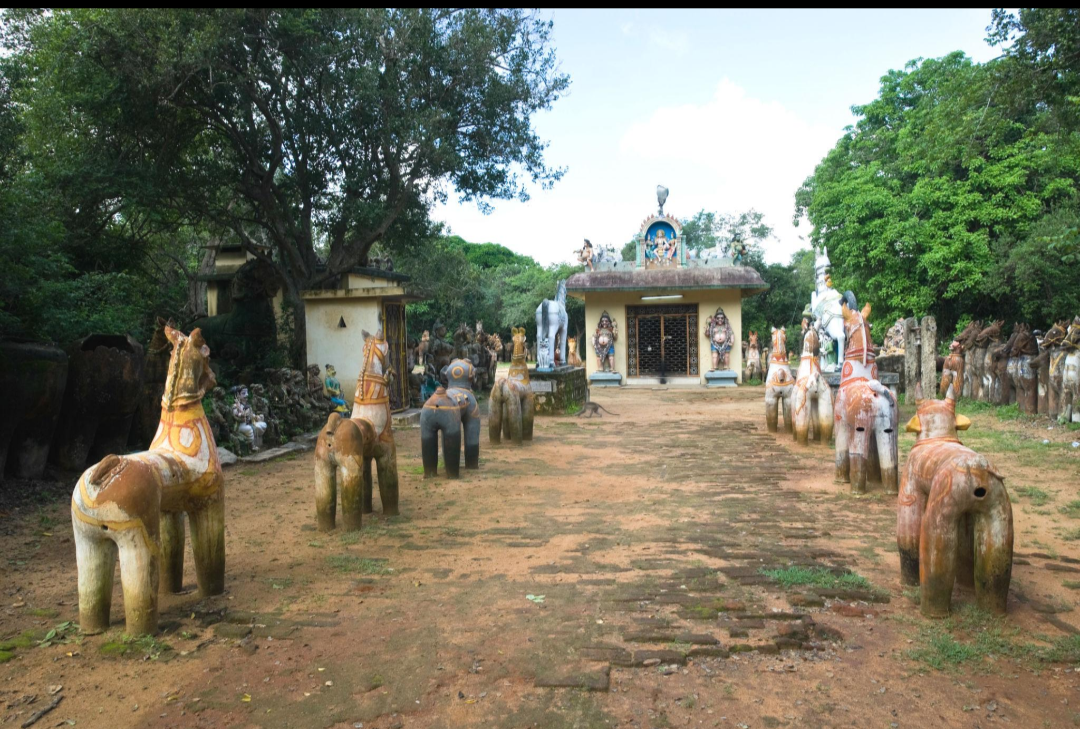
The community is Hindu, with a strong orientation toward village and lineage deities alongside the major Shaiva and Vaishnava temples of the region. Colonial records note that on the night of Sivaratri, Urali Gounder families offered sacrifices to their family gods, and that on the following day the men of the village went out together on a ritual hunt. Kuladeivam (family deity) worship, village goddess festivals, and Aiyanar and Karuppusamy shrines are central to religious life, as across much of rural central Tamil Nadu. Prosperous families historically employed Brahmin priests for major rites, while others relied on their own elders.
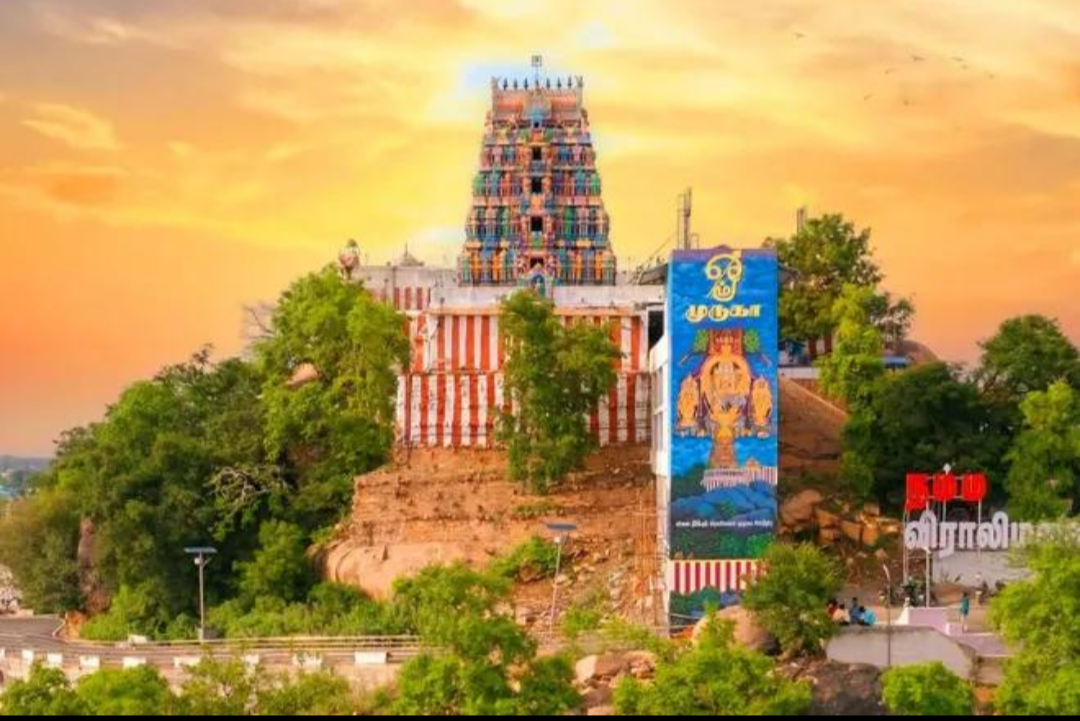
Viralimalai, with its well-known hilltop Murugan temple, lies in the heart of Urali Gounder country, and the major temples of Tiruchirappalli, including Srirangam and Samayapuram, are part of the wider religious landscape of the community. Pongal, Deepavali, Karthigai Deepam, and Aadi festivals for the goddess are widely observed.
Customs: Marriage, Death, and Community Justice
Marriage
Marriage traditionally took place within the endogamous nadu group and outside one's own karai. Early twentieth-century records describe a betrothal among the Nattu-simai Uralis in which the maternal uncle of each partner ceremonially measured out three measures of paddy before the other family, a reminder of how central the maternal uncle is in Tamil kinship. Widow remarriage and divorce were permitted, and men wore the sacred thread at weddings and funerals. Cross-cousin and uncle-niece matches, common across Tamil Nadu, were traditionally favoured.
Death and the Ettu ceremony
Funeral customs were among the most elaborate recorded. The bier was kept outside the village and the body carried to it. On the Ettu day, families raised a booth with three plantain trees, where the chief mourner received condolences; visitors either clasped his hand or flung themselves down in grief. The nadu then met outside the village, and the gathering ended with the headman offering three handfuls of kambu (pearl millet) to the bereaved family, a symbolic gift of sustenance.
Community justice
The nadu council enforced custom with distinctive sanctions. A margosa (neem) leaf placed on a person's house marked excommunication, and re-admission required a feast for the elders, part of which was set out for crows; acceptance by the crows signalled that the community was reconciled. These practices have largely faded, but they illustrate how strongly the nadu functioned as a self-governing body.
Your Family's Karai Is a Genetic Clue
Generations of marrying within the nadu and outside the karai leave a recognisable pattern in DNA. Test with GenoConnect and help reveal how these ancient marriage rules shaped Urali Gounder ancestry.
→ Explore Your Lineage
Dress and Ornaments
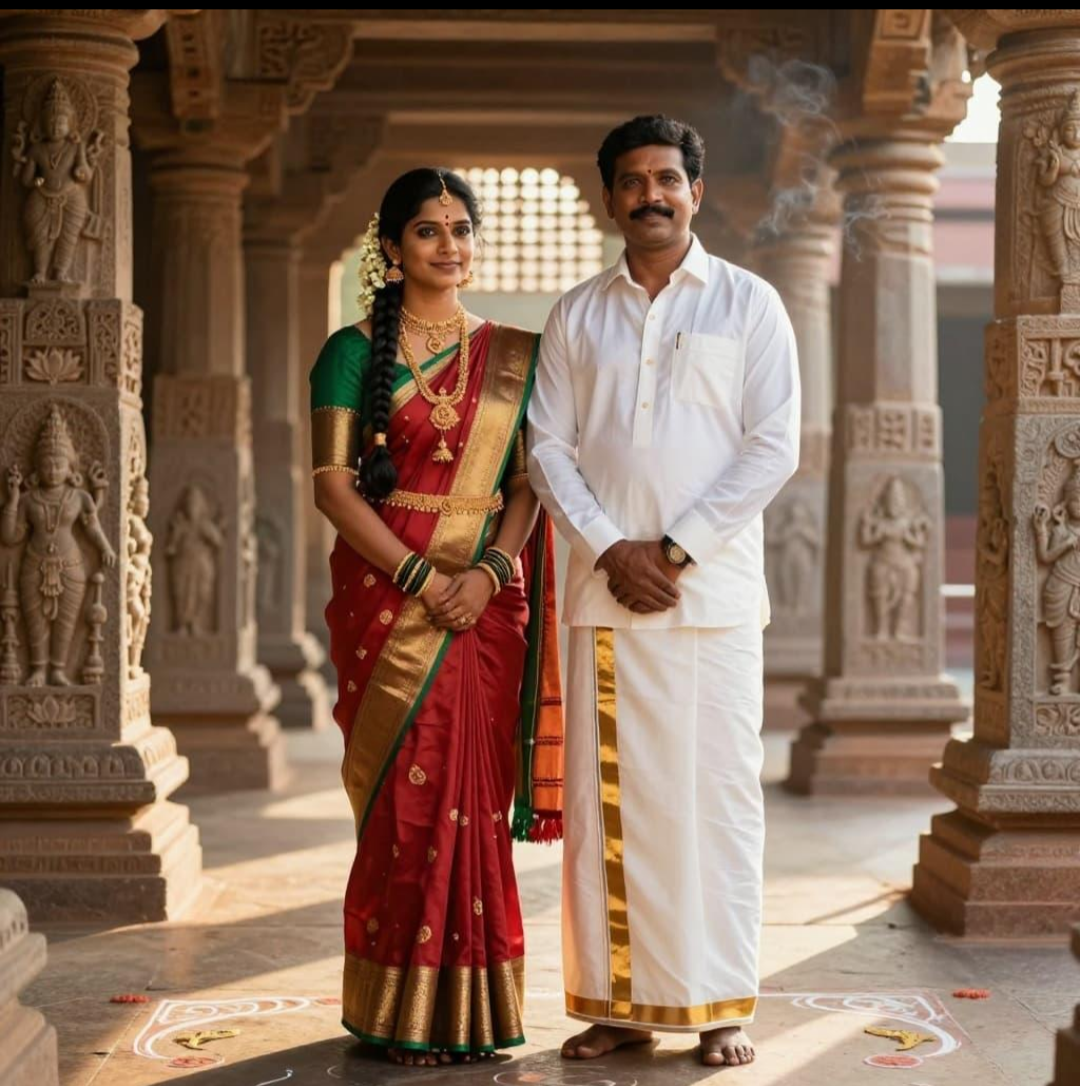
Everyday dress today follows rural Tamil norms: the veshti (dhoti) and shirt or towel for men, and the saree for women, with the half-saree for younger girls on festive occasions. Historically, however, Urali Gounder women were recognisable by a distinctive way of draping the saree, with the pleated portion (kusavam) spread out behind, and by a characteristic pencil-shaped pendant called the kuchu worn from the neck. Older women in some villages are still remembered for heavy gold ear ornaments and the thali chain as the centrepiece of married dress. At weddings, silk sarees from Kanchipuram or nearby weaving centres and silk veshtis with zari borders are standard.
Cuisine
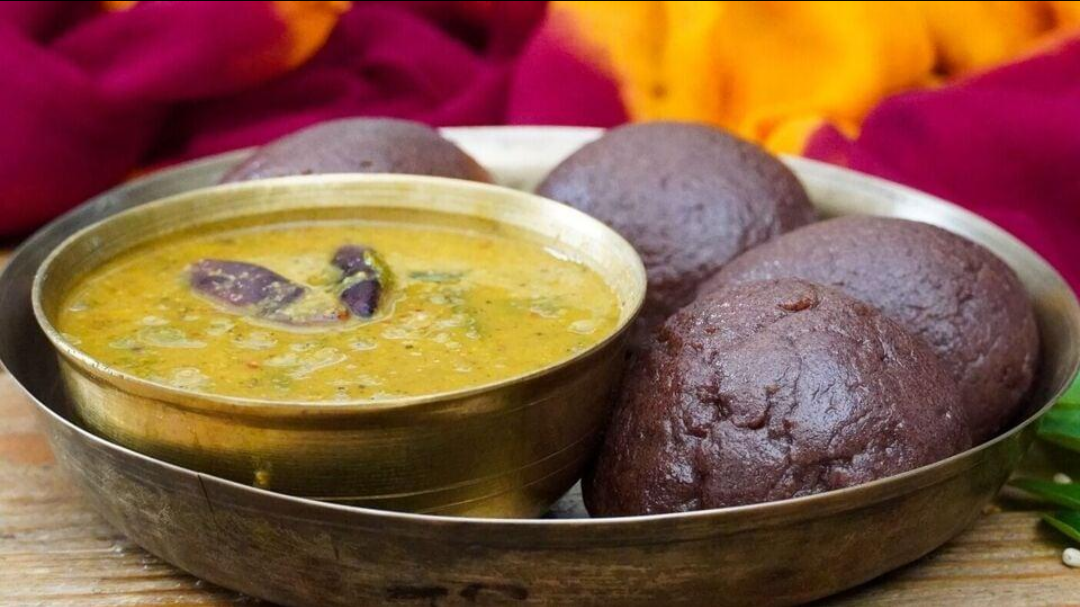
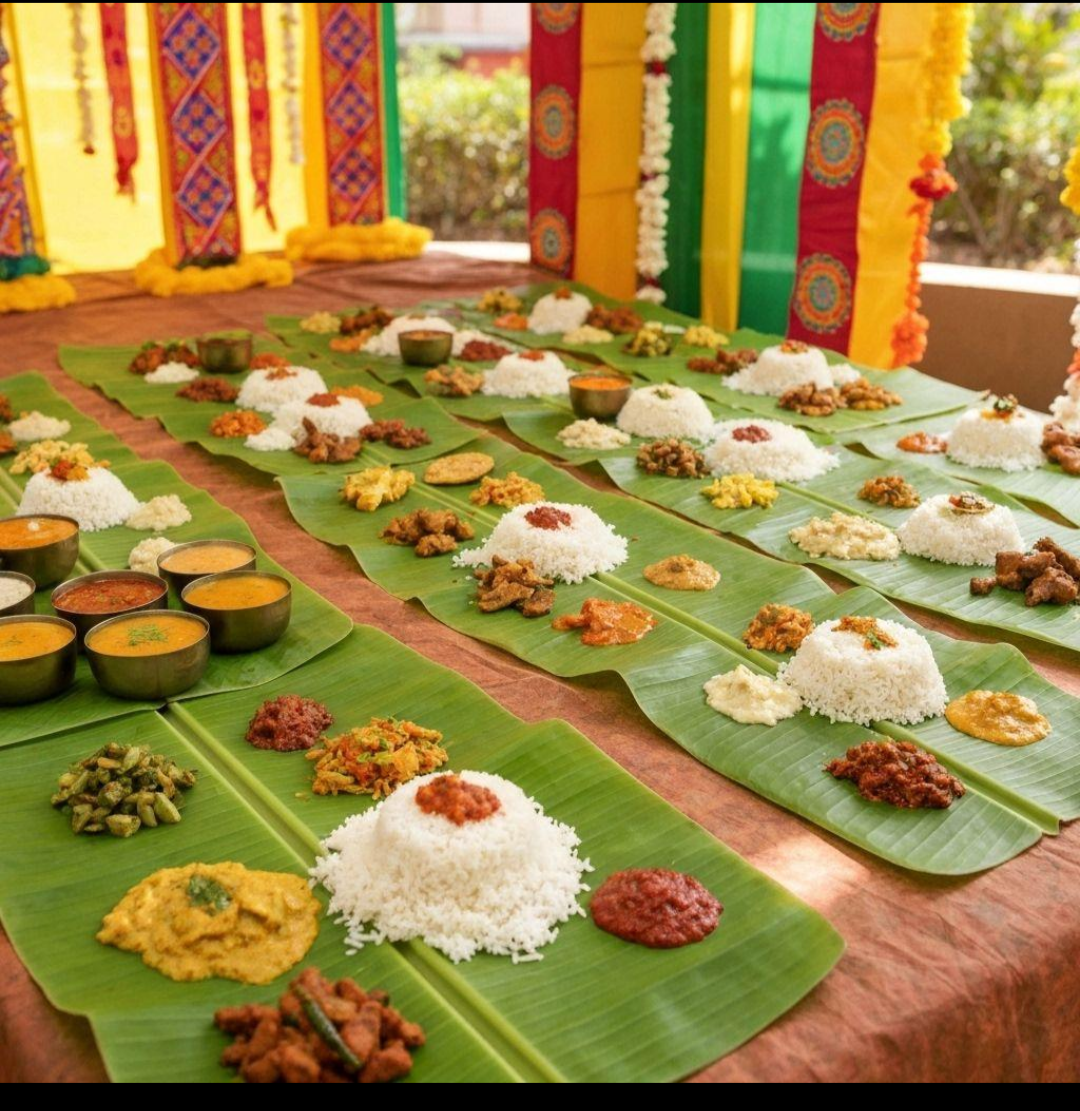
Urali Gounder food belongs to the robust, millet-and-meat tradition of the central Tamil dry lands. It is less rice-dominated than delta cuisine and makes heavy use of kambu (pearl millet), ragi, cholam (sorghum), and pulses, together with country chicken and mutton. The community's hunting heritage, recorded in the Sivaratri hunt, once brought game meat into festive cooking as well.
- Kambu koozh and kambu soru: Fermented pearl millet porridge thinned with buttermilk, eaten with raw shallots and green chilli, the classic summer staple of the dry country.
- Ragi kali: Stiff finger-millet balls eaten with spicy kuzhambu or keerai (greens).
- Nattu kozhi kuzhambu: Country chicken curry with freshly ground pepper, coriander, and shallots, a favourite for guests.
- Kari kuzhambu and kari varuval: Mutton curry and dry fry, the centrepiece of temple-festival and wedding feasts.
- Kola urundai: Spiced minced-meat balls, typical of Trichy–Madurai festive cooking.
- Kollu rasam and kootu: Horse gram preparations, valued as warming and strengthening food.
- Adhirasam and ellu urundai: Jaggery-rice sweets and sesame balls made for Deepavali, Pongal, and family functions.
Kida virundhu (mutton feasts) offered to the kuladeivam after a vow is fulfilled remain one of the most important shared meals in village life.
Physical Appearance
There is no scientific basis for a distinct Urali Gounder physical type. Like most Tamil communities, Urali Gounders show a wide range of skin tones, mostly medium to dark brown, dark hair and eyes, and average heights typical of South India. Variation within the community is far greater than any difference between it and its neighbours, which is why genetic testing, rather than appearance, is the only meaningful way to explore ancestry.
Occupations and Economic Life
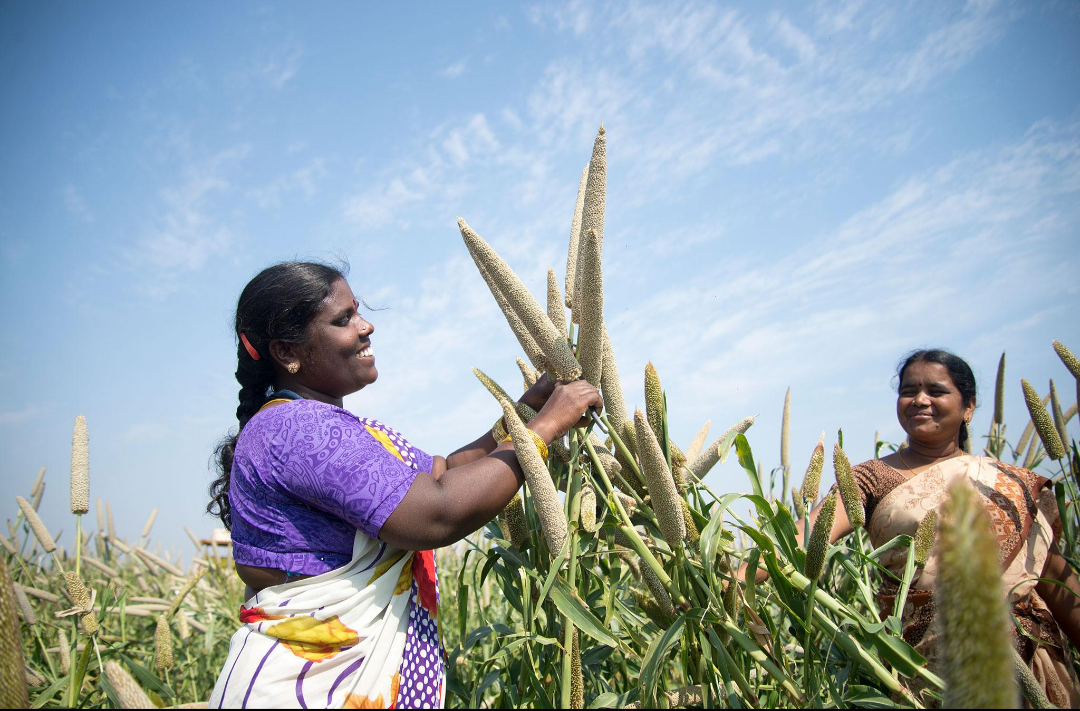
Agriculture has been the backbone of Urali Gounder life: dry-land farming of millets, groundnut, pulses, and cotton, tank-fed paddy, and cattle, sheep, and goat rearing. Many families were landholders and village headmen within the nadu system, while others worked as cultivators and agricultural labourers. Through the twentieth century, education and reservation opened new routes into government service, teaching, police and the armed forces, transport and lorry businesses, construction, and small enterprise in Tiruchirappalli and other towns. More recently, younger members have entered engineering, IT, and healthcare, and many have migrated to Chennai, Coimbatore, and Bengaluru for work.
Population
There is no reliable recent figure for the Urali Gounder population, because India has not published caste-wise census data for most communities since 1931. A figure of around 67,000 for the Denotified Urali Gounder category in its notified districts appears in data associated with Tamil Nadu's Ambasankar Backward Classes Commission (1980s), but this covers only part of the community and is now decades old. Community organisations generally claim a much larger population across Tamil Nadu, in the range of several lakh, though this cannot be independently verified.
Migration and Diaspora
For most of their history the Urali Gounders have been a rooted, land-based community, and their migration has been mostly internal: to Tiruchirappalli city, Chennai, Coimbatore, Tiruppur, and Bengaluru. Like other communities of the Trichy–Pudukkottai region, some families joined the colonial-era Tamil movements to Malaya, Singapore, and Sri Lanka as plantation workers, supervisors, and traders, though community-specific records are scarce. Today, smaller numbers of professionals live in the Gulf countries, Singapore, Malaysia, the United States, and the United Kingdom.
Are You an Urali Gounder Living Outside Tamil Nadu?
Whether your family moved to Chennai, Bengaluru, Malaysia, or beyond, your DNA still carries the story of the nadu. Reconnect with relatives and help map the Urali Gounder diaspora.
→ Find Your Relatives
Small Cultural Things
- Asking someone's nadu or karai is a quick way for elders to place a family, much as other Tamils ask about a native village.
- The maternal uncle (mama) holds special ritual weight at betrothals, ear-piercing, puberty ceremonies, and weddings.
- The Sivaratri night offering followed by a village hunt was once a signature community custom.
- Kambu (pearl millet) carries ritual meaning, appearing even in the closing rite of funerals.
- The Paraiyan drummer's blessing at the nadu assembly, recorded in colonial times, shows how village rituals bound several communities together.
- Jallikattu and rekla (bullock-cart) races, popular across the Trichy–Pudukkottai belt, draw enthusiastic participation from rural youth.
Notable People
The Genetic Story: What We Know and What We Don't
For most Indians, the first genetic questions are about three ancestral components: Ancient Ancestral South Indian (AASI), the indigenous hunter-gatherer ancestry of the subcontinent; Indus Valley Civilisation-related or "Indus Periphery" ancestry, itself a mix of Iranian-related farmers and AASI; and Steppe ancestry from Central Asian pastoralists who entered South Asia in the second millennium BCE. The older ANI/ASI (Ancestral North Indian / Ancestral South Indian) model is widely cited in research, but it is a simplification of these deeper components.
No published study has yet sampled the Urali Gounders specifically. What can be said comes from research on other Tamil communities. Most non-Brahmin Tamil castes carry a high share of AASI-related ancestry, a substantial share of Indus Periphery-related (Iranian-farmer-linked) ancestry, and generally low Steppe ancestry. Based on their region and history, the Urali Gounders would be expected to resemble neighbouring agrarian and warrior communities of central Tamil Nadu, but this remains an expectation, not a finding.
Haplogroups
Paternal (Y-DNA) haplogroups common among Tamil communities include H, L, F, J2, C, and R2, with R1a present at lower frequencies than in North India. Maternal (mtDNA) lineages in Tamil Nadu are dominated by the South Asian branches of macro-haplogroup M (such as M2, M3, M5, and others), with smaller shares of R-derived lineages such as R5, U2, and W. Which of these are most frequent among Urali Gounders, and whether the nadu-based endogamy has preserved any distinctive lineages, is unknown.
Closest communities
Historical and geographic evidence suggests the most likely close genetic neighbours include the Mutharaiyar and Ambalakarar communities, with whom Urali Gounders share the Mutturaja tradition; Kallar and other Mukkulathor groups of the Trichy–Pudukkottai belt; Vettuva Gounders and Kurumba Gounders, who share the Gounder title and region; and other agrarian communities of central Tamil Nadu. Long endogamy within nadus may also have produced founder effects that set the community apart.
| Question | Status in research | What GenoConnect can add |
|---|---|---|
| AASI / Indus Periphery / Steppe proportions | Not studied | Community-level averages from tested members |
| Y-DNA haplogroups | Unknown | Frequency of paternal lineages, by nadu if possible |
| mtDNA haplogroups | Unknown | Frequency of maternal lineages |
| Closest communities | Inferred only from history | Measured genetic relatedness to neighbours |
| Differences between nadus | Never studied | Whether Vadaseri and Nattu-simai groups differ |
Help Write the First Genetic Profile of the Urali Gounders
No scientific study has yet mapped Urali Gounder AASI, Indus, and Steppe ancestry, haplogroups, or closest relatives. Every member who tests brings that picture into focus for the whole community.
→ Test With GenoConnect
Conclusion
The Urali Gounders are a community defined by place and self-government: the rulers of the village, organised for centuries into nadus and karais across the uplands of Trichy and Pudukkottai. Their history weaves together claims of Kshatriya migration, associations with the Mutharaiyar, a hunting and warrior past, colonial suspicion and its legacy in denotified status, and a long agrarian present. Much of that story is still told mainly in family memory and community gatherings. Combining that oral heritage with genetic data offers the community a new way to understand where it comes from, and how its ancient marriage rules and territorial bonds have shaped its people today.
Frequently Asked Questions
Are Urali Gounders the same as Kongu Vellalar Gounders?
No. Gounder is a title used by several unrelated Tamil communities. The Urali Gounders are a separate endogamous community centred on the Trichy–Pudukkottai region, while Kongu Vellalars are centred on the Kongu region of western Tamil Nadu.
Are they the same as the Urali tribe of the Sathyamangalam hills?
No. The Urali (Uraly) people of the Sathyamangalam and Talavadi forests, and the Urali hill tribe of Kerala's Cardamom Hills, are distinct Scheduled Tribe communities. They share the word Urali but have different histories, languages, and customs.
What does Urali mean?
It comes from the Tamil ur (village or land) and ali (ruler), meaning ruler of the village.
What is a nadu and a karai?
A nadu is a territorial council of villages that traditionally functioned as an endogamous group. A karai is an exogamous clan, so people marry within their nadu group but outside their own karai.
Which districts have the largest Urali Gounder populations?
Tiruchirappalli (especially Manapparai and Marungapuri), Pudukkottai (especially Viralimalai), Karur, and Dindigul, with significant numbers in Perambalur, Ariyalur, Salem, Namakkal, Coimbatore, and Madurai.
What is the reservation category of Urali Gounders?
In Tiruchirappalli, Karur, Perambalur, Ariyalur, and Pudukkottai they are listed as a Denotified Community (DNC); elsewhere they are listed as a Backward Class. Check the current Tamil Nadu government community list for exact details.
Are Urali Gounders related to the Mutharaiyar?
Colonial records show that Urali Gounders claimed membership of the Mutturaja group, as did the Ambalakarars, which points to a shared historical tradition. Whether this reflects common descent is not proven, and genetic testing could help answer it.
What is the AASI, Indus, and Steppe composition of Urali Gounders?
No published study has measured it yet. Based on other Tamil communities, high AASI-related and substantial Indus Periphery-related ancestry with low Steppe ancestry would be expected, but only data from community members can confirm this.
What are the common haplogroups among Urali Gounders?
This is not yet known. Among Tamils generally, Y-DNA haplogroups H, L, F, J2, C, and R2 and mtDNA branches of M are common.
How can I learn more about my own Urali Gounder ancestry?
Start by recording your family's nadu, karai, native village, and kuladeivam from elders, then take a GenoConnect DNA test. Your results add to the community picture and help connect you with relatives.
References
- [1]1. Thurston, Edgar and K. Rangachari. Castes and Tribes of Southern India, Vol. VII (T to Z), "Urali." Madras: Government Press, 1909. https://en.wikisource.org/wiki/Castes_and_Tribes_of_Southern_India/Urali
- [2]2. Madras Census Report, 1891 (as quoted in Thurston, 1909).
- [3]3. Wikipedia. "Urali Gounder" and "Talk:Urali Gounder." https://en.wikipedia.org/wiki/Talk:Urali_gounder
- [4]4. Wikipedia. "List of denotified communities of Tamil Nadu." https://en.wikipedia.org/wiki/List_of_denotified_communities_of_Tamil_Nadu
- [5]5. Government of Tamil Nadu. List of Most Backward Classes, Denotified Communities, Backward Classes and Backward Class Muslims (annexure). https://tndalu.emsecure.in/5YearsLaw2026/Content/annexure/Annexures%20-%20I.pdf
- [6]6. OBC Rights. "DNC Caste List" (population figures attributed to the Ambasankar Commission). https://obcrights.org/blog/caste-list/dnc/dnc-cast-list/
- [7]7. Wikipedia. "Gounder," "Kallar (caste)," "Vettuva Gounder," "Kurumba Gounder."
- [8]8. The News Minute. Report on Manapparai noting Urali Gounder OBC/DNC classification. https://www.thenewsminute.com/tamil-nadu/dalit-family-in-trichy-alleges-inaction-by-cops-despite-complaint-on-caste-harassment
- [9]9. Narasimhan, V. M. et al. "The formation of human populations in South and Central Asia." Science 365 (2019). [General background on AASI, Indus Periphery, and Steppe ancestry.]
- [10]10. Reich, D. et al. "Reconstructing Indian population history." Nature 461 (2009). [ANI/ASI model.]