

Marwari,Agarwal Community
Explore the Agarwal community of India: descendants of Maharaja Agrasen of Agroha, their 18 gotras, Marwari trade networks, vegetarian cuisine, diaspora, and genetic ancestry.
THE AGARWAL COMMUNITY OF INDIA
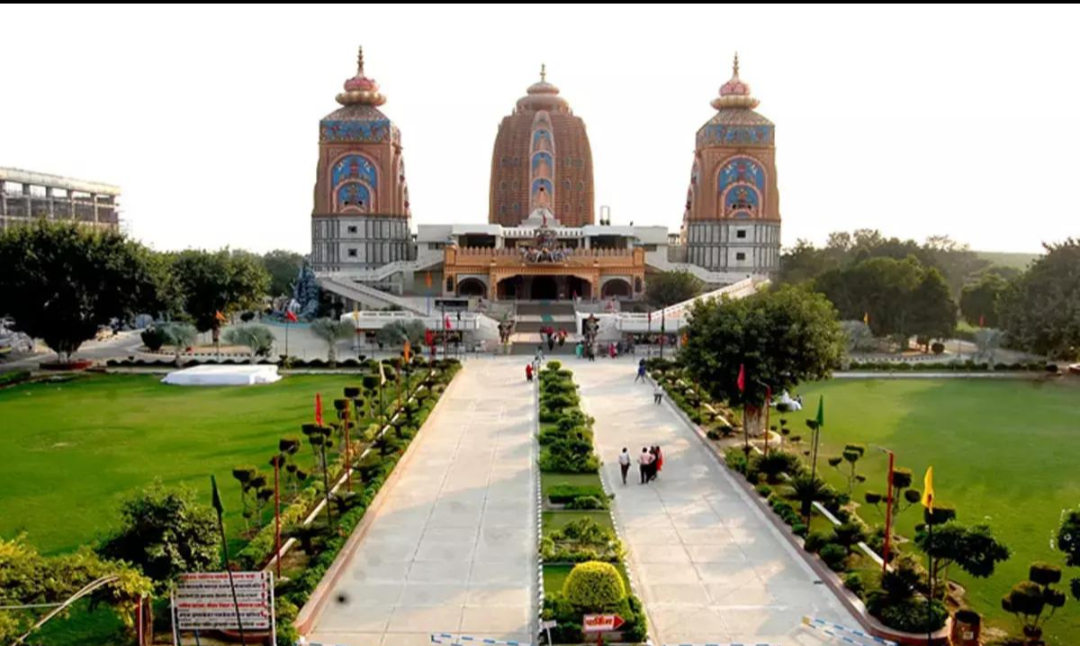
History, Culture, Ancestry and Legacy of the Children of Agroha
Introduction: Who Are the Agarwals?
The Agarwals (also written Agrawal, Aggarwal or Agrawala) are one of India's largest and best-known trading communities. Traditionally classed within the Vaishya varna and widely referred to as Baniyas, they trace their collective ancestry to a legendary king, Maharaja Agrasen, and to the ancient town of Agroha in present-day Hisar district, Haryana. From that heartland the community spread across the plains of north India, into Rajasthan's Shekhawati and Marwar, and from there across the whole subcontinent and beyond, wherever markets, credit and commerce were to be found.
Unlike communities defined by a single river valley or province, the Agarwals are best understood as a people of a region that became a network. Their roots lie in the semi-arid tract where Haryana, Punjab and Rajasthan meet, but their identity has been carried for centuries by migrating merchant families who kept their gotras, their reverence for Agrasen and their distinctive customs even as they settled in Kolkata, Assam, Hyderabad, Mumbai or Nepal. This profile sets out what is reliably known about Agarwal origins, geography, social structure, religion, customs, food, dress, diaspora and notable members, and notes clearly where tradition and documented history diverge.
Etymology of the Name "Agarwal"
The name is generally understood to mean "of Agroha" or "people of Agra(sen)", combining the place or founder's name with the suffix -wal ("belonging to"), a common pattern in north Indian community names. Community tradition links it to Maharaja Agrasen, while historians usually read it as a place-derived name tied to Agroha, the ancient town where the community locates its origin. Both readings point to the same idea: the Agarwals define themselves by a shared ancestral homeland and a shared founding ancestor rather than by an occupation-derived label.
Geography: The Agroha Heartland and Beyond
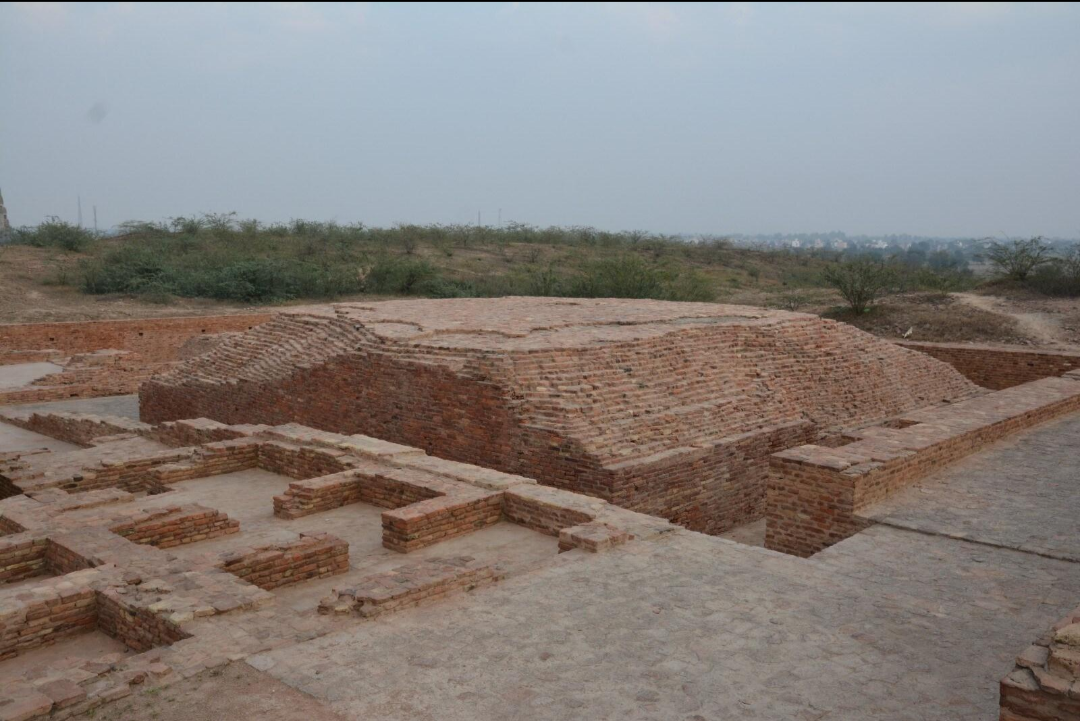
The ancestral homeland lies in the Hisar-Sirsa-Fatehabad belt of western Haryana, an arid-to-semi-arid zone on the old caravan routes connecting the Punjab plains, the Ganga-Yamuna Doab and the Rajasthan desert. Agroha sat on a historic trade route between Taxila in the northwest and Mathura in the Gangetic plains, which helps explain why a commercial community would emerge here. The excavated mound at Agroha (Agroha Theh), dug in the late 1930s and again between 1978 and 1985, revealed a substantial early-historic town with coins, seals, sculpture and Buddhist and Brahmanical remains, giving the community's origin tradition an archaeological anchor, although the excavations do not themselves prove the Agrasen legend.
Today, the largest concentrations of Agarwals are found in Haryana, Delhi, western and central Uttar Pradesh, Rajasthan (especially Shekhawati, Jaipur and Marwar), Punjab, Madhya Pradesh, Bihar and Jharkhand, West Bengal (especially Kolkata), Assam and the Northeast, Maharashtra (Mumbai), Gujarat, Telangana (Hyderabad) and the Terai of Nepal. Because the community is spread so widely, regional Agarwals often speak different home languages and follow slightly different customs, while still recognising one another as part of the same people.
Origins and Early History
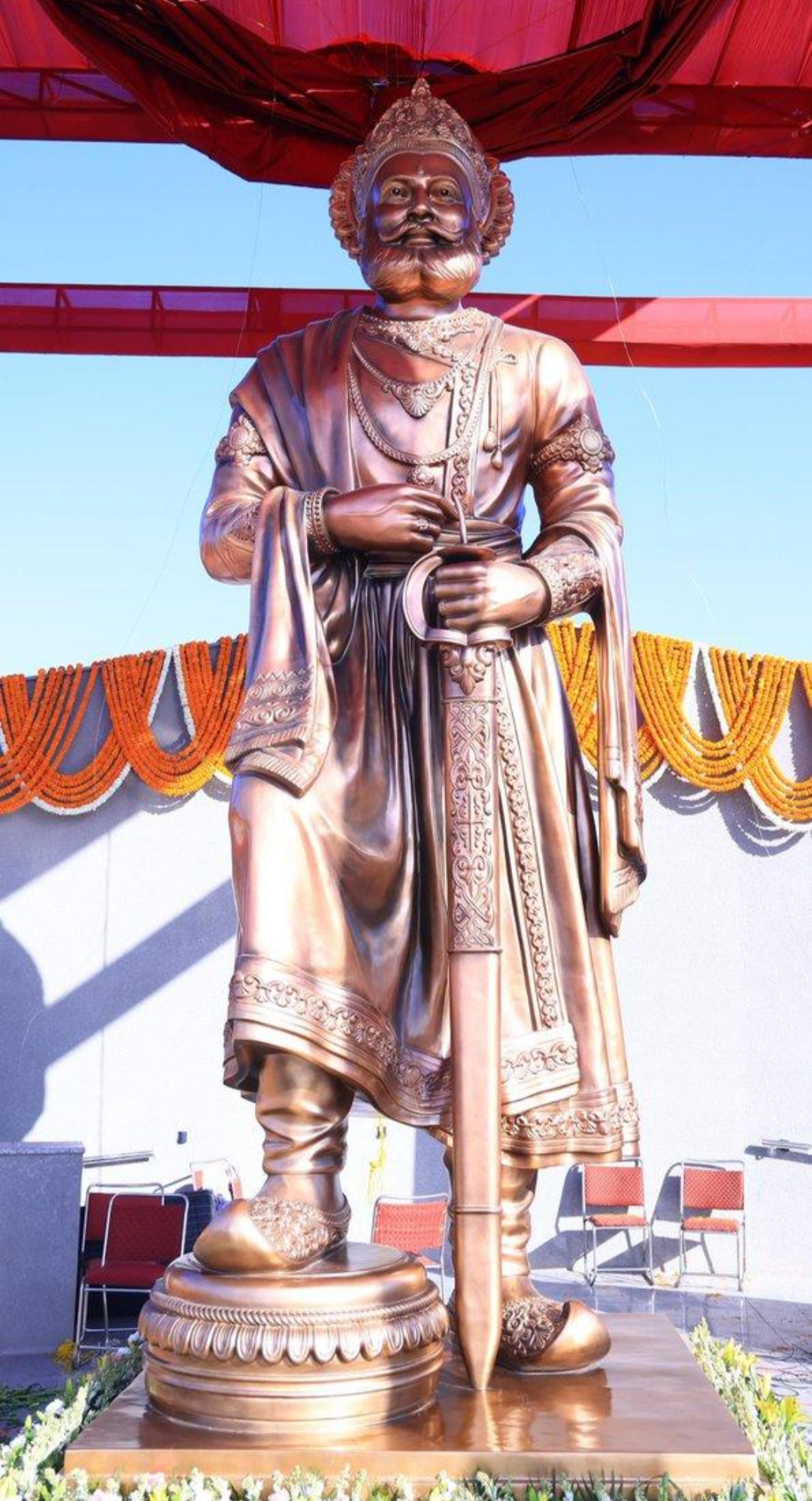
Community tradition holds that Maharaja Agrasen, a Suryavanshi (some versions say Kshatriya-born) king of the Dvapara or early Kali age, founded the kingdom of Agroha. He is remembered as a ruler who renounced animal sacrifice, embraced non-violence and adopted a merchant life for his people. The most famous story about him concerns the custom of "ek eet, ek rupaya" (one brick and one coin): any new family settling in Agroha would receive one brick and one coin from every existing household, so that the newcomer could build a house and start a business. Whether literal or symbolic, this story is still told as the founding ethic of Agarwal mutual help.
Tradition further holds that Agrasen performed eighteen yajnas, and that each yajna was presided over by a different rishi, whose name became the gotra of one of Agrasen's eighteen sons and their descendants. This is the origin account behind the community's famous eighteen gotras (sometimes counted as seventeen and a half, a detail explained by various folk stories). Agroha is said to have declined after foreign invasions and repeated fires, with its people dispersing across north India. Historians cannot date Agrasen or confirm these events, and they treat the narrative as a foundational tradition rather than documented history; but the town's archaeological richness, and the persistence of Agroha as a pilgrimage and memorial site (the modern Agroha Dham temple complex was built from the 1970s onward), shows how central the place remains to Agarwal identity.
In documented history, Agarwal merchants and bankers appear prominently from the medieval period. Agarwal families served as financiers, revenue farmers and treasurers under the Delhi Sultanate, the Mughals and regional courts, and Agarwal Jain families were important patrons of temples and manuscripts in north India. In the eighteenth and nineteenth centuries, Agarwals from Shekhawati and Marwar formed a major part of the great Marwari migration eastward, following the East India Company's commercial economy into Bengal, Bihar, Assam and beyond.
Trace Your Roots to Agroha
Does your family remember Agroha, Hisar or Shekhawati as its ancestral home? Your DNA can show how your lineage connects to the Agarwal heartland and to neighbouring communities of the northwest.
The Eighteen Gotras and Social Structure
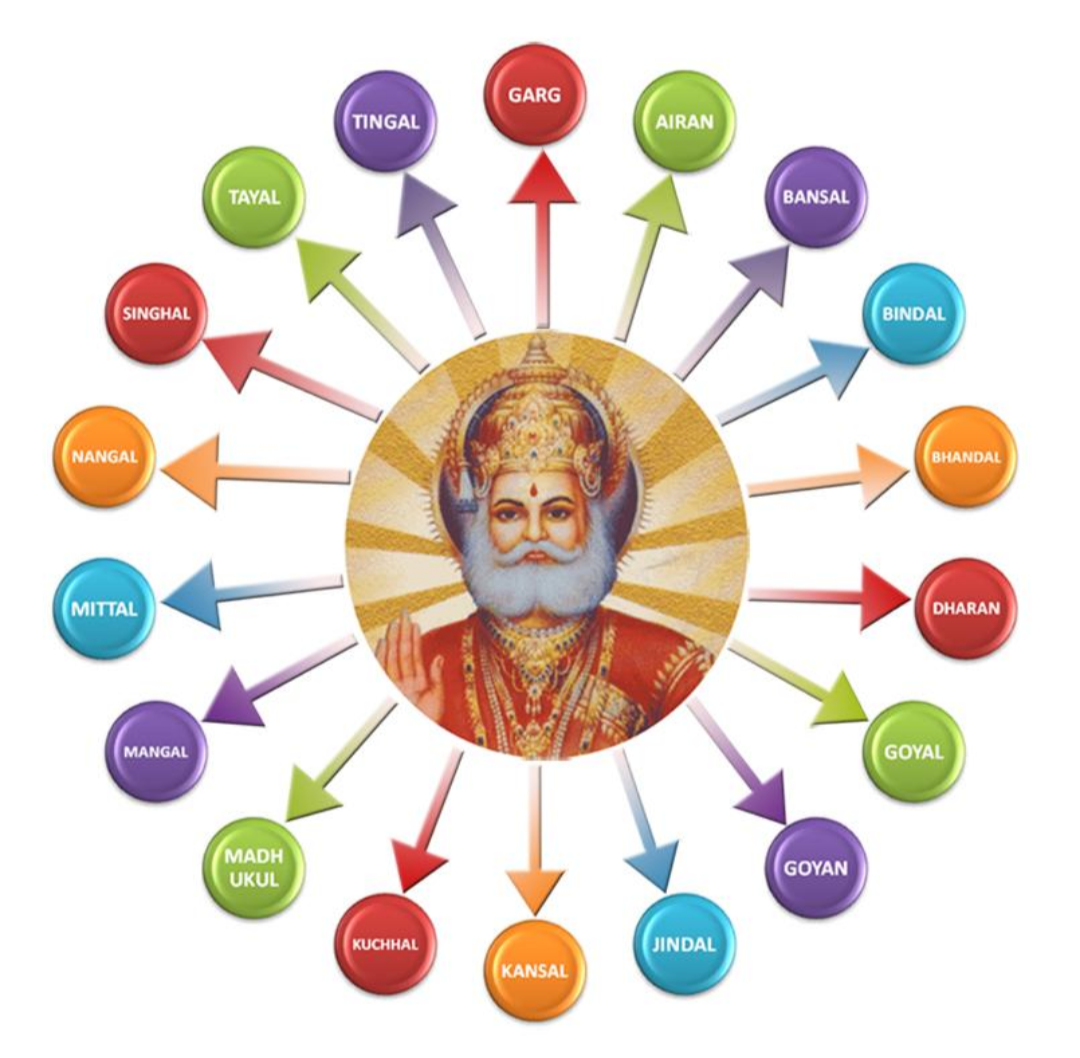
Agarwal social organisation rests on the gotra system. Members of the same gotra are traditionally considered descendants of a common ancestor and do not marry each other; marriage is expected within the wider Agarwal community but outside one's own gotra (and often also avoiding the mother's gotra). The eighteen gotras most commonly listed are:
| Gotra | Gotra | Gotra |
|---|---|---|
| Garg (Gargeya) | Goyal (Goel) | Goyan (Gangal) |
| Bansal | Kansal | Singhal |
| Mangal | Jindal | Tingal (Tayal) |
| Airan | Dharan | Madhukul |
| Bindal | Mittal | Kuchhal |
| Nangal | Bhandal | Tayal / Tunghal |
Spellings and even the exact list vary between regions and community bodies, and many Agarwals use their gotra name, rather than "Agarwal", as their surname. This is why surnames such as Goyal, Bansal, Mittal, Jindal, Singhal, Garg and Kansal so often belong to Agarwal families. Historically, the community was also divided into Bisa ("twenty", regarded as full-status) and Dasa ("ten") sections, a distinction rooted in older ideas of lineage purity and marriage rules. It still survives in some places but has weakened greatly in urban and younger families.
The community is held together by a dense network of associations, including the Akhil Bharatiya Agarwal Sammelan and countless local Agarwal Sabhas and Agrawal Samajs, which run dharamshalas, schools, hospitals, matrimonial services and charitable trusts.
Regional Sub-groups
- Haryanvi and Punjabi Agarwals — living closest to the Agroha homeland, in Haryana, Delhi, Punjab and Chandigarh; often speak Haryanvi, Hindi or Punjabi at home.
- Marwari Agarwals — families from Shekhawati and Marwar who migrated east and south from the eighteenth century; the most visible branch in Kolkata, Assam, Hyderabad, Mumbai and Nepal, often speaking Marwari or Shekhawati at home.
- Uttar Pradesh and Purvanchal Agarwals — long settled in the Doab, Rohilkhand, Awadh and Purvanchal; Hindi or Awadhi-speaking, prominent in trade towns from Meerut and Agra to Kanpur and Varanasi.
- Bihari and Jharkhandi Agarwals — a mix of older settlers and Marwari migrants, concentrated in Patna, Gaya, Bhagalpur, Ranchi and Dhanbad.
- Jain Agarwals — Agarwals who follow Jainism (largely Digambara, with some Shvetambara families), especially in Delhi, western UP, Haryana and Rajasthan; they share gotras and marriage networks with Hindu Agarwals in many places.
- Nepali Agarwals — Marwari-descended families in Kathmandu, Biratnagar, Birgunj and other Terai towns who have been central to Nepal's modern commerce.
Religion and Belief
Most Agarwals are Hindus, largely Vaishnava in devotion, with strong worship of Krishna, Rama and especially Lakshmi, who is regarded as the kuldevi (family goddess) of the community; Agrasen himself is said to have been blessed by Mahalakshmi. Many Marwari Agarwal families are also devotees of Rani Sati Dadi of Jhunjhunu, Khatu Shyam ji and Salasar Balaji, while others follow particular sampradayas such as the Vallabha or Radhavallabha traditions. A significant minority are Jains, and the community's general ethic of vegetarianism and non-violence is often linked to the Agrasen tradition of renouncing animal sacrifice.
Agrasen Jayanti, celebrated on Ashwin Shukla Pratipada (the first day of Sharad Navratri), is the community's own festival, marked with processions, community feasts and charitable events. Diwali, the festival of Lakshmi and of new account books (bahi-khata puja), carries special meaning in Agarwal trading households.
Language
There is no single Agarwal language. The community speaks the languages of the regions where its families have lived longest: Hindi and Haryanvi in the homeland, Marwari and Shekhawati among Rajasthani-origin families, Punjabi in Punjab, Awadhi, Bhojpuri and Braj in Uttar Pradesh and Bihar, and Bengali, Assamese, Marathi, Gujarati, Telugu or Nepali as additional languages among long-settled migrant families. Older merchant households once kept accounts in Mahajani (Muria or Lande) script, a commercial shorthand script used by north Indian traders, now almost entirely replaced by Devanagari and English.
Customs, Family Life and Marriage
Family life has traditionally been organised around the joint family and the family firm, with business, property and ritual life shared across generations. Agarwal weddings are typically elaborate, multi-day affairs that include a sagai or roka (engagement), tilak, ban or haldi, mehndi, sangeet, the baraat with the groom on a mare, the pheras before the sacred fire, and vidaai. Marwari Agarwal weddings add regional customs such as the mayra or bhaat ceremony, in which the bride's or groom's maternal uncle's family brings gifts. Marriages remain strongly endogamous within the community, governed by gotra-avoidance rules, though inter-community marriages have become far more common in cities and the diaspora.
Small everyday customs carry strong community flavour: beginning new account books on Diwali with the auspicious "Shubh-Labh" and swastika marks; keeping fasts on Ekadashi, Karva Chauth and other occasions; feeding cows and Brahmins as acts of merit; and building dharamshalas, gaushalas and piyaus (drinking-water stalls) as forms of charity.
Discover Your Gotra's Genetic Story
Are Garg, Bansal and Mittal families genetically closer to each other than to other communities? By testing, members help us map how Agarwal gotras relate on a genetic level, something no published study has yet done.
Cuisine
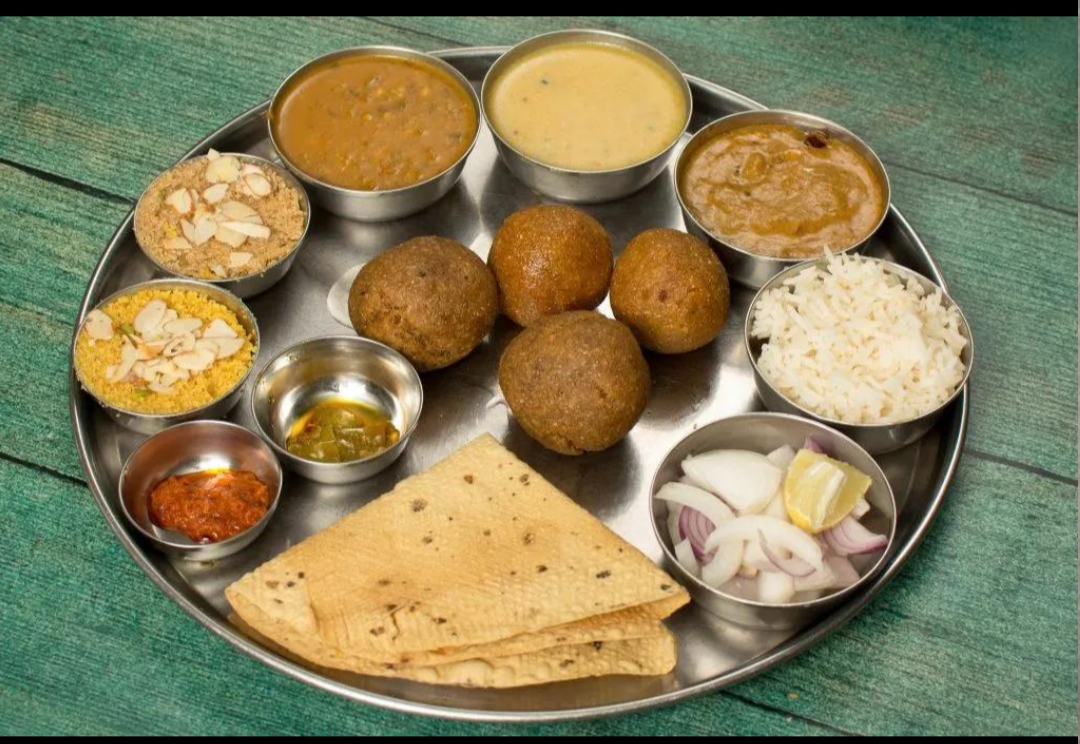
Agarwal cuisine is overwhelmingly vegetarian, and many traditional households, particularly Marwari and Jain Agarwals, also avoid onion and garlic, at least on religious days. The food blends the dairy-rich cooking of Haryana and western UP with the drought-adapted pantry of Rajasthan, and it is known for its sweets and festive snacks. Well-known dishes include:
- Dal-baati-churma — baked wheat balls served with ghee, lentils and sweet crumbled churma; a signature of Marwari households.
- Ker-sangri and gatte ki sabzi — desert beans and berries, and gram-flour dumplings in yoghurt gravy.
- Kadhi-pakora, bajre ki roti and kachri — Haryana and Shekhawati staples.
- Kachori, aloo-puri and namkeen — the breakfast and festive snacks for which Agarwal and Marwari sweet shops are famous.
- Ghewar, besan chakki, malpua and moong dal halwa — classic sweets for Teej, weddings and Diwali.
The prominence of Agarwal and Marwari families in the sweets and snacks trade, from old halwais in Delhi and Agra to modern namkeen brands, has helped carry these flavours across India.
Dress and Appearance
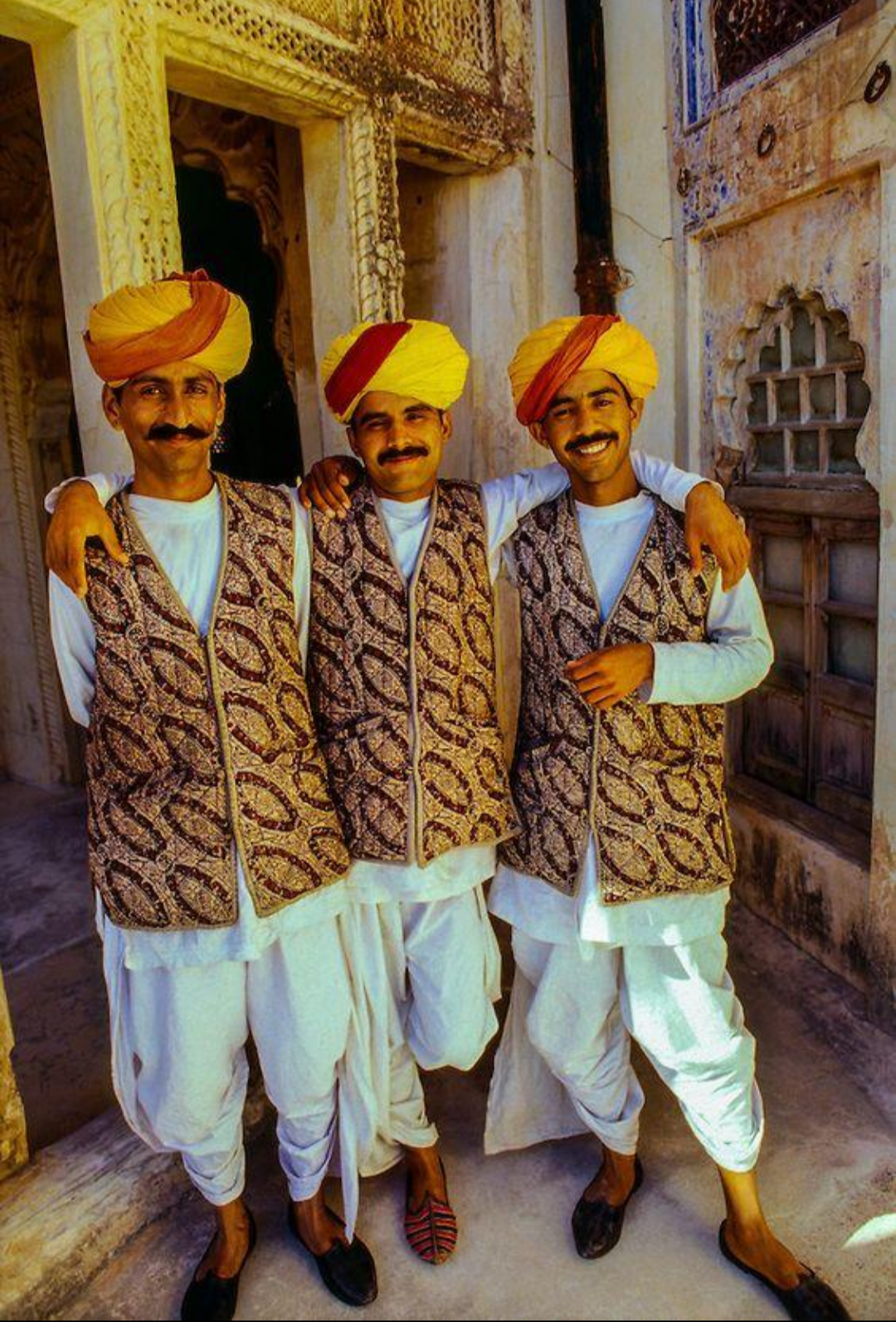
Traditional Agarwal men wore the dhoti-kurta or angarkha with a pagdi (turban), with Marwari men known for brightly coloured safas, and older merchants for the white dhoti, kurta and Gandhi cap of the bazaar. Women wore the ghaghra-choli-odhni in Rajasthan and Haryana and the saree elsewhere, with bandhani and leheriya fabrics, gota-patti work and heavy gold and kundan jewellery on festive occasions. Today, everyday dress follows urban Indian fashion, while weddings and Agrasen Jayanti bring out traditional attire.
Physically, Agarwals show the broad range of appearance typical of north and northwest Indian populations, with complexion, height and features varying considerably across regions and families. There is no single "Agarwal look"; claims of distinctive physical traits are better treated as stereotype than as fact. Genetic data, discussed below, offers a much more meaningful picture of shared ancestry.
Occupation, Business and Philanthropy
Trade, moneylending and banking were the community's traditional occupations, and Agarwals remain heavily represented in business: retail and wholesale trade, textiles, steel and metals, mining, media, finance, pharmaceuticals and, more recently, technology start-ups. Today large numbers of Agarwals also work as chartered accountants, engineers, doctors, lawyers, civil servants and academics, and the community is well represented in India's professional middle class. Philanthropy is a core community value, expressed through hospitals, schools, colleges, dharamshalas, temples and gaushalas built and run by Agarwal families and trusts across India.
Population Size
India has not published a full caste census since 1931, so there is no reliable official count of Agarwals. Community bodies frequently cite figures in the crores, but these are estimates rather than measured numbers and should be treated cautiously. What is clear is that the Agarwals are among the largest of India's Vaishya communities, with a presence in nearly every Indian state and a sizeable population in Nepal. In most states they are counted in the General category; in a few states some Vaishya groups have different classifications, so individual status depends on local lists.
Migration and Diaspora
The first great migration took Agarwals from the Agroha region into the Gangetic plains and Rajasthan over many centuries. The second, the Marwari migration of the eighteenth to twentieth centuries, carried Shekhawati and Marwar families east to Kolkata, Assam, Bihar and Burma and south to Hyderabad and Bombay. Abroad, Agarwal families today live in the United States, the United Kingdom, Canada, Australia, Singapore, Hong Kong, the Gulf states and East Africa, often as entrepreneurs, technology professionals and doctors. Diaspora Agarwal associations organise Agrasen Jayanti and Diwali celebrations and matrimonial networks, keeping community ties alive across generations.
Map Your Family's Journey
From Agroha to Shekhawati, from Kolkata to California: every Agarwal family carries a migration story. Your DNA can help reconstruct where your ancestors came from and who they mixed with along the way.
Genetic Ancestry: What Is Known and What We Are Building
This is the section most readers care about, and it is also where honesty matters most. Very few published genetic studies sample Agarwals as a named community, and none provide a definitive community-level breakdown. What follows combines what is known about comparable north and northwest Indian populations with the patterns we expect to see; the GenoConnect community feature exists precisely to replace these expectations with real, community-specific data.
The three ancestral components
Modern genetics describes most South Asians as a mix of three deep ancestral sources: Ancient Ancestral South Indians (AASI), the indigenous hunter-gatherer ancestry of the subcontinent; Iranian-related farmer ancestry, the main component of the Indus Valley Civilisation population; and Steppe pastoralist ancestry, which arrived from Central Asia in the second millennium BCE and is associated with the spread of Indo-European languages. Older papers used the simpler ANI-ASI (Ancestral North Indian and Ancestral South Indian) model; the three-way model is a finer version of the same picture.
Communities of the northwest, and upper-caste communities of north India in general, tend to carry more Indus-farmer and Steppe ancestry and less AASI ancestry than communities further south and east. As a community rooted in Haryana and Rajasthan, Agarwals would be expected to fall within the north-Indian upper-caste range: a large Indus-farmer-related share, a meaningful Steppe share and a lower AASI share than the Indian average. Exact percentages vary with the model and reference samples used, and may differ between Haryanvi, Marwari and eastern Agarwal families. We deliberately do not quote a single figure here; that number should come from tested Agarwals, not from guesswork.
| Component | Expected pattern for Agarwals | Confidence |
|---|---|---|
| Indus / Iranian-farmer related | Largest single component | Moderate, inferred from regional data |
| Steppe pastoralist | Significant, comparable to other NW upper castes | Moderate, inferred |
| AASI | Present, lower than Indian average | Moderate, inferred |
| East Asian-related | Minimal | Moderate |
Y-DNA and mtDNA haplogroups
Haplogroups trace a single line of descent: Y-DNA follows the direct paternal line and mitochondrial DNA (mtDNA) the direct maternal line. For north Indian upper-caste and trading communities, the most frequently reported Y-DNA haplogroups are R1a (largely the Z93 branch, linked to Steppe-related ancestry), alongside L, J2, H, R2 and G. For mtDNA, north Indian populations are dominated by deep South Asian branches of macrohaplogroups M and R (such as M3, M30, R5 and R7), together with U2 and smaller West Eurasian lineages like U7, HV and W. We expect Agarwals to broadly match this pattern, but the actual frequencies, and whether particular gotras show characteristic paternal lineages, remain an open question.
The gotra system makes Agarwals an especially interesting case for Y-DNA. If gotras do reflect real paternal lineages, men of the same gotra might share haplogroups more often than chance would predict. Equally, centuries of adoption, migration and record-keeping changes could have blurred any such pattern. Only data from many tested Agarwal men across gotras can answer this.
Closest communities
Based on geography, shared history and marriage networks, the communities expected to be genetically closest to Agarwals include other Vaishya and trading groups of the northwest such as Maheshwaris, Oswals and other Marwari communities, Punjabi Khatris and Aroras, and the broader population of Haryana, Delhi and Rajasthan, including Brahmin and other upper-caste groups of the same region. Regional Agarwal branches may each show closer affinity to the communities among whom they settled longest. Testing will reveal how strong these relationships really are, and whether, for example, a Kolkata Marwari Agarwal is genetically closer to a Haryanvi Agarwal or to other Marwari groups.
Help Write the Agarwal Genetic Story
No study has yet measured the AASI, Indus-farmer and Steppe composition of Agarwals, mapped their Y and mtDNA haplogroups across gotras, or identified their closest genetic relatives. Every Agarwal who tests with GenoConnect brings that picture into focus for the whole community.
Small Cultural Things
- Ek eet, ek rupaya — the brick-and-coin story is still cited at weddings, sammelans and fundraising drives as the community's defining ethic.
- Bahi-khata — the red cloth-bound account book, worshipped at Diwali, remains a symbol of Agarwal identity even in families that now keep digital accounts.
- Gotra as surname — seeing Goyal, Bansal or Mittal on a nameplate is, for many Indians, an immediate signal of Agarwal heritage.
- Agroha Dham — many families make pilgrimages to the Agroha temple complex and the Shakti Sarovar there.
- Thrift and generosity — the stereotype of the careful trader sits alongside the community's long record of building public hospitals, schools and water stalls.
Notable Figures
The Agarwal community has produced leading figures in business, politics, literature and public life. A selection includes:
- Bharatendu Harishchandra (1850–1885) — poet and playwright from Varanasi, widely regarded as the father of modern Hindi literature and theatre.
- Lala Lajpat Rai (1865–1928) — the "Punjab Kesari" of the freedom movement, born into an Agarwal Jain family.
- Jamnalal Bajaj (1889–1942) — industrialist, founder of the Bajaj Group and close associate of Mahatma Gandhi.
- Ram Manohar Lohia (1910–1967) — socialist thinker and freedom fighter.
- Lakshmi N. Mittal — steel magnate and chairman of ArcelorMittal.
- Anil Agarwal — founder and chairman of Vedanta Resources.
- O. P. Jindal and the Jindal family — founders and leaders of the Jindal steel and power group.
- Sachin Bansal and Binny Bansal — co-founders of Flipkart.
- Ritesh Agarwal — founder of OYO.
- Arvind Kejriwal and Piyush Goyal — prominent contemporary politicians from different parties.
Conclusion
The Agarwal story begins with a king, a town and a simple promise of a brick and a coin, and it continues in the account books, kitchens, temples and boardrooms of a community now spread across the world. From the mound at Agroha to the markets of Kolkata and the start-ups of Bengaluru, the Agarwals have carried their gotras, their devotion to Lakshmi and Agrasen, and their ethic of mutual help through every migration. The deepest chapter of that story, the one written in their DNA, is still largely unwritten. With each member who tests, that chapter grows clearer.
Frequently Asked Questions
Q. Who is the founder of the Agarwal community?
Community tradition names Maharaja Agrasen, the legendary king of Agroha in present-day Haryana, as the founding ancestor of all Agarwals.
Q. Where is Agroha?
Agroha is a town in Hisar district, Haryana, about 20 km from Hisar city. It contains an excavated ancient mound and the Agroha Dham temple complex.
Q. How many gotras do Agarwals have?
Traditionally eighteen (sometimes described as seventeen and a half), including Garg, Goyal, Bansal, Kansal, Singhal, Mittal, Jindal, Mangal and others. Spellings and lists vary by region.
Q. Are Agarwals and Marwaris the same?
Not exactly. Marwari is a regional identity for trading communities from Rajasthan, which includes Agarwals, Maheshwaris, Oswals and others. Many, but not all, Agarwals are Marwaris, and many Marwaris are not Agarwals.
Q. Are Agarwals Hindu or Jain?
Most are Hindu, largely Vaishnava, but there is a significant Jain Agarwal population, and the two often share gotras and social networks.
Q. Is Agarwal a General category community?
In most Indian states, yes. Reservation lists are set state by state, so anyone needing an official answer should check their state's current list.
Q. What is the population of Agarwals?
There is no reliable official figure, since India has not published a full caste census since 1931. Community estimates exist but should be treated with caution.
Q. What is the AASI, Indus farmer and Steppe composition of Agarwals?
No published study has yet measured this specifically for Agarwals. Based on regional data, they are expected to carry substantial Indus-farmer and Steppe ancestry and relatively low AASI ancestry, but precise figures require community-level testing, which GenoConnect is building.
Q. What are the common Y-DNA haplogroups among Agarwals?
Expected haplogroups, based on similar north Indian communities, include R1a-Z93, L, J2, H, R2 and G. Whether specific gotras carry specific haplogroups is still unknown.
Q. Which communities are genetically closest to Agarwals?
Likely candidates include Maheshwaris, Oswals, Khatris, Aroras and other upper-caste communities of Haryana, Delhi and Rajasthan, but this has not been measured directly.
Q. Can a DNA test tell me my gotra?
Not directly. A gotra is a cultural and ritual identity. However, if enough Agarwals test, Y-DNA patterns may reveal whether men of the same gotra tend to share paternal lineages.
Q. When is Agrasen Jayanti celebrated?
On Ashwin Shukla Pratipada, the first day of Sharad Navratri, usually falling in September or October.
Q. How can I contribute to research on my community?
By testing with GenoConnect and joining the Agarwal community feature, you help build the first community-specific picture of Agarwal ancestry, haplogroups and genetic relationships.
References
- [1]Wikipedia. "Agrawal." https://en.wikipedia.org/wiki/Agrawal
- [2]Wikipedia. "Agrasena." https://en.wikipedia.org/wiki/Agrasena
- [3]Wikipedia. "Agroha." https://en.wikipedia.org/wiki/Agroha
- [4]Wikipedia. "Marwari people." https://en.wikipedia.org/wiki/Marwari_people
- [5]Archaeological Survey of India / Haryana State Archaeology, reports on excavations at Agroha.
- [6]Timberg, Thomas A. The Marwaris: From Traders to Industrialists. Vikas, 1978.
- [7]Reich, D. et al. "Reconstructing Indian population history." Nature 461 (2009).
- [8]Narasimhan, V. M. et al. "The formation of human populations in South and Central Asia." Science 365 (2019).
- [9]Sengupta, S. et al. "Polarity and temporality of high-resolution Y-chromosome distributions in India." AJHG 78 (2006).
- [10]Akhil Bharatiya Agarwal Sammelan, community publications.