

Tamil Nadu Genome Project Community
Explore the fascinating Tamil Nadu genetics & deep roots of Tamil people. Discover the history, geography, and unique DNA of this South Indian community
TAMIL NADU GENOME PROJECT COMMUNITY PROFILE
Geography, People, History, and Genetics of the Tamil Country
1. Introduction: Who Are the People of Tamil Nadu?
Tamil Nadu, literally the “Tamil country,” is not a single caste or religious community but a vast geography-defined population: the inhabitants, past and present, of India's southernmost mainland state, occupying the far end of the Deccan peninsula between the Eastern and Western Ghats and the Bay of Bengal. With roughly 72 million residents at the 2011 Census and an estimated population well above 80 million today, Tamil Nadu is home to one of the oldest continuously spoken and written languages on earth, Tamil, and to a civilisation whose literary and epigraphic record stretches back more than two thousand years. This profile treats “Tamil Nadu” as a geography-of-origin community in the genealogical sense: the shared population of a defined territory, encompassing its many communities, sub-regions, religions, and migrant traditions, whose ancestors have farmed the Kaveri delta, traded across the Indian Ocean, and built some of the world's largest functioning temple complexes for well over two millennia.
Bordered by Andhra Pradesh to the north, Karnataka to the northwest, Kerala to the west, and the Bay of Bengal, the Indian Ocean, and the Gulf of Mannar along its long eastern and southern coastline, Tamil Nadu sits at the very tip of the Indian subcontinent, with Kanniyakumari (Cape Comorin) marking the peninsula's southernmost point. Its historic capitals and temple towns — Madurai, Thanjavur (Tanjore), Kanchipuram, Chennai (Madras), Tiruchirappalli, and Rameswaram — have at different points over two thousand years served as seats of Sangam-era academies, imperial Chola and Pandya capitals, colonial presidency headquarters, and centres of devotional Bhakti literature and Carnatic music. The region is at once the historic homeland of the Sangam-age Chera, Chola, and Pandya dynasties, the ground on which the medieval Chola Empire projected naval power as far as Southeast Asia, the heartland of the Dravidian self-respect and rationalist movements of the twentieth century, and the source of one of the world's largest and most consequential indentured-labour and professional diasporas.
2. Geography
Tamil Nadu is the tenth-largest Indian state by area, covering approximately 130,058 square kilometres, and is unique among Indian states in that both the Western Ghats and the Eastern Ghats run through its territory, meeting at the Nilgiri Hills in the northwest. The state's terrain falls into three broad zones: the towering Western Ghats along the western border with Kerala — comprising the Nilgiri, Anaimalai, and Palni hill ranges, whose peaks exceed 2,400 metres, with Anai Mudi's neighbouring Anaimalai summit ranking among the highest points in peninsular India; the lower, discontinuous Eastern Ghats and their outlying Javadi, Kalrayan, and Shevaroy (Servarayan) hills running through the state's centre, separating the Kaveri and Palar river basins; and the broad eastern coastal and inland plains that make up the overwhelming bulk of the state's cultivable area, drained by rivers flowing east into the Bay of Bengal.
The state's major rivers — the Kaveri (Cauvery), Palar, Ponnaiyar, Vaigai, and Tambraparni (Thamirabarani) — nearly all rise in the Western Ghats and flow eastward; only the Tambraparni is perennial, fed by both the southwest and northeast monsoons, while the others depend heavily on seasonal rainfall. The Kaveri delta, spreading across Thanjavur and the surrounding districts, is the broadest and most fertile part of the eastern plains and has been celebrated for over two thousand years as the historic granary of the Tamil country, sustaining wet-rice cultivation under an ancient network of Chola-era irrigation works including the Grand Anicut (Kallanai), one of the oldest water-diversion structures still in use in the world. Further south lie the comparatively arid flatlands around Ramanathapuram and Madurai. Because the Western Ghats block much of the southwest monsoon, Tamil Nadu is unusually dependent on the northeast (retreating) monsoon for its rainfall, making it prone to cyclical water scarcity. The state's capital and largest city is Chennai, on the northeastern coast; it is administratively organised into 38 districts.
Cultural-Geographic Sub-Regions
Long before modern district boundaries, the Tamil-speaking population identified itself with older cultural and dialect regions, several of which correspond to the classical Chera-Chola-Pandya-Pallava political geography:
| Region | Approximate Location | Notable Centres | Character |
|---|---|---|---|
| Chennai Metro / Tondaimandalam | Northeastern coast | Chennai, Kanchipuram, Chengalpattu, Tiruvallur | Historic Pallava heartland; today the state's administrative, industrial and IT capital region |
| Kongu Nadu | Western interior, upper Kaveri belt | Coimbatore, Tiruppur, Erode, Salem, Namakkal | Textile and manufacturing hub with a distinct Kongu Tamil dialect |
| Chola Nadu / Kaveri Delta | Central-eastern deltaic plain | Thanjavur, Tiruchirappalli, Kumbakonam, Mayiladuthurai | The historic "rice bowl" of Tamil Nadu; heartland of Chola temple architecture and classical arts |
| Pandya Nadu | Southern interior | Madurai, Dindigul, Theni, Sivaganga, Virudhunagar | Ancient Pandya capital region; seat of the Sangam academies and the Meenakshi Temple |
| Chettinad | South-central, part of Sivaganga/Pudukkottai | Karaikudi, Devakottai, Kanadukathan | Historic merchant-banker homeland; famed mansion architecture and distinctive cuisine |
| Nanjil Nadu / Deep South | Southern tip | Kanniyakumari, Tirunelveli, Thoothukudi | Historic Venad/Travancore-linked tract with Tamil-Malayalam cultural overlap |
| Nilgiris & Western Ghats hill tract | Northwestern highlands | Udhagamandalam (Ooty), Coonoor, Kodaikanal | Cool hill-station belt; home to indigenous Toda, Kota, and Badaga communities |
3. Origins and History
3.1 Prehistoric Foundations and the Sangam Age
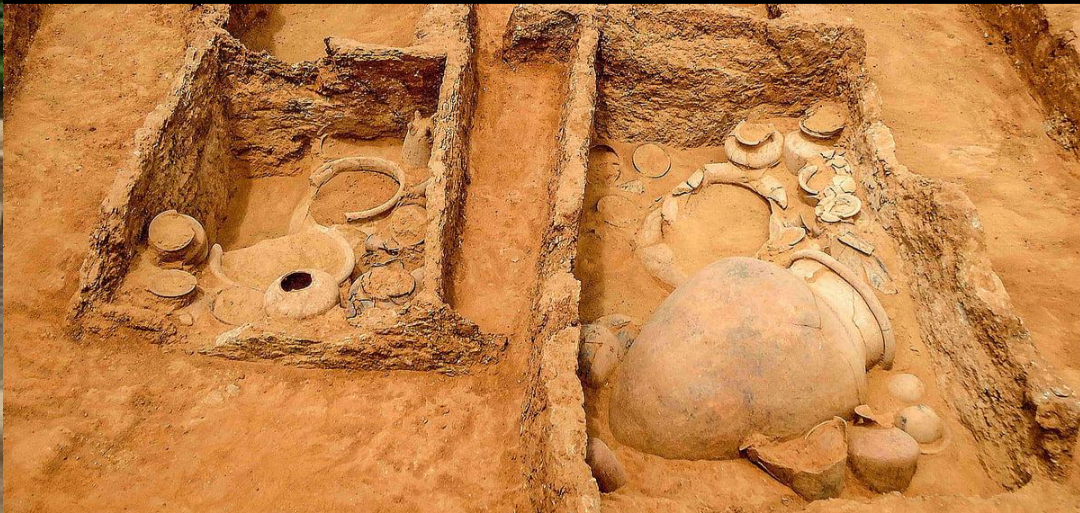
Human habitation of the Tamil country reaches back to the Palaeolithic period, with stone-tool finds across the region and megalithic burial sites (dating roughly 1000–300 BCE) found widely across the interior uplands, attesting to an Iron Age agro-pastoral culture that predates written history. Community memory and classical literature converge on the Sangam period (roughly the last centuries BCE through the early centuries CE) as the foundational era of Tamil civilisation: according to Tamil literary tradition, three successive Sangams, or academies of poets, were convened under the patronage of the Pandya kings of Madurai, producing the corpus of classical poetry — the Ettuthokai and Pathupattu anthologies, along with Tiruvalluvar's ethical treatise the Tirukkural — that remains the bedrock of Tamil literary identity. During this age, the Tamil country (Tamilakam) was divided among three principal ruling lines, the Chera in the west (roughly modern Kerala and western Tamil Nadu), the Chola in the northeast (the Kaveri basin), and the Pandya in the south (around Madurai), alongside numerous local chieftains, and Sangam poetry itself classified the landscape into five ecological-emotional tinai, or regions — kurinji (hills), mullai (forest/pastoral), marudam (agricultural plains), neidal (coast), and palai (arid wasteland) — a framework still cited as an early indigenous model of human-environment relations.
3.2 The Age of Empires: Pallavas, Pandyas and Cholas (c. 600–1300 CE)
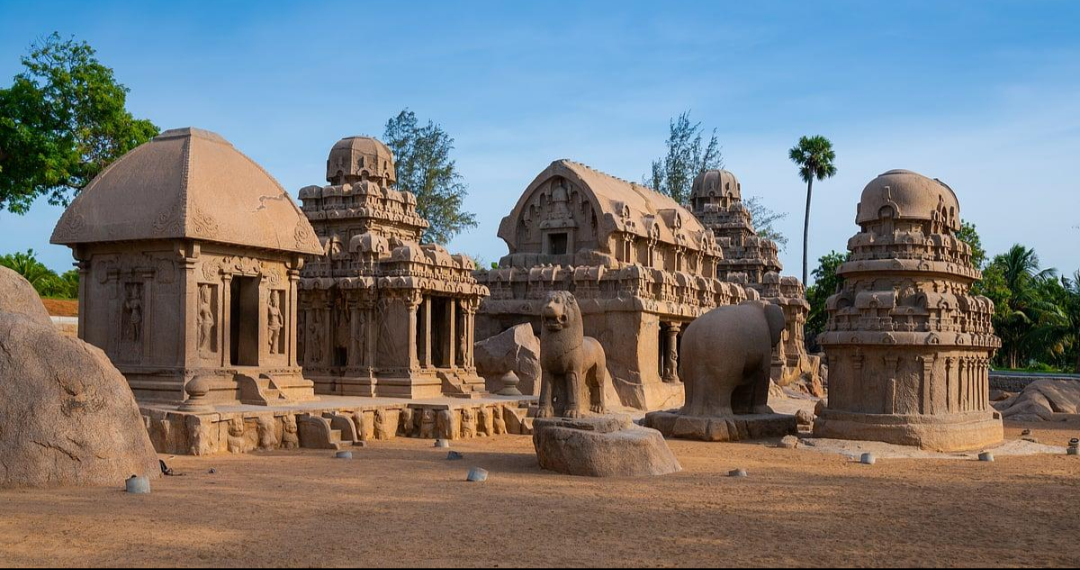
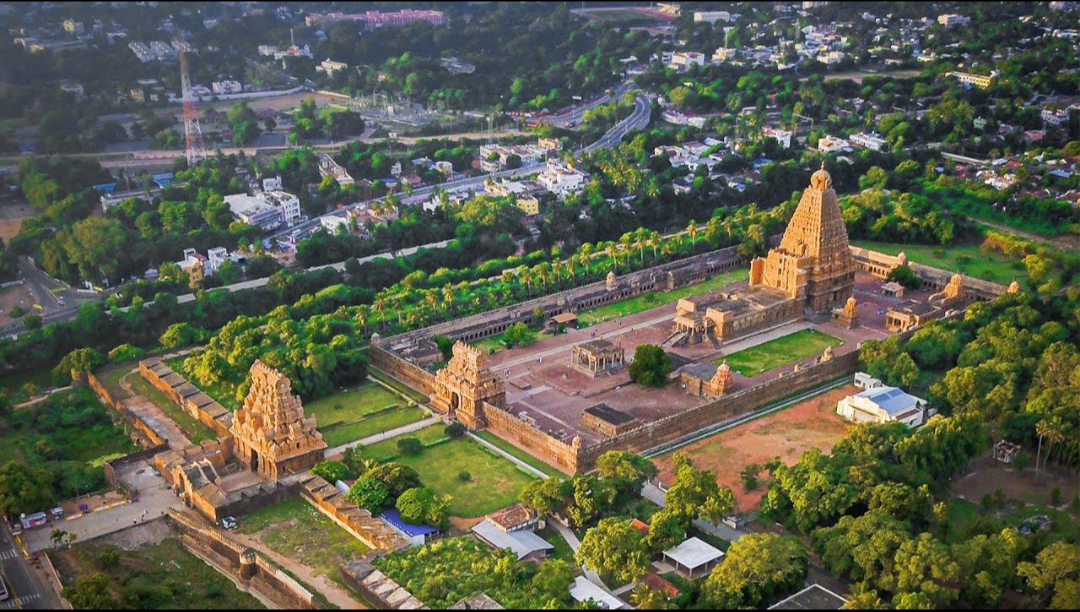
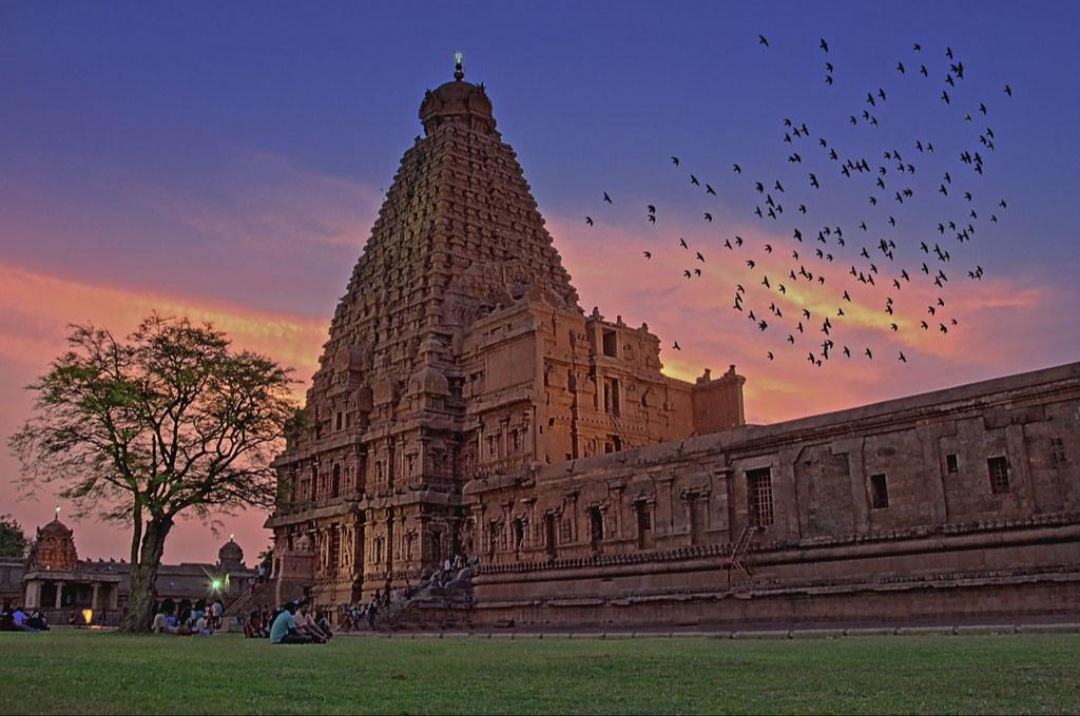
Following an obscure interregnum sometimes associated with the Kalabhra dynasty (roughly 300–600 CE), the Tamil country entered what historians commonly call its Age of Empires. The Pallava dynasty, ruling from Kanchipuram, rose to dominate the northern Tamil region from around the sixth to ninth centuries, sponsoring the rock-cut and structural temple architecture of Mahabalipuram (a UNESCO World Heritage Site) and engaging in prolonged rivalry with the Chalukyas of the Deccan. In the south, the Pandyas revived their fortunes around Madurai, while around 850 CE the Chola line was dramatically revived by Vijayalaya, who captured Thanjavur; his tenth- and eleventh-century successors Rajaraja I and Rajendra I built the medieval Chola Empire into the dominant power of peninsular India and the Indian Ocean, constructing the great Brihadisvara Temple at Thanjavur, maintaining an unusually well-documented system of village self-government (sabha and ur assemblies recorded in stone inscriptions), and launching naval expeditions as far as Sri Lanka, the Maldives, and the Srivijaya kingdom of maritime Southeast Asia — a reach that left a lasting Tamil commercial and religious imprint across the Bay of Bengal world.
3.3 Vijayanagar, the Nayaks, and the Setupatis
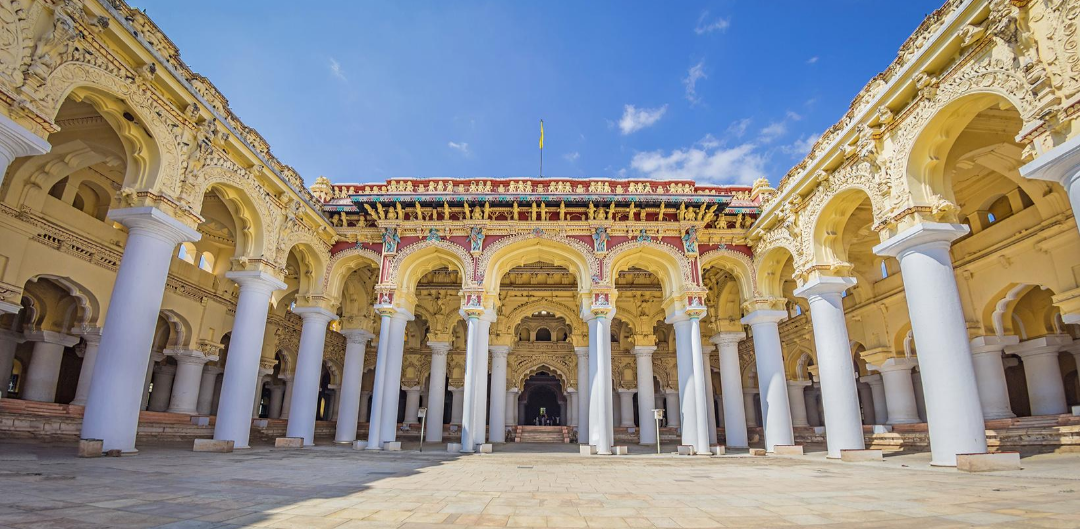
The Chola and Pandya empires declined through the thirteenth and fourteenth centuries amid Delhi Sultanate incursions into the far south; the Tamil country was subsequently absorbed into the Vijayanagar Empire, which governed through Telugu-speaking Nayak viceroys based at Madurai, Thanjavur, and Gingee from the sixteenth century onward. The Madurai Nayaks, most famously Thirumalai Nayak in the seventeenth century, undertook extensive temple building and irrigation works and oversaw a further layering of Telugu- and Kannada-origin elite lineages onto the Tamil social landscape, while the Maravar Setupatis of Ramanathapuram controlled the far south around Rameswaram.
3.4 European Contact and the Colonial Period
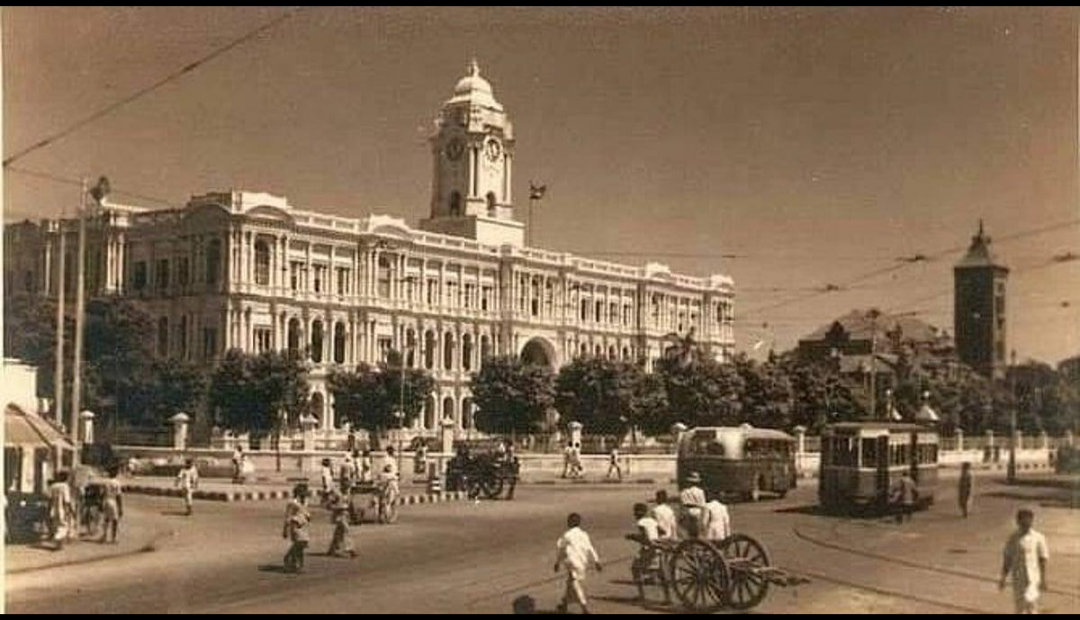
Tamil Nadu's long coastline drew successive waves of European trading powers from the sixteenth century: the Portuguese at San Thome (Mylapore), the Dutch at Nagapattinam, the French at Pondicherry (which remains, alongside Karaikal, a former French enclave with a distinct Franco-Tamil heritage) and, decisively, the British East India Company, which established Fort St George at Madras in 1639 and built it into the administrative capital of the Madras Presidency, the largest and one of the earliest British territorial units in India. Anglo-French rivalry across the Carnatic Wars of the mid-eighteenth century, and the subsequent consolidation of British rule following the defeat of Tipu Sultan's allies and the annexation of remaining Tamil polities, brought the whole of the Tamil country under colonial administration by the early nineteenth century. The Madras Presidency became a major centre of colonial-era education, Christian missionary activity, and railway and irrigation development, while also enduring severe famines — notably the Great Famine of 1876–78 — that drove much of the emigration described below.
3.5 Post-Independence Tamil Nadu
The Madras Presidency was reorganised on linguistic lines after independence, losing its Telugu-, Kannada-, and Malayalam-speaking districts, and the resulting Tamil-majority state was renamed Tamil Nadu in 1969. In the decades since, strong state investment in Tamil-medium education, public health, and welfare programmes has given Tamil Nadu some of India's better social-development indicators, while a wave of industrial and export-oriented growth from the late twentieth century onward has built it into one of the country's most urbanised and economically diversified states, with continued prominence in national cinema, classical arts, and manufacturing.
4. Demographic Profile
Tamil Nadu's 2011 Census population stood at 72,147,030, up from 62.4 million in 2001, making it India's sixth most populous state; current estimates place the population above 80 million. Tamil Nadu is among the most urbanised of India's larger states, with 48.4 per cent of its people living in cities and towns, and one of the more demographically advanced, recording an unusually high overall literacy rate of 80.09 per cent (86.77 per cent for men, 73.44 per cent for women) and a favourable sex ratio of 996 females per 1,000 males — both notably better than the all-India average and reflecting decades of sustained state investment in health and female education.
Religiously, the state is predominantly Hindu (about 87.6 per cent as of the 2011 Census), with significant Christian (about 6.1 per cent, one of the higher Christian shares of any major Indian state, concentrated in the southern districts) and Muslim (about 5.9 per cent) minorities, alongside small Jain, Sikh, and Buddhist communities. Linguistically, Tamil is the mother tongue of some 88 per cent of the population, with Telugu, Urdu, Kannada, Malayalam, Saurashtra, and Hindi spoken by smaller communities descended from historic migrant and trading groups — including the Telugu-speaking Naidu and Reddy lineages left by the Vijayanagar-Nayak period, the Saurashtrian silk-weavers of Madurai and Kanchipuram descended from Gujarati migrants of several centuries ago, and the Urdu-speaking Muslim trading communities of the coast.
5. Genetics and DNA Ancestry
As the southernmost extremity of the subcontinent and a region with an unusually deep, continuous record of in-situ settlement, Tamil Nadu offers population geneticists one of the clearest windows onto South Asia's indigenous genetic layer, alongside the same broad admixture history shared by nearly all Indian populations.
5.1 The ANI–ASI Gradient and Tamil Nadu's Position on It
Like the great majority of Indian populations, the people of Tamil Nadu descend from a mixture of two deeply diverged ancestral populations: Ancestral North Indians (ANI), related to Central Asian, Middle Eastern, Caucasian, and European populations, and Ancestral South Indians (ASI), indigenous to the subcontinent and not closely related to any population outside it. Genome-wide studies estimate that this ANI–ASI admixture occurred roughly 1,900 to 4,200 years ago across India. Populations of the far south, including Tamil Nadu, characteristically carry a markedly higher ASI component and correspondingly lower ANI component than populations of the Gangetic plain, consistent with the region's position at the end of the peninsula, furthest from the historic corridors of Indo-Aryan and Central Asian migration, and with an unusually long history of continuous, in-situ population growth layered atop a deep indigenous base.
5.2 Regional and Community-Level Genetic Studies
Direct population-genetic surveys of Tamil Nadu reinforce this picture of a predominantly autochthonous, internally structured population. A large Y-chromosome study of 1,680 individuals across 31 endogamous communities from Tamil Nadu found that putatively Indian autochthonous paternal haplogroups — including H, F*, L1, R2, and C5 — together accounted for roughly 81 per cent of the male lineages sampled, with a shared genetic heritage dating to the late Pleistocene and early Holocene (roughly 10,000–30,000 years ago), indicating that recent Holocene migrations from western Eurasia contributed under 20 per cent of Tamil male lineages overall — a markedly lower external genetic contribution than is typically reported for Gangetic-plain populations further north. A separate study of several Tamil communities found low genetic differentiation among them (an RST of under one per cent across 45 autosomal STR markers), pointing to a largely common regional origin even as some community-specific patterns remain detectable in the frequency of individual lineages.
5.3 Y-Chromosome and Deep Ancestry
Among Tamil communities broadly, studies report Y-haplogroup R (chiefly R1a1 and the indigenous South-Asian-associated R2) as the most common major lineage, followed by H (predominantly H1), L (predominantly L1-M27, itself linked by recent research to the deep prehistoric spread of Dravidian-speaking populations from West Asia into South Asia via the Iranian plateau), J (predominantly J2), and F*. Tribal groups of the state's Western Ghats hill tracts, such as the Irula, show an even higher concentration of the deep indigenous H and F* lineages with comparatively little external admixture. On the maternal (mitochondrial DNA) side, Tamil Nadu's population is dominated by the indigenous South Asian haplogroup M and its subclades, with a comparatively small Caucasoid-linked maternal component relative to populations of North India — together, these paternal and maternal patterns are broadly consistent with Tamil Nadu's linguistic self-identification as the historic core of Dravidian-speaking South India, atop a genetic substrate reaching back tens of thousands of years on the subcontinent.
6. Language and Literature
Tamil, a Dravidian language with an unbroken literary tradition of over two thousand years, is Tamil Nadu's official language and the mother tongue of the overwhelming majority of its people; it is one of very few languages in the world classified as both a classical language (a status formally recognised by the Government of India in 2004) and a living, everyday vernacular spoken by tens of millions. The Sangam corpus — anthologies such as the Kuruntokai, Akananuru, and Purananuru, alongside Tiruvalluvar's Tirukkural, a work of ethical and political couplets revered across religious lines — forms the foundation of Tamil literary identity, and regional spoken Tamil varies across the sub-regions described above, from Kongu Tamil in the west to distinctive dialects of the far south and the Chettinad tract. Modern Tamil literature, cinema (Kollywood), and print media remain a major cultural and political force, and Tamil-language pride — crystallised in the mid-twentieth-century anti-Hindi agitations — continues to shape the state's education policy and public life.
7. Religion, Festivals, and Pilgrimage
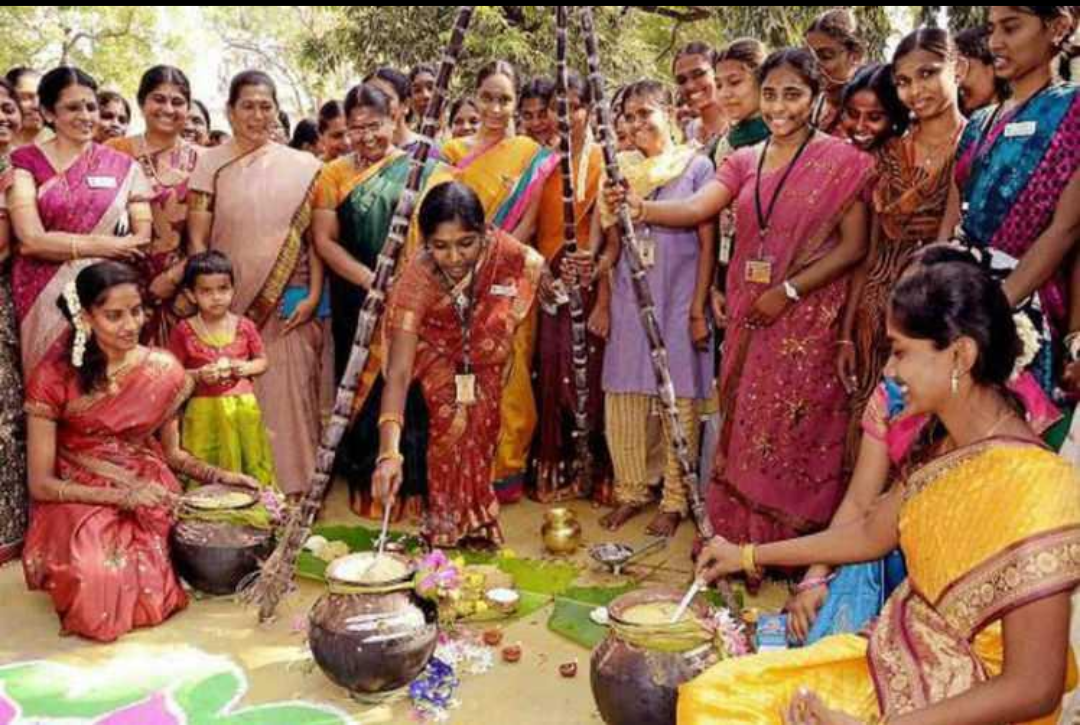
Tamil Nadu is one of the great living temple civilisations of the world: its Chola-era Brihadisvara Temple at Thanjavur, the Meenakshi Amman Temple at Madurai, and the Ranganathaswamy Temple at Srirangam (among the largest functioning Hindu temple complexes anywhere) anchor a dense sacred landscape of Shaivite and Vaishnavite pilgrimage sites, many still administering the same rituals and endowments recorded in medieval inscriptions. Tamil Nadu is also home to a distinct and ancient devotional literary tradition, the Bhakti movement of the Nayanmar (Shaivite) and Alvar (Vaishnavite) poet-saints of the sixth to ninth centuries, whose hymns (the Tevaram and Divya Prabandham) remain central to temple worship. The state hosts a substantial and historically deep Christian population, especially in the south (Tirunelveli, Kanniyakumari) and around former colonial enclaves, tracing to early Portuguese and later Protestant missionary activity as well as older Syrian Christian contact; and a Muslim community concentrated in coastal trading towns with roots in Arab maritime trade dating back over a millennium, alongside later Deccani and Labbai settlement. Major festivals include Pongal, the state's quintessential harvest festival celebrated over four days in mid-January (Bhogi, Surya Pongal, Mattu Pongal for cattle, and Kaanum Pongal); Tamil New Year (Puthandu); Deepavali; Navaratri, marked in Tamil Nadu by the distinctive golu display of dolls; and temple-specific festivals such as the Meenakshi Tirukalyanam at Madurai and the chariot (ther) festivals held across the state's temple towns.
8. Culture, Customs, and Social Practices
Tamil Nadu's population is diverse across religion, region, and community, encompassing a large Hindu majority alongside sizeable Christian and Muslim minorities, and including indigenous hill communities of the Nilgiris such as the Toda, Kota, and Badaga, known for their own distinct customs, crafts, and pastoral traditions. Joint or extended-family living has historically been common across the state, and family, kin-group, and native-village (ur) identity remain significant social anchors even amid extensive urban and overseas migration.
Tamil culture places strong emphasis on hospitality, respect for elders and teachers, and ritual purity practices around the home and temple; the kolam (or rangoli) — an intricate rice-flour or chalk-powder floor design drawn fresh each morning at the threshold of Tamil Hindu homes — is one of the most visible daily markers of Tamil domestic culture, alongside the practice of applying vibhuti (sacred ash) or sandalwood paste, and wearing fresh jasmine flowers in the hair, especially among women.
9. Marriage and Wedding Traditions
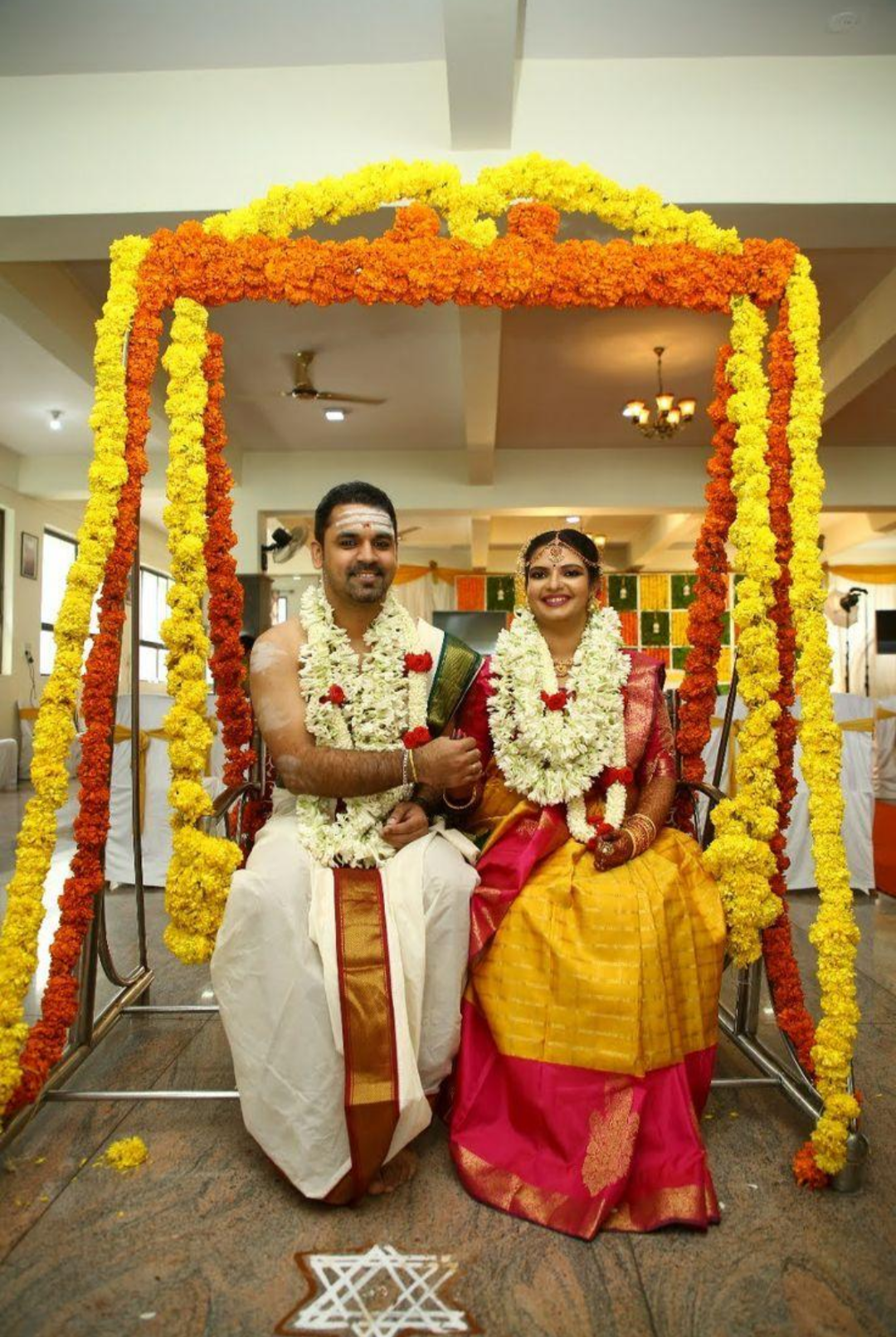
Hindu weddings in Tamil Nadu follow a broadly South Indian Vedic pattern distinct in several respects from North Indian custom: central rituals include the nichayathartham (formal betrothal), the tying of the thali or mangalsutra (a gold pendant, often specific in design to the couple's family or community, tied around the bride's neck by the groom, rather than the vermilion-and-nose-ring markers more common further north), the oonjal ceremony in which the couple is seated on a swing and sung to by women of the family, and saptapadi (the seven steps/circuits around the sacred fire). Cross-cousin and uncle-niece marriage — historically permitted and even preferred within some Tamil Hindu communities as a means of consolidating family property and alliances — has been a distinctive regional kinship practice, though its prevalence has declined markedly in recent decades. Marriage has traditionally been arranged within one's own community and often within a defined kin circle, with horoscope-matching (jathagam parpathu) remaining a common part of the marriage-negotiation process. Christian and Muslim weddings in the state follow their respective religious rites, frequently layered with shared regional customs such as the tying of ritual threads, elaborate multi-day celebrations, and Carnatic or nadaswaram-and-thavil ceremonial music common to Tamil weddings across religious lines.
10. Cuisine
Tamil cuisine is predominantly rice-based, built around fermented and steamed preparations, lentil stews, and a distinctive use of tamarind, curry leaves, and coconut, and is traditionally served on a banana leaf for festive and temple meals.
10.1 Everyday and Temple-Town Cuisine
Breakfast staples eaten across the state — idli (steamed fermented rice-and-lentil cakes), dosai (a fermented rice-and-lentil crepe, in numerous regional variants such as the ghee roast and the paper-thin masala dosai), vada, pongal (a savoury rice-and-lentil dish, distinct from the festival of the same name), and uttapam — are eaten with sambar (a tamarind-and-lentil vegetable stew) and coconut chutney, and are accompanied by filter coffee, a strong decoction-brewed coffee that is a defining feature of daily Tamil life. A typical Tamil meal (saapadu) centres on rice served with sambar, rasam (a thin, peppery tamarind soup), curd rice, kootu and poriyal (lentil-and-vegetable and dry-vegetable preparations respectively), and pickle, often eaten off a banana leaf on festive occasions. Madurai and the temple towns of the south are particularly associated with a strongly vegetarian temple-food tradition, while coastal districts maintain a substantial fish- and seafood-based non-vegetarian cuisine.
10.2 Chettinad and Regional Specialities
Chettinad cuisine, from the Chettiar merchant homeland in the Sivaganga-Pudukkottai belt, is Tamil Nadu's best-known regional culinary export, renowned nationally and internationally for its bold use of freshly ground spice blends and pepper-forward non-vegetarian dishes such as Chettinad chicken and pepper-based meat gravies, reflecting the historic trading community's access to spices from across their Southeast Asian commercial networks. Kongu-region cuisine in the west favours millet-based dishes and distinct souring agents; the coastal Tirunelveli-Kanniyakumari tract is known for its own biryani style and jackfruit- and tamarind-forward vegetarian cooking; and jaggery-and-rice sweets such as adhirasam, along with festival specialities like sweet pongal and payasam, mark seasonal and ceremonial occasions across the state.
11. Traditional Dress and Ornaments
Traditional attire in Tamil Nadu reflects the region's deep temple and weaving heritage. For women, the sari remains the classic formal and ceremonial garment, and Tamil Nadu is above all associated with the Kanjeevaram (Kanchipuram) silk sari — woven from pure mulberry silk with elaborate zari (gold-and-silver thread) work in temple-inspired motifs such as peacocks, mango, and check (rettapet) borders, and prized as a bridal and festive garment of exceptional durability, the body and border famously woven and interlocked separately. Everyday and casual wear historically favoured simpler cotton saris, including those from Madurai and the Chettinad region's distinctive checked cotton weaves. Younger unmarried girls traditionally wore the pavadai-davani (a long skirt with a half-sari draped over a blouse), a style still seen at festivals and formal functions though now largely reserved for special occasions.
For men, the veshti (a plain white or cream cotton dhoti tied at the waist) paired with a shirt remains the standard traditional ensemble, often worn with an angavastram (a shawl-like upper cloth draped over the shoulder) on formal and temple occasions; a silk veshti with a gold-bordered zari edge is customary bridal and festival wear. Gold jewellery holds deep cultural and ritual significance across Tamil communities: bridal and festive ensembles typically include the oddiyanam (a broad ornamental waist-belt), jimikki and jhumka earrings, the thali/mangalsutra marking married status, vanki armlets, and elaborate temple jewellery whose motifs, like those on Kanjeevaram silk, are drawn directly from South Indian temple sculpture and iconography.
12. Traditional Housing and Architecture
Rural Tamil Nadu's traditional dwellings historically followed a courtyard-centred plan (particularly the pillared, multi-courtyard mansions of Chettinad, built by the region's wealthy merchant families using teak, Burma teak, and Athangudi tile flooring, and regarded as one of India's most distinctive vernacular architectural traditions), while more modest agrarian households across the state favoured simple tiled or thatched-roof structures organised around a central open space. At the monumental level, Tamil Nadu's architectural legacy is defined above all by Dravidian temple architecture: the soaring gopuram (tiered gateway towers) of temples such as Meenakshi Amman at Madurai, the vimana of the Brihadisvara Temple at Thanjavur (a UNESCO World Heritage Site and one of the tallest temple towers of its era anywhere in the world), and the rock-cut and structural shore temples of Mahabalipuram, also a UNESCO site, represent a continuous, still-evolving building tradition spanning over a thousand years. The colonial period layered Indo-Saracenic and British civic architecture onto coastal cities, most visibly in Chennai's Fort St George and its surrounding administrative buildings.
13. Performing Arts and Folklore
Bharatanatyam, one of India's principal classical dance forms, developed in Tamil Nadu's temple dance (sadir) tradition and remains the state's signature performing art, alongside Carnatic music, the classical vocal and instrumental tradition whose modern repertoire was substantially shaped by Tamil, Telugu, and Sanskrit-composing musician-saints associated with the temple town of Thiruvaiyaru. Folk and ritual performance traditions run alongside this classical heritage: Villu Paatu (bow-song storytelling), Therukoothu (street theatre depicting episodes from the epics), Kavadi Attam (a ritual dance of devotion to Murugan performed by pilgrims carrying ornamented arches), and Karagattam (a pot-balancing folk dance) remain living rural and temple-festival traditions. Jallikattu, a bull-taming sport traditionally practised during Pongal in the Madurai-Tiruchirappalli-Pudukkottai belt, is one of the state's most fiercely defended cultural practices, having become a significant point of regional identity assertion in national legal and political debate in recent years.
14. Education, Livelihoods, and Socioeconomic Profile
Tamil Nadu is one of India's most industrialised and urbanised states, with a diversified economy spanning automobile and auto-component manufacturing (Chennai is often called the “Detroit of India”), textiles and knitwear (Tiruppur is India's leading knitwear-export hub, and Coimbatore and Erode anchor a broader textile-and-engineering belt), leather goods (Vellore-Ranipet), and a substantial IT and services sector centred on Chennai and Coimbatore. Agriculture remains significant, particularly rice cultivation in the Kaveri delta and sugarcane, cotton, and plantation crops (tea, coffee, spices) in the Western Ghats hill districts. Tamil Nadu's long-standing state investment in public education, healthcare, and the Public Distribution System, has produced socioeconomic indicators — literacy, infant mortality, female labour-force participation — that consistently rank among the better performers in the country.
15. Diaspora
The Tamil diaspora is among the oldest, largest, and most geographically dispersed of any Indian linguistic community, and operates across several distinct historical tracks. The oldest is a long pre-colonial tradition of Tamil seafaring, trade, and settlement across the Indian Ocean and Southeast Asia, which left lasting Tamil commercial, religious, and epigraphic traces in Sri Lanka, the Malay world, and beyond, reaching back to the Chola-era naval expeditions and earlier maritime trade networks.
The larger and more demographically significant wave was nineteenth- and early-twentieth-century colonial indentured and “kangani”-recruited labour migration. Following famines — notably the Great Famine of 1876–78 — and chronic agrarian distress in the Madras Presidency, the British recruited very large numbers of Tamil labourers to work on plantations across the empire: rubber estates and the railways of British Malaya (present-day Malaysia and Singapore), where kangani-recruited Tamil labour exceeded half a million people by the 1930s; tea and coffee estates in Ceylon (Sri Lanka), producing the community today known as Sri Lankan Tamils of Indian origin (or “Hill-Country”/Malaiyaha Tamils), distinct from Sri Lanka's older, pre-colonial Tamil population of the north and east; sugar plantations in Mauritius, Fiji, Réunion, Natal (South Africa), Guyana, Trinidad, and Suriname; and rice, teak, and oilfield work in colonial Burma. Tamil-speaking merchant and financier communities — notably the Chettiars, along with Pillai and Muslim trading families — separately built substantial commercial networks across Burma, Malaysia, Singapore, Sri Lanka, Mauritius, and East and Southern Africa during the same era, often integrating deeply into local populations.
A second, more recent track is twentieth- and twenty-first-century skilled, professional, and Gulf labour emigration: from the 1970s onward, Gulf Cooperation Council construction and services employment drew large numbers of Tamil workers, while parallel streams of engineers, physicians, IT professionals, and academics moved to the United States, United Kingdom, Canada, Australia, and Singapore, building substantial and increasingly influential professional Tamil communities abroad. A third and more recent track is the displacement of Sri Lankan Tamils amid that country's ethnic conflict (1983–2009), which produced large refugee and immigrant communities in Canada, the United Kingdom, and continental Europe. Across all these communities, Tamil-medium schools, temples (with Murugan worship and the Thaipusam Kavadi festival particularly prominent among diaspora communities in Malaysia, Singapore, Mauritius, and South Africa), and cultural associations remain active markers of ongoing Tamil identity generations after emigration.
16. Prominent Figures
16.1 Literature, Arts, and Culture
- Tiruvalluvar (dates disputed, likely first centuries CE) — author of the Tirukkural, one of the most revered ethical texts in Tamil and world literature.
- Subramania Bharati (1882–1921) — poet and freedom-movement figure regarded as the father of modern Tamil poetry.
- Kunjan Nambiar and, in the classical Carnatic tradition, the “Trinity” composer Tyagaraja (1767–1847) — associated with Thiruvaiyaru, among the most influential figures in Carnatic music history.
- Rukmini Devi Arundale (1904–1986) — pioneering dancer credited with reviving and popularising Bharatanatyam as a respected classical art form.
- Kalki Krishnamurthy (1899–1954) — novelist and journalist, among the most widely read Tamil historical novelists of the twentieth century.
16.2 Science, Sports, Cinema, and Other Fields
- Sir C. V. Raman (1888–1970) — Tiruchirappalli-born physicist and Nobel laureate, discoverer of the Raman effect.
- Srinivasa Ramanujan (1887–1920) — Erode-born self-taught mathematician of extraordinary and enduring influence on number theory and analysis.
- A. P. J. Abdul Kalam (1931–2015) — Rameswaram-born aerospace scientist and 11th President of India.
- Viswanathan Anand — Chennai-born five-time World Chess Champion.
- Rajinikanth and Kamal Haasan — among the most influential actors in Indian cinema, central to Tamil Nadu's globally significant film industry (Kollywood).
17. Conclusion
Tamil Nadu represents one of the clearest cases anywhere in India of a geography whose ancient literary self-record, continuous temple and dynastic history, and modern population genetics converge on a coherent regional story: a Dravidian-speaking civilisation with an unbroken written tradition stretching over two thousand years, built by Sangam-age chieftaincies and the imperial Chola, Pandya, and Pallava dynasties, reshaped by Vijayanagar-Nayak rule, European colonial contact, and a defining twentieth-century social-reform movement, and resting throughout on a deep, comparatively undisturbed indigenous genetic base among the oldest and most continuous population histories documented on the subcontinent. From the Chola-era gopurams of Thanjavur and the Sangam verses still recited in Tamil schools, to the Kanjeevaram silk looms of Kanchipuram and the Thaipusam processions still observed by the descendants of indentured Tamil labourers in Malaysia, Mauritius, and South Africa, the story of Tamil Nadu's people is simultaneously a literary history, a genetic case study, and a living regional culture carried today by tens of millions across South Asia and around the world.
References
- [1]Wikipedia. “Tamil Nadu.” en.wikipedia.org/wiki/Tamil_Nadu
- [2]Wikipedia. “Geography of Tamil Nadu” and “Demographics of Tamil Nadu.” en.wikipedia.org
- [3]Wikipedia. “History of Tamil Nadu” and “Tamil diaspora.” en.wikipedia.org
- [4]Nagaraja, T. et al. “Population Differentiation of Southern Indian Male Lineages Correlates with Agricultural Expansions Predating the Caste System.” PLOS ONE, 2012.
- [5]Arunkumar, G. et al. “Genetic variation in South Indian castes: evidence from Y-chromosome, mitochondrial, and autosomal polymorphisms.” BMC Genetics, 2008.
- [6]Suhasini, G. et al. “Genetic admixture studies on four in situ evolved, two migrant and twenty-one ethnic populations of Tamil Nadu, south India.” Journal of Genetics.
- [7]Reich, D. et al. Reconstructing Indian population history and related ANI–ASI admixture studies (MIT/Harvard).
- [8]Human Y-chromosome haplogroup L1-M22 and the Dravidian-connection study, PMC, 2024.
- [9]Britannica. “Tamil Nadu.” britannica.com/place/Tamil-Nadu
- [10]AZA Fashions. “The Ultimate Guide to Tamil Nadu — Heritage, Textiles & Traditional Style.” azafashions.com
- [11]Sangam.org and murugan.org. “Tamil Diaspora” / “History of the Tamil Diaspora.”
- [12]Census of India, 2011; Census2011.co.in, CensusData.in regional data compilations.
Frequently Asked Questions
What ethnicity or ancestry are people from Tamil Nadu?
People from Tamil Nadu are not a single ethnicity but a large, internally diverse Dravidian-speaking population encompassing many communities, sub-regional groups, and Hindu, Christian, and Muslim communities. Genetically, most Tamils descend from a mixture of Ancestral North Indian (ANI) and Ancestral South Indian (ASI) ancestry, with a markedly higher ASI and lower ANI component than populations further north in India, reflecting the region's position at the far end of the peninsula and its very long history of comparatively undisturbed, in-situ settlement.
Is Tamil Nadu Dravidian or Aryan?
Tamil Nadu is the historic heartland of Dravidian language, culture, and political identity in India; Tamil and its regional dialects belong entirely to the Dravidian language family, distinct from the Indo-Aryan languages of North India. Genetically, the population is not purely “Dravidian” in any strict racial sense — like virtually all Indian populations it carries a mixture of ASI and ANI ancestry — but Tamil Nadu shows a comparatively higher ASI proportion and lower ANI proportion than most North Indian states.
What DNA haplogroups are common among people from Tamil Nadu?
Population-genetic studies of Tamil communities report a predominance of deep, indigenous South Asian Y-chromosome haplogroups, chiefly H (especially H1), L (especially L1-M27), F*, and R2, alongside R1a1 and J2 at lower frequencies. Around 81 per cent of male lineages sampled across Tamil Nadu's endogamous populations trace to these autochthonous South Asian lineages, with under 20 per cent attributable to more recent Holocene-era migration from western Eurasia. Maternal (mitochondrial) DNA is dominated by the indigenous South Asian haplogroup M and its subclades.
What language do people in Tamil Nadu speak?
Tamil, one of the world's oldest continuously spoken and written classical languages, is the state's official language and mother tongue of about 88 per cent of the population. Regional Tamil dialects vary by sub-region, including Kongu Tamil in the west and distinctive southern and Chettinad varieties. Minority mother tongues spoken by historic migrant and trading communities include Telugu, Urdu, Kannada, Malayalam, Saurashtra, and Hindi.
What is the traditional dress of Tamil Nadu?
Women traditionally wear the sari, most famously the Kanjeevaram (Kanchipuram) silk sari with gold zari temple motifs, along with the pavadai-davani for young unmarried girls on festive occasions. Men traditionally wear the veshti (dhoti), often with an angavastram draped over the shoulder, and a silk zari-bordered veshti for weddings and formal occasions.
What is Tamil Nadu famous for in terms of food?
Tamil Nadu is best known for its rice-and-lentil-based breakfast dishes — idli, dosai, vada, and pongal — served with sambar and coconut chutney, and for its strong filter coffee. Its most celebrated regional cuisine is Chettinad food from the Chettiar merchant homeland, famous for bold, freshly ground spice blends in dishes such as Chettinad chicken.
Where did people from Tamil Nadu migrate to historically?
Following nineteenth-century famines and agrarian distress in the Madras Presidency, large numbers of Tamil indentured and kangani-recruited labourers were taken to British Malaya (Malaysia and Singapore), Ceylon (Sri Lanka), Mauritius, Fiji, Réunion, Natal (South Africa), Guyana, Trinidad, Suriname, and Burma to work on plantations, railways, and estates. Tamil merchant communities, notably the Chettiars, separately built major trading networks across Southeast Asia and East and Southern Africa. From the later twentieth century onward, a second wave of Gulf labour and skilled/professional emigration has sent Tamil workers and professionals to the Gulf states, North America, the UK, Australia, and Singapore.
Is Tamil Nadu genetically similar to Kerala, Karnataka, or Andhra Pradesh?
Tamil Nadu's population shares the same broad South Indian ANI–ASI genetic gradient as its immediate neighbours Kerala, Karnataka, and Andhra Pradesh, all of which show a comparatively higher ASI and lower ANI proportion than populations further north. Within this broad southern cluster, genetic affinities are generally closest to geographically neighbouring Dravidian-speaking populations, though, as within Tamil Nadu itself, community-level endogamy produces measurable fine-scale genetic structure even between adjacent groups.
What is the significance of the Sangam period in Tamil history?
The Sangam period (roughly the last centuries BCE through the early centuries CE) is regarded as the foundational era of Tamil civilisation, producing the earliest substantial corpus of Tamil literature — classical poetry anthologies and Tiruvalluvar's Tirukkural — composed under the patronage of the Chera, Chola, and Pandya dynasties. It remains a central reference point for Tamil linguistic and cultural identity today.
What is the difference between Chettinad cuisine and everyday Tamil cuisine?
Everyday Tamil cuisine centres on comparatively mild, rice-and-lentil-based staples such as idli, dosai, sambar, and rasam. Chettinad cuisine, from the Chettiar merchant community of the Sivaganga-Pudukkottai region, is distinguished by bold, freshly ground spice blends and a stronger non-vegetarian repertoire, reflecting the community's historic trading links across Southeast Asia.
What physical traits are typical of people from Tamil Nadu?
There is no single physical type for a population of over 72 million spanning many communities, religions, and sub-regions; in general, South Indian populations including Tamil Nadu's tend toward the medium-to-slender build and darker average skin tone typical of the deep peninsula relative to populations further north, though this varies considerably by community. Genetic-diversity research finds measurable trait and lineage differences between Tamil Nadu's various endogamous communities, reflecting centuries of in-group marriage along community and regional lines rather than one uniform state-wide phenotype.