

Jat Community
Explore the rich history, diverse culture, and genetic origins of the Jat community. Uncover their unique social structure, multi-religious Identity
THE JAT COMMUNITY
History, Culture, Traditions and Genetics — A Complete Guide
1. Origins and Etymology
The origin of the word “Jat” (also spelled Jatt, Jaat, Zutt, or Zott in historical Perso-Arabic sources) is itself contested, and this contest is really the starting point for understanding the community's layered history.
- The Sanskrit “Jyeshtha” theory holds that “Jat” evolved from Jyeshtha (“elder” or “eldest”), a term of seniority within Vedic-era pastoral clans.
- The “Gyat/Jnati” theory traces the word to the Sanskrit root for “kinsman” or “known people,” tying Jat identity to clan-based kinship rather than a single bloodline.
- The Getae/Scythian theory, first proposed by colonial ethnographers like Alexander Cunningham, links “Jat” to the Getae, a Thracian-Scythian tribal confederation mentioned by Herodotus, and to the “Zutt” communities recorded by early Arab chroniclers in Sindh and Mesopotamia.
- The Jartrika theory connects Jats to the Jartrika people referenced in the Mahabharata and in Panini's Sanskrit grammar, placing them in the Punjab region well before the Common Era.
- The “Ajaat” (casteless) theory, proposed by the Rohtak lawyer Sagar Dutta Gaur, argues the name derives from ajaat, reflecting the community's historically flexible, non-hierarchical social structure and the fact that Jat gotra names recur across many other North Indian communities.
Historians today generally favour a composite-origin model: the Jat identity was not born from a single tribe migrating wholesale into India, but coalesced over centuries from indigenous pastoralists of the Indus-Saraswati basin, Indo-Aryan agro-pastoral clans, and successive waves of Central Asian groups — Sakas (Scythians), Kushanas, and Hunas — who settled and were absorbed into the northwestern plains between roughly 200 BCE and 600 CE.
Early historical record
Jats are believed to have originated as pastoralists in the lower Indus valley (present-day Sindh), gradually moving north into Punjab in the early medieval period, and then eastward into the Delhi region, northeastern Rajputana, and the western Gangetic plain through the 17th and 18th centuries. Arab historians recorded “Zutt” communities in Sindh as early as the 8th century CE, following Muhammad bin Qasim's conquest — some were even resettled as far as Iraq and Anatolia, and a distinct Zott/Zutt presence in Byzantine and Abbasid records has been linked by some scholars to the later Romani migrations out of India.
Rise to political power
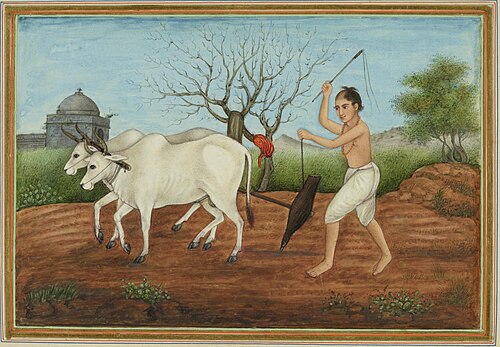
For most of the medieval period, Jats were primarily rural cultivators with a reputation for fierce local self-governance rather than kingship. This changed dramatically in the 17th century:
- 1669 — The Jat uprising against Aurangzeb, led by the Hindu Jat zamindar Gokula of Tilpat, marked the community's emergence as an organised military force challenging Mughal authority in the Agra-Mathura region.
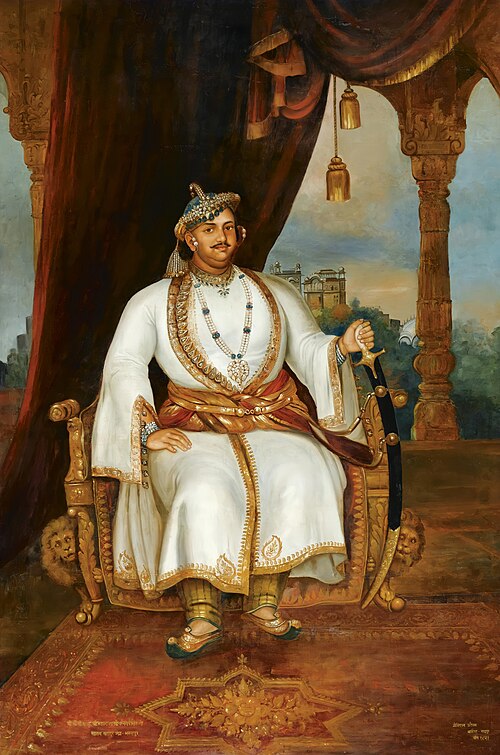
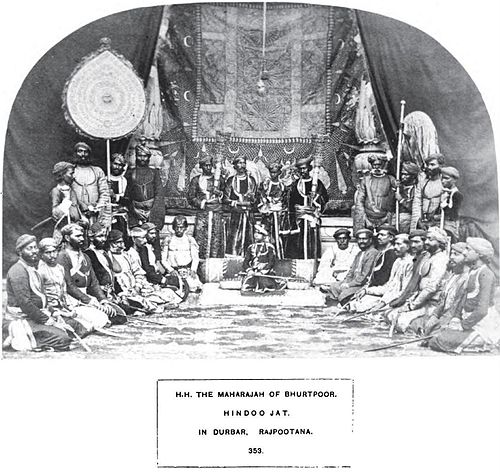
- Early-to-mid 18th century — The rise of Bharatpur. Under leaders like Churaman and later Maharaja Suraj Mal (r. 1707–1763), the Jats built one of the most formidable regional kingdoms in North India, with Bharatpur's fort famously repelling repeated sieges, including by the British in 1805.
- Punjab and Sikhism. From the late 17th century, large numbers of Jats in Punjab joined the Khalsa founded by Guru Gobind Singh in 1699. Jat Sikhs went on to form the backbone of the Sikh Misls and, later, the army of Maharaja Ranjit Singh's Sikh Empire.
- The colonial “martial race.” Under British rule, Jats were classified as a “martial race” and recruited heavily into the Indian Army, giving rise to the distinct Jat Regiment, alongside major Jat representation in the Sikh and Punjab Regiments.
2. Language
Jats do not speak a single “Jat language.” Instead, they speak the dominant language or dialect of whichever region they inhabit, giving the community a genuinely multilingual character:
| Region | Primary language / dialect |
|---|---|
| Haryana | Haryanvi (Bangru) |
| Punjab (India & Pakistan) | Punjabi (Majhi, Malwai, Doabi dialects) |
| Western Uttar Pradesh | Khadi Boli / Braj-influenced Hindi |
| Rajasthan | Rajasthani (Marwari, Bagri, Shekhawati) |
| Sindh (Pakistan) | Sindhi |
Across all these dialects, Jat speech is marked by a distinctive oral tradition: pithy proverbs, agricultural idioms, and a blunt, egalitarian register that folklorists have long noted as reflecting the community's self-image as independent landholders rather than courtly subjects. Punjabi and Haryanvi in particular carry a substantial shared vocabulary of Jat agricultural and kinship terms (khap, sarv-khap, chaupal, veer, baap-dada ki zameen) that function as markers of community identity.
3. Gotras: The Backbone of Jat Social Structure
The gotra (clan) is the single most important unit of Jat identity — arguably more important than religion itself. A gotra is a patrilineal clan claiming descent from a common (often legendary) ancestor, and it governs two things above all: marriage eligibility and social belonging.
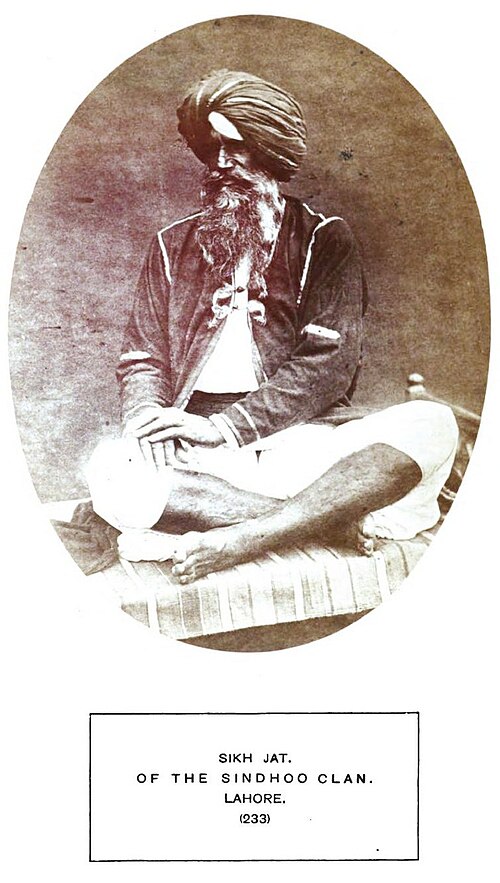
- There are estimated to be over 2,000 recorded Jat gotras across India and Pakistan, though a few hundred are widespread and well known — Malik, Dahiya, Hooda, Sangwan, Sehrawat, Ahlawat, Jakhar, Chahal, Sidhu, Gill, Dhillon, Sandhu, Grewal, Brar, Randhawa, Man, Bal, Deol, Cheema, Sindhu, and many more.
- Gotra exogamy is the core rule: a Jat traditionally cannot marry within their own gotra, nor within their mother's or grandmothers' gotras, since members are considered blood kin regardless of how many generations removed.
- Gotras are grouped locally into khaps — federations of villages or lineages sharing a gotra or historical alliance, each traditionally governed by a khap panchayat, an elected council of village elders that adjudicates marriage disputes, land conflicts, and community matters.
- The Sarv Khap Panchayat functioned historically as a kind of supra-council representing multiple khaps across a wider region, particularly in Haryana and western UP.
- Crucially, gotra identity has survived religious conversion. As the colonial ethnographer K.R. Qanungo observed, “the Jat is a Jat after all, whether he be a Hindu, Sikh or Muslim” — he clings to his gotra as a badge of lineage. This is why Hindu Jat, Sikh Jat, and Muslim Jat family names so often overlap (a Sidhu, Gill, or Chahal can be found across all three religions).
Khap panchayats remain active today, particularly in rural Haryana and western UP, though their role in enforcing traditional (and sometimes controversial) social norms around inter-gotra and inter-caste marriage has made them a subject of ongoing legal and social debate in modern India.
4. How the Sub-Sects Formed: Hindu, Sikh, and Muslim Jats
Unlike castes defined primarily by religion, the Jat identity is unusual in spanning three major religious traditions, a divide that emerged relatively late and for identifiable historical reasons:
- Hindu Jats — the demographic majority historically, concentrated in Haryana, western UP, and Rajasthan, retaining Vedic and folk-Hindu religious practice.
- Sikh Jats — formed primarily from the late 17th century onward as Punjabi Jat clans took Khalsa initiation under Guru Gobind Singh. By the early 20th century, Jats made up over half of the entire Sikh population, and Jat Sikh clans became the dominant landholding and political community of rural Punjab.
- Muslim Jats — formed through conversions during the Delhi Sultanate and Mughal periods, especially concentrated in Punjab (Pakistan) and Sindh. Officially mostly Sunni, Muslim Jat communities retain a strong tradition of venerating local Sufi saints (pirs), with some groups following Shia or even Ismaili traditions.
- A small Christian Jat population also exists, mainly the result of 19th- and 20th-century missionary activity in Punjab, and is more visible today within the UK diaspora.
Because gotra identity persisted across these conversions, the religious “sub-sects” of the Jat community are best understood not as separate ethnic branches but as one kinship network that fractured along devotional lines while continuing to intermarry within the broader Jat fold in many regions, especially rural ones.
5. Religious Beliefs and Practices
Jat religious life is notable for its comparatively simple, non-ritualistic, egalitarian character — a trait folklorists and ethnographers have repeatedly connected to the community's pastoral-agrarian, non-priestly self-image.
Hindu Jat practice
- Worship centres on mainstream Hindu deities — Shiva, Parvati, Ganesha, Krishna, Rama, and Hanuman — alongside a strong layer of local/folk deities, most prominently Gogaji (Gugga Veer), a warrior-saint associated with snake worship and protection of cattle, and Tejaji, a Rajasthani Jat folk hero deified for sacrificing himself to a snake to keep a promise.
- Ancestor worship is significant: villages maintain small shrines (Bhaiyan) marking the burial site of a village's founding ancestor, where women light lamps and offer prayers for the wellbeing of family and livestock.
- Traditional Jat religiosity has historically shown relatively low emphasis on idol worship, elaborate temple ritual, or Brahmanical intermediation compared to many other Hindu communities — a trait some scholars link to the same egalitarian ethos that made Jats receptive to Sikhism's rejection of caste ritualism.
- Regional festivals like Kanagat (the Jat pitru-paksha observance in western UP, held in the September–October lunar fortnight) involve offering water and pindas to ancestral spirits.
Sikh Jat practice
Sikh Jats follow mainstream Sikh theology and practice centred on the Guru Granth Sahib, the Khalsa code of conduct (Rehat Maryada), and gurdwara worship, while retaining certain folk customs (such as reverence for local shrines) inherited from their pre-conversion Hindu Jat background.
Muslim Jat practice
Muslim Jats are predominantly Sunni, following the Five Pillars of Islam, but with a strong regional tradition of pir (Sufi saint) veneration and shrine pilgrimage, blending Islamic practice with older regional customs — a pattern common across South Asian rural Muslim communities.
6. Festivals
Because Jats belong to three religions, their festival calendar is really three overlapping calendars, unified by shared harvest and seasonal celebrations:
| Festival | Community | Significance |
|---|---|---|
| Baisakhi (Vaisakhi) | Hindu & Sikh Jats | Spring harvest festival; also commemorates the founding of the Khalsa in 1699 |
| Lohri | Hindu & Sikh Jats (Punjab/Haryana) | Winter bonfire festival marking the end of the coldest days and the rabi harvest |
| Holi | Hindu Jats | Spring festival of colour; celebrated with particular exuberance in Haryana and western UP |
| Teej | Hindu Jats (Rajasthan, Haryana) | Monsoon festival celebrated by women with swings, folk songs, and Ghoomar/Jhumar dance |
| Gogaji Fair (Gugga Naumi) | Hindu Jats | Major folk-religious fair honouring the snake-deity warrior Gogaji |
| Teja Dashami / Veer Tejaji Fair | Hindu Jats (Rajasthan) | Large annual fair at Parbatsar (Nagaur) honouring the folk deity Tejaji |
| Kanagat | Hindu Jats (western UP) | Ancestor-worship fortnight |
| Eid ul-Fitr & Eid ul-Adha | Muslim Jats | The two major Islamic festivals, marking the end of Ramadan and the Feast of Sacrifice |
| Vaisakhi as Khalsa Day | Sikh Jats | Commemorates the 1699 founding of the Khalsa by Guru Gobind <a href="/communities/singh">Singh</a> |
7. Folklore and Oral Tradition
Jat folklore is dense with warrior-saints, moral fables about honour and sacrifice, and epic ballads sung at fairs and family gatherings:
- Veer Tejaji — perhaps the most widely revered Jat folk hero, a 12th-century warrior of the Kharnal gotra from Nagaur, Rajasthan, celebrated for keeping his word to a snake even at the cost of his own life, and worshipped today as a protector against snakebite and injustice.
- Gogaji (Gugga Veer) — a warrior-saint venerated across Rajasthan, Haryana, and Punjab, associated with snake worship, cattle protection, and communal fairs marked by the Gugga dance and drum (damru) music.
- The Dhola-Maru ballad — a Rajasthani romantic epic popular across Jat and other agro-pastoral communities of the Thar region, recounting the love and reunion of Dhola and Maru across a perilous desert journey.
- Alha-Udal ballads — heroic epic poetry from the Bundelkhand-UP belt, widely sung in Jat and other agrarian communities, celebrating the warrior-brothers Alha and Udal.
- Jhumar dance songs — performed by young married women in circles, accompanied by dholak and thali, telling stories of seasonal change, marriage, and longing.
- A living tradition of panchayat proverbs and agricultural sayings continues to shape everyday Jat speech, emphasising themes of land, honour (izzat), hard work, and clan loyalty.
8. Culture, Dress and Housing Traditions
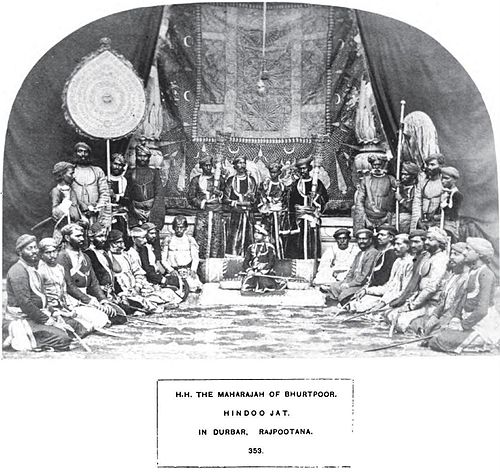
Dress
Traditional Jat dress reflects an agrarian, practical sensibility rather than courtly ornamentation:
- Men (Haryana/Punjab/UP): Dhoti-kurta or kurta-pajama, often paired with a pagri (turban) whose colour and tying style can signal region, occasion, or clan status; a khunda (staff) or ceremonial lathi is a traditional accessory of village elders.
- Men (Sikh Jats): The dastar (Sikh turban), kurta-pajama, and — for Amrit-dhari (initiated) Sikhs — the Five Ks of the Khalsa (Kesh, Kara, Kanga, Kachera, Kirpan).
- Women: Ghagra-choli with an odhni/chunni (veil) in Rajasthan and Haryana; salwar-kameez with a dupatta in Punjab, often in bright reds, oranges, and mirror-worked (shisha) embroidery for festive occasions. Heavy silver jewellery — jhumar (forehead ornament), bangles, anklets, and nose rings — remains a marker of married status and regional identity.
Housing
- The traditional Jat rural home is built around a central courtyard (aangan), historically constructed of mud-brick and thatch, later brick and cement, organised for joint-family living with separate quarters for livestock.
- The haveli — a larger, often multi-storeyed courtyard house with a decorated façade — marks the residences of wealthier landowning Jat families, particularly in Rajasthan and Haryana.
- The chaupal (also baithak) is a community's shared open gathering hall or platform, traditionally where village and khap panchayat matters were discussed, guests hosted, and evenings spent in conversation — a physical embodiment of Jat communal, consensus-based governance.
- Cattle sheds (baada) and grain stores are typically attached to or adjoining the main house, reflecting the historic centrality of livestock and grain wealth to Jat household economy.
Cuisine
Jat cuisine is hearty, dairy-rich, and built around the agricultural staples of the wheat-growing northwestern plains:
- Staples: Wheat rotis, bajra and makki (millet/maize) rotis in winter, served with generous ghee.
- Signature dishes: Sarson ka saag with makki di roti (Punjab/Haryana winter classic), kadhi-chawal, bajra khichdi, churma (a sweet crushed-wheat dish, especially at festivals and weddings), rabri and lassi as everyday dairy staples reflecting the community's historic cattle-herding economy.
- Meat traditions: Where practiced (more common among Muslim Jats and some Hindu/Sikh Jat groups), mutton and chicken curries are festive-occasion foods rather than daily fare; many Hindu Jat households remain predominantly vegetarian-plus-dairy in everyday cooking.
- Food culture emphasises abundance and hospitality — large joint-family meals and generous serving at weddings and fairs are a strong marker of social standing.
9. Physical Traits
Ethnographic and anthropometric literature from the colonial and early post-colonial period often described Jats as generally tall, well-built, and fair-to-wheatish in complexion, with the community's traditionally rigorous agricultural and martial lifestyle frequently cited as a contributing factor to average physical stature and build. It's worth noting, however, that physical description in older ethnographic sources reflects the observational and often racially inflected conventions of colonial anthropology rather than rigorous biological data, and any physical generalisation about a population of over 100 million people spread across multiple regions, climates, and gene pools will necessarily have enormous individual variation. Modern population genetics (see Section 13) is a far more reliable window into ancestry than descriptive physical typing.
10. Prominent Figures
The Jat community has produced an outsized share of India and Pakistan's political, military, sporting, and cultural figures relative to its share of the population:
History and politics
- Maharaja Suraj Mal (1707–1763) — ruler who built the Bharatpur kingdom into a major 18th-century power.
- Chaudhary Charan Singh — former Prime Minister of India, and the most prominent Jat political leader of independent India, closely associated with the interests of India's farming communities.
- Bhagat Singh — revolutionary and anti-colonial icon executed by the British in 1931 (from a Sikh Jat family).
- Sir Chhotu Ram — pre-independence Punjab political leader and champion of peasant/agrarian rights.
Military
The Jat Regiment, Sikh Regiment, and Punjab Regiment of the Indian Army have a long roster of decorated Jat soldiers and officers, reflecting the colonial-era “martial race” classification and a continuing tradition of military service.
Sports
Numerous prominent Indian wrestlers, kabaddi players, and athletes, particularly from Haryana, trace Jat heritage — a reflection of the region's strong wrestling (akhara) culture.
Cinema and public life
Actors including Dharmendra and the late wrestler-actor Dara Singh are widely cited examples of prominent Jat Sikh figures in Indian popular culture.
(This is a representative, not exhaustive, list — the community's public figures span politics, the armed forces, sport, business, and entertainment across India and Pakistan.)
11. Geographic Distribution
| Region | Notes |
|---|---|
| Haryana, India | The demographic and political heartland of Hindu Jats; among the highest Jat population concentrations in India |
| Punjab, India | Predominantly Sikh Jats; historically the dominant agricultural landholding community |
| Western Uttar Pradesh | Mixed Hindu and Muslim Jat population, especially in the Meerut-Muzaffarnagar-Baghpat belt |
| Rajasthan | Large Hindu Jat population, especially in Nagaur, Sikar, Churu, Jhunjhunu, and Bharatpur-Dholpur |
| Delhi NCR | Significant Jat landholding villages, now substantially urbanised |
| Punjab, Pakistan | Predominantly Muslim Jats; one of the largest agrarian communities in Pakistani Punjab |
| Sindh, Pakistan | Muslim Jat pastoral and agricultural communities, considered among the region's earliest Jat settlements |
12. Diaspora
Jat migration abroad accelerated significantly from the late 19th and 20th centuries onward, driven initially by colonial-era labour and military postings and later by independent economic migration:
- United Kingdom — a large and well-established Punjabi Jat Sikh community, particularly in the West Midlands and Greater London, dating back to early-to-mid 20th-century migration.
- Canada — one of the largest Jat Sikh diaspora populations globally, concentrated in British Columbia (Metro Vancouver, Surrey) and Ontario (Greater Toronto Area, Brampton).
- United States — significant Jat Sikh and Hindu Jat communities in California's Central Valley (agriculture-linked migration going back over a century), the Bay Area, and the New York/New Jersey corridor.
- Australia — a fast-growing Jat Sikh population, especially in Melbourne and Sydney, driven largely by education and skilled-migration pathways since the 2000s.
- The Gulf states — significant temporary labour migration from Haryana, Punjab, and western UP Jat communities.
Diaspora Jat communities have generally maintained gurdwara and temple networks, gotra-based social organisations, and continued participation in Baisakhi, Lohri, and other festival calendars as anchors of community identity abroad.
13. Social Contributions
- Agriculture and the Green Revolution. Jat farming communities of Punjab and Haryana were central to India's Green Revolution of the 1960s–70s, driving the adoption of high-yield seed varieties and mechanised farming that transformed India from a food-deficit to a food-surplus nation.
- Military service. Sustained, multi-generational representation in the Indian and Pakistani armed forces, particularly through the Jat, Sikh, and Punjab Regiments.
- Land and local governance. The khap panchayat tradition, whatever its contemporary controversies, represents one of India's oldest continuously functioning grassroots self-governance systems.
- Political mobilisation. Jat farmer-leaders have repeatedly shaped Indian agrarian policy debates, from Chaudhary Charan Singh's tenure to the more recent farmers' protest movements of 2020–21, in which Jat farming communities of Punjab and Haryana played a central organising role.
14. Genetics: What DNA Reveals About Jat Ancestry
Genetics is one part of the Jat story — not the whole of it — but it offers a valuable, independent line of evidence for evaluating the competing origin theories discussed in Section 1.
Y-DNA: the paternal line
Multiple published studies (including Y-STR haplogroup surveys of Jat populations in India and Pakistan) show that Jat paternal lineages are dominated by haplogroup R1a, and specifically its South Asian downstream branch R1a-L657, at frequencies of roughly 35–45%. This subclade is linked to the Bronze Age Indo-Aryan migration from the Pontic-Caspian steppe into South Asia around 2000–1500 BCE — not the later Scythian period. Other significant paternal lineages include R2-M124 (8–12%, a pre-steppe South/Central Asian lineage), J2-M172 (6–10%, linked to Neolithic West Asian farmers), L-M20 and H-M69 (deep indigenous South Asian lineages), and a smaller but notable Q-M242 component (3–6%) that may reflect limited later Central Asian (Scythian, Kushana, or Hunnic-era) admixture.
One striking finding from Y-STR research is that the Jat sample population traced to at least nine distinct ancestral geographic regions, and that roughly 90% of Jats and 75% of 38 other South Asian ethnic groups studied shared the same four dominant haplogroups (J, L, Q, and R) — underscoring that Jats do not carry a genetically unique or exclusive lineage, but rather share deep common ancestry with the wider South Asian population.
Autosomal ancestry: ANI, ASI, and steppe components
In the Ancestral North Indian (ANI) / Ancestral South Indian (ASI) framework used in South Asian population genetics, Jats show an ANI component of roughly 68–76% — among the highest recorded for any Indian community — with steppe-related autosomal ancestry estimated at 25–32%, placing them alongside North Indian Brahmins and Khatris at the upper end of the South Asian steppe-ancestry spectrum. This is consistent with the community's historic concentration along the northwestern invasion and migration corridor of the subcontinent.
One gene pool across three religions
Perhaps the most socially significant genetic finding is that Hindu, Sikh, and Muslim Jats are genetically near-identical — near-overlapping R1a frequencies, steppe ancestry proportions, and ANI/ASI ratios, clustering tightly together in population genetic analyses regardless of religion. This strongly supports the historical picture from Section 4: that the Jat identity is genuinely ancient and pre-dates the medieval-era religious conversions that split the community along devotional lines. Jat community endogamy (marriage within the broader Jat identity, especially in rural areas) combined with strict gotra exogamy has preserved this shared genetic profile even across otherwise significant religious and cultural boundaries.
The gotra system as a genetic mechanism
The gotra exogamy rule — never marrying within one's own clan — has functioned, likely unintentionally, as a mechanism maintaining relatively high genetic diversity within the Jat community as a whole. Studies of runs of homozygosity (a marker of inbreeding/founder effects) show Jats have lower levels than many other endogamous Indian communities, consistent with a large effective population size and regular gotra-to-gotra marriage exchange rather than the tight closed-loop marriage patterns seen in some smaller endogamous groups.
The verdict on origin theories
Taken together, the genetic evidence best supports a mixed-migration model: the bulk of Jat ancestry traces to Bronze Age steppe migrants who entered South Asia around 2000–1500 BCE, layered onto an already-established indigenous Indus Valley/South Asian population, with a real but minor genetic signal (via haplogroup Q-M242) potentially reflecting later Scythian, Kushana, or Hunnic-period contact — consistent with, but not proof of, the historical accounts of “Zutt” communities and their Central Asian trade and migration links. In short, DNA does not support a single-source Scythian or purely indigenous Vedic origin; it supports a community forged over millennia at the crossroads of South Asia's major migration routes.
Frequently Asked Questions
Are Jats one caste or an ethnic group spanning multiple religions?
Jats are best understood as an ethnic/kinship community defined by gotra membership, agricultural-pastoral heritage, and regional identity — one that spans Hinduism, Sikhism, and Islam, rather than a single-religion caste.
What is a Jat gotra?
A gotra is a patrilineal clan tracing descent from a common ancestor. It governs marriage rules (members of the same gotra cannot marry each other) and forms the basic unit of traditional Jat social organisation, historically overseen by khap panchayats.
Are Hindu Jats, Sikh Jats, and Muslim Jats genetically different?
No. Genetic studies consistently show all three groups are near-identical in Y-DNA haplogroup frequencies, steppe ancestry, and ANI/ASI ratios, indicating that the Jat identity predates the medieval-era religious divisions within the community by many centuries.
What is a khap panchayat?
A khap panchayat is a traditional council of village elders, usually organised along gotra or regional lines, historically responsible for resolving disputes, especially those concerning marriage, land, and community norms, within Jat communities of Haryana, western UP, and parts of Punjab and Rajasthan.
Where do most Jats live today?
The largest concentrations are in Haryana, Punjab, western Uttar Pradesh, and Rajasthan in India, and in Punjab and Sindh in Pakistan, with substantial diaspora communities in the UK, Canada, the US, and Australia.