

Kshatriya Community
Delve into the rich heritage of the Kshatriya community in India. Explore the history, culture, and genetics of India's traditional warrior and ruling classes..
The Kshatriyas of India
History, Culture, and Genetics of India's Traditional Warrior and Ruling Communities
1. Introduction: Who Are the Kshatriyas?
Kshatriya is the name given, in classical Hindu textual tradition, to the social order historically associated with rulership, martial service, and the administration of territory. Its members are conventionally described as kings, warriors, landholders, and protectors, and the term itself derives from the Sanskrit kshatra, meaning rule or dominion.
Unlike many of the communities profiled elsewhere on GenoConnect, Kshatriya is not a single endogamous jati (community) with one shared homeland, language, or marriage circle. It is a broad and historically fluid social category, or varna, under which a large number of regionally distinct communities across the Indian subcontinent, from the Rajputs of Rajasthan and the Marathas of Maharashtra to the Rajus of coastal Andhra Pradesh and numerous smaller clan-based groups elsewhere, have identified themselves or been identified by others over roughly two and a half thousand years. This profile surveys the shared textual origins of the Kshatriya idea, the major historical communities that have carried the identity, the population-genetic evidence relevant to them, and the customs, cuisine, dress, and folklore most commonly associated with Kshatriya identity in India today.
Because Kshatriya identity spans so many distinct regional communities, this profile necessarily paints with a broader brush than a single-jati profile can. Where useful, it highlights the best-documented regional traditions, particularly those of the Rajputs and Marathas, while noting that dozens of other communities across India have historically claimed, and in many cases still claim, Kshatriya status.
2. Origins and Early History
2.1 From Rajan to Rajanya to Kshatriya
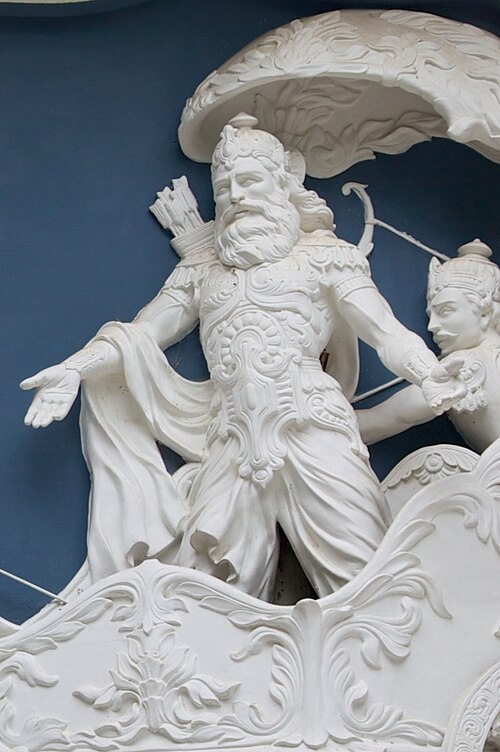
The earliest layer of Vedic society, as reflected in the Rigveda, was organized around tribal chieftains called rajans, whose authority may or may not have been hereditary and who were, in some accounts, chosen or confirmed by a tribal assembly known as the samiti. The rajan's kinsmen and the wider circle of chiefly families came to be called rajanya, a term emphasizing kinship with the ruler. By the end of the Vedic period, rajanya was gradually superseded by the term kshatriya, derived from the Sanskrit root kshatra, meaning rule or dominion over a defined territory. Where rajanya stressed lineage, kshatriya stressed authority over land, a shift that scholars connect to the emergence of more settled, territorially defined kingship.
2.2 The Purusha Sukta and Early Textual Tradition
An early textual reference to the Kshatriya identity appears in the Purusha Sukta, a hymn of the Rigveda that describes the symbolic origin of Kshatriya authority from the body of a cosmic being. Many scholars regard the Purusha Sukta as a comparatively late addition to the Rigveda, composed after most of the rest of the text, reflecting a social order that was still taking shape at the time of its composition. Later Brahmanical and dharmasastra literature, composed between roughly 800 and 100 BCE, formalized the textual understanding of the Kshatriya as a distinct hereditary order associated with governance and military leadership, with the term kshatriya (rather than the earlier rajanya) becoming standard.
Classical texts describe the Kshatriya's prescribed duties as the study of the Vedas, the giving of gifts, and the performance of sacrifice for personal and dynastic benefit, but, unlike Brahmins, without the right to teach the Vedas or officiate as priests for others. In practice, Kshatriya rulers frequently questioned Brahmanical ritual authority, and this tension is credited by historians with contributing to the philosophical ferment of the Upanishads.
2.3 The Mahajanapadas and Shifting Fortunes of the Kshatriya Idea
During the era of the Mahajanapadas (roughly 600 to 300 BCE), several polities in northern India were organized as gana-sangha oligarchic republics ruled by assemblies of Kshatriya clan representatives rather than a single monarch, among them the Shakya and Licchavi confederacies. Because these republics did not closely follow Vedic Brahmanical ritual, some Brahmanical sources of the period disparagingly described their rulers as fallen or degenerate Kshatriyas. Lacking Brahmanical patronage, many gana-sangha Kshatriyas instead patronized the emerging Buddhist and Jain movements, both of which drew heavily on Kshatriya lineages for early followers and, in the case of the Buddha and Mahavira, for their founders.
The historical record after the Mahajanapada period is considerably more complicated than a simple continuous Kshatriya lineage would suggest. Historians note that many of the prominent ruling dynasties of northern India in the centuries after the Mauryan Empire, including the Nanda dynasty, are described in ancient sources as being of non-Kshatriya origin, and that dynasties of varied social background across the subcontinent came, over time, to be formally recognized or to claim recognition as Kshatriya, often through a process, well documented by historians such as Romila Thapar, in which Brahmin genealogists linked new ruling families to the mythical Solar and Lunar dynasties in exchange for patronage. This pattern, sometimes called Sanskritization or Kshatriya-ization, recurred across many centuries and regions, including the Deccan, and helps explain why the term Kshatriya today covers such a wide range of communities with very different regional origins.
3. The Kshatriya Idea Across Regional Communities
Because Kshatriya status has historically been claimed, conferred, and contested across many regions and periods rather than confined to a single lineage, a large number of distinct communities across India today identify as Kshatriya or trace descent from Kshatriya ruling houses. The sections below outline several of the largest and best-documented, without any claim of completeness.
3.1 The Solar and Lunar Dynasties
Much traditional Kshatriya genealogy is organized around two great mythic lineages recorded in the Puranas and the Sanskrit epics: the Suryavanshi, or Solar dynasty, to which the Ramayana traces Lord Rama, and the Chandravanshi, or Lunar dynasty, to which the Mahabharata traces the Pandavas and Lord Krishna. A third, smaller lineage tradition, the Agnivanshi or fire lineage, traces its origin to the fire god Agni and is associated in later legend with several prominent Rajput clans, including the Chauhans, Parmars, Solankis, and Pratiharas. A fourth tradition, Nagavanshi, claims descent from the Nagas, serpent beings described in the Mahabharata and other texts. Historians caution that these genealogies, while central to community identity and clan pride, are traditional and dynastic rather than strictly historical or biological records, and that actual marriage and political alliance among Kshatriya lineages in the epics appear to have been driven more by territorial politics than by strict adherence to lineage rules.
3.2 The Rajputs of North and Central India
The Rajputs (from Sanskrit rajaputra, "son of a king") are today the community most closely and popularly associated with Kshatriya identity, concentrated historically in Rajasthan, Gujarat, Madhya Pradesh, Haryana, Uttar Pradesh, Punjab, and parts of the Himalayan foothills. Rajput clans (kul) are traditionally grouped under the Suryavanshi, Chandravanshi, and Agnivanshi lineages and further subdivided into numerous clans (such as Sisodia, Rathore, Chauhan, Solanki, Gehlot, Jadeja, Kachwaha, Bhati, Panwar, and many others), each with its own regional base, ruling houses, and clan deity.
Rajput political power crystallized as a recognizable regional phenomenon from around the sixth century CE onward, filling the vacuum left by the decline of the Gupta Empire, and reached its most celebrated expression in the medieval kingdoms of Mewar, Marwar, Amber (Jaipur), Bikaner, and Jaisalmer. Rajput rulers were central to the political history of medieval and early modern North India, alternating between fierce resistance to, and strategic alliance with, the Delhi Sultanate and later the Mughal Empire; several Rajput houses, most famously Amber and Bikaner, became close Mughal allies and provided generals, administrators, and queens to the imperial court, while others, most famously Mewar under Maharana Pratap, are remembered chiefly for sustained resistance.
3.3 The Marathas of the Deccan
In the Deccan, the Maratha community of Maharashtra rose to prominence in the seventeenth century under Chhatrapati Shivaji, who founded the Maratha Empire and was formally crowned with Kshatriya rites in 1674 after a genealogy connecting his Bhonsle clan to the Sisodia Rajputs of Mewar was constructed for the coronation. The Maratha claim to Kshatriya status has historically been debated by scholars, since the broader Maratha community encompasses both long-established landed and warrior lineages (the ninety-six clans, or Shahannava Kuli Maratha, tradition) and families historically associated with Kunbi cultivator status, with social and marital boundaries between the two historically fluid rather than rigid. Population-genetics research on the modern Maratha community, discussed further below, situates it as a genetically distinct, indigenous Deccan population rather than as a transplanted extension of North Indian Rajput lineages.
3.4 Andhra and Telangana Kshatriyas (Rajus)
In coastal Andhra Pradesh and parts of Telangana, the Kshatriya identity is most closely associated with the Raju community, whose traditional genealogical literature records descent through a small number of gotras (including Kaundinya, Vishwamitra, and Atreya, among others in some regional lists) and more than a hundred documented surnames tied to ancestral villages. Historically linked to ruling dynasties of the eastern Deccan such as the Vishnukundinas, the Rajus of Andhra Pradesh maintain distinct genealogical texts, family associations, and marriage networks separate from those of North Indian Rajputs, illustrating how the pan-Indian Kshatriya identity has developed largely independent regional expressions.
3.5 Other Communities Associated with Kshatriya Status
Several further regional communities have historically claimed, or been locally recognized with, Kshatriya or Kshatriya-equivalent status, generally on the basis of ruling, landholding, or martial traditions specific to their region:
- Nair (Kerala): a traditionally martial and landholding community of Kerala, historically organized around matrilineal households (taravad) and closely tied to the region's medieval military and administrative systems, sometimes described in regional literature as functionally Kshatriya-equivalent.
- Kodava or Coorg (Karnataka): a small, martially oriented community of the Kodagu hills with distinct customs and a strong tradition of military service, at times described locally in Kshatriya-adjacent terms.
- Bunt (coastal Karnataka): a historically landholding and martial matrilineal community of the Tulunadu region, associated in parts of local tradition with Kshatriya status.
- Khatri (Punjab): a mercantile, administrative, and scholarly community of Punjab whose name is widely believed to derive from Kshatriya, though the community's historical occupations have been predominantly trade, administration, and letters rather than warfare and rulership.
- Numerous smaller regional clans and lineages across Bihar, Uttar Pradesh, Odisha, Bengal, and the Himalayan states that maintain local ruling-house or landholding traditions and Kshatriya self-identification.
These communities differ substantially from one another in language, custom, and social organization, and their inclusion here reflects documented historical association with Kshatriya identity rather than any claim of uniform origin or genetic relationship.
4. Genetics and DNA Ancestry
Population genetics offers a useful, if necessarily approximate, lens on Kshatriya-identified communities, but it is important to state a caveat at the outset that geneticists themselves emphasize: varna and jati are social and historical categories, not genetic lineages, and no single DNA marker or ancestry profile defines who is or is not Kshatriya. What genetic studies can describe is the ancestry profile of specific, named communities that have historically carried the Kshatriya identity in a given region, which is the level at which the evidence below should be read.
4.1 Paternal (Y-DNA) Lineages
Studies of Y-chromosome variation among Indo-Aryan-speaking communities of North and Central India, including Kshatriya-identified groups, have found elevated frequencies of haplogroup R1a, and specifically its R1a-Z93 subclade, which is associated with the Bronze Age expansion of steppe pastoralist populations into South Asia roughly four thousand years ago. Reported R1a frequencies among North Indian Kshatriya samples range widely by region and study, generally falling in the range of roughly twenty to fifty percent, with lower and more variable frequencies reported among many other regional populations. A widely cited study of the Jaunpur district of Uttar Pradesh found that Kshatriya samples showed unusually low internal Y-DNA diversity and a strong concentration in one haplotype cluster, a pattern the researchers attributed to long-term endogamy and founder effects rather than to any single ancient migration.
Genetic surveys of the Maratha community present a markedly different profile: haplogroup H (specifically H-M69), an ancient lineage associated with the Deccan and broader South Asia, and haplogroup L, another indigenous South Asian lineage, are the most commonly reported Y-DNA haplogroups among Maratha men, at meaningfully higher combined frequency than R1a. This distinguishes the Maratha paternal-lineage profile from that of North Indian Rajput communities and situates the community closer, genetically, to other agrarian communities of Maharashtra such as the Kunbis than to North Indian Kshatriya groups, a finding that bears on long-running historical debates about Maratha origins.
4.2 Maternal (mtDNA) Lineages
Mitochondrial DNA studies consistently find that maternal-line ancestry across Indian regional populations is overwhelmingly indigenous South Asian in origin, dominated by haplogroup M and its many regional subclades, with only a modest elevation of West Eurasian-associated maternal lineages in some northwestern communities. This pattern of broad maternal continuity paired with more regionally differentiated paternal lineages is generally read by researchers as evidence that historical lineage formation in India was shaped substantially by male-line social organization and hypergamy rather than by large-scale movement of whole family units.
4.3 Autosomal Ancestry: ANI and ASI
At the whole-genome level, the foundational work of Reich, Moorjani, Thangaraj, and colleagues describes the ancestry of most Indian populations as a mixture of two deeply diverged ancient source populations, the Ancestral North Indians (ANI), genetically related to Middle Eastern, Central Asian, and European populations, and the Ancestral South Indians (ASI), a lineage largely unique to the subcontinent. This research found that ANI ancestry proportions vary widely across Indian groups, from roughly thirty-nine to seventy-one percent, and are on average higher among traditionally landholding, Indo-European-speaking communities of North and Central India, a category that includes many Kshatriya-identified communities, than among many other regional populations. Follow-up work dated the underlying ANI-ASI admixture event itself to roughly 1,900 to 4,200 years ago, with northern groups generally showing more recent and often multiple admixture events, and also found evidence that this mixing process itself was significantly male-biased, consistent with the Y-DNA and mtDNA patterns described above.
4.4 Endogamy, Founder Effects, and Genetic Diversity
Because most Kshatriya-identified communities have practiced strict endogamy for many centuries, they display the population-genetic hallmarks associated with long-term reproductive isolation, including reduced internal genetic diversity relative to more outbred populations and elevated frequency of specific founder mutations within particular lineages and regions. Reich and colleagues have noted that allele-frequency differences between Indian regional and community populations are considerably larger than equivalent differences between European national populations, a pattern attributed to strong founder effects and limited historical gene flow between endogamous groups, with implications for the study and screening of certain recessive genetic conditions within specific communities.
This section summarizes findings from published population-genetics literature; ancestry estimates vary by study, sample, region, and reference panel, individual results from consumer DNA testing may differ from community-level averages, and none of the findings above should be read as establishing a biological definition of Kshatriya identity, which remains a social and historical category.
5. Social Structure and Traditional Role
Across its many regional expressions, Kshatriya social organization has traditionally centered on patrilineal clans (kul or vamsha), each tracing descent from a common ancestor and, in many traditions, further affiliated with the Suryavanshi, Chandravanshi, or Agnivanshi lineage. As with Brahmin and Vaishya communities, many Kshatriya groups adopted a version of the gotra system, originally associated with Brahmanical priestly lineages, both to regulate marriage (gotras are traditionally exogamous, meaning marriage within one's own gotra is customarily avoided) and to claim a share of the social prestige historically accorded to gotra-holding communities.
Writing on mid-twentieth-century village life in India, the anthropologist Pauline Kolenda described the traditional social function of the Kshatriya as one of local leadership and protection, extending in practice to the distribution of agricultural produce and the provision of village-level leadership where land control allowed it. In practice, the historical Kshatriya role varied enormously by region and period, ranging from the ruling houses of major kingdoms to smaller landholding and military-service families with only local influence, and, especially from the colonial period onward, to communities primarily engaged in agriculture, estate management, and, later, the professions and armed services.
6. Religion, Duties, and Symbolism
Classical dharmashastra literature assigns Kshatriyas the duties of studying the Vedas, giving charitable gifts, and performing sacrifice for their own household and dynasty. In ritual symbolism, the Kshatriya is traditionally associated with the staff (danda) of the nyagrodha or banyan tree, said to impart vitality.
Kshatriya-identified communities today are predominantly Hindu and commonly maintain particular devotion to deities associated with protection, sovereignty, and martial valor, most prominently Durga and other forms of the Goddess (often worshipped during Navratri as the community's principal festival), Shiva, and Surya, the sun god, alongside the avataric kings Rama and Krishna, whose stories anchor the Solar and Lunar dynastic traditions described above. Regional clan deities (kuldevi and kuldevta) are also widely venerated, often at ancestral shrines linked to a specific clan's homeland, and continue to be central to clan identity and periodic pilgrimage.
7. Culture, Customs, and Social Practices
Kshatriya cultural identity across regions is most consistently expressed through an emphasis on martial heritage, hospitality, hierarchy within the extended clan, and elaborate ceremony marking major life events. Several practices recur across regional Kshatriya-identified communities, though with considerable local variation:
- A strong tradition of martial training historically including swordsmanship, archery (dhanurveda), horsemanship, and, in the Rajput tradition especially, hunting, alongside more recent emphasis on service in the modern Indian armed forces.
- Clan and lineage consciousness expressed through periodic gatherings, maintenance of genealogical records (in some communities kept by hereditary bard and genealogist communities such as the Charans and Bhats of Rajasthan), and continued veneration of ancestral clan deities and forts or havelis.
- Elaborate hospitality customs, particularly in Rajasthan, where guests are traditionally received with garlands, tilak, and ceremonial welcome regarded as a matter of family honor.
- A historic emphasis on codes of personal and family honor, including, in traditional Rajput narrative literature, stories of chivalry, loyalty, and sacrifice in battle, which remain touchstones of community memory and popular culture today.
The Navratri festival, honoring the Goddess in her nine forms over nine nights, and Dussehra, marking the triumph of good over evil and traditionally associated with the worship of arms and horses (Shastra Puja and Ayudha Puja), hold particular significance in many Kshatriya-identified communities, reflecting the historic association between the community and martial vocation.
8. Marriage and Wedding Traditions
Kshatriya and, especially, Rajput weddings are traditionally elaborate, multi-day ceremonies that combine standard Hindu Vedic rites with region-specific customs emphasizing lineage and royal symbolism. A representative sequence, drawn primarily from Rajput practice but broadly echoed in other regional Kshatriya-identified communities, includes:
- Tilak: a formal engagement ceremony in which male relatives of the bride travel to the groom's home, mark his forehead with a auspicious tilak, and present gifts, formally sealing the marriage alliance between the two families.
- Palla Dastoor: a pre-wedding visit by the groom's family to the bride's home bearing the bridal trousseau, including clothing and jewelry.
- Sangeet: an evening of music and dance celebrating the upcoming wedding, traditionally held at the bride's home before the ceremony and, in many families, echoed at the groom's home afterward.
- Baraat: the groom's ceremonial wedding procession, traditionally featuring the groom in ceremonial dress with a sword and turban (safa), arriving on horseback or in a decorated vehicle accompanied by dancing relatives.
- Saat Phere and core Vedic rites: the couple takes seven ceremonial rounds around the sacred fire, each accompanied by a specific marital vow, alongside kanyadaan (the ceremonial giving away of the bride) and sindoor daan (the groom's application of vermillion to the bride's hair parting).
Regional and community-specific variants add further distinct customs; the Raju community of coastal Andhra Pradesh, for instance, observes the ceremonial placement of decorated earthen pots called arivenus at the wedding venue and traditionally assigns the task of adorning the bride to a close female relative, while numerous Rajput lineages maintain distinct pre-wedding thread-tying (mauli) rituals intended to ward off misfortune from the groom and his immediate family.
9. Cuisine
Kshatriya cuisine varies substantially by region, reflecting the community's dispersal across very different agricultural and climatic zones, from the arid tracts of Rajasthan to the fertile plains of the Gangetic basin and the Deccan plateau. Several broad tendencies nonetheless recur in food writing and community sources associated with Kshatriya-identified groups:
- A historical association with hunting and, among many though by no means all Kshatriya-identified families, meat consumption, particularly game and mutton dishes prepared for feasts and celebrations, alongside robust use of regional spices.
- In Rajasthan, hearty, spice-forward dishes adapted to a arid climate and historically itinerant, martial lifestyle, including laal maas (a fiery red mutton curry), ker sangri (a dry-region bean and berry preparation), and dal-baati-churma, a staple combination of lentils, baked wheat dumplings, and a sweetened cracked-wheat dish.
- Elaborate festive and ceremonial sweets and rich dairy preparations served at weddings and festivals, reflecting the historical resources of landholding families.
- Substantial regional divergence: Maratha Kshatriya-identified cuisine draws on Deccan staples such as bhakri (millet flatbread) and coconut-and-peanut-based curries, while Andhra Raju cuisine follows the broader rice-and-tamarind-based culinary conventions of coastal Andhra Pradesh.
As with most large Indian communities today, contemporary Kshatriya households, particularly in urban and diaspora settings, follow highly varied dietary practices shaped as much by individual family choice, region, and religious observance as by any single community-wide culinary tradition.
10. Traditional Dress and Ornaments
Traditional Kshatriya dress is most elaborately documented in the Rajput tradition of Rajasthan, where it retains ceremonial importance at weddings and festivals to this day.
- Rajputi poshak: the traditional attire of Rajput women, comprising a fitted, often backless bodice (kanchli or kurti), a flared skirt (ghagra), and a large draped veil (odhna) that serves simultaneously as head covering, modesty garment, and the ensemble's primary decorative element, richly worked with gota patti metallic embroidery and mirror work (sheesha kaam).
- For men, the traditional achkan or angrakha coat, jodhpuri breeches, and, most distinctively, the pagri or safa, an elaborately tied turban whose color, fabric, and knotting style historically signaled clan, region, and occasion, worn especially at weddings and ceremonial functions alongside a ceremonial sword (talwar).
- Jewelry traditions favoring gold and, distinctively, the ruby, associated in Kshatriya symbolism with courage and vitality, alongside elaborate sets of nose rings (nath), bangles, and toe rings that, as in many Indian communities, function as markers of married status.
Outside ceremonial contexts, everyday dress among Kshatriya-identified communities today follows mainstream regional and pan-Indian fashion, with traditional poshak, safa, and comparable regional formalwear reserved chiefly for weddings and major community or religious occasions.
11. Traditional Architecture
Kshatriya-identified ruling and landholding families across India left a substantial architectural legacy centered on fortification and defensible residence, reflecting the community's historic martial and administrative role. In Rajasthan and neighboring regions, this legacy is most visible in the great hill forts of Chittorgarh, Kumbhalgarh, Jaisalmer, and Amber, and in the elaborately carved havelis, fortified mansions built around internal courtyards, that housed noble and landholding families in cities such as Jodhpur, Udaipur, and Jaisalmer. In the Deccan, Maratha-era hill forts such as Raigad and Pratapgad, built or fortified under Shivaji and his successors, served comparable defensive and administrative functions and remain significant heritage sites today. Palace architecture associated with Kshatriya ruling houses, blending Rajput, Mughal, and later colonial-era influences, produced landmark structures such as the City Palace complexes of Udaipur and Jaipur, which continue to serve as museums and symbols of regional dynastic history.
12. Folklore and Oral Tradition
Kshatriya identity, particularly in its Rajput expression, has been sustained across centuries by a rich oral and bardic literature composed and transmitted by hereditary genealogist and poet communities, most notably the Charans and Bhats of Rajasthan and Gujarat, whose traditional role included preserving clan genealogies, praising ruling houses, and composing heroic ballads. Works such as the Prithviraj Raso, an epic poem associated with the twelfth-century Chauhan ruler Prithviraj Chauhan, and the widely told Alha-Udal ballads of the Bundelkhand region, celebrating the heroic exploits and battlefield sacrifices of Kshatriya warriors, remain influential touchstones of regional oral culture and popular memory. Comparable bardic and genealogical traditions exist among Kshatriya-identified communities in other regions, including the powada ballad tradition of Maharashtra, which celebrates the exploits of Shivaji and other Maratha leaders, and regional genealogical texts such as the Andhra Kshatriya Vamsha Ratnakaram documenting Raju community lineages in coastal Andhra Pradesh.
13. Education, Livelihoods, and Socioeconomic Profile
The traditional Kshatriya livelihood centered on landholding, military service, and local or regional administration, with agricultural income historically drawn from land under a family's control rather than from direct cultivation. Following the end of princely rule and the land reforms of independent India, which curtailed the large estates historically held by many Kshatriya families, the community has diversified considerably, moving into agriculture on a smaller and more direct scale, business, and, distinctively, continued strong representation in the Indian Army, paramilitary forces, and police, reflecting the community's historical martial identity. Education, particularly in fields connected to public administration, law, and the armed services, has been a significant avenue of continuity for many Kshatriya families, alongside growing representation in medicine, engineering, and other professions typical of India's broader urban middle class.
14. Diaspora
Kshatriya-identified communities, particularly Rajputs and Marathas, participate in the broader twentieth and twenty-first century pattern of Indian emigration, with established communities in the United Kingdom, the United States, Canada, and the Gulf Cooperation Council states, alongside longstanding Rajput and Kshatriya populations in East Africa and other parts of the historic Indian Ocean trading and migration network. Diaspora community associations, often organized along Rajput, Maratha, or Kshatriya Mahasabha lines, maintain cultural events, matrimonial networks, and periodic conventions intended to preserve clan identity, language, and marriage customs among younger, overseas-born generations.
15. Prominent Figures
15.1 Historical Rulers and Warriors
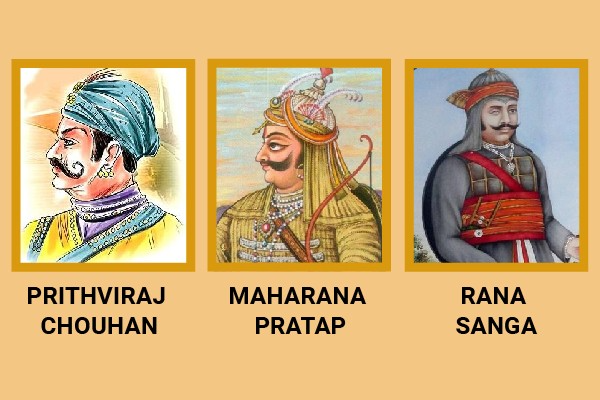
- Maharana Pratap of Mewar (1540 to 1597), Sisodia Rajput ruler celebrated for his sustained resistance to the Mughal Empire, most famously at the Battle of Haldighati.
- Prithviraj Chauhan (c. 1178 to 1192), Chauhan ruler of Ajmer and Delhi, remembered for his resistance to Muhammad of Ghor and as the subject of the Prithviraj Raso epic.
- Chhatrapati Shivaji Maharaj (1630 to 1680), founder of the Maratha Empire, crowned with Kshatriya coronation rites in 1674, regarded as one of the foremost military and administrative strategists of early modern India.
- Rana Sanga of Mewar (1482 to 1528), Sisodia ruler who united numerous Rajput states in resistance to the Delhi Sultanate and, later, the Mughal emperor Babur.
- Rani Padmini of Chittor, a legendary Rajput queen remembered in Rajasthani oral tradition and later Sufi and courtly literature.
- Maharaja Sir Ganga Singh of Bikaner (1880 to 1943), reformist ruler and the only non-White member of the British Imperial War Cabinet during the First World War.
15.2 Modern Military, Public Life, and Culture
- Brigadier Sawai Bhawani Singh (1931 to 2011), Maharaja of Jaipur, decorated with the Mahavir Chakra for gallantry in the 1971 India-Pakistan War.
- Major Shaitan Singh (1924 to 1962), posthumously awarded the Param Vir Chakra, India's highest gallantry decoration, for his defense of the Rezang La position in the 1962 Sino-Indian War.
- Naik Jadunath Singh Rathore (1916 to 1948), posthumously awarded the Param Vir Chakra for gallantry in the 1947 to 1948 Indo-Pakistani conflict.
- Field Marshal Sam Manekshaw, while not of Rajput or Kshatriya community background himself, worked closely with, and is frequently discussed alongside, the many Rajput regiments of the Indian Army, whose regimental tradition remains one of the most visible continuities of Kshatriya martial identity in contemporary India.
This list is illustrative rather than exhaustive; Kshatriya-identified communities across India have produced a very large number of regional rulers, military officers, administrators, and cultural figures over more than two millennia, only a small selection of whom could be included here.
16. Contemporary Reflections
Two broad themes recur in scholarly and community discussion of Kshatriya identity today. The first is diversity and discontinuity: unlike a single endogamous jati, Kshatriya has always been a status that could be claimed, conferred, or lost, so the communities that carry the name today, from Rajasthani Rajputs to Andhra Rajus to Maharashtrian Marathas, differ substantially in language, custom, marriage practice, and documented regional history, and population genetics generally confirms that they are not a single genetically unified lineage. The second is the ongoing renegotiation of a historically martial and landholding identity under changed modern economic and political circumstances, as land reform, the end of princely rule, and broader social and economic change have pushed many Kshatriya families toward new professions while community associations, genealogical societies, and cultural events continue to sustain a strong sense of shared heritage and clan memory.
17. Conclusion
The Kshatriyas of India represent not a single community but a widely shared social and historical identity, rooted in the Vedic transition from tribal chieftaincy to territorial kingship, elaborated in the Puranic genealogies of the Solar and Lunar dynasties, and carried forward by a large and regionally diverse set of communities, most prominently the Rajputs of North and Central India, the Marathas of the Deccan, and the Rajus of coastal Andhra Pradesh, each with its own distinct history, customs, and, as population genetics shows, distinct ancestry profile. From the hill forts of Rajasthan to the Deccan strongholds of the Maratha Empire, from Y-chromosome studies distinguishing Rajput from Maratha paternal lineages to the bardic ballads of the Charans and the powada singers of Maharashtra, the Kshatriya story is at once a shared textual and dynastic ideal and a genuinely plural, regionally rooted set of living community histories.
References
- [1]1. Wikipedia. “Kshatriya.” https://en.wikipedia.org/wiki/Kshatriya
- [2]2. Britannica. “Gotra: History, Origin, and Significance.” https://www.britannica.com/topic/gotra
- [3]3. Thapar, Romila (2004). History of Early India: From the Origins to AD 1300. University of California Press.
- [4]4. Bamshad, M. et al. (2001). Genetic study on the origins of Indian community populations. Genome Research 11: 994 to 1004.
- [5]5. Thangaraj, K. et al. Y-chromosomal study on genetic substructure among Indian communities. PubMed. https://pubmed.ncbi.nlm.nih.gov/17075717/
- [6]6. Sharma, S. et al. (2009). “The Indian Origin of Paternal Haplogroup R1a1*.” Journal of Human Genetics. https://www.nature.com/articles/jhg20082
- [7]7. Reich, D., Thangaraj, K., Patterson, N., Price, A. L., and Singh, L. (2009). “Reconstructing Indian Population History.” Nature 461: 489 to 494.
- [8]8. Moorjani, P. et al. (2013). “Genetic Evidence for Recent Population Mixture in India.” American Journal of Human Genetics 93: 422 to 438.
- [9]9. Basu, A. et al. (2016). “Genomic Reconstruction of the History of Extant Populations of India.” PNAS. https://www.pnas.org/doi/10.1073/pnas.1513197113
- [10]13. Kolenda, Pauline Mahar (1963). “Toward a Model of the Hindu Jajmani System.” Human Organization 22(1): 11 to 31.
- [11]14. Wikipedia. “Rajputi Poshak.” https://en.wikipedia.org/wiki/Rajputi_poshak
- [12]15. IndianRajputs.com. “Famous Rajput Rulers and Personalities.” https://www.indianrajputs.com/famous/
- [13]16. Matrimonialsindia.com. “Marriage Traditions in India: Rituals, Customs and Ceremonies.” https://www.matrimonialsindia.com/blog/marriage-traditions-by-caste-in-india-rituals-customs-ceremonies.htm
- [14]17. Raju Kshatriya community portal. “Marriage Customs.” https://www.rajukshatriya.org/customs/marriage
- [15]18. Dhanunjayagotram (WordPress). “About Kshatriya's.” https://dhanunjayagotram.wordpress.com/about-kshatriyas/
- [16]19. Poojn.in. “Kshatriya Cuisine and Culture: A Warrior's Table.” https://www.poojn.in/post/34777/kshatriya-cuisine-and-culture-a-warriors-table-history-and-traditions
- [17]20. Joshua Project. “Rajput (Hindu traditions) in India.” https://joshuaproject.net/people_groups/17928/in