

Saini Community
Explore the Saini community of India: their Shoorsaini/Yaduvanshi origin traditions, Punjab–Haryana–Himachal homeland, Sikh and Hindu branches, farming and military heritage, cuisine, diaspora, and genetic ancestry.
THE SAINI COMMUNITY OF INDIA
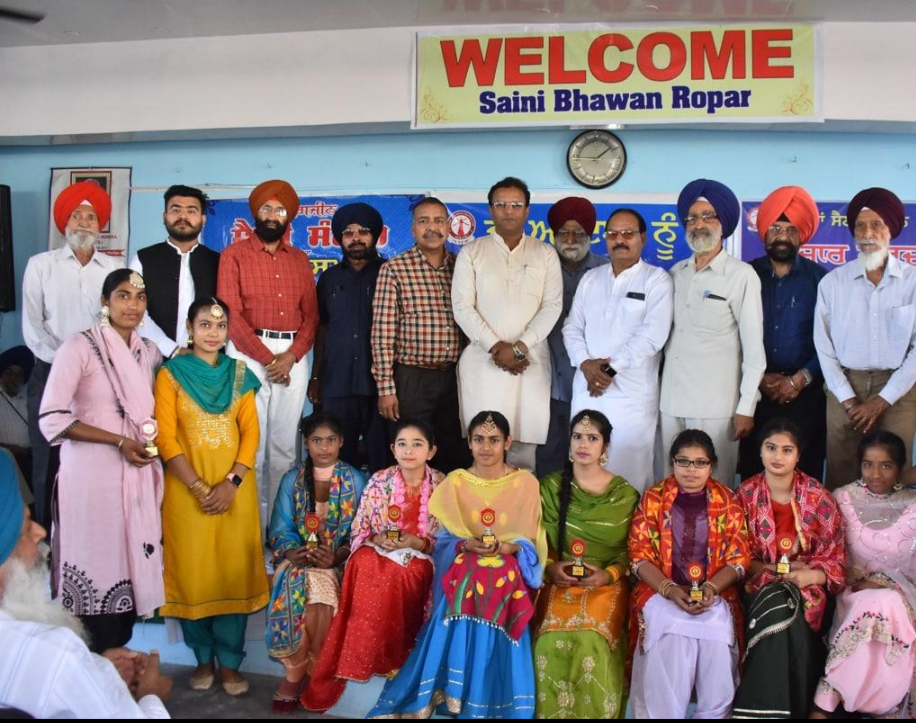
Land, Lineage, and Legacy of North India's Cultivator-Soldiers
Introduction: Who Are the Sainis?
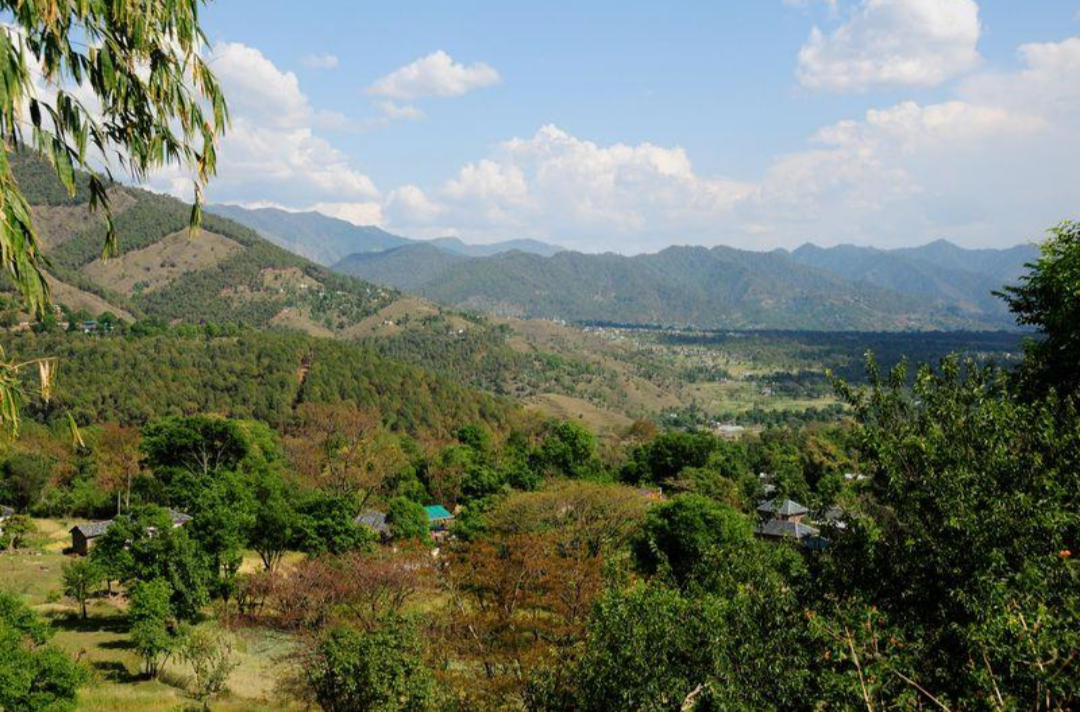
The Sainis are an agricultural community of north-western India whose heartland lies in the sub-Himalayan foothills and plains of Punjab, Haryana, and Himachal Pradesh, with closely linked populations in Jammu, Chandigarh, Delhi, western Uttar Pradesh, Uttarakhand, and Rajasthan. Known for generations as skilled cultivators, market gardeners, and landowners, Sainis also built a strong reputation as soldiers, particularly during the colonial period and in independent India's armed forces. The community today includes both Hindu and Sikh members, and the name Saini is carried by people of varied regional backgrounds who share a common sense of identity and, in many cases, a common origin story.
Because Saini identity is tied as much to a region as to a single lineage, this profile treats the Sainis as a geographically rooted community: a people shaped by the soil of the Shivalik foothills, the Doaba plains, and the Yamuna belt. It draws on census-era ethnography, encyclopaedic sources, and community literature to describe what is reliably known about Saini origins, history, culture, and people, noting where accounts differ, and closes with what is known, and what remains to be learned, about Saini genetic ancestry.
Etymology of the Name "Saini"
Community tradition derives Saini from Shoorsaini (also Shursaini or Sursaini), meaning the people or descendants of Shurasena, the legendary Yadava king of Mathura who is remembered in the Puranas as the grandfather of Krishna. The ancient region around Mathura was itself called Shurasena, and its people are referred to as the Sourasenoi by the Greek ambassador Megasthenes in the fourth century BCE. The Prakrit dialect of that region, Shauraseni, later gave rise to much of the Hindi-belt's literary language. In this reading, "Saini" preserves the memory of a Mathura-region homeland rather than an occupation.
A second strand of usage, especially in Uttar Pradesh, Rajasthan, and southern Haryana, links the name to communities historically known as Mali (gardeners), many of whom adopted Saini as a community name during the caste-association movements of the twentieth century. Both strands are part of the modern Saini story, and the word today functions as a shared community surname across them.
Origins and Early History
The best-known Saini origin tradition, recorded by colonial administrators in the late nineteenth and early twentieth centuries, holds that Saini ancestors were Yaduvanshi Rajputs of the Mathura region who moved north-west into Punjab in the era of the early Turkic invasions of the eleventh century, settling in the sub-mountainous tracts at the foot of the Shivaliks. Writers such as Denzil Ibbetson and H. K. Trevaskis noted this account; some community historians further connect Saini clans to the Tomara rulers of Delhi and to a common ancestry shared with hill Rajput lineages of the Gurdaspur–Nurpur region.
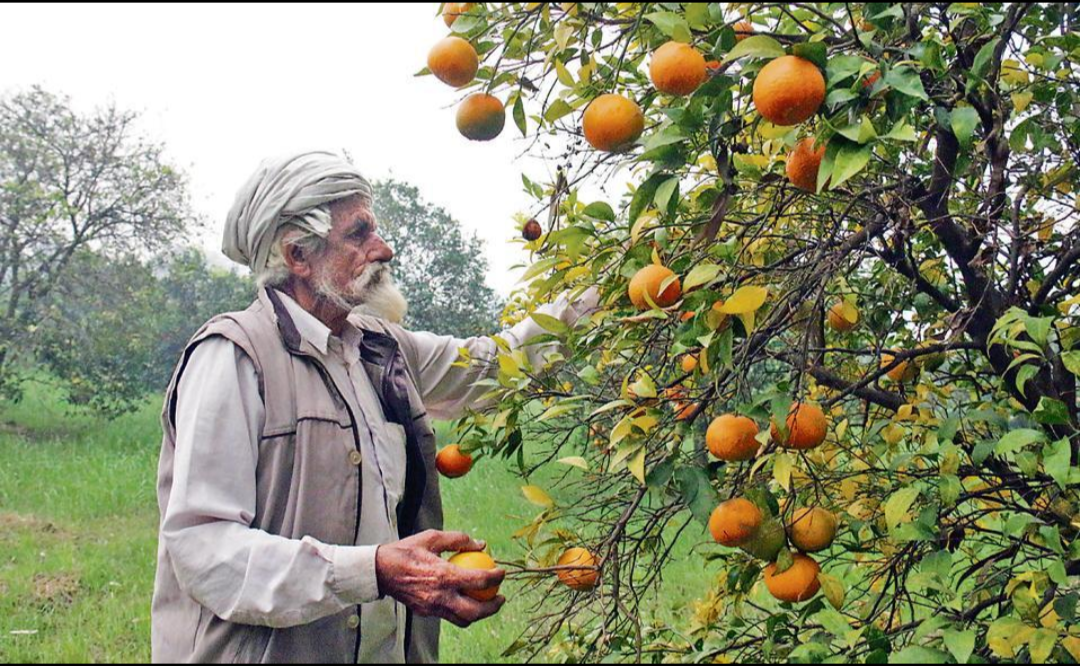
Over the following centuries the community became firmly established as cultivators in the fertile districts of Hoshiarpur, Gurdaspur, Jalandhar, Ropar (Rupnagar), Ambala, Yamunanagar, Kurukshetra, Una, and Kangra. Intensive farming, especially of vegetables, sugarcane, and orchard crops, became a signature of Saini villages. With the rise of Sikhism in Punjab, a substantial part of the community embraced the Sikh faith, while others remained Hindu; the two branches share gotras and customs and have historically intermarried.
As with most Indian communities, these origin narratives are best understood as cherished tradition rather than fully documented history. Scholars note that north Indian agricultural communities typically formed through the coming together of lineages over long periods, and the Saini community of today almost certainly includes families of more than one deep origin. This is precisely the kind of question that population genetics can help illuminate.
Geography and Regional Branches
Saini settlement follows a clear geographic arc along the sub-Himalayan belt and into the Indo-Gangetic plain. Regional groupings differ in dialect, religion, and custom while sharing the Saini name:
- Punjabi Sainis (Doaba and Kandi belt) — Concentrated in Hoshiarpur, Jalandhar, Nawanshahr (SBS Nagar), Gurdaspur, Ropar and Mohali; both Sikh and Hindu, Punjabi-speaking, with deep military traditions.
- Haryanvi Sainis (northern Haryana) — Strong in Ambala, Yamunanagar, Kurukshetra, Kaithal and Panchkula; largely Hindu, speaking Haryanvi and Puadhi; politically prominent in recent decades.
- Himachali Sainis — Settled in Una, Kangra and Hamirpur, historically linked to the Punjabi Saini belt before the reorganisation of states.
- Jammu Sainis — Found in Jammu, Kathua and Samba districts, speaking Dogri and Punjabi.
- Sainis of western UP, Uttarakhand, Rajasthan and southern Haryana — Including communities historically known as Mali; concentrated around Saharanpur, Muzaffarnagar, Meerut, Bijnor, Haridwar, Moradabad, and in Rajasthan around Jaipur, Alwar and Jhunjhunu.
In several states the Saini community is listed among the Other Backward Classes (OBC) for reservation purposes, including Uttar Pradesh, Haryana, Rajasthan, and Punjab, where it was added to the OBC list in 2016.
Population Size
India has not published caste-wise census data since 1931, so there is no official count of Sainis. Community organisations and political estimates commonly place the combined Saini population (including Mali-Saini groups) in the range of several million, with northern Haryana, Punjab's Doaba region, and western Uttar Pradesh holding the largest concentrations. In Haryana the community is considered an electorally significant OBC group, particularly in the Ambala–Kurukshetra belt. Figures should be treated as estimates until fresh caste-wise enumeration is available.
Social Structure, Gotras, and Marriage
Sainis are an endogamous community that practises exogamy at the level of the gotra and the village, as recorded by the Anthropological Survey of India. Marriage outside one's own gotra (and traditionally the mother's and grandmothers' gotras) is the norm, and marriage within one's own village is avoided. Remarriage of widowed persons and divorce are accepted today.
Saini gotras number in the dozens and are an important marker of identity. Commonly cited gotras include Badwal, Bhondi, Dhaurayi, Gahunia, Jaadu, Kaloti, Mahi, Mangar, Pawar, Salaria, Sahnan, Thind, and Tomar, among many others. Several of these names are shared with Rajput and Jat lineages of the region, which community historians read as evidence of shared ancestry and which geneticists would read as an invitation to test it.
Religion and Belief
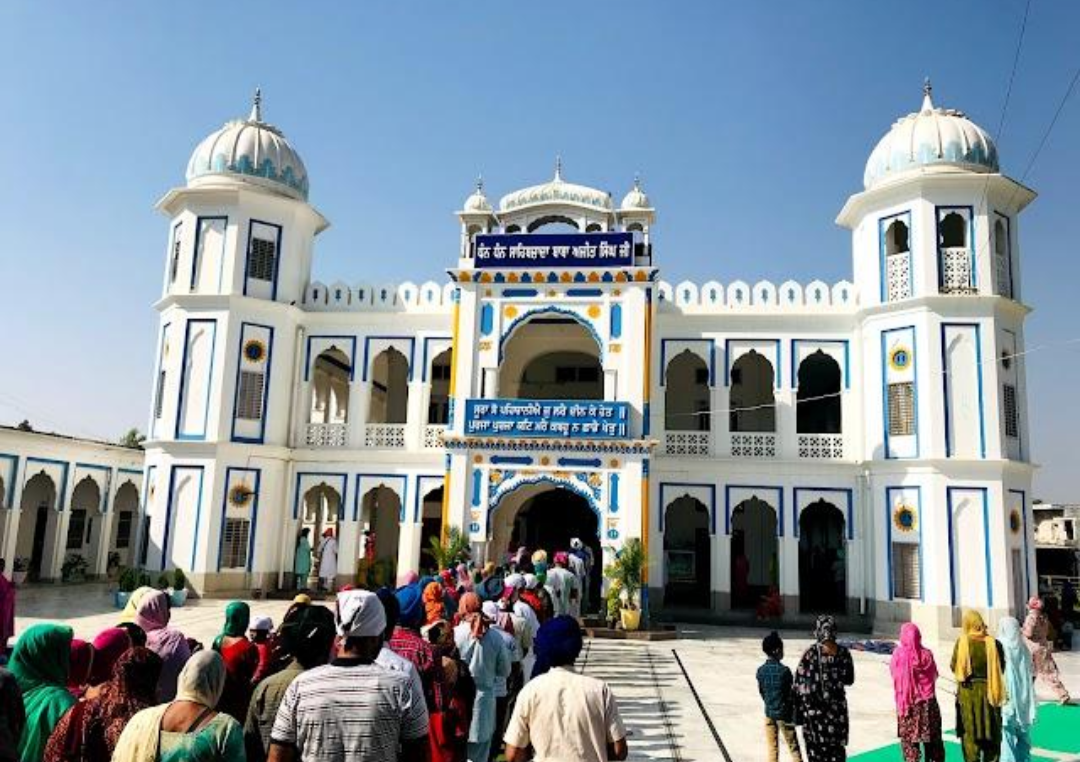
The Saini community is religiously plural. In Punjab a large share of Sainis are Sikh, with gurdwaras at the heart of village life and Sikh rites (Anand Karaj) for marriage. Hindu Sainis, predominant in Haryana, Himachal, Uttar Pradesh and Rajasthan, worship Krishna and other Vaishnava deities, Shiva, and local and lineage deities. Many families of both faiths revere ancestral shrines (jathere) and village guardian deities, a shared folk layer that predates later religious boundaries. A smaller number of Sainis follow Christianity, particularly in parts of Punjab.
Many Saini associations celebrate Maharaja Shoorsaini Jayanti and honour figures such as Mahatma Jyotiba Phule (from the Mali community of Maharashtra), whom Mali-Saini organisations regard as a social reformer of their wider fraternity.
Language
Sainis speak the language of their region rather than a separate community tongue: Punjabi (Doabi and Puadhi dialects) in Punjab, Haryanvi and Hindi in Haryana, Pahari and Punjabi in Himachal, Dogri in Jammu, Khari Boli Hindi in western UP, and Rajasthani dialects in Rajasthan. Hindi and English are widely used in education and work, and Punjabi in Gurmukhi script remains a strong marker for Sikh Sainis.
Culture, Customs, and Small Traditions
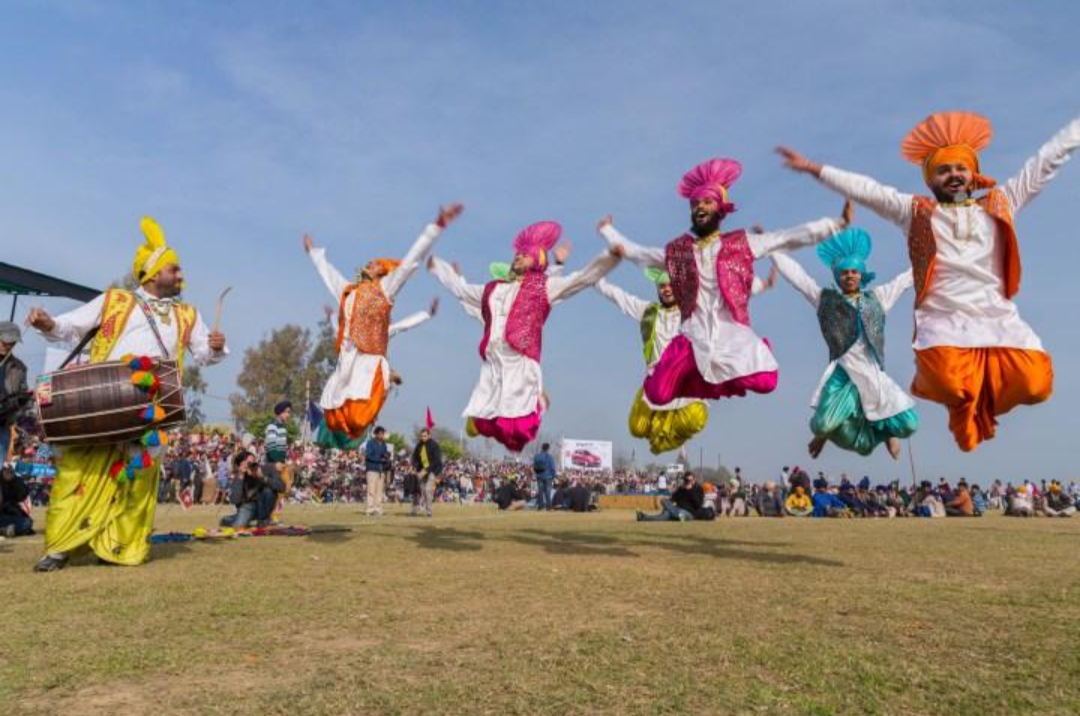
Saini culture is the culture of the north-Indian village and farm, layered with local religious and regional traditions. Some characteristic features include:
- Agricultural calendar — Festivals such as Baisakhi (harvest), Lohri, Teej, and Holi are celebrated with gusto; sowing and harvest rituals once marked the year.
- Jathera worship — Visiting the ancestral shrine of the gotra, especially after a wedding or a child's birth, is a cherished Punjabi Saini custom.
- Kitchen gardens — Even urban Saini households are often noted for a vegetable patch or potted herbs, a living echo of the community's horticultural heritage.
- Military pride — Village memorials, regimental photographs and stories of grandfathers in the World Wars are common heirlooms.
- Weddings — Multi-day events with roka, chunni, mehndi, sangeet, and jaggo (Punjab) or bhaat and ghudchadhi (Haryana), followed by Anand Karaj or Vedic pheras.
- Folk music and dance — Bhangra, giddha, and Haryanvi ragini singing feature at fairs and celebrations.
Cuisine
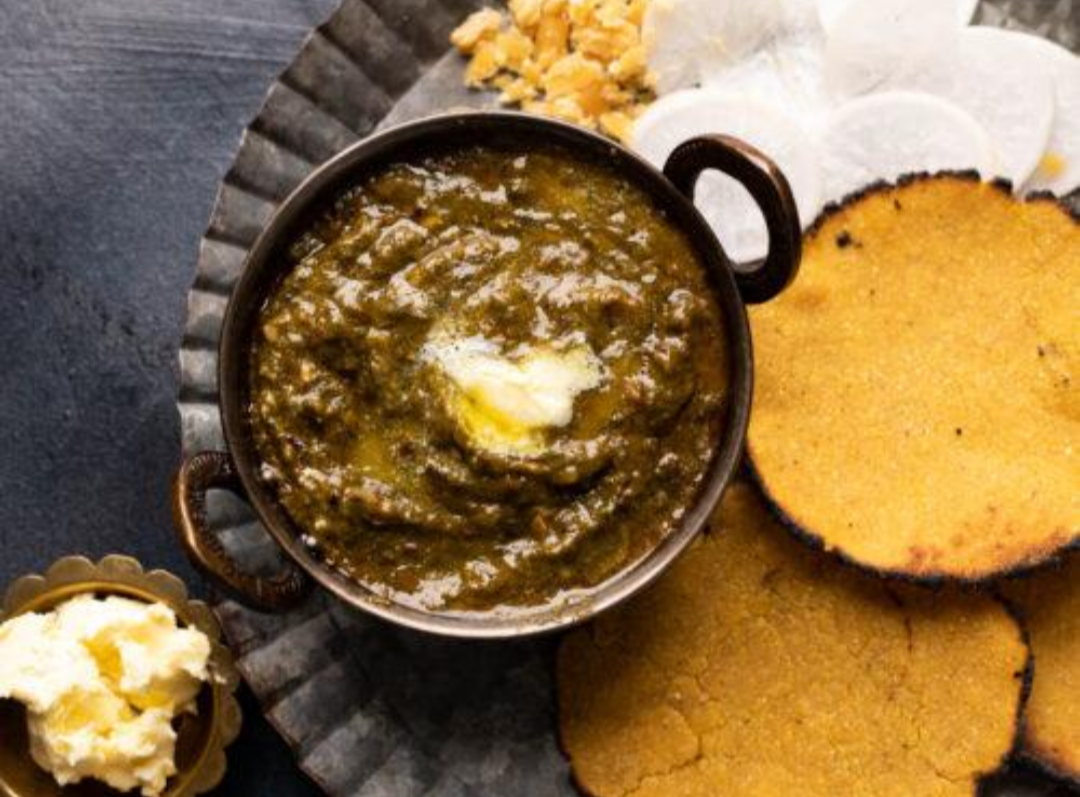
Saini food is rooted in the farm: seasonal vegetables, dairy, and wheat. Because the community has long grown vegetables, home cooking is notably rich in greens and sabzis. Familiar dishes include:
- Sarson da saag and makki di roti — The winter classic of Punjab and Haryana, topped with white butter and jaggery on the side.
- Kadhi-chawal and bajra khichdi — Comfort food of Haryanvi homes.
- Seasonal sabzis — Arbi, gobhi, mooli, lauki, kaddu and karela cooked simply with ghee and cumin.
- Dairy — Lassi, makkhan, dahi and fresh paneer; many families keep buffaloes or cows.
- Sweets — Gur (jaggery) sweets, panjiri, kheer, pinni, and suji halwa for festivals.
Most Hindu Saini households in Haryana and UP lean vegetarian, while meat is more commonly eaten among Punjabi Sainis, reflecting regional rather than community-specific habits.
| Taste Your AncestryFrom saag fields in Hoshiarpur to vegetable gardens along the Yamuna, Saini food tells a story of land. Discover the deeper roots behind your family's table.[ Discover Your Heritage → genoconnect.co ] |
|---|
Traditional Dress
Dress follows region and faith. Sikh Saini men wear the turban (dastar) and kurta-pyjama, while elders in villages may still wear the chadra or tehmat. Hindu Saini men in Haryana traditionally wore the dhoti-kurta with a pagri for occasions. Women wear salwar-kameez with a dupatta (phulkari embroidery is prized in Punjab) or, in Haryana and Rajasthan, the ghagra, kurti and odhni. Gold jewellery, kadas and chooda (bridal bangles) mark weddings.
Physical Traits
There is no single "Saini look". As a north-western Indian population, Sainis broadly share the physical range typical of Punjab and Haryana: generally medium-to-tall stature, wheatish to fair-wheatish complexions, and dark hair and eyes, with lighter eye colours occasionally seen. Variation within the community is large and is better explained by regional ancestry than by caste. Physical features are a poor guide to ancestry; genetics is a far more reliable one.
Occupations: Then and Now
Traditionally, Sainis were landowning cultivators specialising in vegetables, sugarcane, fodder and orchards, frequently described in colonial records as among the most skilled market gardeners of Punjab. Military service was the second great pillar: Sainis enlisted in large numbers in the British Indian Army and continue to serve in the Indian Army, police, and paramilitary forces. Today Sainis are found across agriculture and agribusiness, the armed forces, government service, teaching, medicine, engineering, law, small business, transport, construction and the IT sector, and in politics at every level.
Migration and Diaspora
Punjabi Sainis, especially from Hoshiarpur and Jalandhar, took part in the great Doaba migration of the twentieth century. Substantial Saini communities now live in the United Kingdom, Canada (notably Ontario and British Columbia), the United States, Australia, New Zealand, Italy and the Gulf states, with gurdwaras, temples and community associations maintaining ties to home villages. Within India, Sainis have moved to Delhi-NCR, Chandigarh, Mumbai and Bengaluru for work and education.
Notable Figures
Many people with the Saini surname have achieved distinction. A selection associated with the community in public sources includes:
- Subedar Joginder Singh (Sahnan) — Param Vir Chakra recipient (posthumous) for his heroism in the 1962 Sino-Indian War; widely honoured within the community.
- Nayab Singh Saini — Chief Minister of Haryana since March 2024, re-elected in October 2024; former MP from Kurukshetra.
- Raj Kumar Saini — Former Member of Parliament from Kurukshetra, Haryana.
- Navdeep Saini — Indian fast bowler from Karnal, Haryana, who has represented India in all formats.
- Nirmal Saini — Former captain of the Indian national volleyball team.
Readers should note that the surname is used by people of different backgrounds, so inclusion here reflects public association rather than verified genealogy.
Saini Genetics: What We Know and What We Don't
Most people from India asking about their community's genetics want to know three things: the balance of their ancient ancestral components, their paternal and maternal haplogroups, and which neighbouring communities they are closest to. Published research has rarely sampled the Saini community specifically, so much of what follows is a provisional picture drawn from studies of neighbouring north-western populations. GenoConnect's community feature exists precisely to replace these estimates with real community data.
1. Ancestral Components: AASI, Indus-Related, and Steppe
Modern South Asians are commonly modelled as a mixture of three deep sources: Ancient Ancestral South Indians (AASI), the indigenous hunter-gatherer ancestry of the subcontinent; Indus Periphery-related ancestry, linked to early farmers with Iranian-plateau affinities; and Steppe ancestry, from Bronze Age pastoralists of Central Asia. Older studies described this using the simpler ANI–ASI (Ancestral North Indian–Ancestral South Indian) framework.
Populations of Punjab and Haryana generally show higher Indus-related and Steppe shares and lower AASI shares than populations further south and east. On that basis, the Saini community is expected to show a profile similar to other agricultural groups of the region, with likely differences between Punjabi-Haryanvi Sainis and Mali-Saini groups of the Gangetic plain. The table below is indicative only and is not a measurement of the Saini community.
| Component | Punjab/N. Haryana Sainis (expected) | Western UP/Rajasthan Sainis (expected) |
|---|---|---|
| Indus Periphery-related | Major component (largest share) | Major component |
| AASI | Moderate | Moderate to higher |
| Steppe (Central Steppe MLBA) | Notable, comparable to regional agriculturalists | Somewhat lower |
2. Haplogroups: Paternal (Y-DNA) and Maternal (mtDNA)
Haplogroups trace a single line of descent: Y-DNA from father to son, and mtDNA from mother to child. Among north-western Indian populations, the following lineages are frequent and are therefore the ones Saini testers are most likely to encounter:
| Line | Likely common haplogroups | What they suggest |
|---|---|---|
| Paternal (Y) | R1a (Z93 branch), L-M20, H, J2, R2 | Mix of Steppe-linked, Indus/Iranian-linked, and indigenous South Asian lines |
| Maternal (mt) | M (many South Asian subclades), U2, U7, H, R, W, HV | Predominantly ancient South Asian maternal roots with West Eurasian additions |
Gotra-level Y-DNA testing is particularly exciting: if men of the same gotra share a recent paternal lineage, it can confirm (or complicate) clan traditions such as the Tomar or Salaria connections.
3. Closest Communities and Relatedness
Based on geography, shared gotras and marriage traditions, Saini testers would be expected to cluster genetically near other north-western agricultural and martial communities, such as Jats, Kambojs, Rajputs and Gujjars of Punjab and Haryana, with Mali-Saini groups likely sitting closer to Kushwaha, Mali and other agricultural communities of the Gangetic plain. For Christian or Sikh Saini families, genetics can also show which regional Hindu communities they share the most ancestry with, often illuminating family conversion histories. These relationships remain hypotheses until enough Sainis test.
Conclusion
The Saini story is one of land and lineage. Whether one begins with the Shoorsainis of ancient Mathura, the cultivators of the Shivalik foothills, or the market gardeners of the Yamuna plain, the community's identity has been shaped by skilled farming, military service, and strong kinship networks expressed through gotras and village ties. Today, from Ambala and Hoshiarpur to Brampton and Melbourne, Sainis continue to carry that heritage forward. The deeper questions of where those many lineages came from, and how they relate to their neighbours, are now open to answer through the community's own DNA.
Frequently Asked Questions
Q. Where do Sainis mainly live?
Primarily in Punjab, Haryana, Himachal Pradesh, Jammu, Delhi, western Uttar Pradesh, Uttarakhand and Rajasthan, with a large diaspora in the UK, Canada, the US and Australia.
Q. What is the origin of the Saini community?
Community tradition traces Sainis to the Shoorsaini (Shurasena) Yaduvanshi lineage of Mathura, who are said to have moved to Punjab around the eleventh century. In UP and Rajasthan many Saini groups are historically linked to the Mali gardening community. Both traditions are part of modern Saini identity.
Q. Are Sainis Hindu or Sikh?
Both. Many Punjabi Sainis are Sikh, while Sainis in Haryana, Himachal, UP and Rajasthan are mostly Hindu. A small number are Christian.
Q. Are Sainis and Malis the same?
They overlap. In several states communities historically called Mali adopted the Saini name, while Punjabi Sainis maintain a separate Shoorsaini tradition. Genetic testing can help clarify how closely these groups are related.
Q. Is Saini an OBC caste?
Yes, Sainis are listed as OBC in several states including Uttar Pradesh, Haryana, Rajasthan, and Punjab (since 2016). Check your state's current list for specifics.
Q. What are common Saini gotras?
Examples include Badwal, Bhondi, Dhaurayi, Gahunia, Jaadu, Kaloti, Mahi, Mangar, Pawar, Salaria, Sahnan, Thind and Tomar, among many others.
Q. What is the traditional occupation of Sainis?
Farming, especially vegetables, sugarcane and orchards, along with a strong tradition of military service.
Q. How much Steppe or AASI ancestry do Sainis have?
No published study has measured it directly. Based on neighbouring populations, Punjabi and Haryanvi Sainis are expected to show substantial Indus-related and Steppe ancestry with moderate AASI. GenoConnect's community feature aims to produce real figures from member data.
Q. What haplogroups are common among Sainis?
Not yet well studied. Y-DNA lineages common in the region include R1a-Z93, L, H, J2 and R2; maternal lineages include South Asian M subclades, U2, U7, H and W.
Q. Which communities are Sainis genetically closest to?
Q. How can I learn more about my Saini ancestry?
Take a GenoConnect DNA test and join the Saini community feature to see your ancestry components, haplogroups and genetic matches with other Sainis.
References
- [1]1. Wikipedia. "Saini." https://en.wikipedia.org/wiki/Saini
- [2]2. Wikipedia. "Saini (surname)." https://en.wikipedia.org/wiki/Saini_(surname)
- [3]3. Wikipedia. "Nayab Singh Saini." https://en.wikipedia.org/wiki/Nayab_Singh_Saini
- [4]4. SikhiWiki. "Saini." https://www.sikhiwiki.org/index.php/Saini
- [5]5. Joshua Project. "Saini (Sikh traditions) in India." https://joshuaproject.net/people_groups/18163/IN
- [6]6. Jatland Wiki. "List of Saini Samaj Gotras." https://www.jatland.com/home/List_of_Saini_Samaj_Gotras
- [7]7. Ibbetson, D. Panjab Castes. Lahore, 1916.
- [8]8. Trevaskis, H. K. The Land of the Five Rivers. Oxford University Press, 1928.
- [9]9. Singh, K. S. (ed.). People of India: Punjab / Haryana. Anthropological Survey of India.
- [10]10. Narasimhan, V. M. et al. "The formation of human populations in South and Central Asia." Science 365 (2019).
- [11]11. Reich, D. et al. "Reconstructing Indian population history." Nature 461 (2009).