

Bengal Genome Project Community
Unravel your Bengal ancestry & genetic heritage with GenoConnect DNA tests. Explore the rich history, diverse people, and vast geography of the wider Bengal
BENGAL GENOME PROJECT
Geography, People, History, Genetics and Culture of the Bengal Region
1. Introduction: Who Are the People of Bengal?
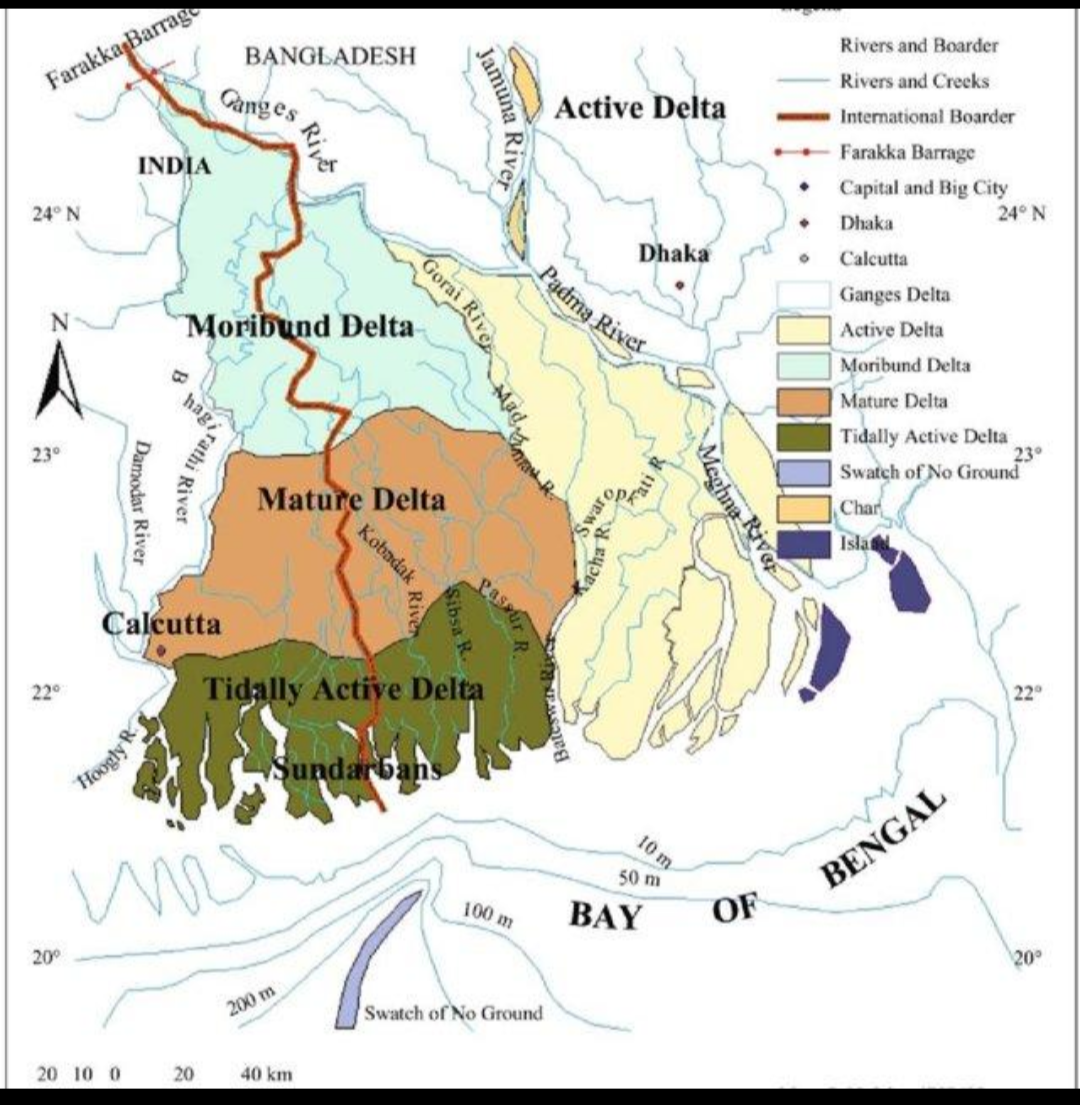
“Bengal” is not a single caste or religious community but a geography-defined population: the inhabitants, past and present, of the vast delta and floodplain built by the Ganga (Padma), Brahmaputra (Jamuna) and Meghna river systems in the eastern part of the Indian subcontinent. Today that population is divided by a modern international border between the Indian state of West Bengal and the independent nation of Bangladesh, with further communities of Bengali origin in the Indian states of Tripura, Assam's Barak Valley, Jharkhand and the Andaman and Nicobar Islands. Together, Bengali speakers number well over 270 million people, making Bangla one of the most widely spoken languages on earth and Bengalis one of the largest ethnolinguistic communities in the world. This profile treats “Bengal” as a geography-of-origin community in the genealogical sense: the shared population of the wider Bengal region, encompassing its many castes, religions, sub-regional dialects and diaspora branches, whose ancestors have farmed, fished, traded and settled this delta for millennia.
Bordered by the Himalayan foothills and Nepal to the north, Bihar and Jharkhand to the west, Odisha and the Bay of Bengal to the south, and Assam, Meghalaya, Tripura and Myanmar to the east, the Bengal region sits at the point where the Indo-Gangetic plain meets the Bay of Bengal and the hill tracts of Northeast India and Southeast Asia. Its cities — Gaur, Pandua, Murshidabad, Dhaka, Kolkata (Calcutta) and Chittagong — have, at different points over more than two thousand years, served as capitals of empires, seats of maritime trade, and centres of religious, literary and revolutionary ferment. The region is at once the heartland of the Buddhist Pala Empire, a province of the Delhi Sultanate and Mughal Empire, the commercial and administrative core of British India, the birthplace of the Bengal Renaissance, and, through the 1971 Liberation War, the founding territory of modern Bangladesh.
2. Geography
The Bengal region covers roughly 230,000 square kilometres between West Bengal (88,752 sq km) and Bangladesh (about 148,000 sq km), forming the largest river delta in the world — the joint delta of the Ganga, Brahmaputra and Meghna. The terrain falls into several broad zones: the Himalayan foothill and Terai belt in the extreme north around Darjeeling and Jalpaiguri; the older, drier Barind and Rarh uplands of the western and northwestern tract; the immense, intensely fertile and densely populated central and eastern delta (the historic “Vanga” or “Bhati” country, now the core of Bangladesh); the mangrove-forested Sundarbans along the coast, shared between West Bengal and Bangladesh and home to the Bengal tiger; and the hilly Chittagong and Sylhet tracts in the southeast and northeast, which shade into the hill country of Northeast India and Myanmar.
This is one of the most fertile and most densely settled landscapes on earth: annual monsoon flooding deposits fresh silt across the delta each year, sustaining rice, jute and fish-based livelihoods that have supported one of the highest rural population densities in South Asia for centuries. Kolkata is the historic and cultural capital of West Bengal, while Dhaka is the capital of Bangladesh; Murshidabad, further upriver, was the last independent seat of Bengal's Nawabs before the region passed to British control.
Cultural-Geographic Sub-Regions
Long before the modern India-Bangladesh border, Bengalis identified themselves with older cultural tracts, each with its own dialect, temperament and historical character:
| Region | Approximate Location | Notable Centres | Character |
|---|---|---|---|
| Rarh | West of the Bhagirathi-Hooghly, West Bengal | Bardhaman, Bishnupur, Birbhum, Bankura | Laterite upland; terracotta temple towns |
| Varendra (Barind) | North Bengal plateau, both sides of the border | Malda, Rajshahi, Dinajpur | Ancient seat of the Pala Empire; older, drier alluvial tract |
| Vanga | Central and eastern delta (core of Bangladesh) | Dhaka, Faridpur, Barisal | Deltaic, riverine, densely populated; historically “East Bengal”, the “Bangal” cultural zone |
| Samatata / Chittagong region | Southeastern coastal and hill tract | Chittagong, Cox's Bazar, Comilla | Coastal and hill-fringe zone with a distinct Chittagonian dialect and Arakanese/Southeast Asian contact |
| Sundarbans | Coastal delta, southern West Bengal and Bangladesh | 24 Parganas, Khulna | Mangrove forest and tidal-island tract; tiger country; distinctive Bonbibi folk cult |
| North Bengal / Darjeeling Hills | Sub-Himalayan north | Darjeeling, Siliguri, Jalpaiguri | Hill and Terai zone; ethnically mixed with Nepali, Lepcha and other Himalayan communities |
| Sylhet / Barak Valley | Northeastern Bengal, extending into Assam | Sylhet, Silchar, Karimganj | Hilly, tea-growing tract; distinct Sylheti speech; source of most of Britain's Bengali diaspora |
3. Origins and Early History
3.1 Ancient Foundations
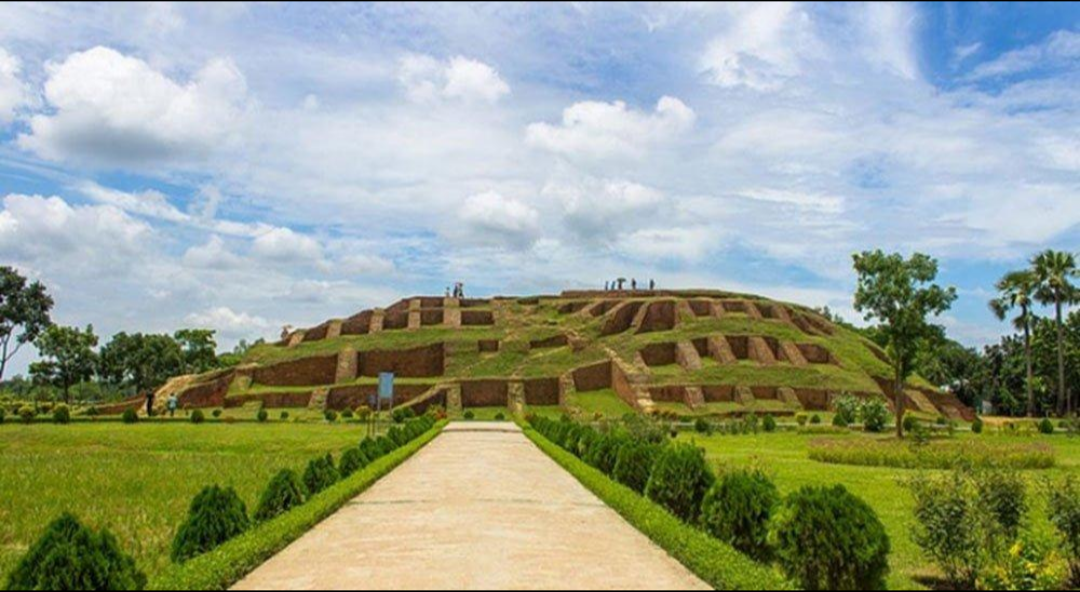
The Bengal delta appears in early Sanskrit literature under several regional names — Vanga, Pundra, Gauda, Radha (Rarh) and Samatata — corresponding to distinct janapadas (early territorial polities) that only gradually merged into a single cultural identity. Archaeological sites such as Chandraketugarh and Mahasthangarh (in present-day Bangladesh, one of the oldest urban sites in the region, with inscriptions dating to the Mauryan period) attest to settled, literate societies from at least the 3rd century BCE. The region formed a distant but connected part of the Mauryan and, later, the Gupta Empire, absorbing Sanskritic, Buddhist and Jain influence while retaining its own riverine, delta-adapted agrarian culture.
3.2 The Pala and Sena Dynasties
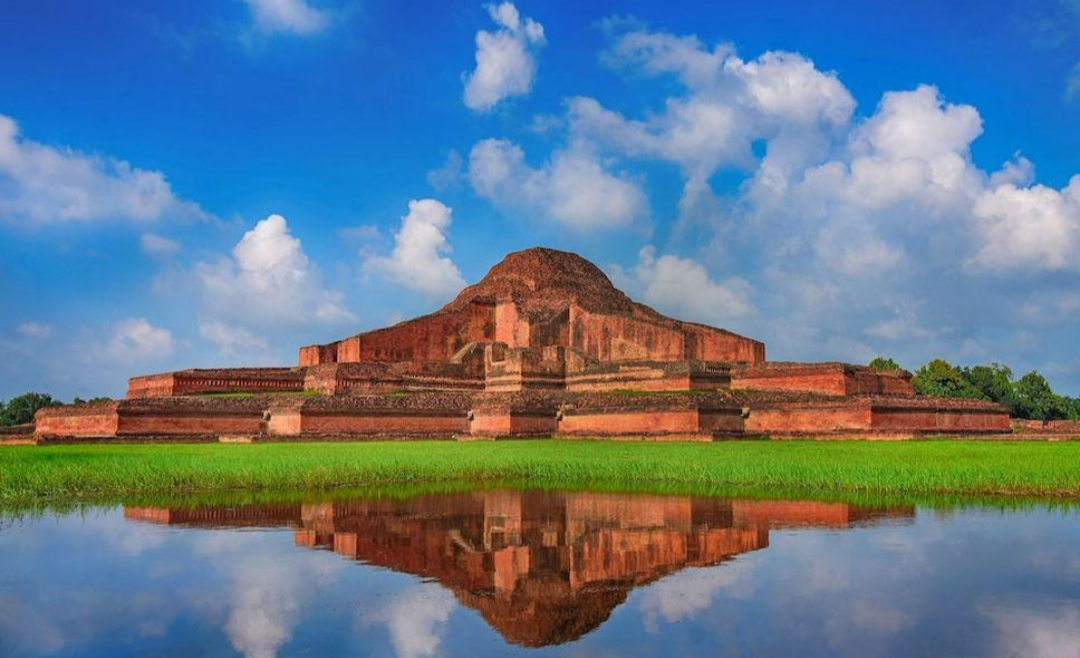
From the 8th to the 12th centuries CE, Bengal was the seat of the Pala Empire, a Buddhist dynasty that built the region into a major centre of Buddhist learning and art, founding the great monastic university of Vikramashila and the vast Somapura Mahavihara at Paharpur (now a UNESCO World Heritage Site in Bangladesh) and extending patronage across much of eastern and northern India. The Palas were succeeded in the 12th century by the Hindu Sena dynasty, under whom Brahmanical orthodoxy, the caste system and Sanskritic court culture were more firmly established across the delta, laying much of the social framework that later Muslim and colonial rule would build upon.
3.3 The Delhi Sultanate, the Bengal Sultanate and Mughal Bengal
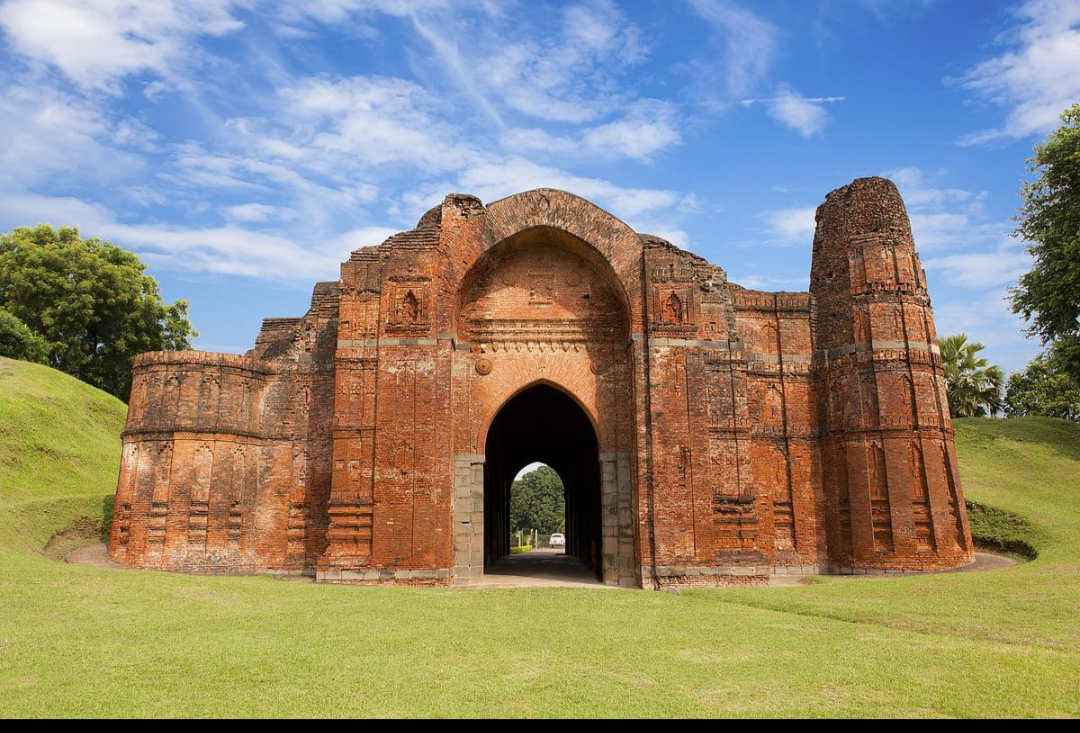
Bengal was first brought under Muslim rule in the early 13th century, when Bakhtiyar Khalji's forces overran the Sena capital of Nadia. For much of the medieval period thereafter it was governed as a province of the Delhi Sultanate before asserting effective independence in the 14th century as the Bengal Sultanate, an era of major mosque-building, Bengali-language literary patronage and expanding maritime trade, centred on capitals at Gaur and Pandua. The Mughals annexed Bengal under Akbar in the late 16th century, administering it as the wealthy province (subah) of Bangla, whose revenues — rice, textiles, and above all fine muslin cloth from the Dhaka region, prized across Mughal India, Persia and Europe — made it one of the empire's richest territories.
3.4 The Nawabs of Bengal and the Company Raj
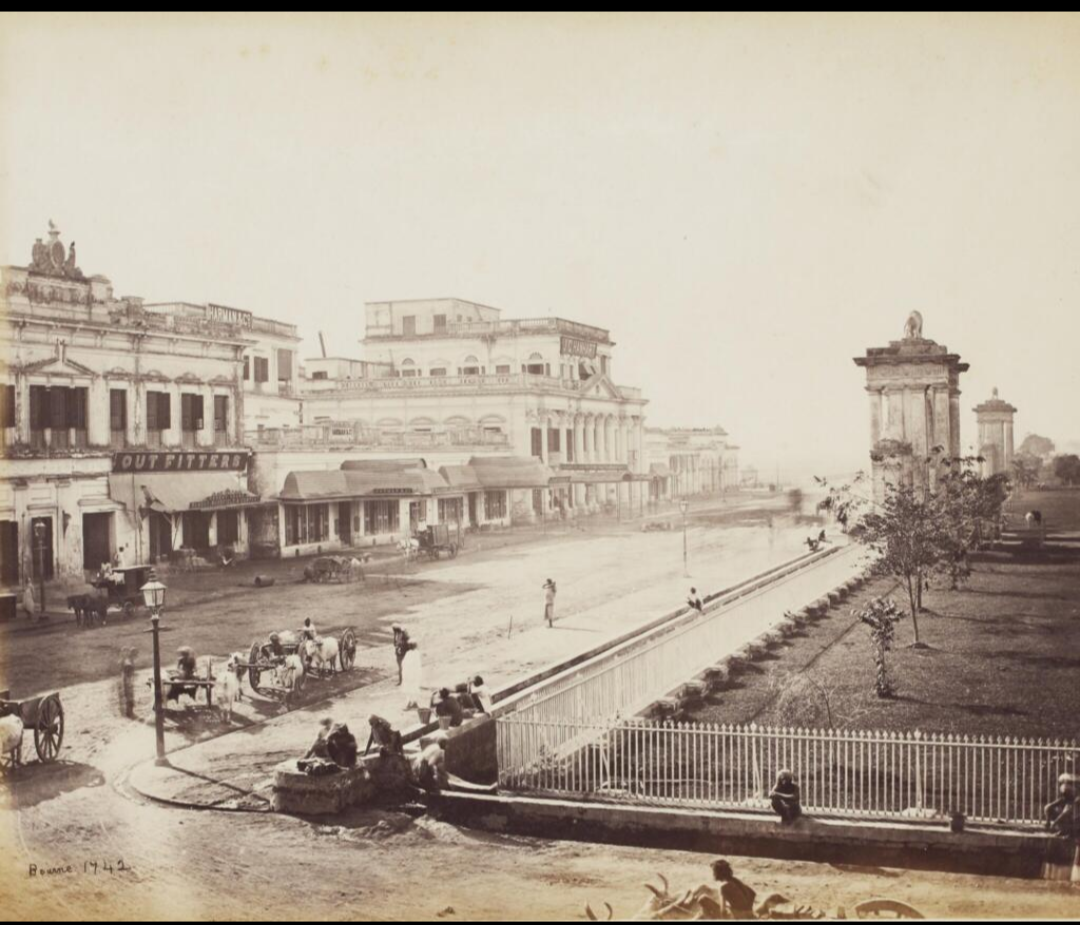
As Mughal central authority weakened in the early 18th century, Bengal came under the effective rule of a line of hereditary Nawabs based at Murshidabad. The decisive turning point in Bengal's, and India's, colonial history came at the Battle of Plassey in 1757, when the British East India Company defeated Nawab Siraj-ud-Daulah, opening the way to Company control of Bengal's revenues and, eventually, direct rule of British India from Calcutta. Bengal Presidency became the administrative and commercial hub of British India for nearly two centuries, and 19th-century Calcutta was the site of the Bengal Renaissance — a sweeping movement of social reform, scientific inquiry and literary innovation associated with figures such as Raja Ram Mohan Roy, Ishwar Chandra Vidyasagar and, later, Rabindranath Tagore.
3.5 Partition and the Making of Two Bengals
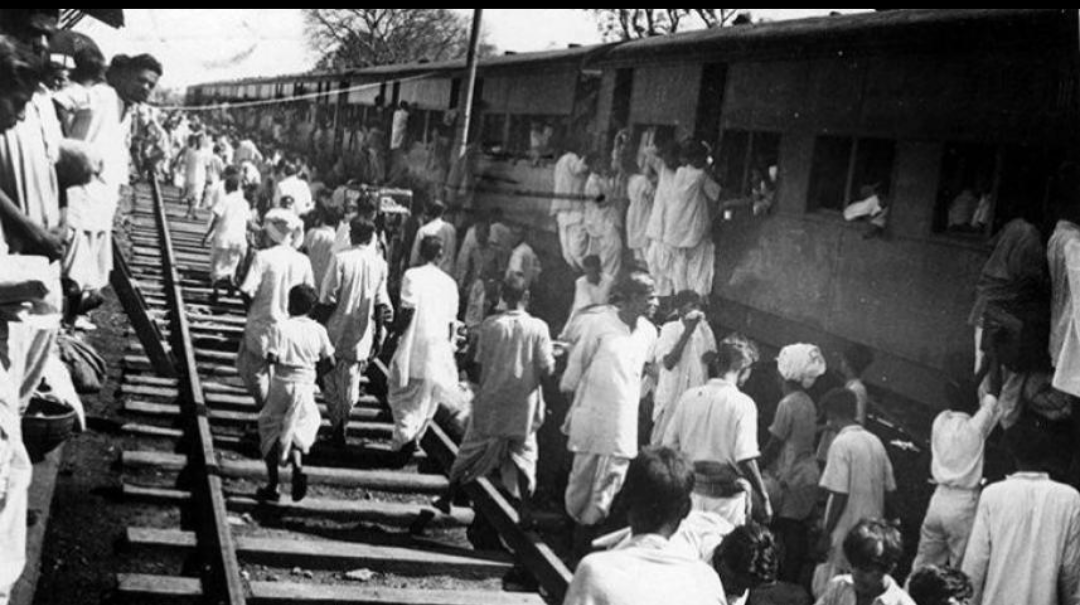
Bengal's modern political geography was reshaped twice within half a century. In 1905, the British partitioned Bengal along religious lines, a move that provoked mass protest (the Swadeshi movement) and was annulled in 1911. Partition returned with independence in 1947, when Bengal was permanently divided between (predominantly Hindu) West Bengal, which joined India, and (predominantly Muslim) East Bengal, which became East Pakistan. Linguistic and political grievances against West Pakistan culminated in the Bangladesh Liberation War of 1971, from which East Pakistan emerged as the independent nation of Bangladesh — the only modern nation-state founded explicitly on a shared language and regional identity rather than religion alone.
3.6 Post-Independence Bengal
Since 1947, West Bengal has remained one of India's most politically and culturally significant states, home to Kolkata's enduring reputation as a centre of Indian intellectual, artistic and political life, while Bangladesh has grown into one of the world's most populous nations and a major economy in its own right. Despite the political division, the two Bengals continue to share language, cuisine, festivals, literature and, for millions of families, direct kinship ties across the border.
4. Demographic Profile
West Bengal's population stood at roughly 91.3 million at the 2011 Census and is estimated at over 100 million today, making it India's fourth-most-populous state; about 70 per cent of its residents still live in rural, agrarian settlements. Bangladesh, meanwhile, is home to more than 170 million people within a considerably smaller area, giving it one of the highest population densities of any large country in the world. Taken together, the Bengal region's population exceeds that of all but a handful of countries on earth, and Bengali (Bangla) ranks among the most-spoken languages globally.
Religiously, the two halves of Bengal diverge sharply as a legacy of Partition: West Bengal is roughly 70 per cent Hindu and 27 per cent Muslim, while Bangladesh is around 91 per cent Muslim and 8 per cent Hindu, with small Buddhist, Christian and indigenous minority populations on both sides. Bengali Hindus and Bengali Muslims nonetheless share the same language, largely the same regional ancestry, and, in rural custom and cuisine, much of the same delta-adapted culture — a legacy of gradual, centuries-long conversion of the local population under the Bengal Sultanate and Mughal rule rather than large-scale external settlement.
5. Genetics and DNA Ancestry
5.1 The ANI-ASI Gradient, With an Eastern Twist
Like the great majority of South Asian populations, Bengalis descend from a mixture of Ancestral North Indian (ANI) ancestry, related to Central Asian, Iranian and wider West Eurasian populations, and Ancestral South Indian (ASI) ancestry, indigenous to the subcontinent. Genome-wide studies place the ANI-ASI admixture event across India at roughly 1,900 to 4,200 years ago. What distinguishes Bengal from most of the rest of the ANI-ASI cline further west is a third, smaller component: a measurable East Asian and Austroasiatic-linked genetic contribution, generally attributed to historical contact and intermarriage with Munda-speaking (Austroasiatic) and Tibeto-Burman-adjacent groups such as the Khasi of the neighbouring Northeast Indian hills. Population-genetics researchers have dated this admixture to roughly the 5th to 10th centuries CE, and it is somewhat more pronounced among Bengalis of the eastern delta (broadly, Bangladesh) than among those of the western, Rarh-side tract.
5.2 Regional and Community-Level Genetic Studies
Genome-wide studies of Bengal's population — including community-contributed autosomal data and academic surveys such as the GenomeAsia 100K project's sampling of Birbhum district in West Bengal — find a genetically layered but broadly continuous population running from West Bengal into Bangladesh, with West Bengal samples characteristically sitting slightly further toward the general North Indian (more ANI-shifted) cline than samples from Bangladesh. Within Bengal, caste and community history leave a clear genetic signature: Bengali Brahmins form a relatively distinct, paternally homogeneous cluster; the traditionally scribal Kayastha community sits close to the regional Bengali average; and Scheduled Caste communities such as Namasudras show a mixture of profiles, some overlapping the general Bengali cluster and others more distinct, reflecting centuries of endogamous, in-group marriage layered onto the shared regional base.
5.3 Y-Chromosome and Maternal Lineages
Y-chromosome (paternal-line) studies of Bengali populations find a mix of deep South Asian haplogroups (including H and, among Munda-descended and some Scheduled Caste groups, O2a, linked to Austroasiatic-speaking populations of eastern and Northeast India) alongside haplogroups associated with the broader Indo-Aryan and North Indian cline, including R1a — reported at notably high frequency among Bengali Brahmins in particular — and, among some Bengali Muslim lineages, J and other West Asian-linked haplogroups reflecting more recent gene flow associated with the spread of Islam. Maternal (mitochondrial) DNA across the region is dominated, as across most of South Asia, by the indigenous haplogroup M and its subclades, consistent with a population whose maternal ancestry is overwhelmingly local and ancient even where paternal lineages show more recent external influence.
6. Language and Literature
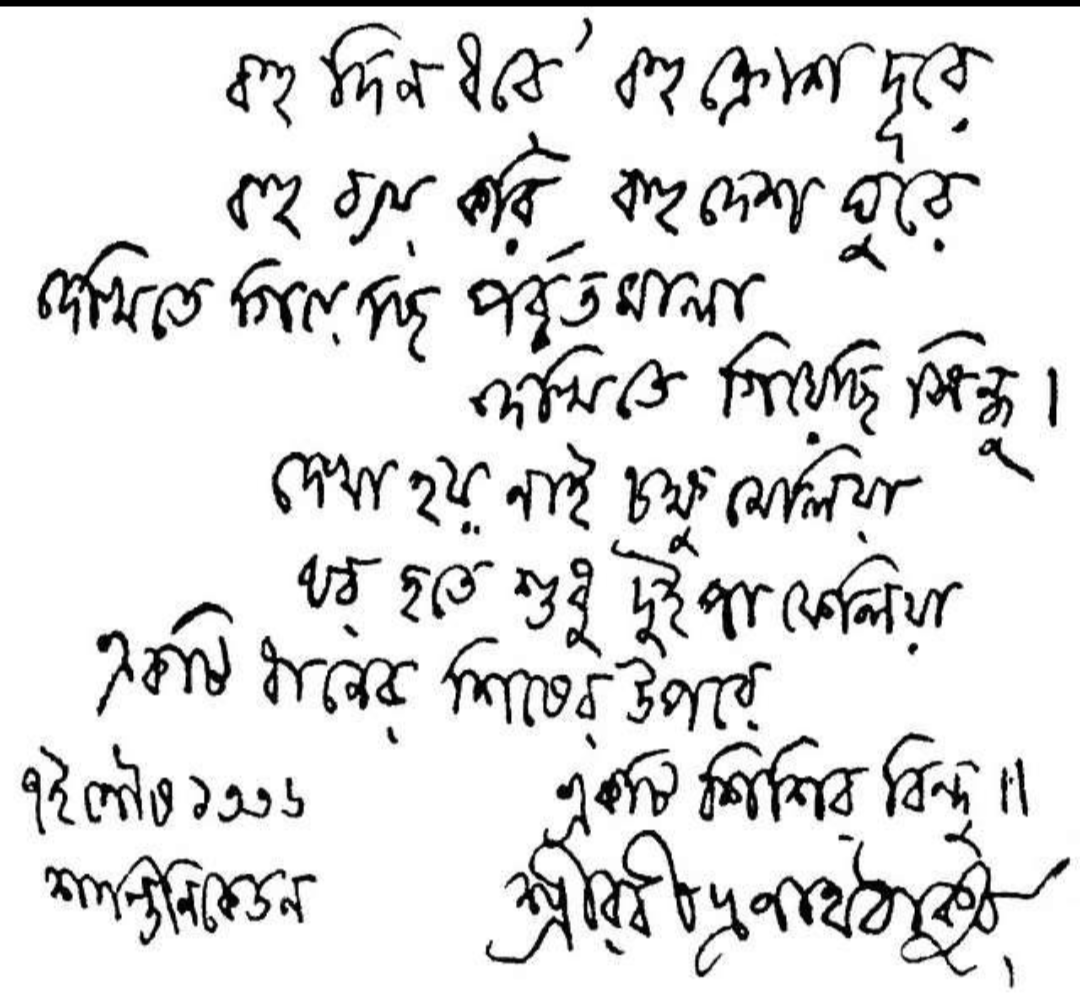
Bangla (Bengali) is the region's defining marker of identity — spoken, in one dialect or another, by nearly everyone across West Bengal and Bangladesh regardless of caste or religion. Standard, literary Bengali is based on the Rarhi dialect of the western delta, but everyday speech varies considerably: Varendri in the north, Manbhumi in the southwest, Rangpuri toward Assam, and, most distinctively, Sylheti and Chittagonian in the east and southeast, which differ enough from standard Bengali in vocabulary and tone that some linguists treat them as separate languages within the wider Bengali-Assamese language family.
Bengal's literary tradition is exceptionally rich, from the medieval devotional Vaishnava padavali poetry associated with the 16th-century saint Chaitanya Mahaprabhu, through the 19th-century Bengal Renaissance novelists and reformers, to Rabindranath Tagore, who in 1913 became the first non-European to win the Nobel Prize in Literature and whose songs (Rabindra Sangeet) remain the national anthems of both India and Bangladesh. Kazi Nazrul Islam, celebrated as Bangladesh's national poet, and novelist Sarat Chandra Chattopadhyay are similarly central to the shared modern Bengali literary canon read on both sides of the border.
7. Religion, Festivals, and Pilgrimage
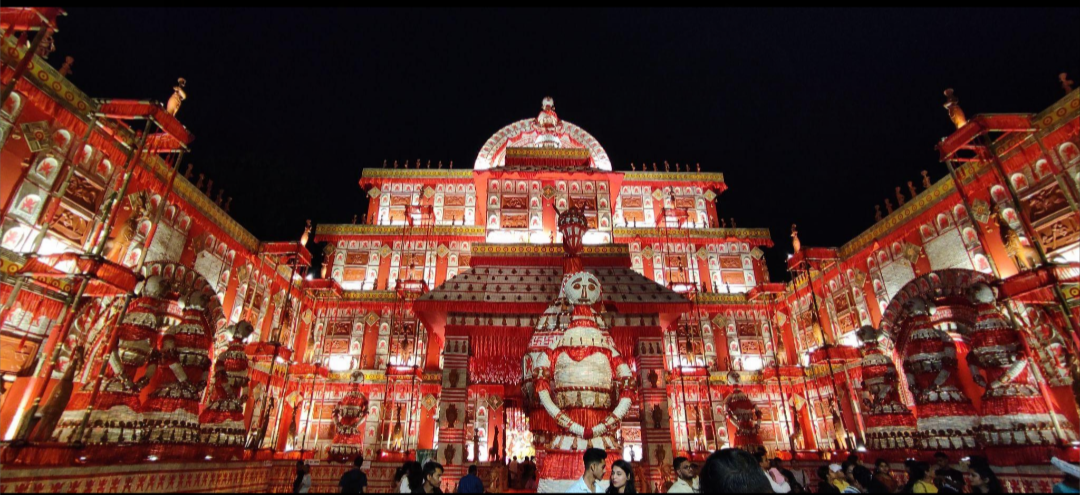
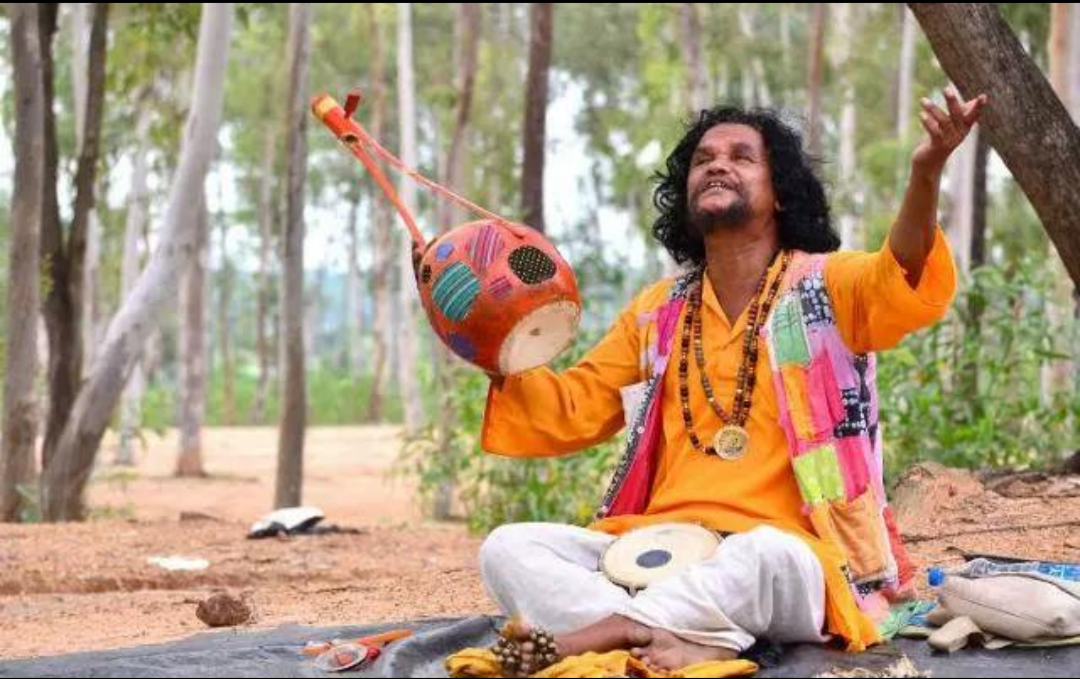
Bengal's religious landscape blends a strong Shakta (goddess-worshipping) tradition, a major Vaishnava devotional movement, historic Buddhist heritage, and, in Bangladesh, one of the world's largest national Muslim populations. Durga Puja, the autumn worship of the goddess Durga, is Bengal's paramount festival and the centrepiece of the Kolkata cultural calendar, alongside Kali Puja, Saraswati Puja and Poila Boishakh (the Bengali New Year), which is celebrated as a secular cultural festival by Bengali Hindus and Muslims alike. The Vaishnava devotional movement founded by Chaitanya Mahaprabhu in 16th-century Nabadwip reshaped Bengali religious life around ecstatic bhakti worship of Krishna, while the syncretic Baul tradition of wandering mystic minstrels — drawing on both Hindu Vaishnava and Sufi Islamic thought — is recognised by UNESCO as an Intangible Cultural Heritage of Humanity. For Bengal's large Muslim population, concentrated above all in Bangladesh, Eid al-Fitr and Eid al-Adha are the principal festivals, and Sufi shrine (dargah) culture remains an important strand of popular religious life across the delta.
8. Culture, Customs, and Social Practices
Bengali Hindu society historically rested on a caste hierarchy topped by Brahmins and the influential, traditionally scribal and administrative Kayastha community, running through cultivating and artisan groups to Scheduled Castes such as Namasudras and Rajbanshis, while Bengali Muslim society developed its own social distinctions between Ashraf (claiming foreign or elite descent) and Atraf (descendants of local converts) lineages, alongside occupational and regional groupings. A distinctive and much-discussed internal cultural division is that between Ghoti (West Bengal-rooted Bengalis) and Bangal (families whose ancestors migrated from East Bengal, now Bangladesh, chiefly around Partition) — a friendly but enduring rivalry that still surfaces in dialect, cuisine preference (mustard-forward Ghoti cooking versus the more chilli-forward, fish-heavy Bangal style) and even football club loyalty (Mohun Bagan versus East Bengal).
Bengali cultural life is famous for its intellectualism and its conversational culture of adda — long, unhurried, opinionated conversation over tea, regarded almost as an art form in Kolkata and Dhaka alike — alongside a deep and widely shared love of literature, theatre, music and cinema. Kolkata's contribution to Indian and world cinema, above all through Satyajit Ray, and the broader Bengali film industries of both Kolkata (Tollywood) and Dhaka (Dhallywood), remain central to the region's modern cultural identity.
9. Marriage and Wedding Traditions
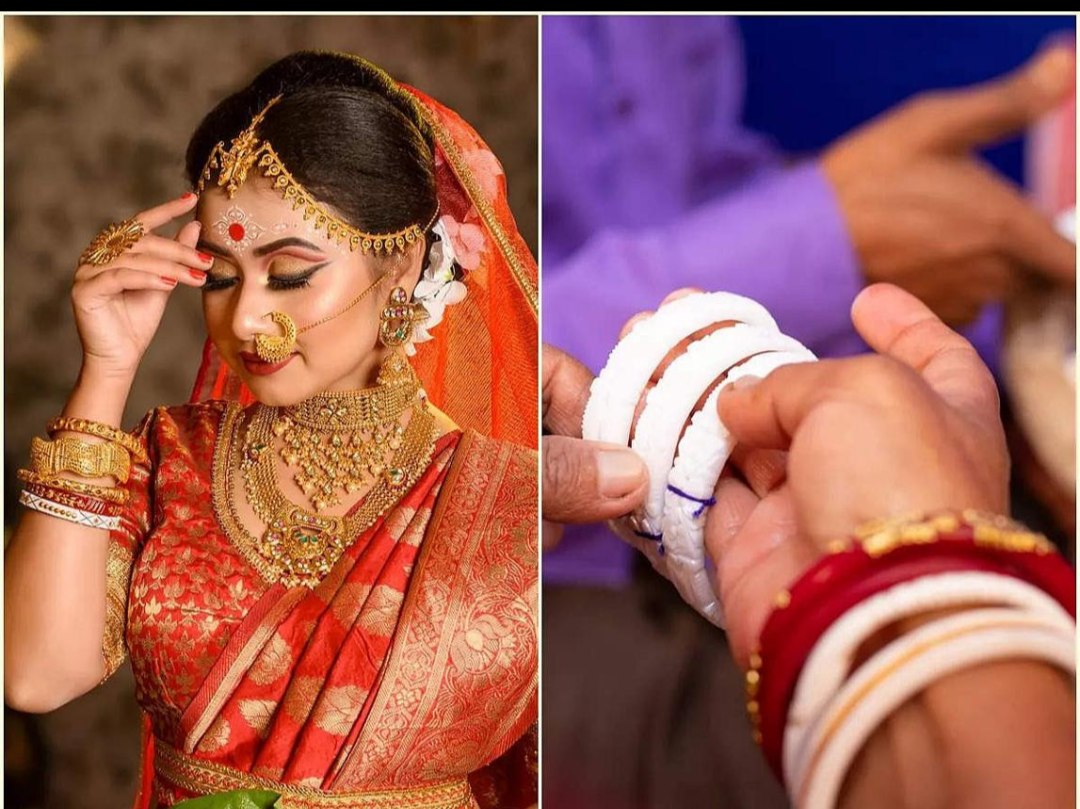
Bengali Hindu weddings follow a distinctive regional sequence within the broader North Indian pattern: Ashirbad (a formal blessing and engagement ceremony), Gaye Holud (a turmeric-paste ceremony for bride and groom, performed separately in their respective homes), the groom's ceremonial arrival (Bor Jatri), Shubho Drishti (the couple's first ritual sight of one another), Mala Bodol (exchange of garlands), Sampradan and the seven vows, and the emotional Bidaay as the bride departs her natal home. A signature Bengali Hindu bridal marker is the pairing of shakha (white conch-shell bangles) and pola (red coral bangles), worn by married women alongside sindoor (vermilion) in the hair parting. Bengali Muslim weddings follow the nikah tradition — with a Holud Sondhya turmeric ceremony closely paralleling its Hindu counterpart, a mehr (dower) settlement, the nikah contract itself, and a walima reception — reflecting centuries of shared regional custom layered onto religious difference.
10. Cuisine
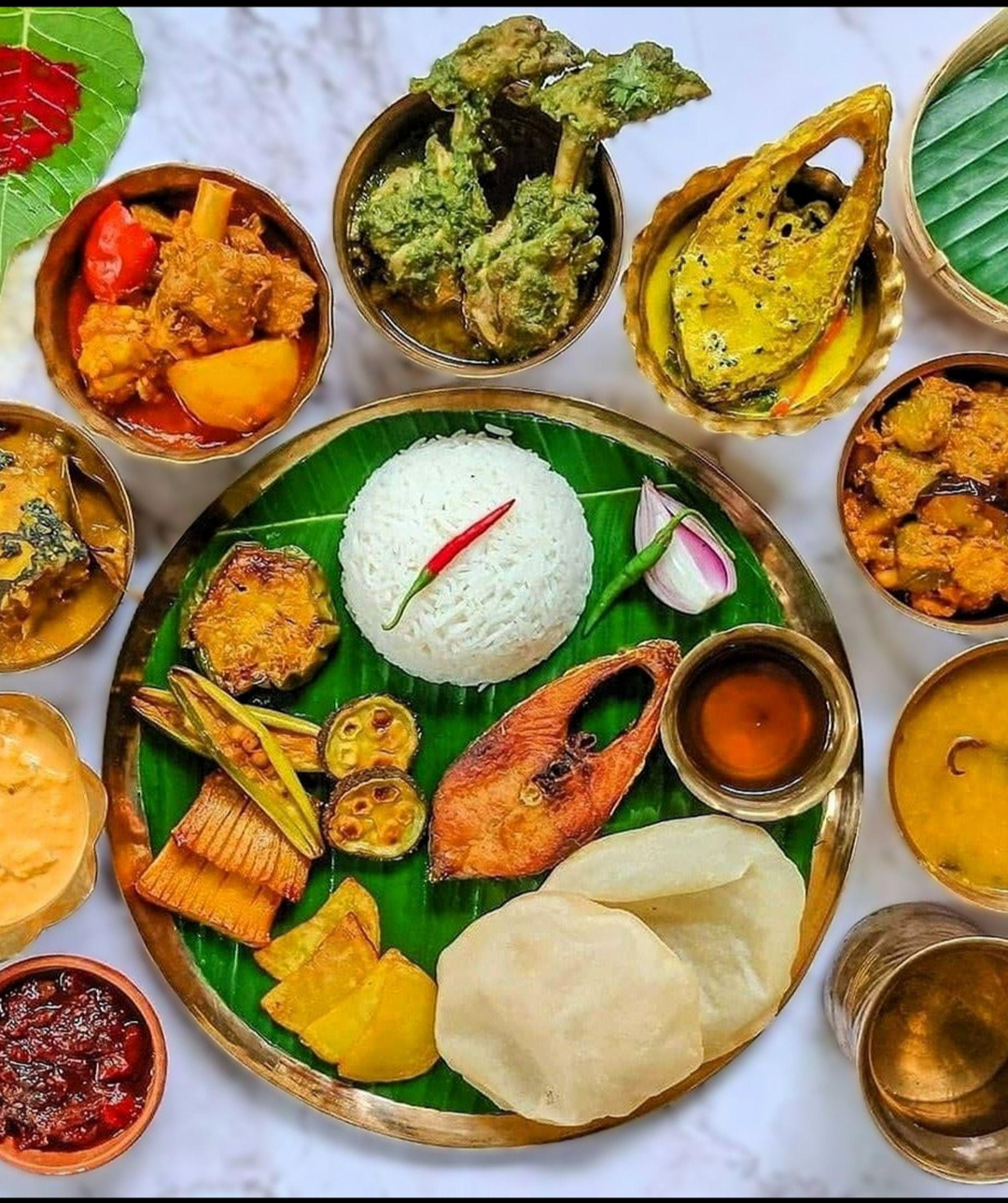
Bengali cuisine is built on rice and fish (the regional saying machhe-bhate Bangali, “fish and rice make a Bengali”), pungent mustard oil, and a distinctive five-spice blend, panch phoron, rather than the heavier use of dairy and dry-roasted spice found further west and north in India.
10.1 Signature Dishes
Hilsa (ilish), the region's most prized river fish, features in dishes such as sorshe ilish (hilsa in mustard sauce) and is central to both Bengali Hindu and Bengali Muslim festive cooking. Other classics include chingri malai curry (prawn in coconut milk), shukto (a bitter-mellow mixed-vegetable stew that traditionally opens a formal Bengali meal), macher jhol (light fish curry), and luchi-alur dom (fried flatbread with spiced potatoes). Bengali Muslim cuisine, particularly around Dhaka and Chittagong, adds its own rich tradition of kacchi biryani, bhuna khichuri and mughlai-influenced meat dishes, developed under Mughal and Nawabi patronage in old Dhaka.
10.2 Sweets
Bengal's sweet-making tradition is unrivalled in South Asia and centres on chhena (fresh cottage cheese): roshogolla (spongy cheese balls in light sugar syrup), sandesh (a delicately flavoured pressed-cheese sweet), rasmalai, mishti doi (sweetened, caramelised set yogurt) and chomchom are all Bengali in origin and now eaten across the subcontinent.
11. Traditional Dress and Ornaments
For women, the saree remains Bengal's defining traditional garment, worn in a distinctive regional drape (the anchal, or loose end, worn over the left shoulder with pleats often tucked at the back rather than the front). The white, red-bordered taant (handloom cotton) or garad silk saree, worn above all during Durga Puja, is instantly recognisable as Bengali; the Baluchari saree (woven with mythological narrative scenes) and the Jamdani saree of the Dhaka region, a UNESCO-recognised handloom muslin tradition, represent the region's most prized weaving crafts. Kantha, a running-stitch embroidery traditionally worked on layered old cotton cloth, is another distinctive Bengali textile art. For men, the dhoti-kurta or the simpler panjabi (kurta) remains standard traditional and festive wear across both West Bengal and Bangladesh, with the lungi widely worn as everyday informal dress, especially in rural Bangladesh.
12. Traditional Housing and Architecture
Rural Bengal's traditional dwelling is the thatched, sloped-roof mud or bamboo hut known as the bangla ghar — its distinctive curved, sloping char-chala (four-sided) or aat-chala (eight-sided) roofline, designed to shed the region's heavy monsoon rain, was carried by British colonists into the English word “bungalow.” Terracotta temple architecture reached its peak in the Rarh region, above all at Bishnupur in West Bengal, where 17th- and 18th-century temples are decorated with intricately carved brick panels depicting epic and devotional scenes. Bengal's Islamic architectural heritage is equally distinctive, from the Adina Mosque and ruined capital at Gaur to the Sixty Dome Mosque at Bagerhat in Bangladesh, a UNESCO World Heritage Site built in the 15th century; while colonial Kolkata's grand public architecture — the Victoria Memorial, Howrah Bridge, and the zamindar rajbari mansions scattered across the delta — reflects the region's role as the commercial and administrative capital of British India.
13. Folklore and Oral Tradition
Bengal's oral tradition runs deep alongside its written literature. Mangalkavya, a genre of narrative devotional poetry praising regional deities such as Manasa (goddess of snakes) and Chandi, was composed and performed across the delta from the medieval period onward. Thakurmar Jhuli, a landmark early-20th-century compilation of Bengali folk tales and fairy tales, remains a touchstone of Bengali childhood on both sides of the border. Bhatiali, the haunting boatmen's songs of the river delta, and the philosophical, itinerant songs of the Baul mystics, together form one of the most distinctive folk-music traditions in South Asia, still performed at riverside fairs and village gatherings.
14. Education, Livelihoods, and Socioeconomic Profile
Historically an intensely agrarian, rice- and jute-based economy — colonial Bengal was for decades the world's dominant supplier of raw jute and jute textiles, processed above all in the mills along the Hooghly River near Kolkata — the region remains substantially rural and farming-dependent, alongside major fisheries in its rivers, ponds and coastal waters. Kolkata developed under British rule into colonial India's foremost commercial, administrative, educational and industrial centre, a status it has only partly retained since independence as economic weight shifted elsewhere in India, while Dhaka has grown rapidly since 1971 into one of Asia's major garment-manufacturing and services hubs. Education has long been prized in Bengali culture, with Kolkata's 19th-century colleges and the University of Dhaka among the subcontinent's oldest and most influential institutions of higher learning, and both West Bengal and Bangladesh show comparatively strong literacy rates by South Asian standards.
15. Diaspora
Bengal's diaspora history runs on several distinct tracks. From the colonial period onward, Bengalis — particularly from the densely populated eastern districts — migrated within the subcontinent to the tea gardens and administrative towns of Assam and to Rangoon (Yangon) and other cities of British Burma, where Bengali trading and professional communities remained significant well into the 20th century. Partition in 1947, and again the 1971 Liberation War, triggered enormous cross-border displacement between the two Bengals, reshaping family networks that in many cases still span the India-Bangladesh border today.
The most distinctive modern diaspora thread is Sylheti: emigration from the Sylhet region of northeastern Bangladesh to the United Kingdom, beginning with lascar sailors in the colonial merchant navy and expanding into a major post-war labour migration, has made Sylhetis the dominant group within Britain's Bangladeshi community and the driving force behind the UK's “Indian restaurant” trade, most famously along London's Brick Lane. Alongside this, later 20th- and 21st-century skilled and professional emigration — engineers, physicians, academics and IT professionals from both West Bengal and Bangladesh — has built substantial Bengali communities in the United States, Canada, the Gulf states and Australia, maintaining active Bengali-language cultural associations, Durga Puja committees and literary societies abroad.
16. Prominent Figures
16.1 Political and Public Life
- Subhas Chandra Bose (1897–1945) — born in Cuttack to a Bengali family; a leading, more radical figure of the Indian independence movement and founder of the Indian National Army.
- Sheikh Mujibur Rahman (1920–1975) — “Father of the Nation” and founding leader of independent Bangladesh.
- Jyoti Basu (1914–2010) — India's longest-serving state chief minister, leading West Bengal's Left Front government for over two decades.
- Mamata Banerjee (b. 1955) — current Chief Minister of West Bengal and founder of the All India Trinamool Congress.
16.2 Literature, Arts, and Culture
- Rabindranath Tagore (1861–1941) — poet, composer and polymath; the first non-European Nobel laureate in Literature (1913), and author of the national anthems of both India and Bangladesh.
- Kazi Nazrul Islam (1899–1976) — celebrated as the national poet of Bangladesh, known for his revolutionary and devotional verse.
- Bankim Chandra Chattopadhyay (1838–1894) — novelist and author of Vande Mataram, a central figure of the Bengal Renaissance.
- Satyajit Ray (1921–1992) — filmmaker widely regarded as one of the greatest directors in world cinema, best known for the Apu Trilogy.
16.3 Science, Sports, and Other Fields
- Jagadish Chandra Bose (1858–1937) — pioneering physicist and biologist, an early figure in radio wave research.
- Satyendra Nath Bose (1894–1974) — physicist after whom the boson is named, born and educated in Calcutta.
- Amartya Sen (b. 1933) — Nobel laureate economist, born in Santiniketan, West Bengal.
- Sourav Ganguly (b. 1972) — former captain of the Indian cricket team, among the most influential figures in modern Indian cricket.
17. Conclusion
Bengal represents a rare case of a geography whose ancient river-delta ecology, layered religious and imperial history, and modern population genetics converge on a coherent, if internally diverse, regional story: an ancient Buddhist and Brahmanical delta civilisation, reshaped by the Bengal Sultanate and Mughal rule, transformed into the commercial and intellectual capital of British India, and split by Partition and the 1971 Liberation War into two nations that nonetheless still share one language, one literature and one culinary and cultural imagination. From the terracotta temples of Bishnupur to the Jamdani looms of Dhaka, and from Tagore's songs sung in Kolkata drawing rooms to the Baul melodies still carried along the delta's rivers, the story of Bengal's people is at once a religious history, a genetic case study, and a living regional culture shared today by more than a quarter of a billion Bengali speakers across South Asia and its worldwide diaspora.
Frequently Asked Questions
What ethnicity or ancestry are Bengali people?
Bengalis are not a single ethnicity but a large, internally diverse Indo-Aryan ethnolinguistic population native to the Bengal delta, encompassing many castes, sub-regional groups, and both Hindu and Muslim communities across West Bengal and Bangladesh. Genetically, most Bengalis descend from a mixture of Ancestral North Indian (ANI) and Ancestral South Indian (ASI) ancestry, like the majority of South Asian populations, with an additional, smaller East Asian and Austroasiatic-linked component distinguishing Bengal from populations further west in the Gangetic plain.
Are Bengalis Aryan, Dravidian, or Mongoloid?
Bengali is classified as an Indo-Aryan language, and Bengali culture and literature sit firmly within the Indo-Aryan tradition of North India. Genetically, however, Bengalis are not purely “Aryan” in any strict sense: like other South Asian populations they carry a mixture of ANI and ASI ancestry, with Bengal's population additionally showing a modest East Asian and Austroasiatic admixture absent, or far weaker, further west in India — a legacy of historical contact with Munda- and Tibeto-Burman-adjacent groups rather than a Mongoloid origin for the population as a whole.
What DNA haplogroups are common among Bengalis?
Paternal (Y-chromosome) studies of Bengali populations report a mix of deep South Asian haplogroups such as H, the Austroasiatic-linked haplogroup O2a (notable among some Scheduled Caste and Munda-descended communities), and haplogroups tied to the wider North Indian and Indo-Aryan cline such as R1a, which is reported at particularly high frequency among Bengali Brahmins. Maternal (mitochondrial) DNA is dominated, as across most of South Asia, by the indigenous haplogroup M and its subclades.
What language do Bengali people speak?
Bengali (Bangla) is the principal language across West Bengal and Bangladesh, one of the most widely spoken languages in the world. Standard Bengali is based on the Rarhi dialect of the western delta, while regional speech varies considerably, including the distinctive Sylheti and Chittagonian varieties of the east and southeast.
What is the traditional dress of Bengal?
Bengali women traditionally wear the saree, especially the white, red-bordered taant or garad silk saree associated with Durga Puja, along with the finely woven Jamdani muslin saree of the Dhaka region and kantha-embroidered textiles. Married Bengali Hindu women traditionally wear shakha (conch-shell) and pola (coral) bangles. Men traditionally wear the dhoti-kurta or panjabi, with the lungi common as everyday wear, particularly in rural Bangladesh.
What is Bengal famous for in terms of food?
Bengali cuisine centres on rice and fish, especially hilsa (ilish), cooked with mustard oil and the panch phoron spice blend, alongside dishes such as chingri malai curry and shukto. Bengal is equally famous for its chhena-based sweets — roshogolla, sandesh, rasmalai and mishti doi — which originated in the region and are now eaten across South Asia.
Where did Bengalis migrate to historically?
Within the subcontinent, Bengalis migrated historically to Assam's tea gardens and to Rangoon (Yangon) and other cities of British Burma. Partition in 1947 and the 1971 Bangladesh Liberation War caused large-scale cross-border displacement between West Bengal and East Bengal/Bangladesh. Internationally, the Sylhet region of northeastern Bangladesh is the source of most of the United Kingdom's Bangladeshi community, whose members have historically dominated Britain's South Asian restaurant trade, while later professional and skilled emigration has built Bengali communities across the United States, Canada, the Gulf and Australia.
What caste and community groups are found in Bengal?
Bengali Hindu society historically spans Brahmins and the influential Kayastha community at the upper end, through various cultivating and artisan castes, to Scheduled Castes such as Namasudras and Rajbanshis. Bengali Muslim society, the demographic majority in Bangladesh, includes both Ashraf lineages claiming foreign descent and the far more numerous Atraf descendants of local converts, organised into their own regional and occupational groupings.
Is West Bengal genetically similar to Bangladesh, Assam, or Odisha?
West Bengal and Bangladesh form a broadly continuous genetic population, sharing the same core ANI-ASI-plus-East-Asian admixture profile, though West Bengal samples tend to sit slightly further toward the general North Indian (more ANI-shifted) cline than samples from Bangladesh. Assamese populations show an even stronger East Asian genetic signal, reflecting closer and more recent contact with Tibeto-Burman-speaking Northeast India, while Odisha sits on the same broad eastern Indian ANI-ASI gradient without Bengal's distinctive East Asian admixture.
What is the difference between Ghoti and Bangal Bengalis?
Ghoti refers to Bengalis whose ancestry is rooted in West Bengal (the Rarh and western delta), while Bangal refers to families originally from East Bengal, now Bangladesh, many of whom resettled in West Bengal around Partition. The distinction shows up in dialect, in cuisine (Ghoti cooking leans more toward mustard and sweetness, Bangal cooking toward chilli and fish), and famously in football club rivalry, between Mohun Bagan (associated with Ghotis) and East Bengal Club (associated with Bangals).
What physical traits are typical of people from Bengal?
There is no single physical type for a population of hundreds of millions spanning many castes, religions and sub-regions; in general, Bengal's population tends toward medium build and stature by South Asian standards, with skin tone across the broad range typical of eastern India and Bangladesh. Forensic and population-genetic studies find measurable trait and ancestry differences between Bengal's various endogamous communities, reflecting centuries of in-group marriage along caste and regional lines rather than one uniform Bengal-wide phenotype.
References
- [1]Wikipedia. “Bengal,” “West Bengal,” “Bengalis,” “Pala Empire,” “Bengal Sultanate.” en.wikipedia.org
- [2]Census of India 2011; Population Projections for Indian States 2011–2036, National Commission on Population / NITI Aayog.
- [3]Reich, D. et al. Reconstructing Indian population history and related ANI-ASI admixture research (Harvard/MIT).
- [4]GenomeAsia100K Consortium. The GenomeAsia 100K Project genome-wide survey of Asian populations, including West Bengal (Birbhum) sampling.
- [5]Khan, R. and colleagues. Population-genetic analyses of West Bengal and Bangladesh, Brown Pundits / Unsupervised Learning (razib.com).
- [6]UNESCO Intangible Cultural Heritage Lists: Baul songs of Bangladesh; UNESCO World Heritage Sites: Sundarbans, Sixty Dome Mosque (Bagerhat), Somapura Mahavihara (Paharpur).