
How you look genetically might be different than you think!
Unlock the secrets written in your genes
Advanced DNA analysis that reveals your unique physical traits, and genetic potential. Because understanding your DNA means understanding yourself.

Cerebral Cortex Thickness
Your brain's power isn't just about size, its cerebral cortex thickness plays a huge role in memory, thinking, and learning. A thinner or thicker cortex can be linked to cognitive abilities, mental health conditions, and even neurological disorders. Genetics influence cortical thickness, but lifestyle factors like diet, exercise, and brain training also shape brain health. DNA testing can reveal how your genes impact brain structure, helping you optimize learning, focus, and long-term cognitive function. Understanding your brain's blueprint lets you take control of your mental performance.

Familial Short Stature
Being shorter than average isn't always random, familial short stature is often written in your DNA. If height runs in your family, genetics play a major role in determining how tall you'll grow. While hormones, nutrition, and overall health also influence growth, DNA testing can help uncover genetic factors affecting height. Knowing your genetic potential can guide lifestyle choices, such as proper nutrition, exercise, and medical evaluations, to support healthy development. Height may be in your genes, but a healthy lifestyle can still make a difference!

Facial Attractiveness
What makes a face attractive? Science says it's a mix of genetics, symmetry, and even how your skin glows. Facial features like jawline structure, skin texture, and eye shape are influenced by DNA, but lifestyle factors like skincare, diet, and hydration also play a huge role. DNA testing can reveal genetic traits linked to facial structure, collagen production, and aging, helping you personalize skincare and wellness routines. While genetics set the foundation, confidence and self-care are what truly make a face stand out!
Stress Fracture Risk
Ever feel like your bones can't keep up with your workouts? Your risk of stress fractures might be in your DNA. These tiny bone cracks happen from overuse, high-impact sports, or weak bone structure. Genetics influence bone density, calcium absorption, and recovery speed, making some people more prone to injury. DNA testing can help identify your risk, so you can optimize nutrition, adjust training intensity, and strengthen bones with the right workouts. Stay ahead of injuries and keep moving strong!
0 Available Reports
Sample Physical Traits Report Presentation
Preview our updated standard Polygenic Score Report structure featuring population bell curve risk gradient visualization, DNA variant diagrams, 3-step calculation science, and references.
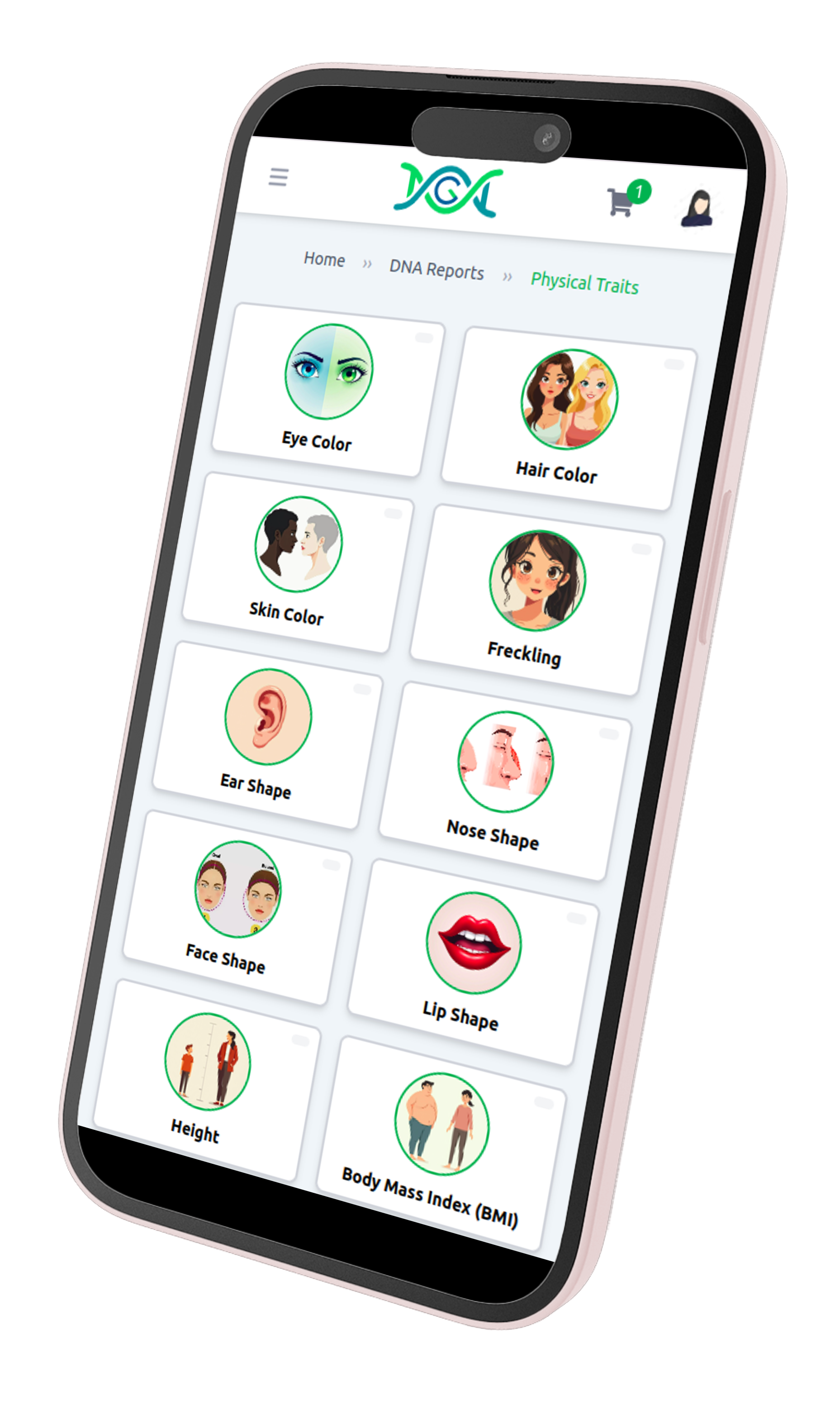
Hair Thickness & Strand Diameter Predisposition
Polygenic score evaluating genetic variants across EDAR and keratin gene clusters associated with hair fiber cross-sectional area and strand diameter.
Your Genetic Result
Polygenic Risk Score (PRS) Assessment
What this means for you
Your polygenic risk score falls in the 88th percentile of the reference population (Elevated). This indicates approximately 2.1 times the baseline relative risk of developing Hair Thickness & Strand Diameter Predisposition compared to the average population.
Curated Key Variants
Gene: EDAR(Ectodysplasin A Receptor)
Homozygous for 370A allele strongly associated with coarse/thick hair strands.
Biology of Hair Shaft Diameter
Hair strand thickness is governed by cellular processes in the dermal papilla of hair follicles, where signaling pathways control fiber diameter during the anagen (growth) phase.
Follicular Signaling & Keratin Genes
Key genes including EDAR, TGM3, and LPAR6 influence hair shaft keratin structure and cross-sectional hair thickness.
Frequently Asked Questions
Ready to Understand Your Physical Traits?
Join thousands who have discovered their genetic physical traits.
Get Your Physical Traits Report