

Himachal Pradesh Brahmin Community
A community for people of the Brahmin community from Himachal Pradesh — connect, explore ancestry, and share identity.
HIMACHAL PRADESH BRAHMINS
Geography, Origins, History, Culture, and People of the Pahari Brahmin Communities of the Western Himalaya
1. Introduction: Who Are the Brahmins of Himachal Pradesh?
The Brahmins of Himachal Pradesh, often simply called Pahari Brahmins, are a geography-defined cluster of priestly, scholarly, and cultivating lineages who have lived for many centuries in the valleys, ridges, and river terraces of the western Himalaya. This profile treats them as a geography-of-origin community in the genealogical sense: the Brahmin families whose ancestors settled in the hill states that today make up Himachal Pradesh, spanning Kangra, Chamba, Mandi, Kullu, Bilaspur, Hamirpur, Una, Shimla, Solan, Sirmaur, and, in smaller numbers, Kinnaur and Lahaul-Spiti.
Himachal Pradesh is one of the few Indian states where Brahmins form a large share of the population. Together with the Rajputs, they make up the upper-caste majority of the state and have shaped its temples, courts, village deity (devta) institutions, languages, and politics. Yet Pahari Brahmin life has always looked different from the Brahmin life of the Gangetic plain. Many hill Brahmin families ploughed their own fields, served as hereditary priests to village gods, cooked the great community feasts known as dham, kept horoscopes and genealogies for princely houses, and wrote in the Takri script long before Devanagari became standard. Sanskrit learning and mountain farming have gone hand in hand in these families for generations.
2. Geography
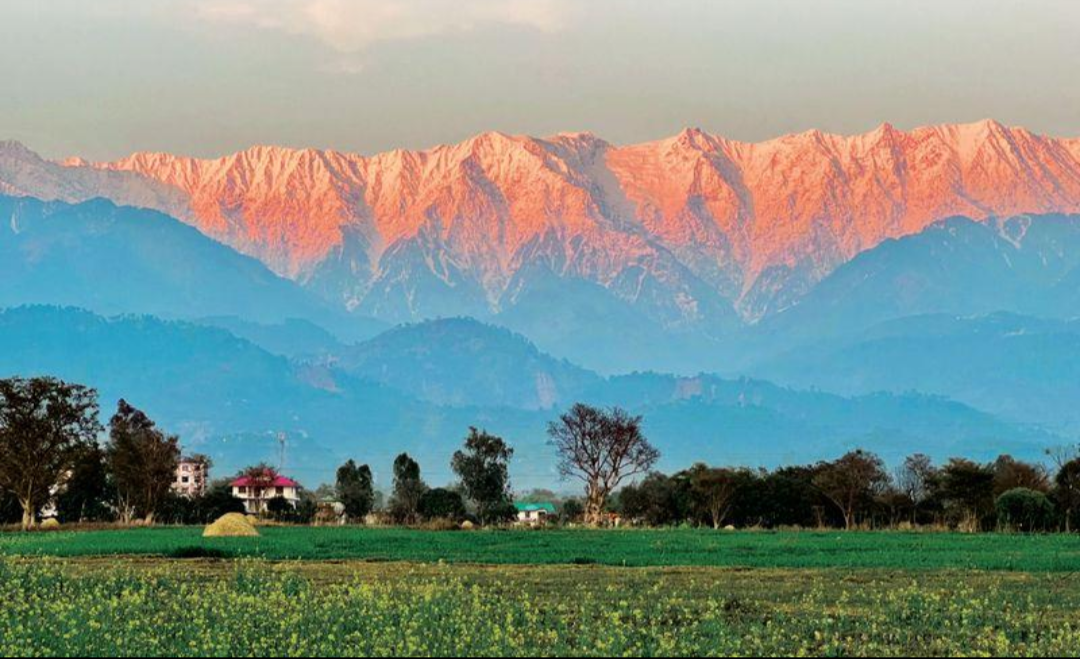
The Dhauladhar range rising above the Kangra valley, the heart of Brahmin settlement in Himachal
Himachal Pradesh covers about 55,673 square kilometres of mountainous terrain in the western Himalaya. It is bordered by Jammu and Kashmir and Ladakh to the north, Punjab to the west, Haryana to the south-west, Uttarakhand to the south-east, and Tibet (China) to the east. Elevation rises from roughly 350 metres in the Una and Paonta plains to more than 6,000 metres in the Great Himalayan ranges of Kinnaur and Lahaul-Spiti. The state is drained by five major river systems: the Chenab (Chandrabhaga), Ravi, Beas, Sutlej, and Yamuna.
Brahmin settlement follows this geography closely. The largest concentrations are found in the lower and middle hills, where terraced farming, market towns, and princely capitals developed. The high cold desert of Lahaul-Spiti and the upper reaches of Kinnaur are dominated by Buddhist and tribal communities, and Brahmins there are few.
Cultural-Geographic Sub-Regions
Before modern districts, Himachali Brahmins identified themselves with the old hill states (riyasats) whose rulers they served as priests, astrologers, and administrators. These older regional identities still shape dialect, food, marriage networks, and family deities.
| Region | Approx. Modern Area | Notable Centres |
|---|---|---|
| Kangra (Trigarta) | Kangra, Hamirpur, Una | Kangra, Palampur, Nurpur, Jwalamukhi, Guler |
| Chamba | Chamba district | Chamba, Bharmour, Salooni |
| Mandi and Suket | Mandi district | Mandi, Sundernagar, Rewalsar |
| Kullu | Kullu district | Kullu, Manali, Naggar, Nirmand |
| Kahlur | Bilaspur district | Bilaspur, Naina Devi |
| Mahasu and Shimla Hills | Shimla, Solan, upper Sirmaur | Shimla, Rampur, Rohru, Arki |
| Sirmaur | Sirmaur district | Nahan, Paonta Sahib, Renuka |
3. Origins and Early History
3.1 Traditional Accounts of Origin
Most Himachali Brahmin families describe themselves as belonging to the northern (Pancha Gauda) division of Brahmins, and the two affiliations most often cited are Saraswat and Gaur. Saraswat families trace their name to the ancient Sarasvati river region of the north-west, and form the older and larger layer across Kangra, Mandi, Kullu, and Chamba. Gaur Brahmins are more common in the southern hills, Bilaspur, and areas bordering Haryana and the plains.
Family traditions in many villages speak of ancestors arriving from the plains of Punjab, Kurukshetra, Kannauj, Varanasi, Bengal, or Kashmir, usually at the invitation of a hill raja who granted land to settle priests and scholars. Such migration stories are extremely common and should be read as a mix of memory and prestige claim. Historically, they point to a real pattern: hill kings repeatedly invited learned Brahmins to legitimise their rule, perform royal rituals, and staff temples, and those families married into older local Brahmin populations over time.
3.2 Ancient and Early Medieval Evidence
Early references to the region appear in the idea of Trigarta (the Kangra region) and in the Kuluta and Audumbara janapadas known from coins and texts. The Chamba copper-plate grants from roughly the 10th and 11th centuries CE record land donated to Brahmins by rulers of the Varman dynasty, one of the clearest documentary signs of settled Brahmin communities in the hills. Nirmand in Kullu, with its old temples and a well-known copper-plate inscription, is also traditionally associated with a large early Brahmin settlement.
3.3 The Hill States and Medieval Period
From the medieval centuries until 1947, Himachal was divided into dozens of small Rajput-ruled states such as Kangra (Katoch), Chamba, Mandi, Suket, Kullu, Kahlur (Bilaspur), Guler, Nurpur, Jaswan, Sirmaur, and Bushahr. Each court kept a raj-purohit (royal priest), astrologers (jotshi), record-keepers, and scribes, overwhelmingly drawn from Brahmin families. Brahmins also received revenue-free land (muafi, sasan) for temple service. The Kangra region came under Mughal influence from the 16th and 17th centuries, then the Sikh kingdom of Ranjit Singh in the early 19th century, before British annexation after the Anglo-Sikh wars.
3.4 Colonial Period
Under British rule, the hills were split between directly administered districts (Kangra, which then included Kullu and Lahaul-Spiti, and Shimla) belonging to Punjab Province, and numerous princely states grouped as the Punjab Hill States. Shimla became the summer capital of British India from 1864. Brahmins entered colonial service as clerks, teachers, patwaris, and later lawyers, and many joined the Indian Army, particularly through the Dogra regiments recruited from Kangra and nearby hills. Colonial ethnographers such as Denzil Ibbetson and H.A. Rose recorded detailed, though often simplified, accounts of Kangra Brahmin sub-groups and their marriage rules.
3.5 Formation of Himachal Pradesh
Himachal Pradesh was created on 15 April 1948 as a Chief Commissioner's province from about thirty princely states. Bilaspur merged in 1954. In 1966 the hill areas of Punjab, including Kangra, Kullu, Lahaul-Spiti, Shimla, and parts of Una and Hoshiarpur, were added. Full statehood came on 25 January 1971. The 1966 merger was especially important for Brahmins, since it brought the populous Kangra Brahmin belt into the state and shaped its politics for decades.
4. Population and Demographic Profile
The 2011 Census counted about 6.86 million people in Himachal Pradesh, of whom roughly 95 per cent were Hindu, the highest Hindu share of any Indian state. About 90 per cent of the population lived in rural areas. Scheduled Castes formed about 25 per cent and Scheduled Tribes about 5.7 per cent.
The Census does not enumerate general castes, so there is no official count of Brahmins. The widely cited estimate places Brahmins at around 18 per cent of the state population, second only to Rajputs (about 32 to 33 per cent). On that basis, Himachal Pradesh has roughly 1.2 to 1.4 million Brahmins today. Kangra, Hamirpur, Mandi, Una, Bilaspur, and Shimla districts account for the largest numbers. These figures should be treated as informed estimates rather than census facts.
4.1 Sub-Groups and Internal Hierarchy
Pahari Brahmin society historically had its own internal distinctions, which older records describe in detail. They are far less rigid today, but older family members may still refer to them in marriage negotiations.
- Nagarkotia Brahmins of Kangra (named after Nagarkot, the old name of Kangra), traditionally regarded as the highest-ranking status group and associated with priestly and scholarly roles.
- Halbah or Hali Brahmins, families who ploughed their own land. In classical Brahmin norms ploughing lowered status, so the plough became a key marker of rank in Kangra records.
- Pujaris and devta priests attached to village gods in Kullu, Mandi, and Shimla, whose status was tied to the particular deity they served.
- Gaddi Brahmins of Bharmour and the Dhauladhar ranges, who form one of the caste divisions within the pastoral Gaddi community alongside Rajputs, Ranas, Thakurs, and Khatris.
- Bhojki priestly families attached to major Shakti temples such as Jwalamukhi and Chintpurni. Their exact position relative to other Brahmin groups has been debated historically.
- Occupational designations such as Acharaj (funeral priests), Jotshi (astrologers), Vaid (Ayurvedic physicians), and Purohit (family priests).
4.2 Common Surnames and Gotras
The most widespread Himachali Brahmin surname by far is Sharma. Others include Bhardwaj, Vaidya, Joshi, Upadhyay, Awasthi, Kaushal, Kashyap, Gautam, Shastri, Dogra (a regional name also used by other castes), Mahant, Guleria (from Guler), Parashar, Bhatt, Dhiman (in some areas), Pandit, and Rishi. Common gotras include Bhardwaj, Kashyap, Vashishth, Gautam, Kaushal (Kaushik), Atri, Parashar, Vatsa, Shandilya, and Sankrityayan. Village names (for example Guleria, Nadaunia, Dadwal) are often used as surnames, which helps genealogists trace a family to its ancestral place.
5. Genetics and Ancestry
As a regionally rooted, largely endogamous group, Himachali Brahmins share the broad North Indian genetic pattern, while also carrying some features linked to their Himalayan setting.
5.1 The ANI and ASI Framework
Like almost all Indian populations, Himachali Brahmins descend from a mixture of Ancestral North Indians (ANI), related to populations of Central Asia, Iran, and West Eurasia, and Ancestral South Indians (ASI), indigenous to the subcontinent. Genome studies date this mixing to roughly 2,000 to 4,000 years ago. North-western Indo-European-speaking groups, including Brahmins and other upper castes of Punjab, Himachal, Haryana, and Kashmir, generally sit toward the higher-ANI end of the Indian range.
5.2 Paternal and Maternal Lineages
Studies of North Indian Brahmin groups consistently report a relatively high frequency of the Y-chromosome haplogroup R1a, especially its South Asian branch R1a-Z93, alongside other lineages such as J2, L, H, and R2. Maternal (mitochondrial) lineages remain dominated by indigenous South Asian haplogroup M and U subclades, showing that the female-line ancestry of these groups is deeply local.
5.3 Himalayan Context
Himachal sits at a meeting point between Indo-Aryan-speaking populations of the western Himalaya and Tibeto-Burman-speaking communities of Kinnaur, Lahaul, and Spiti. Brahmins of the lower and middle hills generally cluster genetically with other north-western Indian populations, while East Asian-related ancestry becomes more visible among higher-altitude tribal groups. Fine-scale, published studies focused specifically on Himachali Brahmins remain limited, so individual DNA results are best read against wider North-west Indian reference groups.
6. Language and Script
Himachali Brahmins speak the Western Pahari group of Indo-Aryan languages, usually collectively called Pahari or Himachali. The main varieties include Kangri (Kangra, Hamirpur, Una), Mandeali (Mandi), Kullui (Kullu), Chambeali and Gaddi (Chamba), Bilaspuri or Kahluri (Bilaspur), Mahasui (Shimla and Solan), Sirmauri (Sirmaur), and Kinnauri-adjacent speech in the upper Sutlej valley. Hindi is the official language, and Sanskrit is the second official language of the state since 2019.
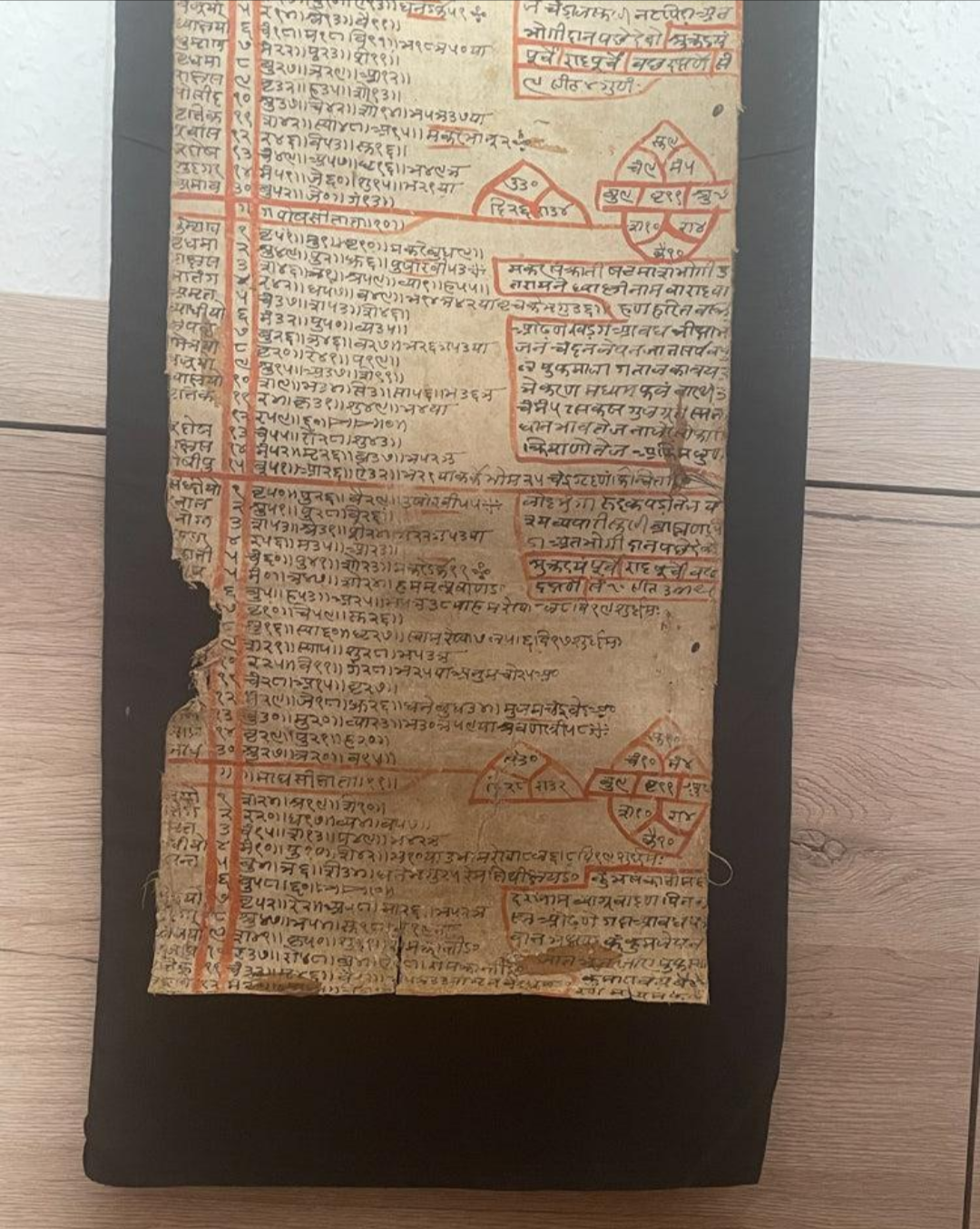
Historically, Brahmin record-keepers, astrologers, and priests wrote in Takri, a script of the Sharada family used across the hill states for horoscopes, land records, temple accounts, and letters. Many old family horoscopes (janampatri) and genealogical registers are in Takri, and its revival is a small but growing cultural movement in Himachal today. Families searching old records at pilgrimage centres such as Haridwar or Jwalamukhi often find entries in Takri or Landa-type scripts.
7. Religion, Devtas, and Festivals
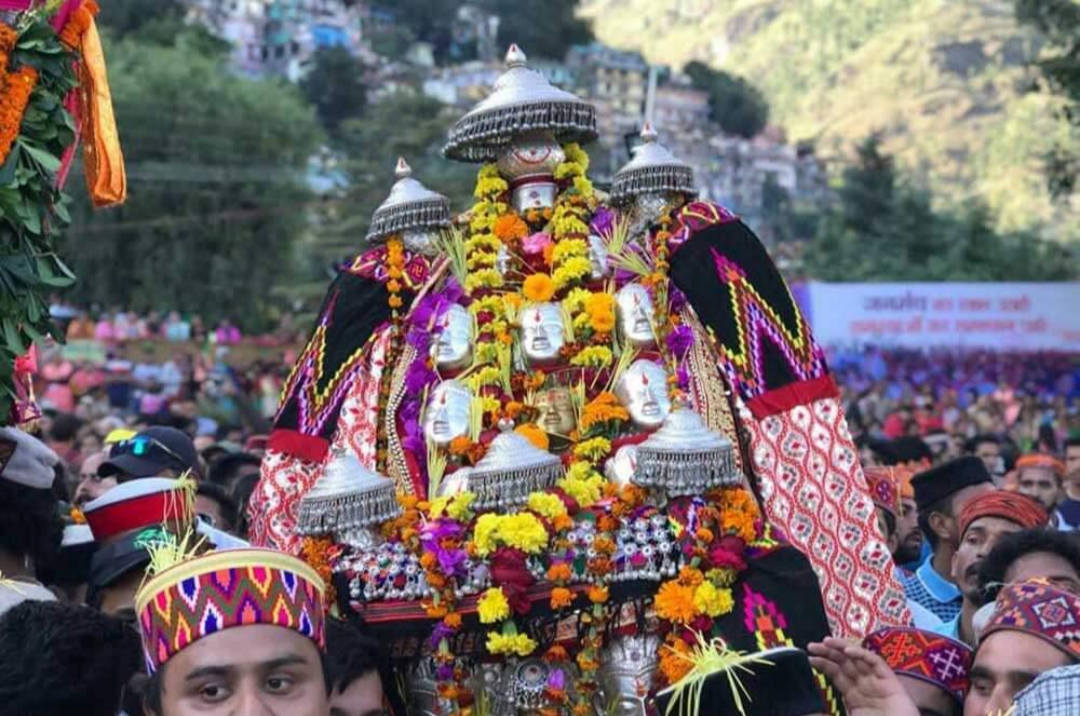
Himachal Pradesh is known as Dev Bhoomi, the land of the gods. Its religious life is organised around thousands of village deities (devtas and devis), each with its own temple, palanquin (rath), musicians, oracle (gur), and hereditary officials. Brahmins frequently serve as pujaris, keeping the ritual calendar and performing worship, while the oracle through whom the deity speaks may come from different castes. This devta system makes Himachali Brahmin religious life more local and community-based than the textual Brahmin model.
Major pilgrimage centres associated with Brahmin priesthood include the Shakti Peethas of Jwalamukhi, Chamunda, Brajeshwari (Kangra), Chintpurni, and Naina Devi; Baijnath Shiva temple; the Lakshmi Narayan temples of Chamba; Bhimakali at Sarahan; the Manimahesh lake pilgrimage; and the dozens of temples of Mandi.
Important festivals include:
- Kullu Dussehra, when hundreds of valley devtas gather to honour Raghunath ji.
- Mandi Shivratri, an international fair where regional deities visit Mandi.
- Minjar Mela in Chamba, a monsoon festival marked by silk tassels (minjar).
- Lohri and Maghi (Makar Sankranti), Sair (Saaza) at the end of the monsoon, Phulaich in Kinnaur, Nag Panchami, and Renuka Ji fair in Sirmaur.
- Pan-Hindu festivals such as Diwali, Holi, Navratri, Janmashtami, and Shivratri, observed with local customs.
8. Culture, Customs, and Social Practices
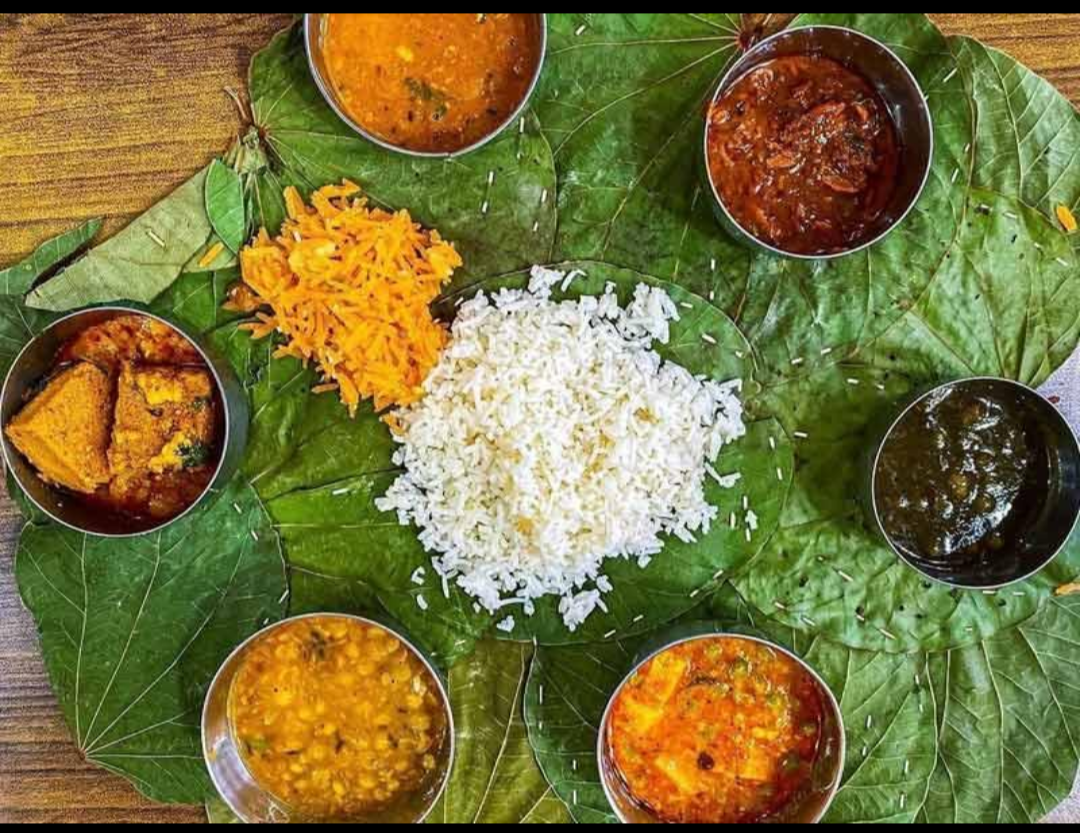
Traditional Pahari Brahmin households were joint families living in multi-storey stone and timber homes, farming small terraced plots and keeping cattle. The sacred thread (janeu) ceremony, daily sandhya, and the keeping of family horoscopes remained important markers of Brahmin identity. Unlike in many plains regions, hill Brahmins lived in close daily contact with Rajputs, Rathis, Ghirths, Kanets, and Scheduled Caste artisans, and village life was organised around shared devtas, shared water sources, and shared feasts.
A distinctive element is the Brahmin role in the dham, the community feast. In Kangra and Chamba, dham food is cooked by hereditary Brahmin cooks called botis, who prepare rice and lentil dishes in large brass vessels over wood fire. Guests sit in rows on the floor and eat from leaf plates (pattal). The dham remains the centrepiece of weddings, religious ceremonies, and death rites across much of the state.
8.1 Small Cultural Details
- The Himachali topi (cap), with a coloured velvet band, is a proud regional symbol. The Kullu cap has a patterned band, and green-banded and maroon-banded caps have also carried political meaning in state politics.
- Greeting elders by touching their feet and the address "Pandit ji" or "Shastri ji" for respected priests remain common.
- Families keep a kul devta or kul devi (lineage deity), often in an ancestral village far from where they now live, and return for first haircutting (mundan) and other rites.
- Genealogies are often recorded with pandas (pilgrim priests) at Haridwar, Kurukshetra, Pehowa, or local Shakti temples, creating long written family records.
- Pahari folk songs such as jhoori, natti songs, and wedding songs (suhag, sithniyan) are sung by women during ceremonies.
- The Nati dance of Kullu, Shimla, and Sirmaur is performed in circles at fairs and weddings.
9. Marriage and Wedding Traditions
Marriage among Himachali Brahmins is traditionally arranged within the caste and outside the gotra, with horoscope matching (kundli milan) by a family priest. Older norms in Kangra included hypergamy, in which higher-status Brahmin groups accepted brides from slightly lower-status Brahmin families but did not give daughters in return. Such distinctions have faded but not fully disappeared.
Wedding rituals include the sagai (engagement), tel-haldi (oil and turmeric), ganesh puja, the barat procession accompanied by traditional musicians playing the dhol, nagara, shehnai, and karnal (a long brass horn), the phere around the sacred fire, and the grand dham feast. Bridal songs and the farewell (vidai) songs of the Pahari hills are emotional highlights. In many villages the local devta is formally invited to the wedding.
10. Cuisine
Himachali Brahmin cuisine is shaped by altitude, cold winters, and dairy-rich hill farming. It is known for curd-based gravies, slow-cooked lentils, and festive rice dishes. Food practices vary: many Brahmin families are vegetarian, while in parts of the hills, as in Kashmir, meat eating has historically been accepted in some Brahmin households. Practice depends on region, family, and generation.
10.1 Dham Cuisine
- Madra: chickpeas or kidney beans cooked in yoghurt with ghee and whole spices, the signature Chamba and Kangra dish.
- Maah di dal: black lentils slow-cooked until creamy.
- Khatta (or ambua): a tangy sauce made with dried mango, tamarind, or pumpkin and jaggery.
- Sepu vadi: lentil dumplings in a spinach-yoghurt gravy, typical of Mandi dham.
- Mittha or meethe chawal: sweet saffron rice with dry fruits, often served first.
- Rajmah, kadhi, teliya maah, and boor ki kadhi in regional variations.
10.2 Everyday and Seasonal Foods
- Siddu: steamed wheat buns stuffed with poppy seed or walnut paste, eaten with ghee.
- Babru (stuffed fried bread), patande (thin pancakes of Sirmaur), and aktori (buckwheat cake).
- Chha gosht and Chamba chukh (a chilli preparation) in households that eat meat or like strong heat.
- Seasonal use of buckwheat (kuttu), barley, red rice, lingad (fern shoots), and wild greens.
- Himachali apples, apricots, walnuts, and rhododendron (burans) juice in the higher belts.
11. Traditional Dress and Ornaments
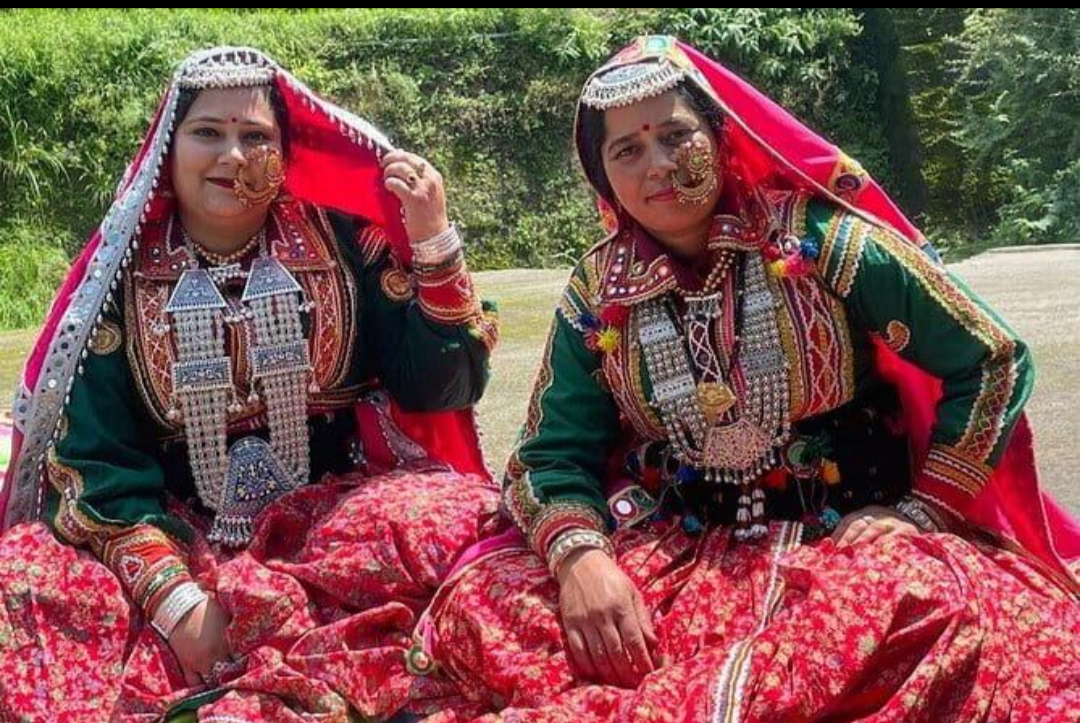
For men, traditional attire includes the kurta, a woollen jacket or sadri, churidar or pyjama, and the Himachali topi. In the colder valleys, the woollen chola and dora (a long black rope belt) are worn by Gaddi men. Formal occasions call for an achkan or long coat.
For women, clothing includes the kurta-salwar or long gown-like ghagra, a woollen shawl, and the dhatu or dhatu scarf tied over the head. In Kullu, women wear the woollen pattu, pinned at the shoulders with silver brooches (bumini). Kullu shawls, with their geometric borders, are a proud regional craft.
Traditional jewellery is heavy and made mainly of silver and gold. Well-known pieces include the large Himachali nath (nose ring), chak or chiri (head ornament), chandrahar and galuband (necklaces), kangan (bracelets), and jhumka and bali earrings. Many pieces are passed down as family heirlooms and worn by brides.
12. Traditional Housing and Architecture
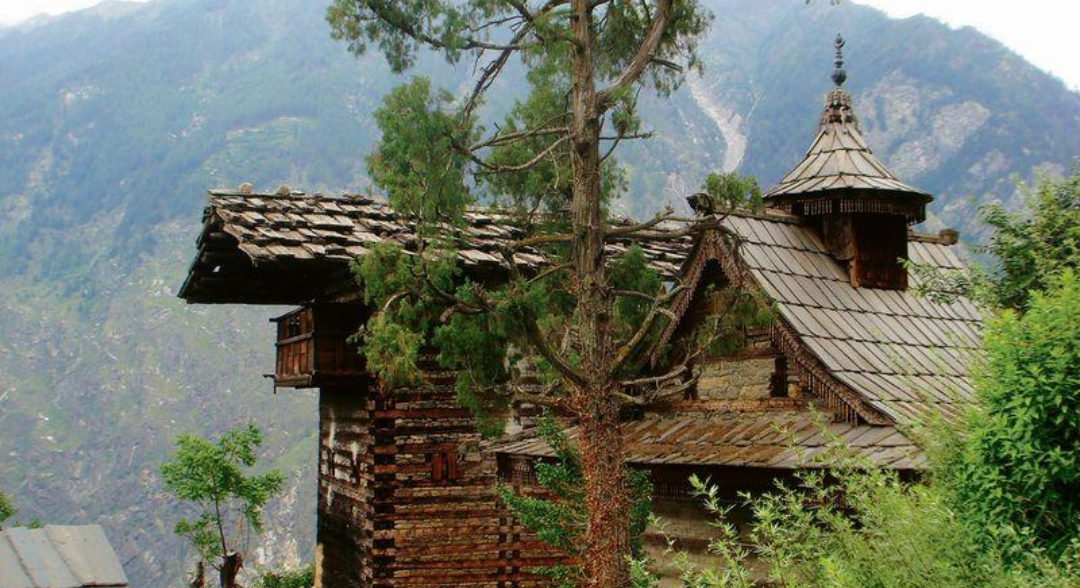
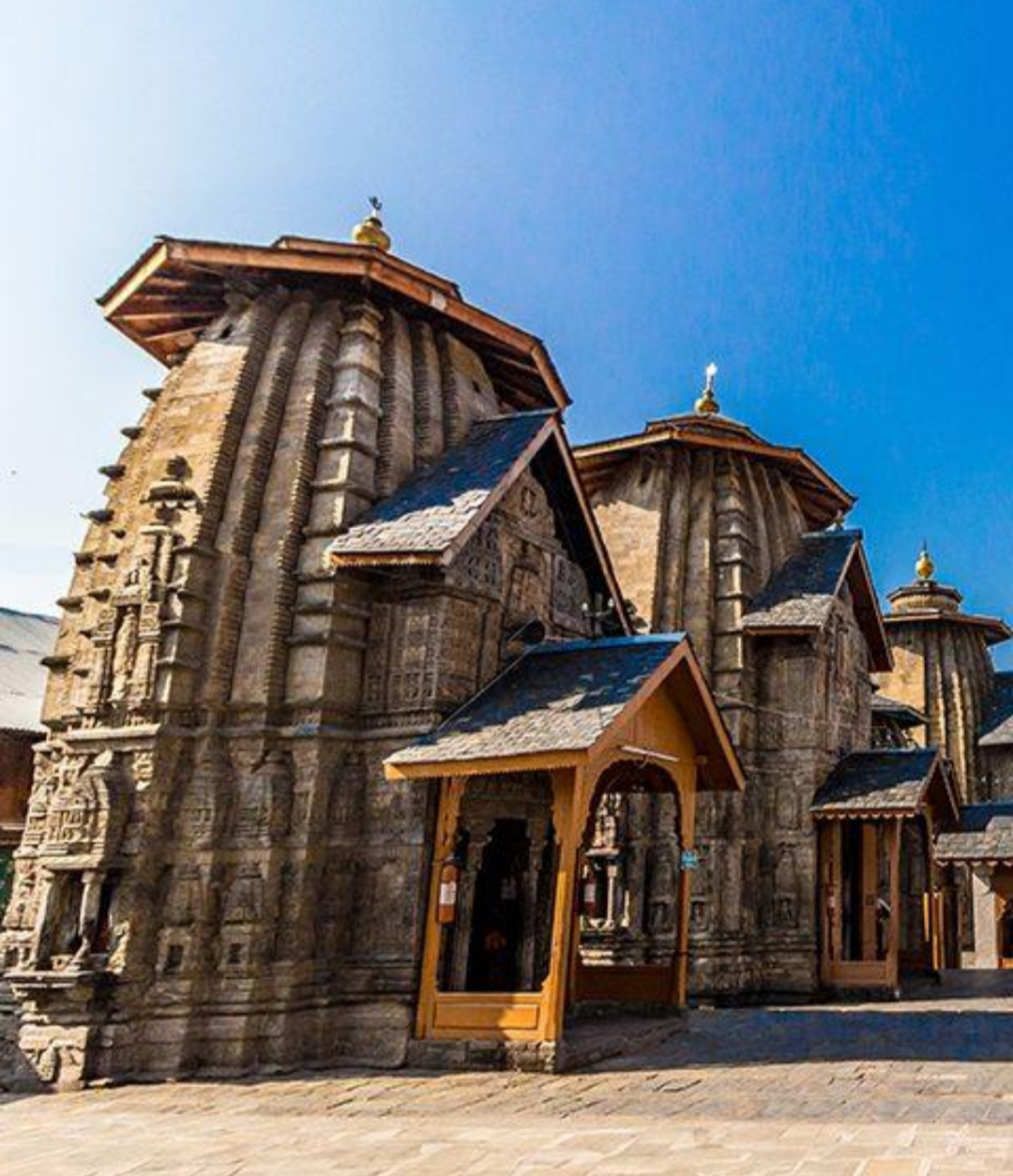
Pahari Brahmin homes traditionally used the kath-kuni building style, with layers of timber (usually deodar) and stone laid without mortar, topped by slate roofs. These houses resist earthquakes and hold heat well. Ground floors sheltered cattle, while families lived on upper floors with wooden balconies. Brahmin families also maintained and served in the region's temples, whose styles include pagoda-like tiered roofs (Kullu and Mandi), shikhara stone temples (Baijnath, Masroor rock-cut temples), and wood-carved temples such as Hadimba in Manali.
13. Folklore, Learning, and Oral Tradition
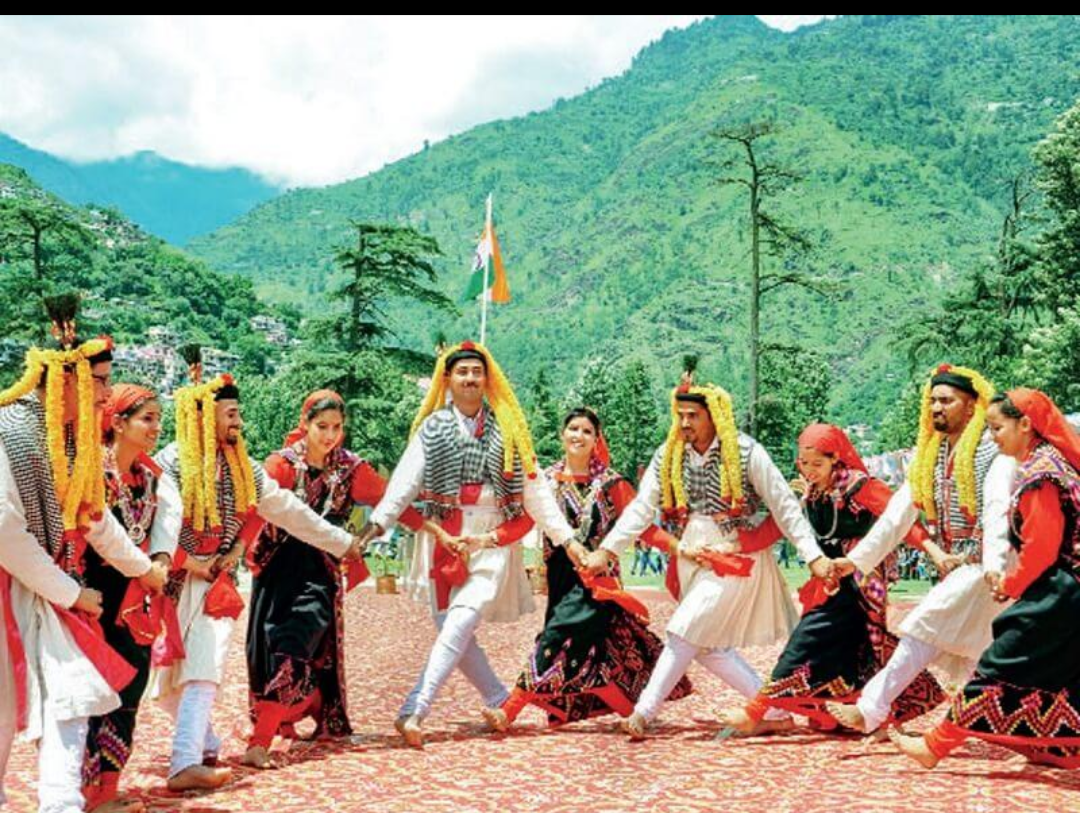
Himachali Brahmins historically preserved Sanskrit learning, jyotish (astrology), Ayurveda, and ritual manuals. Folk ballads such as the haars and jhoori songs, tales of local devtas, and legends of the Pandavas (who are believed to have passed through the hills in exile) form a rich oral heritage. The Kangra valley was also the centre of the celebrated Pahari painting traditions of Guler and Kangra in the 18th century, which drew on Sanskrit texts such as the Gita Govinda, the Bhagavata Purana, and the Rasamanjari, often interpreted through the scholarly input of court Brahmins.
14. Education, Livelihoods, and Occupations
Himachal Pradesh has one of the highest literacy rates in India (about 82.8 per cent in 2011), and Brahmins are among its most educated groups. Traditional occupations included priesthood, astrology, teaching Sanskrit, Ayurvedic medicine, temple service, cooking for dhams, and farming. Today Himachali Brahmins work across a wide range of fields:
- Government service, especially teaching, administration, and state departments, which are the largest employers in Himachal.
- Armed forces, particularly through Dogra and other regiments. Kangra, Hamirpur, and Bilaspur have long traditions of military service.
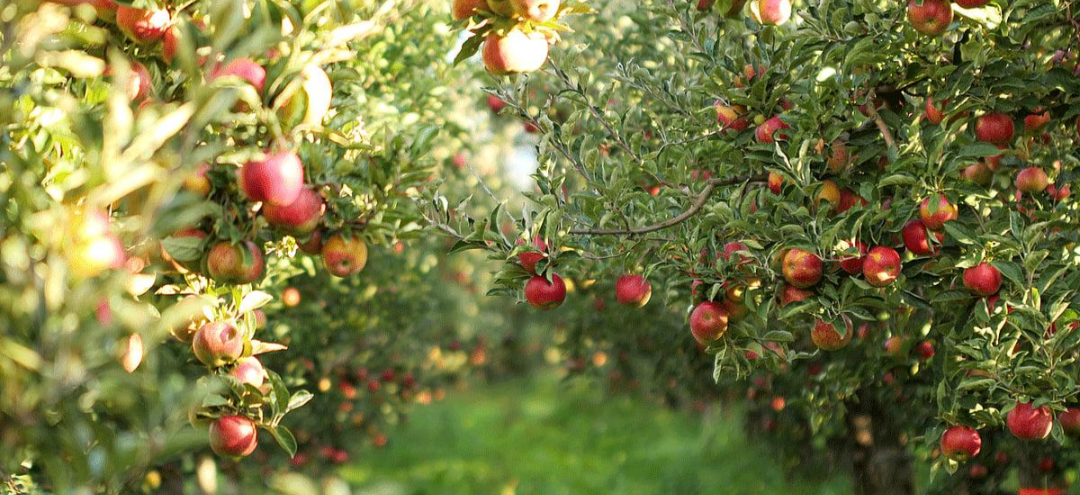
- Horticulture and agriculture, including apple orchards in Shimla, Kullu, and Mandi, and off-season vegetables.
- Tourism and hospitality, including hotels in Shimla, Manali, and Dharamshala, and work in hotels across India and abroad.
- Priesthood and temple administration, still important in pilgrimage centres.
- Professional fields such as medicine, engineering, law, academia, and banking, often after migration to Chandigarh, Delhi, and other cities.
15. Diaspora
Himachali Brahmins have migrated mainly within India rather than abroad. The biggest destinations are Chandigarh, Delhi, Punjab, Haryana, Jammu, and Mumbai, driven by education, government jobs, army service, and the hotel industry. Many retired soldiers and officers settle in Kangra, Palampur, or Shimla, keeping strong ties to their villages.
Smaller communities of Himachali origin live in the United States, Canada, the United Kingdom, Australia, and the Gulf states, working as doctors, engineers, IT professionals, academics, and hospitality staff. Diaspora groups often organise Himachali cultural associations, celebrate the dham and Himachal Day (15 April), and maintain links with their kul devtas at home.
16. Prominent People
The following people are commonly identified as being from Himachali Brahmin families or having Himachali Brahmin roots. Community identification of public figures can be imprecise, so this list is illustrative rather than exhaustive.
16.1 Politics and Public Life
- Shanta Kumar: two-time Chief Minister of Himachal Pradesh and former Union Minister, from Kangra.
- J.P. Nadda: BJP National President and Union Health Minister, with family roots in Bilaspur.
- Pandit Sukh Ram: former Union Telecom Minister and long-serving politician from Mandi.
- Suresh Bhardwaj: former state minister and senior BJP leader from Shimla.
16.2 Military
- Major Somnath Sharma, PVC: India's first recipient of the Param Vir Chakra (1947, Battle of Badgam), from a Kangra family.
16.3 Literature, Arts, and Culture
- Chandradhar Sharma Guleri: pioneering Hindi writer, author of the classic short story Usne Kaha Tha, whose family came from Guler in Kangra.
- Yami Gautam: film actress, from a family of Bilaspur and Mandi roots.
Many local scholars, priests, soldiers, and teachers are well known in their own districts but rarely appear in national sources.
17. Physical Traits
There is no single physical type for Himachali Brahmins. As with most north-western Indian communities, people tend to have fair to wheatish complexions, and eye and hair colour are generally dark, though lighter shades occur. Rosy cheeks and hardy, lean builds are often described in hill populations, partly reflecting outdoor work and high-altitude life rather than ancestry alone. Variation within the community is large, and appearance should never be used as a marker of caste or community identity.
18. Conclusion
The Brahmins of Himachal Pradesh have a way of life shaped by the mountains. They carry the Sanskrit rituals, astrology, and learning of the wider Brahmin tradition, but they also grew deeply rooted in mountain agriculture, village devta worship, Takri record-keeping, and the shared culture of the hill states. From the royal purohits of Chamba and Mandi to the dham cooks of Kangra, the pujaris of Kullu's devtas, and the soldiers of the Dogra regiments, their history is part of the history of the western Himalaya. For anyone tracing their roots, a Himachali Brahmin surname, gotra, ancestral village, and kul devta together form a strong starting point.
References and Further Reading
- Census of India 2011, Himachal Pradesh: Primary Census Abstract.
- Rose, H.A. A Glossary of the Tribes and Castes of the Punjab and North-West Frontier Province. Lahore, 1911 to 1919.
- Ibbetson, Denzil. Panjab Castes. Lahore, 1916.
- Hutchison, J. and Vogel, J.Ph. History of the Panjab Hill States. Lahore, 1933.
- Parry, Jonathan P. Caste and Kinship in Kangra. Routledge, 1979.
- Vogel, J.Ph. Antiquities of Chamba State. Calcutta, 1911.
- Reich, D. et al. "Reconstructing Indian population history." Nature, 2009.
- Handa, O.C. Temple Architecture of the Western Himalaya. Indus Publishing.
- Government of Himachal Pradesh, Department of Language, Art and Culture publications.
Frequently Asked Questions
Who are Himachali Brahmins?
What is the population of Brahmins in Himachal Pradesh?
Are Himachali Brahmins Saraswat or Gaur?
Both are present. Saraswat Brahmins are the older and larger group across Kangra, Mandi, Kullu, and Chamba, while Gaur Brahmins are more common in the southern and south-western parts of the state. Both belong to the northern Pancha Gauda division.
What are common Himachali Brahmin surnames?
Sharma is the most common. Others include Bhardwaj, Vaidya, Joshi, Upadhyay, Awasthi, Kaushal, Gautam, Kashyap, Parashar, Shastri, Guleria, Bhatt, and Rishi. Some families use village-based surnames that point to an ancestral place.
Who are the Nagarkotia Brahmins?
Do Himachali Brahmins eat meat?
Practice varies. Many families are vegetarian, especially those in priestly roles, but in parts of the hills meat eating has historically been accepted in some Brahmin households. Diet depends on region, family, and personal choice.
What is a Himachali dham?
A dham is a traditional community feast served at weddings and religious events. In Kangra and Chamba it is prepared by hereditary Brahmin cooks called botis and includes dishes such as madra, maah di dal, khatta, and sweet rice, served on leaf plates.
What language do Himachali Brahmins speak?
They speak Pahari languages such as Kangri, Mandeali, Kullui, Chambeali, Bilaspuri, Mahasui, and Sirmauri, along with Hindi. Historically, many Brahmin records were written in the Takri script.
What is the traditional dress of Himachali Brahmins?
Men traditionally wear a kurta, woollen jacket, churidar, and the Himachali topi. Women wear kurta-salwar or ghagra with a head scarf (dhatu), and in Kullu the woollen pattu. Silver and gold jewellery such as the large nath and chak is important for brides.
What role do Brahmins play in the devta system?
Brahmins often serve as hereditary pujaris of village deities, managing rituals and the religious calendar. The deity's oracle (gur), musicians, and other officials may come from different castes, making the devta system a shared village institution.
Are Himachali Brahmins genetically different from Brahmins of the plains?
They share the same broad North Indian ANI and ASI ancestry and high R1a frequency found among many northern Brahmin groups. Being a north-western, regionally endogamous group, they generally cluster with populations of Punjab, Kashmir, and the western Himalaya, though detailed studies on Himachali Brahmins specifically are still limited.
Who are famous Himachali Brahmins?
Where have Himachali Brahmins migrated?
Most migration has been within India, to Chandigarh, Delhi, Punjab, Haryana, and Mumbai, for education, government jobs, the army, and hospitality. Smaller diaspora groups live in the USA, Canada, the UK, Australia, and the Gulf.
How can I trace my Himachali Brahmin ancestry?
Start with your surname, gotra, ancestral village, and kul devta. Then look for family entries in panda registers at Haridwar or regional pilgrimage centres, old Takri horoscopes and land records, and revenue records (jamabandi) of your village. DNA testing can add a wider view of regional ancestry.