

Jharkhand Genome Project Community
Explore the genetic diversity of people from Jharkhand.
JHARKHAND GENOME PROJECT
Geography, People, History, and Genetics of the Land of Forests
Table of Contents
1. Introduction: Who Are the People of Jharkhand?
Jharkhand, literally the “Land of Forests” (from jhar, bush or forest, and khand, land or tract), is not a single ethnic community in the way a tribe, caste, or religious denomination is. It is a geography-defined population: the inhabitants, past and present, of the Chotanagpur plateau and the Santhal Parganas in eastern India. With roughly 33 million people counted in the 2011 Census and current projections placing the population close to 40 million, Jharkhand is home to more people than many countries, including Australia or Malaysia. This profile treats “Jharkhand” as a geography-of-origin community in the genealogical sense: the shared population of a defined territory, encompassing its many Adivasi (tribal) peoples, its long-settled non-tribal Sadan communities, its later migrant populations, and its Hindu, Sarna, Christian, and Muslim families, whose ancestors have hunted, farmed, smelted iron, cleared forests, mined, and migrated across this plateau for millennia.
Carved out of southern Bihar on 15 November 2000, the birth anniversary of the tribal hero Birsa Munda, Jharkhand is bordered by Bihar to the north, West Bengal to the east, Odisha to the south, and Chhattisgarh and Uttar Pradesh to the west. What makes Jharkhand distinctive among Indian regions is that it is one of the few places in South Asia where all three of the subcontinent’s older language families meet on the same ground: the Austroasiatic Munda languages (Santali, Mundari, Ho, Kharia), the Dravidian languages (Kurukh and Malto), and the Indo-Aryan languages (Nagpuri or Sadri, Khortha, Panchpargania, Kurmali, and Hindi). This linguistic layering mirrors a genetic one, and it makes the people of Jharkhand one of the most important populations for understanding the deep ancestry of India as a whole.
The region’s modern history is equally striking. It is the land of the Santhal Hul of 1855, of Birsa Munda’s Ulgulan of 1899–1900, and of one of independent India’s longest regional autonomy movements. It is also the mineral heart of the country: the coalfields of Jharia and Bokaro, the iron ore of Saranda, the copper of Ghatsila, the uranium of Jaduguda, and the steel city of Jamshedpur. The story of Jharkhand’s people is therefore at once an Adivasi story, an agrarian story, an industrial story, and a story of migration.
2. Geography
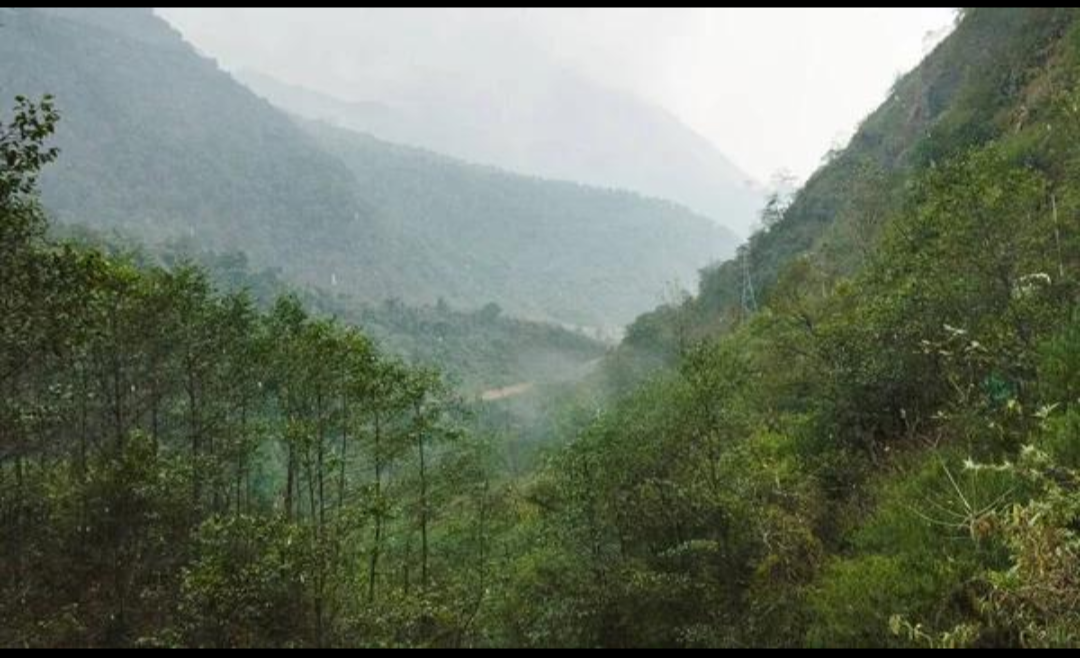
Jharkhand covers 79,716 square kilometres and is landlocked. Almost the entire state lies on the Chotanagpur plateau, an ancient block of Precambrian rock that forms the north-eastern edge of the Indian peninsular shield. The terrain is a series of stepped plateaus rather than a single tableland: the higher Ranchi plateau (around 600 to 700 metres), the Hazaribagh plateau to its north, the Pat lands of the west around Netarhat (over 1,000 metres), the Kolhan and Singhbhum uplands in the south-east, and the Rajmahal hills in the far north-east, where the plateau drops down towards the Ganga at Sahebganj. The highest point is Parasnath hill (about 1,350 metres) in Giridih district, one of the holiest sites in Jainism.
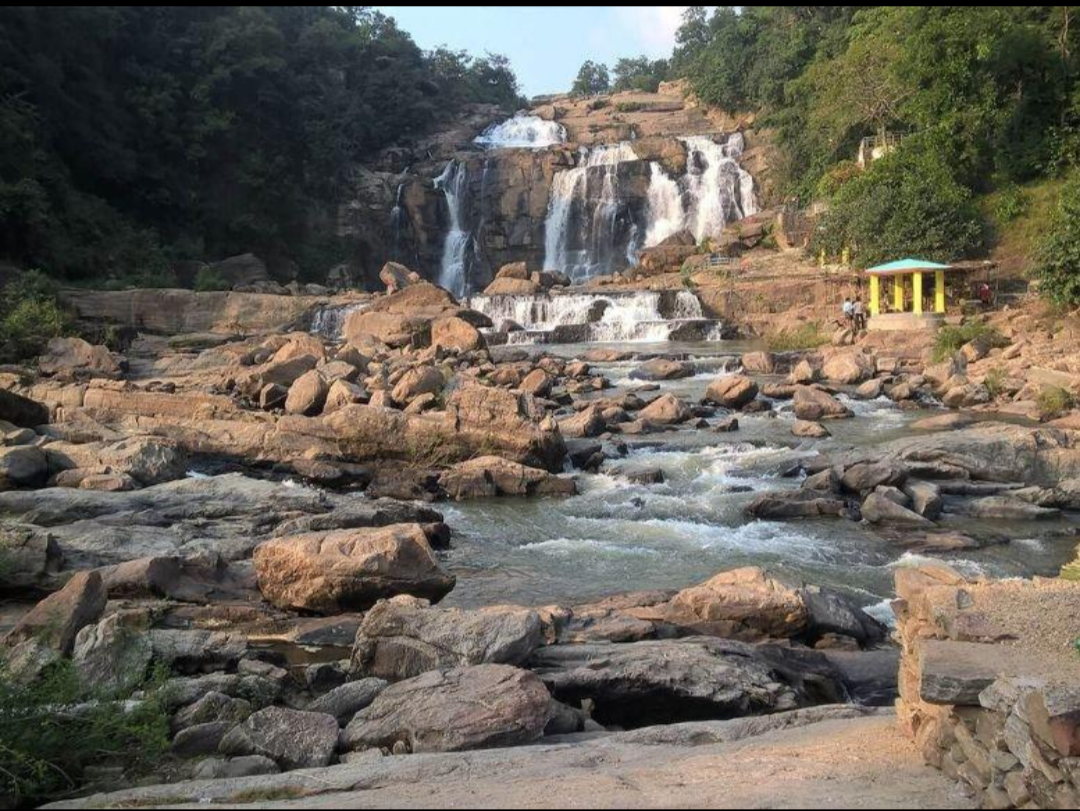
The state is drained by rain-fed rivers rather than snow-fed ones. The Damodar, once called the “Sorrow of Bengal” for its floods, flows east through the coal belt; the Subarnarekha rises near Ranchi and flows through Jamshedpur towards the Bay of Bengal; the North and South Koel, the Barakar, the Kharkai, the Shankh, the Ajay, and the Mayurakshi complete the network. Because the plateau breaks sharply at its edges, these rivers produce the waterfalls that are part of every Jharkhandi childhood: Hundru, Dassam, Jonha, Hirni, and Lodh, the highest in the state.
Roughly a third of Jharkhand is under forest, dominated by sal (Shorea robusta), along with mahua, kusum, palash, karanj, and bamboo. The Saranda forest of West Singhbhum, often called the “land of seven hundred hills”, is regarded as one of the largest sal forests in Asia, and Palamu (Betla) was among the first nine reserves under India’s Project Tiger in 1973. The climate is tropical monsoon, with hot summers, a June to September monsoon that feeds a largely single-crop paddy agriculture, and cool, dry winters. Beneath the forests lies the mineral wealth that shaped Jharkhand’s modern history: coal, iron ore, copper, mica, bauxite, uranium, and limestone. Jharkhand is commonly cited as holding a very large share of India’s mineral reserves, and the Jharia coalfield is the country’s principal source of prime coking coal.
Administratively, Jharkhand has 24 districts organised into five divisions. Ranchi is the capital and seat of the High Court, and Dumka serves as the sub-capital.
Cultural-Geographic Sub-Regions
Long before modern district boundaries, the people of Jharkhand identified with older regions, each with its own dominant communities, speech, and historical character:
3. Origins and Early History
3.1 Prehistoric Foundations
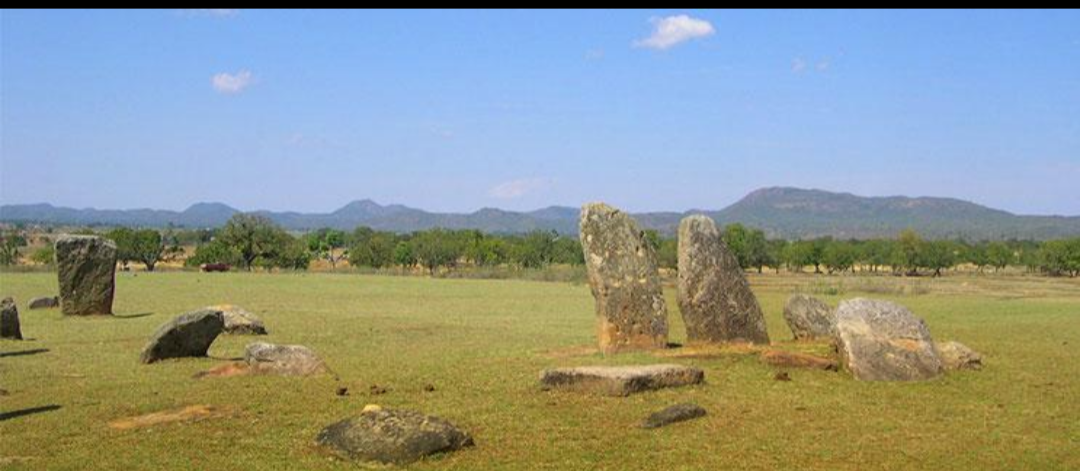
The Chotanagpur plateau has one of the longest records of human presence in eastern India. Stone tools from the Palaeolithic, Mesolithic microliths, and Neolithic celts have been found across Ranchi, Hazaribagh, Singhbhum, and the Damodar valley. Rock paintings at Isko in Hazaribagh district, showing animals, geometric designs, and human figures, are often linked by local scholars to the living Khovar and Sohrai mural traditions of the same area, a striking example of possible continuity in visual culture. The plateau is also dotted with megaliths: burial and memorial stones (sasandiri and birdiri among the Munda and Ho) that are still raised today, and ancient standing-stone sites such as Punkri Barwadih near Hazaribagh, which some researchers interpret as marking equinox sunrises.
Iron working has deep roots here. The Asur, today one of the smallest Particularly Vulnerable Tribal Groups, preserve traditions of traditional iron smelting, and Munda and Asur oral literature remember a time when Asur iron-smelters were overcome by the supreme deity Singbonga, a myth that many historians read as a memory of real technological and social change on the plateau.
3.2 The Forest Kingdoms
Ancient Sanskrit sources treated much of this region as the forested frontier, the atavika or Jharkhanda lands between the Gangetic kingdoms and Kalinga. Mauryan-era references to the forest peoples, and later medieval inscriptions and chronicles, show the plateau as a zone of semi-independent chiefdoms that maintained their own customs. Tradition holds that the Munda were the earliest settled cultivators of the Ranchi plateau, clearing forest and founding khuntkatti villages, where land belonged collectively to the lineage of the original clearers. The Oraon, by their own traditions, arrived later from the west, many narratives placing their earlier home at Rohtasgarh in present-day Bihar.
From around the early centuries CE, the Nagvanshi dynasty established itself in the Ranchi region, eventually ruling a kingdom that became known as Khukhra or Nagpur (from which “Chotanagpur” derives), with successive seats at places such as Doisa, Palkot, and Ratu. The Nagvanshi kings, the Chero rulers of Palamu (whose most celebrated king, Medini Rai, ruled in the 17th century), the Raj of Ramgarh, the rajas of Singhbhum at Porahat, and many smaller zamindari houses together formed the “Sadan” political layer that grew up alongside tribal institutions.
3.3 The Mughal Frontier
Mughal chroniclers knew the region as Kokrah or Jharkhand, and prized it for its diamonds, drawn from rivers such as the Sankh, and for its wild elephants. Akbar’s forces pressed the Nagvanshi rulers into paying tribute in the late 16th century, and Jahangir later imprisoned the Nagvanshi king Durjan Sal for over a decade before releasing him. Yet Mughal control remained light: the plateau’s dense forest and scattered hill forts made it a frontier of tribute rather than direct rule, which helped preserve older Adivasi land and village systems into the colonial era.
3.4 Colonial Conquest and the Great Uprisings
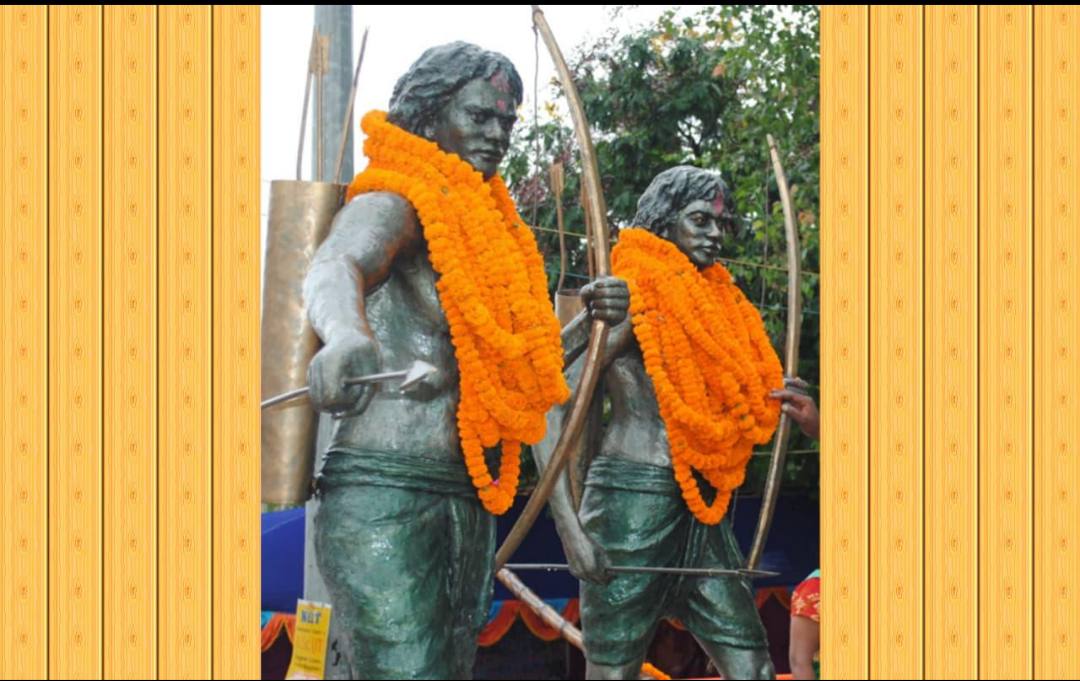
The East India Company gained the diwani of Bengal, Bihar, and Orissa in 1765, and pushed into the plateau from Dhalbhum and Palamu in the following decades. Company rule brought zamindari revenue demands, outside moneylenders and traders (remembered in Adivasi songs as diku, outsiders), and the erosion of collective land rights. The result was a century of resistance that makes Jharkhand one of the most rebellious regions in Indian colonial history:
- Tilka Manjhi led attacks on Company forces in the Rajmahal hills in the 1780s and is remembered as one of the earliest Adivasi rebels against British rule.
- The Kol Rising (1831–32) swept across Ranchi, Singhbhum, and Palamu under leaders such as Budhu Bhagat, leading the British to create the South-West Frontier Agency in 1834 and govern the region under special rules.
- The Santhal Hul (1855–56), led by the brothers Sidhu and Kanhu Murmu with Chand, Bhairav, and their sisters Phulo and Jhano, began at Bhognadih on 30 June 1855 (still marked as Hul Diwas) and was followed by the creation of the Santhal Pargana district with its own protective regulations.
- The Revolt of 1857 found leaders in Thakur Vishwanath Shahdeo, Pandey Ganpat Rai, and Sheikh Bhikhari around Ranchi, and the brothers Nilambar and Pitambar in Palamu.
- The Ulgulan (1899–1900), led by Birsa Munda of Ulihatu, combined religious reform with a struggle to restore khuntkatti land rights. Birsa died in Ranchi jail in June 1900, aged about 25, and is today honoured as Dharti Aaba, “Father of the Earth”.
These uprisings directly shaped law. The Chotanagpur Tenancy Act of 1908 and, later, the Santhal Pargana Tenancy Act restricted the transfer of tribal land to outsiders, and they remain central to Jharkhandi politics today.
3.5 Missions, Mines, and Industry
The 19th century also brought Christian missions. German Lutheran missionaries of the Gossner Mission arrived in Ranchi in 1845, followed by Anglican and Catholic missions, the latter associated especially with the Belgian Jesuit Constant Lievens, who defended Adivasi tenants in the courts in the 1880s. Mission schools, hospitals, and cooperative credit gave many Munda, Oraon, and Kharia families access to education, and created a Christian Adivasi community that remains influential in public life.
At the same time, the plateau was transformed into an industrial frontier. Coal mining expanded rapidly in Jharia and Bokaro from the 1890s; the Tata Iron and Steel Company began building its works at Sakchi in 1907, which grew into Jamshedpur, India’s first planned industrial city; and lac, tasar silk, mica from Koderma, and timber were drawn into imperial markets. Early 20th-century reform movements, such as the Tana Bhagat movement begun among the Oraon by Jatra Bhagat around 1914, blended religious reform with resistance to rent and forced labour and later aligned with Gandhian nationalism.
3.6 The Jharkhand Movement and Statehood
The demand for a separate Adivasi-majority province emerged in the late colonial period through organisations such as the Chotanagpur Unnati Samaj and the Adivasi Mahasabha. In 1938, the Olympic hockey champion Jaipal Singh Munda took charge of the Mahasabha, and in 1949–50 it became the Jharkhand Party, which won many seats in the region in the first general elections. After decades of shifting fortunes, the movement was revived in the 1970s by the Jharkhand Mukti Morcha (JMM), founded in 1972 by Shibu Soren, Binod Bihari Mahato, and A. K. Roy, which joined Adivasi and non-Adivasi (particularly Kurmi-Mahato and mine-worker) demands. The Bihar Reorganisation Act finally created Jharkhand as India’s 28th state on 15 November 2000.
4. Demographic Profile
The 2011 Census counted 32,988,134 people in Jharkhand, making it the 14th most populous state; current projections place the figure at close to 40 million. Around 76 per cent of people lived in rural areas, and the average density was 414 persons per square kilometre, much lower than the Gangetic plains to the north. The sex ratio was 948 females per 1,000 males, above the national average, a pattern often linked to the relatively higher social position of women in many Adivasi societies. Literacy stood at 66.4 per cent (about 77 per cent for men and 55 per cent for women), below the national average, with sharp gaps between urban centres such as Ranchi, Jamshedpur, and Dhanbad and remote tribal blocks.
Scheduled Tribes made up 26.2 per cent of the population in 2011 (about 8.6 million people) and Scheduled Castes about 12 per cent. Jharkhand recognises 32 Scheduled Tribes, of which eight are notified as Particularly Vulnerable Tribal Groups (PVTGs): the Asur, Birhor, Birjia, Hill Kharia, Korwa, Mal Paharia, Parhaiya, and Sauria Paharia. The largest tribal communities are:
| Community | Approx. Population (2011) | Language Family | Main Areas |
|---|---|---|---|
| Santal | ~2.75 million | Austroasiatic (Santali) | Pargana, Kolhan, Dhanbad-Bokaro |
| Oraon (Kurukh) | ~1.7 million | Dravidian (Kurukh) | Ranchi, Gumla, Lohardaga, Latehar |
| communities | ~1.2 million | Austroasiatic (Mundari) | Khunti, Ranchi, Seraikela |
| Ho | ~0.9 million | Austroasiatic (Ho) | West Singhbhum (Kolhan) |
| Kharia | ~0.2 million | Austroasiatic (Kharia) | Simdega, Gumla |
| Others | Bhumij, Lohra, Kharwar, Chero, Bedia, Mahli, Paharia, Birhor, Asur, etc. | Mixed | Across the state |
Alongside the Adivasis live the Sadan, the long-settled non-tribal population of Chotanagpur whose ancestors have shared the plateau for centuries. These include Kurmi (Kudmi) Mahtos, a large and politically significant community; Ahir, Teli, Rautia, Chik Baraik, Lohar, Ghasi, Bhuiyan, Turi, and other artisan and cultivating groups; Brahmin, Rajput, and Bhumihar families, including descendants of the Nagvanshi and other ruling houses; and Muslim communities such as the Ansari (Julaha weavers) and others, many of whom speak Nagpuri or Khortha as a mother tongue. The industrial era added large migrant populations from Bihar, Bengal, Odisha, Uttar Pradesh, and South India to the mining and steel towns.
Religiously, the 2011 Census recorded Hindus at about 67.8 per cent, Muslims at 14.5 per cent, Christians at 4.3 per cent, and “other religions and persuasions” at 12.8 per cent, most of whom follow Sarna, the indigenous nature-centred faith of the Munda, Oraon, Ho, and others. Many Adivasi organisations campaign for a separate “Sarna Dharma” code in the Census, and the Jharkhand Assembly passed a resolution in support of it in 2020. Santal traditional religion (Sari Dhorom) is closely related.
5. Genetics and DNA Ancestry
Few Indian regions are as genetically interesting as Jharkhand. Its population combines the oldest indigenous South Asian ancestry, a distinctive East and Southeast Asian-linked component carried by Munda-speaking peoples, and the Indo-Aryan-associated ancestry found across the Gangetic plain. Jharkhand DNA is therefore best understood not as a single signature but as a layered mosaic.
5.1 The ANI–ASI Background
Like nearly all Indian populations, the people of Jharkhand descend in part from a mixture of Ancestral North Indians (ANI), related to populations of Central Asia, West Asia, and Europe, and Ancestral South Indians (ASI), who are indigenous to the subcontinent. Genome-wide studies date the main ANI–ASI mixing to roughly 2,000 to 4,000 years ago. Compared with the Gangetic plain, the Adivasi communities of Jharkhand generally carry a higher share of ASI-related ancestry, while the non-tribal Sadan and later migrant communities sit closer to neighbouring Bihar, Bengal, and Odisha on this gradient.
5.2 The Austroasiatic (Munda) Puzzle
The most famous question in Jharkhand genetics concerns the Munda-speaking peoples: the Santal, Munda, Ho, Kharia, Bhumij, Birhor, Asur, and Korwa. Their languages belong to the Austroasiatic family, whose other branches are spoken in Southeast Asia (Khmer, Vietnamese, Mon) and North-East India (Khasi). Genetics has shown a sex-specific pattern that has been debated for two decades:
- Paternal (Y-chromosome) side: Munda-speaking men carry high frequencies of haplogroup O2a-M95 (also written O1b1a1a), which is otherwise typical of East and Southeast Asia. A 2007 study of 25 Austroasiatic populations found O-M95 at an average of about 52 per cent, followed by the South Asian haplogroup H-M69 at around 26 per cent. That study argued for an Indian origin of O-M95, but later work with better resolution has favoured an arrival from Southeast Asia.
- Maternal (mitochondrial) side: In contrast, the maternal lineages of Munda speakers are overwhelmingly South Asian, dominated by indigenous haplogroup M sub-lineages shared with their Dravidian- and Indo-Aryan-speaking neighbours.
- Genome-wide picture: A 2019 study estimated that Munda speakers derive roughly two-thirds of their ancestry from an older South Asian population (best represented today by groups such as the Paniya of Kerala) and about one-third from a Southeast Asian source, with the mixing dated to roughly 2,000 to 3,800 years ago.
The emerging consensus is that Austroasiatic-speaking men from Southeast Asia arrived in eastern India a few thousand years ago and married into local populations, with the language spreading and the Southeast Asian ancestry diluting over time. The Santal, Munda, and Ho of Jharkhand are therefore living carriers of one of the major prehistoric migrations into the subcontinent. Some Dravidian-speaking plateau peoples, such as the Oraon, also carry noticeable O-M95 frequencies, likely reflecting centuries of close contact and intermarriage on the plateau.
5.3 Other Lineages and Health Genetics
Among Jharkhand’s non-tribal and later-settled communities, Y-chromosome lineages resemble those of the wider Gangetic plain, with a mix of deep South Asian haplogroups (such as H and L) alongside R1a, R2, and J2, reflecting Indo-Aryan-associated and later movements. Genetic studies also show strong community-level structure: because most Adivasi groups practise clan exogamy but tribal endogamy, each community keeps a measurable genetic distinctiveness while sharing a common regional base.
Population genetics also has practical health relevance. Sickle cell trait and certain inherited blood conditions such as G6PD deficiency are reported at elevated frequencies in several tribal communities of central and eastern India, including in Jharkhand, which is why the region is a focus of India’s national sickle cell screening efforts. Anyone with concerns about such conditions should seek screening and advice from a qualified doctor rather than rely on ancestry results alone.
| Uncover Your Plateau Genetic MixYour Jharkhand roots may carry ancient South Asian, Austroasiatic, and Indo-Aryan-linked threads in different proportions. Discover your own genetic composition and the story it tells with GenoConnect.→ Get My Genetic Breakdown |
|---|
| See Live Genetics from Jharkhand Genome Project MembersThis article is a written overview. Insights shows live, pooled DNA from consented Jharkhand Genome Project members and updates as more kits join. Genetic Comparison lets you see how this community compares with others.→ Open Insights |
|---|
6. Language and Literature
Hindi is Jharkhand’s principal official language, but the state also recognises many second official languages, including Santali, Mundari, Ho, Kharia, Kurukh, Nagpuri, Khortha, Kurmali, Panchpargania, Bengali, Odia, Urdu, and several Bihari languages. Everyday life is often trilingual: a person may speak Mundari or Kurukh at home, Nagpuri (Sadri) in the market, and Hindi or English at school and work.
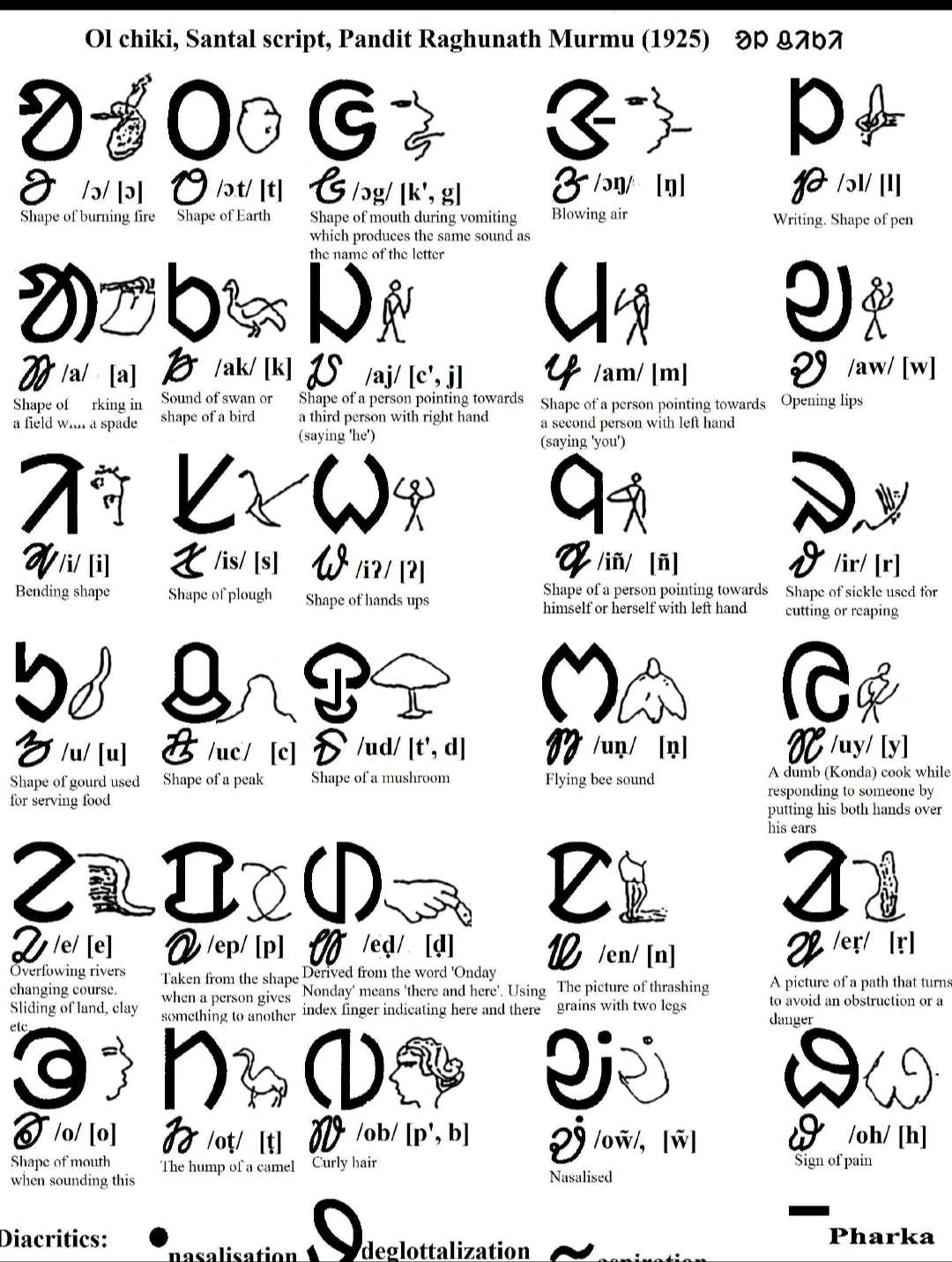
- Austroasiatic (Munda) languages: Santali, the largest, has been in the Eighth Schedule of the Constitution since 2003 and is written in its own Ol Chiki script, created by Pandit Raghunath Murmu in 1925. Ho has the Warang Citi script devised by Lako Bodra. Mundari and Kharia are also widely spoken.
- Dravidian languages: Kurukh, spoken by the Oraon, and Malto, spoken by the Sauria and Mal Paharia of the Rajmahal hills, are the northernmost Dravidian languages in India.
- Indo-Aryan languages: Nagpuri (Sadri) is the lingua franca of South Chotanagpur and is shared by tribal and non-tribal people alike; Khortha dominates the north and the coal belt; Panchpargania and Kurmali are spoken in the south-east.
Jharkhand has a rich modern literature in all of these languages and in Hindi. Nagpuri poetry and song, Santali literature published in Ol Chiki, and a strong wave of Adivasi writing in Hindi, by poets such as Ram Dayal Munda, Rose Kerketta, Nirmala Putul, Anuj Lugun, and Jacinta Kerketta, have made the region a centre of contemporary Indigenous literature in India.
7. Religion, Festivals, and Sacred Places
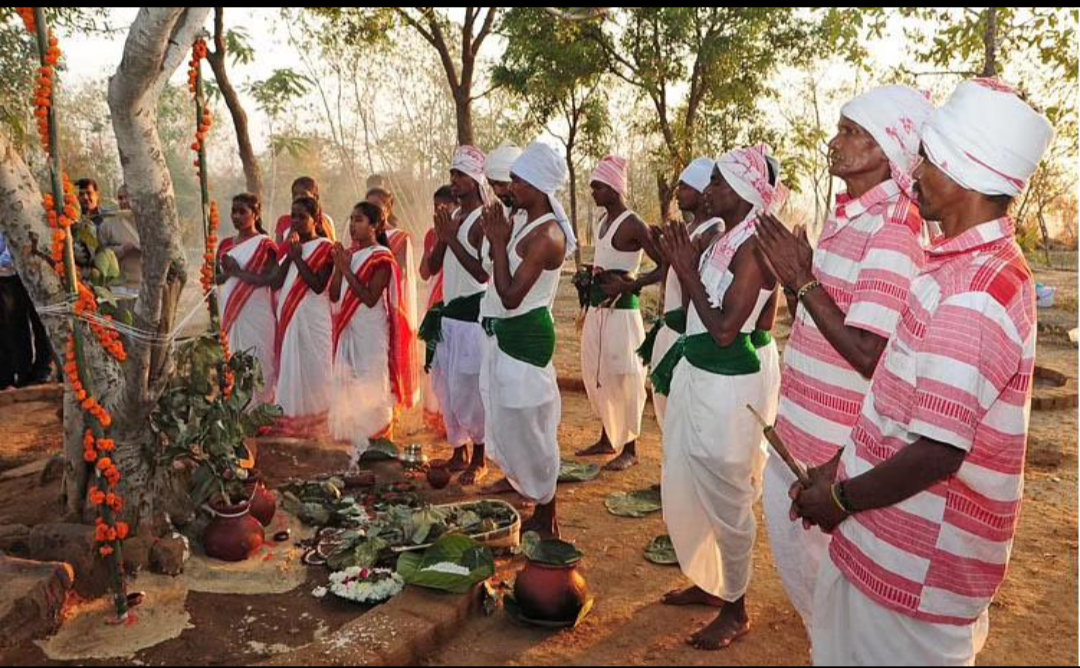
Jharkhand’s religious life is closely tied to the forest and the agricultural year. In Sarna tradition, worship centres on the sarna or sacred grove, a patch of sal trees preserved at the edge of each village, where the village priest (pahan among the Munda and Oraon, naeke among the Santal) makes offerings. The supreme deity is known as Singbonga (Munda and Ho), Dharmes (Oraon), or Thakur Jiu, with Marang Buru venerated by the Santal at the jaher than grove. Ancestor spirits are honoured in the household.
The major Adivasi festivals follow the seasons:
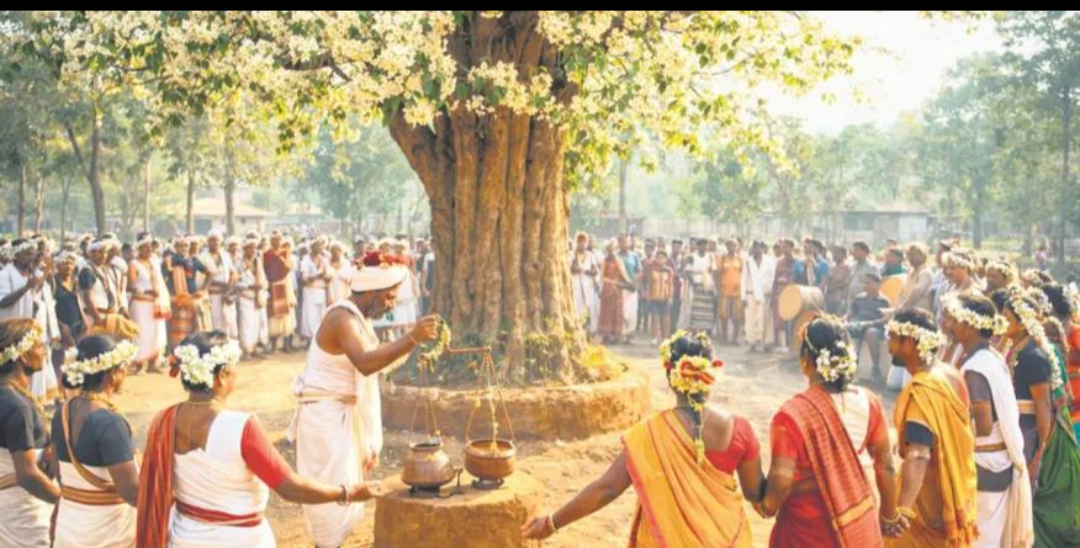
- Sarhul (known as Baha among the Santal and Ho) is the spring festival of sal blossoms, celebrated in March–April when the pahan “marries” the earth and the sky and predicts the coming rains; it is now a major public celebration in Ranchi.
- Karam in August–September honours the Karam tree with an all-night vigil, songs, and dance, and is celebrated by Adivasi and Sadan communities alike.
- Sohrai after the harvest honours cattle, with houses freshly painted in the Sohrai mural style.
- Tusu in mid-January, especially among the Kurmi and in the Panch Pargana, is marked by women’s songs and the immersion of decorated chaurals.
- Mage Parab is the great festival of the Ho; Jani Shikar, held roughly every twelve years, is a ritual hunt by Oraon women commemorating, in tradition, their defence of Rohtasgarh.
Hindu pilgrimage is centred on Baidyanath Dham at Deoghar, one of the twelve Jyotirlingas, which draws enormous crowds of kanwariyas during the month of Shravan; the Chhinnamasta temple at Rajrappa and the Jagannath temple at Ranchi (built in 1691) are also important. Parasnath hill (Shikharji) is among the holiest sites in Jainism, where twenty of the twenty-four tirthankaras are believed to have attained liberation. Christian communities celebrate Christmas and Easter with Adivasi songs and dance, and Muslims observe Eid, Muharram, and local urs festivals. Chhath, Diwali, Holi, and Durga Puja are widely celebrated, particularly in the towns.
8. Culture, Customs, and Social Practices
Many Jharkhandi Adivasi societies are organised into exogamous, often totemic clans: killi among the Munda and Ho, gotra among the Oraon, and paris among the Santal. The twelve Santal clans (including Hansda, Murmu, Kisku, Hembrom, Marandi, Soren, Tudu, and Baskey) are traced back to the children of the first human pair in Santal mythology. Oraon clans such as Tirkey, Ekka, Lakra, Kujur, Tigga, Minz, Toppo, and Xalxo are named after animals, birds, or plants, which members traditionally do not harm. These clan names now serve as surnames, so a name alone often tells a Jharkhandi a great deal about someone’s community.
Traditional self-governance systems remain important. The Santal have the majhi (village headman) and pargana (head of a group of villages); the Munda have the munda and pahan, with villages grouped into a patti under a manki; the Ho of Kolhan have the Manki-Munda system, recognised by the British in the 19th century; and the Oraon have the parha confederacy of villages. Village life traditionally revolves around the akhra, the open dance ground where the community gathers to sing, dance, and settle matters. Youth dormitories, the dhumkuria of the Oraon and the gitiora of the Munda and Ho, once trained young people in songs, crafts, and social rules.
Music and dance are part of daily and seasonal life rather than performance alone. The mandar (a double-headed clay drum), nagara, dhol, banam (a Santal fiddle), and flute accompany line dances in which men and women link arms. Jhumar, Domkach, Paika (a martial dance), Karma, and Santali dances are widespread, and Seraikela Chhau, a masked dance-drama, was inscribed by UNESCO in 2010 as part of the Chhau dance tradition of eastern India.
Small Cultural Things
- “Johar” is the everyday greeting across Adivasi Jharkhand, often said with folded hands, and has become a symbol of Jharkhandi identity.
- Sal-leaf plates and bowls (pattal and dona) are still used at feasts, and sal twigs serve as the traditional toothbrush (datun).
- Weekly haats (village markets) are social as much as economic events, where news is exchanged and matches are sometimes made.
- Stone memorials: the Munda and Ho raise flat sasandiri stones over family bones and upright birdiri memorial stones, a living megalithic tradition.
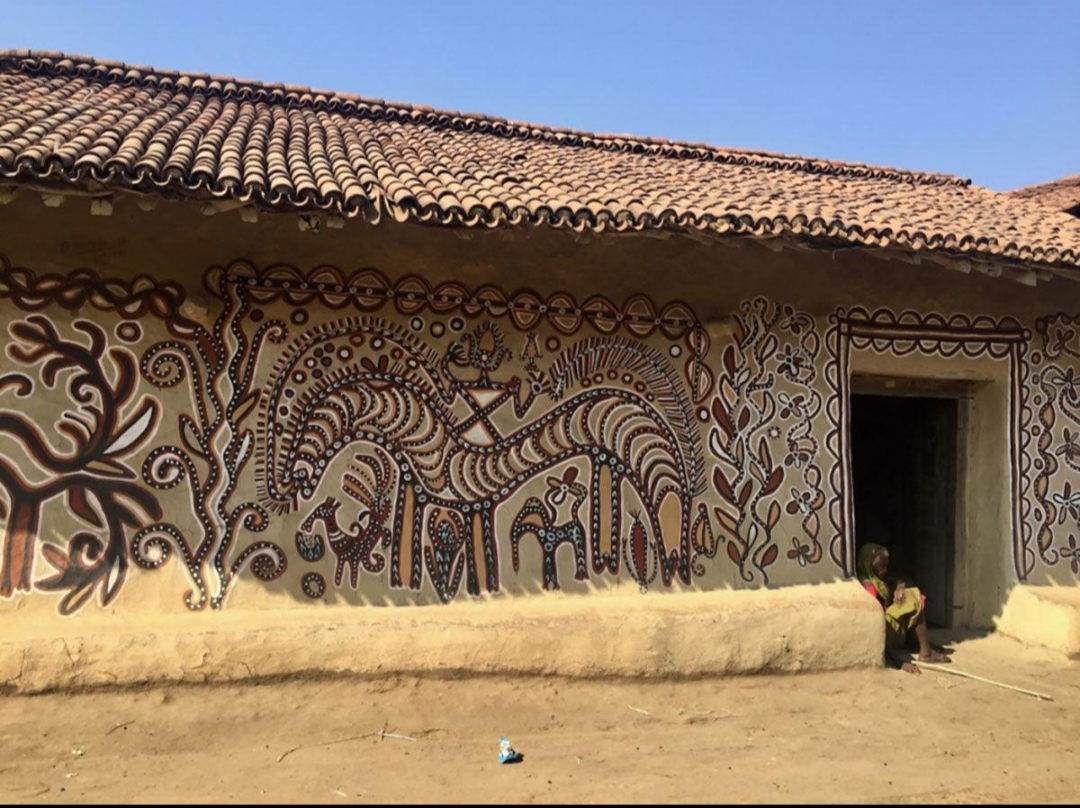
- Sohrai and Khovar wall painting in Hazaribagh, done by women using natural earth colours, received a Geographical Indication tag in 2020.
- Sendra, the traditional ceremonial hunt, still gathers Santal men each spring at hills such as Dalma.
- Crafts: Dokra lost-wax metal casting, Paitkar scroll painting from Amadubi in East Singhbhum, bamboo work, and tasar silk weaving. Jharkhand is India’s largest producer of tasar silk and of lac.
9. Marriage and Wedding Traditions
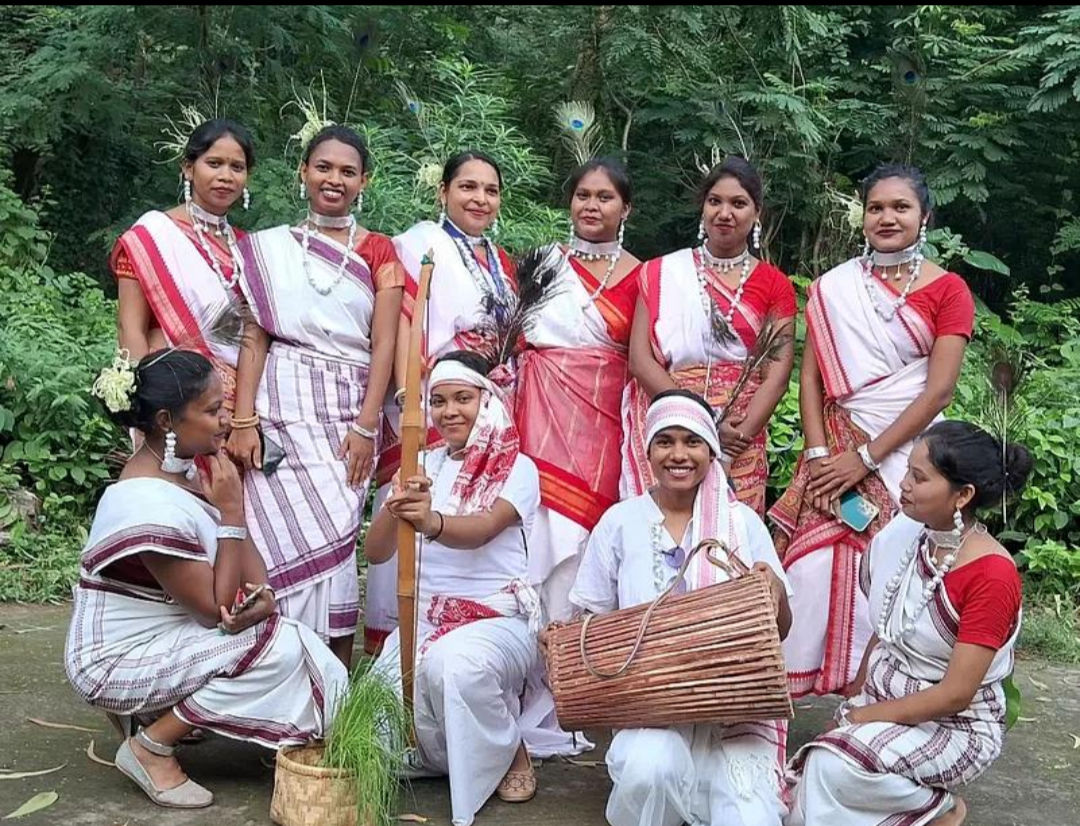
Marriage rules in Adivasi Jharkhand usually require marrying within one’s tribe but outside one’s clan. Adult marriage is the norm, and many communities traditionally give brides more social freedom than neighbouring caste societies, including the acceptance of widow remarriage and divorce through community councils. A bride price, paid by the groom’s family (gonong among the Munda and Ho, gonon among the Santal), rather than a dowry, is traditional, though dowry has spread in some areas.
Weddings are community affairs with singing and dancing at the akhra, rice beer shared among relatives, and rites such as the application of vermilion (sindradan among the Santal) as the binding act. Santal custom recognises several forms of marriage, from fully arranged unions to those formed by mutual choice. Among the Munda and Oraon, couples who cannot afford the customary feast sometimes live together informally (a practice known as dhuku), and public mass-wedding programmes in recent years have helped such couples formalise their unions.
Sadan Hindu weddings follow broad North Indian patterns with tilak, haldi, the baraat, and the phere, often with Nagpuri or Khortha wedding songs sung by women. Christian Adivasi weddings combine church services with community feasting and traditional dance, while Muslim families follow the nikah with local customs such as mehndi.
10. Cuisine
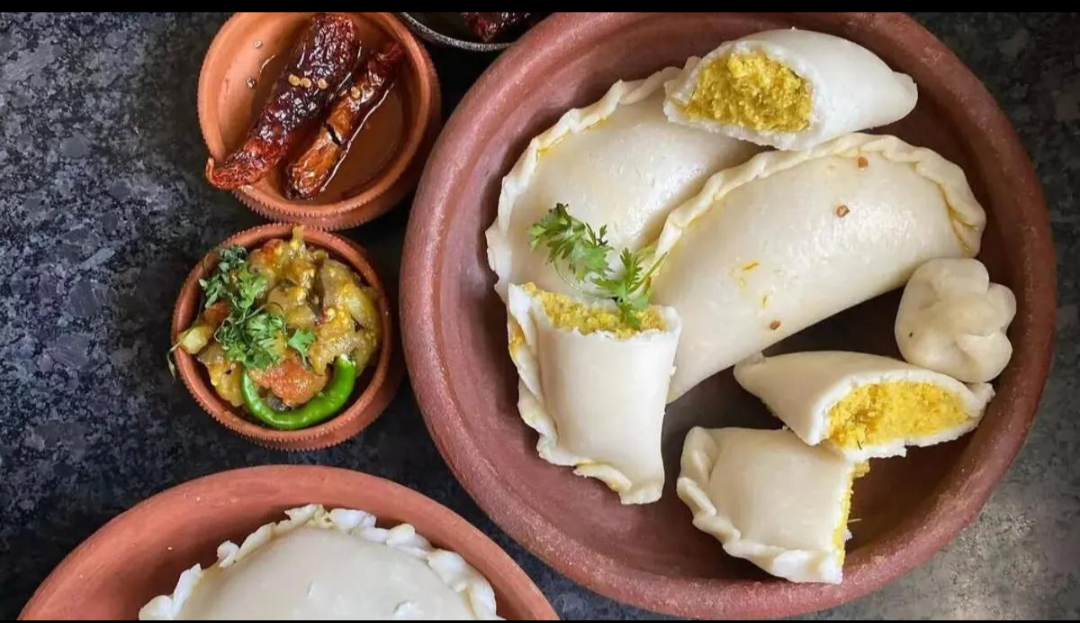
Jharkhandi food is built on rice, pulses, forest greens, and seasonal wild foods, cooked simply with mustard oil and little spice. It is one of India’s most forest-connected cuisines, and many dishes depend on what the jungle offers in a particular month.
10.1 Everyday Staples and Festive Foods
- Dhuska: deep-fried bread of rice and chana dal batter, eaten with ghugni (spiced black gram) or potato curry; the state’s signature breakfast.
- Chilka roti: a thin rice-and-lentil pancake, often eaten with chutney.
- Pitha: steamed or fried rice cakes in many forms, including arsa (sweet fried rice-and-jaggery cakes made at festivals) and meat- or lentil-filled pitha steamed in sal leaves among the Santal.
- Marua (ragi) roti, gondli (little millet) and kurthi (horse gram) dal: millet and pulse foods that sustained upland farming families.
- Litti-chokha, thekua, and sattu: shared with Bihar and common in Palamu and the north.
10.2 Forest and Seasonal Foods
- Rugra and khukhri: wild mushrooms gathered from sal forests during the monsoon and prized as delicacies.
- Saag (leafy greens): dozens of wild and cultivated greens, including futkal, koinar, kanda, and chakod, eaten fresh or dried for the lean season.
- Bamboo shoot (karil): cooked fresh or pickled.
- Red-ant chutney: made from red weaver ants and their eggs with chilli and salt, valued as a tangy relish and home remedy.
- Meat and fish: chicken, pork, goat, and small river fish, often cooked in leaf parcels or with minimal spice.
10.3 Drinks
Handia, a rice beer fermented with ranu (tablets made from forest herbs and roots), is central to Adivasi hospitality and ritual, offered to ancestors and shared at every festival and wedding. Mahua flowers are eaten, dried, and distilled into liquor. Sweet foods from mahua and jaggery are also common.
11. Traditional Dress and Ornaments
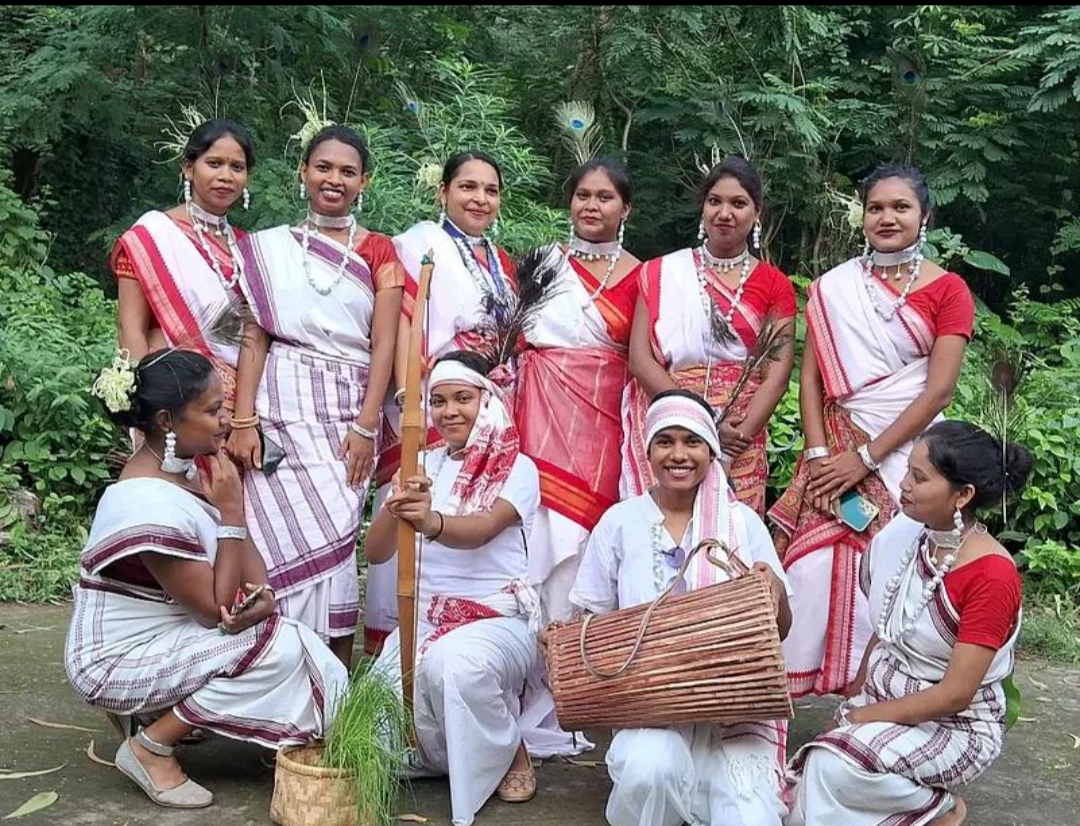
Traditional clothing in Jharkhand is practical, handwoven, and often made from cotton with bold borders. For Santal women, the traditional garment is the two-piece panchi and parhan, a check or striped cloth worn wrapped around the body, while men wear a dhoti or shorter cloth with a gamchha. Among the Munda and Oraon, the most recognisable dress is the white saree with a red border (lal paar), worn by women during Sarhul and Karam; men wear a white dhoti with a red-bordered cloth and sometimes a turban during dances. Kharia, Ho, and other communities have their own weaves and colours.
Ornaments are traditionally made of silver, brass, or bell-metal more than gold. Common pieces include the hasuli (a heavy neck ring), bangles and armlets, paijan (anklets), and ear and nose ornaments. Women wear flowers, especially sal blossoms, in their hair during festivals, and peacock feathers adorn dancers’ turbans. Godna (tattooing) was once a mark of adulthood and community identity among Oraon, Munda, and other women, and elders explain it as the one ornament that goes with you after death. Today, Sadan and urban Jharkhandis wear the saree, salwar kameez, kurta-pyjama, and western clothes, but traditional dress returns at festivals and cultural events.
12. Traditional Housing and Architecture
Traditional Jharkhandi houses are built of mud and timber with sloping roofs of clay tiles (khapra) or thatch, arranged around a courtyard. Santal houses are known for their clean, smooth walls, often painted in bands of colour, and in Hazaribagh the walls of village homes become canvases for Sohrai and Khovar murals after the harvest and at weddings. The nomadic Birhor traditionally built small leaf huts (kumba) in forest camps. Built heritage includes the Nagvanshi palaces at Palkot and Doisa, the old forts of Palamu, the 17th-century Jagannath temple of Ranchi, colonial-era churches such as St. Paul’s Cathedral and the Gossner church in Ranchi, and the planned industrial architecture of Jamshedpur.
13. Folklore and Oral Tradition
Oral tradition is the heart of Jharkhandi culture. The Santal creation story tells how the first human pair, Pilchu Haram and Pilchu Budhi, hatched from the eggs of a pair of swans (Has and Hasil) created by Thakur Jiu, and how their descendants wandered through named lands before settling in the forests. Munda and Ho myths tell of Singbonga and the Asur iron-smelters. The Oraon remember their migration from Rohtasgarh, commemorated in the women’s Jani Shikar hunt. Songs are sorted by season and festival (Karam songs, Sarhul songs, Sohrai songs, Tusu songs), and the Birsa Munda ballads and Hul songs keep memories of resistance alive. Nagpuri and Khortha folk songs, Jhumar, and Akhra songs are now also recorded and performed widely on regional radio, cassettes, and social media.
14. Education, Livelihoods, and Socioeconomic Profile
Most rural Jharkhandis still depend on rain-fed agriculture, chiefly single-crop paddy on terraced fields (don) and upland crops such as maize, millets, and pulses (tanr). Forest produce is a vital second income: lac, tasar cocoons, mahua flowers and seeds, sal seeds and leaves, tendu leaves, chironji, and honey. Jharkhand is India’s leading producer of lac and tasar silk, and the Indian Lac Research Institute (now the ICAR National Institute of Secondary Agriculture) was established at Namkum near Ranchi in the 1920s.
The state’s industrial economy is built on minerals: coal (Central Coalfields and Bharat Coking Coal, headquartered in Ranchi and Dhanbad), steel (Tata Steel in Jamshedpur and SAIL’s Bokaro Steel Plant), heavy engineering (HEC in Ranchi), copper (Ghatsila), and uranium (Jaduguda). Major educational institutions include IIT (ISM) Dhanbad, founded in 1926 as the Indian School of Mines; XLRI Jamshedpur; BIT Mesra; IIM Ranchi; RIMS; and Birsa Agricultural University. Jharkhandi Adivasis also have a proud tradition of service in the armed forces and police, and in sport, especially hockey.
Despite this wealth, Jharkhand remains one of India’s poorer states by income and multidimensional poverty measures. Mining and dam projects have displaced many Adivasi families, land alienation remains a sensitive issue, and parts of the state have been affected by Left-wing extremism. Seasonal and long-term labour migration, to brick kilns, construction sites, and factories across India and to domestic work in big cities, is a major part of family life in many districts.
15. Diaspora
The Jharkhandi diaspora is older and wider than is often realised, and it developed along several tracks.
15.1 Indentured “Hill Coolies”
Among the very first Indian indentured labourers sent overseas after the abolition of slavery were “hill coolies” or Dhangars recruited from Chotanagpur. They were shipped to Mauritius from 1834 and to British Guiana in 1838, the so-called Gladstone coolies, because planters believed forest-dwelling Adivasis were hardy workers. Mortality among these early migrants was very high, and recruitment later shifted towards the Bhojpuri districts of Bihar and Uttar Pradesh, but some Mauritian, Guyanese, and Caribbean families of Indian descent carry Chotanagpur ancestry.
15.2 The Assam Tea Gardens and North Bengal
The largest Jharkhandi diaspora is inside India. From the 1860s onward, hundreds of thousands of Santal, Munda, Oraon, Kharia, and Sadan labourers were recruited to the tea gardens of Assam and the Dooars of North Bengal. Their descendants, known as the Tea Tribes or Adivasis of Assam, are today a large community in their own right, still speaking Sadri, Kurukh, Santali, and Mundari and celebrating Karam and Sarhul. Other colonial-era migrations took Jharkhandi workers to the Sundarbans, to Andaman (where the “Ranchiwala” community descends from labourers brought in the early 20th century), and to Bhutan and Nepal. Santal and Oraon communities also live in northern Bangladesh and the Nepal Terai.
15.3 Modern Migration
Since the late 20th century, young Jharkhandis have migrated for work to Delhi, Mumbai, Kolkata, Bengaluru, Pune, Kerala, Tamil Nadu, and Gujarat, from construction and factory labour to nursing, IT, engineering, and the civil services. A smaller professional diaspora lives in the Gulf, the UK, the US, Canada, and Australia, and maintains Jharkhandi cultural associations that organise Sarhul and Karam celebrations abroad.
16. Prominent Figures
16.1 Freedom Struggle and Public Life
- Birsa Munda (c. 1875–1900): leader of the Ulgulan; his birthday, 15 November, is Jharkhand’s foundation day and has been observed nationally as Janjatiya Gaurav Divas since 2021.
- Sidhu and Kanhu Murmu, Chand and Bhairav, Phulo and Jhano: leaders of the Santhal Hul of 1855.
- Tilka Manjhi (18th century): early Adivasi rebel of the Rajmahal hills.
- Thakur Vishwanath Shahdeo, Pandey Ganpat Rai, Sheikh Bhikhari, Nilambar and Pitambar: leaders of 1857 in Chotanagpur and Palamu.
- Jatra Bhagat: founder of the Tana Bhagat movement among the Oraon.
- Jaipal Singh Munda (1903–1970): captain of India’s hockey team at the 1928 Amsterdam Olympics, member of the Constituent Assembly, and founder of the Jharkhand Party.
- Shibu Soren (1944–2025): “Dishom Guru”, co-founder of the JMM, three-time Chief Minister, and Union Coal Minister.
- Kartik Oraon, Babulal Marandi, Arjun Munda, and Hemant Soren: leading political figures; Babulal Marandi was the state’s first Chief Minister.
16.2 Literature, Arts, and Culture
- Ram Dayal Munda (1939–2011): scholar, musician, and former Vice-Chancellor of Ranchi University; Padma Shri awardee.
- Pandit Raghunath Murmu (1905–1982): creator of the Ol Chiki script for Santali (born in Mayurbhanj, Odisha, and revered across the Santal world).
- Mukund Nayak and Madhu Mansuri Hasmukh: Nagpuri folk singers and Padma Shri awardees.
- Rose Kerketta, Nirmala Putul, Anuj Lugun, Jacinta Kerketta: leading Adivasi writers and poets.
- Imtiaz Ali and Priyanka Chopra: film personalities born in Jamshedpur.
16.3 Sports, Environment, and Social Work
- Mahendra Singh Dhoni: born in Ranchi; former captain of India’s cricket team.
- Deepika Kumari: world-class archer from Ranchi district.
- Sylvanus Dungdung, Michael Kindo, Salima Tete, Nikki Pradhan: Olympic hockey players; Dungdung won gold at Moscow in 1980.
- Jamuna Tudu, Simon Oraon, and Chhutni Mahato: Padma Shri awardees recognised for forest protection, water conservation, and campaigning against witch-hunting respectively.
17. Conclusion
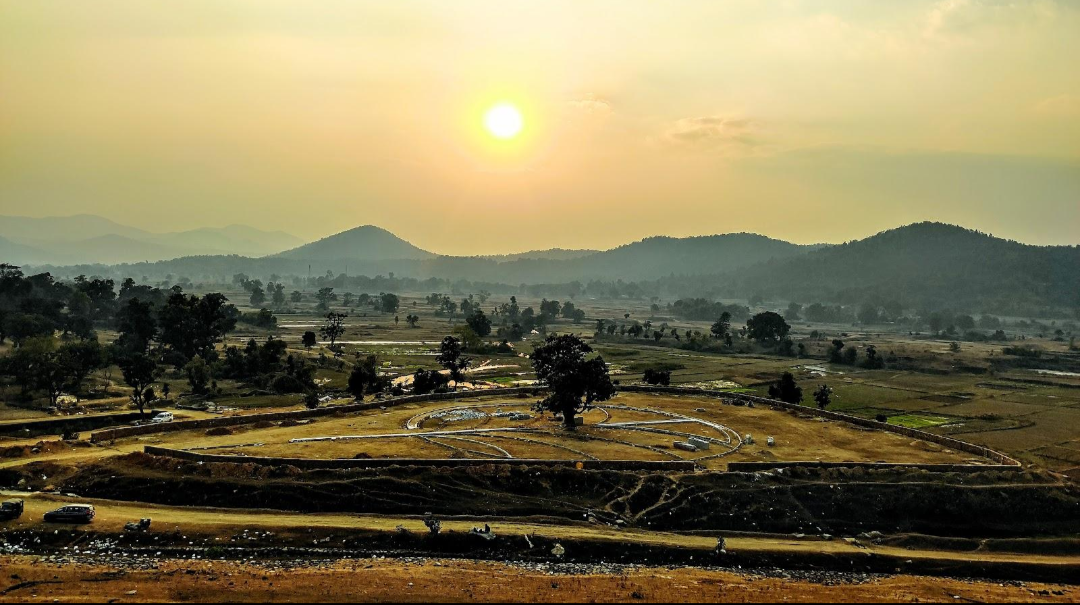
Jharkhand is a rare case where language, oral memory, history, and population genetics all point to the same deep story: an ancient plateau settled by some of the oldest populations of South Asia, joined a few thousand years ago by Austroasiatic-speaking migrants from the east, later by Dravidian-speaking peoples from the west, and over the last millennium by Indo-Aryan-speaking settlers, kings, traders, and workers. Its people resisted colonial rule more persistently than almost any other region, built India’s industrial foundations with their labour and their land, and carried their songs and festivals to the tea gardens of Assam and the sugar estates of Mauritius. From the sal groves of the Sarhul pahan to the steel mills of Jamshedpur, and from the Ol Chiki script to the hockey fields of Simdega, the story of Jharkhand’s people is at once an Indigenous history, a genetic case study, and a living regional culture.
References
- [1]1. Census of India 2011. Primary Census Abstract and Religion Data, Jharkhand. Office of the Registrar General, India.
- [2]2. Kumar, V. et al. (2007). “Y-chromosome evidence suggests a common paternal heritage of Austro-Asiatic populations.” BMC Evolutionary Biology 7:47.
- [3]3. Chaubey, G. et al. (2011). “Population genetic structure in Indian Austroasiatic speakers: the role of landscape barriers and sex-specific admixture.” Molecular Biology and Evolution 28(2).
- [4]4. Tätte, K. et al. (2019). “The genetic legacy of continental scale admixture in Indian Austroasiatic speakers.” Scientific Reports 9.
- [5]5. Riccio, M. E. et al. (2011). “The Austroasiatic Munda population from India and its enigmatic origin: a HLA diversity study.” Human Biology 83(3).
- [6]6. Reich, D. et al. (2009). “Reconstructing Indian population history.” Nature 461; Moorjani, P. et al. (2013). “Genetic evidence for recent population mixture in India.” American Journal of Human Genetics 93.
- [7]7. Singh, K. S. (1966, rev. 2002). Dust-Storm and the Hanging Mist: A Study of Birsa Munda and His Movement. Firma KLM.
- [8]8. Roy, S. C. (1912). The Mundas and Their Country; (1915) The Oraons of Chota Nagpur. Ranchi.
- [9]9. Corbridge, S. (1988). “The ideology of tribal economy and society: politics in the Jharkhand, 1950–1980.” Modern Asian Studies 22(1).
- [10]10. Government of Jharkhand, Department of Scheduled Tribe, Scheduled Caste, Minority and Backward Class Welfare: tribal and PVTG lists.
Frequently Asked Questions
What ethnicity or ancestry are people from Jharkhand?
People from Jharkhand are not a single ethnicity. The state includes Adivasi peoples such as the Santal, Oraon, Munda, Ho, and Kharia, long-settled non-tribal Sadan communities such as the Kurmi-Mahto, and later migrants to its mining and industrial towns. Genetically, most carry a mix of indigenous South Asian (ASI-related) and North Indian (ANI-related) ancestry, and Munda-speaking groups additionally carry a distinctive Southeast Asian-linked component.
Are Jharkhand’s tribes Aryan or Dravidian?
Neither label fits neatly. Jharkhand’s tribes speak languages from two different families: the Santal, Munda, Ho, and Kharia speak Austroasiatic (Munda) languages related to Khmer and Khasi, while the Oraon and Paharia speak Dravidian languages (Kurukh and Malto). The non-tribal population mostly speaks Indo-Aryan languages such as Nagpuri, Khortha, and Hindi. Genetically, all of these groups share a largely indigenous South Asian base.
What DNA haplogroups are common in Jharkhand?
Munda-speaking men show high frequencies of Y-chromosome haplogroup O2a-M95, typical of Southeast Asia, alongside the South Asian haplogroup H-M69. Their maternal lineages are mostly South Asian haplogroup M sub-lineages. Non-tribal communities show Y lineages similar to the Gangetic plain, including H, L, R1a, R2, and J2.
Did the Munda people come from Southeast Asia?
Current genetic evidence suggests that Austroasiatic-speaking men arrived in eastern India from Southeast Asia a few thousand years ago and intermarried with local populations. A 2019 study estimated that a speakers carry about one-third Southeast Asian-related ancestry and two-thirds older South Asian ancestry, with the mixing dated to roughly 2,000 to 3,800 years ago. Earlier studies argued for an Indian origin, so the question is still discussed.
What languages are spoken in Jharkhand?
Hindi is the main official language, with many second official languages. Santali, Mundari, Ho, and Kharia are Austroasiatic; Kurukh and Malto are Dravidian; and Nagpuri (Sadri), Khortha, Panchpargania, Kurmali, Bengali, Odia, and Urdu are Indo-Aryan. Nagpuri serves as a common link language in much of the state.
What is Jharkhand famous for in terms of food?
Jharkhand is known for dhuska, chilka roti, arsa and other pitha, rugra mushrooms, bamboo shoot, many wild greens (saag), red-ant chutney, and millet foods such as marua roti. Handia rice beer and mahua are traditional drinks tied to hospitality and ritual.
What are the main festivals of Jharkhand?
The main Adivasi festivals are Sarhul (Baha), Karam, Sohrai, Tusu, and Mage Parab. Chhath, Diwali, Holi, Durga Puja, Christmas, and Eid are also widely celebrated, and the Shravan fair at Baidyanath Dham in Deoghar is one of India’s biggest pilgrimages.
Where did people from Jharkhand migrate to historically?
In the 1830s, Adivasi “hill coolies” from Chotanagpur were among the first Indian indentured labourers sent to Mauritius and British Guiana. From the 1860s, very large numbers went to the tea gardens of Assam and North Bengal, where their descendants form the Tea Tribes. Today many Jharkhandis migrate to Indian cities for work, and a smaller professional diaspora lives abroad.
What physical traits are typical of people from Jharkhand?
There is no single physical type for a population of nearly 40 million made up of dozens of communities. Physical features vary widely between and within communities, and centuries of in-group marriage along tribal and caste lines mean that measurable differences exist between groups, but no single set of features defines a “Jharkhandi”. Ancestry is better understood through genealogy and DNA than appearance.
What are Particularly Vulnerable Tribal Groups (PVTGs) in Jharkhand?
PVTGs are small communities identified by the Government of India as needing special support because of low population, declining numbers, or pre-agricultural livelihoods. Jharkhand’s eight PVTGs are the Asur, Birhor, Birjia, Hill Kharia, Korwa, Mal Paharia, Parhaiya, and Sauria Paharia.