

Karnataka Genome Project Community
Explore Karnataka genetics, geography, history, and people. Uncover your Kannada heritage, from ancient empires like Vijayanagara to the Western Ghats
KARNATAKA GENOME PROJECT
Geography, People, History, and Genetics of the Kannada Homeland
1. Introduction: Who Are the People of Karnataka?
Karnataka, meaning roughly “elevated land” or, by another reading, “black soil country,” is not a single ethnic community in the way a caste or a religious denomination is, but a vast geography-defined population: the people, past and present, of a state that spans the southern Deccan plateau, the Western Ghats, and a strip of the Arabian Sea coast. With roughly 61 million residents at the 2011 Census and an estimated population above 68 million today, Karnataka is home to nearly one in twenty Indians. This profile treats “Karnataka” as a geography-of-origin community in the genealogical sense: the shared population of a defined territory, encompassing its many castes, sub-regions, religions, and linguistic communities, whose ancestors have farmed, traded, built temples, and migrated across this stretch of peninsular India for millennia.
Bordered by Goa and Maharashtra to the north, Telangana and Andhra Pradesh to the east, Tamil Nadu to the southeast, Kerala to the southwest, and the Arabian Sea to the west, Karnataka occupies a pivotal position between the Indo-Gangetic north and the Dravidian deep south. Its cities and sites — Hampi, Badami, Belur, Halebidu, Shravanabelagola, Mysuru, and Bengaluru — have, across some two thousand years, served as capitals of empires, centres of Jain, Shaiva, and Vaishnava religious authority, and, in the present day, the hub of India's information-technology industry. The region is at once the historic core of the Kadamba, Chalukya, Rashtrakuta, Hoysala, and Vijayanagara empires, the cradle of the twelfth-century Lingayat Vachana movement, and modern India's best-known technology corridor.
2. Geography
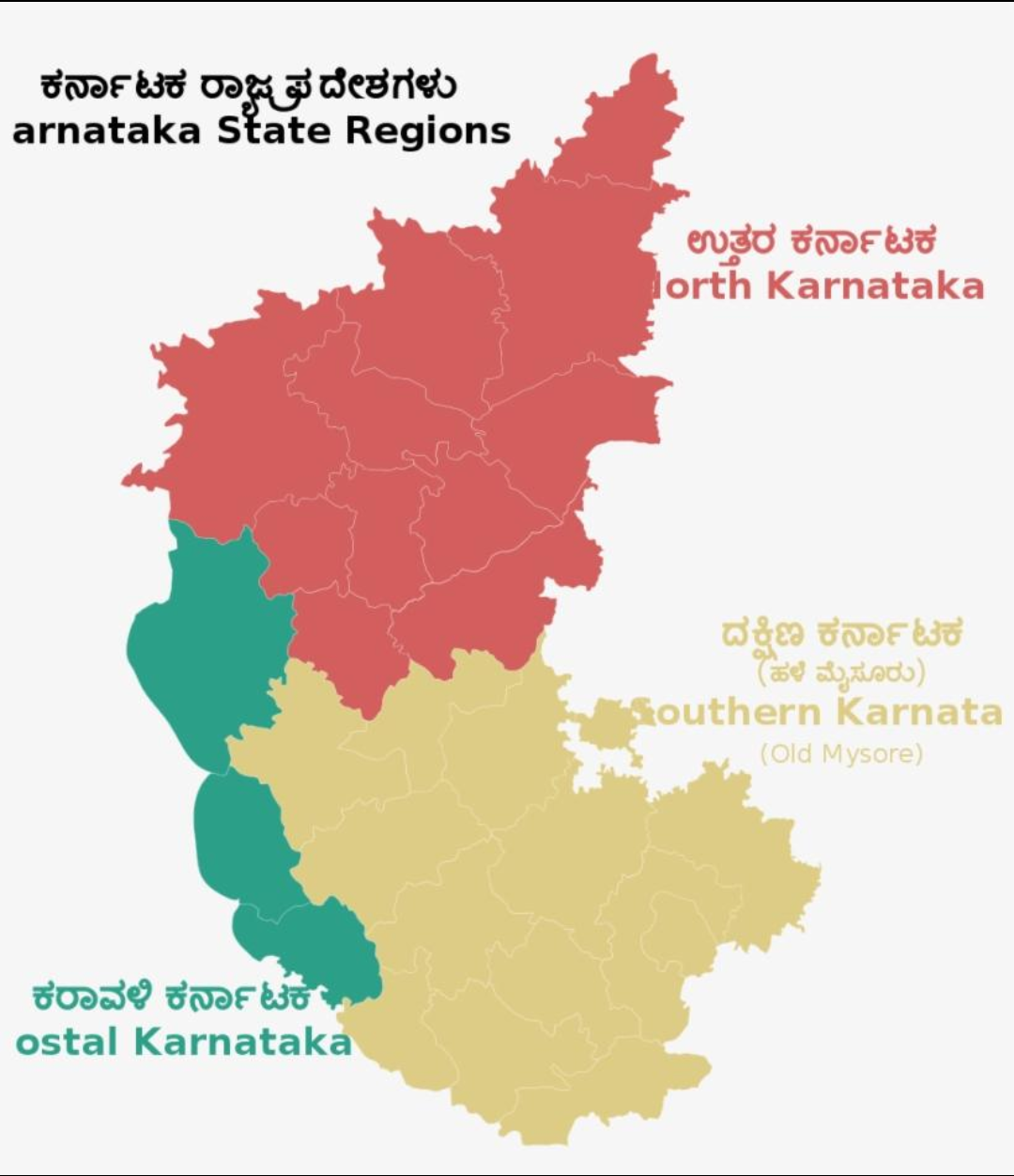
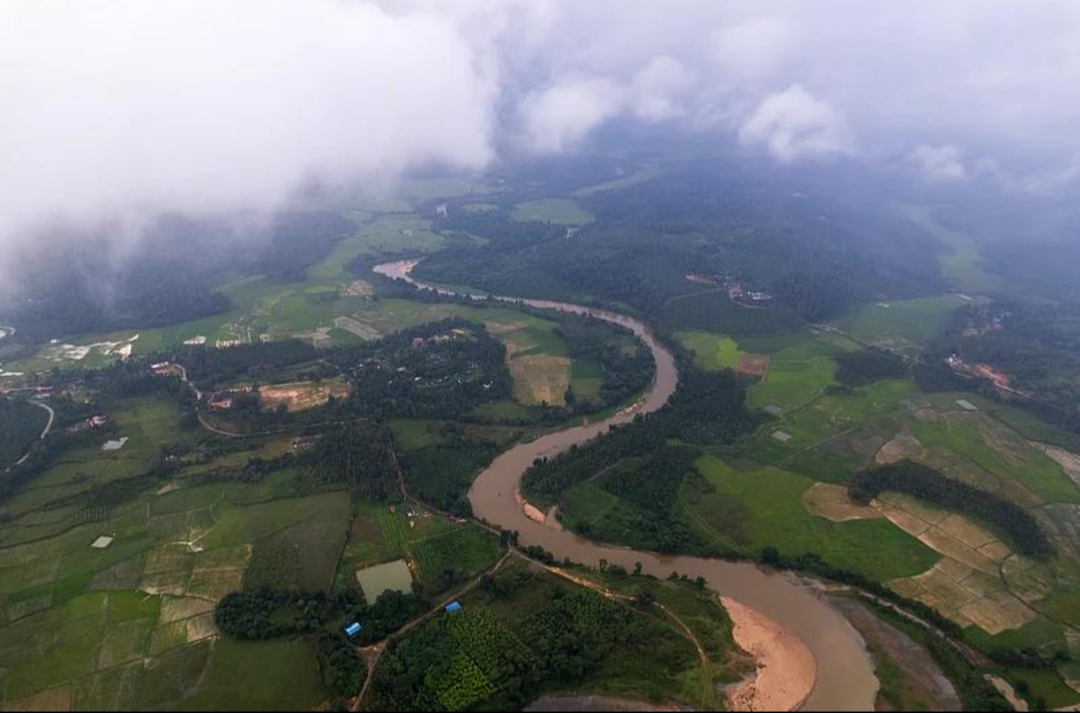
Karnataka is the sixth-largest Indian state by area, covering roughly 191,791 square kilometres, and stretches along the Arabian Sea with a coastline of about 320 kilometres. The state's terrain falls into three broad zones: the narrow, fertile Karavali coastal belt in the west (Dakshina Kannada, Udupi, and Uttara Kannada districts); the hilly, forested Malenadu (Malnad) region formed by the Western Ghats, which holds some of the highest rainfall in India and the state's coffee- and spice-growing tracts; and the vast Bayaluseeme, the open plains of the Deccan plateau that make up the bulk of the state's interior, semi-arid in its northern reaches and more fertile in the south around the Cauvery and Krishna river basins. The highest point, Mullayanagiri in Chikkamagaluru district, rises to about 1,930 metres.
Bengaluru (Bangalore) is the state capital and by far its largest city; historic Mysuru served as the seat of the Wodeyar kingdom. The state is administratively divided into four revenue divisions and 31 districts. Long before these modern boundaries, the region's people identified with older cultural-historical tracts, still invoked in everyday speech and politics:
| Region | Approximate Location | Notable Centres | Character |
|---|---|---|---|
| Karavali (Coastal) | Narrow Arabian Sea coastal strip | Mangaluru, Udupi, Karwar | Tulu- and Konkani-speaking; seafood cuisine; laterite and tiled architecture |
| Malenadu | Western Ghats interior | Chikkamagaluru, Shivamogga, Kodagu | High rainfall, coffee and spice plantations, dense forest |
| Old Mysore (Old Mysuru) | Southern Karnataka plateau | Mysuru, Mandya, Hassan, Tumakuru, Bengaluru | Former Wodeyar kingdom core; Vokkaliga-majority districts; silk and sandalwood |
| Mumbai-Karnataka / Kittur Karnataka | Northwestern Karnataka | Belagavi, Dharwad, Hubballi, Bagalkot, Vijayapura | Formerly under Bombay Presidency; Marathi-Kannada overlap; Hindustani classical music tradition |
| Hyderabad-Karnataka / Kalyana Karnataka | Northeastern Karnataka | Kalaburagi, Bidar, Raichur, Yadgir, Koppal | Formerly under the Nizam of Hyderabad; Deccani Urdu influence; historically less developed, now under special constitutional status |
| Central Karnataka / Bayaluseeme heartland | East-central plains | Ballari, Chitradurga, Davanagere, Shivamogga fringe | Semi-arid Deccan plains; millet cultivation; historic Vijayanagara territory near Hampi |
3. Origins and Early History
3.1 Prehistoric Foundations and Early Kingdoms
Human habitation in the Karnataka region reaches back to the Palaeolithic, with stone tool sites documented in the Krishna, Tungabhadra, and Bhima river valleys, and megalithic burial cultures dating to the Iron Age found widely across the interior plateau. By the mid-first millennium BCE, the region lay on the fringes of the Mauryan empire under Ashoka, whose rock edicts survive at sites such as Brahmagiri, and it later formed part of the Satavahana dominions for roughly four centuries. Karnataka's own recorded political history begins with the Kadambas of Banavasi, founded around the fourth century CE by Mayurasharma, traditionally regarded as the first native Kannada-speaking royal dynasty, and with the contemporaneous Western Ganga dynasty, which ruled the southern part of the state and was a major early patron of Jainism.
3.2 The Chalukyas, Rashtrakutas, and Hoysalas
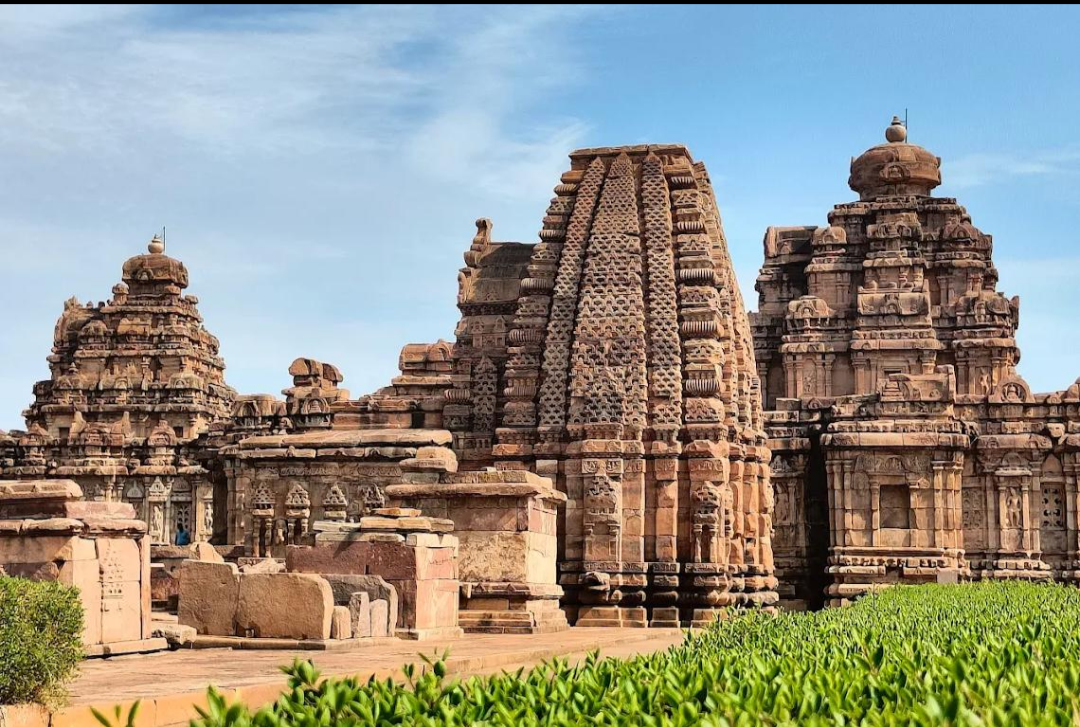
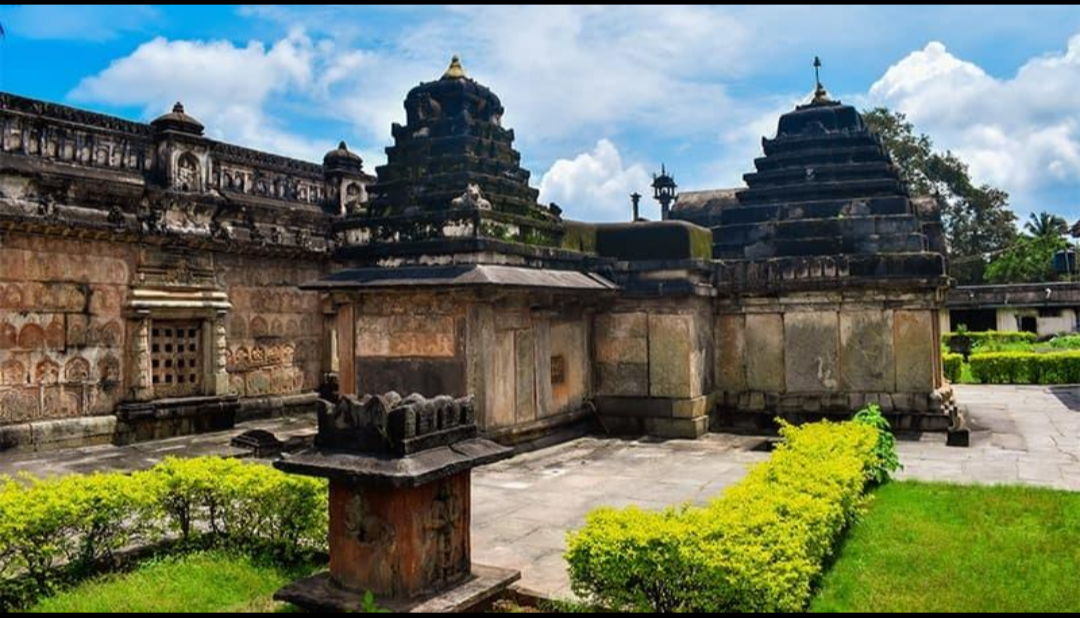
From the sixth century, the Badami Chalukyas rose to imperial power under rulers such as Pulakeshin II, leaving behind the rock-cut and structural temples of Badami, Aihole, and Pattadakal — the latter now a UNESCO World Heritage Site. They were succeeded by the Rashtrakutas of Manyakheta (roughly the eighth to tenth centuries), a Deccan-wide power whose patronage extended to the rock-cut Kailasa temple at Ellora, and then by the Western Chalukyas of Kalyana, who peaked under Vikramaditya VI. From around the tenth to fourteenth centuries, the Hoysala kingdom, centred on Belur and Halebidu, produced some of India's most intricately carved soapstone temple architecture and patronised Kannada literature and Vaishnava and Jain religious life alike.
3.3 Vijayanagara and the Deccan Sultanates
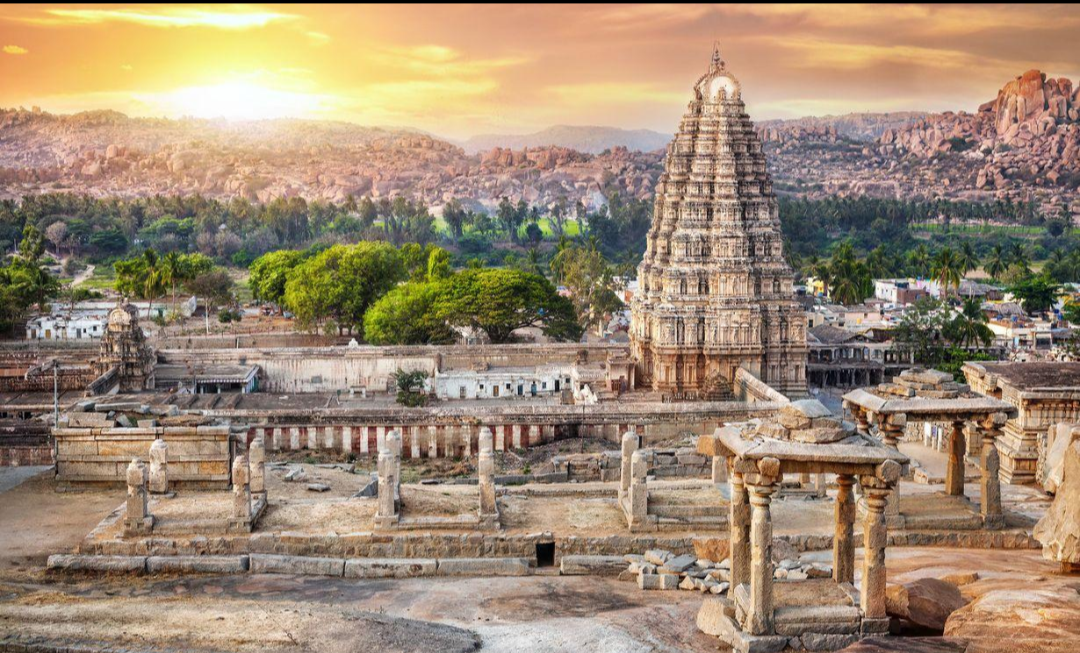
In 1336, the Vijayanagara Empire was founded at Hampi on the banks of the Tungabhadra, and over the next two centuries, under rulers such as Harihara I, Bukka Raya, Deva Raya II, and, most famously, Krishnadevaraya, it grew into one of the largest and wealthiest empires in Indian history, a bulwark of Hindu political power in the peninsula and a major centre of temple building, Carnatic music, and Kannada and Telugu literary patronage. Its defeat at the Battle of Talikota in 1565 by a confederacy of Deccan sultanates led to the sack of Hampi and the empire's gradual decline; the Bijapur (Adil Shahi) and Bidar sultanates subsequently controlled large parts of northern Karnataka, leaving behind Indo-Islamic monuments such as the Gol Gumbaz.
3.4 The Wodeyars, Hyder Ali, and Tipu Sultan
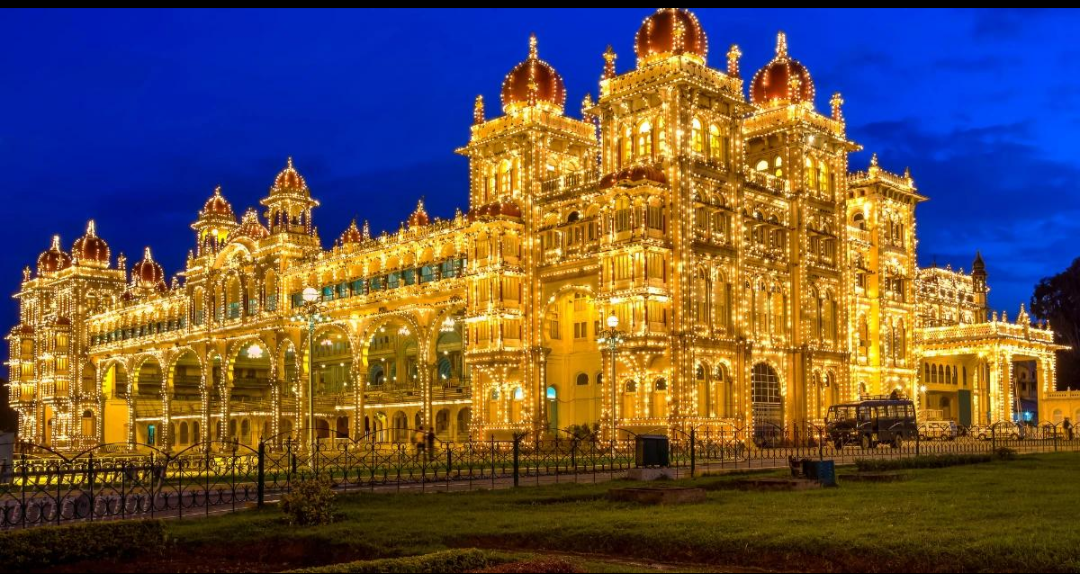
The Wodeyars of Mysuru, originally feudatories of Vijayanagara, established an independent kingdom after 1565 and, under British-era reorganisation, went on to rule Mysore for much of the following four centuries. In the 1760s, effective power passed for a generation to the army commander Hyder Ali and then to his son Tipu Sultan, whose modernising military and administrative reforms and repeated wars against the East India Company — the four Anglo-Mysore Wars — made Mysore the Company's most formidable regional adversary until Tipu's death at Srirangapatna in 1799. The Wodeyar family was restored to a reduced princely state thereafter, ruling under British paramountcy (with a period of direct British commissionership from 1831 to 1881) until Indian independence.
3.5 Colonial Fragmentation and the Unification of Karnataka
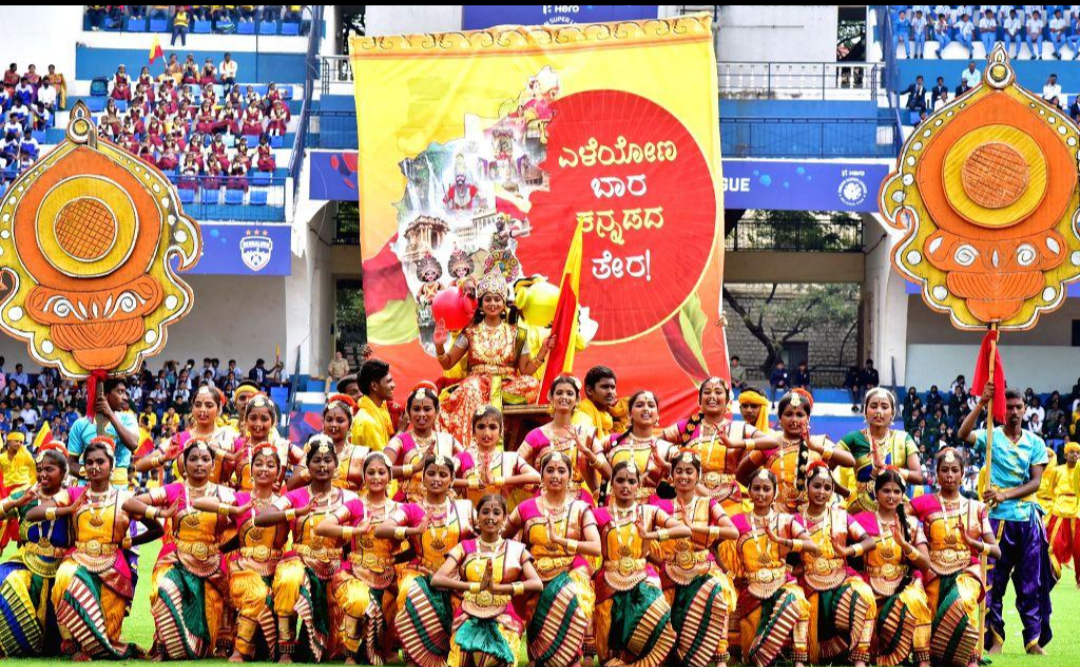
Through the colonial period, Kannada-speaking territory was split across the princely State of Mysore, the Bombay and Madras Presidencies, and the Nizam's Hyderabad State — a fragmentation that fed a decades-long Ekikarana (unification) movement. Mysore acceded to the Indian Union in 1947 and became an Indian state in 1950, with the last ruling Maharaja, Jayachamaraja Wodeyar, serving as its rajpramukh (governor). Under the States Reorganisation Act of 1956, Kannada-majority areas of the former Bombay, Madras, and Hyderabad states and of Coorg (Kodagu) were merged into Mysore State, which was renamed Karnataka on 1 November 1973 — a date still celebrated annually as Karnataka Rajyotsava.
4. Demographic Profile
Karnataka's 2011 Census population stood at 61,130,704, up from about 52.85 million in 2001, making it India's eighth most populous state; current estimates place the population above 68 million. Population density in 2011 was about 320 persons per square kilometre, with 38.7 per cent of residents urban and 61.3 per cent rural — a rural share that has fallen further with Bengaluru's rapid growth. The 2011 sex ratio was 973 females per 1,000 males, and overall literacy was 75.4 per cent (82.5 per cent for men, 68.1 per cent for women); both figures have since risen, with state literacy estimated at roughly 82–83 per cent in the mid-2020s.
Religiously, the state is predominantly Hindu (about 84 per cent at the 2011 Census), with Muslim (about 13 per cent), Christian (about 1.9 per cent), and smaller Jain, Buddhist, and Sikh minorities. Kannada is the sole official language and the mother tongue of roughly two-thirds of the population, but the state is markedly multilingual: Urdu, Telugu, Tamil, Marathi, Tulu, Konkani, and Kodava are all spoken by substantial communities, particularly in the border districts and along the coast.
5. Genetics and DNA Ancestry
As a state straddling the Deccan plateau, the Western Ghats, and the west coast, Karnataka presents a genetically layered population shaped by both deep South Asian roots and successive waves of migration and admixture.
5.1 The Ancestral North Indian – Ancestral South Indian Gradient
Like almost all Indian populations, the people of Karnataka descend from a mixture of two deeply diverged ancestral groups: Ancestral North Indians (ANI), related to Central Asian, Iranian, and wider West Eurasian populations, and Ancestral South Indians (ASI), an indigenous South Asian lineage with no close relatives outside the subcontinent. This admixture is generally dated to roughly 4,000–2,000 years ago. South Indian populations, Karnataka included, characteristically carry a higher ASI component and a correspondingly lower ANI component than populations of the Indo-Gangetic plain; estimates for Kannada-speaking groups such as Lingayats place ANI ancestry in a broad 40–48 per cent range, compared with 50–65 per cent or more among many North Indian groups — though, as with all such estimates, proportions vary considerably by caste, sub-region, and specific study.
5.2 Coastal and Regional Population Studies
Direct genetic studies of Karnataka's coastal and southwestern communities point to a more complex picture than a single north-south gradient. Research on groups historically associated with warrior and landholding status — including the Bunt and Kodava (Coorg) communities of Karnataka, alongside the Nair of neighbouring Kerala — has found them to share notable genetic affinity with one another and with populations combining both ANI- and ASI-related ancestry, distinct from South Indian groups with a higher ASI proportion, such as several Scheduled Tribe populations of the Western Ghats. A 2025 study of the Kodava specifically identified them as genetically distinctive within southern India, with evidence of an early Indo-Aryan-linked migration and subsequent long-term genetic isolation in their Kodagu highland homeland, consistent with the community's own oral traditions of a separate historical origin.
5.3 Y-Chromosome, Maternal Lineages, and Caste-Linked Structure
Broader South Indian Y-chromosome (paternal-line) surveys find Karnataka's population carrying a mix of deep, indigenous South Asian haplogroups (including H and L) together with haplogroups linked to the spread of Indo-Aryan and, further back, earlier West Asian-associated migrations (including R1a and, in some communities, J-related lineages), while maternal (mitochondrial) DNA across the region is dominated by indigenous South Asian haplogroup M and its many subclades. As elsewhere in India, Karnataka's genetic diversity is also structured along caste and community lines: centuries of endogamy — marriage largely confined within jati, sect, or sub-region — mean that “Karnataka” genetic ancestry is best understood not as one uniform population but as a mosaic of many historically self-marrying communities layered onto a shared regional and peninsular Indian genetic substrate.
6. Language and Literature
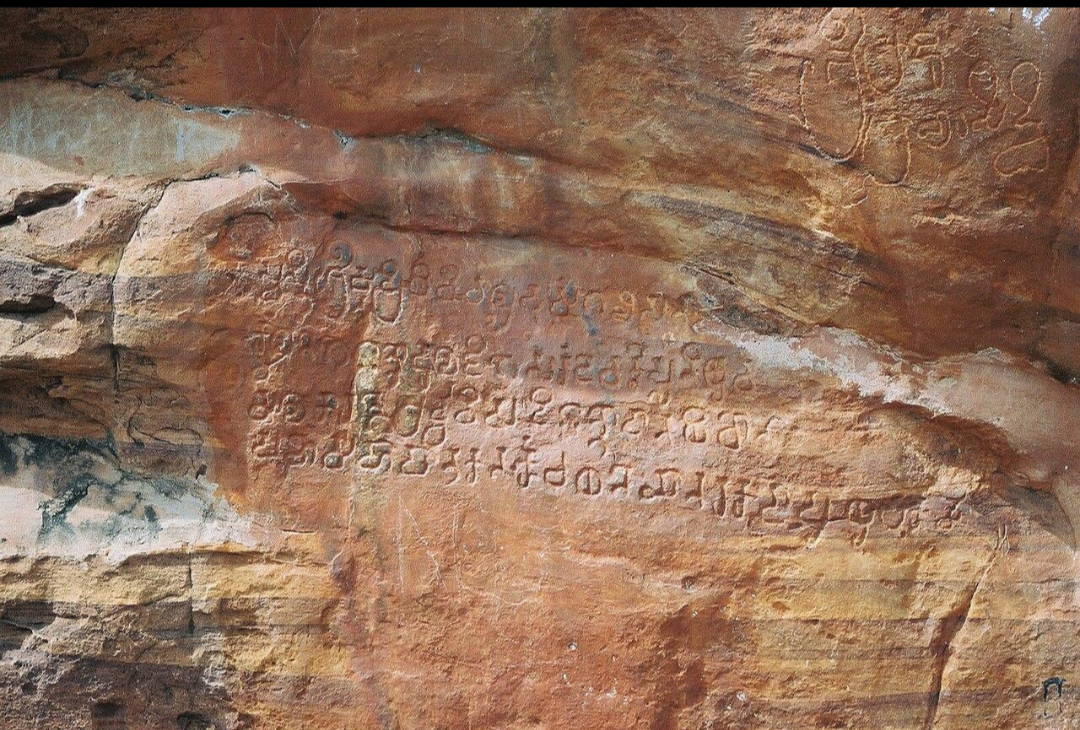
Kannada, a Dravidian language with a literary tradition stretching back over a thousand years, is Karnataka's sole official language and the mother tongue of the majority Kannadiga population. Its major regional and social dialects include the Halegannada (Old Kannada) inscriptional tradition, the courtly and literary registers of the Mysuru region, the distinct dialects of North Karnataka (Kalaburagi-Belagavi belt), and community dialects such as Havyaka Kannada among Havyaka Brahmins of the Malenadu. Alongside Kannada, the state is home to Tulu (spoken across Dakshina Kannada and Udupi and possessing its own rich oral epic and Yakshagana performance tradition), Kodava Takk (the language of the Kodava community of Kodagu), Konkani (concentrated on the coast, especially among Goud Saraswat Brahmin and Catholic communities), Beary and Dakhni-influenced Urdu, Marathi in the northwest, and Telugu and Tamil along the eastern and southern borders.
Kannada's classical literary tradition includes the ninth-century poet Pampa, regarded as the father of Kannada poetry, and the flowering of Veerashaiva Vachana literature in the twelfth century under figures such as Basavanna, whose pithy devotional and socially reformist verses remain widely recited. The Haridasa devotional movement, centred on figures such as Purandara Dasa — celebrated as the father of Carnatic music — shaped both Kannada devotional poetry and South Indian classical music from the sixteenth century onward, while modern Kannada literature has produced eight Jnanpith Award laureates, the largest tally of any Indian language, including Kuvempu, D. R. Bendre, and U. R. Ananthamurthy.
7. Religion, Festivals, and Pilgrimage
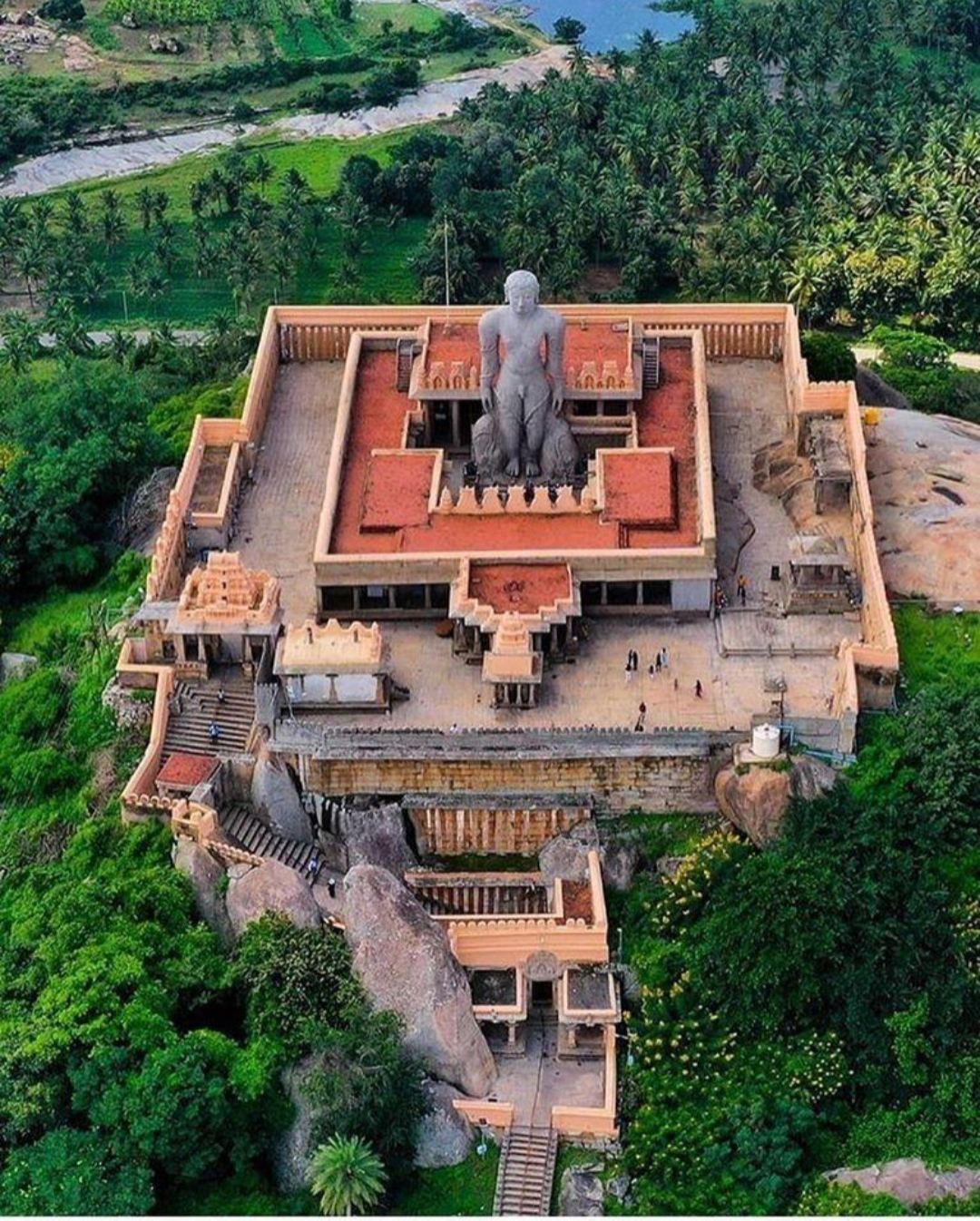
Karnataka is a major centre of both Hindu and Jain sacred geography. Shravanabelagola, with its colossal ninth–tenth-century monolithic statue of Bahubali (Gommateshwara), is one of the most important Jain pilgrimage sites in India, reflecting the region's long history of royal Jain patronage under the Gangas, Rashtrakutas, and Hoysalas. Udupi, associated with the thirteenth-century philosopher-saint Madhvacharya and his dualist (Dvaita) school of Vedanta, is a major Vaishnava pilgrimage centre, while the twelfth-century Lingayat (Veerashaiva) reform movement founded by Basavanna at Basavakalyan established Shaivism of a distinctively egalitarian, caste-questioning character that remains one of Karnataka's largest religious communities. The state's Muslim population, concentrated particularly in North Karnataka and the coastal Beary community, sustains a significant Sufi shrine tradition alongside observance of Eid al-Fitr, Eid al-Adha, and Muharram.
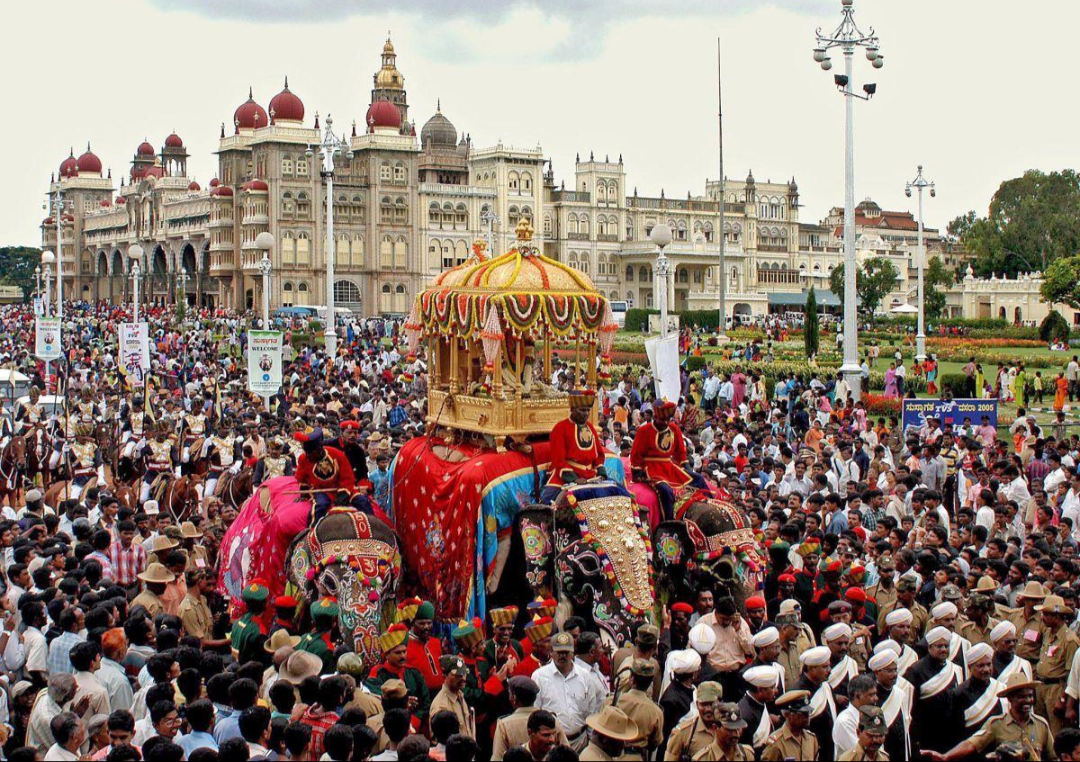
Major festivals observed across the state include Ugadi (the Kannada New Year), Dasara — celebrated with particular grandeur as the Mysuru Dasara, the former royal state festival of the Wodeyars, featuring a procession of caparisoned elephants and the illumination of Mysuru Palace — Makara Sankranti, Ganesha Chaturthi, and coastal and Malenadu-specific observances such as Kambala (traditional buffalo racing in slush paddy fields), Aati Kalenja, and the Kodagu region's Kailpodh and Huttari harvest festivals. The Bengaluru Karaga, an ancient nocturnal procession associated with the Thigala community and the goddess Draupadi Amman, is one of the city's oldest surviving ritual traditions.
8. Culture, Customs, and Social Practices
Karnataka's social fabric has historically rested on a dense caste and community structure. Numerically and politically dominant groups include the Lingayats (Veerashaivas), concentrated in North and Central Karnataka, and the Vokkaligas, a landholding agrarian community concentrated in the Old Mysore region; other major communities include Kurubas (traditionally shepherds and weavers), Brahmin sub-groups such as Havyaka, Smartha, and Madhva Brahmins, the trading Bunt and Konkani communities of the coast, and numerous Scheduled Caste communities such as the Holeya and Madiga, and Scheduled Tribe groups including the Soliga, Yerava, and Jenu Kuruba of the Western Ghats forests. The Kodava of Kodagu are a small, historically martial and land-owning community with distinctive customs — including ancestor worship, weapon veneration, and a matrilineal-influenced inheritance pattern in some clans — that set them apart from the surrounding Kannada-speaking population.
Joint or extended-family living has historically been the rural norm, and family, clan (bali or gotra), and community identity remain significant markers of social belonging, particularly around marriage. Hospitality and a strong regional emphasis on courtesy and formal address are widely shared cultural values, and Karnataka's identity is further shaped by its status as modern India's leading centre of the information-technology and biotechnology industries, layered atop its far older agrarian and courtly heritage.
9. Marriage and Wedding Traditions
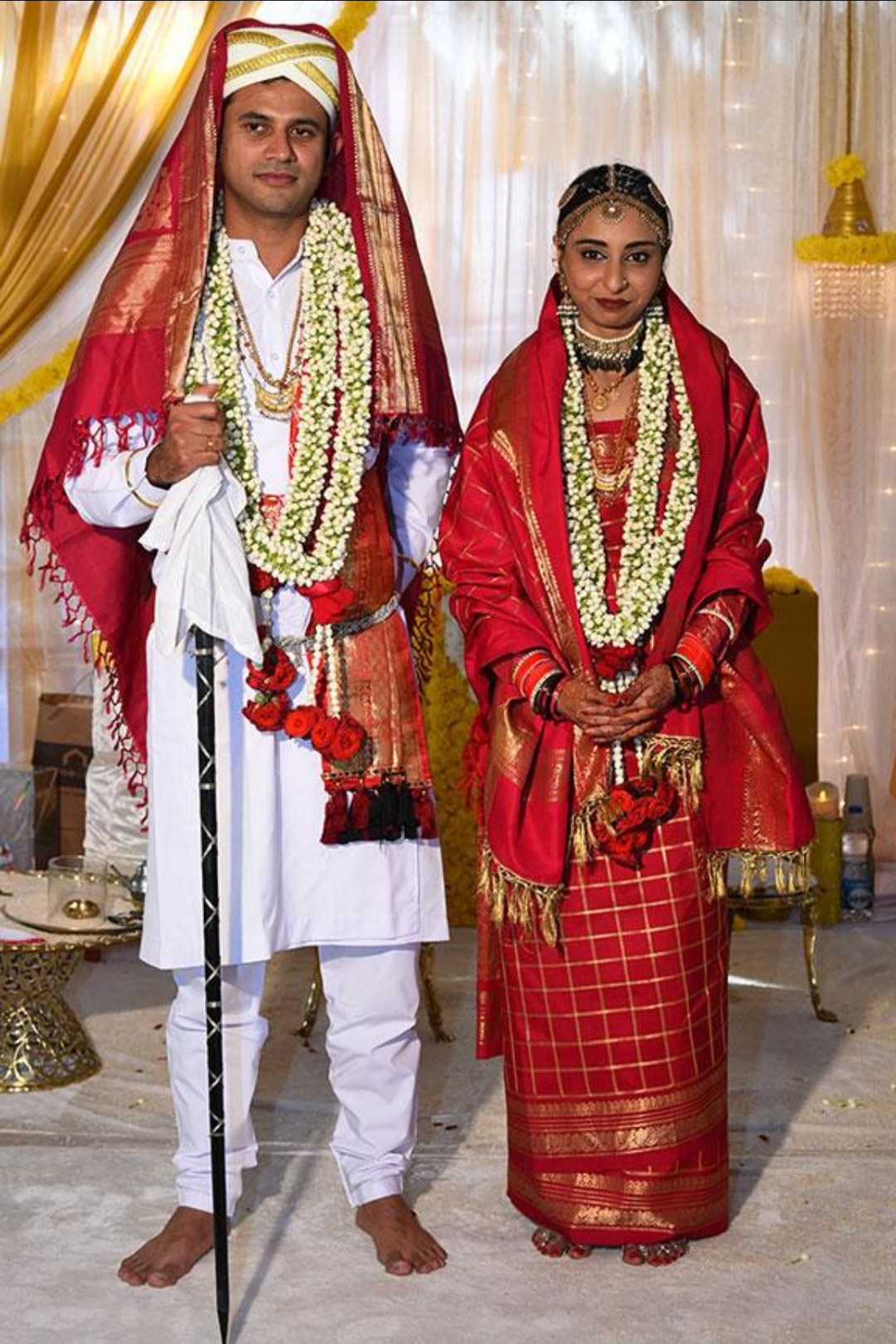
Hindu weddings in Karnataka broadly follow the South Indian Vedic pattern — including a nischitartha (formal betrothal), haldi/arishina ceremonies for the bride and groom, phere or homa around the sacred fire, and a dhare or kanyadaan giving-away ceremony — with distinctive regional inflections: the elaborate multi-day ceremonies of landed Vokkaliga and Lingayat families, the Mangalorean Konkani community's traditional roce (turmeric-oil) ceremony, and the Kodava community's markedly different wedding customs, which historically omit Brahmin priests altogether in favour of community elders presiding over the muhurtha. Marriage has traditionally been arranged within caste and, in many communities, within specified gotra-exogamy rules, though cross-cousin marriage has historically been permitted or even favoured in several South Indian communities of the state. Muslim weddings follow the nikah tradition with a mehr settlement and walima reception, often layered with regionally shared customs such as mehndi.
10. Cuisine
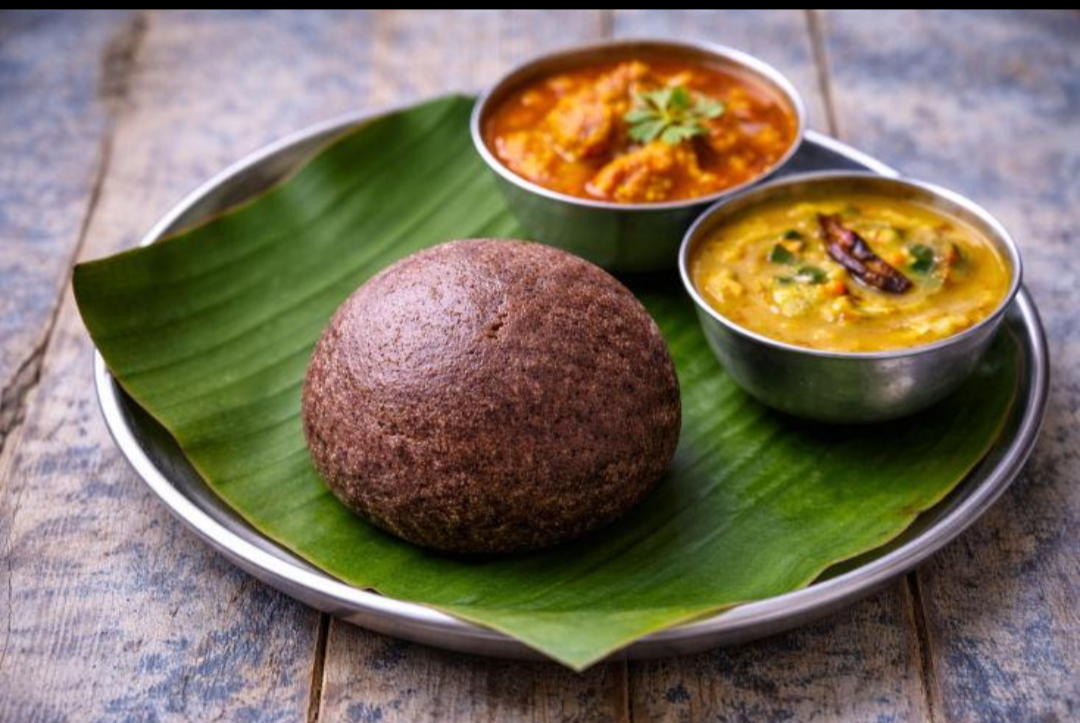
Karnataka's food culture is markedly regional, shaped by its neighbours — Kerala, Andhra Pradesh, Tamil Nadu, Maharashtra — and by its own coastal, Malenadu, and plateau ecologies. Staple grains include rice in the south and coast, ragi (finger millet) and jowar (sorghum) across the drier plateau districts, all typically eaten with a range of saaru (spiced lentil or tamarind broths), palya (dry vegetable preparations), and gojju or raita.
10.1 Old Mysore and Everyday Kannadiga Cuisine
The best-known dish nationally is bisi bele bath (literally “hot lentil rice”), a spiced one-pot preparation of rice, lentils, vegetables, and tamarind that originated in the Mysuru region; ragi mudde, a dense finger-millet dumpling eaten with saaru or curry, is a staple of the rural south. Udupi cuisine — developed in the temple-town kitchens of Udupi and popularised nationwide through Udupi-run restaurants — is a strictly vegetarian tradition credited with widely spreading the masala dosa, idli, and vada to the rest of India. Mysuru is additionally famous for Mysore pak, a rich gram-flour-and-ghee sweet, and for Mysore masala dosa, while Davanagere is known nationally for its distinctive benne (butter) dosa.
10.2 Coastal, North Karnataka, and Kodagu Cuisine
- Mangalorean and coastal cuisine — built around rice, coconut, and seafood, with dishes such as neer dosa (thin rice crepes), Mangalorean fish curry, and kori rotti (chicken curry with crisp rice wafers, a Tulu-speaking community specialty).
- North Karnataka cuisine — notably spicier than the south, centred on jolada rotti (sorghum flatbread) eaten with pulse curries and the distinctive North Karnataka thali; Dharwad is famous nationally for its peda sweet.
- Kodagu (Coorg) cuisine — a pork-centred tradition largely apart from the state's broader vegetarian and coastal-seafood patterns, best known for pandi (pork) curry cooked with the sour Kodagu spice kachampuli.
- Sweets and festive fare — obbattu/holige (a jaggery- and coconut-filled flatbread), chiroti, kesari bath, and payasa are shared across most of the state's communities for festivals and weddings.
11. Traditional Dress and Ornaments
Karnataka is one of India's principal silk-producing states, and its traditional dress reflects that heritage. For women, the saree remains the classic formal and ceremonial garment, with Mysore silk — known for its lustrous, lightweight weave and characteristic pure zari (gold-thread) borders — and the geometric, temple-bordered Ilkal saree of North Karnataka among the best known regional varieties; the davani, a half-saree draped over a long skirt and blouse, is a traditional style favoured by young unmarried women, particularly in the south. Draping styles vary by sub-region, with distinct conventions historically observed in Kodagu, coastal Karavali, and North Karnataka.
For men, the panche (a plain or bordered dhoti) remains the traditional lower garment, paired with a kurta or angi and, on formal or temple occasions, an angavastram draped over the shoulder; the peta, a distinctive Mysuru-style turban, is worn at weddings and state ceremonial functions, most visibly during the Mysuru Dasara procession. The Kodava community has its own markedly different formal dress — men traditionally wear the kupya chale, a long black coat tied with a red-and-gold waist sash and a ceremonial dagger (peechekathi), while Kodava women wear the saree draped with the pleats at the back rather than the front, tucked in a style particular to the community. Traditional gold jewellery — including the nose ring (mookuthi), jhumka earrings, and the vanki armband — remains an important part of bridal adornment across the state's Hindu communities.
12. Traditional Housing and Architecture
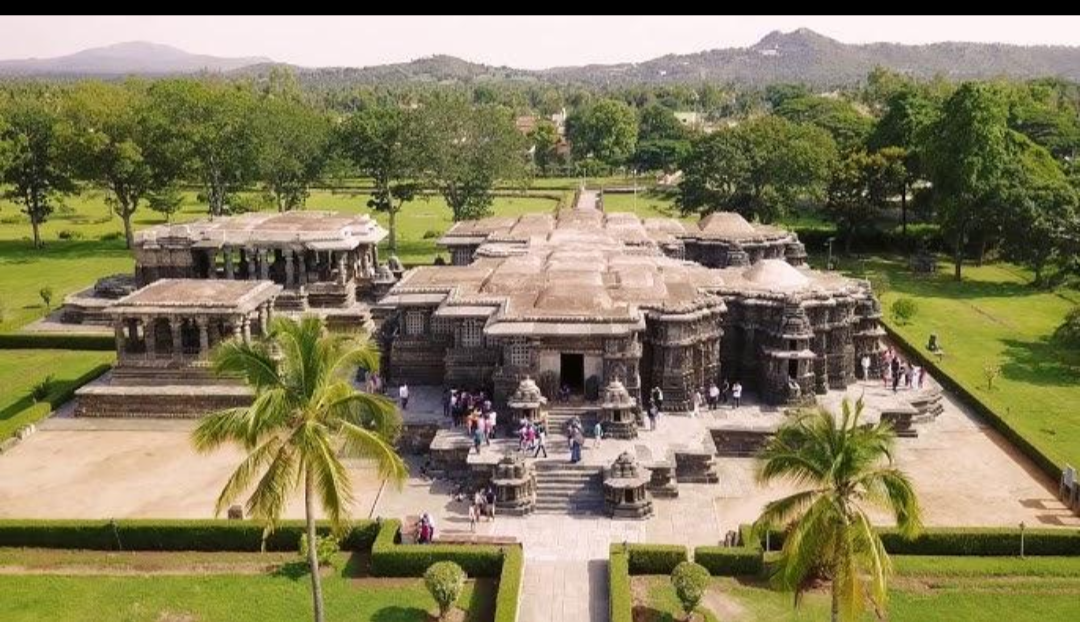
Rural housing traditions vary markedly by region: the coastal Karavali belt favours red laterite-tiled roofs and courtyard homes suited to heavy monsoon rainfall, Malenadu homes are typically timber-framed with sloped tiled roofs set amid plantation land, and the drier Bayaluseeme plains historically favoured mud-brick and, for wealthier landholding families, stone construction organised around a central courtyard. At the monumental level, Karnataka's architectural legacy is exceptionally rich: the Hoysala temples of Belur and Halebidu are renowned for their intricately carved soapstone star-shaped platforms; the ruins of Hampi preserve the Vijayanagara empire's temple, market, and royal-enclosure architecture across a UNESCO World Heritage site; the rock-cut and structural temples of Badami, Aihole, and Pattadakal represent an early Chalukyan experimental phase of South Indian temple design; and Mysuru Palace, rebuilt in Indo-Saracenic style in the early twentieth century, remains the architectural centrepiece of the former Wodeyar kingdom.
13. Folklore and Performing Traditions
Karnataka's oral and performance traditions run alongside its written classical literature. Yakshagana, a centuries-old, coastal-Karnataka form of dance-drama combining vivid costume, percussion, and improvised dialogue, dramatises episodes from the Mahabharata, Ramayana, and Puranas and remains a living all-night performance tradition in Dakshina Kannada and Udupi. Dollu Kunitha, a vigorous drum dance associated with the Kuruba community, and Veeragase, a Shaiva devotional dance, are widely performed folk forms, while Janapada Sahitya (Kannada folk literature) preserves a large corpus of orally transmitted ballads, proverbs, and work songs historically carried by rural and pastoral communities across the plateau districts.
14. Education, Livelihoods, and Socioeconomic Profile
Karnataka's economy spans a wide range, from its historic agrarian base — the state is a major producer of ragi, jowar, sugarcane, and, distinctively, coffee (grown chiefly in the Kodagu and Chikkamagaluru hill districts, which together account for the majority of India's coffee output) — to sericulture (the state has long been India's largest producer of raw silk), to its modern role as the country's leading information-technology and biotechnology hub, centred on Bengaluru, often called India's Silicon Valley. Mysuru historically developed sandalwood carving, silk weaving, and incense manufacture under royal patronage; Belagavi and Hubballi-Dharwad are significant industrial and trading centres in the northwest; and coastal Mangaluru is a major port and banking centre, historically home to several of India's nationalised banks founded by local Konkani and Bunt entrepreneurs. Literacy (about 82–83 per cent in recent estimates) and per-capita income are both above the national average, though a persistent development gap separates the prosperous south and coast from the historically less-developed Kalyana Karnataka region in the northeast.
15. Diaspora
Karnataka's diaspora history is comparatively recent and occupational rather than rooted in the large-scale nineteenth-century indentured-labour emigration that shaped states such as Uttar Pradesh and Bihar; Kannadigas did not form a major part of the Girmitiya migration to the Caribbean, Fiji, or Mauritius. Instead, the state's diaspora has grown chiefly since the late twentieth century, driven by two overlapping streams: skilled and professional emigration — engineers, physicians, and, especially from the 1990s onward, software and IT professionals from Bengaluru's technology industry — to the United States, United Kingdom, Canada, and Australia, and, on a smaller scale, labour and services emigration to the Gulf Cooperation Council states. Coastal Karnataka, particularly the Konkani- and Tulu-speaking communities of Mangaluru and Udupi, has an especially long-standing pattern of emigration to Gulf countries and to Mumbai.
Organised diaspora Kannadiga community life is expressed through associations such as the Association of Kannada Kootas of America (AKKA) and the North America Vishwa Kannada Association (NAVIKA), both of which host biennial or periodic conventions (sammelanas) for Kannadigas across North America, alongside numerous city-level Kannada Koota associations, Ugadi and Rajyotsava celebrations, and Kannada-language schools abroad. Current estimates place the wider Kannadiga population outside India at several hundred thousand, with the largest overseas concentrations in the United Arab Emirates and other Gulf states, followed by the United States, Malaysia, Singapore, Australia, and Canada.
16. Prominent Figures
16.1 Political and Public Life
- Kempegowda (1513–1569) — chieftain under the Vijayanagara Empire traditionally credited as the founder of Bengaluru.
- Krishnaraja Wodeyar IV (1884–1940) — Maharaja of Mysore noted for progressive administrative, educational, and industrial reforms during his reign.
- Sir M. Visvesvaraya (1861–1962) — celebrated civil engineer and Diwan of Mysore, honoured with the Bharat Ratna; his birthday is observed nationally as Engineer's Day.
- D. Devaraj Urs (1926–1982) — influential Chief Minister of Karnataka known for land and social-reform legislation in the 1970s.
16.2 Literature, Arts, and Culture
- Basavanna (1131–1196) — Lingayat philosopher-poet and founder of the Vachana literary and social-reform movement.
- Purandara Dasa (1484–1564) — Haridasa saint-composer revered as the father of Carnatic music.
- Kuvempu (1904–1994) and D. R. Bendre (1896–1981) — among Kannada's eight Jnanpith Award-winning writers, foundational figures of modern Kannada poetry.
- Dr. Rajkumar (1929–2006) — the most celebrated actor and playback singer of Kannada cinema, honoured with the Padma Bhushan and Dadasaheb Phalke Award.
- Bhimsen Joshi (1922–2011) — Hindustani classical vocalist from Karnataka's North Karnataka gharana tradition, awarded the Bharat Ratna.
16.3 Science, Sports, and Other Fields
- Sir C. V. Raman (1888–1970) — Nobel laureate physicist of Tamil Brahmin heritage who spent much of his career at the Indian Institute of Science, Bengaluru.
- Rahul Dravid (b. 1973) — former captain of the Indian cricket team, born and raised in Bengaluru, widely regarded as one of the sport's finest technical batsmen.
- Prakash Padukone (b. 1955) and Pullela Gopichand's contemporaries aside, Karnataka has produced numerous national sporting figures across badminton, chess (Vishwanathan Anand trained partly in Chennai but Karnataka's own Viswanathan-era chess culture is centred on Bengaluru clubs), and athletics.
17. Conclusion
Karnataka represents a geography whose ancient Jain and Shaiva sacred memory, its succession of native Kannada empires — Kadamba, Chalukya, Rashtrakuta, Hoysala, and Vijayanagara — and its modern population genetics converge on a coherent, if internally diverse, regional story: a Deccan plateau and Western Ghats homeland, repeatedly enriched by Indo-Aryan and later Deccan Sultanate contact, reshaped by the Wodeyar kingdom and colonial fragmentation, and reunified through the mid-twentieth-century Ekikarana movement — all while remaining, at its demographic base, a continuous South Indian population whose genetic ancestry still bears the imprint of millennia of settlement across the peninsula. From the carved soapstone temples of Halebidu to the technology campuses of Bengaluru, and from the Vachana verses recited in Lingayat households to the ragi mudde still shaped by hand in rural Mysuru kitchens, the story of Karnataka's people is simultaneously a religious history, a genetic case study, and a living regional culture carried forward by tens of millions across the Kannada-speaking world.
Frequently Asked Questions
What ethnicity or ancestry are people from Karnataka?
People from Karnataka are not a single ethnicity but a large, internally diverse South Indian population encompassing many castes, sub-regional groups (Kannadiga, Tuluva, Kodava, Konkani), and religious communities. Genetically, most Karnataka residents descend from a mixture of Ancestral North Indian (ANI) and Ancestral South Indian (ASI) ancestry, typically with a higher ASI component than populations of North India, reflecting the region's position within the Dravidian-speaking South, though specific communities such as the Kodava show a genetically distinctive profile shaped by early migration and long isolation.
Is Karnataka Aryan or Dravidian?
Karnataka is part of India's Dravidian linguistic and cultural zone: Kannada, Tulu, and Kodava Takk all belong to the Dravidian language family. Genetically, however, the population is not purely “Dravidian” in any strict sense; like almost all Indian populations, it carries a mixture of Ancestral North Indian (ANI, linked to West Eurasian populations) and Ancestral South Indian (ASI, indigenous to the subcontinent) ancestry, with the ASI component generally more pronounced than in North Indian states.
What DNA haplogroups are common among people from Karnataka?
Population-genetic studies of South Indian groups, Karnataka included, report a mix of deep indigenous South Asian paternal haplogroups such as H and L, alongside haplogroups associated with later Indo-Aryan and West Asian-linked migration, including R1a and, among some communities, J-related lineages. Maternal (mitochondrial) DNA is dominated by the indigenous South Asian haplogroup M and its subclades, broadly consistent with patterns seen across peninsular India.
What language do people in Karnataka speak?
Kannada is the sole official language and the majority mother tongue, but the state is markedly multilingual: Tulu is widely spoken across the Dakshina Kannada and Udupi coast, Kodava Takk is spoken in Kodagu, Konkani is concentrated among coastal Goud Saraswat Brahmin and Christian communities, and Urdu, Marathi, Telugu, and Tamil are spoken by substantial communities near the state's respective borders.
What is the traditional dress of Karnataka?
Women traditionally wear the saree — Mysore silk and the geometric Ilkal saree are the best-known regional varieties — or the davani half-saree, often with gold jewellery such as the mookuthi nose ring and jhumka earrings. Men traditionally wear a panche (dhoti) with a kurta, and the Mysuru-style peta turban on formal occasions. The Kodava community has its own distinct dress: the kupya chale coat and sash for men, and a back-pleated saree style for women.
What is Karnataka famous for in terms of food?
Karnataka is best known for bisi bele bath and ragi mudde from the Old Mysore region, the Udupi vegetarian tradition that popularised the masala dosa and idli nationwide, Mysore pak as a signature sweet, spicy jolada rotti-based North Karnataka cuisine, Mangalorean coastal seafood dishes such as neer dosa and fish curry, and Kodagu's distinctive pork-based pandi curry.
Where did people from Karnataka migrate to historically?
Unlike states such as Uttar Pradesh or Bihar, Karnataka was not a major source of nineteenth-century indentured-labour emigration to the Caribbean or Fiji. Its diaspora has instead grown mainly since the late twentieth century, through skilled and professional emigration — particularly IT and engineering professionals from Bengaluru — to the United States, United Kingdom, Canada, and Australia, alongside Gulf labour migration, especially from coastal Karnataka.
What caste groups are found in Karnataka?
Karnataka's major communities include the Lingayats (Veerashaivas), concentrated in North and Central Karnataka; the Vokkaligas, a landholding agrarian community of the Old Mysore region; Kurubas; several Brahmin sub-groups (Havyaka, Smartha, Madhva); the coastal Bunt and Konkani communities; Scheduled Caste communities such as the Holeya and Madiga; and Scheduled Tribe communities including the Soliga and Jenu Kuruba of the Western Ghats. The Kodava of Kodagu form a distinct, historically martial land-owning community.
Is Karnataka genetically similar to Kerala, Tamil Nadu, or Andhra Pradesh?
Broadly, Karnataka shares the same South Indian ANI-ASI genetic gradient as its neighbours Kerala, Tamil Nadu, and Andhra Pradesh, with populations across these states showing greater ASI-related ancestry than North Indian groups. Within this shared backdrop, specific Karnataka coastal communities such as the Bunt and Kodava show particular genetic affinity with Kerala's Nair community, while the state's Western Ghats tribal groups pattern more closely with other South Indian tribal populations of high ASI ancestry.
What is the Vachana movement?
The Vachana movement was a twelfth-century Kannada devotional and social-reform movement led by the philosopher-poet Basavanna and other Lingayat (Veerashaiva) saint-poets, who composed vachanas — short, direct devotional verses in everyday Kannada — while rejecting caste hierarchy and ritual orthodoxy. It remains foundational to both Kannada literature and Lingayat religious identity in Karnataka today.
What is the difference between Udupi and Mangalorean cuisine?
Udupi cuisine is a strictly vegetarian, temple-kitchen tradition associated with the pilgrimage town of Udupi, known nationally for dishes such as masala dosa, idli, and sambar. Mangalorean cuisine, from the wider Dakshina Kannada coastal belt, is broader and includes a strong non-vegetarian, seafood-based tradition — fish curries, prawn preparations, and kori rotti — alongside vegetarian coastal staples such as neer dosa.
What physical traits are typical of people from Karnataka?
There is no single physical type for a population of over 61 million spanning many castes, religions, and sub-regions. In general, South Indian populations including Karnataka's tend toward a somewhat higher proportion of ASI-linked traits than North Indian populations, but forensic and physical-anthropological research consistently finds measurable differences between the state's various endogamous communities, reflecting centuries of in-group marriage along caste, tribal, and regional lines rather than one uniform state-wide phenotype.