

Punjab Genome Project Community
Discover your Punjabi ancestry & deep roots. Explore diverse genetics, millennia-old history, & rich culture of Punjab's people across India & Pakistan.
The Punjab Genome Project
1. Introduction: Who Are the People of Punjab?
Punjab is one of South Asia's oldest and most consequential regional identities: a name that describes not a single ethnicity or faith but a stretch of alluvial river-plain "the land of five waters" whose population has been shaped for thousands of years by irrigation, invasion, and settlement rather than by descent from any one ancestral group. Split since 1947 between Punjab province in Pakistan and the smaller Indian state of Punjab (with a further Indian re-organisation in 1966 that carved out Haryana and Himachal Pradesh), the historical Punjab region is today home to well over a hundred million people on both sides of the border, making it one of the most populous cultural-linguistic zones on the subcontinent.
The people generally called Punjabis include Jats, Khatris, Aroras, Rajputs, Sainis, Gujjars, Ramgarhias (Tarkhans), Ahluwalias, Aroras, Labanas, Kambojs, Arains, Brahmins, and Banias, as well as numerous Dalit communities such as Chamars (Ravidasias) and Churas (Mazhabi Sikhs/Valmikis) a mosaic that spans three major religions (Sikhism and Hinduism concentrated in the Indian half, Islam overwhelmingly dominant in the Pakistani half) bound together less by a single bloodline than by shared soil, a common language family, and an agrarian-martial regional character forged over roughly five millennia of continuous habitation.
2. Geography
Historical Punjab occupies the plain formed by the Indus river and its five great tributaries the Jhelum, Chenab, Ravi, Beas, and Sutlej a fact preserved in the name itself, from the Persian panj ("five") and ab ("water"). These snow-fed rivers, descending from the western Himalaya and the Kashmir hills, converge into the Panjnad before joining the Indus, and their combined waters have made the intervening plain one of the most heavily irrigated and agriculturally productive tracts on earth. Since Partition in 1947, only the Sutlej and Beas flow mainly through Indian territory, while all five rivers pass through Pakistani Punjab, which retains the larger and more populous share of the historical region.
Agriculturally, Punjab on both sides of the border is often called the granary of the subcontinent: Indian Punjab, despite its small size, has for decades been among India's leading producers of wheat and rice and was the principal launching ground of India's Green Revolution from the 1960s onward, while Pakistani Punjab plays an equivalent role as Pakistan's largest wheat-, cotton-, and rice-growing province. This deep agricultural wealth sustained by one of the world's oldest and most extensive canal-irrigation systems, first substantially expanded under British colonial administration underlies much of the region's dairy- and grain-heavy cuisine, its historic prosperity, and the social organisation of its dominant landholding castes discussed in later sections.
3. Origins and Early History
3.1 Prehistoric and Harappan Foundations
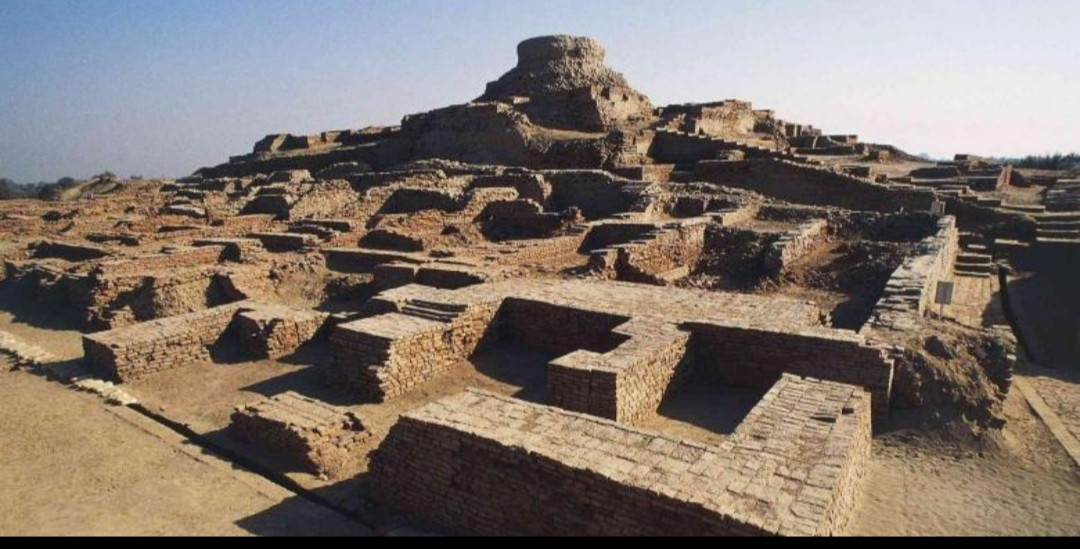
Punjab holds one of the deepest and most consequential places in South Asian prehistory. The type-site of the entire Indus Valley (Harappan) Civilisation, Harappa itself, on the Ravi river in present-day Pakistani Punjab, gives its name to the Bronze Age urban culture that flourished across the wider Indus basin roughly 2600–1900 BCE, with planned streets, standardised brick sizes, granaries, and a still-undeciphered script. Alongside Harappa, the region contains numerous other Indus-era and pre-Harappan sites, and its plains lie astride the now largely dried-up Ghaggar-Hakra river system, which many archaeologists associate with the Vedic Saraswati. This deep continuity of settlement, river-fed agriculture supporting urban civilisation for roughly five thousand years, anchors Punjab's historical identity in the same way that Rakhigarhi anchors neighbouring Haryana's.
3.2 The Vedic Age and Early Kingdoms
In the Vedic period, the Punjab plain referred to in early texts as Sapta Sindhu, the "land of seven rivers" was the heartland in which the Rigveda is traditionally believed to have been composed, and the region subsequently formed the core of the Gandhara and Trigarta kingdoms and lay along the route of Alexander the Macedonian's furthest campaign into South Asia in 326 BCE, where his army, exhausted after crossing the Hydaspes (Jhelum) in battle against King Porus, turned back at the Beas. In succeeding centuries, the region passed through Mauryan, Indo-Greek, Kushan, and Gupta rule, each leaving its own layer on the region's archaeology and folk memory, before becoming, like Haryana to its southeast, a central battleground on the historic invasion corridor into the Gangetic plain.
3.3 Medieval Empires, the Sikh Gurus, and the Sikh Empire
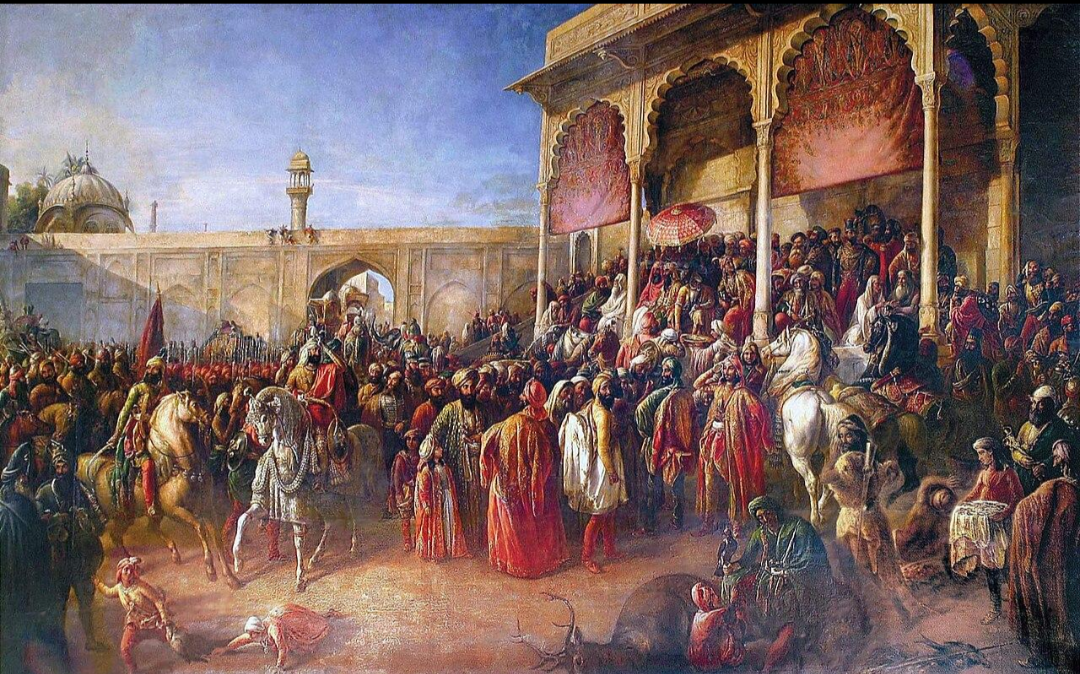
Lying directly on the invasion route from Central Asia into the subcontinent's interior, Punjab was fought over by nearly every major power in South Asian history the Ghaznavids, the Delhi Sultanate, the Mughals, and the Afghan Durranis among them and it was against this backdrop of repeated conquest that Sikhism emerged in the region in the late fifteenth century under Guru Nanak, the first of the ten Sikh Gurus, whose teachings of one formless God and social equality were developed and consolidated by his nine successors over the following two centuries, including Guru Gobind Singh's founding of the Khalsa order in 1699.
3.4 Colonial Rule, the 1947 Partition, and the Punjabi Suba Movement
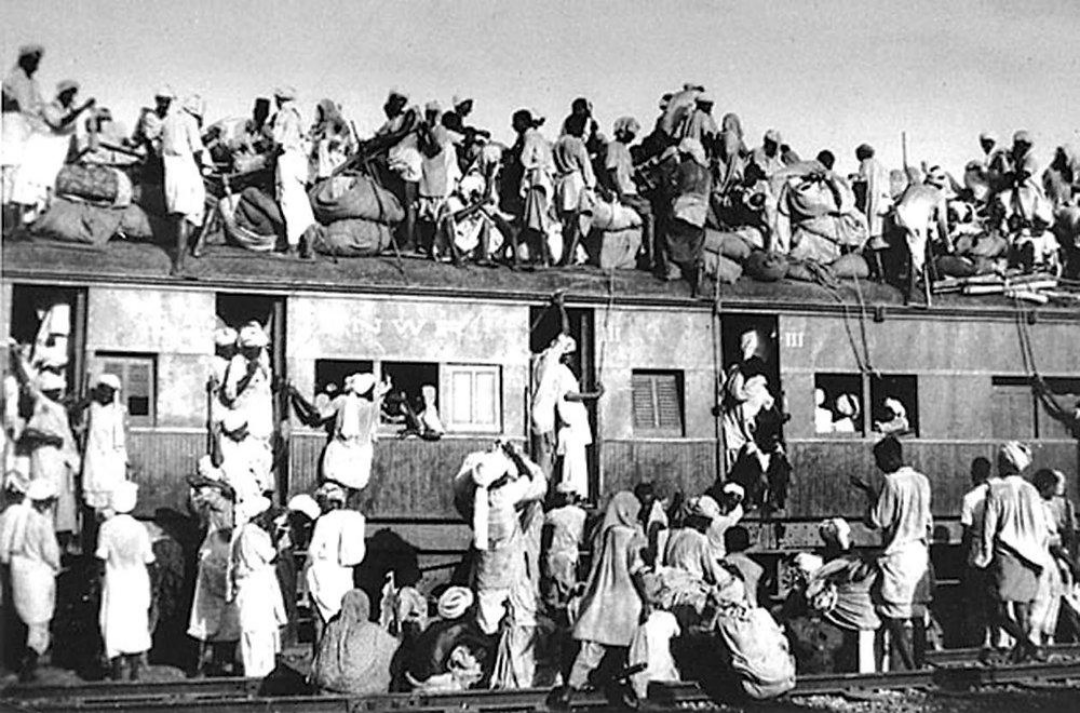
The British folded the annexed Punjab into a single administrative province in 1849, developing it over the following century into one of colonial India's principal recruiting grounds for the British Indian Army and, through a major expansion of canal irrigation, into the empire's most productive agricultural region a legacy still visible in Punjab's contemporary agrarian economy and its associated martial and farming traditions. This unified province came to a violent end with the Partition of India in August 1947, when undivided Punjab was split along religious lines into a mostly Muslim West Punjab, which became part of the new state of Pakistan, and a mostly Sikh- and Hindu-populated East Punjab, which remained in India; the resulting mass migration displaced an estimated fourteen million people in both directions and produced communal violence with a death toll historians place in the hundreds of thousands to two million, among the largest and most traumatic population transfers of the twentieth century.
Within independent India, East Punjab was further reorganised on linguistic lines in 1966 following the sustained Punjabi Suba ("Punjabi-speaking state") movement led by the Shiromani Akali Dal and the Sikh religious leadership, which had campaigned since the 1950s through protest marches, hunger strikes, and repeated imprisonments for a state built around the Punjabi language rather than the bilingual Punjab that had existed since Partition. The resulting Punjab Reorganisation Act carved the Hindi-speaking plains districts into the new state of Haryana and transferred hill areas to Himachal Pradesh, leaving a smaller, Punjabi-majority Punjab with its shared capital, Chandigarh, as it exists today. Pakistani Punjab, for its part, has remained Pakistan's largest and most populous province throughout this period, with its own distinct and considerably larger trajectory of post-Partition development.
4. Genetics and DNA Ancestry
4.1 Paternal (Y-DNA) Lineages
Multiple Y-chromosome surveys of Punjabi communities, most extensively of Jat Sikhs and Jat Hindus, the region's largest landholding caste group, report haplogroup R1a, and specifically its R1a-Z93 branch associated with the Bronze Age Steppe-pastoralist expansion into South Asia, as the leading paternal lineage, with reported frequencies commonly cited in the 30-50% range and, in some Jat Sikh samples, considerably higher still. Other paternal lineages recur at meaningful but smaller frequencies across Punjab's communities, including haplogroup J2 (associated with the region's Iranian-related farmer ancestry), haplogroup L, and haplogroup H, with commercial and academic surveys generally reporting a gradient in which land-holding agrarian castes such as Jats and Rajputs carry a higher proportion of R1a and Steppe-linked lineages than trading castes such as Khatris and Aroras, artisan castes such as Ramgarhias, or historically Dalit communities, whose paternal lineages skew toward J2, L, and H. A large-scale study of 302 Jat Y-chromosome samples drawn from both India and Pakistan, covering Punjabi as well as Haryanvi Jats, found the group's paternal lineages split across at least nine distinct haplogroups, concluding that Jats, rather than descending from any single ancestral population such as the Indo-Aryans or Indo-Scythians, share broad genetic continuity with numerous other communities of the northwestern subcontinent.
4.2 Maternal (mtDNA) Lineages
As with neighbouring Haryana, the maternal-line DNA of Punjab's communities is overwhelmingly indigenous to South Asia, dominated by macrohaplogroup M and its regional subclades, in contrast with the region's comparatively elevated West and Central Asian paternal signal. This asymmetry between paternal and maternal lineages is the classic genetic signature of male-biased historical migration into an already-settled population, in which incoming groups of men are understood to have taken wives from local communities rather than arriving together with women of their own a pattern consistent with successive waves of Bronze Age Steppe migration, and later historical invasion, moving into an Indus Valley-descended population base.
4.3 Autosomal Ancestry and the Steppe Signal
At the whole-genome level, Punjab's population and its dominant Jat community in particular sits toward the high end of the Ancestral North Indian (ANI) and Steppe-ancestry spectrum found among Indian and Pakistani populations generally. Genetic-ancestry surveys of Punjabi communities typically report a Steppe-pastoralist-related component of roughly a quarter to a third of total ancestry among Jat Sikhs and Jat Hindus, alongside a substantial Iranian-farmer-related component of comparable or somewhat greater size and a smaller but still significant Ancestral South Indian (AASI) hunter-gatherer component; trading castes such as Khatris and Aroras and artisan or historically Dalit communities tend to show a correspondingly lower Steppe proportion and a higher AASI and Iranian-farmer share. Even at its highest recorded levels, however, Steppe-related ancestry represents only about a third of the total picture for any Punjabi community, with the majority of ancestry continuing to derive from the region's much older Indus Valley-related and South Asian hunter-gatherer-related populations a finding broadly consistent with the ancient-DNA evidence from Rakhigarhi in neighbouring Haryana, which showed the Indus Valley Civilisation's population to have been overwhelmingly local in origin before the Bronze Age migrations layered onto it.
4.4 Caste, Zaat, and Genetic Considerations
Punjab's dominant landholding castes, and the Jat community above all, are organised into strictly exogamous patrilineal clans called gotra among Hindu and Sikh Jats and zaat or got more broadly across Punjabi society with marriage traditionally required to occur between different clans while remaining, in the great majority of cases, within the same broader caste, producing the same pattern of caste-level endogamy alongside clan-level exogamy documented among Haryana's Jats, Rors, and other agrarian communities. Over many centuries this pattern of long-term endogamy along caste lines, combined with a shared regional gene pool built up over thousands of years of Indus Valley-descended and Bronze Age Steppe-related ancestry, has produced the broad genetic homogeneity noted by population geneticists across Punjab's landholding communities, even as trading castes, artisan castes, and Dalit communities within the same region retain their own somewhat distinct genetic profiles.
5. Social Structure: Caste, Zaat, and Biradari
Punjab's traditional society is organised around a set of dominant castes whose relative weight differs somewhat between the Sikh, Hindu, and Muslim halves of the region. Among Sikhs, the Jat (Jatt) caste, traditionally agricultural, forms the largest and, particularly in rural areas and within Sikh religious and political institutions, the most dominant group, even though the faith's founding Gurus themselves belonged to the mercantile Khatri caste and repeatedly preached against caste hierarchy. Other significant Sikh and Hindu Punjabi castes include the Khatri and Arora trading communities (often collectively called Bhapa in colloquial usage and closely associated historically with Punjab's commercial and urban life), Ramgarhias (traditionally carpenters and artisans, prominent in the post-1947 diaspora), Ahluwalias (traditionally brewers, later a leading political lineage through the princely state of Kapurthala), Sainis, Kambojs, Labanas, Rajputs, and Brahmins, alongside historically Dalit communities such as Chamars/Ravidasias and Churas/Mazhabi Sikhs, whose contemporary religious and political organisation — including the distinct Ravidassia movement reflects both the historical caste hierarchy found elsewhere in north India and its specifically Sikh and Punjabi articulation. In the Muslim-majority Pakistani half of the region, the leading agrarian castes are broadly similar in kind Jats, Rajputs, Gujjars, and the specifically Punjabi Muslim Arain cultivator caste — organised through the same zaat/biradari (clan/brotherhood) framework rather than the Hindu varna system.
The biradari literally "brotherhood" is the operative unit of everyday social organisation across Punjabi society regardless of religion: an extended kinship and mutual-obligation network, usually coextensive with a zaat or gotra, that historically organised marriage, dispute resolution, labour-sharing at harvest and at weddings, and local political mobilisation, and which continues to shape rural and even diaspora social life, from the choice of a marriage partner to informal community leadership.
6. Language
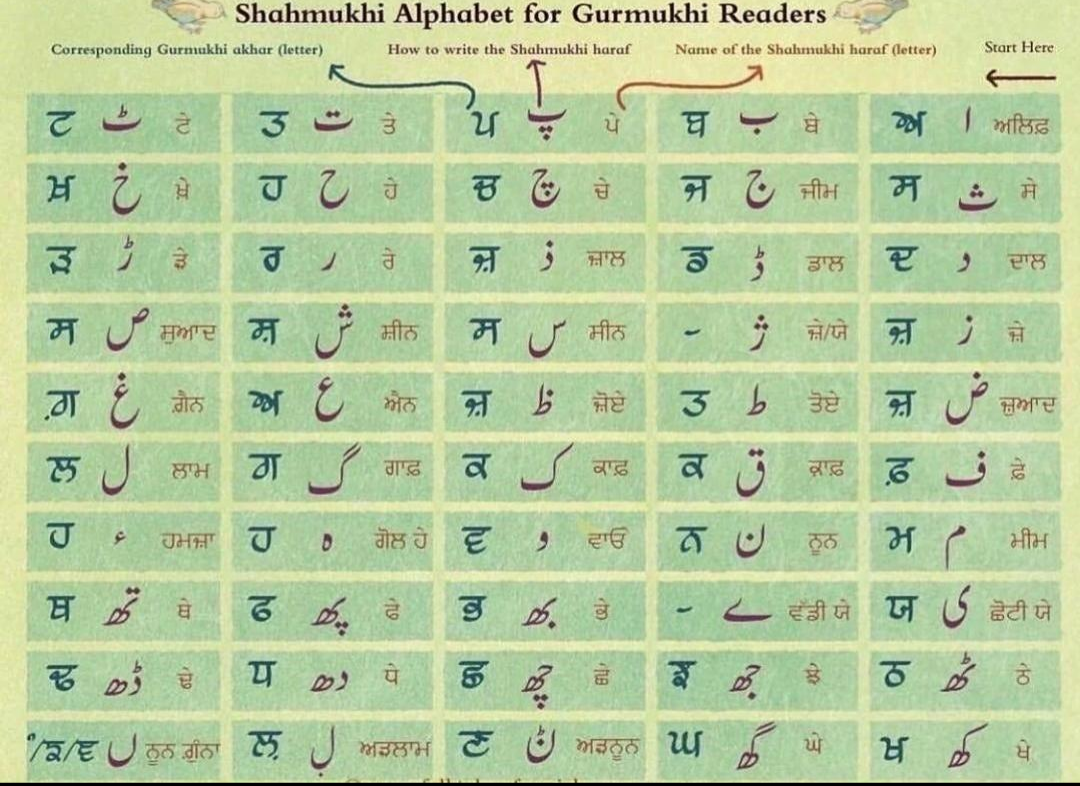
Within Indian Punjab, regional dialects broadly track the Majha, Doaba, and Malwa sub-regions described above Majhi being generally treated as the prestige or standard dialect, closest to literary and Gurbani Punjabi, with Malwai and Doabi carrying their own distinct vocabulary and intonation while Punjabi's wider dialect continuum extends into Saraiki in southern Pakistani Punjab and into closely related Lahnda varieties further west. Punjabi's centuries-old literary tradition, running from the medieval Sufi verse of Baba Farid and Shah Hussain through Guru Nanak's own hymns to the eighteenth-century romantic epics discussed in Section 12, has made it one of South Asia's most developed regional literatures, while in the twentieth and twenty-first centuries Punjabi-language cinema, television, and above all popular music have carried the language to a global audience far beyond the historical region itself.
7. Culture, Customs, and Social Practices
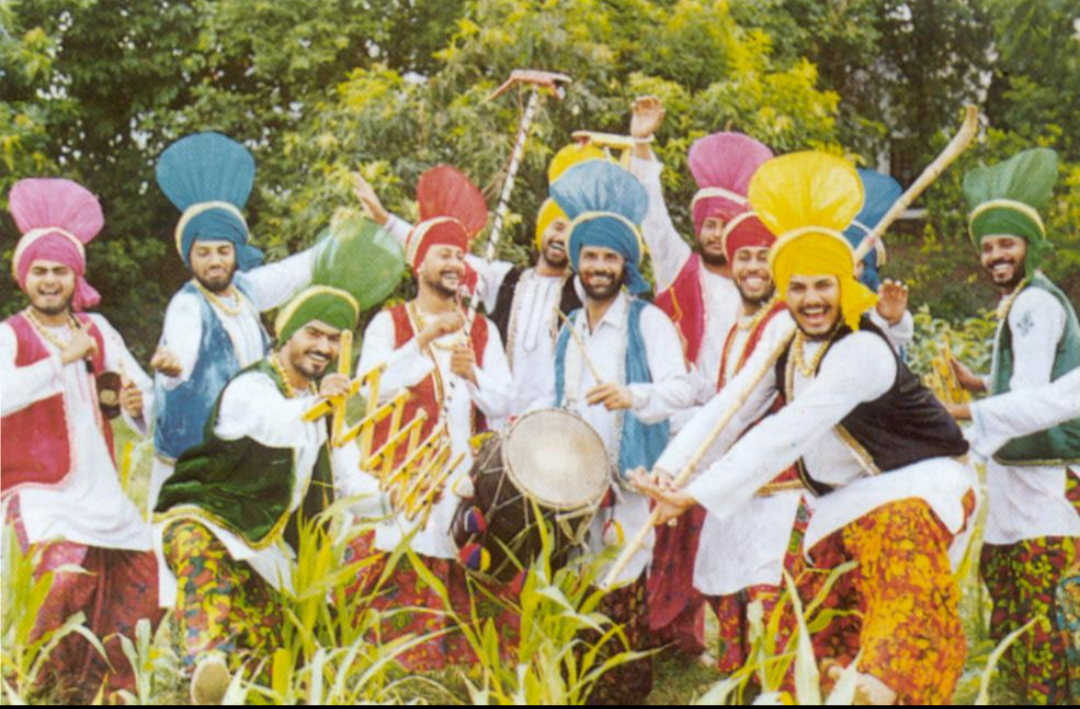
Punjabi culture is widely characterised, in both scholarly and popular description, as exuberant, hospitable, and direct a reputation closely tied to the region's historically prosperous agrarian economy and to its long martial tradition of army and police service. Rural social life traditionally centred on the joint, multi-generational household and on the village common or sath, while religious and communal life for Sikh Punjabis centres on the gurdwara, with langar the communal, caste-blind free kitchen instituted by the Sikh Gurus and open to all visitors regardless of faith remaining one of the most distinctive and widely admired features of Punjabi Sikh religious practice.
8. Marriage Traditions
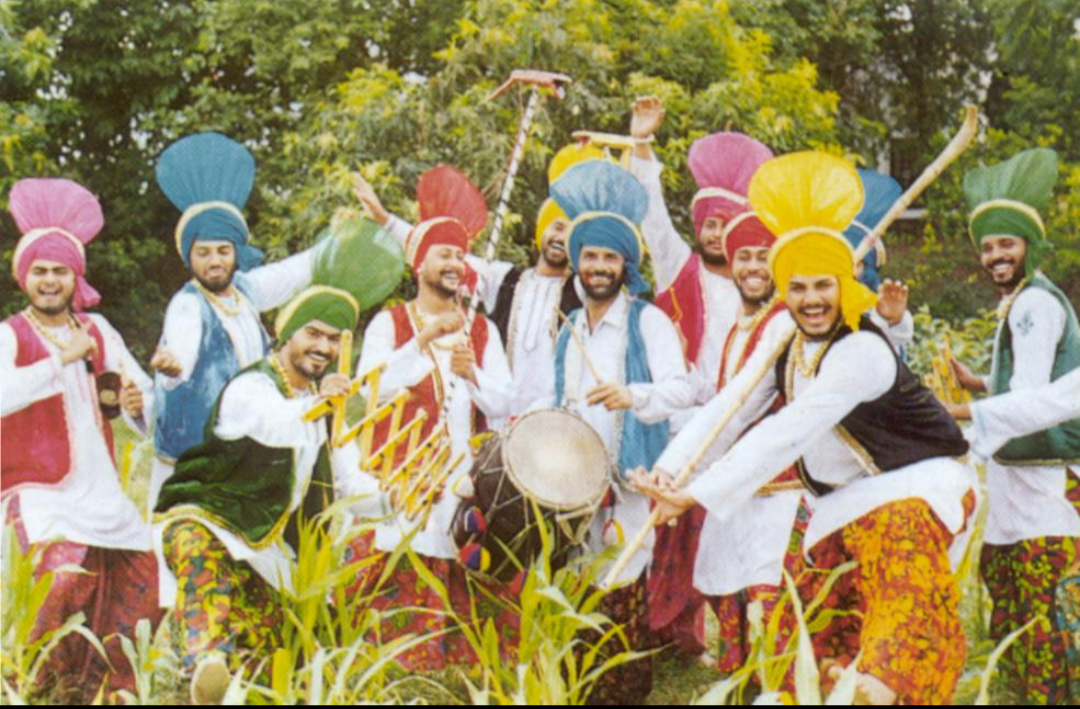
- Roka and engagement — an initial family agreement to proceed, often followed by a formal engagement (mangni/kurmai) at which rings are exchanged.
- Maiyan, vatna, and mehndi — pre-wedding beautification and blessing rituals in which turmeric-and-oil paste (vatna) is applied to the bride and groom by female relatives, and mehndi (henna) is applied to the bride's hands and feet, typically accompanied by singing of traditional boliyan.
- The baraat, sehra, and anand karaj/vidhi — the groom's wedding party (baraat) travels to the venue, often on a decorated horse or car, and the couple is married either through the Sikh anand karaj ceremony around the Guru Granth Sahib or, among Hindu Punjabis, through Vedic phere around the sacred fire before a priest.
- Doli and vidaai — the emotional farewell (vidaai) as the bride formally leaves her parental home, historically travelling to her husband's household in a palanquin or decorated vehicle (doli), remains one of the most ritually significant moments of a Punjabi wedding regardless of religion.
9. Cuisine
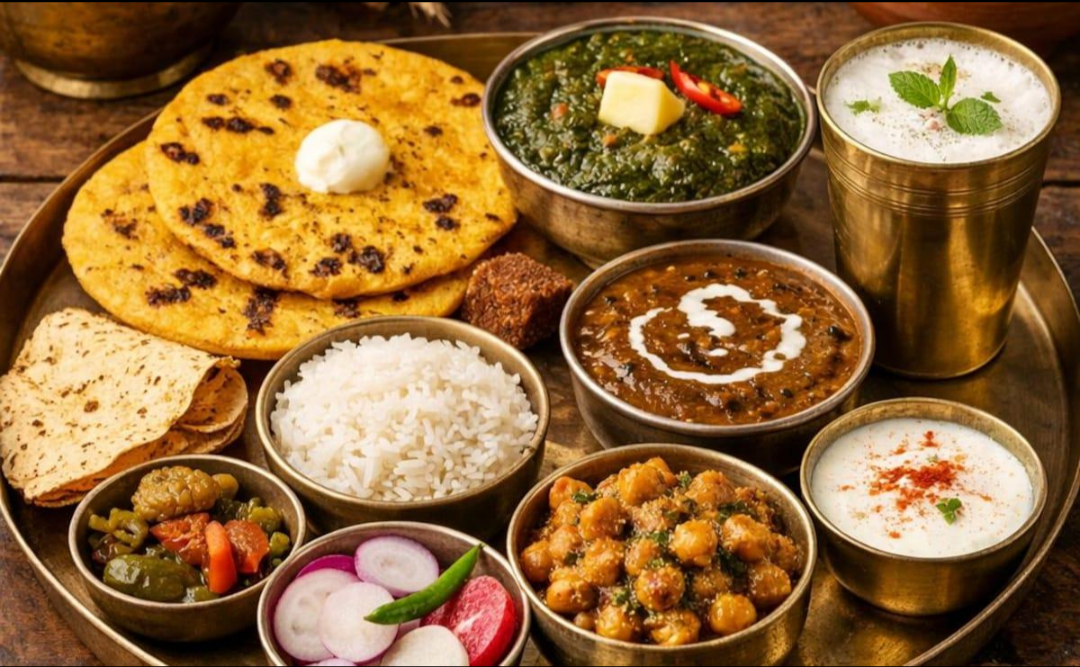
Punjabi cuisine is rich, generous with dairy, and closely tied to the region's wheat, maize, and mustard harvests a food culture that has, more than any other regional Indian cuisine, come to define "North Indian food" for much of the world through the tandoor-based restaurant tradition that spread from Punjab across the subcontinent and its diaspora after Partition.
- Sarson da saag and makki di roti — the region's most iconic winter dish, a slow-cooked curry of mustard greens (often blended with spinach and bathua/goosefoot) served with maize-flour flatbread and a generous helping of white butter (makhan); the combination is closely associated with the Lohri festival and is often described as Punjab's culinary identity in miniature.
- Dal makhani and chole — black lentils and kidney beans slow-simmered with butter and cream, and spiced chickpeas typically eaten with the deep-fried leavened bread bhature, are Punjabi staples that have become pan-Indian restaurant fixtures.
- Tandoori cooking — meats, breads (naan, tandoori roti), and paneer cooked in the clay tandoor oven originated as a rural Punjabi technique and became, through post-Partition migration, the signature cooking method of "Punjabi" and "Mughlai" restaurants across India and abroad.
- Lassi and dairy — sweet or salted yogurt-based lassi, fresh butter and ghee, and paneer reflect Punjab's status as one of South Asia's leading dairy-producing regions, with dairy treated almost as a food group of its own in the traditional rural diet.
- Stuffed parathas and pinni — flatbreads stuffed with potato, radish, or paneer form a hearty breakfast staple, while pinni (a dense wheat-flour, ghee, and jaggery or sugar sweet, often made with dried fruit and nuts) marks weddings, winter, and festive occasions.
10. Traditional Dress, Ornaments, and Physical Traits
Traditional Punjabi dress for women centres on the salwar kameez loose, tapered trousers (salwar) paired with a long tunic (kameez) and a dupatta or chunni scarf a garment so closely associated with the region that it is often simply called the "Punjabi suit" across South Asia; the Patiala salwar, a voluminously pleated variant associated with the former princely state of Patiala, is a particularly well-known regional style. Phulkari ("flower work"), a distinctive hand-embroidery tradition worked in bright silk floss on cotton or khaddar cloth, is deeply symbolic in Punjabi culture, traditionally produced by women for weddings and festive wear and today a recognised regional textile craft in its own right; women's traditional accessories include the paranda (a tasselled hair ornament plaited into the braid), the jutti (an embroidered, pointed-toe leather slipper worn by both sexes), and jewellery such as jhumka earrings and layered gold or silver bangles.
On physical traits, Punjab's population like Haryana's is frequently noted, in both popular commentary and sporting circles, for above-average height and physical build among its rural agrarian communities, an attribute often popularly attributed to a dairy- and wheat-heavy diet and to generations of manual agricultural and military labour, and cited locally as part of the folk explanation for the region's historic strength in wrestling, kabaddi, hockey, and other physically demanding sports discussed in Section 13.
11. Traditional Housing and Architecture
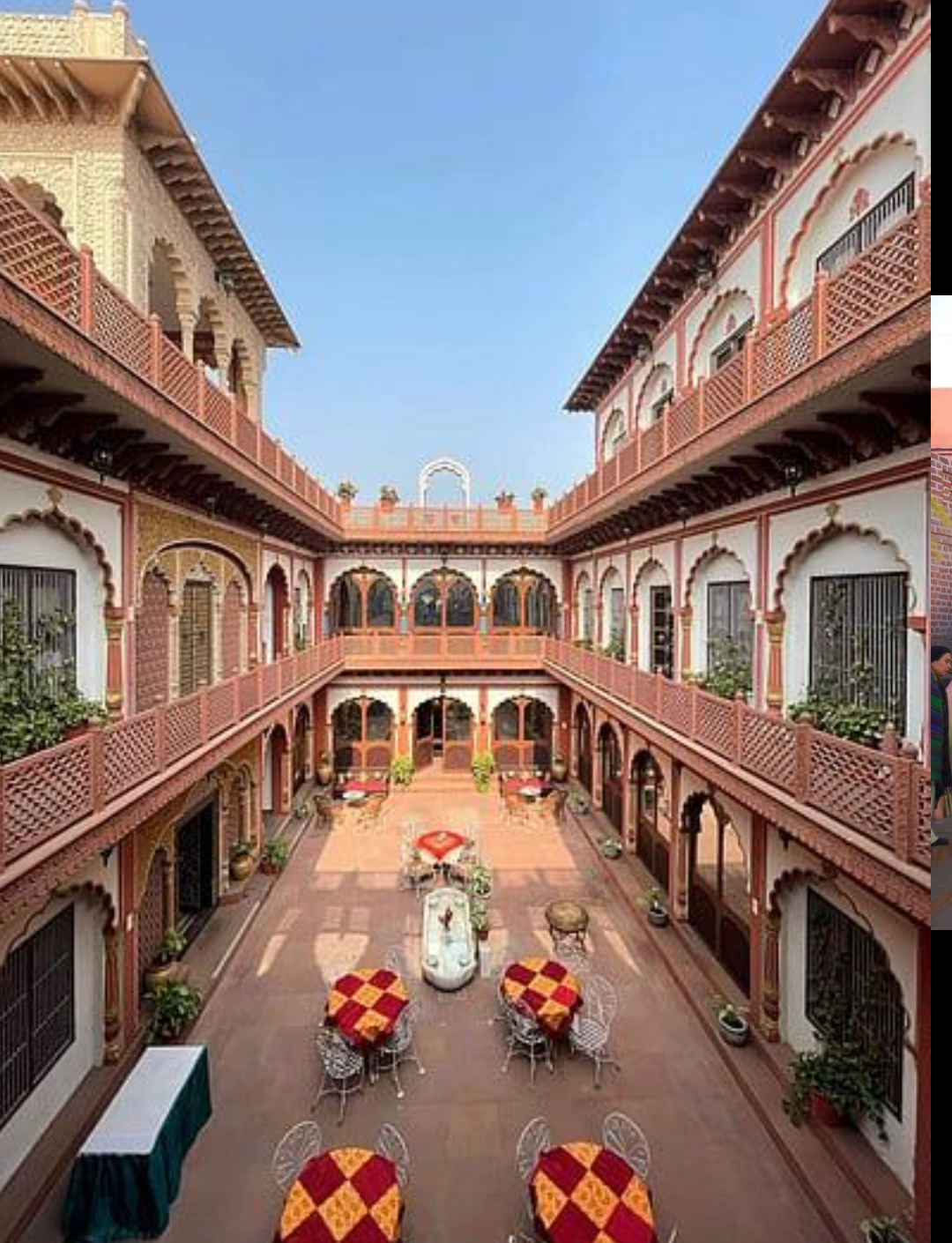
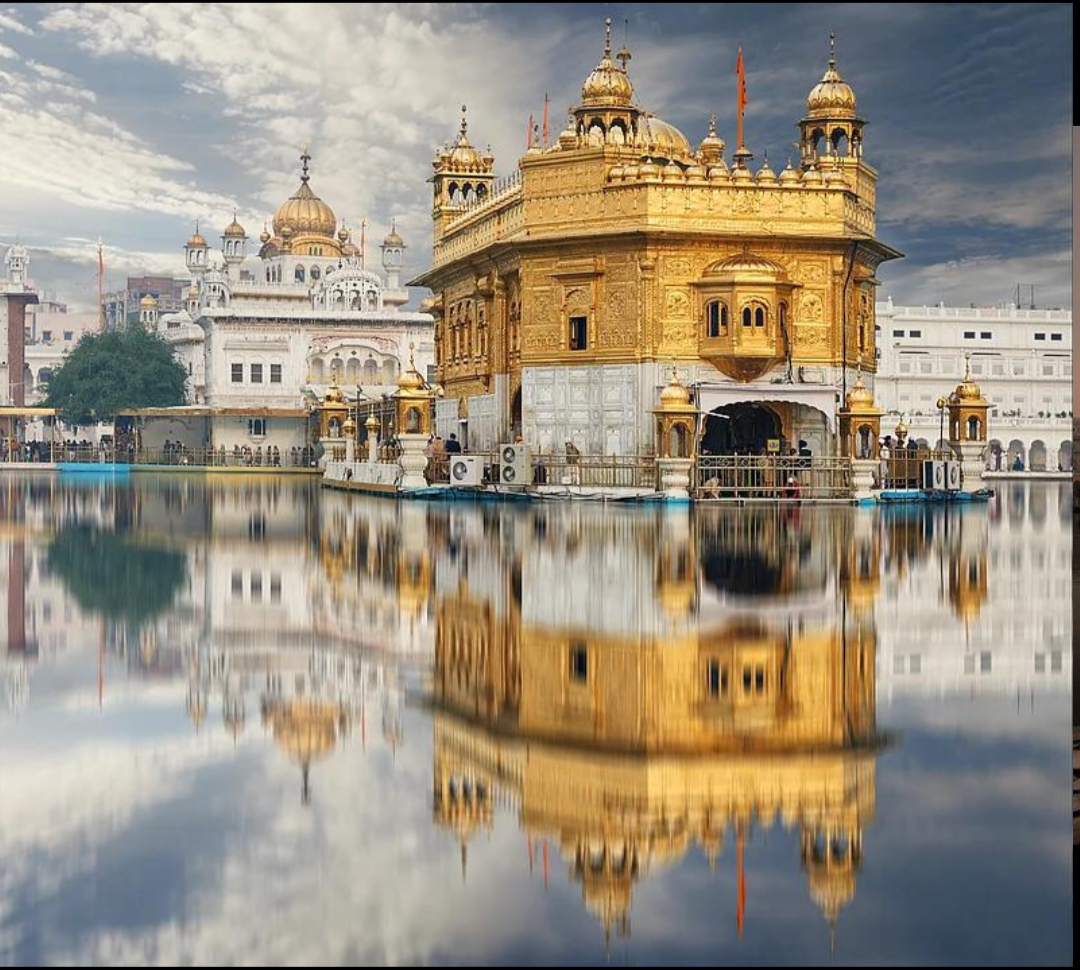
Historic rural Punjab, like Haryana, was built around courtyard-centred, joint-family homesteads (haveli in their grander form) constructed of sun-dried or fired brick and mud, arranged around a central open courtyard used for cooking, grain storage, and livestock, with a raised sitting platform or baithak outside for the household's men to receive guests; thick walls and small windows suited the region's hot summers and cold winters alike, while granary structures built of mud and dung plaster remained a common feature of village homesteads well into the twentieth century. Punjab's built heritage also includes a substantial legacy of Sikh Empire and Mughal-era architecture most prominently the Golden Temple (Harmandir Sahib) at Amritsar, Sikhism's holiest shrine, along with numerous forts, havelis, and gurdwaras built or expanded under Maharaja Ranjit Singh and his successors as well as important Mughal and Sultanate-era monuments in and around Lahore, the region's historic capital.
12. Folklore and Oral Tradition
Alongside these narrative epics, Punjab has a rich devotional and mystical poetic tradition running from the medieval Sufi verse of Baba Farid and Shah Hussain through the eighteenth-century poet-mystic Bulleh Shah, whose kafi verses remain widely sung across both Indian and Pakistani Punjab regardless of religious line, to Guru Nanak's own hymns, later compiled into the Guru Granth Sahib. Boliyan (short, often improvised sung couplets exchanged during bhangra and giddha performances), the wandering-minstrel tradition, and the region's folk instruments the dhol barrel drum, the tumbi (a single-string plucked instrument popularised globally by folk singer Lal Chand Yamla Jatt and later by bhangra-pop artists), and the algoze double flute together form the backbone of a folk-music tradition that, through the mid-to-late twentieth-century careers of singers discussed in Section 15, became the foundation of the modern Punjabi pop and bhangra-fusion music industry with a worldwide diaspora audience.
13. Education, Livelihoods, and Socioeconomic Profile
Military and police service has been a defining livelihood in Punjab for well over a century, a legacy of the colonial British Indian Army's heavy recruitment from the region's Jat, Rajput, and other agrarian castes, and Punjab continues to be disproportionately represented in the modern Indian and Pakistani armed forces and police services relative to its population. Sport, too, occupies an outsized place in the region's social fabric: Punjab (on both sides of the border) has long been one of South Asia's leading nurseries of talent in field hockey, wrestling (kushti), and kabaddi the last a rural team sport with deep roots in Punjabi villages that has, through the Pro Kabaddi League and the Kabaddi World Cup, become a significant modern sporting export in its own right — while cricket, athletics, and boxing have likewise produced a long list of prominent Punjabi competitors discussed in Section 15.
Beyond agriculture and the armed services, Indian Punjab has a substantial industrial base in textiles, sporting goods (Jalandhar is a globally significant manufacturing centre for sports equipment), bicycle and light engineering manufacture (centred on Ludhiana), and, increasingly, information technology and services around Mohali and Chandigarh, while a large share of the region's population, at home and abroad, is represented across trade, transport, medicine, law, and academia reflecting the commercially minded Khatri and Arora trading castes as much as the agrarian Jat and Rajput communities discussed above.
14. Diaspora
Punjabi emigration is, in absolute numbers, one of the largest and longest-running regional migration streams from South Asia. An initial wave of Punjabi soldiers, police, and labourers spread across the British Empire from the 1880s onward to Hong Kong, Malaya, and East Africa — while farmers crossed the Pacific to found some of North America's earliest South Asian communities on the west coast of Canada and the United States, including one of the United States' first gurdwaras, established at Stockton, California, in 1912; the 1914 turning-away of the Komagata Maru, a ship carrying hundreds of would-be Punjabi immigrants, from Vancouver harbour remains a defining and still-commemorated moment in this early diaspora history. The 1947 Partition displaced millions of Punjabis across the new India-Pakistan border, and post-war Commonwealth labour migration from the 1950s through the 1970s, including the resettlement of Sikhs expelled from Uganda and other parts of East Africa in the early 1970s, substantially built up today's large Punjabi communities in the United Kingdom, Canada, and beyond.
15. Prominent Figures
15.1 Politics, Freedom Struggle, and Military
- Bhagat Singh — revolutionary executed by the British in 1931 at age 23, among the most revered martyrs of the Indian independence movement.
- Lala Lajpat Rai — freedom-fighter and political leader, one of the "Lal-Bal-Pal" triumvirate of the early independence movement.
- Giani Zail Singh — from Faridkot district, seventh President of India.
- Nawabzada Liaquat Ali Khan — a leading Muslim League figure from pre-Partition Punjab who became the first Prime Minister of Pakistan.
- Master Tara Singh and Sant Fateh Singh — Akali Dal leaders who led the decades-long Punjabi Suba movement described in Section 3.4.
- Parkash Singh Badal and Amarinder Singh — among the dominant Chief Ministers of post-1966 Punjab, from the Akali Dal and Congress respectively.
- Manmohan Singh — born in Gah, pre-Partition Punjab (now in Pakistan), economist and Prime Minister of India from 2004 to 2014.
15.2 Sports
Milkha Singh — the "Flying Sikh," Olympic and Asian Games sprinter of the 1950s-60s and one of independent India's first global sporting icons.
Balbir Singh Sr. — three-time Olympic gold-medallist field hockey forward, among the most celebrated Indian hockey players of the twentieth century.
Kapil Dev — cricketer and captain of India's 1983 Cricket World Cup-winning team, born in Chandigarh.
Harbhajan Singh and Yuvraj Singh, leading cricketers of India's 2000s-2010s national teams, both from Punjab.
Navjot Singh Sidhu, cricketer turned television personality and politician.
The Phogat and Chahal wrestling families and numerous Punjabi kabaddi internationals reflect the region's long-standing strength in wrestling and kabaddi described in Section 13.
15.3 Arts, Cinema, Music, and Public Life
- Bulleh Shah and Waris Shah — the great Sufi-mystic and romantic-epic poets of eighteenth-century Punjabi literature, discussed in Section 12.
- Amrita Pritam — pioneering twentieth-century Punjabi poet and novelist, among the first major women writers in the language.
- Gurdas Maan — veteran Punjabi folk-pop singer and actor widely regarded as one of the architects of the modern Punjabi music industry.
- Diljit Dosanjh — contemporary Punjabi singer and actor who has carried Punjabi-language music to mainstream Bollywood and international stages.
- AP Dhillon and other diaspora artists — part of a wave of Canada- and UK-based Punjabi-origin musicians who have taken Punjabi hip-hop and pop to a global audience.
- The Kapoor, Chopra, Deol, and Anand film families — among the many Punjabi-origin (often pre-Partition Lahore or West Punjab-rooted) families who came to dominate the Hindi film industry after 1947, including figures such as Raj Kapoor, Dev Anand, Yash Chopra, and their descendants.
16. Contemporary Reflections
Several tensions recur in contemporary discussion of Punjabi identity on both sides of the border. The deepest and most consequential is the enduring legacy of the 1947 Partition itself, which severed a single linguistic and cultural region along religious lines and continues to shape family memory, cross-border relations, and questions of belonging for Punjabis in India, Pakistan, and the diaspora alike a wound many families still describe in terms of villages, homes, and relatives left on the "other side." A second, more recent tension concerns Indian Punjab's agrarian economy: the same Green Revolution intensive-irrigation model that made the state India's granary from the 1960s onward has, in the twenty-first century, produced serious groundwater depletion and rural indebtedness, fuelling large farmer protest movements and a broader debate about the sustainability of the state's traditional agricultural base. A third concerns the diaspora itself: as emigration continues at a scale unusual even by South Asian standards, communities within Punjab and their vastly larger overseas counterparts continually renegotiate what it means to be Punjabi — through language retention, religious practice, and popular culture across a geographic distance the historical region's own inhabitants could scarcely have imagined.
17. Conclusion
References
- [1]
- [2]
- [3]
- [4]
- [5]
- [6]
- [7]
- [8]