

Rajasthan Genome Project Community
Unravel your Rajasthani ancestry with GenoConnect. Explore Rajasthan's rich genetic diversity, delving into its unique geography & vibrant culture
The Rajasthan Genome Project
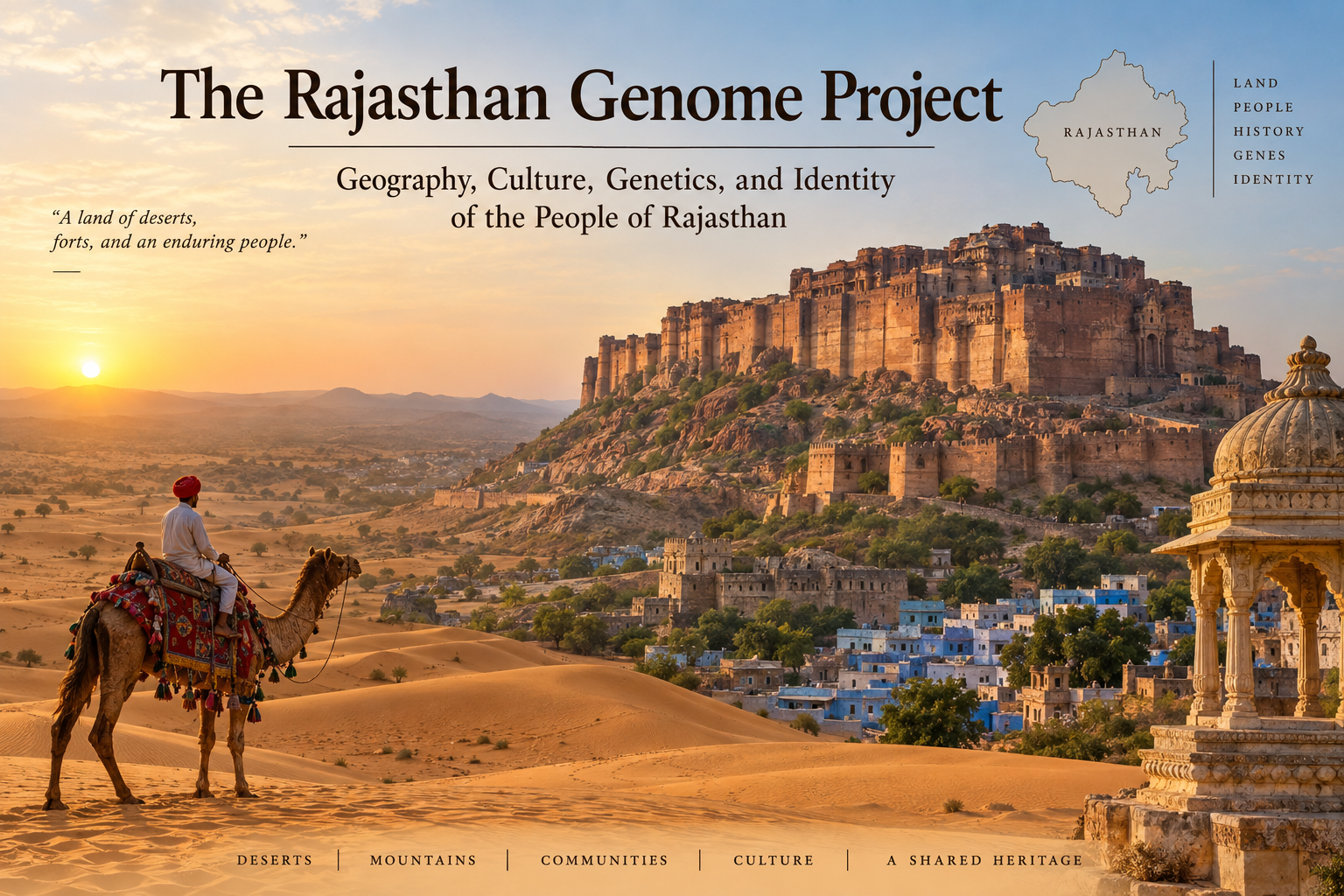
Table of Contents
1. Introduction: Who Are the People of Rajasthan?
Rajasthan is India's largest state by area and home to roughly 80 million people, and like Haryana, its identity is built less on a single bloodline than on a shared stretch of land, a cluster of related dialects, and centuries of common political history. Carved out between 1949 and 1956 from the old Rajputana Agency twenty-two princely states and chiefships that had never before existed as one administrative unit Rajasthan brings together the arid Thar in the west, the Aravalli hill country running diagonally through its middle, and fertile eastern plains that shade into Madhya Pradesh. The people who live across this stretch, generally called Rajasthanis, are anything but a single group: Rajputs, Jats, Marwaris (Maheshwaris, Oswals, Agarwals, and other trading castes), Gurjars, Ahirs, Meenas and Bhils (both recognised Scheduled Tribes), Bishnois, Brahmins, and a long list of artisan and service communities all call the state home, held together less by shared descent than by a common dialect family, a shared desert-and-fort landscape, and centuries of intermarriage and political entanglement across caste lines.
2. Geography
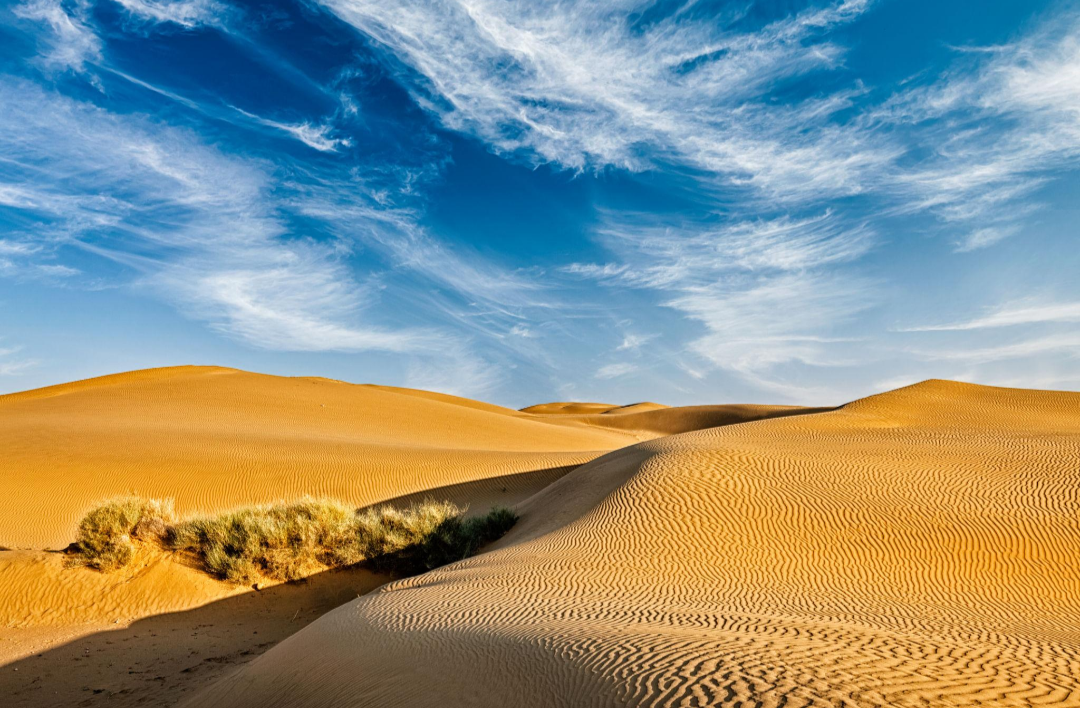
Rajasthan sits in northwestern India, bordering Pakistan along its western edge and sharing internal borders with Punjab, Haryana, Uttar Pradesh, Madhya Pradesh, and Gujarat. Geographers usually split the state into four physiographic zones: the western sandy desert, the Aravalli hill system running roughly northeast to southwest through the middle of the state, the semi-arid eastern plains, and the Hadoti plateau in the southeast bordering the Deccan and Malwa uplands. The Aravallis, among the oldest fold-mountain systems on earth, dating back to the Precambrian, act as the climatic dividing line: everything to their west is the Thar, the Great Indian Desert, while the belt to their east catches enough of the southwest monsoon to support wheat, mustard, and sugarcane farming. Guru Shikhar, near Mount Abu, is the range's highest point.
The western half of the state was, geologically, seabed until fairly recently by geological reckoning: the Tethys Sea covered much of Rajasthan until the Cretaceous and Eocene, and the salt lakes at Sambhar, Didwana, and Pachpadra are relics of that vanished ocean. By the time the desert had fully set in, somewhere in the second millennium BCE, the region's population had already begun adapting to an arid, sparsely watered landscape a fact that shows up constantly in the state's cuisine, architecture, and settlement patterns, all of which are built around scarcity of water and the need to store what little there is. Historically, Marwar (the western, desert-facing tract centred on Jodhpur) and Mewar (the hillier, better-watered tract centred on Udaipur and the southern Aravallis) developed as two distinct cultural zones on either side of the range, and much of what people now call "Marwari" or "Mewari" identity traces back to that older geographic split.
3. Origins and Early History
3.1 Early Settlement and the Rajput Question
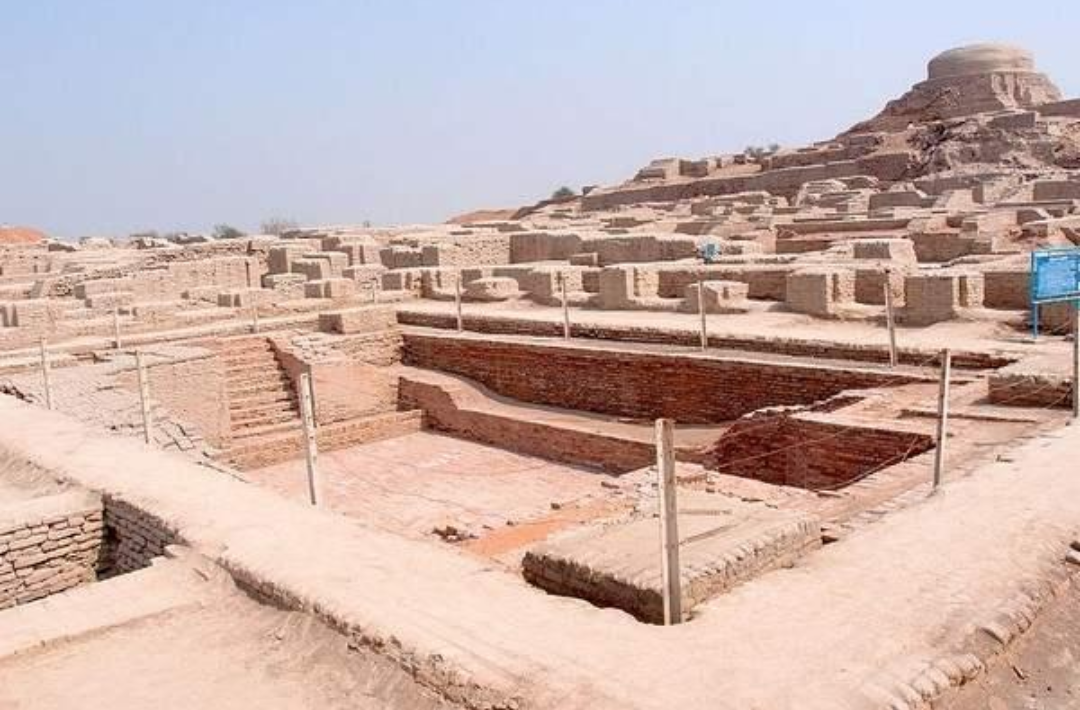
Unlike Haryana, whose defining prehistoric identity rests on a single site (Rakhigarhi), Rajasthan's deep past is scattered across smaller Harappan and Chalcolithic settlements Kalibangan on the dried Ghaggar-Hakra, Balathal and Ahar in the south — alongside a much longer and messier medieval story about who the Rajputs actually were. The term "Rajput" only enters common use around the sixth century CE, well after the clans it describes, and its origins have been argued over for two centuries. Colonial-era writers, most famously James Tod in his early nineteenth-century *Annals and Antiquities of Rajasthan*, proposed that clans such as the Pratiharas, Chauhans, and Solankis descended from Scythian, Hun, or other Central Asian groups who entered India in the centuries after the Gupta collapse, pointing to shared customs like horse worship and sun veneration. A rival and now more widely cited academic view, associated with historian B.D. Chattopadhyaya, holds instead that Rajput identity was largely built from the ground up: local pastoral and agrarian groups, including ancestors of today's Jats and Gurjars, who gained land and political power between the sixth and ninth centuries and adopted a Kshatriya, Sanskritic self-image to match their new status. Both theories still circulate, and the genetic evidence discussed below complicates rather than settles the question.
3.2 Delhi, the Mughals, and Three Centuries of War and Alliance
From the thirteenth century onward, Rajasthan's Rajput kingdoms sat directly between the Delhi Sultanate and the trade and agricultural wealth of Gujarat, which made the region a near-constant battleground. Chittorgarh, the Sisodia capital, was besieged and sacked at least three times across this period, and each siege is remembered in local memory through the practice of jauhar mass self-immolation by the women of a besieged fort rather than capture a grim historical fact that Rajasthani tradition has turned into a recurring symbol of honour and resistance, even as modern historians and the state's own women's movements have pushed back hard against romanticising it.
The arrival of the Mughals changed the pattern. Akbar pursued a deliberate strategy of drawing Rajput houses into his empire through marriage alliances, court appointments, and military service rather than conquest alone, and most of the major clans Amber (later Jaipur), Bikaner, Marwar accepted Mughal overlordship on favourable terms, supplying generals, administrators, and queens to the imperial court. Mewar alone held out. Maharana Pratap, who came to the Sisodia throne in 1572, refused every overture Akbar sent him and met a Mughal army under Raja Man Singh of Amber at the Haldighati pass in June 1576, in a battle usually described as tactically indecisive: the Mughals held the field, but Pratap escaped and spent the rest of his reign waging guerrilla resistance from the Aravalli hills rather than submitting. That refusal, more than any single battlefield outcome, is what turned Pratap into the region's enduring symbol of Rajput defiance, and it sits in an interesting tension with the fact that most other Rajput houses chose alliance over resistance and prospered considerably from it.
3.3 Colonial Rajputana and the Making of Modern Rajasthan
By the early nineteenth century, the British had brought the region's princely states under indirect rule as the Rajputana Agency, a patchwork of twenty-two states and chiefships, all but one (Tonk) ruled by Hindu princes, administered through a British agent stationed at Mount Abu. This arrangement lasted until independence. What followed was one of the more complicated integration stories in India: rather than joining as a single unit, Rajputana's states merged in seven separate stages between March 1948 and November 1956, under the direction of Sardar Vallabhbhai Patel and V.P. Menon. The four largest states Jaipur, Jodhpur, Bikaner, and Jaisalmer — held out longest, and their merger into "Greater Rajasthan" on 30 March 1949 is still marked every year as Rajasthan Day. Ajmer-Merwara, a directly administered British province rather than a princely state, was folded in only after the 1956 States Reorganisation Act, along with a slice of Sirohi district around Mount Abu that had briefly gone to Bombay State. The result, formalised in November 1956, was the state's present shape: independent India's largest state by area, built out of two dozen separate courts that had spent the preceding three centuries alternately fighting each other and the Mughals.
4. Genetics and DNA Ancestry
4.1 Paternal (Y-DNA) Lineages
Multiple Y-chromosome studies of Rajput populations across Rajasthan and Gujarat report R1a, and specifically its Z93 subclade associated with the Bronze Age Indo-Iranian steppe migrations, at frequencies in the 35–45% range, with clans based in Rajasthan and Gujarat Rathore, Sisodia, Chauhan, Solanki — showing some of the highest steppe-linked R1a frequencies recorded for any Rajput group, alongside J2 and L lineages at lower frequency. Jat populations sampled across Rajasthan, Haryana, and Punjab show a broadly similar but not identical picture: one large study of Jat Y-chromosomes found the community's paternal lineages split across at least nine haplogroups, R1a, J, L, and Q chief among them, a spread that researchers read as evidence against any single unique ancestral marker for the community. Haplogroup Q, present at moderate frequency in both Jat and some Rajput samples, is often linked to later Central Asian contact rather than the earlier Bronze Age wave. Marwari trading communities — Maheshwaris, Oswals, Agarwals, and Khandelwals — show related but community-specific patterns shaped by centuries of caste endogamy, a signature genetic-ancestry researchers have specifically studied because of how tightly these groups have married within themselves even after their global trading diaspora took hold.
4.2 Maternal (mtDNA) Lineages
4.3 Autosomal Ancestry and the Steppe Question
At the whole-genome level, Rajasthan's dominant landholding castes sit toward the higher end of the Ancestral North Indian (ANI) / steppe-ancestry spectrum recorded among Indian populations, broadly comparable to Haryana's Jats and generally higher than populations further south or east in the state. This is consistent with, though it doesn't fully resolve, the older historical argument over Rajput origins described above: a population with a substantial steppe-linked genetic component is compatible both with a story of Central Asian-descended founder groups and with a story of local groups who intermarried heavily with steppe-descended populations (such as Jats and Gurjars) as they rose to power and adopted a Rajput identity. Genetically speaking, the Jat, Rajput, and Gurjar populations of Rajasthan and its neighbours are considerably more similar to one another than any of them are to populations further south or east in India their differences are gradients within one broad northwestern gene pool, not sharp splits between separate ancestries.
4.4 Gotra, Endogamy, and Regional Genetic Patterns
5. Social Structure: Rajputs, Jats, Marwaris, and the Desert's Many Communities
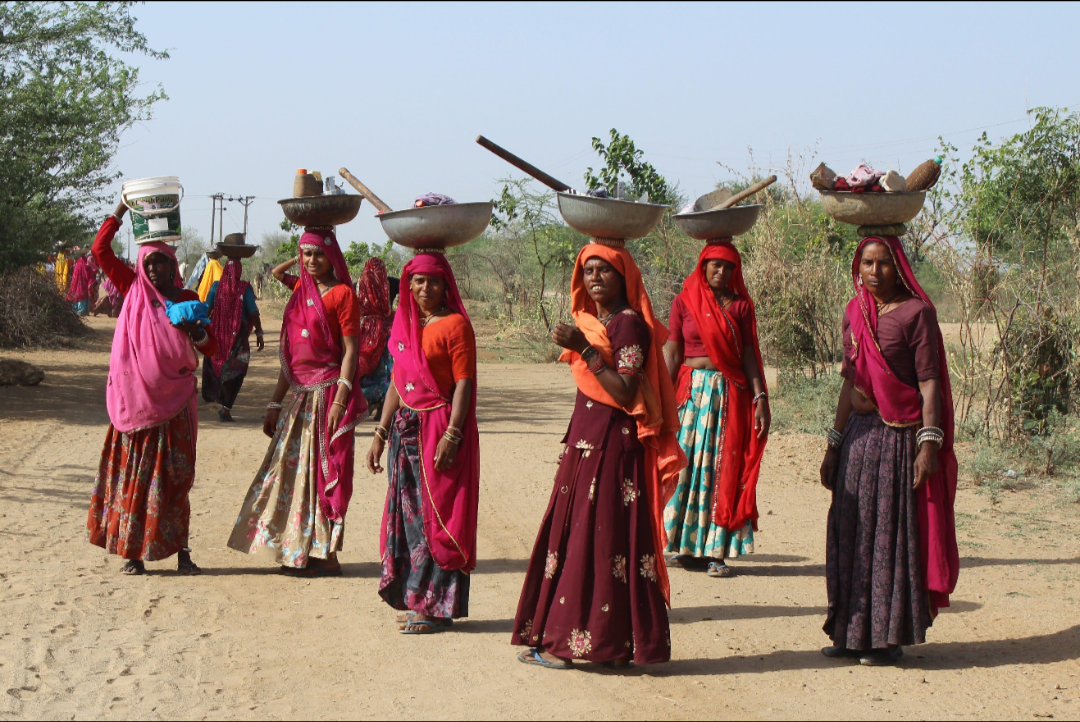
Rajasthan's traditional social order was built around Rajput ruling houses and their landed aristocracy (jagirdars and thakurs), a Brahmin priestly class, Jat and Gurjar agrarian communities who worked much of the land, and a distinctive commercial layer — the Marwari trading castes, chiefly Maheshwaris, Agarwals, Oswals, and Khandelwals whose banking and moneylending networks eventually spread across all of India. Alongside these sit the Bishnoi, a Vaishnav sect founded in the fifteenth century by Guru Jambheshwar around twenty-nine environmental and social precepts, concentrated in the western desert districts and known for a long tradition of tree and wildlife protection; the Meena and Bhil communities, both recognised Scheduled Tribes with a strong presence in the southern and southeastern hill tracts; and numerous artisan, pastoral, and service castes, including the Raika camel-herders of the Marwar region.
The Rajput courts, before independence, ran their territories through a network of thikanas (feudal estates) held by jagirdars in exchange for military service to the ruling Maharaja or Maharana, a system that shaped land tenure, social hierarchy, and marriage alliances across the state well into the twentieth century. Marriage alliances between ruling houses a Sisodia princess to a Kachwaha court, a Rathore daughter to the Mughal emperor were themselves a central instrument of medieval Rajasthani politics, discussed further below.
6. Language
7. Culture, Customs, and Social Practices
Rajasthani culture is often described, with some justification, as a culture built around hospitality and performance the phrase *Atithi Devo Bhava* ("the guest is god") is treated less as a slogan than as a genuine social obligation, and much of the state's tourism economy has grown directly out of that older hospitality tradition. Rural and small-town life still centres on extended, often joint-family households, community feasting at weddings and fairs, and a rich calendar of religious and folk festivals: Teej and Gangaur, both particularly associated with women and marked by swings, songs, and processions; the Pushkar Camel Fair, one of the largest livestock fairs in the world, which has become a major international tourist draw; and the Marwar and Desert festivals staged around Jodhpur and Jaisalmer that showcase the region's folk music and dance for a wider audience.
8. Marriage Traditions
Marriage across Rajasthan's dominant communities follows the same broad pattern as in Haryana: endogamy within caste, exogamy across clan, arranged through family and community networks rather than individual courtship in most traditional settings. Rajput marriage alliances in particular carried heavy political weight for centuries a daughter married into a rival or allied house could cement a treaty, and the Mughal court's marriages into Rajput royal families were themselves a central mechanism of Akbar's integration policy described above.
- Sagai and pre-wedding rituals — engagement, followed by rituals such as haldi (turmeric) and mehndi (henna) applied to the couple in the days before the wedding, closely paralleling practice across north India.
- The baraat and phere — the groom's wedding procession travels to the bride's town or village, and the couple takes the sacred phere around the fire before a priest, as in the broader North Indian Hindu tradition.
- Community feasting — Rajasthani weddings, like Haryanvi ones, are large multi-day community events, with feasting, music, and labour often organised through extended family and caste networks.
- Historical practices now legally abolished — colonial and later Indian law abolished both sati (the historical, and by the nineteenth century already controversial, practice of a widow immolating herself on her husband's funeral pyre) and child marriage, though child marriage in particular has persisted informally in some rural pockets of the state and remains a subject of ongoing legal and social effort rather than a fully closed chapter.
9. Cuisine
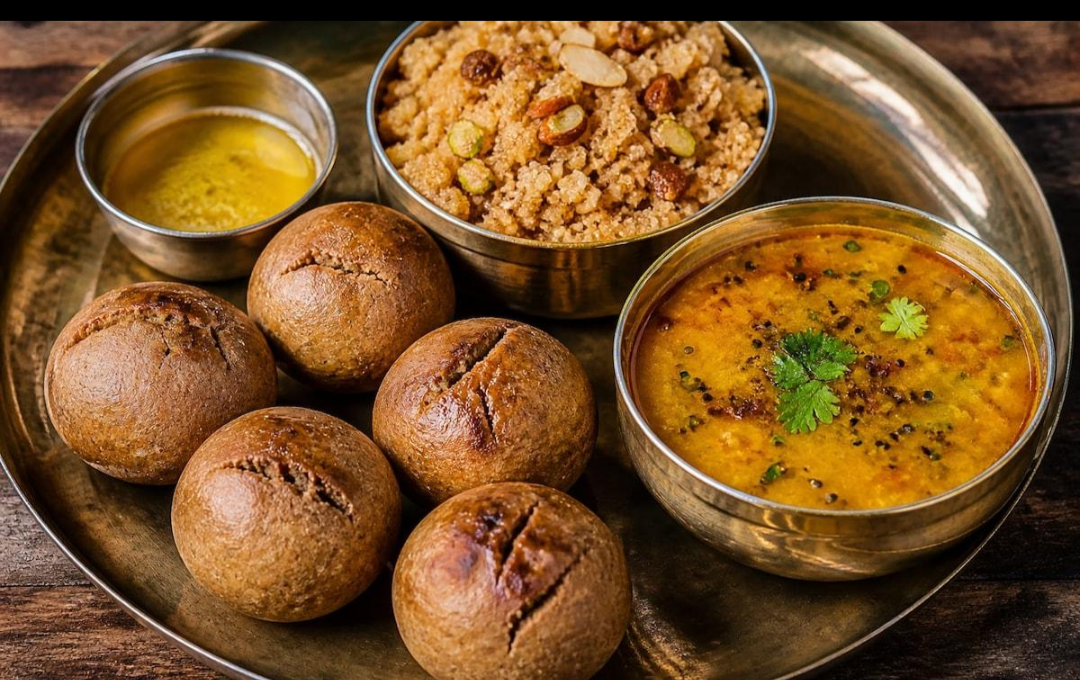
- Dal baati churma — the state's signature dish: hard-baked wheat balls (baati), split into a rich lentil curry (dal) and eaten alongside a sweet crushed-wheat preparation (churma) made with ghee and sugar or jaggery.
- Laal maas — a fiery mutton curry built on Mathania red chillies, historically a hunting-camp dish of Rajput households and now one of the state's best-known non-vegetarian exports.
- Ker sangri and gatte ki sabzi — desert vegetable dishes built to survive scarcity: ker (a wild desert berry) and sangri (dried beans from the khejri tree) cooked together, and gatte, gram-flour dumplings simmered in a yogurt-based gravy, both classic solutions to a landscape with little fresh produce for much of the year.
- Bajra roti and buttermilk — pearl-millet flatbread paired with chaas (buttermilk) or lassi remains a staple of the rural diet, echoing the same grain-and-dairy backbone found across Haryana and much of the drier belt of northwestern India.
- Ghewar, mawa kachori, and other festive sweets — Ghewar, a disc-shaped, syrup-soaked sweet often finished with rabri, is strongly associated with the monsoon-season Teej and Gangaur festivals, alongside snacks like pyaaz (onion) kachori sold widely across Jaipur's old city.
10. Traditional Dress, Ornaments, and Physical Traits
Rajasthani dress, like Haryana's, marks a clear line between men's and women's clothing, but leans toward brighter, more saturated colour on both sides a practical adaptation, many local accounts suggest, to a wide, pale desert landscape where a person needed to be visible from a distance. Men traditionally wear a dhoti or angrakha with a kurta, completed by a safa or pagari (turban) whose colour, size, and style of tying historically signalled caste, region, and even the wearer's clan; Rajput, Brahmin, Bishnoi, and Bania turbans were each recognisably distinct to a local eye. Footwear is traditionally the mojari or jutti, hand-stitched leather shoes often worked with embroidery.
On physical traits, popular commentary and travel writing frequently describe Rajasthanis, and Rajputs in particular, as tall, lean, and comparatively light-skinned with pronounced features, though this kind of generalisation flattens what is in practice a very wide range of build and complexion across the state's many communities and regions a desert pastoralist in Barmer, a Mewari hill farmer, and a Marwari trading family in Jaipur do not share one uniform physical type, whatever older ethnographic writing sometimes implied.
11. Traditional Housing and Architecture
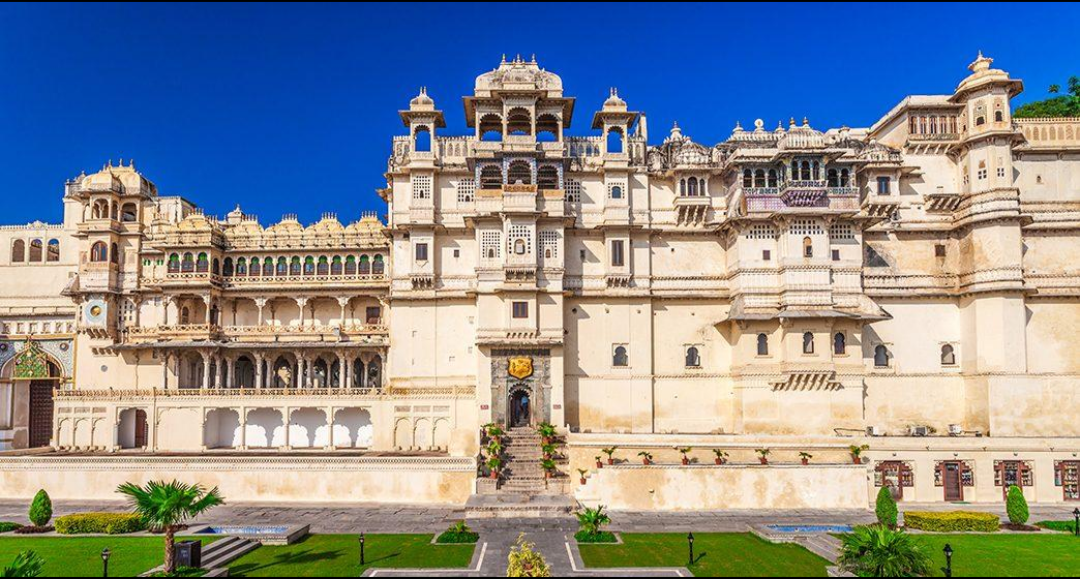
Rajasthan's built heritage is unusually well preserved for a region this arid, largely because stone and lime plaster survive the climate far better than the mud-and-thatch construction typical of wetter parts of India. Rural homes historically took the form of thick-walled, courtyard-centred structures — round mud-and-thatch huts (jhopas) in the poorer desert tracts, and more substantial stone or brick havelis among wealthier landowning and merchant families. The Shekhawati region, home to many of the Marwari trading families discussed below, is particularly known for elaborately frescoed havelis, built by merchants who had grown wealthy in Calcutta and Bombay and sent money home to construct increasingly grand family houses, turning entire small towns into open-air galleries of merchant-class art. Water scarcity shaped the built landscape just as strongly: stepwells (baoris) and reservoirs built to capture and store the brief monsoon rains remain a defining feature of the region's older towns, and the great hilltop and desert forts Chittorgarh, Kumbhalgarh, Jaisalmer, Mehrangarh were built as much for water storage and siege endurance as for military defence.
12. Folklore and Oral Tradition
Rajasthan's oral culture runs through several parallel traditions. The Pabuji ki Phad is a long devotional scroll-painting depicting the folk deity Pabuji, unrolled and sung by Bhopa priest-performers over the course of a night, a tradition that functions simultaneously as religious ritual, historical memory, and travelling art form. Dhola-Maru, a folk-romance ballad, and the wider bardic tradition once maintained by professional Charan and Bhat genealogist-poets attached to Rajput courts, both carried the region's dynastic history forward long before written record-keeping caught up. Folk deities specific to the region Gogaji, Ramdevji, Tejaji draw devotees across caste lines and are central to a number of the state's major village fairs. The Manganiyar and Langa musical traditions described above are themselves a form of oral history, their song repertoires carrying genealogies, historical events, and moral instruction across generations in much the same way ragini and saang do in Haryana.
13. Education, Livelihoods, and Socioeconomic Profile
Military service has long been a defining livelihood for Rajput, Jat, and other landholding families, a legacy of the region's centuries as a patchwork of martial princely states, and Rajasthan continues to supply a disproportionate share of recruits to the Indian Army. Alongside farming, mining, and the armed forces, tourism has become an enormous part of the modern economy forts, palaces, desert safaris, and heritage-hotel conversions of former royal residences now support a large share of employment in cities like Jaipur, Udaipur, and Jodhpur, an economic afterlife for the old aristocracy that has proved considerably more durable than its original military and administrative role. Handicrafts, textiles, and gemstone-cutting (particularly in Jaipur) remain significant traditional industries, and, as discussed below, the state's Marwari trading castes built an entirely separate and enormously consequential economic legacy far outside Rajasthan's own borders.
14. Diaspora
Rajasthan's most distinctive diaspora story belongs to its Marwari trading communities, whose migration out of the region began under Mughal patronage Vaishya merchants and financiers reportedly moved into Bengal alongside Rajput soldiers sent there as part of the imperial army and accelerated sharply once the Mughal Empire weakened and commercial power shifted from overland caravan routes to the colonial port cities. Marwari firms established themselves first in Calcutta from the eighteenth century onward, later in Bombay, and eventually across a network stretching to Rangoon, Singapore, Hong Kong, and, in the twentieth century, East Africa, the United Kingdom, and North America. Several of India's best-known industrial families the Birlas, Bajajs, Goenkas, and others, including the ancestors of steel magnate Lakshmi Mittal trace their commercial roots back to this Marwari merchant network out of Rajasthan's Shekhawati region.
15. Prominent Figures
15.1 Rulers, Politics, and the Freedom Movement
Maharana Pratap and Rana Sanga of Mewar, and Prithviraj Chauhan of Ajmer and Delhi medieval rulers remembered above all for resisting external conquest, and central figures in how Rajasthani identity narrates its own history.
Bhairon Singh Shekhawat — long-serving Chief Minister of Rajasthan and later Vice President of India.
Vasundhara Raje and Ashok Gehlot — prominent recent Chief Ministers who have shaped the state's post-liberalisation politics.
Rajyavardhan Singh Rathore — army officer, Olympic shooting medallist, and later Union minister.
15.2 Business
- The Birla family, originally from Pilani in Shekhawati, one of India's oldest and largest industrial houses, and Lakshmi Mittal, the steel magnate whose family's commercial roots also trace back to the Shekhawati Marwari trading network.
15.3 Sports and Arts
- Deepak Chahar — international cricketer with roots in Hanumangarh district.
- Prasoon Pandey — Jaipur-born advertising filmmaker known for some of India's best-remembered television commercials.
15.4 Science and Scholarship
- Brahmagupta — the seventh-century mathematician and astronomer, born in Bhinmal, credited with foundational work on zero and negative numbers.
- Gaurishankar Hirachand Ojha — historian and epigraphist whose study of Rajasthan's inscriptions and records earned him recognition as one of the region's foremost chroniclers.
16. Contemporary Reflections
17. Conclusion
Rajasthan is, in the end, a genome-and-heritage story built less around a single ancestral thread than around a landscape desert, hill range, and fortress that shaped everyone who settled there. Its population genetics trace a familiar northwestern Indian pattern: a substantial and disputed steppe-ancestry signal running through its dominant Rajput and Jat communities, a locally rooted maternal lineage beneath it, and centuries of gotra-based endogamy layered carefully on top. Its history runs from scattered Harappan-era settlements through the rise and endless internal rivalry of the Rajput clans, three centuries of war and calculated alliance with Delhi and the Mughals, Maharana Pratap's lone and famous refusal to bend, and finally the patient, seven-stage diplomatic project that stitched twenty-two separate courts into a single Indian state between 1948 and 1956. From the desert ballads of the Manganiyar and Langa musicians to the frescoed merchant havelis of Shekhawati, and from a dal baati churma thali to a Marwari trading network that now reaches across the globe, the Rajasthani story is at once a genetic case study, a martial and mercantile social history, and a living regional culture that continues to reshape itself.
References
- [1]Civilsdaily. "In news: Formation story of Rajasthan." https://www.civilsdaily.com/news/in-news-formation-story-of-rajasthan/
- [2]Sahapedia. "The Vegetation of the Thar Desert: Geography, History, Culture and Conservation." https://www.sahapedia.org/the-vegetation-of-the-thar-desert-geography-history-culture-and-conservation
- [3]Mongabay India. "The Aravalli mountains, an ecological asset under threat." https://india.mongabay.com/2025/12/the-aravalli-mountains-an-ecological-asset-under-threat-commentary/
- [4]RajRAS / Connect Civils. "Physical Divisions of Rajasthan" and "Formation of Rajasthan." https://rajras.in/
- [5]Vajiram & Ravi; GKToday; Testbook. "Battle of Haldighati." https://vajiramandravi.com/upsc-exam/battle-of-haldighati/ ; https://www.gktoday.in/battle-of-haldighati/
- [6]LSE South Asia Blog. "The 'Marwari' business community is now a part of history." https://blogs.lse.ac.uk/southasia/2014/09/08/the-marwari-business-community-is-now-a-part-of-history/
- [7]Marwar India Magazine. "From Traders to Business Tycoons." http://www.marwar.com/from-traders-to-business-tycoons/
- [8]Banglapedia. "Marwaris." https://en.banglapedia.org/index.php/Marwaris
- [9]Rajasthan Studio. "8 Communities of Rajasthan." https://rajasthanstudio.com/8-communities-of-rajasthan-full-of-culture-and-life/
- [10]AZA Fashions; Flamingo Travels; Infinity Learn. Rajasthani dress and cuisine overviews.
- [11]RajRAS / Connect Civils; Unacademy; Mana Traveller. Prominent personalities of Rajasthan.