

Ezhuthachan Community
A community for people of Ezhuthachan heritage — connect, explore ancestry, and share identity.
THE EZHUTHACHAN COMMUNITY OF KERALA
എഴുത്തച്ഛൻ · also known as Kadupattan / Kadupattar
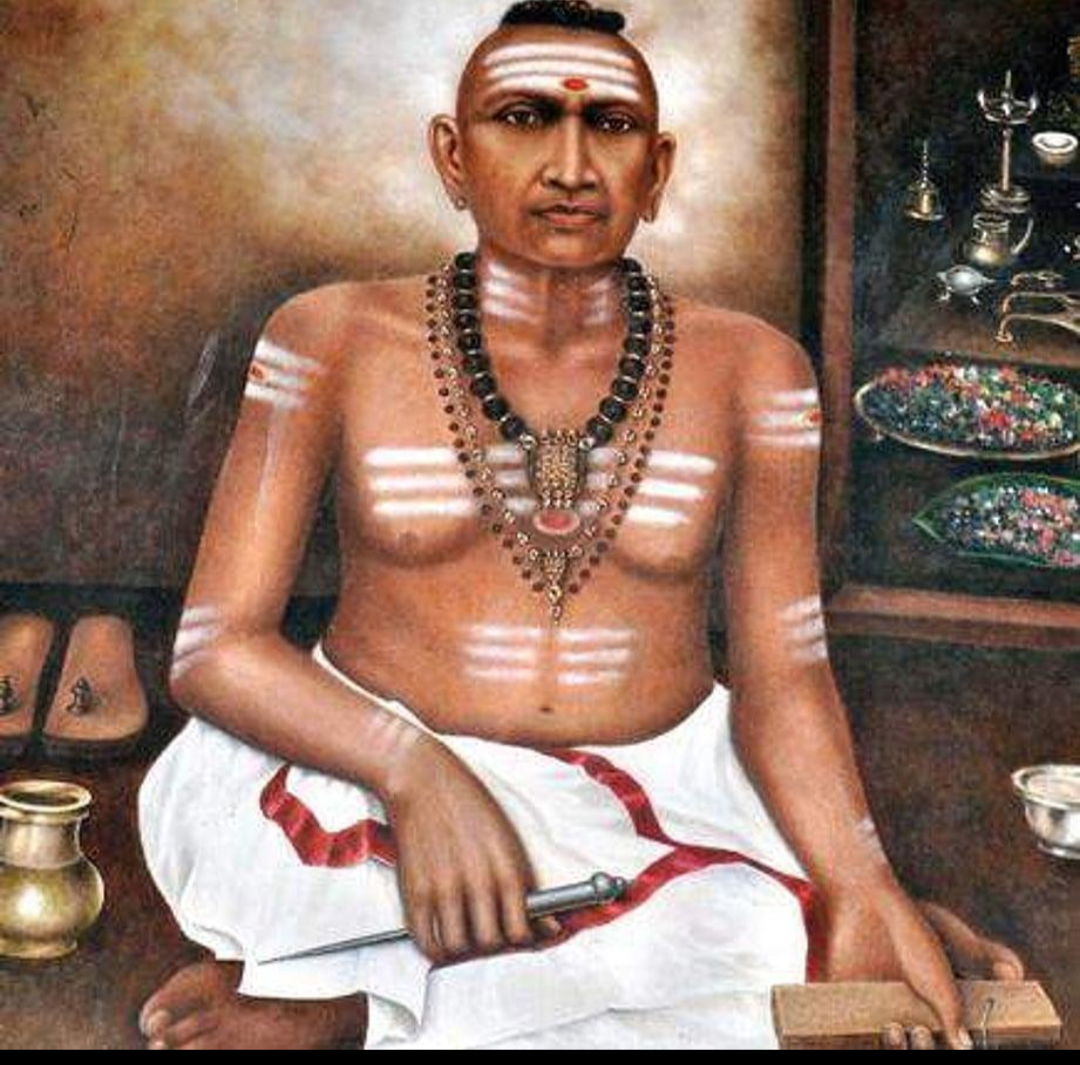
History, Culture, Geography and Ancestry of Kerala’s Hereditary Village Schoolmasters
Introduction: Who Are the Ezhuthachans?
The Ezhuthachans, also called Kadupattans or Kadupattar, are a Hindu community native to Kerala, concentrated in the old Malabar and Cochin country — today’s Thrissur, Palakkad, Malappuram and Kozhikode districts. For centuries they were the people who taught Kerala to read and count. Before modern schools existed, an Ezhuthachan ran the village ezhuthupalli (writing school), taught children the alphabet in sand and on palm leaf, drilled them in arithmetic, and introduced them to the Ramayana, Mahabharata and Puranic stories. Many were also well-versed in Sanskrit, astrology and traditional medicine.
Today the community is classified as an Other Backward Class (OBC) by both the Government of India and the Government of Kerala. It is represented by the Akhila Kerala Ezhuthachan Samajam and several regional trusts. Although small in number compared with Kerala’s larger communities, the Ezhuthachans carry an outsized cultural association: the name they share is the one Kerala gives to Thunchaththu Ramanujan Ezhuthachan, the sixteenth-century poet celebrated as the father of modern Malayalam.
This profile brings together colonial ethnographies, Kerala historiography, community sources and what population genetics can reasonably suggest, while noting clearly where traditions differ and where research has simply not yet been done.
Etymology: “Father of Letters”
The word Ezhuthachan joins Malayalam ezhuthu (writing, letters) and achan (father, master), and is usually translated as “father of letters” or “master of learning.” Edgar Thurston, writing in 1909, described Ezhuthachan as the name given to educated Kadupattans of Malabar employed as schoolmasters — in other words, it began as an occupational title and gradually became the community’s name.
The older name, Kadupattan (plural Kadupattar), is explained in two main ways. The first reads it as “Pattars (Bhattas, i.e. Brahmins) from Kadu,” a village in the Tamil country. The second, proposed by historian K. Balakrishna Kurup, reads it as Kadu-pottan, joining two old Jain centres, Kaduru (in present Karnataka) and Pottalakere (Patancheru, in present Telangana). Neighbouring communities historically used the respectful forms Pattarappan for men and Pattathiyaramma for women, and some colonial records called them Choular — “people from the Chola country.” A few Kadupattan families also used the title Panikkar.
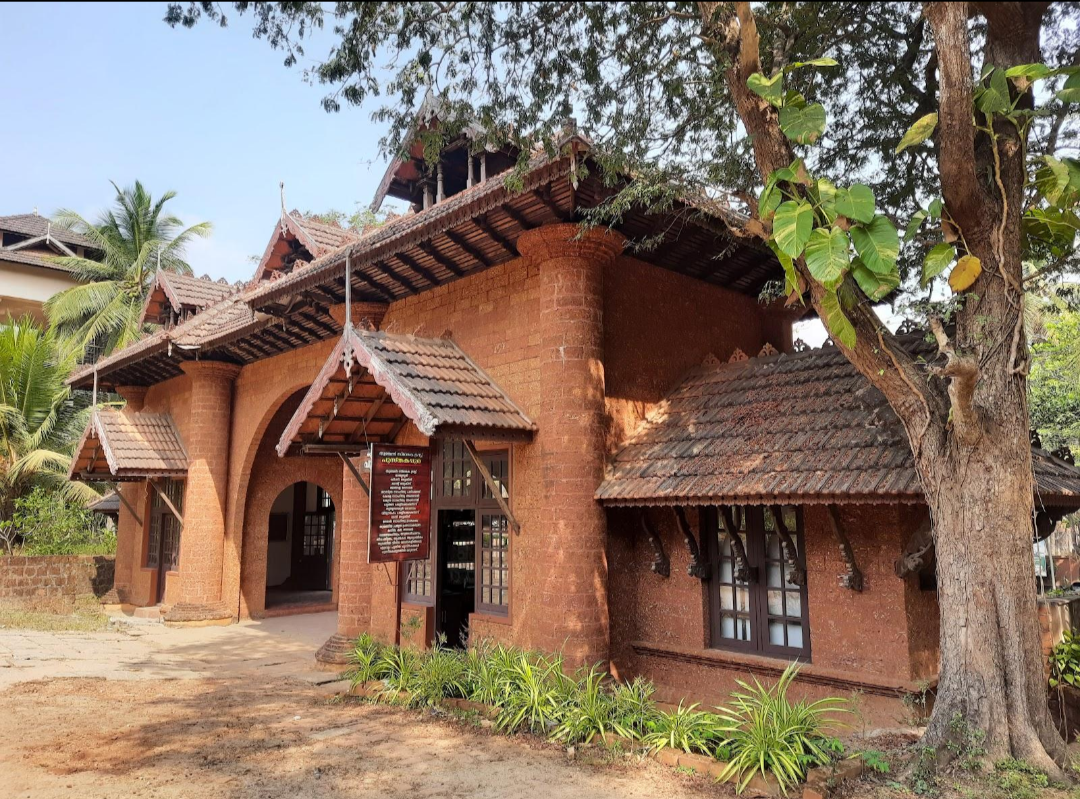
Geography: A Community of the Palakkad Gap and the Bharathapuzha
The Ezhuthachans are best understood as a regional community whose homeland follows the Bharathapuzha (Nila) river valley and the Palakkad Gap — the only major natural pass through the Western Ghats, and the historic corridor between the Tamil plains and Kerala’s coast. Their traditional heartlands include:
- Palakkad: Chittur, Kollengode, Ottapalam and the paddy-growing villages of Palakkad district, closest to the Tamil border.
- Southern Malabar (Malappuram/Palakkad): the old Valluvanad and Nedunganad territories, where the community ran many village schools.
- Tirur region: Tirur, Trikkandiyur and Tirunavaya on the Nila, remembered as the area of the earliest settlements and of Thunchan Parambu.
- Thrissur: the former Kingdom of Cochin, especially the areas around Thrissur town.
- Kozhikode: smaller populations around Kozhikode (Calicut), the old seat of the Zamorins who are said to have first patronised the community.
This geography matters for ancestry. A community that settled at the Kerala end of the Palakkad Gap sits at a natural meeting point of Tamil and Malayali populations, which is exactly the kind of setting where family trees — and DNA — tend to show mixed regional signals.
Origins and Early History
There is no single agreed account of Ezhuthachan origins. Three main traditions circulate, and each should be read as tradition or scholarly hypothesis rather than settled fact.
1. The Pattar-Brahmin tradition
The best-known story, cherished by the community itself and recorded by K. V. Krishna Iyer and M. G. S. Narayanan, holds that the Kadupattar were Brahmins (Bhattas) of a village called Kadu in the Pandya or Chola country who adopted unorthodox, “Buddhist” views and were driven out. They arrived in Calicut as refugees around 1447 CE, a date encoded in a Katapayadi chronogram. The senior princess of the Zamorin’s household granted them protection and appointed them teachers of letters to the palaces and the great Nair tharavads. Narayanan notes that the “Buddhist” label need not be literal, since any unorthodox view could be branded that way in medieval Kerala, and that the date is significant: a school of Sanskrit-to-Malayalam translators emerged within a century of it.
A variant recorded in the Trichur District Gazetteer (1962) says they were Pattar Brahmins degraded for eating a kind of fish. Community sources add that they once held high standing under the Zamorin but lost it through the envy of the Zamorin’s minister — which is why others sometimes called them pattanam pizhaithavar, “those who lost status.”
2. The Jain-guild hypothesis
K. Balakrishna Kurup proposed that the Kadupattans descend from a Jain teaching guild associated with Kaduru and Patancheru, both prominent Jain centres between roughly the eighth and thirteenth centuries. As Jainism declined in the Deccan, such groups moved south toward the Kaveri basin; South Indian inscriptions mention nobles titled Kadupattigal linked with Pallava and Chola courts. Wars of the thirteenth and fourteenth centuries may then have pushed families through the Nilgiris and the Palakkad Gap into Kerala, where the Bhakti movement absorbed them into Vaishnava, Shaiva and Shakta Hinduism. Supporters point to an old ezhuthupalli invocation that appears to address the Jina, and to references to Digambara monks in the Adhyatma Ramayanam.
3. An occupational caste of the Malabar trades
Older colonial and missionary sources give a humbler picture. Hermann Gundert’s 1872 dictionary describes the Kadupattar as a caste of packers and carriers who were also schoolmasters locally, and J. A. Baines (1912) grouped them with salt traders who had taken up “hedge-school” teaching. Community historians add that Kadupattans held the right to supply pure sesame oil to temples. These accounts may reflect the diverse livelihoods of different families rather than contradicting the migration stories.
Settlement in Kerala
Community tradition describes the migration as a series of family groups. The first eight households (the Ettu Veettukar), bearing names such as Thekkeppattu, Vadakkeppattu and Kizhakkeppattu, settled near Tirunavaya; a second group of thirty-two households (the Muppaththirandu Veettukar) settled in the Thrissur region; relatives later settled around Palakkad. During sixteenth-century fighting between the Zamorin and the Portuguese, families from the coast moved inland to Valluvanad, Chittur and Cochin. The community appears in Gundert’s Keralolpathi, in Valluvanad palm-leaf records of 1833 and 1849, and in the British census of 1881.
The Ezhuthupalli: A Community of Teachers
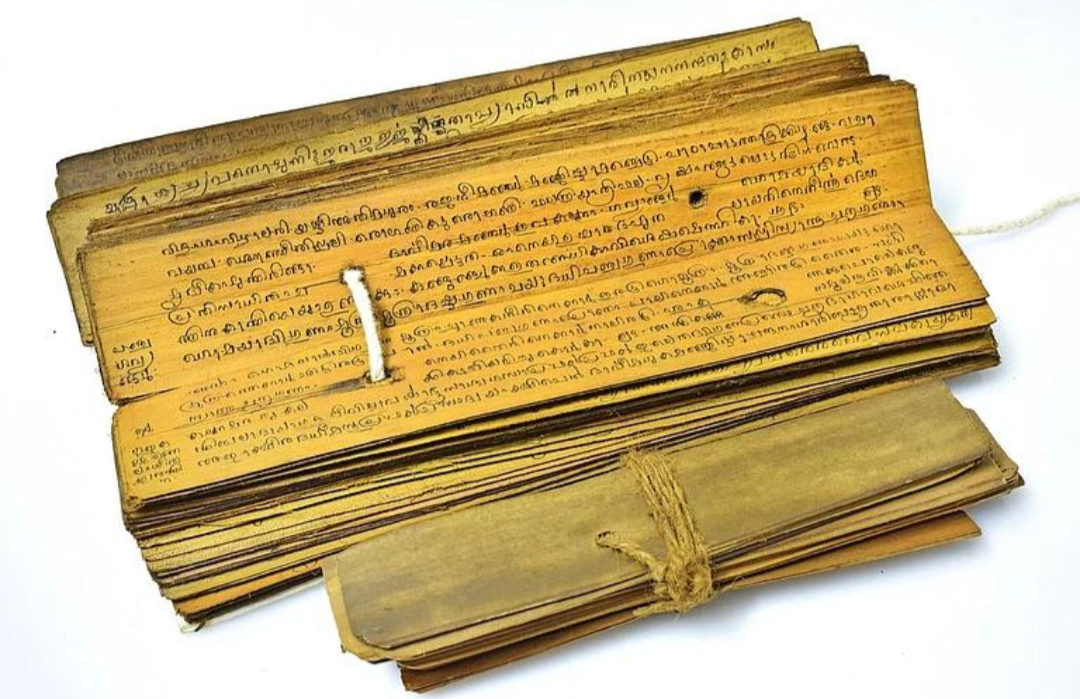
By the sixteenth century, as M. G. S. Narayanan notes, Ezhuthachans were attached as tutors to the kovilakams of royal families and to large Nair households. Wealthy families would host a teacher at home, a practice called Ezhuthachan thamasikkuka. Children learned to write letters in sand, then on palm leaf, and were taught Vattezhuthu and later the Grantha-based script, arithmetic and Puranic stories. Many Ezhuthachans also became known as physicians, astrologers, Sanskrit scholars and practitioners of mantravada; the Aithihyamala preserves stories of the Chembra Ezhuthachans, a celebrated lineage of learned men.
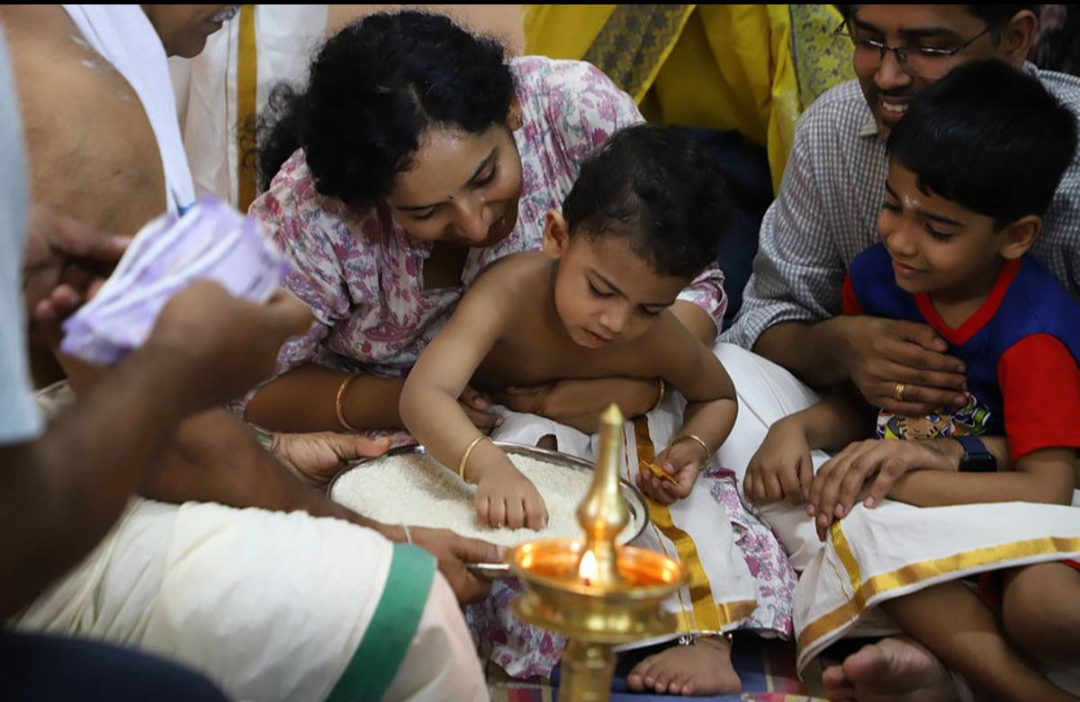
When British rule introduced public schooling to Malabar in the nineteenth century, many ezhuthupallis turned into aided primary schools. Around 1850, according to local historian S. Rajendu, the community led the founding of numerous schools for ordinary people in Valluvanad and Nedunganad. Kerala’s Vidyarambham ritual — where a child writes their first letters on Vijayadashami — preserves the memory of this world of village teachers.
Social Structure and Inheritance
William Logan’s Malabar Manual (1887) observed that the Ezhuthachans could hardly be told apart from the Nairs except by their inheritance customs. That exception is important. While most Nair families followed marumakkathayam (matrilineal descent), the Ezhuthachans followed a modified makkathayam, a patrilineal system in which property passed from father to son. Some census records nevertheless lumped them with the Nairs, and some scholars see this closeness as the result of adapting to Kerala customs after arrival.
Historically the community was placed among the Shudra castes, though it was permitted to worship up to the balikkallu (sacrificial stone) of temples. Monogamy was the norm, polyandry was not practised, and widows could remarry. Colonial ethnographers remarked that many of their household customs, and especially their funeral rites, resembled Tamil practice more than Malayali practice — a detail that has fed the tradition of a Tamil-country origin.
Organised community life began in 1906, when the Sanskrit scholar Chakkulliyal Kunjunni Ezhuthachan founded the Adhyapaka Samajam. The Ezhuthachan Samajam took shape under Vakil P. Kumaran Ezhuthachan and his son-in-law V. R. Krishnan Ezhuthachan, both active in the Congress, the Cochin Rajya Prajamandal and peasant movements. After a quiet period following Independence, the Samajam revived from the 1990s and now runs educational institutions, including Thunchath Ezhuthachan College and a law college in Palakkad.
Religion and Belief
Ezhuthachans are Hindus with a strong blend of Vaishnava, Shaiva and Shakta practice. Household and community worship centres on Ganapathy, Vettakkorumakan (the hunter-deity popular across Malabar), Bhagavati, Vishnumaya and Shakti. A community tradition holds that Adi Shankara himself instructed their ancestors in Shakti worship, and some families still describe their Shakta rites as inherited from their forefathers; teachers who followed this path were sometimes called Gurukkal. The reading of Adhyatma Ramayanam during Karkidakam (Ramayana Masam, July–August) carries special pride in Ezhuthachan homes because of its association with Thunchaththu Ezhuthachan.
Language and Literature
The community speaks Malayalam, usually in the central-northern dialects of Palakkad, Valluvanad and Thrissur; families near Chittur and the Tamil border are often comfortable in Tamil as well. Its historical role in literacy is its greatest cultural legacy. M. G. S. Narayanan links the arrival of the Kadupattar to a strengthening of literary activity among non-Brahmin groups in Malabar and to a wave of translations from Sanskrit into Malayalam.
Whether Thunchaththu Ramanujan Ezhuthachan belonged to this community is debated. Some older accounts place him in the Chakkala Nair group. The community, along with historians K. Balakrishna Kurup and Velayudhan Panikkassery and the nineteenth-century paleographer A. C. Burnell, holds that he was a Kadupattan; Burnell described “Eluttacchan” as indicating his caste. The question remains open, but his legacy — the kilippattu style and the Adhyatma Ramayanam — is central to how the community understands itself.
Customs, Family Life and Marriage
Ezhuthachan weddings follow a simple Kerala Hindu form, with rituals such as Ganapathy homam at the start, dakshina (gifts to elders in return for blessings) and panigrahanam, where the groom takes the bride’s hand. Like most Kerala Hindu weddings they are relatively short ceremonies followed by a vegetarian sadya. Marriage within the community remains common in rural areas, though inter-community marriage has increased among urban and diaspora families.
Small cultural things that community members often mention include: the pride attached to Vidyarambham day and initiating children into letters; the practice of reading the Ramayana aloud in Karkidakam; households where an elder still knows a little Sanskrit or astrology; family names ending in -pattu or linked to old tharavads; and a general respect for teaching, which many families still regard as the community’s natural profession.
Cuisine
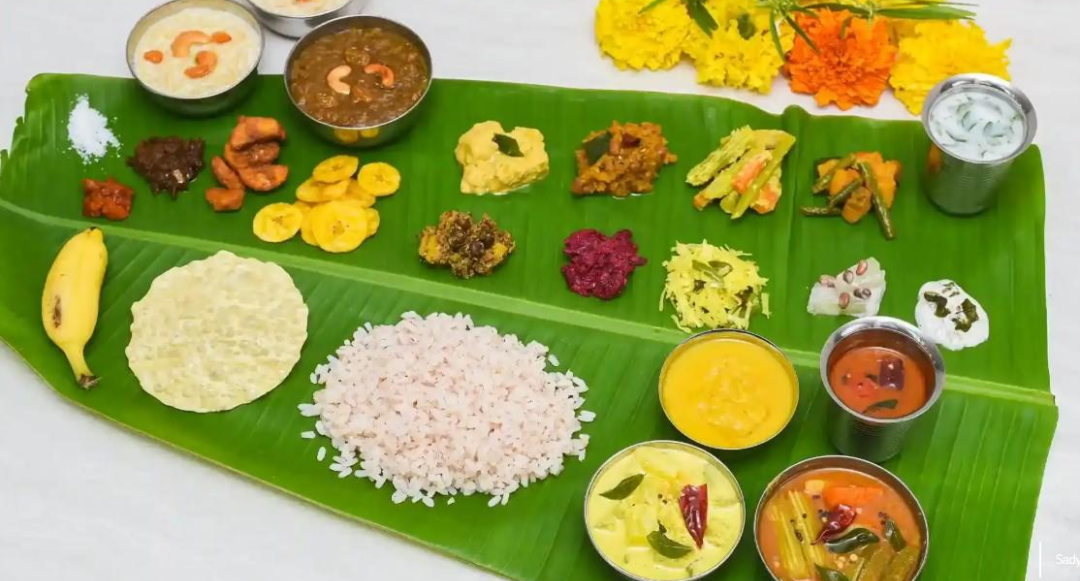
The community has no separately documented cuisine; its food is that of Hindu households of Palakkad, Thrissur and southern Malabar. Many traditional families were largely vegetarian or ate fish sparingly, though practice varies widely today. Dishes typical of the region include:
- Sadya — a banana-leaf feast of rice, sambar, avial, olan, kalan, erissery, thoran and pachadi, served at weddings, Onam and Vishu.
- Kalan — a thick yogurt-and-yam curry especially associated with Thrissur and Palakkad sadyas.
- Rasam, mor kuzhambu and Tamil-style kuzhambu — a Palakkad speciality flavoured with the Tamil-influenced cooking of the border, alongside dishes such as puli inji (ginger-tamarind relish).
- Sweets: rice-and-jaggery or palada payasam, and neyyappam and unniyappam for temple festivals.
- Everyday foods: puttu, idiyappam, dosa, and banana chips fried in coconut oil.
If the tradition of Tamil-country customs is correct, some families may keep recipes or festival foods that echo Tamil Nadu more than coastal Kerala. We invite community members to share heirloom recipes with us.
Dress
Traditional dress is the Kerala standard. Men wear the mundu or double veshti, often with a melmundu (shoulder cloth), and the kasavu-bordered mundu for ceremonies. Women wear the mundum neriyathum or set-mundu, and the kasavu saree for festivals and weddings, with gold jewellery such as the palakka mala, kasu mala and nagapadam. Older photographs of village teachers typically show a plain white mundu, bare upper body or a simple shirt, and sometimes a sacred thread or sandal-paste marks.
Physical Traits
Like most Kerala communities, Ezhuthachans show a wide range of appearances. Edgar Thurston described them as medium in stature with complexions ranging from dark to fair and wavy or curly hair. Such descriptions from colonial “race science” should be read with caution; they tell us very little about ancestry, and individuals in any Indian community vary more than these generalisations suggest.
Population Size
There is no reliable current figure. India has not published a caste-wise census since 1931, and the Ezhuthachans were counted with other groups in several colonial censuses. Community organisations give their own estimates, but these are not independently verified. The honest answer is that the Ezhuthachans are a small-to-mid-sized regional community, concentrated in four districts, with numbers likely in the lakhs rather than millions.
Diaspora
Ezhuthachan migration follows broader Kerala patterns. Many families moved to Chennai, Coimbatore (just across the Palakkad Gap), Bengaluru, Mumbai and Delhi for education and government or private employment. Like others from Palakkad and Thrissur, many joined the large Kerala migration to the Gulf — the UAE, Saudi Arabia, Qatar, Oman, Kuwait and Bahrain — from the 1970s onward. Smaller professional communities live in the United States, United Kingdom, Canada, Australia and Singapore. Diaspora families often keep a strong tie to their ancestral villages through temple festivals and family events.
Occupations: Then and Now
Teaching is the community’s traditional calling, and a large share of members still work as schoolteachers, lecturers and education officials. Historically, families also practised agriculture, Ayurveda, astrology, temple-related services, and, according to some sources, trade in oil and salt and palanquin bearing. Today Ezhuthachans work across government service, law, engineering, medicine, IT, banking, the arts and the Gulf private sector.
| Your Family’s Occupation Has a Story TooTeachers, healers, astrologers, oil-traders — each family branch carried its own path through history. Adding your DNA and family details helps rebuild the full picture of the community.▶ Join the Ezhuthachan Community Project |
|---|
Genetic Ancestry: What We Expect, and What We Don’t Yet Know
No published study has examined Ezhuthachan DNA as a separate group. What follows is therefore based on published research on Kerala and South Indian populations in general, and should be read as an informed starting point — a set of hypotheses that GenoConnect’s community feature is designed to test.
The three ancestral components
Most Indians can be modelled as a mix of three deep ancestral sources. For a Kerala community like the Ezhuthachans, published regional data suggest roughly the following pattern:
| Ancestral source | Who they were | Expected share in Ezhuthachans |
|---|---|---|
| AASI (Ancient Ancestral South Indian) | Descendants of India’s first hunter-gatherers; closest living relatives are Andamanese and some tribal groups | Substantial — likely similar to other Kerala middle castes, and a major share of total ancestry |
| Indus Periphery / Iranian-farmer related | Ancestry linked to people of the Indus Valley Civilisation era | Large — typically the single biggest or second-biggest component in South Indian castes |
| Steppe (Central Asian pastoralist) | Bronze Age herders associated with the spread of Indo-European languages | Low — generally a few percent in Kerala non-<a href="/communities/brahmin">Brahmin</a> groups; clearly higher in <a href="/communities/brahmin">Brahmin</a> groups |
Why this matters for the Ezhuthachans: the steppe component is a useful clue for the origin debate. Tamil and Kerala Brahmin groups usually carry noticeably more steppe ancestry than their non-Brahmin neighbours. If the Pattar-Brahmin tradition describes a large share of Ezhuthachan ancestors, we would expect community members to show steppe levels closer to Pattar or Tamil Brahmin groups. If their steppe levels resemble those of Nairs and other Kerala middle castes, the tradition may describe a founding lineage rather than the community as a whole — or ancestors may have married extensively into local families after arrival.
Haplogroups: paternal and maternal lines
Y-DNA haplogroups trace a direct father-to-son line, and mitochondrial (mtDNA) haplogroups trace a direct mother-to-daughter line. Because the community has followed patrilineal inheritance for centuries, its Y-DNA lines may be especially informative about founding families.
| Line | Haplogroups commonly found in Kerala populations | What it could suggest |
|---|---|---|
| Y-DNA (paternal) | H (esp. H1a), L1a, R1a (Z93 branch), J2, R2, C, F* | High R1a or specific J2 branches could support an outside or <a href="/communities/brahmin">Brahmin</a>-linked paternal origin; H and L are deeply South Indian |
| mtDNA (maternal) | Mostly M lineages (M2, M3, M5, M30, M18 etc.), with U2, R5, R30 and others | Mostly indigenous South Asian maternal lines are expected in nearly every Kerala community |
A pattern often seen in Indian communities formed through migration is a more “outside” paternal profile combined with a largely local maternal profile, reflecting incoming men who married local women. Whether that holds for the Ezhuthachans is an open and interesting question.
Closest genetic neighbours: communities to compare
Based on geography, history and tradition, the following groups are the most useful comparisons. Which ones Ezhuthachans actually cluster with is precisely what community testing can reveal:
- Nairs, especially Malabar and Palakkad subgroups — the community Logan said was hardly distinguishable from Ezhuthachans, and the most likely source of intermarriage.
- Pattar (Kerala Iyer) Brahmins, the Tamil-origin Brahmins of Palakkad, the key test of the Pattar-Brahmin tradition.
- Tamil non-Brahmin castes such as groups from the Kaveri delta and Kongu region, relevant to the tradition of Tamil customs and Chola-country origins.
- Kaniyar Panickers and Ambalavasis, Kerala’s other hereditary teacher-astrologer community (Ganaka/Panicker) and Ambalavasi temple groups.
- Thiyyas/Ezhavas and Namboodiris, as regional reference points for broader Malabar ancestry.
- Jain communities of Karnataka and Tamil Nadu, relevant to the Jain-guild hypothesis, though genetic signals of such an old, partly religious identity may be difficult to detect.
Notable Figures
- Thunchaththu Ramanujan Ezhuthachan (16th century) — devotional poet and author of the Adhyatma Ramayanam Kilippattu, celebrated as the father of modern Malayalam. The community regards him as one of its own, though his caste remains debated among historians.
- Vakil P. Kumaran Ezhuthachan — lawyer, freedom fighter and Congress leader, founder in practice of the Ezhuthachan Samajam.
- V. R. Krishnan Ezhuthachan — freedom fighter and founder of the Cochin Rajya Prajamandal, later president of the Ezhuthachan Samajam.
- K. N. Ezhuthachan — scholar in Malayalam and Sanskrit, author of the Sanskrit epic Keralodayam and works on Kerala’s social history.
- The Chembra Ezhuthachans — the legendary line of scholars and practitioners remembered in Kottarathil Sankunni’s Aithihyamala.
- Chakkulliyal Kunjunni Ezhuthachan — Sanskrit scholar and teacher who founded the Adhyapaka Samajam in 1906.
Conclusion
The story of the Ezhuthachans is the story of Kerala learning to write. Whether their ancestors came through the Palakkad Gap as Brahmin refugees, a Jain guild of teachers, or grew out of Malabar’s own villages, the community built its identity around letters, knowledge and teaching — and the name Ezhuthachan became inseparable from Malayalam itself. Much of their deeper history, however, remains unwritten. Traditions disagree, records are thin, and no genetic study has yet examined the community. That is where Ezhuthachan families themselves can now contribute: by adding their DNA and family stories to build the first real portrait of where Kerala’s schoolmasters came from.
Frequently Asked Questions
Q. What does “Ezhuthachan” mean?
It means “father of letters” or “master of learning,” from Malayalam ezhuthu (writing) and achan (father). It began as an occupational title for village schoolmasters and became the community’s name.
Q. Are Ezhuthachans and Kadupattans the same community?
Yes. Kadupattan (or Kadupattar) is the older name; Ezhuthachan was originally the title of those who worked as teachers and is now the common name for the community.
Q. Where do Ezhuthachans mainly live?
Mainly in Thrissur, Palakkad, Malappuram and Kozhikode districts of Kerala, along the Bharathapuzha valley and the Palakkad Gap, with a diaspora across Indian cities and the Gulf.
Q. Are Ezhuthachans a subgroup of the Nairs?
Q. What is the Ezhuthachans’ reservation status?
The community is listed as an Other Backward Class (OBC) in Kerala and in the central list.
Q. Was Thunchaththu Ezhuthachan from this community?
The community and several historians believe so, but it is debated; some older accounts link him to the Chakkala Nair group. His caste has never been conclusively established.
Q. Were Ezhuthachans originally Brahmins?
One strong tradition says they descend from Pattar Brahmins of the Tamil country who arrived in Calicut around 1447 CE. Another view links them to a Jain teaching guild. Neither has been proven, and genetic testing can help test these traditions.
Q. What is the typical genetic make-up of an Ezhuthachan?
No study has examined the community specifically. Based on Kerala populations in general, we expect substantial AASI ancestry, a large Indus-farmer-related component and a low steppe component. Testing with GenoConnect helps establish the actual community profile.
Q. Which Y-DNA and mtDNA haplogroups are Ezhuthachans likely to carry?
Likely Y-DNA haplogroups include H, L, R1a, J2 and R2, while maternal lines are expected to be mostly South Asian M lineages along with U2 and R lineages. Community-level data does not yet exist.
Q. Which communities are Ezhuthachans genetically closest to?
Q. How can I contribute to research on my community?
Take a GenoConnect DNA test and add your family details. Each participant helps build the community’s first genetic profile, including ancestry proportions, haplogroups and closest related communities.
References
- [1]1. Thurston, Edgar (1909). Castes and Tribes of Southern India, Vols. 2–3. Madras: Government Press.
- [2]2. Iyer, L. K. Anantha Krishna (1912). The Tribes and Castes of Cochin, Vol. 2, pp. 103–114.
- [3]3. Logan, William (1887). Malabar Manual. Madras: Government Press, p. 139.
- [4]4. Menon, A. Sreedhara (1962). Kerala District Gazetteers: Trichur. Trivandrum: Government of Kerala, p. 208.
- [5]5. Narayanan, M. G. S. (2006/2018). Calicut: The City of Truth Revisited. Calicut: Mathrubhumi Books, pp. 158–159.
- [6]6. Kurup, K. Balakrishna (1998/2000). Viśvāsattinte Kāṇāppuṟaṅṅaḷ. Calicut: Mathrubhumi Publications, pp. 15–40.
- [7]7. Iyer, K. V. Krishna (1938). The Zamorins of Calicut. Calicut: Norman Printing Bureau, p. 51.
- [8]8. Gundert, Hermann (1868). Keralolpathi (2nd ed.); (1872) A Malayalam and English Dictionary. Mangalore: Basel Mission.
- [9]9. Burnell, A. C. (1878). Elements of South Indian Palaeography (2nd ed.). London: Trübner, p. 42.
- [10]10. Singh, K. S. (1996). Communities, Segments, Synonyms, Surnames and Titles. Anthropological Survey of India.
- [11]11. Sankunni, Kottarathil. Aithihyamala (“Chembra Ezhuthachanmar”).
- [12]12. Narasimhan, V. M. et al. (2019). “The formation of human populations in South and Central Asia.” Science 365(6457).
- [13]13. Reich, D. et al. (2009). “Reconstructing Indian population history.” Nature 461, 489–494.
- [14]14. Wikipedia. “Ezhuthachan (caste).” https://en.wikipedia.org/wiki/Ezhuthachan_(caste)
- [15]15. Akhila Kerala Ezhuthachan Samajam. Community website (ezhuthachansamajam.com).
- [16]16. Note: Community oral history contains several accounts of Ezhuthachan origins. Population figures, caste affiliations of historical figures and genetic expectations are presented as uncertain where the evidence is incomplete.