

Kushwaha Community
Explore the Kushwaha (Koeri, Kachhi, Murao, Maurya, Shakya) community of the Gangetic plains: origins, horticultural heritage, culture, cuisine, diaspora, and genetic ancestry.
THE KUSHWAHA COMMUNITY OF INDIA
Kushwaha community, Koeri caste, Kachhi, Murao, Maurya, Shakya, Kushwaha ancestry, Kushwaha DNA, Kushwaha haplogroup, Bihar Uttar Pradesh communities, South Asian genetics
Introduction: Who Are the Kushwahas?
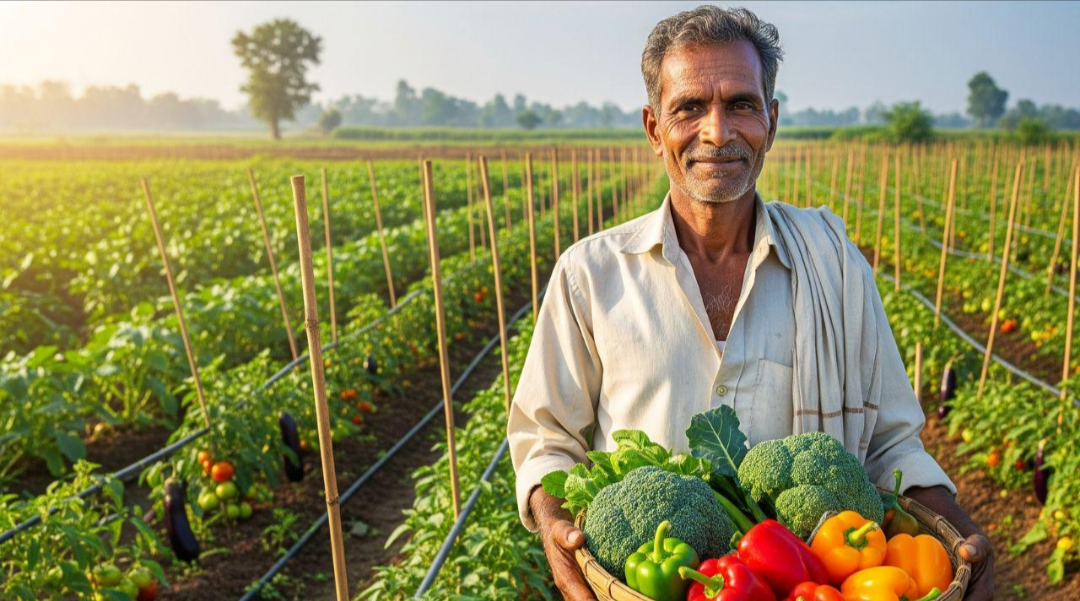
The Kushwaha (also written Kushvaha or Kushwah) are one of the largest agricultural communities of the Gangetic plains of northern India. The name today works as an umbrella identity that brings together several regional groups historically known as Koeri in Bihar and eastern Uttar Pradesh, Kachhi in central and western Uttar Pradesh and Bundelkhand, and Murao in Awadh, along with families who use surnames such as Maurya, Shakya, Mahto, Mehta, Bhagat and, in some regions, Saini. What unites these groups is a shared occupational heritage of intensive cultivation, particularly vegetables, poppy, sugarcane, flowers and other high-value crops that require skilled, labour-intensive care, and a twentieth-century movement that joined them under a common Kushwaha name.
Unlike communities defined by a single founding migration or religious conversion, the Kushwahas are best understood as a people of a landscape. Their identity was shaped by the fertile alluvial soils of the Ganga, Ghaghara, Gandak and Son river valleys, by village markets and urban vegetable trade, and by centuries of living alongside Yadavs, Kurmis, Bhumihars, Rajputs, Brahmins and many other neighbouring communities. This profile brings together historical, sociological and community sources to describe Kushwaha geography, origins, culture, cuisine, diaspora and notable figures, and closes with what is known, and what remains to be discovered, about the community's genetic ancestry.
Etymology of the Name "Kushwaha"
Community tradition derives the name Kushwaha from Kusha, the son of Rama in the Ramayana, making the community "Kushvanshi", descendants of Kusha, and therefore part of the Suryavanshi (solar) lineage of Kshatriyas. Older regional names have more grounded meanings. "Koeri" is widely linked in folk etymology to "koir", the vegetable garden or plot near the village, reflecting the community's association with market gardening. "Kachhi" is associated with "kachhar", the moist, low-lying riverbank land where vegetables thrive. "Murao" is often tied to the cultivation of "muri" or root vegetables such as radish, though some members connect it with Maurya.
Historians note that the unified Kushwaha name and the claim of descent from Kusha gained wide currency in the early twentieth century, as part of a broader movement of status assertion among agricultural castes. Before that period, the Koeri, Kachhi and Murao groups were recorded separately in colonial ethnographies and census reports, and their sacred traditions leaned more towards Shiva and Shakti worship than towards Rama.
Geography: Homeland and Distribution
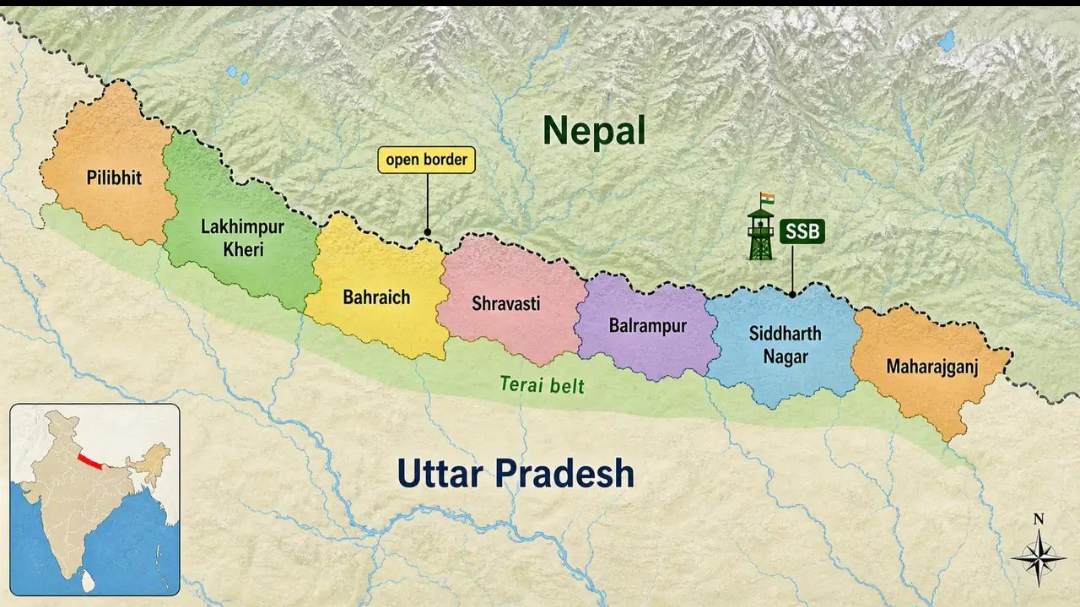
The Kushwaha heartland lies in the middle Gangetic plain. In Bihar the community, mainly under the Koeri name, is found across almost every district, with notable concentrations in Bhojpur, Rohtas, Buxar, Patna, Nalanda, Aurangabad, Gaya, East and West Champaran, Siwan, Saran, Samastipur, Vaishali and Muzaffarpur. In Uttar Pradesh, the community spreads from the Bhojpuri-speaking east (Ballia, Ghazipur, Deoria, Kushinagar, Gorakhpur, Varanasi) through Awadh (Lucknow, Barabanki, Unnao, Rae Bareli, Sitapur, Lakhimpur Kheri) to the Kachhi and Shakya belts of the west and centre (Etah, Mainpuri, Farrukhabad, Kannauj, Etawah, Badaun, Bareilly) and into Bundelkhand (Jhansi, Lalitpur, Jalaun).
Beyond these two states, Kushwaha families are well established in Madhya Pradesh, especially in the Gwalior-Chambal, Bundelkhand and Rewa regions, and in Jharkhand, Chhattisgarh, Rajasthan, Haryana, Delhi and Uttarakhand. Across the border, the Kushwaha or Koiri community forms a significant population in the Madhesh plains of Nepal, where common surnames include Mahato, Kushwaha, Mehta and Bhagat.
Origins and Early History
The Kushwaha community holds several origin narratives, and it is useful to separate them clearly. The first is the mythological tradition of descent from Kusha, son of Rama, which places the community in the Suryavanshi Kshatriya line. The second identifies the community with the Mauryas, the dynasty founded by Chandragupta Maurya around 321 BCE, which went on to rule much of the subcontinent under Ashoka. The third links some branches, especially those using the surname Shakya, to the Shakya clan of Kapilavastu into which Gautama Buddha was born. These narratives carry deep emotional and political significance within the community, and the Maurya connection in particular is celebrated in festivals, statues and community literature.
Historians, however, generally note that no inscriptions or early texts directly connect today's Koeri, Kachhi or Murao groups with Kusha, the Mauryas or the Shakyas. In the documentary record, these groups appear as skilled cultivators in medieval and colonial sources. Colonial ethnographers such as H. H. Risley and William Crooke described the Koeri and Kachhi as among the most industrious agriculturists of the region, specialising in poppy (for the colonial opium trade), vegetables, tobacco and garden crops near towns. Their expertise made them valued tenants, and in many villages Koeri households occupied the rich garden land immediately around the settlement.
A turning point came in the early twentieth century. In 1922 the All India Kushwaha Kshatriya Mahasabha held its first session, bringing the Koeri, Kachhi and Murao under a single banner. Writers such as Ganga Prasad Gupta published histories asserting Kshatriya origins, and community members began adopting the sacred thread, Vaishnava devotional practices centred on Rama, and new surnames such as Kushwaha and Maurya. Historian William Pinch's study of peasant identity in colonial north India documents how this movement reshaped community self-understanding. After Independence, the community became central to agrarian and backward-class politics in Bihar and Uttar Pradesh, and today it is classified as an Other Backward Class (OBC) in most states.
Regional Sub-groups and Surnames
The Kushwaha community is a cluster of related groups that historically married largely within their own regional sub-group. The main branches include:
- Koeri (Koiri) — The largest branch, concentrated in Bihar, Jharkhand, eastern Uttar Pradesh and the Nepal Terai. Common surnames include Kushwaha, Mehta, Mahto, Singh, Prasad, Bhagat and, increasingly, Maurya.
- Kachhi — Found in central and western Uttar Pradesh, Bundelkhand and Madhya Pradesh, traditionally associated with riverbank vegetable cultivation. Many now use Kushwaha or Kachhwaha as a surname.
- Murao (Maurya) — Concentrated in Awadh and adjoining areas of Uttar Pradesh, renowned for vegetable and root-crop farming near towns such as Lucknow and Kanpur. Many Muraos now use the surname Maurya.
- Shakya — Found mainly in western Uttar Pradesh (Etah, Mainpuri, Badaun, Farrukhabad), with a strong tradition of claiming descent from the Buddha's clan; some Shakya families have embraced Buddhism.
- Saini and Mali links — In some states, the Saini and Mali communities are grouped alongside Kushwahas for administrative or organisational purposes, although their histories and identities are distinct, and many Sainis of Punjab and Haryana maintain a separate identity.
Note that the Kushwaha agricultural community is distinct from the Kachhwaha Rajput dynasty of Amber and Jaipur, despite the similarity of names. Some community writers draw connections between the two; most historians treat them as separate groups.
Population Size
India's national census has not published caste-wise figures since 1931, so all modern estimates are partial. The most reliable recent count comes from the Bihar Caste-Based Survey released in October 2023, which recorded Kushwahas (Koeri) at 4.21 percent of Bihar's population, about 5.5 million people, making them the second-largest OBC group in the state after Yadavs. In Uttar Pradesh, the Kushwaha-Maurya-Shakya-Saini cluster is widely regarded as one of the three largest OBC groupings alongside Yadavs and Kurmis, with political analysts commonly estimating it at around 6 to 8 percent of the state's population. Including Madhya Pradesh, Jharkhand, other states and Nepal, the total community is plausibly in the range of 25 to 35 million people, though this figure should be treated as an informed estimate rather than a census count.
Traditional Occupation and Jobs Today
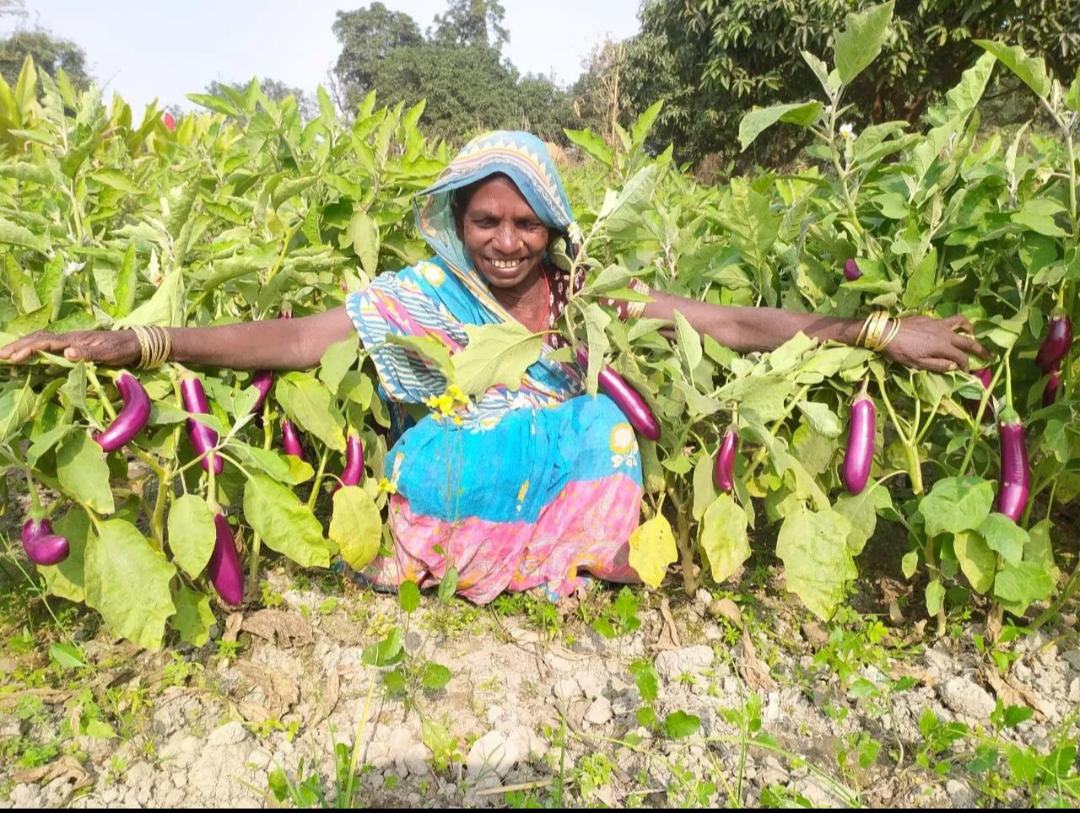
The defining traditional occupation of the Kushwahas is intensive, skilled cultivation. Koeri and Murao farmers were known for producing more per acre than most neighbours, through careful irrigation, manuring and multiple cropping. They grew vegetables for town markets, potatoes, onions, garlic, chillies, turmeric, ginger, sugarcane, tobacco, flowers for temples and, during the colonial era, poppy for the opium monopoly. Many families also traded their own produce in local mandis.
Land reforms, the Green Revolution and the spread of education brought great change. In Bihar especially, many Koeri families acquired land and moved into government service, teaching, police, the armed forces, engineering, medicine and law. Today, Kushwahas are found in every walk of life: as commercial vegetable and potato growers, mandi traders, small-business owners, civil servants, politicians, academics, soldiers and IT professionals. Migrant workers from Kushwaha villages also form part of the large labour flows from Bihar and eastern Uttar Pradesh to Delhi, Mumbai, Punjab, Gujarat, Bengaluru and the Gulf.
Religion and Belief
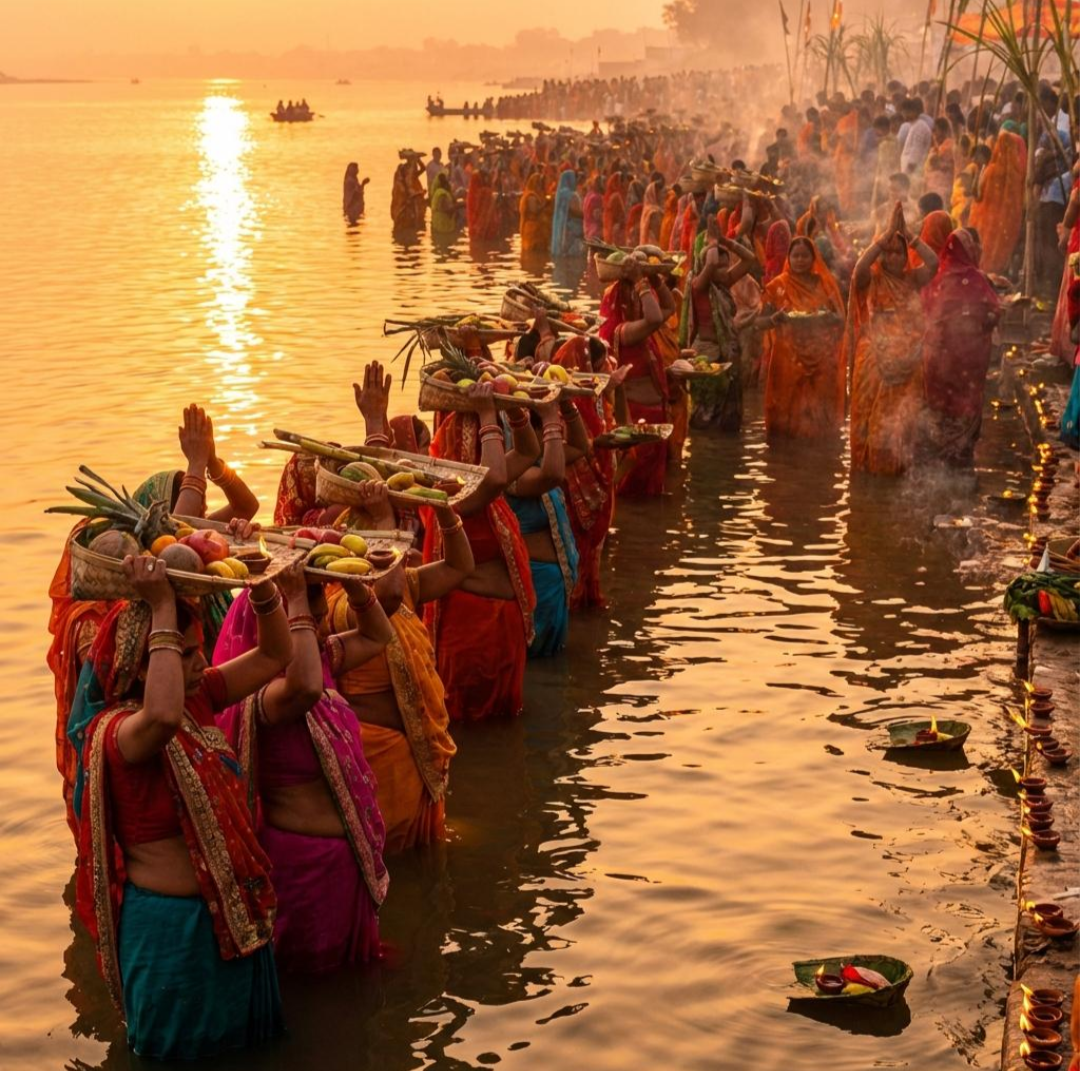
The large majority of Kushwahas are Hindus. Their religious life blends pan-Indian Hinduism with strong local traditions: worship of village deities (gram devta), the Mother Goddess in her many local forms, Shiva, Hanuman and, since the reform movements of the twentieth century, Rama and Sita. Chhath Puja, devoted to the Sun God (Surya) and Chhathi Maiya, is among the most important festivals for Bihar and eastern UP Kushwahas, a fitting celebration for a community claiming Suryavanshi descent. Other major festivals include Holi, Diwali, Teej, Jitiya, Makar Sankranti (Khichdi) and Navratri.
A significant section of the community, especially among Shakyas and Mauryas, has turned towards Buddhism or Buddhist-inspired cultural practice, celebrating Buddha Purnima and the legacy of Emperor Ashoka. Community bodies also commemorate Samrat Ashok Jayanti and the birth anniversary of Chandragupta Maurya, and honour reformers such as Jagdeo Prasad.
Language
Kushwahas speak the languages of their regions rather than a distinct community dialect. In Bihar and eastern Uttar Pradesh, Bhojpuri, Magahi and Maithili are the home languages; in Awadh, Awadhi; in western UP and Bundelkhand, Braj and Bundeli; and in Madhya Pradesh, Bundeli, Bagheli and Hindi. Standard Hindi is the common language of education and public life, and in Nepal the community speaks Bhojpuri, Maithili and Nepali. Many traditional farming terms for soils, seasons and crops survive in their speech and offer a rich vocabulary of agrarian knowledge.
Customs, Family Life and Marriage
Kushwaha family life traditionally centres on the joint household and shared family land. Marriages are generally arranged within the community, and often within the regional sub-group, while avoiding the same gotra. Common gotras include Kashyap, Kaushal and many local lineage names. Weddings follow regional Hindu custom: tilak (betrothal), haldi, matkor (worship of the earth), the baraat procession, the dwar puja at the bride's door, the sacred rounds around the fire, and vidai, accompanied by rich traditions of women's folk songs such as sohar for births and gari, playful teasing songs, at weddings.
Village-level caste panchayats once handled disputes, while state and national associations such as the All India Kushwaha Mahasabha now organise conferences, matrimonial gatherings, scholarships and commemorations. Agricultural rhythms still shape much of family life in villages: sowing and harvest festivals, collective labour during transplanting, and the pride of a well-tended vegetable plot.
Cuisine
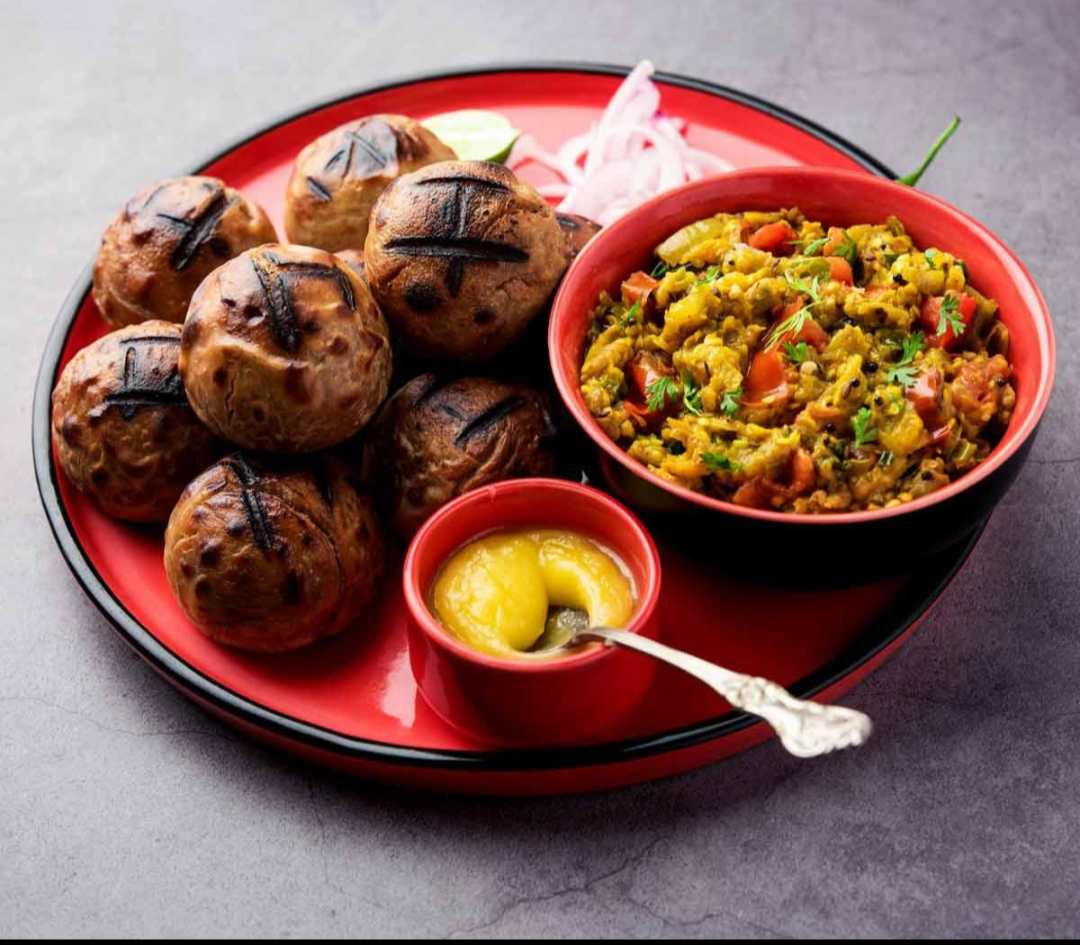
Kushwaha food is the food of the farmer's plate in the Gangetic plains: seasonal, vegetable-rich, and built around grains and pulses. Families who have grown vegetables for generations tend to have an especially varied home kitchen. Some characteristic dishes include:
- Litti-chokha — Wheat balls stuffed with spiced sattu (roasted gram flour), baked over cow-dung or wood fire and eaten with smoky mashed brinjal, potato and tomato, a signature dish of Bihar and eastern UP.
- Sattu — Drunk as a cooling sherbet in summer or kneaded into parathas, a staple of field workers.
- Dal-bhat-tarkari and chokha — The everyday meal of lentils, rice, seasonal vegetable curry and mashed vegetables flavoured with mustard oil, raw onion and green chilli.
- Saag and seasonal greens — Mustard, chana, bathua and noni greens, especially in winter, eaten with makke or bajra roti in parts of UP.
- Kadhi-bari, dal-pithi and ghugni — Home-style dishes of gram flour dumplings in yoghurt curry, lentil-stuffed rice dumplings, and spiced black chickpeas.
- Festival foods — Thekua and kasar at Chhath, khichdi at Makar Sankranti, gujiya at Holi, and tilkut and lai from local markets.
Diet ranges from strictly vegetarian households, especially those influenced by Vaishnava reform or Buddhist practice, to families that eat fish, chicken and mutton, reflecting regional rather than community-wide rules.
Dress
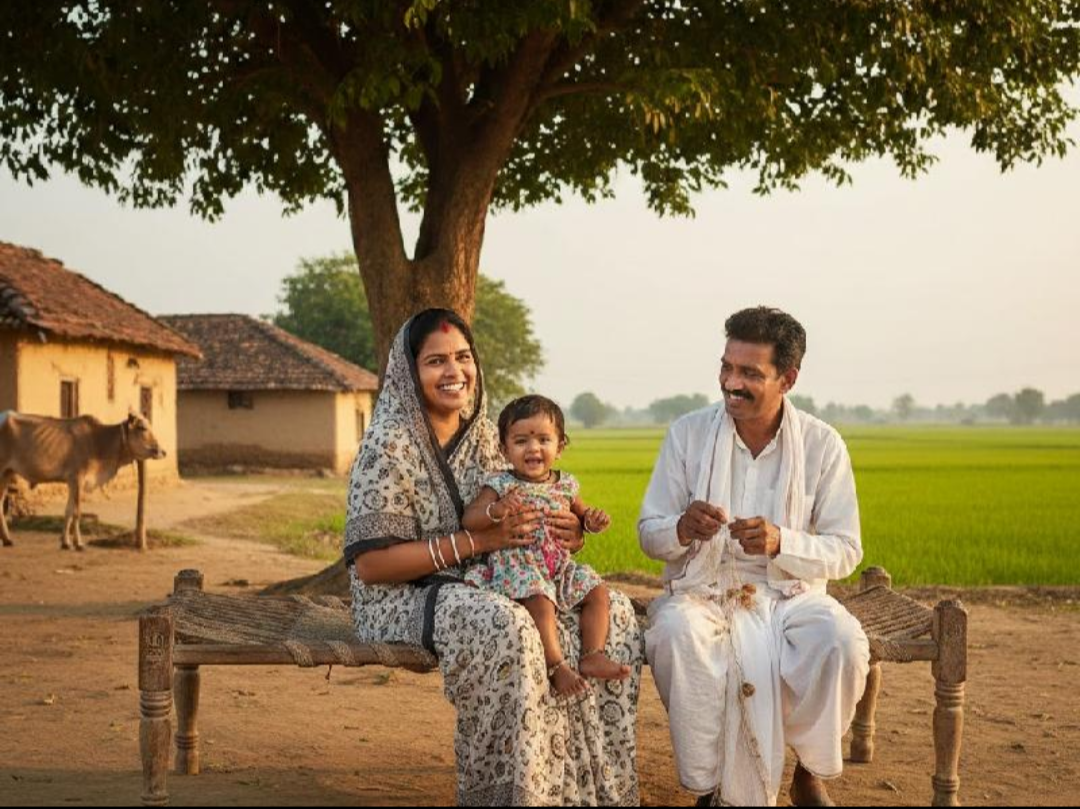
Traditional Kushwaha dress follows the rural styles of the Hindi heartland. Men wore the dhoti with kurta or bandi (a sleeveless vest) and a gamchha, the checked cotton cloth that serves as a towel, head cover and sunshade in the fields; elders often wore a pagri or safa at ceremonies. Women traditionally wore the saree in the seedha pallu style, with the head covered before elders, along with glass bangles, sindoor, payal (anklets), bichhiya (toe rings), and silver jewellery such as hansuli (neck ring) and kardhani (waist chain). The yellow-dyed piyari saree is worn by brides and during Chhath in Bihar and eastern UP. Today, urban Kushwahas dress as any other middle-class North Indian family, while traditional clothing remains central to weddings and festivals.
Physical Traits
Like most communities of the Gangetic plains, Kushwahas show wide physical variation, and no single "look" defines the community. Complexions range from wheatish to darker brown, with straight to wavy black hair and dark brown eyes being most common. This diversity reflects the deep mixture of ancestral populations that shaped the Gangetic plains over thousands of years, described in the genetics section below. Physical appearance is a poor guide to ancestry; genetic testing gives a far more accurate picture.
Migration and Diaspora
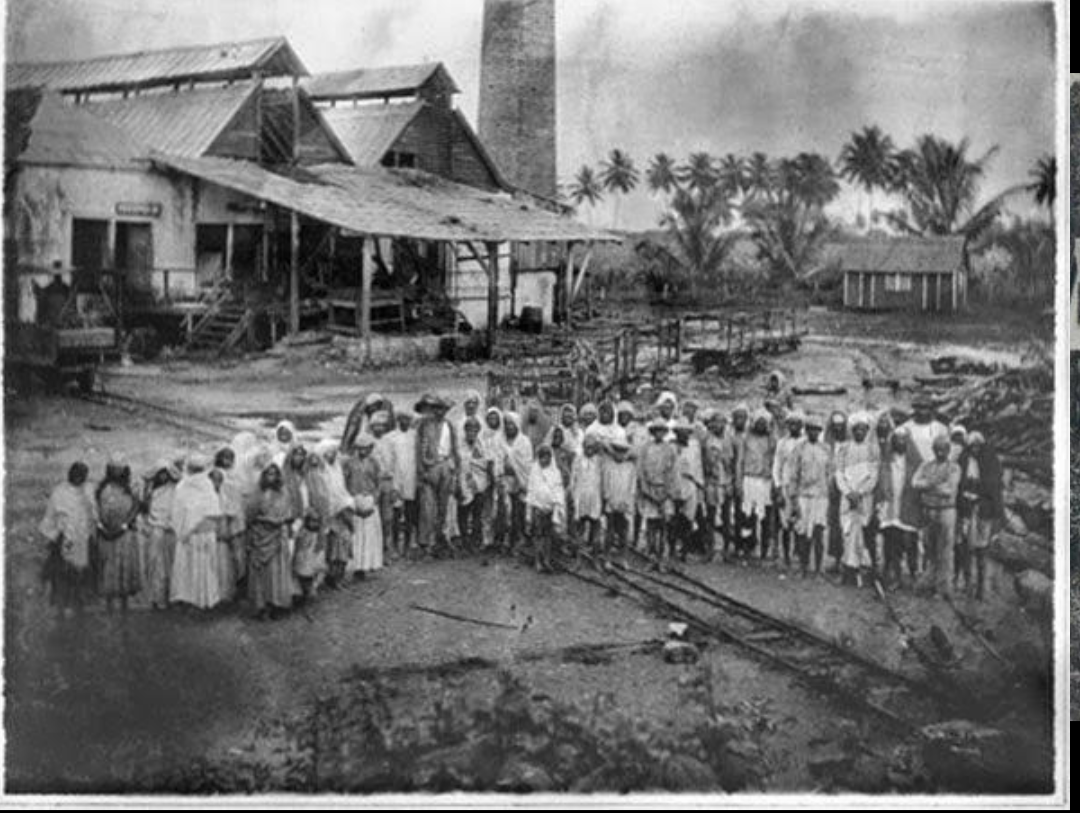
The Kushwaha diaspora was shaped above all by the indenture system of the nineteenth and early twentieth centuries. Between 1834 and 1917, hundreds of thousands of labourers from the Bhojpur region of Bihar and eastern UP were recruited through Calcutta to work on sugar plantations in Mauritius, Fiji, Trinidad and Tobago, Guyana, Suriname, Jamaica and South Africa. Agricultural castes, including Koeris and Kachhis, formed a significant share of these girmitiya emigrants, and plantation registers record them by caste name. Their descendants are today part of the Indo-Caribbean, Indo-Fijian and Indo-Mauritian communities, many of whom still celebrate Chhath, sing Bhojpuri folk songs and are searching for their ancestral villages.
In the twentieth and twenty-first centuries a second wave of migration took Kushwahas to Kolkata, Delhi, Mumbai and Punjab, later to the Gulf countries as workers, and increasingly to the United States, the United Kingdom, Canada and Australia as professionals and students. Across the border, Nepal's Madhesh hosts an indigenous Kushwaha-Koiri population with deep historical ties to Bihar.
Small Cultural Things
- The village "koiri bari" or vegetable garden near the settlement was once so linked to the community that the name itself became a shorthand for skilled gardening.
- Many households keep a tulsi chaura in the courtyard and offer the first produce of the season to the family deity before selling it.
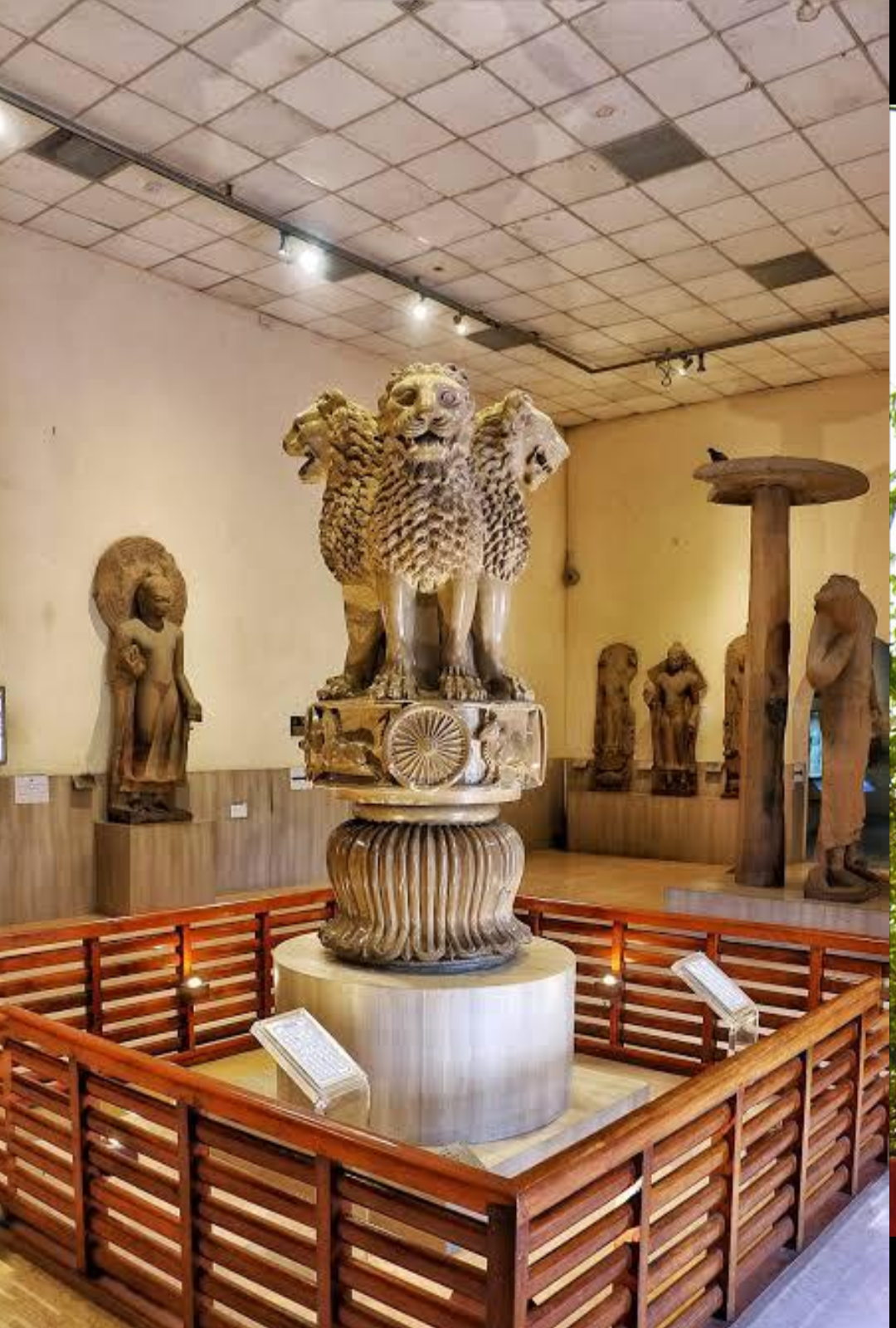
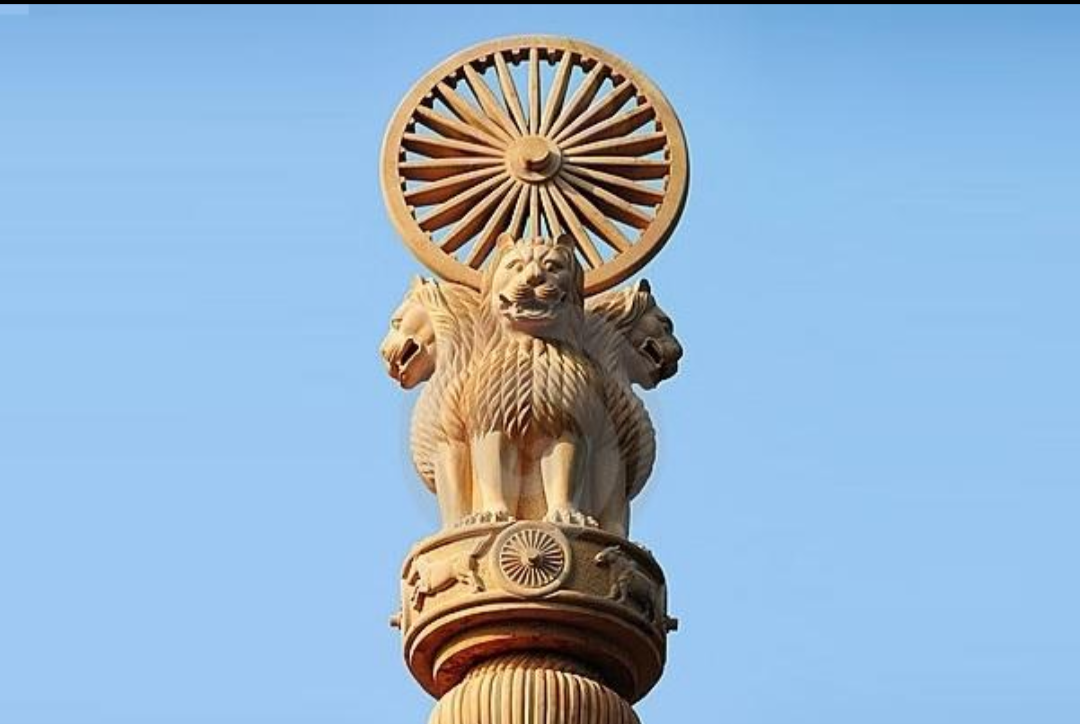
- Images of Emperor Ashoka, Chandragupta Maurya and the Ashokan lion capital frequently appear on community calendars, wedding cards and association banners.
- The phrase "Jai Kushwaha" or "Jai Samrat Ashok" is used as a community greeting at gatherings.
- Folk songs about sowing, rain and harvest (such as kajri in the monsoon and chaita in spring) are part of the shared Bhojpuri and Awadhi heritage.
- The gamchha remains a quiet emblem of rural identity, draped over the shoulder at political rallies as well as in the fields.
Prominent People
The community has produced leaders in politics, social reform, public life and the professions. A selection includes:
- Jagdeo Prasad (1922–1974) — A socialist leader and social reformer from Bihar, often called the "Lenin of Bihar", who championed the rights of backward classes and was killed during a protest in 1974.
- Upendra Kushwaha — A Bihar politician who served as Union Minister of State for Human Resource Development and founded the Rashtriya Lok Samata Party and later the Rashtriya Lok Morcha.
- Samrat Choudhary — A Bihar politician who has served as Deputy Chief Minister of Bihar and as state president of the Bharatiya Janata Party in Bihar.
- Keshav Prasad Maurya — A senior Uttar Pradesh politician who has served as Deputy Chief Minister of Uttar Pradesh and as a Member of Parliament from Phulpur.
- Swami Prasad Maurya — A long-serving Uttar Pradesh politician and former state cabinet minister, known for his advocacy on backward-class issues.
- Shakuni Choudhary — A former Indian Army soldier turned politician who served as a minister in Bihar and was a prominent Koeri leader for decades.
Genetic Ancestry of the Kushwahas
For many Indians today, the most pressing ancestry questions go beyond older concepts such as "Ancestral North Indian" (ANI) and "Ancestral South Indian" (ASI). People want to know how much of their ancestry comes from each of the three deep source populations of South Asia, which Y-chromosome and mitochondrial lineages run in their family, and which neighbouring communities they are most closely related to. For the Kushwahas, as for most Indian communities, these questions have not yet been answered directly by published research. Community-specific studies with large, well-documented Kushwaha samples simply do not exist yet. What follows is therefore an informed picture based on studies of the wider Gangetic plains, clearly marked as such, followed by what GenoConnect aims to establish through community testing.
The Three Ancestral Components
Modern genetic research models most South Asians as a mixture of three deep ancestral sources:
- AASI (Ancient Ancestral South Indian) — The descendants of the first hunter-gatherers who settled South Asia more than 50,000 years ago, related distantly to the Andaman Islanders.
- Indus Periphery / Iranian-related farmer ancestry — Ancestry associated with early farmers and herders of the Iranian plateau who mixed with AASI groups to form the population of the Indus Valley Civilisation.
- Steppe ancestry — Ancestry from Bronze Age pastoralists of the Central Asian steppe who entered South Asia from around 2000 BCE, broadly associated with the spread of Indo-European languages.
Studies such as Narasimhan et al. (2019) show that communities of the middle Gangetic plains typically carry substantial amounts of all three components, with steppe ancestry generally higher among traditionally priestly groups and lower among many agricultural, artisan and labouring communities of the same region. Based on comparable agricultural communities of Bihar and Uttar Pradesh, an indicative regional range for the Kushwaha community would be:
| Ancestral component | Indicative regional range* | What it represents |
|---|---|---|
| AASI | approx. 35–50% | Earliest South Asian hunter-gatherers |
| Indus Periphery (Iranian-farmer related) | approx. 38–50% | Indus Valley-era farming population |
| Steppe | approx. 8–18% | Bronze Age Central Asian pastoralists |
Y-DNA Haplogroups (Paternal Lines)
Y-chromosome haplogroups trace the direct father-to-son line. Published studies of Uttar Pradesh and Bihar populations show that the most common paternal lineages in agricultural communities of the region include R1a (especially the Z93 branch, linked with steppe-related ancestry), H1a (an ancient South Asian lineage), L1a and J2 (often associated with Iranian-related and Indus-era ancestry), R2a, and smaller frequencies of O2a (linked to Austroasiatic and eastern populations) and others. Kushwaha men are likely to be distributed across several of these lineages, but the actual frequencies, and whether certain sub-groups carry distinctive founder lineages, remain unknown.
mtDNA Haplogroups (Maternal Lines)
Mitochondrial DNA traces the mother-to-daughter line and in South Asia is dominated by very ancient, indigenous lineages. Across the Gangetic plains, the most common maternal haplogroups belong to the M macro-haplogroup (including M2, M3, M5, M30 and M4'67), together with R5, U2 (especially U2a, U2b and U2c), R30, W and smaller amounts of West Eurasian lineages such as H, T and J. These maternal lineages are generally shared widely across caste boundaries and reflect a deep common indigenous foundation. Kushwaha maternal lines are expected to follow this broad regional pattern.
Closest Genetic Relatives
Genetic relatedness in India usually follows geography and social position more closely than modern caste labels. On that basis, Kushwahas are expected to cluster most closely with other agricultural and pastoral communities of the same regions, such as Kurmis, Yadavs, Lodhs, Kurmi-Patels and Mallahs in Uttar Pradesh and Bihar, while Bihar Koeris are likely to be closer to other Bihari populations and western UP Shakyas and Kachhis closer to communities of the Doab and Braj region. Whether Koeri, Kachhi and Murao, which were separate groups until a century ago, share a common genetic origin or are historically distinct populations united later by a social movement, is one of the most interesting open questions for the community.
What GenoConnect Aims to Discover
Because no one has yet published a detailed genetic study of the Kushwaha community, every person who tests contributes to building it. With enough samples, the GenoConnect Kushwaha community feature aims to answer:
- The average AASI, Indus Periphery and Steppe composition of Kushwahas, and how it differs among Koeri, Kachhi, Murao, Maurya and Shakya families.
- The most common Y-DNA and mtDNA haplogroups within the community, and any founder lineages specific to it.
- Which neighbouring castes and communities are genetically closest to Kushwahas in each region.
- Genetic links between the Indian homeland and Kushwaha-descended families in Mauritius, Fiji, the Caribbean, South Africa and Nepal.
Conclusion
The story of the Kushwaha community is the story of the Gangetic plains themselves: of soil, rivers and seasons, of skilled hands that turned village gardens into some of the most productive land in India, and of a twentieth-century movement that drew scattered groups into a shared identity proud of Kusha, Chandragupta Maurya and Emperor Ashoka. From the fields of Bhojpur and Awadh to plantation islands across the oceans, Kushwaha families have carried their food, festivals and songs wherever they went. The next chapter of their history, the genetic one, is still being written, and it is one the community can help write together.
Frequently Asked Questions (FAQs)
Q. Who are the Kushwahas?
The Kushwahas are a large agricultural community of northern India and the Nepal Terai, traditionally skilled in vegetable and garden-crop cultivation. The name brings together the Koeri, Kachhi, Murao, Maurya and Shakya groups.
Q. Are Koeri, Kachhi and Murao the same as Kushwaha?
They are regional branches that have identified collectively as Kushwaha since the early twentieth century, especially after the All India Kushwaha Kshatriya Mahasabha was founded in 1922. Historically they were recorded separately and largely married within their own branch.
Q. Are Kushwahas descendants of the Maurya dynasty?
Many Kushwahas trace their heritage to Chandragupta Maurya and Emperor Ashoka, and this is an important part of community identity. Historians note that no early inscriptions directly connect today's community with the Mauryan dynasty, so the link is best understood as community tradition.
Q. Is the Kushwaha community the same as the Kachhwaha Rajputs of Jaipur?
Q. Which category are Kushwahas in for reservation?
Kushwahas are classified as Other Backward Classes (OBC) in most states, including Bihar, Uttar Pradesh, Madhya Pradesh and Haryana. Classification can differ by state, so check your state list.
Q. What is the population of the Kushwaha community?
Bihar's 2023 caste survey counted about 5.5 million Kushwahas (4.21 percent of the state). National totals are unknown because India has not published a full caste census since 1931; estimates including all states and Nepal range from roughly 25 to 35 million.
Q. What is the gotra of Kushwahas?
Kushwaha families follow many gotras, with Kashyap being among the most commonly cited, alongside a large number of local lineage names. Gotra varies by family and region.
Q. What is the genetic ancestry of Kushwahas?
Like other Gangetic communities, Kushwahas are expected to carry a mix of AASI, Indus Periphery and Steppe ancestry, but no published study has yet measured this directly. Testing with GenoConnect helps establish the community's actual genetic profile.
Q. What are the common haplogroups among Kushwahas?
Regional data suggest paternal lineages such as R1a-Z93, H1a, L1a, J2 and R2a, and maternal lineages dominated by M, U2 and R5 sub-groups. Community-specific frequencies are not yet known.
Q. Can DNA tell me if my family is Koeri, Kachhi or Murao?
Not on its own today. As more people from each sub-group test and share their community details, GenoConnect will be able to compare sub-groups and show where your DNA fits best.
Q. My ancestors went to Mauritius, Fiji or Trinidad as indentured labourers. Can I find my Kushwaha roots?
Yes, DNA testing can match you with genetic relatives in India, and combined with plantation emigration records it can help narrow down your ancestral region and village.
Q. How can I contribute to research on my community?
Take a GenoConnect DNA test and join the Kushwaha community feature. Every sample helps build a clearer picture of the community's ancestry, lineages and relationships.
References
- [1]Wikipedia. "Kushwaha." https://en.wikipedia.org/wiki/Kushwaha
- [2]Wikipedia. "Koeri." https://en.wikipedia.org/wiki/Koeri
- [3]Wikipedia. "Kachhi (caste)." https://en.wikipedia.org/wiki/Kachhi_(caste)
- [4]Wikipedia. "Murao people." https://en.wikipedia.org/wiki/Murao_people
- [5]Wikipedia. "Shakya (surname)." https://en.wikipedia.org/wiki/Shakya_(surname)
- [6]Pinch, William R. (1996). Peasants and Monks in British India. University of California Press.
- [7]Risley, H. H. (1891). The Tribes and Castes of Bengal. Calcutta: Bengal Secretariat Press.
- [8]Crooke, William (1896). The Tribes and Castes of the North-Western Provinces and Oudh. Calcutta.
- [9]Government of Bihar (2023). Bihar Caste-Based Survey Report (Bihar Jaati Adharit Ganana).
- [10]The Wire (2 October 2023). "Bihar's Much-Awaited Caste Census Puts OBC-EBC Groups at Politically Dominant 63%."
- [11]Narasimhan, V. M. et al. (2019). "The formation of human populations in South and Central Asia." Science 365(6457).
- [12]Reich, D., Thangaraj, K. et al. (2009). "Reconstructing Indian population history." Nature 461: 489–494.
- [13]Sengupta, S. et al. (2006). "Polarity and temporality of high-resolution Y-chromosome distributions in India." American Journal of Human Genetics 78(2).
- [14]Chaubey, G. et al. (2015). Studies on Gangetic plain populations and South Asian mtDNA diversity (various).
- [15]Tinker, Hugh (1974). A New System of Slavery: The Export of Indian Labour Overseas, 1830–1920. Oxford University Press.