

Rathore Community
Discover the Rathore community: a prominent Rajput clan from Marwar & Bikaner, Rajasthan. Explore their rich history, heritage, and regional ties across India.
THE RATHORE COMMUNITY
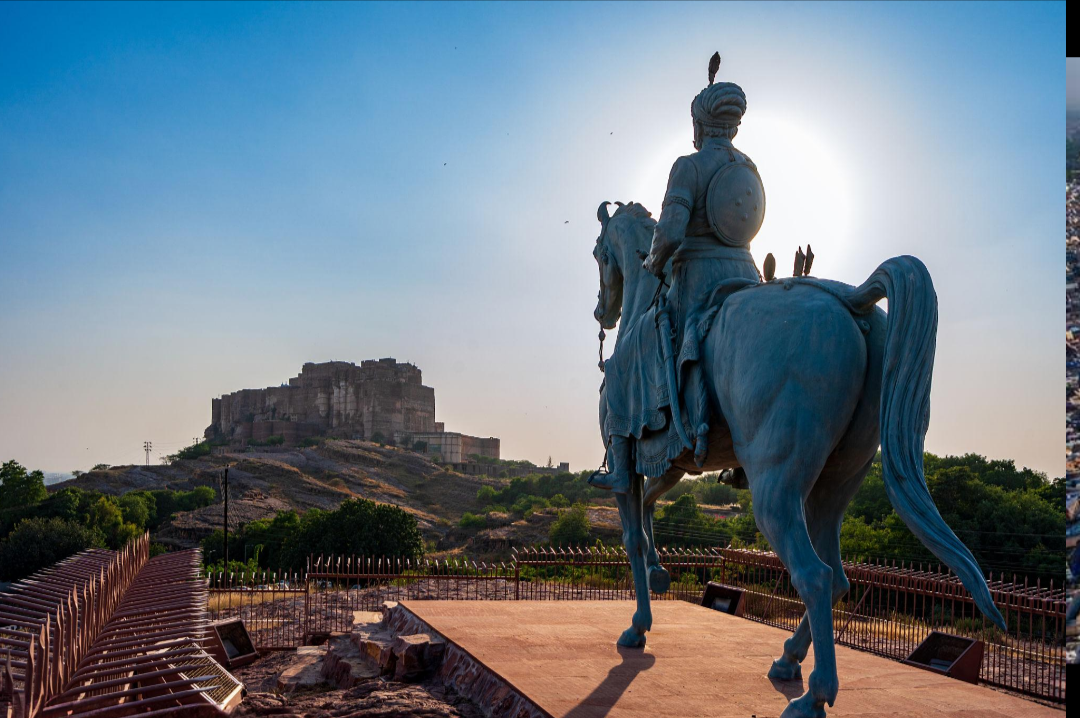
History, Land, Culture, and Ancestry of the Rathores of Marwar, Bikaner, and Beyond
Introduction: Who Are the Rathores?
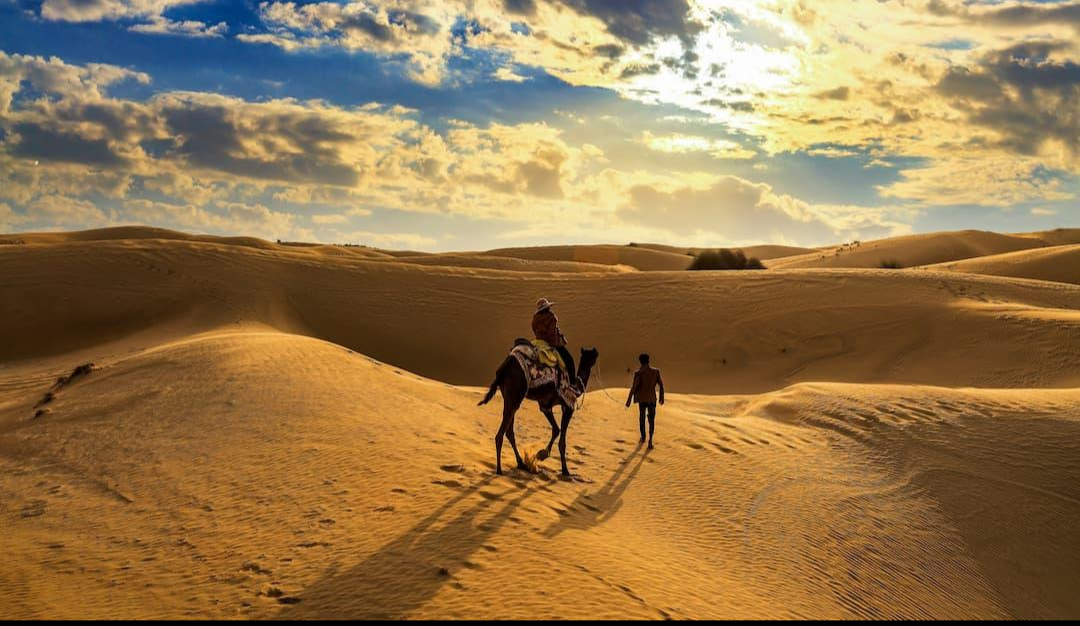
The Rathores are one of the most prominent Rajput clans of India, best known as the ruling house of Marwar (Jodhpur) and Bikaner in western Rajasthan. For more than five centuries the Rathore name has been tied to a particular landscape: the dry, sandy plains and rocky ridges of the Thar Desert and its fringes, stretching from the Luni river basin around Jodhpur and Barmer to the northern desert around Bikaner, and from Nagaur and Merta in the east to Jaisalmer's borders in the west. The great fort of Mehrangarh, rising above Jodhpur on its sandstone cliff, has become almost a visual shorthand for the community.
Like several Indian communities, the Rathores are best understood as a people of a region as much as a lineage. The core of the community is a Kshatriya Rajput clan that traces descent through a common male line, but "Rathore" as a surname has travelled far beyond that core. Rathore families ruled or held estates in Madhya Pradesh (Ratlam, Sailana, Sitamau, Jhabua, Alirajpur), Gujarat (Idar), and Rajasthan's Kishangarh, while the surname Rathore or Rathod is also carried today by several unrelated or loosely related communities across India and Pakistan. This profile focuses on the Rathore Rajputs of Rajasthan and their branches, while noting the wider spread of the name.
This article draws on historical chronicles, colonial-era ethnography, encyclopaedic sources, and population-genetic research on north-western India. Where accounts differ, or where no reliable research exists, that is stated plainly.
Etymology of the Name "Rathore"
The most widely repeated explanation connects "Rathore" (Rāṭhoṛ, also written Rathor, Rathaur, or Rathod) to the name of the Rashtrakutas, a powerful dynasty of the Deccan between the eighth and tenth centuries. In this view, "Rāṣṭrakūṭa" gradually softened in popular speech into forms like Rāṭhauḍ and Rāṭhoṛ. The word rāṣṭrakūṭa itself is usually read as "chief of a territory (rashtra)," an administrative title before it became a dynastic name.
Rathore bardic tradition, however, gives a different ancestry. It connects the clan to the Gahadavala kings of Kannauj, especially Raja Jaichand, and through them to the Suryavanshi (solar) line of Rama. Historians have long debated whether the Rajasthan Rathores descend from the Rashtrakutas, from the Gahadavalas, or from a local chiefly lineage that later adopted a prestigious ancestry. The honest position is that the name almost certainly carries a Rashtrakuta echo, but the direct line of descent cannot be proven from surviving records.
Geography: The Rathore Homeland
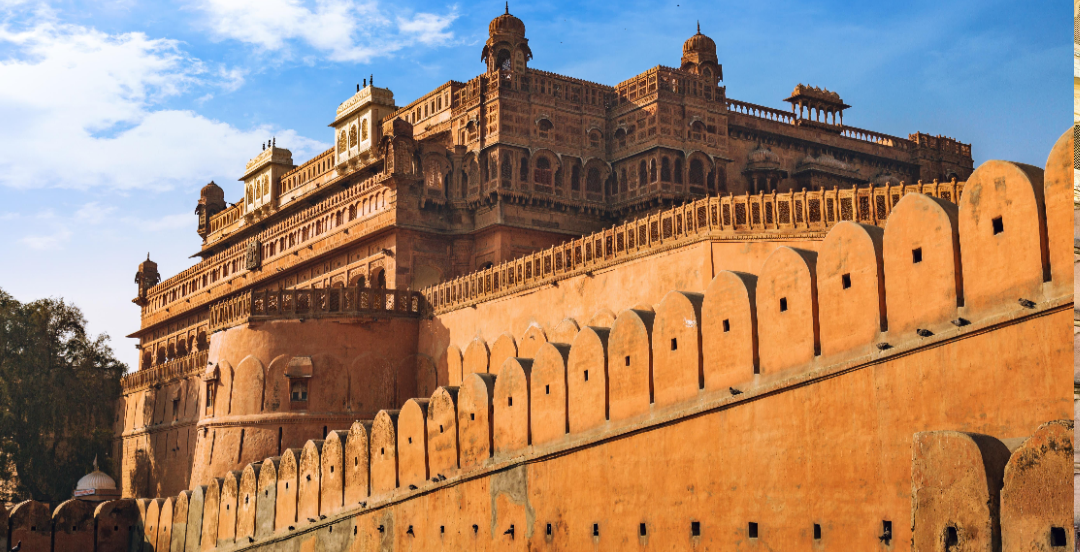
The Rathore heartland is Marwar, "the land of death" or, in a gentler reading, "the region of the desert" (maru). Marwar covers today's Jodhpur, Barmer, Balotra, Pali, Nagaur, Jalore, Sirohi fringes, and parts of Jaisalmer district. The Luni is its only significant river, and life has historically depended on wells, stepwells (baori), tanks (talab), and the rain-fed kharif season. Bajra (pearl millet), moth bean, guar, and sesame are traditional crops, and camels, goats, sheep, and cattle have been central to the rural economy.
To the north lies Bikaner, founded by a Rathore prince in 1488, in an even drier landscape of shifting dunes. The Ganga Canal, brought to Bikaner in 1927 under a Rathore ruler, transformed parts of this area into irrigated farmland. Other Rathore centres developed over time:
- Rajasthan: Jodhpur, Bikaner, Nagaur, Merta, Kishangarh (Ajmer), Pokaran, Barmer (Mallani), Pali, and hundreds of thikanas (estates) such as Pokaran, Ahuwa, Asop, Rian, Auwa, and Jasol.
- Madhya Pradesh (Malwa and western tribal belt): Ratlam, Sailana, Sitamau, Jhabua, and Alirajpur, founded or ruled by Rathore branches, especially from the seventeenth century.
- Gujarat: Idar and Ahmednagar (Himmatnagar), ruled by a Rathore branch from Jodhpur from the eighteenth century.
- Uttar Pradesh: Rathaur Thakur families in districts such as Kannauj, Farrukhabad, and Etah, who connect their origins to the Kannauj tradition.
| Where Does Your Rathore Line Belong?Marwar, Bikaner, Malwa, Idar, or the Ganga plains? Rathore families moved with conquest, service, and marriage over six centuries. Your DNA can show which regional population your family is genetically closest to today.[ Find Your Rathore Roots → ] |
|---|
Origins and Early History
The documented history of the Rajasthan Rathores begins with Rao Siha (Sheoji), who is remembered as the founding ancestor of the Marwar line. A memorial stone found at Bithu near Pali records his death in 1273 CE. Tradition says Siha came west from the Kannauj region after the fall of the Gahadavalas and settled around Pali and Kher, first serving and protecting local communities and then establishing his own authority.
For about a century and a half, Siha's descendants were one among many competing chiefs in the Luni basin. The turning point came under Rao Chunda (d. 1423), who took Mandore, the old capital of the Pratiharas, and Rao Ranmal, who became powerful at the court of Mewar before being killed there. His son Rao Jodha recovered Mandore and in 1459 founded a new capital on a nearby hill, building the fort of Mehrangarh. The city below became Jodhpur.
Jodha had many sons, and their dispersal created the Rathore map of Rajasthan. Rao Bika founded Bikaner in 1488, and Rao Duda established Merta, giving rise to the Mertiya Rathores. Across the sixteenth century, Rao Maldeo (r. 1532-1562) expanded Marwar into one of the strongest states of north India, clashing with Sher Shah Suri at the battle of Sammel (Giri-Sumel) in 1544. His son Rao Chandrasen resisted Mughal overlordship for years, while later rulers, beginning with Mota Raja Udai Singh, entered Mughal service and married into the imperial house.
The seventeenth and eighteenth centuries brought both high service and hard conflict. Maharaja Jaswant Singh (d. 1678) was a senior Mughal commander, and after his death Aurangzeb tried to take control of Marwar. The Rathore nobleman Durgadas Rathore protected the infant heir Ajit Singh and led a long struggle, often called the thirty-year war, until Ajit Singh recovered Jodhpur. Durgadas remains one of the most honoured figures in Rathore memory.
In 1818 Jodhpur and Bikaner signed treaties with the British East India Company and became princely states. Both acceded to India in 1947 and merged into the state of Rajasthan by 1949. The former ruling families remain publicly visible: the Jodhpur family still lives in part of Umaid Bhawan Palace, and Mehrangarh is run by a trust set up by the family.
Clan Structure: Khamps and Nakhs
Rathores are divided into many sub-clans, called khamps or shakhas, usually named after a founding ancestor. Bardic lists count dozens of them. These divisions still matter in marriage and in social memory, because members of a khamp generally know which village or thikana they come from and which ancestor founded it. Some of the better known include:
| Sub-clan | Founding ancestor or origin | Traditional area |
|---|---|---|
| Jodha | Descendants of Rao Jodha | Jodhpur region, widespread |
| Bika | Descendants of Rao Bika | Bikaner |
| Mertiya | Descendants of Rao Duda of Merta | Merta, Nagaur, central Rajasthan |
| Champawat | Champa, son of Rao Ranmal | Pali, Jodhpur (Auwa, Pali) |
| Kumpawat | Kumpa, grandson of Rao Ranmal | Jodhpur, Pali (Asop) |
| Udawat | Uda, son of Rao Suja | Jodhpur, Pali |
| Karnot | Karan, son of Rao Ranmal | Jodhpur region |
| Mahecha | Descendants of Rao Mallinath | Mallani, Barmer |
| Jaitawat | Jaita, descendant of Rao Ranmal | Pali, Jodhpur |
Rathores trace their gotra as Gautam and describe themselves as Suryavanshi. Their clan goddess (kuldevi) is Nagnechi Mata (Nagnechiya Mata), whose principal shrine is at Nagana in Barmer district, and whose image is kept in Mehrangarh. The Bikaner line also has a deep attachment to Karni Mata of Deshnoke. Because a khamp is a patrilineal group, marriage within the Rathore clan is not allowed; Rathores marry into other Rajput clans such as Bhati, Kachhwaha, Chauhan, Deora, Sisodia, Jhala, and Parmar.
Population Size and Distribution
India has not published a full caste-wise census since 1931, so there is no reliable count of Rathores. The Rajputs as a whole are usually estimated at around 6 to 8 percent of Rajasthan's population, and the Rathores are one of the two or three largest Rajput clans in the state, along with the Bhatis and Chauhans. Informal community estimates put the number of Rathore Rajputs in India in the low millions, but these figures are rough and should be treated with care. The caste enumeration planned for India's next national census may eventually give a better picture.
Counting is further complicated by the surname. Rathore and Rathod are carried by many people who are not Rathore Rajputs, including members of the Rathore Teli community of Madhya Pradesh and Chhattisgarh, many Banjara (Lambadi) families across the Deccan who use Rathod, several Gujarati communities, and Muslim Rajput families in Pakistan. A surname count would therefore overstate the Rajput clan considerably.
People and Physical Appearance
Rathores, like other communities of western Rajasthan, show a wide range of appearance. Complexion ranges from wheatish to fair and to deeper brown, and many people from desert districts are more sun-tanned simply because of the climate. Adults are often of medium to tall build. Moustaches have long been a mark of Rajput masculinity, and the upturned or full moustache is still a proud feature at weddings and festivals. Eye colour is mostly dark brown, though lighter brown or hazel eyes appear occasionally, as they do across north-west India.
It is important not to overstate these traits. No single "Rathore look" exists, and appearance is shaped as much by climate, diet, and individual family history as by clan. Genetics offers a more precise way to understand ancestry than physical features.
Religion and Belief
Most Rathores are Hindus. Worship centres on the kuldevi, Nagnechi Mata, along with Shiva, Vishnu in the form of Krishna and Rama, and the goddess in her many forms. The community has strong links with regional folk deities, several of whom were Rathores themselves:
- Pabuji Rathore of Kolu, a fourteenth-century hero who died protecting the cows of a Charan woman. He is worshipped across Marwar, especially among Rebari and Raika camel herders, and his epic is performed through the painted scroll called the Pabuji ki Phad, sung by Bhopa priest-musicians at night.
- Rao Mallinath, an early Rathore ruler venerated as a saint. The Mallinath cattle fair at Tilwara on the Luni river is one of the largest livestock fairs in Rajasthan.
- Meera Bai, the famous poet-saint devoted to Krishna, was born into the Mertiya Rathore family. Her bhajans remain part of daily devotion across India.
A smaller number of Rathores follow Islam. Muslim Rathore Rajputs live mainly in Pakistan's Punjab, Azad Kashmir, and Sindh, and in parts of Jammu and Kashmir. Their family traditions usually describe conversion of Rajput ancestors during the Sultanate or Mughal periods.
Language
The home language of most Rajasthan Rathores is Marwari (Marwadi), a Rajasthani language written in Devanagari today and historically in the Mahajani script for accounts. Local varieties include Thali (desert Marwari), Godwari, and Merwari, and Bikaner families speak Bikaneri Marwari. Rathore courts were major patrons of Dingal, the literary language of Charan poets, used for heroic poetry, genealogies, and praise songs. Hindi is widely used, and Rathore branches settled in Malwa and Gujarat also speak Malvi and Gujarati. Muslim Rathores in Pakistan mainly speak Punjabi, Pahari, or Sindhi.
Culture, Customs, and Social Life
The Thikana and the Chronicle
Rathore social life was historically organised around the thikana, the estate of a jagirdar or noble, who owed military service to the ruler. Each thikana had its own fort or haveli, its temple, and its family bards. Rathore history is unusually well recorded because of this system. The khyat tradition produced major chronicles such as Muhnot Nainsi's seventeenth-century Khyat and the Marwar ra Pargana ri Vigat, a detailed survey of villages and revenue. Charans and Bhats (Rao or Barwa genealogists) kept family trees, and many families still possess these records or can trace them through a family bard.
Life-cycle Rituals
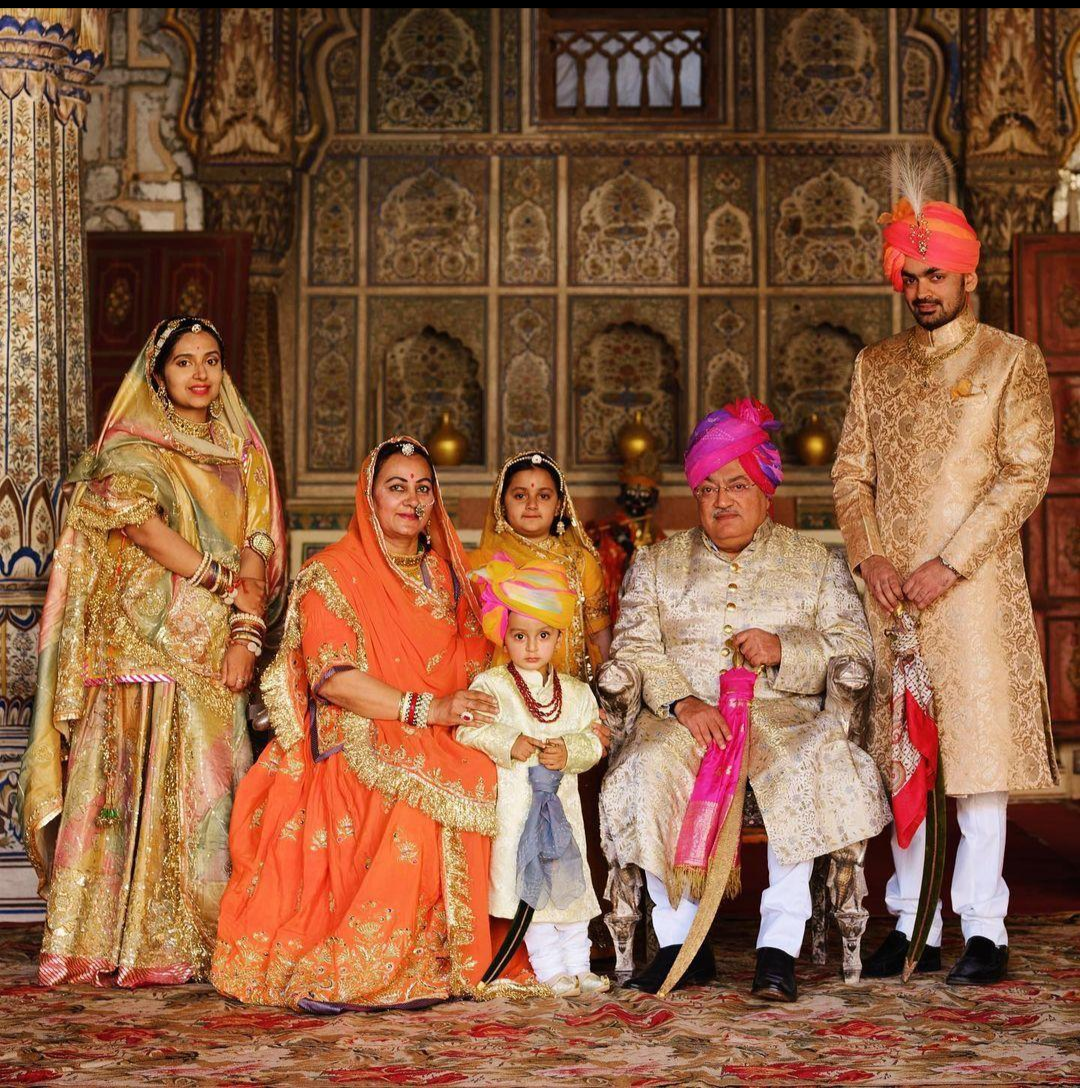
A Rathore wedding traditionally unfolds over several days. Important rites include tilak (engagement), haldi and mehndi, the groom's procession on horseback, toran (the groom striking a decorated wooden emblem at the bride's door with a sword or stick), phera around the sacred fire, and bidai. The groom wears a safa (turban), an achkan or sherwani, and a sword. Folk songs sung by women, called banna-banni geet, accompany almost every stage. Older customs such as the tradition of the groom's sword representing him in his absence are remembered in family history.
Festivals
- Gangaur, the spring festival of Gauri and Shiva, celebrated by women with processions and fasting, especially grand in Jodhpur and Bikaner.
- Teej, the monsoon festival, marked with swings, leheriya dress, and ghevar.
- Dussehra, when Rajput families traditionally perform shastra puja, the worship of weapons.
- Holi, including the royal Holi celebrations of Jodhpur.
Small Cultural Things
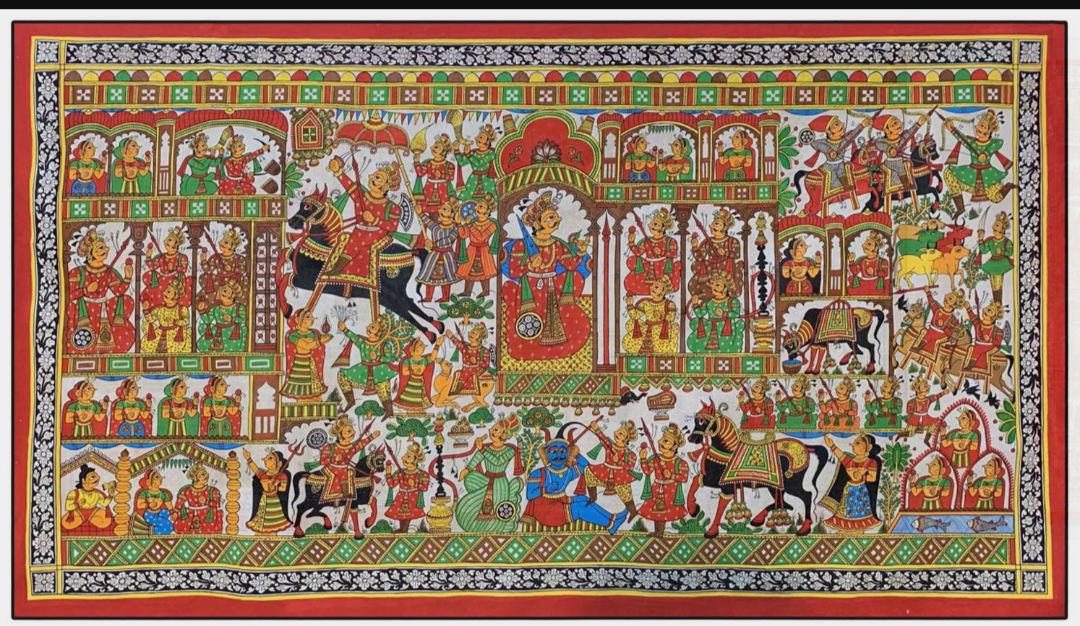
- Manuhar: the insistent, affectionate hospitality of Marwar, where guests are urged repeatedly to eat and drink more. Refusing once is expected; refusing politely several times is part of the ritual.
- Khamma Ghani: the traditional Marwari greeting, used as both hello and a mark of respect, especially toward elders.
- Hukum and Baisa / Banna: respectful forms of address. Elders and seniors are addressed as "Hukum," a young man as "Banna," and a daughter of the house as "Baisa."
- The panchranga safa: the five-coloured turban associated with Jodhpur, and turban-tying as a skill passed from fathers to sons.
- Horses and the Marwari breed: the Marwari horse, with its distinctive inward-curving ears, was bred by Rathore and other Marwar Rajputs for war and remains a matter of pride.
- Polo: Jodhpur is one of India's historic polo centres, and the style of riding breeches known worldwide as "jodhpurs" takes its name from the city.
- Kishangarh painting: the Kishangarh school, patronised by the Rathore ruler Sawant Singh (Nagari Das), produced the celebrated Bani Thani portrait with its elongated eyes and profile.
| Keeping the Rathore Story AliveMany Rathore families keep their history through bards, khyats, and oral memory. Add genetic evidence to that story, and connect with relatives whose families left the same villages generations ago.[ Connect With Your Community → ] |
|---|
Dress and Ornaments
Rathore dress follows the broader Rajput tradition of western Rajasthan, and much of what the world knows as "Rajasthani royal dress" developed in Jodhpur. For men, the essential items are the safa or pagri (turban), in leheriya, bandhej, or panchranga patterns depending on the season and occasion; the bandhgala or Jodhpuri coat, a closed-collar jacket that became a formal suit across India; the achkan or long coat for weddings; and the jodhpur breeches or churidar. Traditional men's jewellery includes earrings (murki), neck ornaments, and a sword or dagger at formal occasions.
For women, the traditional dress is the poshak, made up of the kurti and kanchli (bodice), the lehenga (ghaghra), and the odhni (veil), often in bandhej, leheriya, or gota-patti work. The most distinctive ornaments include the borla or rakhdi (forehead ornament), the aad (a broad gold choker), the nath (nose ring), the bajuband (armlet), and the chuda (ivory or bone bangles, now often plastic, covering the arm). The Rajputi poshak remains the standard dress for weddings and festivals among Rathore women today.
Cuisine
Rathore food is desert food: built to last, heavy on millet, pulses, ghee, and dried vegetables, and famous for its meat dishes. Water was scarce, so cooks used milk, buttermilk, and ghee in place of water, and relied on dried beans and berries that kept well. Well-known dishes include:
- Laal maas: a fiery mutton curry coloured red by Mathania chillies, grown near Jodhpur. It is the dish most associated with Rajput hunting and feasting traditions.
- Safed maas: a milder white curry cooked with yoghurt, cashew, and cream.
- Ker sangri: a dry dish of desert berries (ker) and beans of the khejri tree (sangri), a true Marwar staple.
- Bajre ki roti with lahsun ki chutney and ghee, the daily food of the desert villages.
- Dal baati churma: baked wheat balls with lentils and a sweet crushed wheat mixture, eaten at festivals and gatherings.
- Gatte ki sabzi: gram flour dumplings in a yoghurt gravy.
- Mirchi bada and mawa kachori of Jodhpur, and Bikaneri bhujia and rasgulla of Bikaner.
- Kadhi, raab (a millet and buttermilk drink), and ghevar during Teej.
Not all Rathore households eat meat; many follow vegetarian customs, especially among women or families with strong Vaishnav devotion. Food during fasts and festivals is strictly vegetarian.
Occupations: From the Battlefield to the Boardroom
For centuries, Rathores were rulers, landholders, and soldiers. The Jodhpur Lancers and the Bikaner Camel Corps (Ganga Risala) served in both World Wars; the Jodhpur Lancers are remembered for the cavalry charge at Haifa in 1918, which is still commemorated by the Indian Army. After Independence and the abolition of jagirdari, many Rathore families lost their landed income and moved into new occupations. Today the community is well represented in:
- The Indian Army, paramilitary forces, and police.
- Agriculture and animal husbandry, especially in rural Marwar and Bikaner.
- Politics and public service, including the civil services.
- Heritage hospitality, where former forts and havelis have become heritage hotels, a field in which Rajasthan's Rathore families were pioneers.
- Business, law, education, medicine, and technology, especially among younger urban Rathores.
Migration and Diaspora
Rathore migration has come in several waves. The earliest spread was political: princes and younger sons carving out estates across Rajasthan, Malwa, and Gujarat between the fifteenth and eighteenth centuries. A second wave came through military service, as Rathores joined the armies of the Mughals, Marathas, and the British. A third came after Independence, when land reforms pushed many families toward cities such as Jaipur, Jodhpur, Ahmedabad, Mumbai, Delhi, Indore, and Bengaluru.
The international Rathore diaspora is smaller than that of trading communities but visible in the United Kingdom, the United States, Canada, Australia, and the Gulf countries, where Rathores work in engineering, medicine, and business. In Pakistan, Muslim Rathore Rajputs form a distinct and established community, particularly in Punjab and Azad Kashmir. A Hindu Rajput population also remains in Sindh's Tharparkar district, though the Rathores there are fewer than the Sodhas.
Genetics and Ancestry of the Rathores
Most people in India who explore their genetics want to know three things: how much of their ancestry comes from India's ancient hunter-gatherers, from Indus-era farmers, and from Bronze Age steppe migrants; what their paternal and maternal haplogroups are; and which neighbouring communities they are genetically closest to. For almost no individual Indian community, including the Rathores, has this been studied in detail. What follows is an honest summary of what is known about the wider region and what remains unknown.
The Three Ancestral Streams
Research over the past fifteen years has shown that almost all people in South Asia descend from a mix of three ancient populations:
- AASI (Ancient Ancestral South Indians): the descendants of the first hunter-gatherers of the subcontinent, whose ancestry is found in every Indian community.
- Indus Periphery or Iranian-farmer related ancestry: from the people linked to the Indus Valley Civilisation, who carried ancestry related to early farmers and herders of the Iranian plateau.
- Steppe ancestry: from Bronze Age pastoralists of the Central Asian steppe, who arrived in the second millennium BCE and are associated with the spread of Indo-Aryan languages.
Studies of north-western India show that steppe ancestry is generally higher in the north-west and among traditionally priestly and martial groups, and lower in the south and east. Rajput groups of Rajasthan are expected to fall within the higher range for the region. However, no peer-reviewed study has yet published a three-way ancestry breakdown specifically for the Rathores. Figures circulating online for "Rajputs" are drawn from small, mixed samples and should not be applied to any single clan. Rathore families from Marwar, Bikaner, Malwa, and Uttar Pradesh may also differ from one another, since they have married into different local populations over centuries.
Paternal (Y-DNA) Haplogroups
Because Rathore identity passes from father to son, the Y chromosome is especially meaningful for the community. In north-western India, the most frequent paternal haplogroup among Rajput and other upper-caste groups is R1a, particularly the R1a-Z93 branch linked to the Bronze Age steppe migrations. Other haplogroups commonly found in the region include R2, L, J2, H, and G. A clan tracing descent from a common ancestor such as Rao Siha may show one or a few dominant paternal lineages, but this has never been tested in a published study. This is exactly the kind of question that community-level testing can answer.
Maternal (mtDNA) Haplogroups
Maternal lineages in north India are overwhelmingly South Asian in origin. The most common belong to the macro-haplogroup M (including M2, M3, M5, and others) and to R-derived lineages such as U2, U7, R5, and R6, with smaller numbers of H, W, and HV. Because Rathore men have always married women from other Rajput clans and regions, Rathore maternal lineages are likely to be much more diverse than paternal lineages and to closely resemble those of other Rajasthani communities.
Closest Communities and Genetic Relatedness
Based on geography, marriage networks, and language, the Rathores are expected to be closest genetically to other Rajput clans of Rajasthan and Gujarat (such as the Bhati, Kachhwaha, Chauhan, Sisodia, and Deora), and then to other communities of Marwar and north-western India such as Charans, Rajpurohits, Jats, and Bishnois. Community-scale testing could show how close these relationships really are, whether Marwar and Bikaner Rathores differ, and how closely the Rathore Rajputs relate to other communities who carry the Rathore or Rathod surname.
For Muslim Rathores of Pakistan and Kashmir, and for other communities with Rathore or Rathod surnames, genetic comparison can show whether their ancestry aligns more closely with Rajasthan Rathores or with local populations, adding evidence to family traditions about conversion or migration.
| Question | What current research tells us | What community testing could reveal |
|---|---|---|
| AASI, Indus, and Steppe proportions | Regional estimates only; no Rathore-specific study | A Rathore-specific ancestry profile, by region and sub-clan |
| Y-DNA haplogroups | R1a-Z93 common in the region; clan-level data absent | Shared paternal lineages among Rathore families and khamps |
| mtDNA haplogroups | Mostly South Asian M and U lineages in north India | The maternal diversity brought by generations of marriages |
| Closest communities | Expected: other Rajasthani <a href="/communities/rajput">Rajputs</a>, then Marwar castes | Actual genetic distance to neighbouring communities |
| Surname and conversion questions | Mostly oral tradition | Whether Rathore/Rathod families in other groups share ancestry |
Notable Rathores
The Rathore community has produced rulers, saints, warriors, and modern public figures. A selection includes:
- Rao Jodha (1416-1489), founder of Jodhpur and builder of Mehrangarh Fort.
- Rao Bika (1438-1504), founder of Bikaner.
- Rao Maldeo (r. 1532-1562), who expanded Marwar into one of the strongest states of north India.
- Meera Bai (c. 1498-c. 1547), the Krishna-devotee poet-saint, born into the Mertiya Rathore family of Kudki.
- Durgadas Rathore (1638-1718), the nobleman who defended Marwar's independence against Aurangzeb.
- Amar Singh Rathore (1613-1644), a Mughal noble of Nagaur whose defiance at Shah Jahan's court became the subject of ballads and folk plays.
- Pabuji Rathore, the folk hero-deity whose epic is sung across Rajasthan.
- Maharaja Ganga Singh of Bikaner (1880-1943), who brought the Ganga Canal to Bikaner and represented India in the Imperial War Cabinet during the First World War.
- Sir Pratap Singh (1845-1922), soldier and statesman of Jodhpur, associated with the Jodhpur Lancers.
- Maharaja Umaid Singh (1903-1947), who built Umaid Bhawan Palace.
- Maharaja Gaj Singh II (b. 1948), head of the former Jodhpur royal family and a leading figure in heritage conservation.
- Jaswant Singh (1938-2020), former Indian Minister of External Affairs, Finance, and Defence, from Jasol in Barmer.
- Rajyavardhan Singh Rathore (b. 1970), Olympic silver medallist in double trap shooting (Athens 2004), former army officer, and politician.
Conclusion
The Rathore story is one of a clan that came to define a region. From Rao Siha's settlement in the thirteenth century to Jodhpur's founding, from the resistance of Durgadas to the modern heritage of Mehrangarh and Umaid Bhawan, the Rathores have shaped Marwar's politics, language, dress, and food. Their name also travelled to Malwa, Gujarat, the Gangetic plains, and beyond, carried by migration, service, and marriage. Much of this history is well recorded in chronicles and bardic genealogies. What has not yet been recorded is the community's genetic story, and that is where each Rathore family's participation can add something new.
Frequently Asked Questions
Q. Who are the Rathores?
The Rathores are a Rajput clan whose historical heartland is Marwar (Jodhpur) and Bikaner in western Rajasthan. They ruled several princely states and are known for figures such as Rao Jodha, Durgadas Rathore, and Meera Bai.
Q. Where did the Rathores originally come from?
Documented history begins with Rao Siha, who settled near Pali and died in 1273. Tradition links the clan to the Gahadavala kings of Kannauj, while many historians connect the name with the Rashtrakutas of the Deccan. The exact origin remains debated.
Q. Are Rathore and Rathod the same?
Often, but not always. Rathod is a common regional spelling, especially in Gujarat and Maharashtra. However, both surnames are also used by communities that are not Rathore Rajputs, such as some Teli, Banjara, and Gujarati groups.
Q. What is the kuldevi of the Rathores?
The kuldevi is Nagnechi Mata (Nagnechiya Mata), whose main shrine is at Nagana in Barmer district. Bikaner Rathores are also closely associated with Karni Mata of Deshnoke.
Q. What is the gotra of the Rathores?
Rathores generally give their gotra as Gautam and describe themselves as Suryavanshi.
Q. Can Rathores marry other Rathores?
Traditionally, no. All Rathores are considered descendants of one male ancestor, so marriage within the clan is avoided. Rathores marry into other Rajput clans.
Q. What are the main sub-clans of Rathores?
Well-known khamps include Jodha, Bika, Mertiya, Champawat, Kumpawat, Udawat, Karnot, Jaitawat, and Mahecha, among many others.
Q. What language do Rathores speak?
Most Rajasthan Rathores speak Marwari and Hindi. Branches in Madhya Pradesh and Gujarat also speak Malvi and Gujarati.
Q. What are famous Rathore dishes?
Laal maas, safed maas, ker sangri, bajre ki roti, dal baati churma, gatte ki sabzi, mirchi bada, and Bikaneri bhujia.
Q. How many Rathores are there in India?
There is no reliable count, as India has not published a full caste census since 1931. Estimates place Rathore Rajputs in the low millions.
Q. What is the typical Y-DNA haplogroup of Rathores?
No clan-specific study exists. In the region, R1a (especially R1a-Z93) is common among Rajputs, alongside L, J2, H, R2, and G. Testing with GenoConnect can help clarify the Rathore picture.
Q. How much steppe ancestry do Rathores have?
Rajasthan Rajput groups are expected to be among the higher-steppe populations in India, but there is no published Rathore-specific estimate. Community testing is the best way to find out.
Q. Which communities are Rathores genetically closest to?
Q. Are there Muslim Rathores?
Yes. Muslim Rathore Rajputs live mainly in Pakistan's Punjab and Azad Kashmir, and in parts of Jammu and Kashmir. Genetic comparison can show how closely they relate to Rajasthan Rathores.
Q. How can DNA testing help me learn about my Rathore ancestry?
A test can estimate your AASI, Indus, and steppe ancestry, identify your paternal and maternal haplogroups, find relatives, and show which communities you are closest to. As more Rathores test, the community profile becomes more accurate.
References
- [1]Wikipedia. "Rathore (Rajput clan)." https://en.wikipedia.org/wiki/Rathore_(Rajput_clan)
- [2]Wikipedia. "Kingdom of Marwar." https://en.wikipedia.org/wiki/Kingdom_of_Marwar
- [3]Wikipedia. "Bikaner State." https://en.wikipedia.org/wiki/Bikaner_State
- [4]Wikipedia. "Mehrangarh." https://en.wikipedia.org/wiki/Mehrangarh
- [5]Wikipedia. "Durgadas Rathore." https://en.wikipedia.org/wiki/Durgadas_Rathore
- [6]Wikipedia. "Pabuji." https://en.wikipedia.org/wiki/Pabuji
- [7]Tod, James. Annals and Antiquities of Rajasthan. 1829-1832.
- [8]Muhnot Nainsi. Nainsi ri Khyat and Marwar ra Pargana ri Vigat (17th century).
- [9]Reu, Bisheshwar Nath. History of the Rashtrakutas (Rathodas). Jodhpur, 1933.
- [10]Reich, D. et al. "Reconstructing Indian population history." Nature 461 (2009).
- [11]Moorjani, P. et al. "Genetic evidence for recent population mixture in India." American Journal of Human Genetics 93 (2013).
- [12]Narasimhan, V. M. et al. "The formation of human populations in South and Central Asia." Science 365 (2019).
- [13]Underhill, P. A. et al. "The phylogenetic and geographic structure of Y-chromosome haplogroup R1a." European Journal of Human Genetics 23 (2015).
- [14]Mehrangarh Museum Trust. https://www.mehrangarh.org/