

Gujarat Genome Project Community
Discover Gujarati genetics, ancestry, history, & vibrant culture. Explore the diverse people of Gujarat, from ancient Harappan origins to its global diaspora
GUJARAT GENOME PROJECT
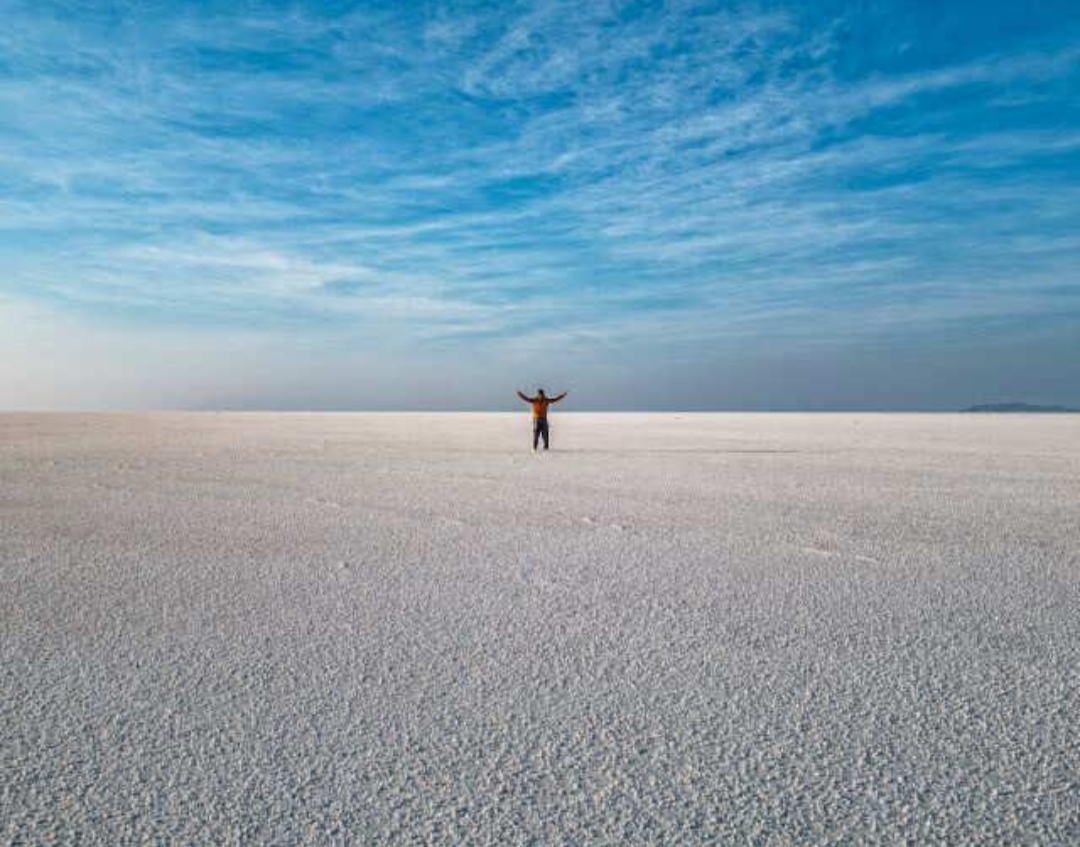
The People of Gujarat: Geography, History, Genetics, Culture, and Diaspora of a Land of the Western Indian Coast
1. Introduction: Who Are the People of Gujarat?
Gujarat is a state on the western coast of India, bordering the Arabian Sea, Pakistan's Sindh province, and the Indian states of Rajasthan, Madhya Pradesh, and Maharashtra. With an estimated population of roughly 74 million as of 2026 and a documented population of just over 60 million at the 2011 census, Gujarat is India's ninth most populous state and its sixth largest by area, encompassing a striking diversity of terrain, from the salt marshes of the Rann of Kutch to the forested hills of the eastern tribal belt and the fertile alluvial plains of the Sabarmati, Mahi, Narmada, and Tapti river valleys.
The people of the state, known as Gujaratis, speak Gujarati, an Indo-Aryan language, and form one of India's most distinctive regional communities, notable for a nearly five-thousand-year continuous history of maritime trade, a leading role in India's independence movement, a pronounced tradition of vegetarianism and mercantile enterprise, and one of the largest and most globally dispersed diaspora populations of any Indian region. This profile is written for a geography-based, rather than a single-ethnicity or single-faith community: it examines the population of Gujarat as a whole – encompassing its Hindu majority, its historic Muslim, Jain, Parsi (Zoroastrian), Christian, and small Jewish communities, its dominant land-owning and mercantile castes, and its substantial tribal (Adivasi) population – as a shared geographic and cultural unit shaped by a common land, language, and history.
This profile examines the region's ancient Harappan-era origins, its classical and medieval dynastic history, the population-genetic evidence for its ancestry, its social structure and constituent communities, and the customs, cuisine, dress, architecture, and diaspora that define Gujarati identity today.
2. Geography
Gujarat is conventionally divided into three broad geographic regions: mainland Gujarat (the fertile plains drained by the Sabarmati, Mahi, Narmada, and Tapti rivers), Saurashtra (the peninsula historically known as Kathiawar, a plateau of low hills ringed by a long coastline), and Kutch (a semi-arid region dominated by the vast seasonal salt marsh of the Rann of Kutch, divided into the Great Rann and Little Rann). The state has the longest coastline of any Indian state, running approximately 1,600 kilometres along the Arabian Sea, which has shaped its history as a maritime and trading region since antiquity.
Gujarat's landscape ranges from the salt desert of the Rann of Kutch and the deciduous forests of the Gir range (home to the Asiatic lion, the only wild population in the world) in the south, to the Aravalli and Sahyadri hill fringes in the north and east, and the low-lying wetlands of the Nal Sarovar and coastal marshes. The capital is Gandhinagar, planned in the 1960s on the banks of the Sabarmati River and named for Mahatma Gandhi, while Ahmedabad, the former capital and the state's largest city, remains its commercial, cultural, and demographic centre. Other major cities include Surat, Vadodara, Rajkot, and Bhavnagar. Administratively the state is divided into 33 districts, and the great majority of the population is Gujarati-speaking, though the state is also home to speakers of Bhili, Hindi, Sindhi, Marathi, Urdu, and Kutchi.
3. Origins and Early History
3.1 The Indus Valley Civilization in Gujarat
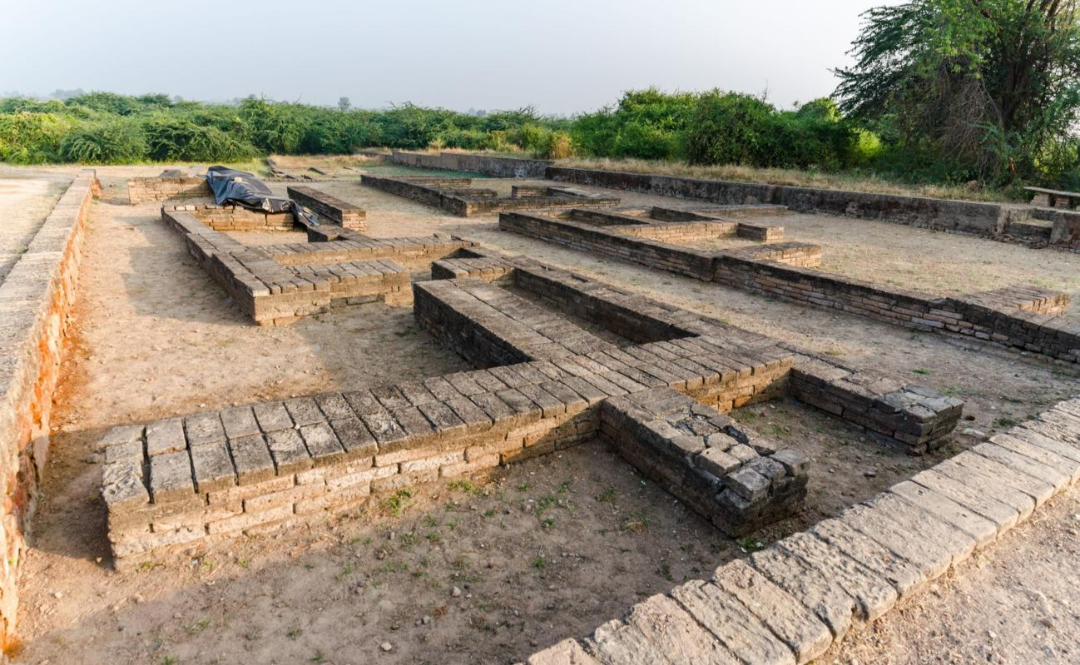
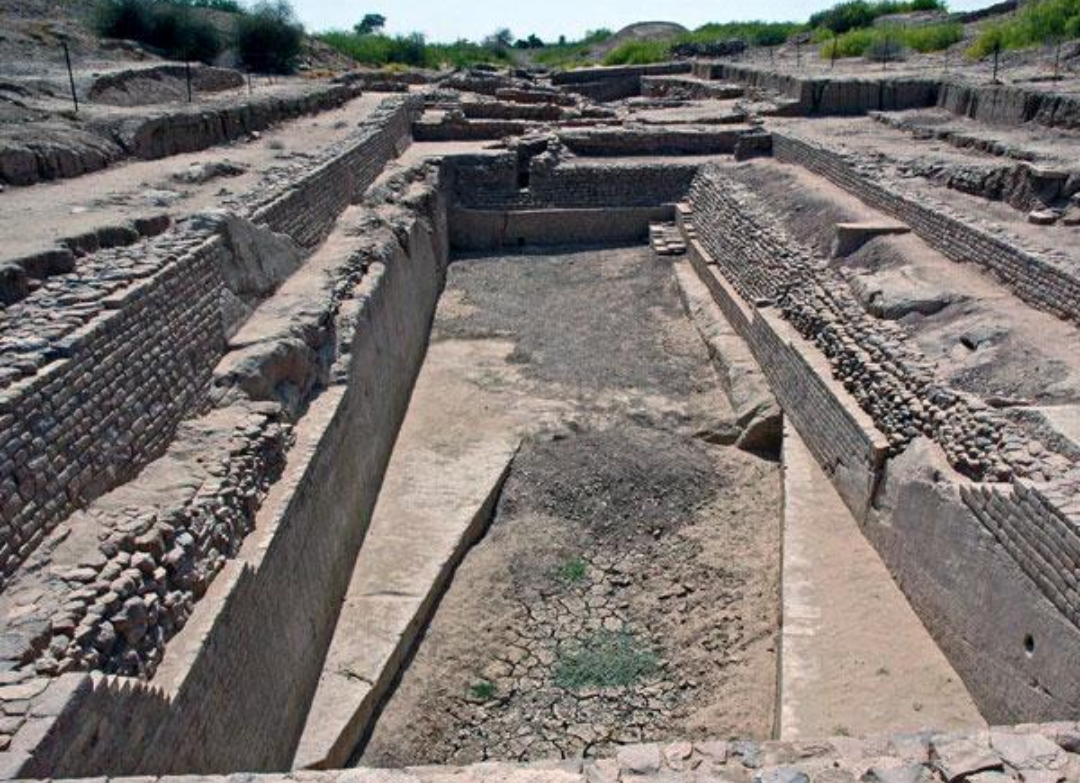
Gujarat holds one of the densest concentrations of Indus Valley (Harappan) civilization sites outside the Indus basin itself, and its early history is inseparable from that civilization's maritime and mercantile character. The most celebrated site is Lothal, in present-day Ahmedabad district, a planned port city built from around 2400 BCE that is home to the world's earliest known artificial dock, connecting the settlement to an ancient course of the Sabarmati River; excavations there, led by archaeologist S. R. Rao from 1954, uncovered a bead-making factory, warehouses, and an advanced drainage system, and the site functioned as a hub for trade in beads, gems, and copper linking the Harappan world to Mesopotamia and beyond.
Other major Gujarati sites of the Indus Valley Civilization include Dholavira in Kutch, one of the largest and best-preserved Harappan cities yet excavated, and Surkotada, Rangpur, and Rojdi on the Kathiawar peninsula; more than sixty distinct Indus-era settlements have been identified in Kutch alone. The decline of the Indus civilization from around 1900 BCE appears to have triggered internal migration from Kutch toward the Gujarati hinterland and Saurashtra, seeding the region's subsequent Bronze and Iron Age cultures. Early human settlement in the region, however, reaches back far earlier still, with Stone Age sites documented in the Sabarmati and Mahi river valleys of eastern Gujarat.
3.2 Classical and Early Historic Period
Gujarat entered the historical record proper with the spread of Mauryan imperial rule in the 3rd century BCE, followed by the Indo-Greek, Western Kshatrapa (Saka), and Gupta periods. The Saka ruler Rudradaman I extended his authority over Saurashtra and Kutch in the 2nd century CE, and the region later formed part of the Gupta Empire from the late 4th century. Following the Gupta decline, the Maitraka dynasty, founded by the general Bhatarka around 475 CE, ruled Gujarat and Malwa for roughly three centuries from the capital of Valabhi (Vallabhipura), a noted centre of Buddhist, Vedic, and Jain learning; Valabhi fell to Arab raiders from Sindh in 770 CE. In 775 CE, the first Parsi (Zoroastrian) refugees are traditionally said to have landed on the Gujarati coast, fleeing religious persecution in Persia – the beginning of a community that has remained closely identified with the region ever since.
4. Medieval History
4.1 The Maitraka Kingdom and the Solanki (Chaulukya) Golden Age
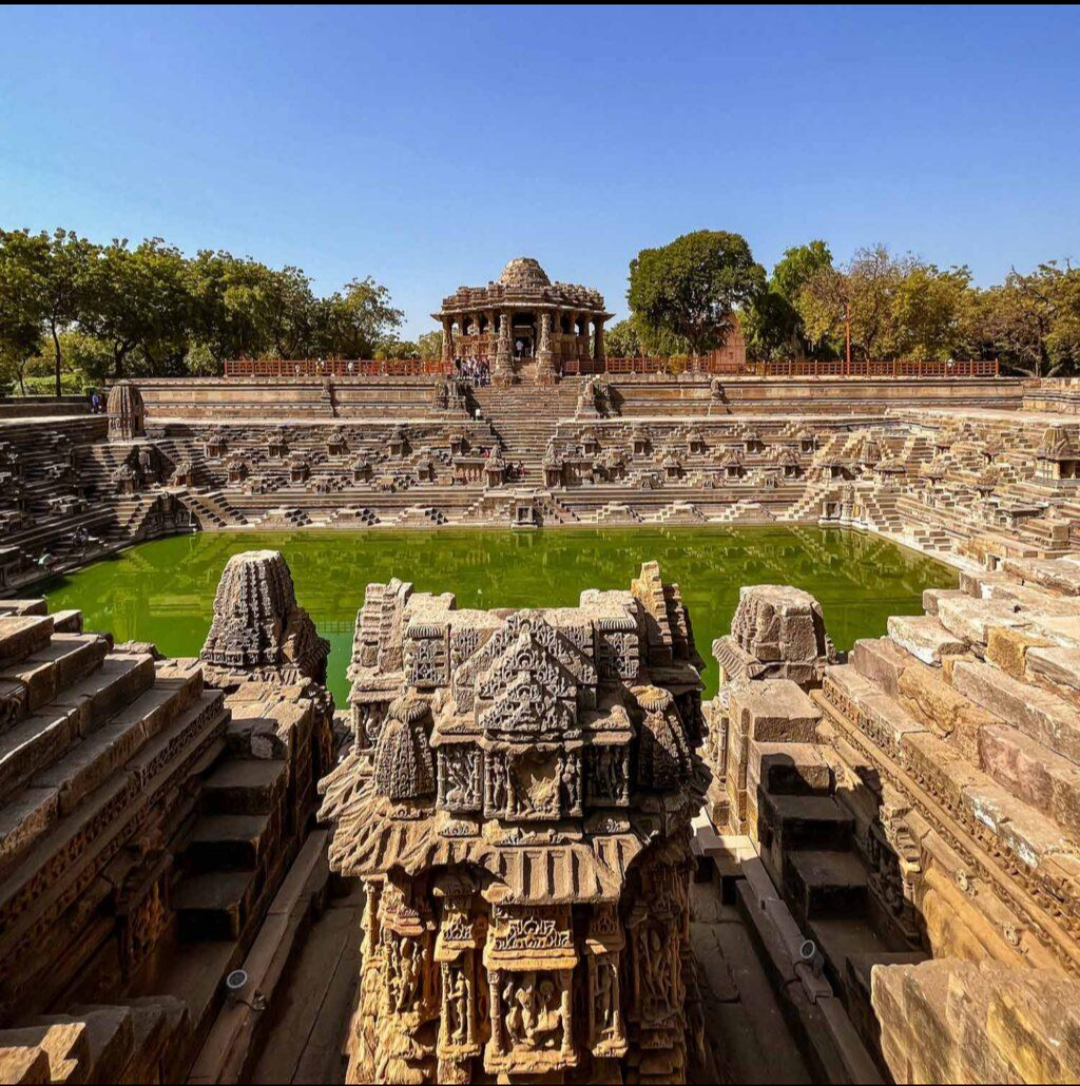
After the fragmentation of Gujarat into small principalities in the ninth century, the region was reunited under the Solanki dynasty (known in inscriptions as the Chaulukyas), founded around 940 CE by Mularaja I, who overthrew the preceding Chavda rulers. Ruling from the capital of Anahilapataka (modern Patan), the Solankis presided over what is widely regarded as a golden age of Gujarati political power, trade, and temple architecture, reaching their greatest territorial extent under celebrated kings such as Siddharaja Jayasimha and Kumarapala. The Vaghela dynasty succeeded the Solankis in the thirteenth century, but their last ruler, Karnadeva Vaghela, was defeated around 1299 by Alauddin Khalji, the Sultan of Delhi, bringing Gujarat under Muslim rule for the first time.
4.2 The Gujarat Sultanate and Mughal Rule
Gujarat remained part of the Delhi Sultanate until the early fifteenth century, when the weakening of Delhi's authority after Timur's sack of the city allowed the regional governor Zafar Khan (Muzaffar Shah I) to declare independence in 1407, founding the Gujarat Sultanate. His grandson, Ahmad Shah I, founded the city of Ahmedabad on the banks of the Sabarmati in 1411 and made it his capital, a city that would grow into one of medieval India's great commercial and architectural centres; his own grandson, Sultan Mahmud Begada, fortified the city with a wall stretching some ten kilometres and twelve gates in 1487. The Gujarat Sultanate flourished as a major hub of Indian Ocean trade until it was absorbed into the Mughal Empire by Akbar in 1573, after which Gujarat's ports – above all Surat – became the principal gateway for Mughal India's maritime commerce with the Middle East and, later, with European trading companies including the English East India Company, which established its first Indian factory at Surat in 1615.
4.3 Maratha Rule and the Princely States
Mughal control weakened through the eighteenth century, and the Maratha Empire, particularly the Gaekwad dynasty based at Baroda (Vadodara), came to dominate much of Gujarat by the mid-eighteenth century. The British East India Company assumed administrative control of the region in 1818, and following the 1857 uprising, Gujarat came under direct British Crown administration, split between a British-administered Bombay Presidency province and a patchwork of over two hundred princely states, particularly numerous across the Kathiawar (Saurashtra) peninsula, which was never fully absorbed into British India and retained its many small princely courts until independence.
5. Colonial Era and the Freedom Movement
Gujarat occupies an outsized place in the history of the Indian independence movement, having produced both Mohandas Karamchand Gandhi, born in Porbandar in 1869, and Vallabhbhai Patel, born in Nadiad in 1875, who together shaped the character and strategy of the freedom struggle. Gandhi's early satyagraha (nonviolent resistance) campaigns on Indian soil were rooted in Gujarat: the Kheda Satyagraha of 1918 organized peasants in Kheda district against onerous taxation during a period of crop failure, while the Bardoli Satyagraha of 1928, led by Patel, mobilized farmers across 137 villages of Surat district against a steep and unjustified increase in land revenue; its success, and the popular bestowal of the title "Sardar" (chief or leader) on Patel by the women of Bardoli, helped reinvigorate the national movement after the collapse of the Non-Cooperation Movement.
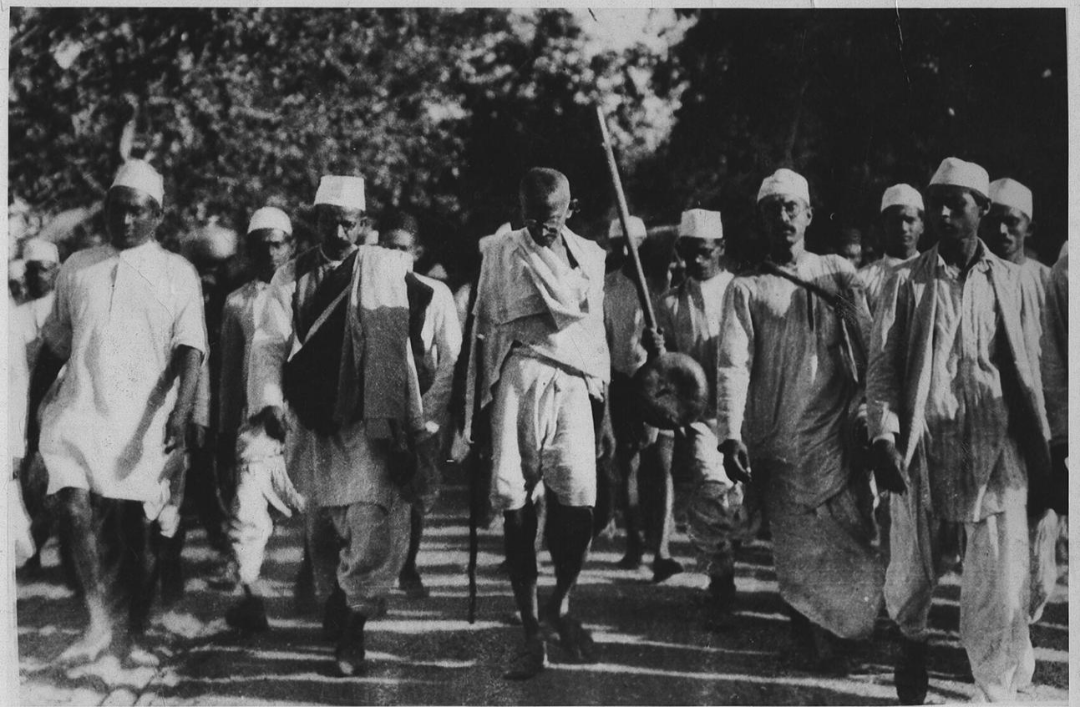
Gujarat's most iconic contribution to the freedom struggle came in 1930, when Gandhi led the 24-day, 387-kilometre Salt March (Dandi March) from his Sabarmati Ashram near Ahmedabad to the coastal village of Dandi, in a direct act of civil disobedience against the British salt tax that launched the nationwide Civil Disobedience Movement and drew global attention to the Indian cause. After independence, Patel, as India's first Deputy Prime Minister and Home Minister, oversaw the political integration of over five hundred princely states – including the many small states of his native Saurashtra – into the Indian Union, an achievement that earned him the popular epithet "Iron Man of India."
6. Genetics and DNA Ancestry
As a large and internally diverse population rather than a single endogamous ethnic group, Gujarat does not have a single unified genetic signature; rather, population-genetic and consumer DNA-testing research describes Gujaratis as broadly representative of the wider western Indian genetic landscape, with meaningful internal variation by caste, community, and region.
6.1 Ancestral North Indian / Ancestral South Indian (ANI–ASI) Framework
Modern population genetics models most South Asian ancestry, including that of Gujarat, as deriving from admixture between two deep ancestral populations: Ancestral North Indians (ANI), who share ancestry with West Eurasian and Central Asian steppe populations, and Ancestral South Indians (ASI), a lineage more deeply diverged and linked to the subcontinent's indigenous hunter-gatherer populations. Consumer genome studies of Gujarati samples (the "GIH" reference population used in international genetics databases) find a broad South Asian genetic base of roughly 65–90 percent, with the balance drawn in varying proportions from European, West Asian, Southeast Asian, and Austronesian-related ancestry components – with an average, across sampled individuals, of approximately 82 percent South Asian, 8 percent European, 5 percent Southeast Asian, and smaller West Asian and Austronesian contributions. Within specific agrarian castes such as the Patidars, the ANI–ASI ratio has been estimated at roughly 50–55 percent ANI to 45–50 percent ASI, placing the community near the midpoint of the broader western Indian genetic spectrum.
6.2 Paternal (Y-DNA) and Maternal (mtDNA) Lineages
Y-chromosome (paternal-line) studies of Gujarati populations report a notably high frequency of haplogroup L (specifically L1/L-M20), a lineage linked by researchers to the ancient farming populations of the Indus Valley, alongside significant contributions from haplogroups H, J2 (associated with West Asia and the Fertile Crescent), and R1a and R2 (associated with Central Asian and steppe-linked migration), with R1a present at somewhat lower frequency in Gujarat than in northern India or Punjab. Mitochondrial DNA (maternal-line) studies of Gujarati samples find a predominance of indigenous South Asian haplogroups such as M and its subclades, alongside minority lineages including U2, U7, and HV, the latter also documented among Gujarati Patel families. Whole-genome sequencing of individual Gujarati subjects has further indicated an ultimate ancestral migration route out of Africa, through the Middle East and Central Asia, into South Asia within roughly the past 20,000 to 25,000 years, consistent with the broader settlement history of the subcontinent.
6.3 Community-Level Genetic Variation
Because Gujarati society, like much of India, has historically practiced endogamy (in-group marriage) along caste and community lines, genetic studies find measurable differences between Gujarat's constituent communities. Gujarati Brahmin and Kshatriya (Rajput) populations tend to show comparatively higher ANI-related ancestry and elevated R1a frequency; the land-owning Patidar (Kanbi) community shows a more balanced ANI–ASI profile with a distinctively high frequency of the L-M20 lineage, linking it to the region's ancient agricultural population and to related agrarian communities elsewhere in western and central India, such as the Kunbis of Maharashtra and the Kurmis of the Gangetic plain; and Gujarat's tribal (Adivasi) communities of the eastern hill belt – including the Bhils, Dhodias, Gamits, and Chaudharis – show a higher proportion of ASI-related ancestry, consistent with deeper, less admixed indigenous lineage. The Gujarati Parsi community, by contrast, traces a distinct West Asian (Iranian) genetic and cultural heritage overlaid on many centuries of residence in Gujarat.
6.4 Endogamy and Genetic Health Considerations
As in many long-settled, caste- and community-endogamous South Asian populations, sustained in-group marriage across generations has left detectable genetic signatures of reduced diversity and founder effects within specific Gujarati communities, a pattern of general interest to population geneticists studying South Asian health genetics. Individual genetic ancestry results can and do vary considerably from these community-level averages, and consumer ancestry findings should be read as broad population trends rather than predictions about any single person's heritage.
7. Social Structure and Communities
Gujarat's population is organized into a wide array of religious and caste communities, reflecting its long history as a crossroads of trade and settlement. According to census data, roughly 89 percent of the state's population is Hindu, around 10 percent Muslim, and just under 1 percent each Jain and Christian, with small Sikh, Buddhist, Parsi, and Jewish minorities. Within the Hindu majority, traditional caste groupings include Brahmins (the traditional priestly class, around 4 percent of the population), Vania or Bania communities (traditionally traders and merchants, historically prominent in banking and commerce, and closely linked with Gujarat's large Jain population, since many Bania families are Jain by faith), and Rajputs (traditionally a warrior and landholding class).
The largest single caste cluster is the Patidar community (formerly called Kanbi), an agrarian and land-owning group constituting roughly 12 percent of the population, historically concentrated in the fertile Charotar tract of central Gujarat and divided into Leva and Kadva sub-groups; land reforms under British administration and, later, the Green Revolution greatly increased Patidar landholding, prosperity, and social mobility, and the community has since become closely associated with both agriculture and the global diamond and hospitality trades. The Koli community forms the largest caste grouping overall, at close to a quarter of the population, historically associated with agriculture, fishing, and, in parts of Saurashtra, warrior status, with many Kolis today identifying as Kshatriya. Scheduled Castes make up roughly 7 percent of the population, and Scheduled Tribes (Adivasis) – including the Bhil, Dhodia, Gamit, and Chaudhari peoples – constitute around 14 percent, concentrated mainly along the state's eastern, forested belt bordering Rajasthan, Madhya Pradesh, and Maharashtra.
Gujarat is also home to one of India's largest Jain populations, historically concentrated among trading and banking families and closely tied to the state's centres of Jain temple architecture at Palitana, Girnar, and elsewhere; and to the largest and most historically established Parsi (Zoroastrian) community in India, descended from Persian refugees who settled along the Gujarati coast from the eighth century onward and who became major contributors to India's industrial and commercial development. A small, historic Jewish community has also been present in Ahmedabad, centred on the Magen Abraham Synagogue.
8. Language and Script
Gujarati is an Indo-Aryan language written in its own Gujarati script, a cursive derivative of the Devanagari script from which the characteristic horizontal head-line has been dropped. Spoken by an estimated 55–60 million people as a first language, chiefly in Gujarat and in neighbouring Union Territories, Gujarati is one of the twenty-two scheduled languages recognized by the Indian Constitution and ranks among the most widely spoken languages of the Indian diaspora worldwide. The language has a rich literary tradition stretching back to medieval devotional (bhakti) poetry, most famously that of the poet-saint Narsinh Mehta (15th century), regarded as the father of Gujarati poetry, and running through the reformist and nationalist prose of the nineteenth and twentieth centuries, including the writings of Mahatma Gandhi himself, much of which was composed in Gujarati. Within the state, regional dialects include standard Gujarati, Saurashtra/Kathiawadi, and Kutchi (considered by some linguists a distinct though closely related language), alongside significant populations of Hindi, Sindhi, Marathi, Urdu, and tribal Bhili speakers.
9. Culture, Customs, and Social Practices
Gujarati culture is often characterized by a strong emphasis on family, community, hospitality, and business enterprise, alongside a widely noted tradition of vegetarianism, ahimsa (non-violence), and religious pluralism that scholars trace to the region's long-standing Jain and Vaishnava Hindu influence. Gujarat is closely associated with the life of Krishna in Hindu tradition, believed to have established his kingdom at Dwarka on the Saurashtra coast, and the state is home to major pilgrimage sites including the Dwarkadhish temple, the Somnath temple (one of the twelve jyotirlinga shrines of Shiva, repeatedly destroyed and rebuilt over the centuries), the Jain temple complexes of Palitana and Girnar, and the shrine of the popular folk saint Jalaram Bapa at Virpur.
Community life in Gujarat traditionally centres on large extended families, caste- and community-based associations (many of which maintain active diaspora chapters), and a strong culture of philanthropy and trust-based charitable giving associated with its mercantile communities. The state is also known for its wide network of community-run educational institutions, cooperative movements (most famously the Amul dairy cooperative, founded in 1946 in Anand and a global symbol of India's cooperative dairy sector), and a broadly entrepreneurial social ethos that runs across caste and religious lines.
10. Festivals
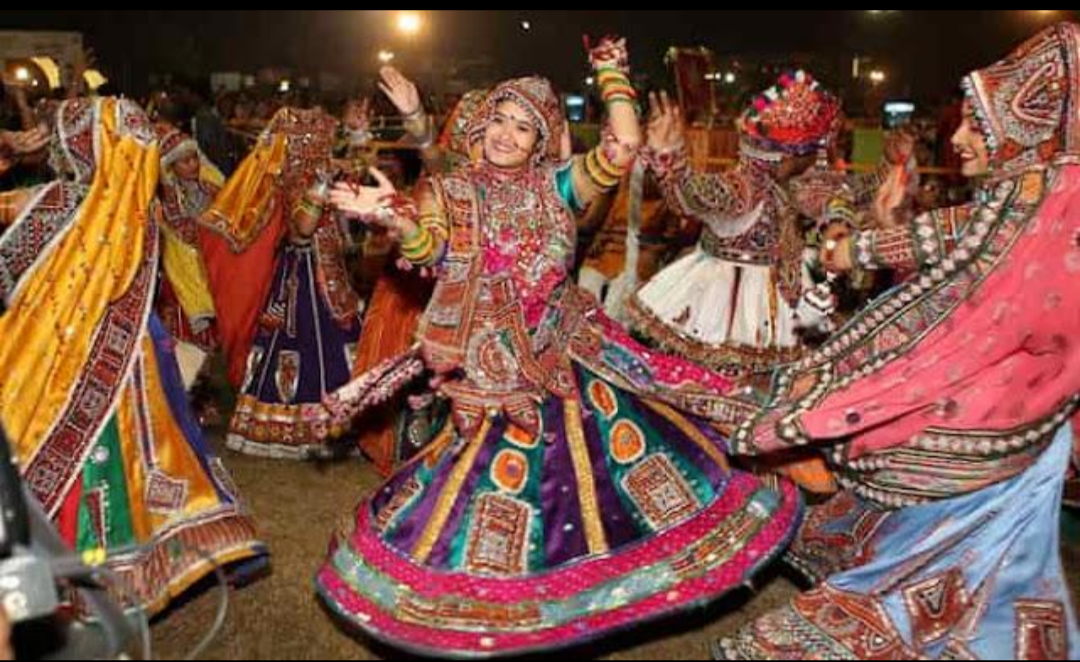
Navratri ("nine nights"), held in early autumn in honour of the goddess Durga, is Gujarat's most emblematic festival and is celebrated with garba and dandiya raas, two of India's best-known folk dance forms. Garba is a circular dance, traditionally performed by women around a perforated clay lamp-pot (the garbo or garbha deep), whose light is said to represent divine energy shining through the body of the universe; dandiya raas is performed with a pair of decorated wooden sticks, its choreography traditionally understood as re-enacting the mythological battle between the goddess Durga and the demon Mahishasura. Both dances, along with the associated mirror-worked chaniya choli costume, have since spread across the global Indian diaspora and are performed at Navratri gatherings from Leicester to New Jersey.
Other major festivals include Uttarayan (Makar Sankranti), celebrated in mid-January with kite-flying competitions that fill the skies over Ahmedabad and other cities; Diwali, marked with the same household lighting, sweets, and worship of Lakshmi observed elsewhere in India, but which in Gujarat also traditionally marks the start of the Gujarati new year (Bestu Varas) on the following day; and the Rann Utsav, a large modern cultural festival held each winter on the white salt desert of the Rann of Kutch, showcasing the region's handicrafts, textiles, and folk music.
11. Marriage and Wedding Traditions
A traditional Gujarati Hindu wedding is an elaborate multi-day affair combining Vedic ritual with distinct regional social custom. Pre-wedding ceremonies typically include the Chandlo Matli (engagement), at which families formally exchange gifts and blessings; the Mameru or Mosalu, at which the bride receives gifts from her maternal uncle's family; and the Pithi ceremony, in which a turmeric, sandalwood, and rosewater paste is applied to the bride and groom for ritual purification and to bring a glow to the skin before the wedding. The wedding day itself centres on the Hindu Vedic rites of Kanyadaan (the ceremonial giving away of the bride) and the Saptapadi or Phera, in which the couple takes seven vows while circling a sacred fire.
Distinctively Gujarati elements include the Garba and Sangeet evenings held in the days before the wedding, filled with folk dance and music in the Navratri style, and, among some communities, the Ponkhvu ceremony in which the groom is ritually welcomed by the bride's mother at the wedding venue. Wedding attire is typically vivid and heavily embroidered: brides traditionally wear a Panetar (a white-and-red bordered silk saree given by the maternal family) for the wedding rites, changing afterward into a Gharchola (a saree in red, green, or maroon patterned with a gold checkered grid) gifted by the groom's family, while grooms traditionally wear a silk kurta and dhoti with an ornate turban (pagh or phento). A festive communal meal, often built around the traditional Gujarati thali, follows the ceremony.
12. Cuisine
Gujarati cuisine is among the most distinctively vegetarian of India's major regional culinary traditions, a pattern closely tied to the historical influence of Jainism and Vaishnava Hinduism in the region, and is well known for a signature sweet-salty-spicy flavour balance rarely found in other parts of the subcontinent, in which a touch of jaggery or sugar is worked into otherwise savoury dals, curries, and vegetable preparations.
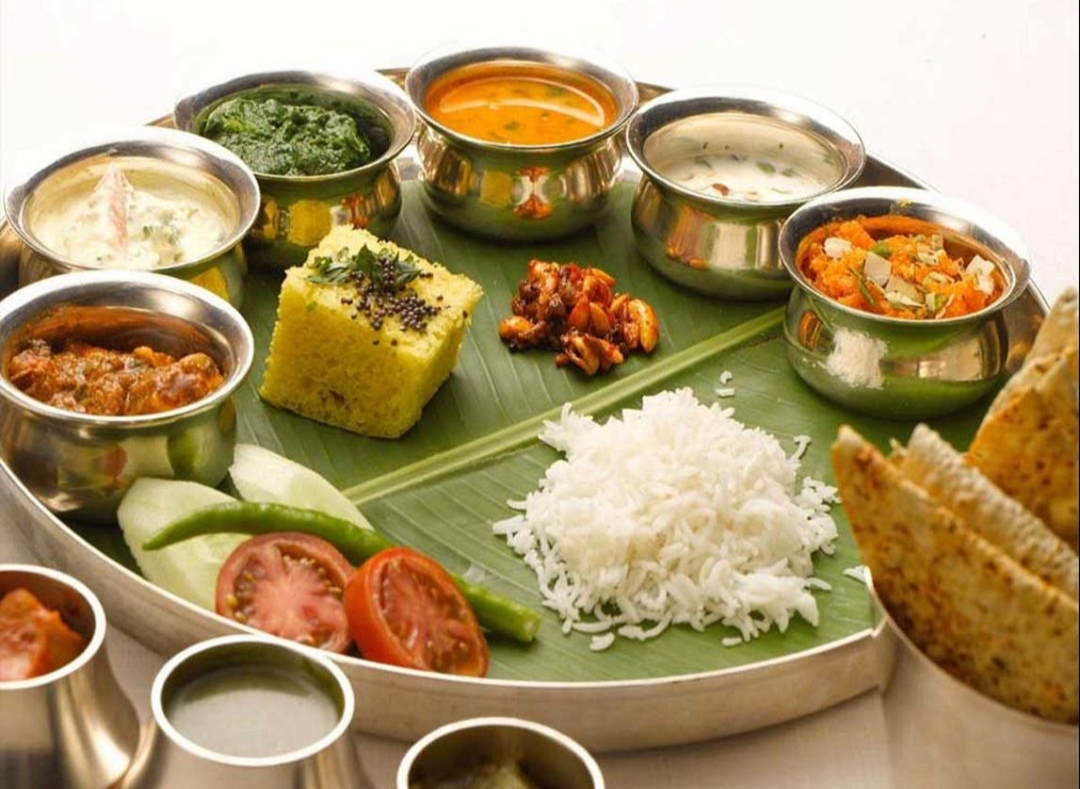
The everyday Gujarati meal is often described as dal-bhat-rotli-shaak: lentils (dal), rice (bhat), flatbread (rotli), and a vegetable preparation (shaak). On festive occasions this is expanded into the full Gujarati thali, an all-you-can-eat platter that can include a dozen or more items served together: kadhi (a sweet-and-sour yoghurt and gram-flour curry), khichdi, an array of farsan (savoury snacks) such as the steamed chickpea-flour cake dhokla, the fried fafda and gathiya, the stuffed and steamed patra (colocasia leaf rolls), and the vegetable-and-lentil cake handvo, alongside pickles, buttermilk (chaas), and a mishthan (sweet) such as mohanthal, shrikhand, or the jaggery-based sukhdi. Distinct regional cuisines exist within the state, with North Gujarat, Kathiawad (Saurashtra), Kutch, Central Gujarat, and South Gujarat each contributing characteristic dishes and levels of spice.
13. Traditional Dress and Ornaments
Traditional Gujarati women's wear is built around the chaniya choli, a three-piece ensemble of a flared, ankle-length skirt (chaniya or ghagra), a fitted, often backless blouse (choli), and a long scarf (odhni or dupatta), commonly decorated with mirror work, bead work, and embroidery and worn most famously during Navratri garba celebrations. Gujarat is also renowned for two textile traditions of its own: Bandhani, an intricate tie-dye technique associated particularly with Kutch and practiced by the Khatri community, and the Patola saree of Patan, woven by an exceptionally labour-intensive double-ikat technique in which both warp and weft threads are individually tied and dyed before weaving – a single Patola saree can take several months to complete and is among India's most prized textile art forms.
For weddings and formal occasions, women traditionally wear the Panetar and Gharchola sarees described above, along with layered silver jewellery distinctive to Gujarat, including oxidized silver bajubands (armlets), kandoras (waist chains), and large silver hoop earrings, particularly among the state's rural and pastoral communities. Traditional men's wear consists of a dhoti (a length of unstitched cloth wrapped and draped around the legs) or the pleated, short-sleeved kediyu jacket paired with tight-fitting chorno trousers, along with a kurta and a distinctive turban known as a pagh or phento, whose colour, shape, and style of tying have traditionally varied by caste, community, and region across Saurashtra and Kutch.
14. Physical Traits and Regional Diversity
As with any large, historically diverse population defined by geography rather than a single lineage, there is no single physical "type" that characterizes the people of Gujarat; anthropological and genetic literature instead documents considerable regional and community variation across the state, consistent with Gujarat's varied ANI–ASI ancestry proportions discussed above. In general terms, communities of the northern and central plains, and groups with historically higher Ancestral North Indian ancestry components such as Brahmin, Rajput, and some Bania communities, tend on average toward the lighter skin tones and features more common in northern and western South Asia, while many communities of the southern and eastern tribal belt, whose ancestry is weighted more heavily toward the Ancestral South Indian component, show features more typical of populations with deeper indigenous South Asian ancestry, including darker skin tones on average. Coastal Kutchi and Saurashtrian populations, shaped by many centuries of maritime contact with Persia, Arabia, and East Africa, show additional local variation reflecting that history of contact and, in some family lines, admixture.
These patterns are population-level statistical tendencies documented in genetic and anthropological research, not fixed or uniform traits, and enormous individual variation exists within every community and region of the state.
15. Traditional Housing and Architecture
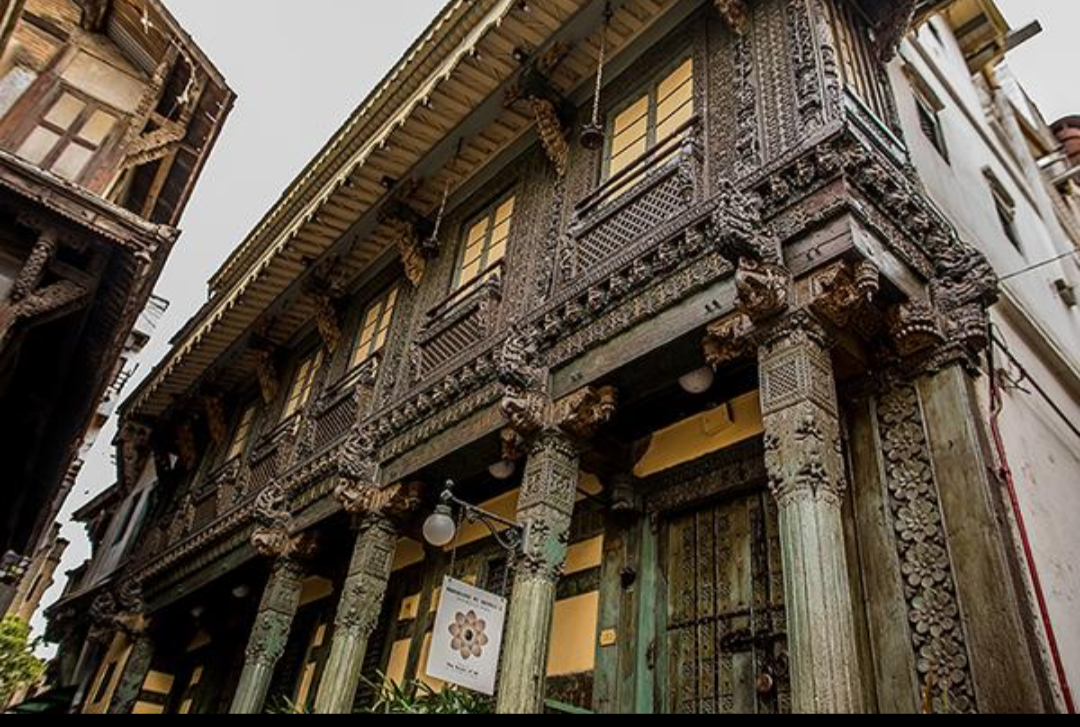
Traditional Gujarati domestic architecture varies markedly by region and community. In the historic walled core of Ahmedabad, residential life has long been organized around the pol, a distinctive urban housing cluster of closely packed, multi-storey wooden havelis (mansions) opening onto shared internal lanes, courtyards, and communal gates, historically organized along caste, trade, or community lines and designed for security, ventilation, and dense urban living; many pols retain elaborately carved wooden facades and brackets. In rural Kutch and Saurashtra, the traditional dwelling is the bhunga, a circular, mud-and-dung-plastered hut with a conical thatched roof, whose rounded form gives it notable resilience against earthquakes, a significant feature in a seismically active region. Wealthier landholding families across mainland Gujarat historically built the haveli style of courtyard mansion, while temple architecture across the state – from the sun temple at Modhera, built under the Solankis, to the step-wells (vav) such as the UNESCO-listed Rani ki Vav at Patan – reflects a long and highly developed tradition of stone carving and water architecture.
16. Folklore and Oral Tradition
Gujarat possesses a rich tradition of oral literature carried by hereditary bard and genealogist communities such as the Charans and Barots, who historically preserved the ancestry, exploits, and legendary histories of ruling and landholding families in memorized verse. Folk ballads and legends recount the exploits of medieval Rajput and Kathi warriors, the romantic tale of Jesal and Toral, and the devotional poetry-legends surrounding saints such as Narsinh Mehta and the folk deity Jalaram Bapa. The Bhavai folk theatre tradition of Gujarat, performed by travelling troupes historically associated with the Nayak community, combines satire, devotional themes, music, and dance and remains a recognized regional performance art. Garba songs themselves, sung in praise of the mother goddess, constitute a living and continuously evolving oral tradition performed each Navratri across the state and its diaspora.
17. Economy, Livelihoods, and Entrepreneurship
Gujarat has long been regarded as one of India's most commercially dynamic states, a reputation rooted in its centuries-old maritime trading networks and its large communities of merchant and trading castes. The state is a national leader in several major industries: the city of Surat alone accounts for approximately 90 percent of the world's diamond cutting and polishing, an industry built up from the mid-twentieth century largely by migrant farm labourers from the Saurashtra region who moved to the city to learn the trade, alongside a major textile and man-made fibre industry producing a large share of India's total synthetic fabric output. Ahmedabad remains one of India's principal textile and industrial centres, historically nicknamed the "Manchester of India," while the state as a whole hosts major petrochemical, pharmaceutical, chemical, and port infrastructure, including the large private ports of Mundra and Kandla.
Beyond large industry, Gujarat is also home to one of India's most successful agricultural cooperative movements, epitomized by the Amul dairy cooperative founded in Anand in 1946, which transformed India's dairy sector and became a national model for cooperative enterprise (the "White Revolution"). Community traditions of entrepreneurship, thrift, and risk-taking commerce, historically associated above all with Bania, Jain, Patidar, and Parsi communities, are widely cited by economists and sociologists as a defining feature of the Gujarati economic character, one that has translated directly into the state's prominent diaspora business communities worldwide.
18. Diaspora
Gujaratis have one of the longest histories of overseas migration of any Indian regional group, with merchant communities such as the Bhatias of Kutch documented trading and settling in Muscat, Oman, as early as the sixteenth century, and long-established trading links to Zanzibar, Yemen, and the wider Persian Gulf. The largest waves of modern emigration began in the nineteenth and twentieth centuries, first to East Africa (particularly Kenya, Uganda, and Tanzania) under British colonial rule, where Gujaratis came to dominate the retail and trading economy – a community many of whose members were later forced to relocate again, particularly following the 1972 expulsion of Asians from Uganda, most of whom resettled in the United Kingdom.
Today, the Gujarati diaspora is estimated to make up close to a third of the entire overseas Indian population and is present in over 125 countries. The largest overseas Gujarati populations are found in the United Kingdom (where Gujaratis form roughly half of the two-million-strong British Indian community and are heavily concentrated in London boroughs such as Harrow and Brent and in the city of Leicester), the United States (concentrated especially in the New York City metropolitan area, New Jersey, and California, with significant emigration beginning after the 1965 Hart-Celler Act), Canada, Pakistan, and across East and Southern Africa, the Gulf states, and Fiji. The Patel surname, carried by the Patidar community, is now among the most common surnames of Indian origin in both the United Kingdom and the United States, closely associated in both countries with family-run hospitality and retail businesses.
19. Prominent Figures
19.1 Political and Public Life
- Mahatma Gandhi (1869–1948) – born in Porbandar; leader of the Indian independence movement and pioneer of nonviolent civil disobedience, revered as the Father of the Nation.
- Sardar Vallabhbhai Patel (1875–1950) – born in Nadiad; independence leader, India's first Deputy Prime Minister and Home Minister, and architect of the political integration of India's princely states.
- Muhammad Ali Jinnah (1876–1948) – born in Karachi to a Gujarati-origin merchant family; founder and first Governor-General of Pakistan.
- Morarji Desai (1896–1995) – born in Bhadeli; served as Prime Minister of India (1977–79), the first from outside the Congress party.
- Narendra Modi (b. 1950) – born in Vadnagar; Chief Minister of Gujarat (2001–2014) and Prime Minister of India since 2014.
19.2 Business and Industry
- Dhirubhai Ambani (1932–2002) – born in Chorwad; founder of Reliance Industries, one of India's largest conglomerates.
- Mukesh Ambani (b. 1957) and Anil Ambani (b. 1959) – chairmen respectively of Reliance Industries and the Reliance Anil Dhirubhai Ambani Group.
- Gautam Adani (b. 1962) – born in Ahmedabad; founder and chairman of the Adani Group, with major interests in ports, energy, and infrastructure.
- Azim Premji (b. 1945) – chairman of Wipro and one of India's most prominent philanthropists, from a Gujarati Muslim Khoja business family.
- Uday Kotak (b. 1959) – founder of Kotak Mahindra Bank.
- Dilip Shanghvi (b. 1955) – founder of Sun Pharmaceutical Industries, India's largest pharmaceutical company.
19.3 Science, Arts, and Culture
- Vikram Sarabhai (1919–1971) – physicist and founding chairman of the Indian Space Research Organisation (ISRO), regarded as the father of the Indian space programme.
- Homi J. Bhabha (1909–1966) – nuclear physicist from a prominent Gujarati Parsi family; founding director of the Tata Institute of Fundamental Research and architect of India's atomic energy programme.
- Narsinh Mehta (15th century) – poet-saint regarded as the father of Gujarati devotional poetry.
- Zaverchand Meghani (1896–1947) – poet, folklorist, and journalist, celebrated as the “Rashtriya Shayar” (national poet) of Gujarat for his work collecting Gujarati and Kathiawadi folk literature.
- Freddie Mercury (1946–1991) – born Farrokh Bulsara in Zanzibar to a Gujarati Parsi family; lead singer of the rock band Queen.
- Pratik Gandhi (b. 1980) – actor, prominent in both Gujarati theatre and Hindi television and film.
This list is illustrative rather than exhaustive; Gujarat and its diaspora have produced a large number of additional political leaders, entrepreneurs, scientists, sportspeople, and cultural figures across the past two centuries.
20. Contemporary Reflections
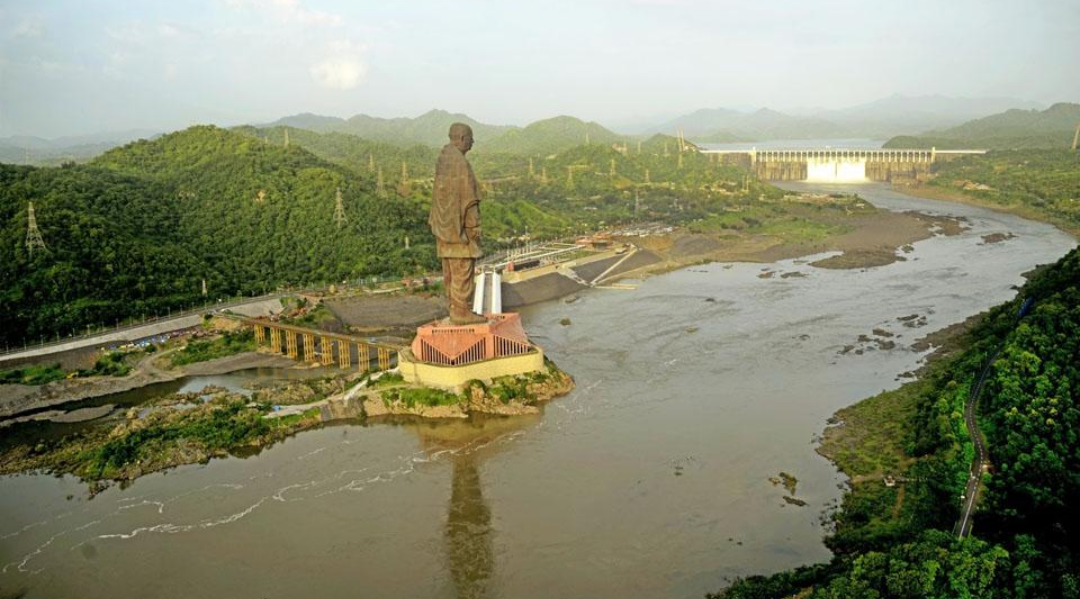
Several themes recur in contemporary discussion of Gujarati identity. One is the tension between the state's celebrated entrepreneurial and cooperative traditions and the ongoing social and political friction among its constituent caste communities, most visibly the 2015 Patidar reservation agitation, which highlighted long-standing competition for government jobs, education quotas, and political representation among Patidar, Koli, and other communities. A second is the balancing of rapid industrial growth, urbanization, and infrastructure development – exemplified by projects such as the Statue of Unity and the biennial Vibrant Gujarat investment summits – against the preservation of the state's rural, agrarian, and tribal heritage. A third is the diaspora's own evolving relationship to Gujarati identity, as second- and third-generation Gujaratis abroad, from Leicester to New Jersey, work to sustain language, festival, and community traditions across generations increasingly shaped by the culture of their country of birth.
21. Conclusion
The people of Gujarat represent a rare case of a modern regional population whose deep historical continuity – traceable through archaeological remains at Lothal and Dholavira, through the temple-building Solanki kings of Patan, through the mercantile ports of the Gujarat Sultanate and Mughal Surat, and through the independence-era leadership of Gandhi and Patel – sits alongside enormous internal social diversity and one of the most extensive and economically successful diaspora networks of any region in the world. From the ancient dockyards of the Indus Valley Civilization to the diamond-cutting floors of modern Surat, and from the Thomma-like oral ballads of Charan bards to the garba circles now danced from Ahmedabad to London and New Jersey, the Gujarati story is at once an ancient history, a case study in population genetics and migration, and a living, continuously evolving regional culture.
References
- [1]1. Britannica. “Gujarat: History, Map, Population, & Facts.” https://www.britannica.com/place/Gujarat
- [2]2. Britannica. “Gujarat – Indus Valley, Mauryan Empire, Mughal Rule.” https://www.britannica.com/place/Gujarat/History
- [3]3. Wikipedia. “History of Gujarat.” https://en.wikipedia.org/wiki/History_of_Gujarat
- [4]4. Wikipedia. “Demographics of districts of Gujarat.” https://en.wikipedia.org/wiki/Demographics_of_districts_of_Gujarat
- [5]5. StatisticsTimes.com. “Gujarat Population 2026.” https://statisticstimes.com/demographics/india/gujarat-population.php
- [6]6. World Population Review. “Gujarat Population 2026.” https://worldpopulationreview.com/regions/gujarat
- [7]7. Wikipedia. “Lothal.” https://en.wikipedia.org/wiki/Lothal
- [8]8. Vajiram & Ravi. “Lothal: Ancient Port of Indus Valley Civilisation.” https://vajiramandravi.com/upsc-exam/lothal-ancient-port-of-indus-valley-civilisation/
- [9]9. Ancient Origins. “The Extensive Indus Valley Sites of Gujarat.” https://www.ancient-origins.net/ancient-places-asia/extensive-indus-valley-sites-gujarat-004641
- [10]10. Wikipedia. “History of Ahmedabad.” https://en.wikipedia.org/wiki/History_of_Ahmedabad
- [11]11. Vajiram & Ravi. “Solanki Dynasty 940–1244 CE.” https://vajiramandravi.com/current-affairs/?p=97039