

Haryana Genome Project Community
Discover your Haryanvi ancestry with the Haryana Genome Project. Explore the unique gene pool & cultural tapestry of this North Indian state.
The Haryana Genome Project
1. Introduction: Who Are the People of Haryana?
2. Geography
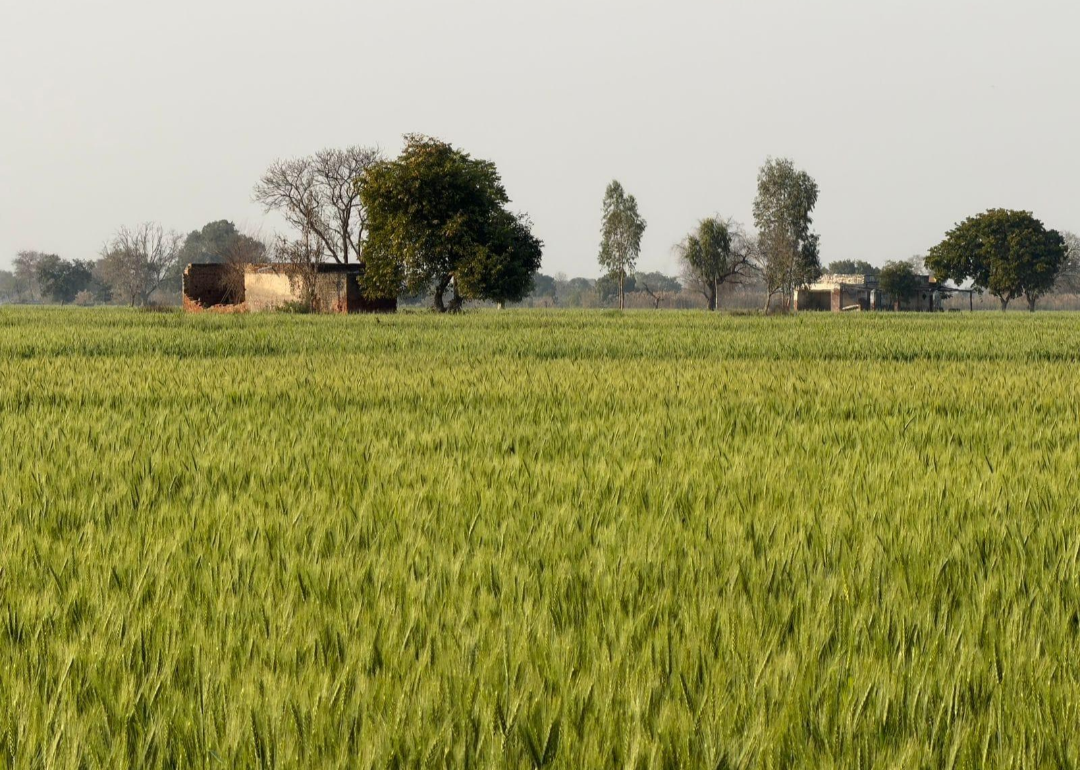
Agriculturally, Haryana is one of India's most productive states, a pillar of the Green Revolution and a leading producer of wheat, rice, bajra (pearl millet), barley, maize, mustard, sugarcane, and dairy a resource base that underlies much of the community's traditional cuisine, wealth, and social organisation described in the sections below.
3. Origins and Early History
3.1 Prehistoric and Harappan Foundations
3.2 The Vedic Age and the Mahabharata
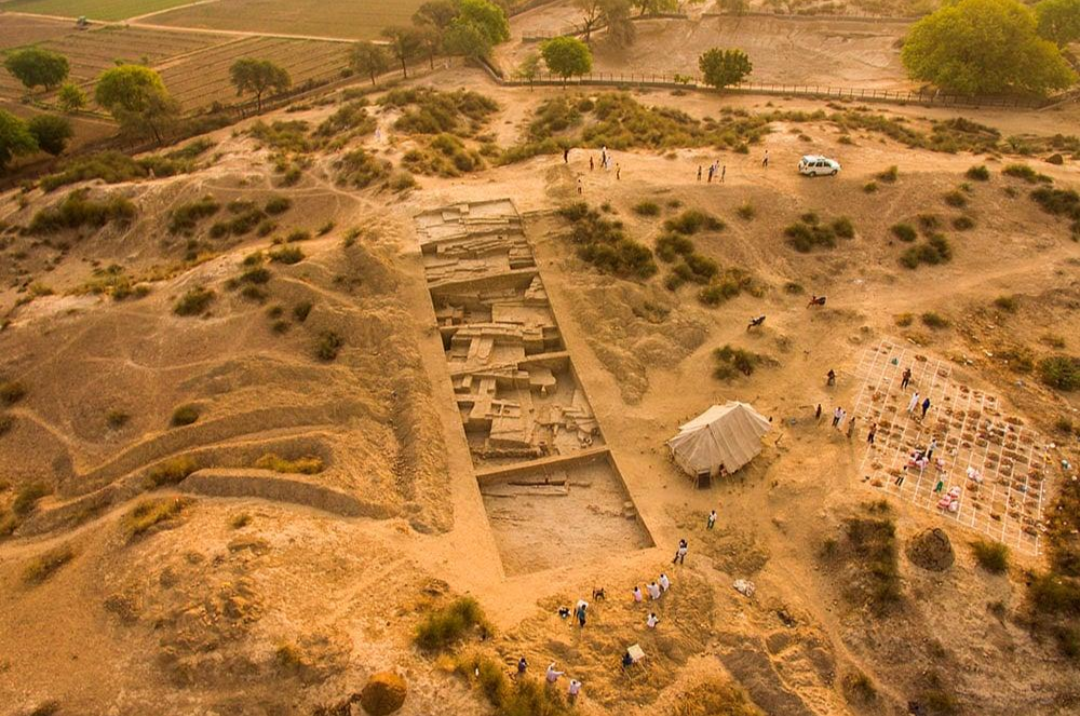
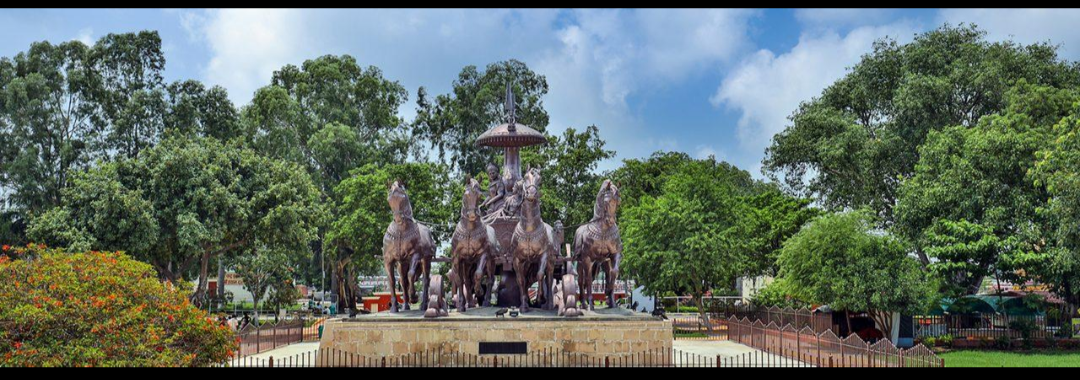
Haryana occupies a central place in India's Vedic and epic imagination. Ancient names for the region Brahmavarta, Aryavarta, and Bahudhanyaka ("land of abundant grain") reflect traditions that associate it with the earliest Vedic compositions and with the mythic ploughing of Kurukshetra by King Kuru. The region formed the heartland of the Kuru Mahajanapada, one of ancient India's great kingdoms, and it was here, at Kurukshetra, that the Mahabharata situates its climactic eighteen-day war between the Kaurava and Pandava clans and Krishna's delivery of the Bhagavad Gita to Arjuna. Painted Grey Ware pottery associated with the broad period of the epic has been excavated at Kurukshetra, Panipat, and other sites named in the Mahabharata (Panprastha/Panipat, Sonprastha/Sonipat, and Tilprastha among them), lending the oral epic tradition a degree of archaeological correlation.
3.3 Medieval Empires and the Three Battles of Panipat
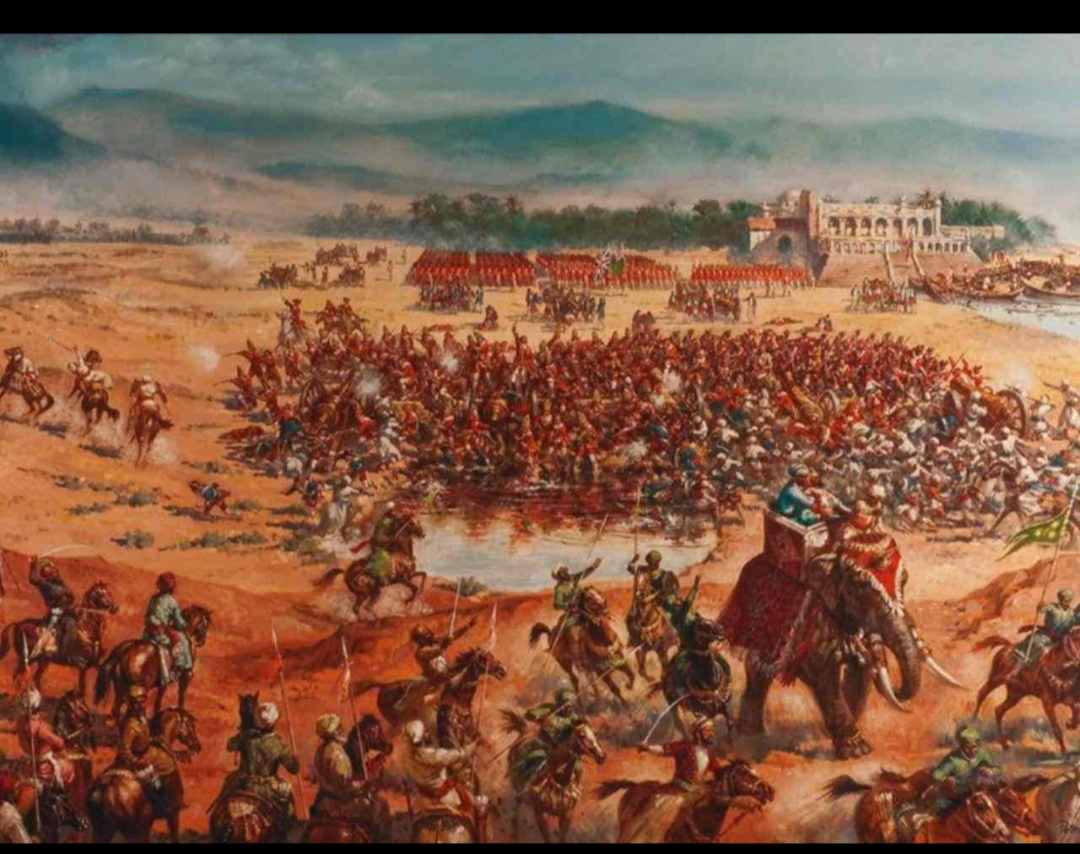
Lying directly on the invasion route into the Gangetic plain and the capital region of Delhi, Haryana has been fought over by nearly every major power in Indian history the Mauryas, Guptas, various Rajput dynasties, the Delhi Sultanate, the Mughals, and the Marathas. Its most famous historical role is as the site of the three Battles of Panipat: in 1526, when Babur's use of artillery defeated the Delhi Sultanate and founded the Mughal Empire; in 1556, when Akbar consolidated Mughal power; and in 1761, when the Afghan ruler Ahmad Shah Abdali (Durrani) decisively defeated the Maratha Confederacy. Through the Mughal and later Maratha periods, the region's population increasingly dominated by Jat, Rajput, Ahir, and Gujjar agrarian-military communities supplied soldiers, revenue, and grain to whichever power-controlled Delhi, reinforcing the martial and agrarian character for which the region remains known.
3.4 Colonial Rule and the Formation of Modern Haryana (1966)
The East India Company absorbed the region in 1803, and in 1858 it was folded into the British province of Punjab. After Indian independence in 1947, the area remained part of the joint Punjab state, but growing linguistic and cultural friction between Punjabi-speaking Sikhs and Hindi-speaking Hindus led, after a long political campaign, to the Punjab Reorganisation Act of 1966, which carved out the Hindi-speaking districts as the new state of Haryana on 1 November 1966 the same year Himachal Pradesh separately gained additional territory. Modern Haryana was therefore not born as an ancient ethnic homeland in the way many world communities are, but as a linguistic-cultural state whose population's shared identity as "Haryanvi" has consolidated over the sixty years since.
4. Genetics and DNA Ancestry
4.1 The Rakhigarhi Genome and the Indus Question
4.2 Paternal (Y-DNA) Lineages
Modern Haryana's living communities, by contrast with the Harappan-era Rakhigarhi individual, show a much stronger later Indo-Aryan and Central Asian paternal signal, reflecting the Bronze Age and subsequent migrations that followed the decline of the Indus cities. Multiple Y-chromosome surveys of Haryanvi Jats and related groups report haplogroup R1a and specifically its R1a-Z93 branch, associated with the Bronze Age Steppe expansion into South Asia as the leading paternal lineage, with reported frequencies commonly cited in the 35–50% range and higher in some samples. One large-scale study of 302 Jat Y-chromosome samples from India and Pakistan found the population's paternal lineages split across at least nine distinct haplogroups (chiefly R1a, J, L, and Q, which together account for roughly 90% of the total), concluding that Jats, far from sharing one unique ancestral marker, are genetically continuous with several other South Asian communities. The Ror community of Haryana, considered by some scholars to preserve some of the region's oldest agrarian stock, shows a related but distinct pattern dominated by R1a, R2, L, J2, and H lineages. Haplogroup Q, at moderate frequency among Haryanvi Jats, is often linked by researchers to later historical contact with Central Asian groups.
4.3 Maternal (mtDNA) Lineages
As with many other South Asian populations that show an elevated West or Central Asian paternal signal, the maternal-line (mitochondrial) DNA of Haryana's communities is overwhelmingly indigenous to South Asia, dominated by macrohaplogroup M and its regional subclades. Forensic and population-genetic surveys of Haryanvi Jat and Brahmin populations used in India both for ancestry research and for building courtroom-grade DNA reference databases report high haplotype and gene diversity but a consistently local maternal ancestral base. This asymmetry between paternal and maternal lineages is the classic genetic signature of male-biased historical migration into an existing population, where incoming groups of men took wives from the local community rather than arriving with their own.
4.4 Autosomal Ancestry and the Steppe Signal
On the whole-genome level, Haryana's population sits toward the high end of the Ancestral North Indian (ANI) / Steppe-ancestry spectrum among Indian populations. Genomic surveys of Haryanvi Jats report ANI proportions in the range of roughly 70–76%, among the highest recorded for any Indian community, alongside a detectable Steppe-pastoralist-related component estimated at around a quarter to a third of total ancestry and a substantial share of ancestry related to the Indus Valley population itself. This combination deep Harappan-era continuity overlaid by a comparatively strong later Steppe/Indo-Aryan signal is interpreted by researchers as evidence of long-term genetic continuity in the region punctuated by the Bronze Age migrations rather than wholesale population replacement, a picture broadly consistent with the Rakhigarhi findings once the roughly two-thousand-year gap between the Harappan sample and the present is taken into account.
4.5 Gotra, Endogamy, and Genetic Considerations
Haryana's dominant agrarian castes, and the Jat community in particular, are organised into strictly exogamous patrilineal clans called gotras, of which Jats alone recognise several hundred, grouped under a smaller number of larger clan confederations. Marriage is traditionally required to occur between different gotras (with many communities applying a "four-gotra rule" excluding the gotras of both parents on both sides) while remaining within the same broader caste a pattern that produces caste-level endogamy alongside clan-level exogamy. Over many centuries this has generated the regional genetic homogeneity noted by population geneticists, along with the distinctive markers noted above, such as an unusually high frequency of the lactase-persistence allele (linked to the region's historic dependence on dairy) and a leading share of blood group B both cited in comparative genetic surveys as part of Haryana's regional genetic signature.
5. Social Structure: Caste, Gotra, and Khap Panchayats
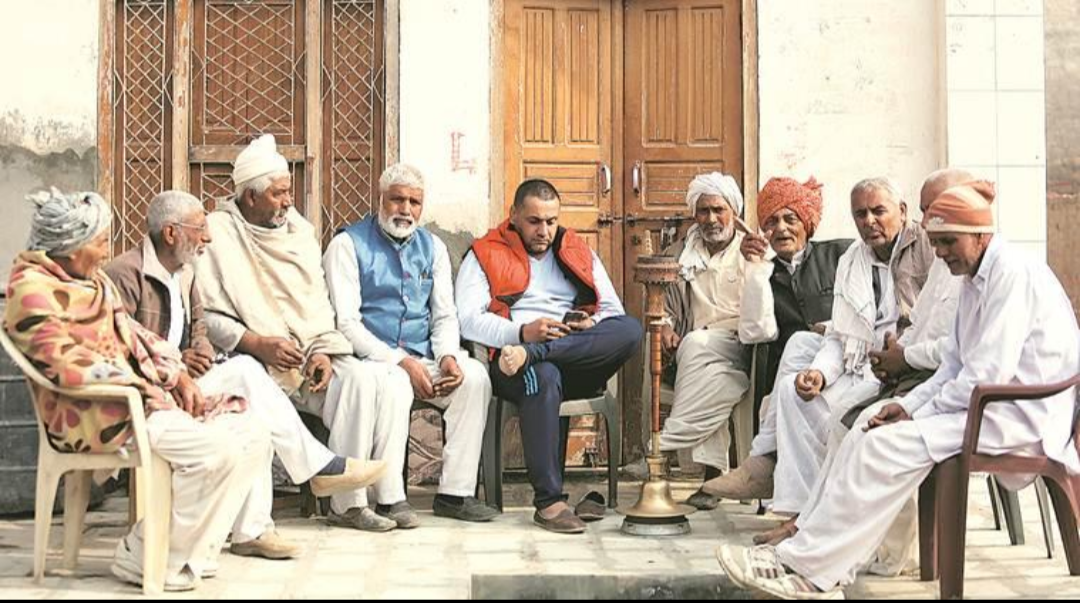
Haryana's traditional rural society is organised around dominant land-owning agrarian castes chiefly Jats, Ahirs (concentrated in the southern Ahirwal belt), Rors, Gujjars, and Rajputs alongside Brahmin priestly families, Bania trading communities, artisan and service castes such as Nais (barbers) and Kumhars (potters), and Scheduled Caste communities including Chamars, whose historical position was shaped by the same land-based caste hierarchy found elsewhere in north India. Partition in 1947 added a further layer, bringing large numbers of Punjabi Khatri and Sindhi refugee families into Haryana's towns and cities.
6. Language
The everyday language of most of rural Haryana is Haryanvi (also called Bangaru in parts), a Western Hindi dialect written in a modified Devanagari script and estimated to be spoken by roughly ten million people across Haryana and adjoining parts of Delhi, Uttar Pradesh, and Rajasthan. Related Rajasthani-family languages such as Ahirwati (in the southern Ahirwal tract), Mewati, and Bagri are spoken in border areas. Hindi is the state's official language and is used in administration, education, and formal media, while Haryanvi remains the language of the home, the village, and as described below of the state's rich oral folk tradition. Despite Haryana's economic prominence in the National Capital Region, Haryanvi has not been granted status as a scheduled Indian language, a point of ongoing cultural pride and political advocacy among its speakers.
7. Culture, Customs, and Social Practices
Festivals mix pan-Hindu observances Holi, Diwali, Raksha Bandhan with distinctly regional and agrarian ones, including Teej (the monsoon festival particularly associated with women, swings, and the Loor folk dance), Gugga Naumi (worship of the folk snake-deity Gugga), and the Phalgun-season Phag songs and dances performed around Holi. Sport, and wrestling in particular, functions as something close to a cultural institution in its own right, discussed further below.
8. Marriage Traditions
- Sagai and pre-wedding rituals — engagement ceremonies, followed by rituals such as tel baan (turmeric and oil applied to the couple) and mehndi (henna), mark the days before the wedding.
- The barat and phere — the groom's marriage party (barat) travels to the bride's village or town, and the couple takes the sacred phere (circling the fire) as in broader North Indian Hindu practice, typically before a Vedic priest.
- Community feasting — as in much of rural north India, Haryanvi weddings involve large, multi-day community feasts, with dietary contributions and labour often organised through the biradari network described above.
- Ghoonghat and the joint household — the practice of the bride veiling her face before elders (ghoonghat) and moving into her husband's joint family household remains part of traditional custom in many rural areas, though it has weakened considerably in urban Haryana.
9. Cuisine
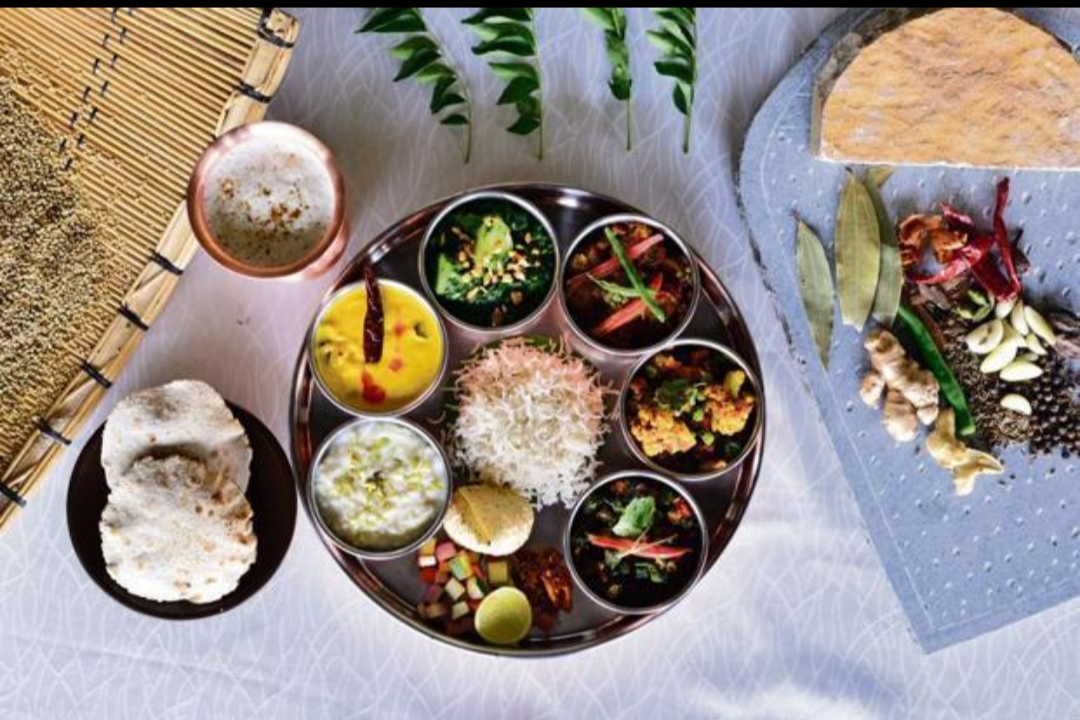
Haryanvi cuisine is simple, hearty, and built around the region's grain and dairy wealth it is sometimes called the "land of rotis" for the sheer variety of its flatbreads, and its food culture reflects a farming population that prizes filling, energy-dense meals over-elaborate spicing.
- Bajra roti and khichdi — pearl-millet flatbread and a slow-cooked porridge of pounded bajra and moong dal (often eaten with ghee or lassi) form the staple of the traditional village diet, alongside wheat roti and besan (gram-flour) roti.
- Kadhi pakora — a notably thick, ghee-rich version of the yogurt-and-gram-flour curry with fried dumplings, often enriched with green chickpeas (hare choley) or bathua (goosefoot greens), distinguishes Haryanvi kadhi from thinner regional versions.
- Dairy staples — fresh butter (locally nooni or tindi ghee), lassi, and buttermilk (chaas) are consumed daily and treated almost as food groups in themselves, a direct reflection of Haryana's status as one of India's leading dairy-producing states; a sweetened milk drink is even called kachi lassi in local usage.
- Kachri and seasonal vegetables — the wild desert cucumber kachri is used in chutneys and vegetable preparations, alongside seasonal greens such as sarson (mustard) and methi (fenugreek), and dishes like singri ki sabzi and gajar-methi.
- Festive sweets — churma (a wheat-jaggery-ghee sweet), panjiri and pinni (dense winter ladoos made with unrefined sugar), alsi ki pinni (flaxseed ladoos), raabri (a milk-cardamom dessert), and malpua (a festival pancake) mark weddings and festivals.
10. Traditional Dress, Ornaments, and Physical Traits
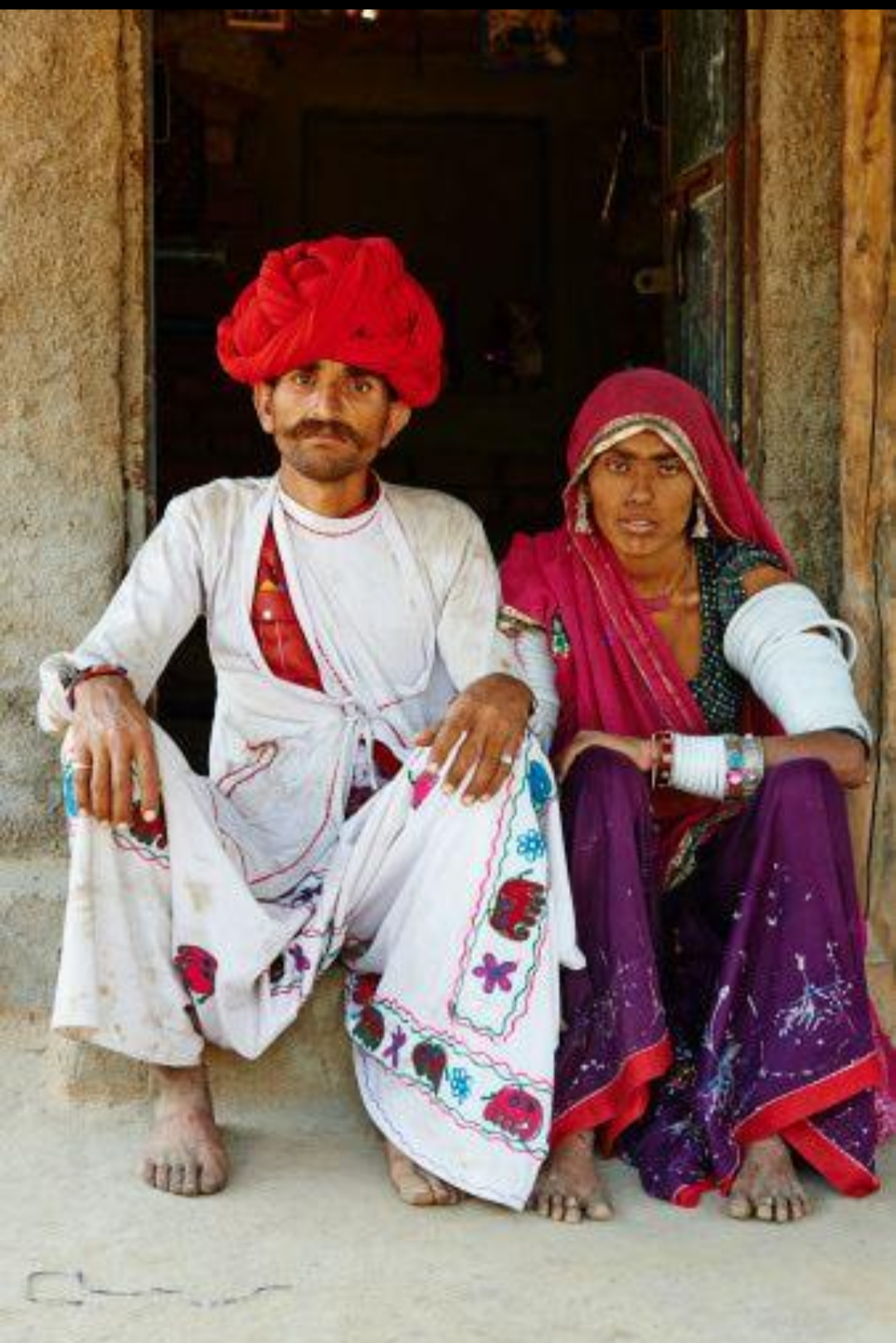
Traditional Haryanvi dress is simple in cut but distinguished by colour contrast between the sexes. Men traditionally wear a plain white or off-white dhoti (or the related chadra) with a kurta and a turban (pagri or safa), whose colour and style of tying historically varied by caste and community Jat, Ahir, Brahmin, Bania, and Rajput turbans were each recognisably distinct with an angocha (cotton stole) and, in winter, a wool blanket-shawl (loi) completing the outfit. Footwear is traditionally the leather jutti.
11. Traditional Housing and Architecture
12. Folklore and Oral Tradition
Haryana's most distinctive contribution to North Indian oral culture is its pairing of ragini and saang. Saang (also swang, "impersonation") is an all-night, open-air folk theatre performed on a bare village-square platform, without sets or amplification, in which a small troupe sings and acts out a shared repertoire of romantic, moral, and martial legends Heer-Ranjha, Raja Harishchandra, Amar Singh Rathore, and Gopi Chand Bharthari among them accompanied only by harmonium, sarangi, and dholak. Ragini is the sung verse form that carries the narrative and emotional weight of a saang; it can also stand alone, and ragini couplets are performed at weddings, akharas (wrestling gymnasiums), and political rallies to this day. Both forms are traditionally oral, passed master-to-student in a guru-shishya lineage, and are strongly associated with Pandit Lakhmi Chand (1903–1945), popularly honoured as the "Surya Kavi" and sometimes called the "Shakespeare of Haryana" for his role in shaping and popularising the ragini-saang tradition.
13. Education, Livelihoods, and Socioeconomic Profile
Haryana's economy has historically rested on agriculture and, since the mid-twentieth century, on the state's central role in India's Green Revolution as a major producer of wheat, rice, and dairy the state consistently ranks among India's top milk-producing regions, a fact closely tied to the dairy-heavy cuisine described in Section 9. Alongside farming, military and paramilitary service has long been a defining livelihood, particularly for Jat, Ahir, Rajput, and Gujjar families in the southern districts of Narnaul, Rewari, and Bhiwani, where army recruitment traditionally ran especially deep; the state has produced numerous senior military officers, including several chiefs of the Indian Army.
This agrarian-military base has fed directly into Haryana's modern reputation as India's leading nursery of Olympic and Commonwealth Games talent, particularly in wrestling, boxing, and athletics. Village akharas (wrestling gymnasiums) that once trained young men purely for traditional mud-pit kushti were converted from the 1990s onward, through a state "mud-to-mat" scheme, into modern freestyle-wrestling training centres; early state Olympians such as wrestlers Lila Ram and Devi Singh and long-jumper Ram Mehar came directly from army backgrounds and later returned home as coaches. The state government has for decades offered cash awards and guaranteed government jobs including out-of-turn appointments in the Haryana Civil Service, Police, and public sector — to medal-winning athletes, an incentive structure widely credited, alongside the deeper cultural and institutional history, for Haryana regularly supplying close to a third of India's medals at events such as the Commonwealth Games despite having under two percent of India's population.
Beyond agriculture, dairying, the armed forces, and sport, contemporary Haryana anchored by the Gurugram and Faridabad industrial belt adjoining Delhi has a substantial presence in automobile manufacturing, information technology, and other services, and its people are represented across India's civil services, medicine, law, and academia, alongside the traditional occupations described above.
14. Diaspora
15. Prominent Figures
15.1 Politics, Administration, and Military
Bansi Lal, Bhajan Lal, Om Prakash Chautala, and Bhupinder Singh Hooda successive Chief Ministers of Haryana who shaped the state's post-1966 political and agricultural development.
Devi Lal — former Deputy Prime Minister of India and a towering figure in Haryana's Jat-agrarian politics.
Nawabzada Liaquat Ali Khan — born in Karnal in 1895, he became the first Prime Minister of Pakistan after Partition.
General Dalbir Singh Suhag — former Chief of Army Staff of the Indian Army, among several senior military officers the state has produced.
Arvind Kejriwal — from Hisar, Chief Minister of Delhi and national convenor of the Aam Aadmi Party.
15.2 Sports
- Kapil Dev — from Chandigarh/Haryana's cricketing lineage, captain of India's 1983 Cricket World Cup-winning team.
- Sushil Kumar and Yogeshwar Dutt — Olympic-medal-winning freestyle wrestlers who helped popularise the sport nationally in the 2010s.
- Vijender Singh — Beijing 2008 Olympic bronze medallist boxer, later a professional boxer.
- Saina Nehwal — from Hisar, an Olympic-medal-winning badminton player and former world number one.
- Geeta Phogat, Babita Phogat, Vinesh Phogat, and Sakshi Malik — wrestlers from Haryana's Jat wrestling families whose careers (including Sakshi Malik's Rio 2016 bronze) have been central to the state's recent Olympic prominence.
- Bajrang Punia — Olympic-medal-winning freestyle wrestler and one of the country's most decorated recent grapplers.
15.3 Arts, Cinema, and Public Life
- Pandit Lakhmi Chand — the early twentieth-century "Surya Kavi," the central figure in the ragini-saang folk-theatre tradition described in Section 12.
- Om Puri — acclaimed film actor born in Ambala.
- Randeep Hooda and Parineeti Chopra — contemporary Hindi-film actors from Rohtak and Ambala respectively.
- M. V. Pylee, K. K. Mathew and other Haryana-born jurists and scholars have contributed to Indian constitutional law and higher education, reflecting the state's growing representation in national academic and judicial life.
16. Contemporary Reflections
Two tensions recur in contemporary discussion of Haryanvi identity. The first concerns gender and custom: the same khap-panchayat and gotra-exogamy institutions credited with preserving clan cohesion and dispute resolution have also drawn sustained criticism, from courts, scholars, and the national press, for enforcing restrictive marriage norms and for their role in so-called "honour"-related disputes, prompting an ongoing debate sharpened by female wrestlers and other public figures from within these same communities about reforming customary authority without discarding its genuine community function. The second concerns social change amid rapid economic transformation: as Gurugram and the Delhi-adjoining districts urbanise and industrialise at a pace unmatched by the state's traditional agrarian heartland, younger, increasingly mobile and internationally connected Haryanvis are renegotiating caste, gender, and marriage norms that held largely unchanged for generations, even as village-level institutions like the khap panchayat, the jathera, and the akhara persist alongside them.
17. Conclusion
References
- [1]Testbook. "History of Haryana: Ancient, Medieval & Modern History." https://testbook.com/haryana-gk/history-of-haryana
- [2]Know India: National Portal of India. "Haryana." https://knowindia.india.gov.in/states-uts/haryana.php
- [3]Wikipedia. "History of Haryana." https://en.wikipedia.org/wiki/History_of_Haryana
- [4]Britannica Kids. "Haryana." https://kids.britannica.com/students/article/Haryana/325792
- [5]The Week. "New DNA study debunks Aryan invasion theory." https://www.theweek.in/news/india/2019/09/06/new-study-debunks-aryan-invasion-theory.html
- [6]ThePrint. "2500 BC Rakhigarhi skeletons have no traces of 'Aryan gene', finds DNA study." https://theprint.in/india/aryan-invasion-theory-gets-a-setback-from-dna-study-of-2500-bc-rakhigarhi-skeletons/287454/
- [7]OpIndia. "No 'Aryan Gene' in Rakhigarhi skeletons, Indus Valley population largest source of ancestry for South Asians: Study." https://www.opindia.com/2019/09/no-aryan-gene-in-rakhigarhi-skeletons-indus-valley-population-largest-source-of-ancestry-for-south-asians-study/
- [8]Indogenetics (Substack). "Population Genetics and Ancestry of the Haryanvi People." https://indogenetics.substack.com/p/population-genetics-and-ancestry
- [9]NCBI PMC. "Y-STR Haplogroup Diversity in the Jat Population Reveals Several Different Ancient Origins." https://www.ncbi.nlm.nih.gov/pmc/articles/PMC5611447/
- [10]NCBI PMC. "Haplotype diversity...mtDNA...Brahmin Population of Haryana." https://www.ncbi.nlm.nih.gov/pmc/articles/PMC5988218/
- [11]Wikipedia. "Haryanvi people." https://en.wikipedia.org/wiki/Haryanvi_people
- [12]Fashonation. "Roots in Fabric: The Traditional Attire of Haryana." https://fashonation.com/roots-in-fabric-the-traditional-attire-of-haryana/
- [13]Hinduscriptures. "Costumes of Haryana." https://www.hinduscriptures.in/vedic-society/traditional-dresses-and-accessories/costumes-of-haryana
- [14]Remitly. "Haryanvi Cuisine: Rustic North Indian Food Traditions." https://www.remitly.com/blog/food/haryanvi-cuisine/
- [15]Recipes Fandom. "Cuisine of Haryana." https://recipes.fandom.com/wiki/Cuisine_of_Haryana