

Brahmin Community
A community for people of Brahmin heritage — connect, explore ancestry, and share identity.
THE BRAHMIN COMMUNITY OF INDIA
Scholars, Priests, and a Pan-Indian People: History, Culture, Genetics, and Legacy
Introduction: Who Are the Brahmins?
Brahmins are the hereditary priestly and learned varna of Hindu society, traditionally charged with preserving the Vedas, performing rituals, teaching, and advising rulers. Unlike most communities profiled on GenoConnect, the Brahmins are not a single people rooted in one region. They are better understood as a pan-Indian network of hundreds of endogamous jatis, spread from Kashmir to Kanyakumari and from Gujarat to Assam, each speaking the local language, eating the local food, and sharing much of its ancestry with the region it has lived in for centuries or millennia.
What ties these groups together is a shared ritual identity: descent reckoned through gotras named after Vedic sages, the sacred thread (janeu or poonal) conferred at the upanayana ceremony, allegiance to a particular Veda and its shakha (recension), and a long association with Sanskrit learning. This profile treats the Brahmins as a family of regional communities, noting what is common across India and what is distinctive in each region, and it flags clearly where historical, traditional, and genetic accounts differ.
Etymology of the Name "Brahmin"
The word Brahmin (Sanskrit brāhmaṇa) derives from brahman, a term that in the Vedic texts refers to sacred utterance, the power residing in the ritual formula, and later to the ultimate reality of Upanishadic philosophy. A brāhmaṇa was thus "one who possesses or knows brahman", the custodian of sacred speech. The same root gives the name of a class of Vedic prose texts, the Brāhmaṇas, which explain the meaning of rituals. Regional forms of the word include Bahun in Nepal, Bamun in Assam, Bapan or Bamhan in the Hindi belt, Baman in Marathi and Gujarati, and Pārpār (historically) in Tamil.
Origins and Early History
The earliest literary reference to the four-fold varna order is the Purusha Sukta hymn of the Rigveda (Book 10), generally dated to the late Rigvedic period, roughly 1200–1000 BCE. In the earlier Rigvedic hymns, the priest (brahman, hotṛ, purohita) appears as a ritual specialist rather than a rigidly hereditary caste. Over the later Vedic period (c. 1000–500 BCE), centred on the Kuru-Panchala region of the upper Ganga-Yamuna doab, priestly lineages became increasingly hereditary and endogamous, and the gotra system, which traces male lines to rishis such as Kashyapa, Vasishtha, Bharadvaja, Gautama, Atri, Vishvamitra, and Jamadagni, took shape.
From this heartland, Brahmin families spread across the subcontinent over the next two thousand years. Some movement followed the expansion of Vedic culture itself; much more came through royal patronage. From the Gupta period onward, and especially between the fifth and twelfth centuries CE, kings across India issued copper-plate land grants (brahmadeya and agrahara) to Brahmin families, inviting them to settle new territories. Inscriptions record Brahmins from Madhyadesha, Kannauj, and elsewhere being settled in Bengal, Odisha, Assam, the Deccan, and the Tamil country. Regional traditions frequently remember such invitations: the Kulin Brahmins of Bengal trace descent to five Brahmins said to have been brought from Kannauj by King Adisura; Namboothiri tradition credits Parashurama with settling Brahmins in Kerala.
At the same time, historians and geneticists agree that Brahmin communities were not formed only by migration. Local priestly groups, temple servants, and in some cases ruling or landholding lineages were absorbed into Brahmin status over time, and regional Brahmin communities intermarried with local populations before endogamy became strict. This is why, as the genetics section below explains, Brahmins everywhere share substantial ancestry with their regional neighbours while also carrying a distinctive signature.
Trace Your Gotra Beyond the Family Priest
Your gotra tells you which rishi your paternal line claims. Your DNA tells you where that line and your many other ancestral lines actually came from. See how the two stories line up.
Test With GenoConnect →
Regional Sub-groups: Pancha Gauda and Pancha Dravida
A traditional classification, found in texts such as the Sahyadrikhanda and in Kalhana-era Kashmiri tradition, divides Brahmins into two great blocs of five each, separated roughly by the Vindhya mountains. The Pancha Gauda are the northern Brahmins; the Pancha Dravida are the southern and western Brahmins. The scheme is a simplification (many communities fit awkwardly within it), but it remains the most widely used framework.
| Bloc / Region | Principal communities (illustrative, not exhaustive) |
|---|---|
| Pancha Gauda: Saraswat | Kashmiri Pandits, Punjabi Saraswats and Mohyals, Gaud Saraswat (GSB) and Chitrapur Saraswats of Konkan and Karnataka |
| Pancha Gauda: <a href="/communities/kanyakubja">Kanyakubja</a> | <a href="/communities/kanyakubja">Kanyakubja</a>, Sarayupareen (Saryupareen), Sanadhya, Jijhotia of Uttar Pradesh, Madhya Pradesh and Bihar |
| Pancha Gauda: Gauda | <a href="/communities/gaur">Gaur</a> Brahmins of Haryana, western UP, Rajasthan; Tyagi; Bengali Rarhi and Barendra (with debated placement) |
| Pancha Gauda: Maithil | Maithil Brahmins of north Bihar and the Nepal Terai, known for their panji genealogical registers |
| Pancha Gauda: Utkala | Odia Brahmins including Shasana (Kulina) Brahmins and Jagannath temple servitors |
| Pancha Dravida: Maharashtra | Deshastha, Chitpavan (Konkanastha), Karhade, Devrukhe |
| Pancha Dravida: Andhra | Telugu Brahmins: Niyogi (secular/administrative) and Vaidiki (priestly), with Velanadu, Mulaknadu and other sub-sects |
| Pancha Dravida: Dravida | Tamil Brahmins: <a href="/communities/iyer">Iyers</a> (Smarta, Shaiva-leaning) and Iyengars (Sri Vaishnava); Kerala's Namboothiris and Tamil-origin Pattar |
| Pancha Dravida: Karnata | Kannada Brahmins: Hoysala Karnataka, Havyaka, Kota, Shivalli (Madhva), Babburkamme, Smartha groups |
| Pancha Dravida: Gurjara | Gujarati Brahmins: <a href="/communities/nagar">Nagar</a>, Audichya, Anavil, Modh, Shrimali and many others |
Beyond these ten, there are the Assamese Brahmins, the Bahuns of Nepal, Dogra Brahmins of Jammu, Pahari Brahmins of Himachal and Uttarakhand (such as Garhwali and Kumaoni Brahmins), Bhumihars of Bihar and eastern UP (whose Brahmin status is claimed by the community and contested by some others), and many small jatis such as the Rajpurohits of Rajasthan. Each has its own marriage circle, dialect, rituals, and food habits, and for most practical purposes, including genetic ancestry, the region and jati matter more than the label "Brahmin" alone.
Geography and Population
Brahmins live in every state of India, but their share of the population varies enormously. Historically they have been proportionally most numerous in the Himalayan and Hindi-belt states and least so in parts of the south and northeast. Uttarakhand, Himachal Pradesh, Uttar Pradesh, Jammu, and Delhi have comparatively high proportions; Tamil Nadu, where Brahmins are estimated at only around 2–3 percent of the population, and Kerala have among the lowest.
Precise numbers are hard to give because India's last full caste enumeration was the 1931 Census, which counted Brahmins at a little over 4 percent of the population of British India. Modern estimates generally place Brahmins at roughly 4–5 percent of India's population, which would be in the range of 5–7 crore people. The Bihar caste survey of 2023 counted Brahmins at about 3.7 percent of that state's population. The next national Census, which the Government of India has announced will include caste enumeration, should produce the first reliable all-India figure in nearly a century.
Religion, Ritual, and Belief
Brahmins follow every major tradition within Hinduism. Smartas, following the tradition associated with Adi Shankaracharya, worship five or six deities and hold Advaita Vedanta philosophy. Sri Vaishnavas, including most Iyengars and many Telugu and Kannada Brahmins, follow Ramanujacharya's Vishishtadvaita. Madhvas, concentrated around Udupi, follow Madhvacharya's Dvaita school. Kashmiri Pandits have historically been associated with Kashmir Shaivism, while Bengali, Odia, and Assamese Brahmins include many Shaktas and Vaishnavas, the latter shaped by Chaitanya's movement.
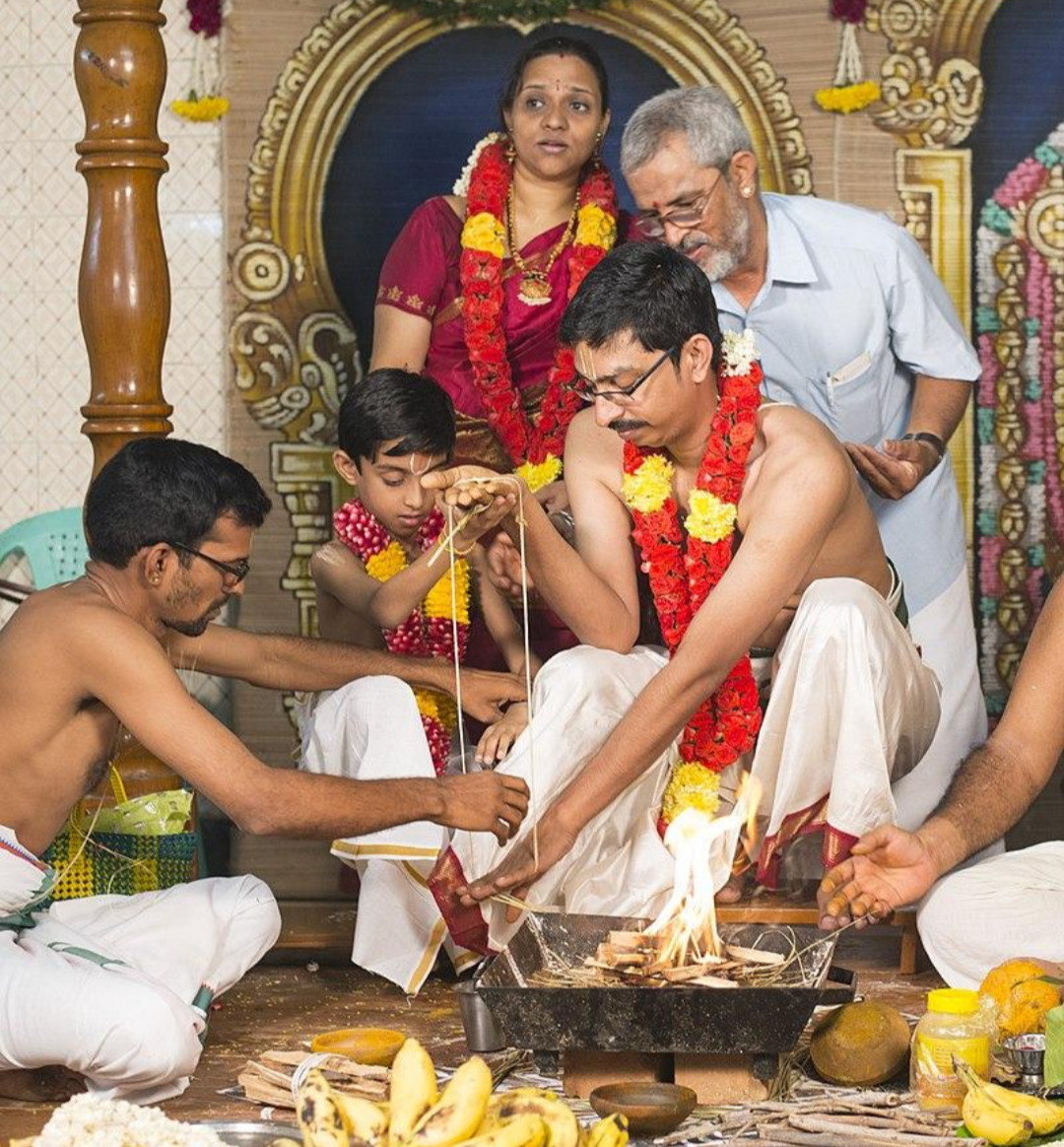
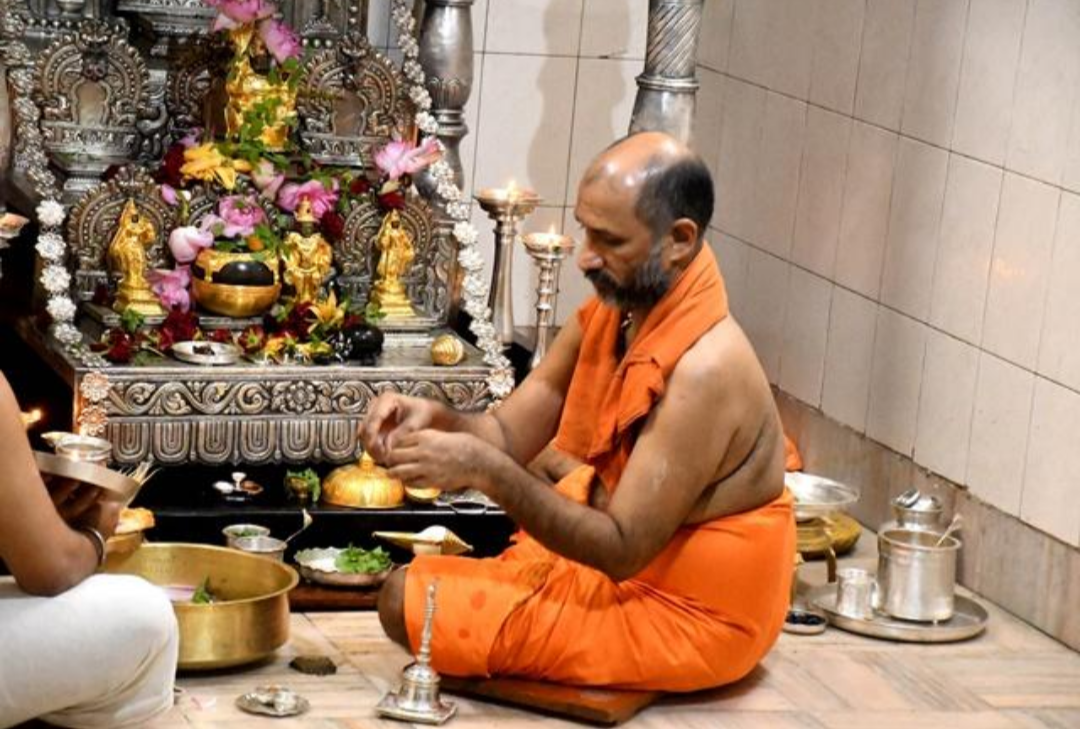
Core ritual life includes the upanayana (thread ceremony) for boys, daily sandhyavandanam prayers with the Gayatri mantra, the annual renewal of the sacred thread (Shravani, Avani Avittam, or Upakarma), shraddha rites for ancestors, and life-cycle samskaras presided over by a family priest who often keeps multi-generation records. The well-known pilgrimage registers kept by pandas at Haridwar, Varanasi, Gaya, and Kurukshetra are a remarkable, if uneven, genealogical resource for many Hindu families, Brahmin and non-Brahmin alike.
Language
There is no single Brahmin language. Brahmins speak the language of their region: Hindi and its varieties (Awadhi, Bhojpuri, Braj, Bundeli), Maithili, Bengali, Odia, Assamese, Marathi, Gujarati, Kashmiri, Dogri, Punjabi, Konkani, Kannada, Telugu, Tamil, Malayalam, Tulu, and Nepali. Some groups have recognisable community dialects. Tamil Brahmins historically used a distinctive register sometimes called Brahmin Tamil, with more Sanskrit loanwords and characteristic forms; Havyakas speak Havyaka Kannada; Chitrapur Saraswats and GSBs have their own Konkani varieties. Sanskrit remains the language of ritual, and some families, such as the traditional Vedic reciters of Kerala and Karnataka, preserve oral recitation techniques recognised by UNESCO as Intangible Cultural Heritage.
Customs, Family Life, and Marriage
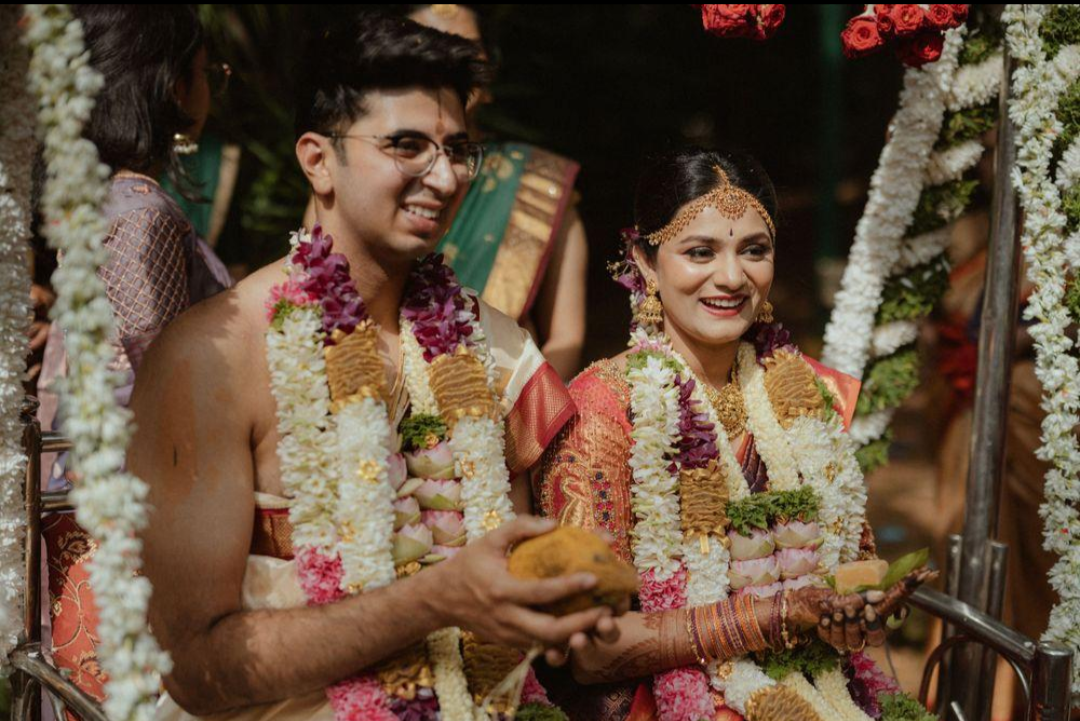
Brahmin marriages have traditionally been arranged within the same jati and regional sub-group but outside one's own gotra (sagotra marriage is avoided) and outside certain related lineages (sapinda rules). Northern communities also avoid marriage between close relatives on both sides, while many South Indian Brahmin communities, like their regional neighbours, historically permitted cross-cousin or uncle-niece marriage. Horoscope matching is common. Maithil Brahmins keep panji records, genealogical registers maintained by panjikars and consulted before marriages at the Saurath Sabha gathering near Madhubani.
Weddings follow Vedic grihya rites centred on the sacred fire: kanyadaan, panigrahana (taking the hand), and saptapadi (seven steps). Regional flavours abound: the Kashi Yatra mock pilgrimage in Tamil and Telugu weddings, the Kashmiri Pandit Devgon and Posh Puza, the Maharashtrian antarpat cloth held between bride and groom, and the Bengali shubho drishti exchange of glances.
Cuisine
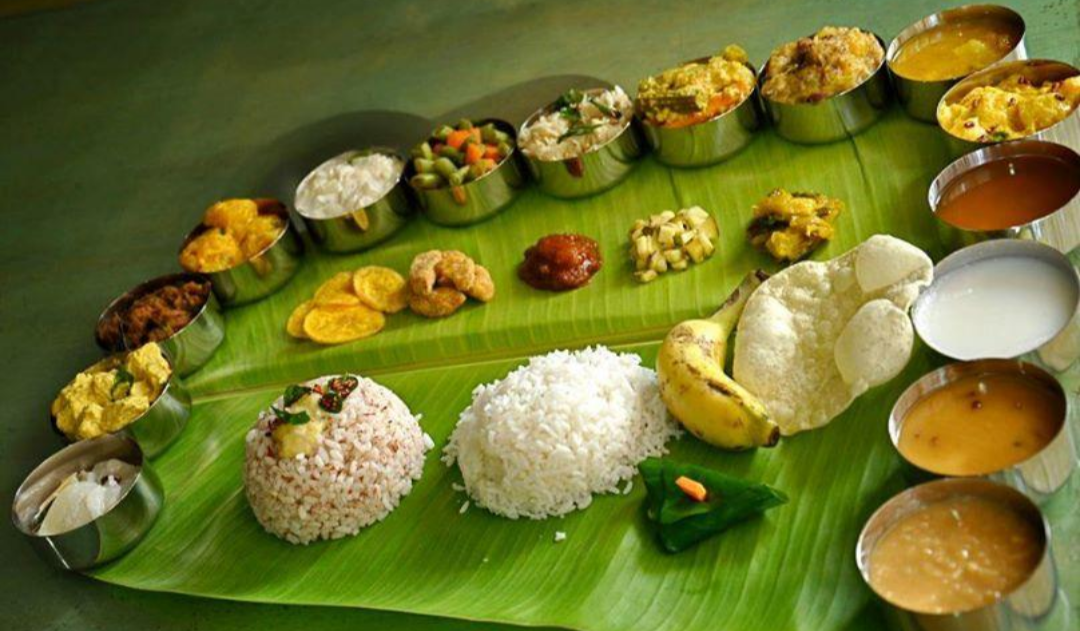
It is a common misconception that all Brahmins are vegetarian. Most Brahmins of the south, Gujarat, Rajasthan, Maharashtra, UP, and MP are traditionally lacto-vegetarian, and orthodox households may also avoid onion, garlic, and certain vegetables. But Bengali, Odia, Maithil, Assamese, Kashmiri, and Konkani Saraswat Brahmins have long eaten fish, and several of these groups eat meat. Some well-known dishes and traditions include:
- Tamil Brahmin (Iyer/Iyengar) cooking — sambar, rasam, mor kuzhambu, vatha kuzhambu, paruppu usili, curd rice, and the Iyengar puliyodharai (tamarind rice) and akkaravadisal.
- Udupi cuisine — developed in the Madhva temple kitchens of Udupi; the ancestor of the modern South Indian vegetarian restaurant, from masala dosa to saaru and kosambari.
- Kashmiri Pandit cuisine — rogan josh, yakhni, and dum aloo made without onion and garlic, using asafoetida, fennel, and dry ginger instead; also haakh (collard greens) and nadru (lotus stem).
- Bengali and Odia Brahmin food — maach (fish) preparations such as shorshe ilish, the famous Jagannath temple Mahaprasad of Puri, and elaborate niramish (vegetarian, no onion-garlic) cooking for festival days.
- GSB and Saraswat cuisine — fish curries with coconut and kokum, and vegetarian dishes such as khatkhate.
- Maharashtrian Brahmin food — varan-bhaat with ghee, modak, puran poli, thalipeeth, and matki usal.
- North Indian Brahmin food — sattvic thalis of dal, kadhi, poori, kheer, and seasonal vegetables; litti-chokha and sattu in Bihar and eastern UP.
Small food customs are widely shared: offering food to the deity (naivedya) before eating, ritual purity rules around cooking (madi in Karnataka and Tamil Nadu), fasting on Ekadashi, and eating on banana leaves at ceremonies in the south.
Fish-eater or Pure Vegetarian? Your DNA Has Its Own Story
Food habits drew lines between Brahmin communities. Your ancestry may draw different ones. Compare your genome with Brahmin and non-Brahmin groups from your region.
Explore Your Ancestry →
Dress and Identity Markers
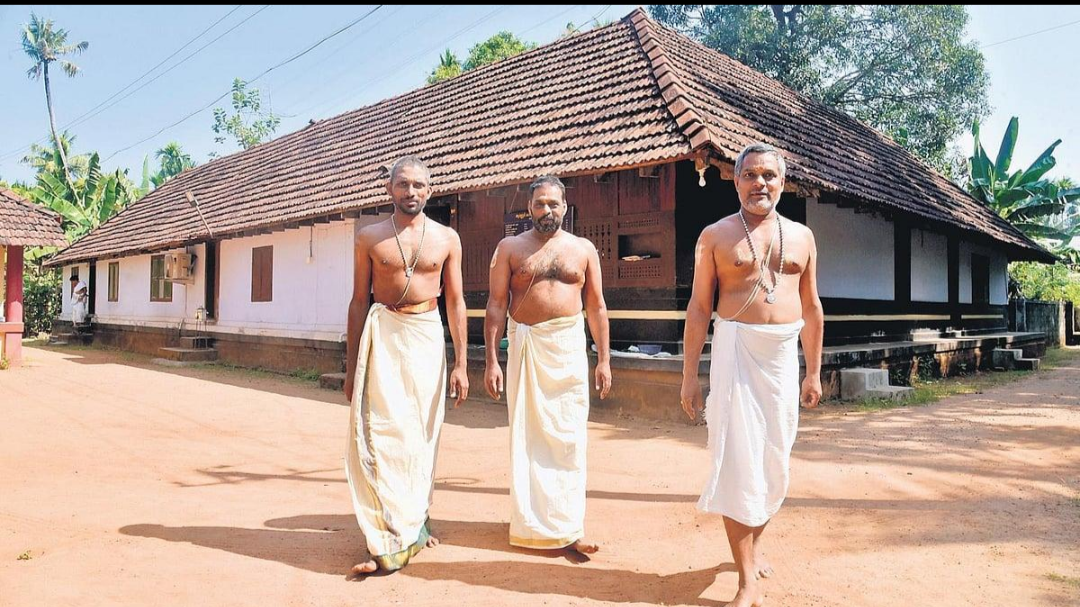
Traditional male dress is the unstitched dhoti or veshti, worn in a specific ritual style (panchakacham in the south, with five tucks) with an angavastram or uttariya over the shoulder. The sacred thread (yajnopavita, janeu, poonal, jaanva) worn over the left shoulder is the most widely shared marker. The shikha or choti tuft of hair, now far less common, was once universal. Sectarian marks on the forehead distinguish groups: the U-shaped namam of Iyengars and other Vaishnavas, three horizontal lines of vibhuti among Iyers and Shaivas, and sandal-paste marks in the north.
Among women, the nine-yard madisar of Tamil Brahmins, the nauvari of Maharashtrian women, the Kerala mundum neriyathum, the Bengali red-and-white saree for festive occasions, and the Kashmiri Pandit pheran with the dejhoor (a gold ear ornament worn by married women) are all distinctive. In daily modern life, most Brahmins dress as others in their region do.
Physical Traits: What Can and Cannot Be Said
Brahmins do not share a single physical appearance. A Kashmiri Pandit, a Maithil Brahmin, an Odia Brahmin, and a Tamil Iyer usually resemble other people from their own region more than they resemble each other. Skin tone, height, facial features, and hair form vary along the same north-south and west-east gradients seen in the wider Indian population, and within any one family there is often considerable variation.
Popular stereotypes, such as the idea that Brahmins are uniformly fair-skinned, are not supported by evidence and have been harmful. Genetically, skin pigmentation in South Asia is influenced by many genes, including variants in SLC24A5, SLC45A2, and TYR, and their frequencies follow geography and overall ancestry proportions rather than caste labels alone. The honest summary is that on average, Brahmin groups in a given region may carry slightly more West Eurasian-related ancestry than some neighbouring groups (see below), but the physical differences this produces are small compared with regional variation and individual variation.
Genetics: AASI, Indus Farmer, and Steppe Ancestry
Most modern Indians can be modelled as a mixture of three deep ancestral sources. The first is Ancient Ancestral South Indian (AASI) ancestry, descending from the earliest hunter-gatherers of South Asia and distantly related to the Andaman Islanders. The second is Indus Periphery or "Indus farmer" ancestry, itself a mix of Iranian-plateau-related ancestry and AASI, associated with people of the Harappan civilisation and best represented by the Rakhigarhi genome published in 2019. The third is Steppe ancestry, brought by Middle-to-Late Bronze Age pastoralists from the Eurasian steppe in the second millennium BCE and widely associated by researchers with the spread of Indo-European languages into South Asia.
Earlier studies described the same picture with two components, Ancestral North Indians (ANI) and Ancestral South Indians (ASI). ANI is now understood as largely a blend of Indus Periphery and Steppe ancestry, while ASI is a blend of Indus Periphery and AASI ancestry. Moorjani and colleagues (2013) estimated that ANI-ASI mixing in India occurred mostly between about 4,200 and 1,900 years ago, after which strict endogamy began to freeze populations in place, a result consistent with the hardening of the caste system.
The most important finding for Brahmins came in Narasimhan and colleagues' landmark 2019 study in Science. It found that, after accounting for regional position, Steppe ancestry is proportionally elevated in groups that traditionally held priestly roles, with Brahmin and Bhumihar populations standing out, which the authors linked to the role of priestly groups as custodians of Vedic texts. In other words, Brahmins generally carry somewhat more Steppe ancestry than other groups from the same region, but they also carry substantial Indus farmer and AASI ancestry, and none are "purely" of any one source.
Indicative ancestry ranges by region
Published studies model very few individual Brahmin communities, and estimates vary with the method and reference populations used. The ranges below are broad indications drawn from the patterns in the literature, not measured values for any specific jati. Filling this gap with community-level estimates is exactly what GenoConnect's community feature aims to do.
| Region (Brahmin groups) | AASI | Indus Periphery / Iranian farmer | Steppe |
|---|---|---|---|
| Northwest and Himalaya (Kashmiri Pandit, Punjabi, Pahari) | Lower | High | Highest among Indians; often a substantial minority share |
| Gangetic north (<a href="/communities/kanyakubja">Kanyakubja</a>, Sarayupareen, Maithil, Bhumihar) | Moderate | High | Elevated relative to regional neighbours |
| East (Bengali, Odia, Assamese) | Moderate | Moderate to high | Moderate; small East Asian-related share in some groups |
| West (Gujarati, Maharashtrian, Konkani Saraswat) | Moderate | High | Moderate, above most regional non-Brahmin groups |
| South (Tamil, Telugu, Kannada, Namboothiri) | Moderate to high | Moderate to high | Lower than in the north but clearly above most South Indian non-Brahmin groups |
Y-DNA haplogroups (paternal lines)
Studies of Brahmin Y chromosomes (for example Sengupta et al. 2006, Sharma et al. 2009) consistently find haplogroup R1a, particularly its South Asian branch R1a-Z93, as the most frequent paternal lineage in many Brahmin samples, often more common than in neighbouring non-Brahmin groups, and very high in some northern and eastern Brahmin samples. Other common paternal haplogroups include R2, J2, L, H, and G, with regional differences: H and L are more common in southern and western samples, while J2 is well represented in several South Indian Brahmin groups. A Brahmin man's gotra does not correspond to a single haplogroup; men of the same gotra frequently belong to different haplogroups, which is consistent with gotras being inherited through adoption, ritual affiliation, and other social processes as well as strict biological descent.
mtDNA haplogroups (maternal lines)
On the maternal side, Brahmins look much more like their regional neighbours. Most Brahmin mtDNA lineages belong to South Asia-specific branches of macro-haplogroups M (such as M2, M3, M5, M30) and R (such as R5, R7, U2, U7), with West Eurasian lineages such as H, T, J, and U7 present at modest frequencies, more so in the northwest. Bamshad and colleagues (2001) first highlighted this contrast: upper-caste Y chromosomes showed greater affinity with West Eurasians, while maternal lineages were overwhelmingly local. This pattern points to historic unions between incoming or elite male lineages and local women.
Closest genetic relatives
Genome-wide, the strongest predictor of who a Brahmin group is closest to is geography. Tamil Brahmins cluster nearer to other Tamil and South Indian populations than to Kashmiri Pandits; Bengali Brahmins sit close to Bengali Kayasthas and other Bengali groups; Maithil and Bhumihar samples sit near other upper-caste Bihari and eastern UP groups. Within a region, Brahmins tend to be closest to other historically elite or landholding groups (for example Kayasthas, Rajputs, Bhumihars, Khatris, Nairs in Kerala, or Vellalars in Tamil Nadu, depending on region) and somewhat more distant from tribal and historically marginalised groups. Communities that trace descent from Brahmin converts, such as the Syrian Christians of Kerala with their Namboothiri-ancestry traditions, some Kashmiri Muslim families with Pandit or Bhat names, and Muslim Mohyals of Punjab, are a fascinating area where oral tradition and DNA can be compared directly.
Know Your Exact Mix: AASI, Indus Farmer, and Steppe
Research papers can tell you the average for a region. Your GenoConnect test tells you your own proportions, your paternal and maternal haplogroups, and which Indian communities you are genetically closest to.
Discover Your Brahmin Ancestry →
Occupations: Then and Now
The Dharmashastras assign Brahmins six duties: studying and teaching the Vedas, performing and officiating at sacrifices, and giving and receiving gifts. In practice, Brahmins have always done much more. They served as royal ministers, scribes, astrologers, physicians (Ayurvedic vaidyas), temple administrators, and landholders. The Peshwas of the Maratha Confederacy were Chitpavan Brahmins; Brahmin diwans administered many princely states; Niyogi Brahmins specialised in administration and accountancy in the Telugu region.
Under colonial rule, early access to English education gave Brahmins a large share of government jobs, law, journalism, and the professions, particularly in Madras, Bombay, and Bengal. This advantage also produced strong reactions, notably the Non-Brahmin and Self-Respect movements in Tamil Nadu and the Satyashodhak movement of Jyotirao Phule in Maharashtra, which challenged Brahmin dominance in education, religion, and administration and reshaped regional politics.
Today Brahmins work across every sector: information technology, academia, science, civil services, medicine, law, the armed forces, business, media, and the arts. Priesthood remains a living profession, but it is a small share of the community and often poorly paid. Many Brahmins, especially in rural UP, Bihar, Uttarakhand, and Odisha, are farmers or small-town workers. Since 2019, economically weaker Brahmin families, like others in the general category, have been eligible for the 10 percent EWS reservation.
Migration and Diaspora
Brahmin migration has taken several forms. In the historical period, royal invitations and land grants moved families across the subcontinent. In the colonial period, Tamil and Telugu Brahmins followed administrative and professional jobs to Bombay, Calcutta, and Delhi, while Bengali Brahmins spread across eastern and northern India. A smaller number went overseas as indentured labourers from the Bhojpuri belt to Trinidad, Guyana, Suriname, Fiji, and Mauritius, where the surname Maharaj still often signals Brahmin descent and where Brahmin pundits reconstructed Hindu religious life far from home.
The exodus of Kashmiri Pandits from the Kashmir Valley in 1990, amid militant violence, displaced most of the community to Jammu, Delhi, and beyond and remains a defining trauma of modern Pandit identity. Since the 1960s, and especially since the 1990s technology boom, Brahmins, particularly from the southern states, have been heavily represented in Indian professional migration to the United States, the United Kingdom, Canada, Australia, Singapore, and the Gulf. Nepal's Bahuns, the largest caste group after Chhetris in that country, form a closely related population across the border.
Small Cultural Things
- Gotra in the sankalpa — at every puja, the officiating priest asks the family's gotra, which is recited along with the name and place in the ritual vow.
- Surnames as signposts — names such as Sharma, Mishra, Tiwari (Trivedi), Dubey (Dwivedi), Chaturvedi, Pandey, Shukla, Upadhyay, Joshi, Bhat, Kulkarni, Deshpande, Iyer, Iyengar, Rao, Namboothiri, Mukherjee, Banerjee, Chatterjee, Bhattacharya, Mohapatra, Kaul, and Razdan often point to both region and sub-group. Many, such as Dwivedi ("knower of two Vedas"), record Vedic learning.
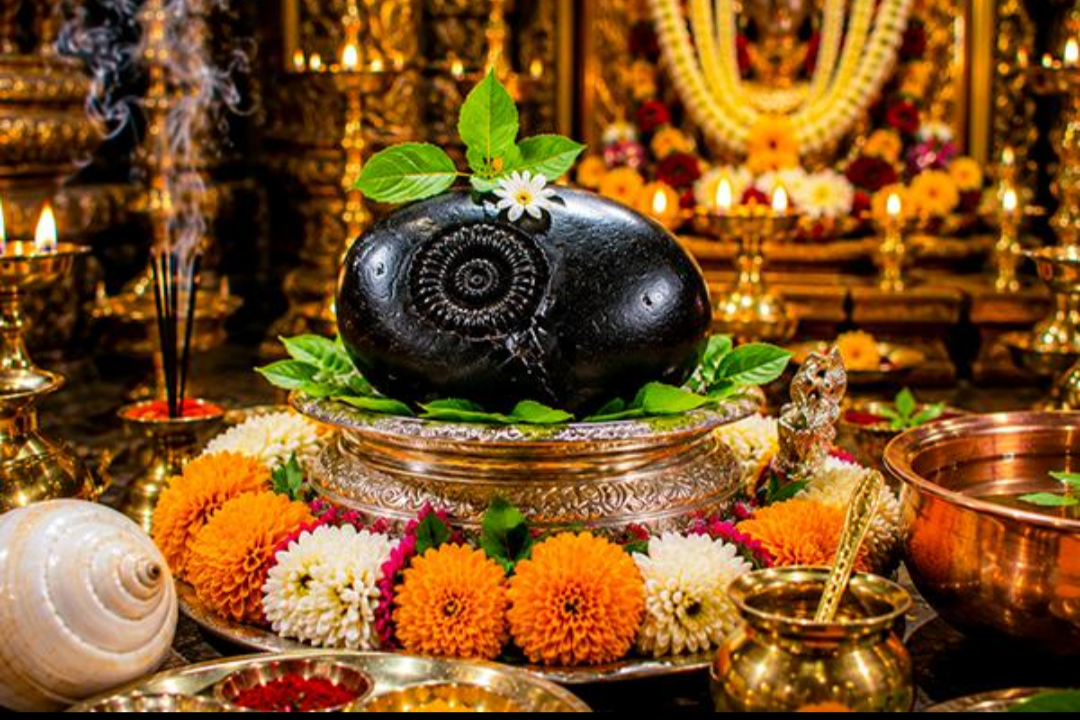
- Shaligram and tulsi — many Vaishnava Brahmin homes keep a shaligram stone and a tulsi plant as objects of daily worship.
- Shivaratri as Herath — Kashmiri Pandits celebrate Mahashivaratri as Herath, their most important festival, with walnuts soaked in water as a central offering.
- Numbers in names — Chaturvedi, Trivedi, and Dwivedi originally denoted mastery of four, three, and two Vedas; Pathak meant a reciter, Upadhyay a teacher, and Dikshit one who performed major initiations.
- Kitchen rules — eating only after bathing, separate utensils for ritual cooking, and not tasting food before it is offered to the deity survive in many homes.
Notable Figures
Brahmins have been prominent in Indian religious, intellectual, and political life for centuries. A selection of historical figures with well-documented Brahmin backgrounds includes:
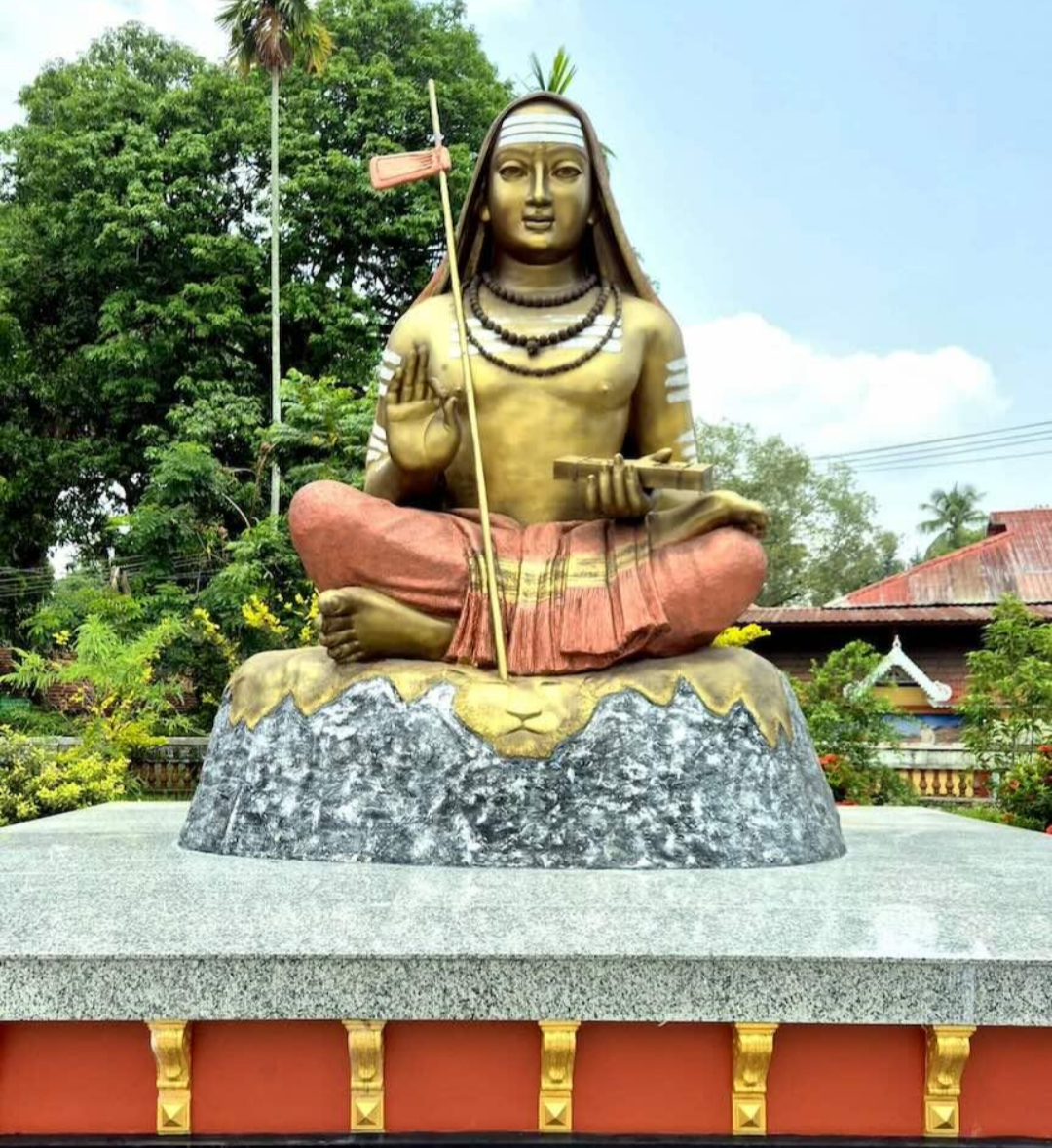
- Adi Shankaracharya (8th century CE) — Namboothiri-born philosopher who systematised Advaita Vedanta and is credited with founding the four major mathas.
- Ramanujacharya and Madhvacharya — founders of Vishishtadvaita and Dvaita Vedanta respectively, whose traditions still shape Iyengar and Madhva life.
- Goswami Tulsidas (16th century) — Sarayupareen Brahmin poet of the Ramcharitmanas in Awadhi.
- Bal Gangadhar Tilak and Gopal Krishna Gokhale — Chitpavan Brahmin leaders of the Indian national movement.
- Ishwar Chandra Vidyasagar — Bengali scholar and reformer who campaigned for widow remarriage and women's education.
- Pandita Ramabai — Sanskrit scholar and pioneering women's rights reformer.
- Mangal Pandey and Chandrashekhar Azad — figures of the 1857 uprising and the revolutionary freedom struggle respectively.
- Rabindranath Tagore — Nobel laureate poet from the Pirali Brahmin Tagore family of Calcutta.
- Jawaharlal Nehru — India's first Prime Minister, from a Kashmiri Pandit family.
- Srinivasa Ramanujan, C. V. Raman, and Subrahmanyan Chandrasekhar — Tamil Brahmin mathematician and physicists of world renown.
- Atal Bihari Vajpayee — three-time Prime Minister of India and noted Hindi poet.
Alongside these, countless unnamed priests, teachers, scribes, and farmers kept Sanskrit learning, temple traditions, and village records alive, often at little personal gain.
Conclusion
The Brahmin community is best understood not as one people but as a web of regional communities bound by shared ritual identity, a common gotra system, and a long association with learning. Their history is one of migration and patronage, local absorption, scholarly achievement, social privilege, and, in the modern era, critique and change. Genetics adds a new layer to this story: it confirms both the distinctive Steppe-related signal that sets Brahmins slightly apart from their neighbours and the deep local roots they share with everyone else in their region. How these threads combine in any one family can only be answered one genome at a time.
Frequently Asked Questions
Q. Are all Brahmins genetically the same?
No. Brahmins from different regions differ substantially from one another, and each group is genetically closest to other communities from its own region. What Brahmin groups share is a modestly elevated proportion of Steppe ancestry compared with their regional neighbours.
Q. How much Steppe ancestry do Brahmins have?
It varies by region. It is generally highest among northwestern and Himalayan Brahmins such as Kashmiri Pandits and lowest among South Indian Brahmins, though even there it is typically higher than in most neighbouring non-Brahmin groups. No Brahmin group is predominantly Steppe-derived; all carry large shares of Indus farmer and AASI ancestry. A DNA test can estimate your personal proportions.
Q. What is the most common Y-DNA haplogroup among Brahmins?
R1a, especially the South Asian branch R1a-Z93, is the most frequently reported paternal lineage in many Brahmin samples. However, J2, R2, L, H, and G are also common, and frequencies differ by region.
Q. Does my gotra correspond to a specific haplogroup?
Not reliably. Studies show that men of the same gotra often carry different Y haplogroups. Gotra is a ritual and social lineage that may include adoptions and affiliations, not a strict genetic marker. Comparing Y-DNA within your own family and gotra can still reveal interesting patterns.
Q. Why is my maternal (mtDNA) haplogroup South Asian if my family is Brahmin?
This is normal. Most Brahmin maternal lineages belong to South Asia-specific branches of haplogroups M and R, reflecting local women's ancestry over thousands of years.
Q. Are Brahmins related to Europeans or Iranians?
Brahmins, like most Indians, share some distant ancestry with Europeans (through Steppe pastoralists) and with ancient Iranians (through the Iranian-related component of Indus farmer ancestry). These are ancient, partial connections, not recent descent.
Q. Which communities are Brahmins genetically closest to?
Usually other communities from the same region, especially other historically landholding or elite groups such as Kayasthas, Rajputs, Bhumihars, Khatris, Nairs, or Vellalars, depending on the region.
Q. My family is Christian or Muslim but has a tradition of Brahmin ancestry. Can DNA confirm it?
DNA cannot confirm caste directly, but it can show whether your ancestry profile, haplogroups, and closest genetic matches resemble those of Brahmin communities in your region more than other groups. For Kerala's Syrian Christians, Kashmiri Muslims, and other convert communities, such comparisons are one of the most interesting uses of community-level data.
Q. How many Brahmins are there in India?
Estimates put Brahmins at roughly 4–5 percent of India's population. Exact numbers await the caste enumeration planned in the next national Census; the last full count was in 1931.
Q. How can I learn more about my own Brahmin community?
Take a GenoConnect DNA test and join your community on the platform. As more members of a given jati test, community-level estimates of ancestry, haplogroup distribution, and genetic relatedness become more accurate, building the kind of knowledge that published research has not yet provided.
Help Map Your Community
Very few Brahmin jatis have ever been studied genetically. Every member who tests helps build the first detailed genetic portrait of Iyers, Kanyakubjas, Chitpavans, Maithils, Pandits, and hundreds of other communities.
Join the Brahmin Community on GenoConnect →
References
- [1]1. Reich, D. et al. (2009). Reconstructing Indian population history. Nature 461: 489–494.
- [2]2. Moorjani, P. et al. (2013). Genetic evidence for recent population mixture in India. American Journal of Human Genetics 93(3): 422–438.
- [3]3. Narasimhan, V. M. et al. (2019). The formation of human populations in South and Central Asia. Science 365(6457): eaat7487.
- [4]4. Shinde, V. et al. (2019). An ancient Harappan genome lacks ancestry from Steppe pastoralists or Iranian farmers. Cell 179(3): 729–735.
- [5]5. Bamshad, M. et al. (2001). Genetic evidence on the origins of Indian caste populations. Genome Research 11(6): 994–1004.
- [6]6. Sengupta, S. et al. (2006). Polarity and temporality of high-resolution Y-chromosome distributions in India. American Journal of Human Genetics 78(2): 202–221.
- [7]7. Sharma, S. et al. (2009). The Indian origin of paternal haplogroup R1a1* substantiates the autochthonous origin of Brahmins and the caste system. Journal of Human Genetics 54: 47–55.
- [8]8. Basu, A., Sarkar-Roy, N., and Majumder, P. P. (2016). Genomic reconstruction of the history of extant populations of India. PNAS 113(6): 1594–1599.
- [9]9. Census of India, 1931. Government of India.
- [10]10. Government of Bihar (2023). Bihar Caste-based Survey Report.
- [11]11. Deshpande, M. M. (2010). Pañca Gauḍa and Pañca Drāviḍa: Contested borders of a traditional classification. Studia Orientalia 108.
- [12]12. Bronkhorst, J. (2016). How the Brahmins Won: From Alexander to the Guptas. Brill.
- [13]13. Joseph, T. (2018). Early Indians: The Story of Our Ancestors and Where We Came From. Juggernaut.
- [14]14. Fuller, C. J. and Narasimhan, H. (2014). Tamil Brahmans: The Making of a Middle-Class Caste. University of Chicago Press.