

Delhi Genome Project Community
Discover your Delhi ancestry. From Dehat villages and Mughal Shahjahanabad to Partition-era Punjabi families, trace the history, geography and genetics of Delhi's people through DNA.
Delhi Genome Project
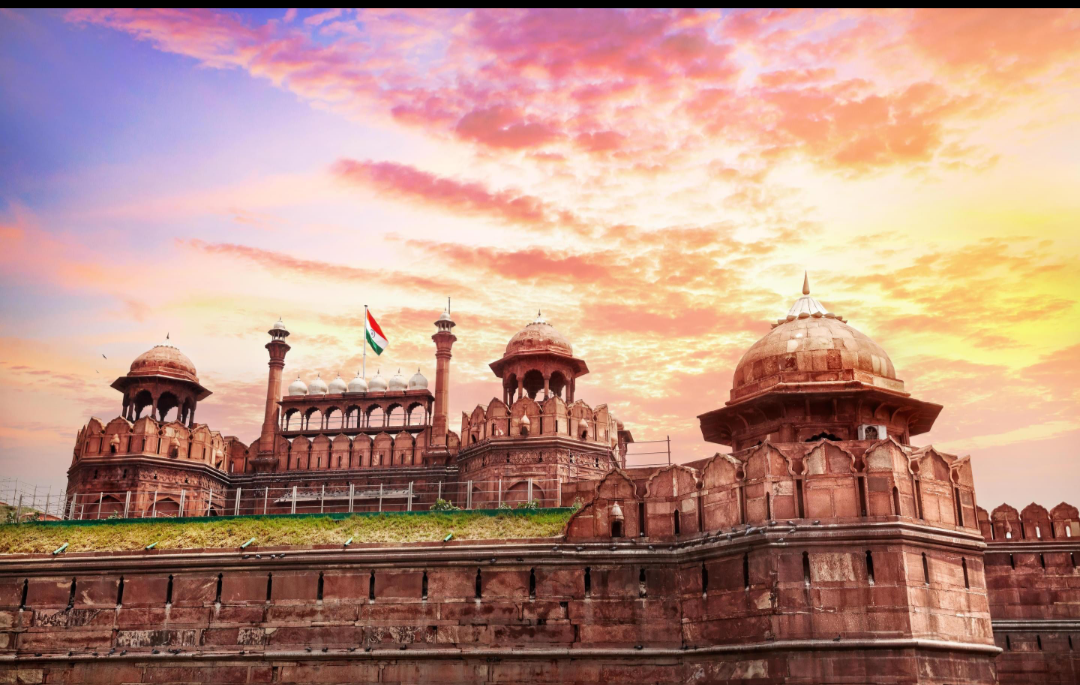
Delhi Ancestry: Trace Your Roots in India's Capital Through DNA | GenoConnect
1. Introduction: Who Are the People of Delhi?
Delhi is not a single ethnic community in the way a caste, a tribe, or a religious denomination is. It is a geography-defined population: the people, past and present, of a small but extraordinarily consequential stretch of land on the west bank of the Yamuna, where the last low ridges of the Aravalli hills meet the river. Today this territory is the National Capital Territory (NCT) of Delhi, covering roughly 1,483 square kilometres and home to more than 16.8 million people at the 2011 Census, with the wider metropolitan region that spills into Haryana and Uttar Pradesh ranking among the largest urban agglomerations on earth. This profile treats "Delhi" as a geography-of-origin community in the genealogical sense: the shared population of a defined place, encompassing all of its castes, religions, languages, and waves of settlers.
What makes Delhi unusual among geographic communities is that it has been a capital, on and off, for close to a thousand years, and capitals draw people in. Its population is best understood as a set of historical layers laid one on top of another: the Jat, Gujjar, Ahir, Brahmin, and other farming families of the old village belt known as Dilli Dehat; the Muslim, Bania, Kayastha, and artisan families of Mughal Shahjahanabad, today's Old Delhi; the Punjabi Hindu, Sikh, and Sindhi families who arrived as refugees at Partition in 1947; and the millions who have come since from Uttar Pradesh, Bihar, Uttarakhand, Rajasthan, Bengal, the South, and the Northeast. Each layer carries its own history and, to a measurable degree, its own genetic signature.
From a genetics perspective, Delhi is a textbook example of what population geneticists call a "sink" population: a place that continuously absorbs lineages from surrounding regions rather than generating a single local type. Understanding a family's Delhi ancestry therefore usually means asking two questions at once: how long has the family been in Delhi, and where did its lines come from before they arrived?
Discover Your Delhi Roots!
Whether your family has farmed a Dehat village for twenty generations, traded in Chandni Chowk since Mughal times, or arrived from Lahore or Rawalpindi in 1947, your DNA carries the story of how you became a Dilliwala. Trace your ancestral threads with a GenoConnect DNA kit.
2. Geography
The NCT of Delhi is landlocked, bordered by Haryana on the north, west, and south, and by Uttar Pradesh on the east across the Yamuna. Its physical setting explains much of its history. The Delhi Ridge, the northernmost tail of the ancient Aravalli range, runs through the city from the south-west towards the Yamuna in the north, and is conventionally divided into the Northern Ridge (near Delhi University), the Central Ridge, the South-Central Ridge around Mehrauli, and the Southern Ridge, which includes the Asola Bhatti Wildlife Sanctuary. To the east lies the flat, flood-prone Yamuna floodplain (khadar), and to the west and north the older alluvial plain (bangar) that continues into Haryana, drained by the Sahibi river, which historically ended in the Najafgarh jheel (lake) and now flows as the Najafgarh drain.
The Yamuna enters Delhi near Palla in the north and leaves it near Okhla and Jaitpur in the south-east, a stretch of roughly 50 kilometres. The combination of a defensible rocky ridge and a river crossing made this spot a natural gateway between the Punjab plains and the north-west on one side and the Gangetic heartland on the other, which is why almost every power that sought to control North India eventually built a capital here. Delhi's climate is one of sharp extremes: scorching summers with hot, dry loo winds and temperatures that can exceed 45°C, a humid monsoon from roughly July to September, and cold, foggy winters that, in recent decades, have also become synonymous with severe air pollution.
Administratively, Delhi has had an elected Legislative Assembly since 1993, following the 69th Constitutional Amendment of 1991. In December 2025, the Delhi government reorganised the territory from 11 into 13 revenue districts, aligned with the zones of the Municipal Corporation of Delhi, the New Delhi Municipal Council, and the Delhi Cantonment. The new districts include Old Delhi, Central North, and Outer North, alongside New Delhi, Central, North, South, South East, South West, East, North East, West, and North West, with the territory divided into 39 sub-divisions. Delhi also sits at the centre of the wider National Capital Region (NCR), which takes in Gurugram, Faridabad, Noida, Ghaziabad, and other districts of neighbouring states, where many families with Delhi roots now live.
Cultural-Geographic Zones of Delhi
Long before the modern districts, Delhiites identified with older zones of the city, each with its own history, population, and character:
Are You Delhi-6, Dehat, or a Partition Family?
Delhi's zones each tell a different ancestral story, from the havelis of Shahjahanabad to the village chaupals of Najafgarh and the refugee colonies of West Delhi. Explore the Delhi Genome Project to see how your family's heritage fits into the city's layers.
3. Origins and History
3.1 Prehistory and Legendary Foundations
Palaeolithic stone tools have been recovered from the Aravalli ridge on Delhi's southern edge, showing that people lived in the area tens of thousands of years ago. Late Harappan-period material has been reported from sites on the city's fringes, while the great Harappan city of Rakhigarhi lies only about 150 kilometres to the north-west in Haryana. Excavations at the Purana Qila (Old Fort) have revealed Painted Grey Ware pottery, a culture associated with the later Vedic period, and a long sequence of occupation stretching through the Mauryan, Shunga, Kushan, Gupta, Rajput, Sultanate, and Mughal periods.
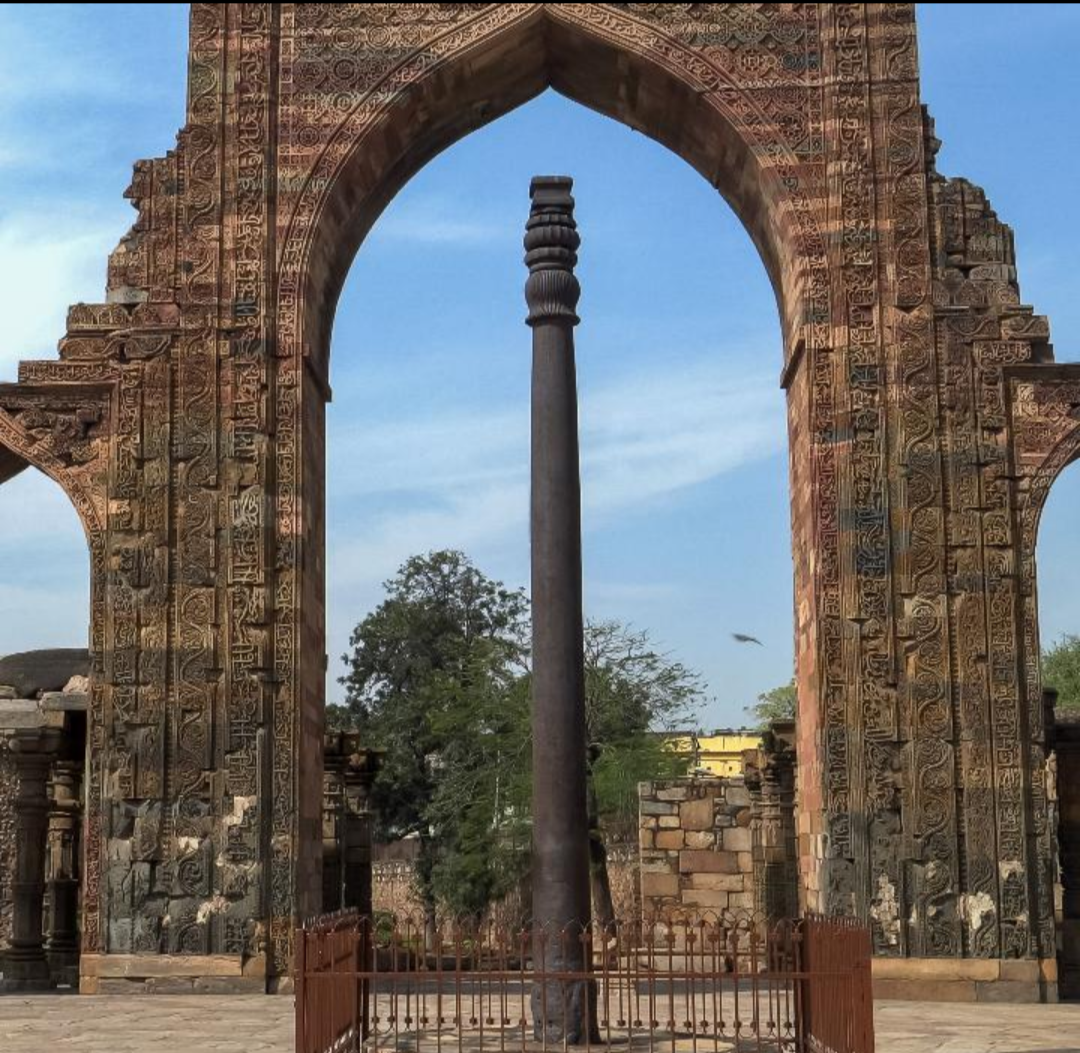
Tradition identifies the Purana Qila site with Indraprastha, the city of the Pandavas in the Mahabharata, and several of Delhi's older villages and temples claim links to the epic. A minor rock edict of the Mauryan emperor Ashoka, discovered in 1966 near Srinivaspuri in South Delhi, confirms that the area lay within the Mauryan world in the 3rd century BCE. The famous rust-resistant Iron Pillar now standing in the Qutb complex dates to the Gupta period (around the 4th–5th century CE) and bears an inscription in the name of a king called Chandra.
3.2 The Tomars, the Chauhans, and the First Delhi
The city that later generations recognised as Delhi, called Dhillika in medieval inscriptions, emerges clearly under the Tomar Rajputs. Tradition credits Raja Anangpal Tomar with founding the city and building the fortification known as Lal Kot, although the surviving walls are generally dated to the 11th century. In the mid-12th century the Chauhans of Ajmer took control, and Prithviraj Chauhan (Prithviraj III) extended the fortifications into what became known as Qila Rai Pithora. His defeat by Muhammad of Ghor at the second battle of Tarain in 1192 opened the way for Turkic rule, and his general Qutb-ud-din Aibak began the construction of the Qutb Minar and the Quwwat-ul-Islam mosque on the site of the older citadel.
3.3 The Delhi Sultanate (1206–1526)
For more than three centuries, Delhi was the seat of a succession of Turkic and Afghan dynasties: the Mamluks (including Iltutmish, Razia Sultan, India's first woman ruler of the Sultanate, and Balban), the Khaljis, the Tughlaqs, the Sayyids, and the Lodis. Each dynasty tended to build its own city, giving rise to the famous saying that Delhi has been built seven times; some historians count eleven or more. Alauddin Khalji built Siri and repelled repeated Mongol invasions; the Tughlaqs built Tughlaqabad, Jahanpanah, and Firozabad (Feroz Shah Kotla); and Muhammad bin Tughlaq notoriously ordered much of Delhi's elite population to move to Daulatabad in the Deccan in 1327. The city was sacked by Timur in 1398.
This period matters for Delhi's genetic and cultural make-up. The Sultanate attracted Turkic, Afghan, Persian, and Central Asian soldiers, administrators, scholars, and slaves, and under Jalaluddin Khalji a group of Mongols who had converted to Islam were settled in a quarter known as Mughalpura. It was also the age of the great Chishti Sufi saints, Khwaja Qutbuddin Bakhtiyar Kaki at Mehrauli and Hazrat Nizamuddin Auliya, and of the poet and musician Amir Khusrau, whose shrines remain living centres of the city's devotional life.
The "Seven Cities" of Delhi
| City | Builder / Period | Surviving Remains |
|---|---|---|
| Lal Kot / Qila Rai Pithora | Tomars (11th c.), extended by Prithviraj (12th c.) | Rampart fragments around Mehrauli and the Qutb complex |
| Siri | Alauddin Khalji (c. 1303) | Wall remains near Shahpur Jat and Hauz Khas |
| Tughlaqabad | Ghiyasuddin Tughlaq (1320s) | Massive fort ruins in south-east Delhi |
| Jahanpanah | Muhammad bin Tughlaq (14th c.) | Walls linking Siri and Lal Kot; Bijay Mandal |
| Firozabad | Firoz Shah Tughlaq (1354) | Feroz Shah Kotla, with an Ashokan pillar brought from Topra |
| Dinpanah / Shergarh | Humayun and Sher Shah Suri (16th c.) | Purana Qila (Old Fort) |
| Shahjahanabad | Shah Jahan (1639–1648) | Red Fort, Jama Masjid, Chandni Chowk (Old Delhi) |
3.4 Mughal Delhi
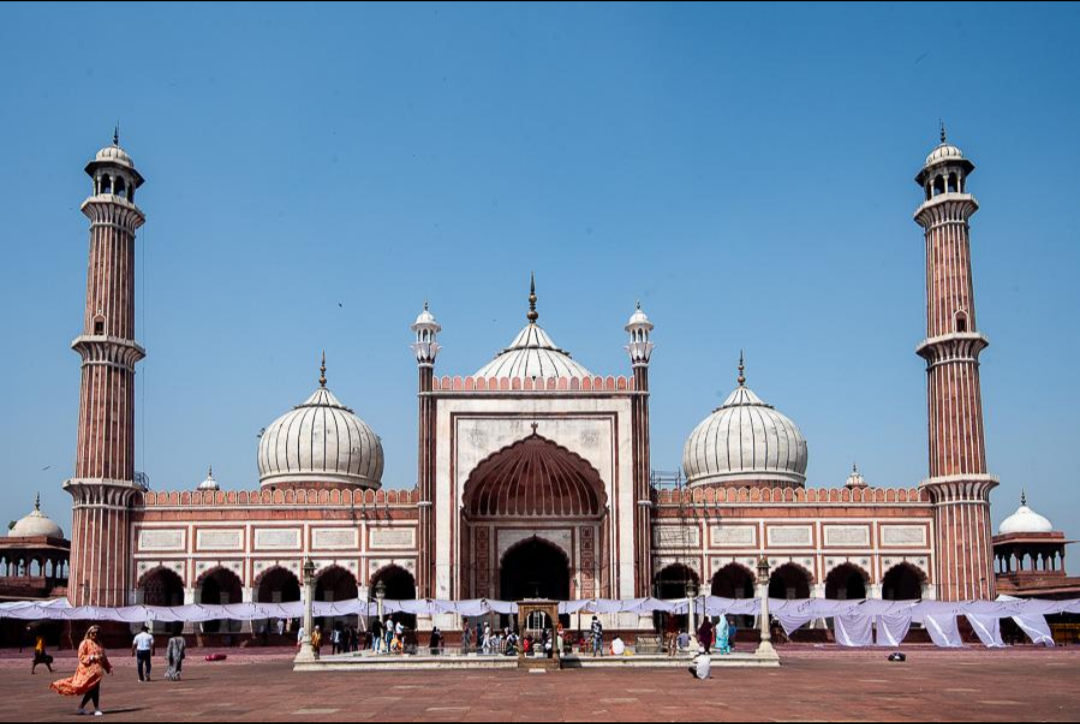
Babur's victory at the first battle of Panipat in 1526 brought the Mughals to power. Humayun began Dinpanah on the Purana Qila site, which Sher Shah Suri rebuilt during his interregnum, and Humayun's Tomb (completed around 1570) set the architectural template that culminated in the Taj Mahal. In 1639 Shah Jahan began building a new capital, Shahjahanabad, completed in 1648 with the Red Fort at its heart, the Jama Masjid nearby, and the canal-lined avenue of Chandni Chowk, whose layout is associated with his daughter Jahanara.
The 18th century brought decline and repeated catastrophe: the Persian ruler Nadir Shah sacked the city and massacred many of its inhabitants in 1739, Afghan armies under Ahmad Shah Abdali raided repeatedly, and from 1771 the Marathas under Mahadji Shinde effectively controlled the Mughal emperor. After the battle of Delhi in 1803, the East India Company took charge, leaving the emperor as a figurehead. Yet this was also a period of great cultural brilliance, sometimes called the Delhi Renaissance, when Urdu poetry, Delhi College, and the courtly culture of the late Mughals flourished.
3.5 The 1857 Uprising and the Colonial Capital
On 11 May 1857, rebel sepoys from Meerut reached Delhi and proclaimed the aged emperor Bahadur Shah Zafar the leader of their revolt. The British besieged the city from the Northern Ridge and recaptured it in September 1857, followed by harsh reprisals: much of the population was expelled for a time, large parts of Shahjahanabad around the Red Fort were demolished, and Zafar was exiled to Rangoon, where he died in 1862. Delhi was then attached to the Punjab province and reduced to a provincial town.
Its fortunes reversed in 1911, when King George V announced at the Delhi Durbar that the capital of British India would move from Calcutta to Delhi. A separate Delhi province was created, and a new imperial city designed by Edwin Lutyens and Herbert Baker rose on Raisina Hill. New Delhi was formally inaugurated in 1931, bringing government servants, contractors, and professionals from across India, many of them Punjabis, Bengalis, and Kayasthas, into the city.
3.6 Partition and the Remaking of Delhi (1947)
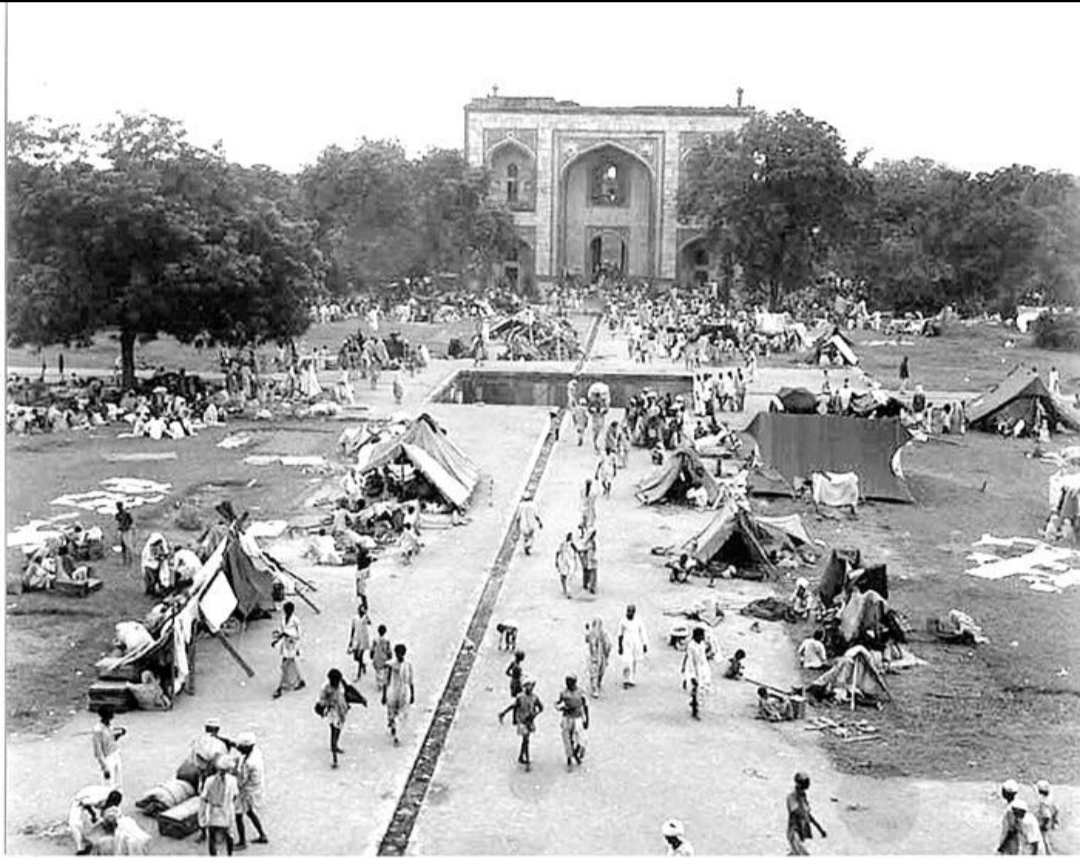
No single event reshaped Delhi's population as dramatically as Partition. Census figures show the city's population rising from about 0.92 million in 1941 to about 1.74 million in 1951. Hundreds of thousands of Hindu and Sikh refugees arrived from West Punjab, the North-West Frontier Province, and Sindh, while a large part of Delhi's Muslim population left for Pakistan: Muslims, who had made up roughly a third of the city's population before Partition, fell to only about six per cent by 1951. Refugee camps at Kingsway Camp and elsewhere gave way to new resettlement colonies such as Lajpat Nagar, Rajinder Nagar, Patel Nagar, Tilak Nagar, and Malviya Nagar. The arriving Punjabis transformed Delhi's commerce, food, speech, and politics, and their descendants remain one of the most visible groups in the city.
3.7 Post-Independence Delhi
Delhi became a Part C state in 1952, a Union Territory in 1956, and the National Capital Territory with its own Assembly in the early 1990s. The 1982 Asian Games brought flyovers and stadiums; the anti-Sikh violence of 1984 left a deep scar on the city's Sikh community; the Delhi Metro, opened in 2002, reshaped daily life; and the 2010 Commonwealth Games added further infrastructure. Throughout, migration continued on a massive scale, particularly from Uttar Pradesh and Bihar (the "Purvanchali" population), Uttarakhand, Rajasthan, Haryana, and Punjab, alongside Bengalis, Malayalis, Tamils, people from the Northeast, and communities from beyond India's borders such as Tibetans and Afghans.
[Image suggestion] A Partition-era refugee camp in Delhi, or a present-day view of Lajpat Nagar market.
4. Demographic Profile
The 2011 Census recorded a population of 16,787,941 in the NCT of Delhi, and estimates for the mid-2020s generally place the territory well above 20 million, with the wider urban agglomeration much larger still. Delhi is almost entirely urban (about 97.5 per cent in 2011) and has one of the highest population densities of any Indian state or Union Territory. A very large share of its residents were born elsewhere, reflecting the steady inflow of migrants that has defined the city since 1947.
| Indicator (Census 2011) | Value |
|---|---|
| Population | 16,787,941 |
| Area | About 1,483 sq km |
| Population density | About 11,320 persons per sq km |
| Urban population | About 97.5% |
| Sex ratio | 868 females per 1,000 males |
| Literacy rate | 86.2% (men 90.9%, women 80.8%) |
| Scheduled Castes | About 16.8% of the population |
| Religion | Hindu about 81.7%; Muslim about 12.9%; Sikh about 3.4%; Jain about 1.0%; Christian about 0.9%; Buddhist and others smaller |
| Mother tongues | Hindi dominant (around four in five residents), followed by Punjabi and Urdu, with Bengali, Maithili, and many others |
The low sex ratio is itself a demographic fingerprint of migration: for decades, many migrants were young men who came to Delhi for work, leaving families behind in their home villages. Delhi's Muslim population today includes both the descendants of Old Delhi families who stayed in 1947 and later migrants from Uttar Pradesh, Bihar, and elsewhere, while its Sikh population is concentrated in West and South Delhi and descends largely from Partition-era refugees and earlier Punjabi settlers.
5. Genetics and DNA Ancestry
Because Delhi has absorbed people from across India for centuries, it offers a genetically layered population rather than a single, uniform signature. A randomly chosen group of Delhi residents will, in effect, contain samples of Haryana, Punjab, western and eastern Uttar Pradesh, Bihar, Uttarakhand, and many other regions. That makes Delhi one of the most genetically diverse places in South Asia, and it means that the most useful way to read Delhi ancestry is layer by layer.
5.1 The Deep Foundations: ANI, ASI, and Beyond
Like almost every population in India, the people of Delhi descend from a mixture of two deeply diverged ancestral groups: Ancestral North Indians (ANI), related to populations of Central Asia, West Asia, and Europe, and Ancestral South Indians (ASI), indigenous to the subcontinent and not closely related to any population outside it. Genome-wide studies date the main phase of ANI–ASI mixing to roughly 1,900 to 4,200 years ago. More recent ancient-DNA work has refined this picture: ANI itself formed from a mixture of an older Indus Valley-related population (carrying ancestry related to ancient Iranian hunter-gatherers and farmers, plus indigenous South Asian ancestry) with Steppe pastoralist ancestry that arrived during the second millennium BCE, broadly coinciding with the spread of Indo-Aryan languages.
The Delhi region lies close to the heart of this story. The genome of a woman buried at Rakhigarhi, about 150 kilometres north-west of Delhi, around 2500 BCE, showed a mixture of Iranian-related and indigenous South Asian ancestry with no detectable Steppe component, offering a glimpse of the pre-Steppe population of the Delhi–Haryana plain. Populations from the north-west of India, including Punjab, Haryana, and western Uttar Pradesh, which are Delhi's main historical source regions, today carry among the highest ANI and Steppe-related proportions in India, while migrants from eastern Uttar Pradesh and Bihar tend to carry somewhat more ASI-related ancestry, following the broad north-west to south-east gradient seen across the subcontinent.
Uncover Your ANI–ASI Genetic Mix
5.2 Population-Genetic Studies of Delhi
Forensic and population-genetic studies have treated Delhi in two ways. One set of studies samples the general Delhi population and explicitly describes it as a mixed population of migrants from different parts of the country; such studies, using panels of autosomal short tandem repeat (STR) markers, report high allele diversity and heterozygosity, exactly what one would expect from a city that pools many regional gene pools. Another set focuses on Delhi's long-settled rural communities. A study of 20 autosomal STRs in 120 Jats of Delhi, for example, documented high genetic diversity within the community and added the group to India's reference databases.
Comparative studies place Delhi's older rural populations firmly within a north-western Indian cluster. A 2022 study of Uttar Pradesh found that the UP population was genetically closest to the populations of Uttarakhand, the Jats of Delhi, the Jat Sikhs of Punjab, and the population of Rajasthan, illustrating how the Delhi Dehat communities sit on a genetic continuum linking Haryana, Punjab, Rajasthan, and western Uttar Pradesh. For a person whose family has lived in a Delhi village for many generations, this is typically the signal a DNA test will reveal.
5.3 Paternal (Y-DNA) and Maternal (mtDNA) Lineages
Studies of North-West Indian paternal lineages show a mix of deeply rooted South Asian Y-chromosome haplogroups, such as H and L, alongside haplogroups associated with later migrations into the subcontinent, most notably R1a (especially its South Asian branch R1a-Z93), which reaches high frequencies among many north-western communities, including Jats, Gujjars, Brahmins, and Khatris. J2, R2, and G also occur at lower frequencies. Among some Muslim lineages of Old Delhi, a modest share of West Asian and Central Asian-linked paternal lineages reflects the Sultanate and Mughal-era arrivals, although most Delhi Muslims, like most Delhi Hindus, descend predominantly from local and regional populations.
Maternal lineages tell a slightly different story. Across North India, mitochondrial DNA is dominated by indigenous South Asian haplogroups, especially M and its many subclades, along with South Asian branches of R and U (such as U2), with smaller shares of West Eurasian lineages such as U7, H, and W. The contrast between male and female lines, with maternal lines more deeply indigenous than paternal lines, is a pattern of sex-biased admixture seen throughout India and is clearly visible in Delhi's source populations.
5.4 Endogamy, Founder Effects, and Health-Relevant Genetics
Many of the communities that make up Delhi have practised endogamy (marriage within the community) and clan exogamy for centuries. Large genomic surveys of South Asia have found that many Indian groups show strong founder effects, meaning their members descend from a relatively small number of ancestors, which can raise the frequency of particular recessive variants within a community. In Delhi, the most widely discussed example is beta-thalassaemia trait, whose carrier frequency is notably high in some communities well represented in the city, including Punjabi and Sindhi groups, which is why premarital and antenatal thalassaemia screening is often recommended. Another example is lactase persistence, the ability to digest milk in adulthood, which is more common in north-western India than in the south and east, consistent with the region's long dairy traditions. Ancestry results should not be read as medical diagnoses; carrier status needs clinical testing and genetic counselling.
5.5 What a Delhi DNA Test Typically Reveals
| Family Background | Typical Genetic Affinity | Historical Depth in Delhi |
|---|---|---|
| Old Delhi (Shahjahanabad) families | Mostly North Indian; some lines with modest West or Central Asian traces | Mughal era onward, often 250+ years |
| Partition-era Punjabi, Sikh and Sindhi families | North-western Punjab and Sindh-related ancestry, high ANI | Since 1947 |
| Purvanchali families (eastern UP and Bihar) | Gangetic-plain ancestry with somewhat more ASI-related share | Mostly since the 1970s |
| Families from Uttarakhand, Bengal, the South or the Northeast | Signatures of their home regions (e.g. East Asian-related ancestry for many Northeastern groups) | Mostly post-1947 |
6. Language and Literature
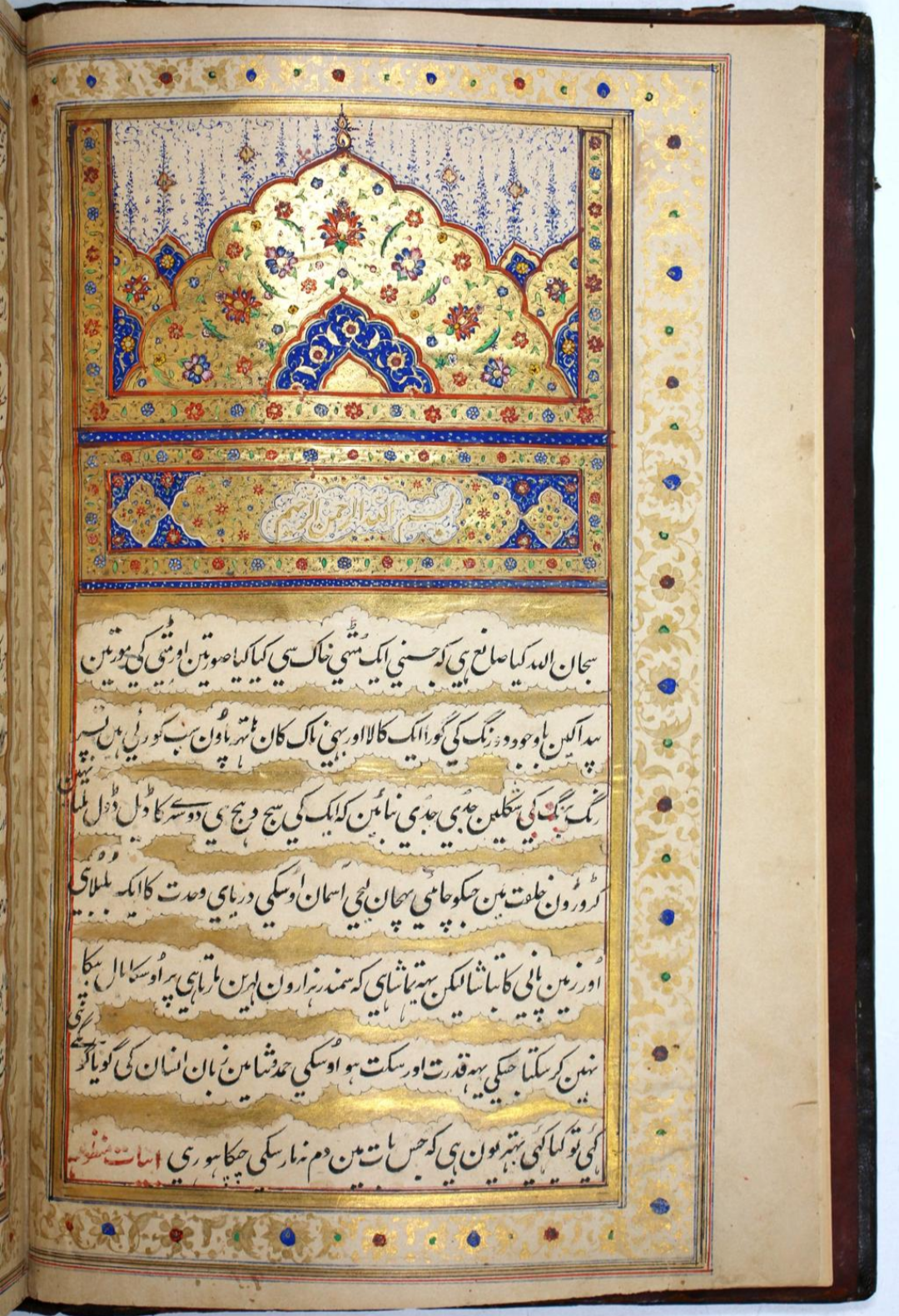
The Delhi–Meerut region is the homeland of Khari Boli, the dialect that became the base of both modern standard Hindi and Urdu, the two literary registers of the language once called Hindustani. Hindi is Delhi's principal official language, and the Delhi Official Languages Act of 2000 gave Urdu and Punjabi the status of second official languages. In everyday life, Delhi speech is a lively mix: the Punjabi-inflected Hindi of the refugee colonies, the Haryanvi-like speech of the Dehat villages, the refined idiom and distinctive Karkhandari Urdu of Old Delhi's artisans, the Bhojpuri and Maithili of Purvanchali neighbourhoods, and, everywhere, a generous dose of English, producing the Hinglish that marks the city's younger generations.
Delhi's literary heritage is immense. Amir Khusrau (1253–1325) wrote in Persian and in the early vernacular Hindavi, and is credited with riddles, songs, and musical forms still performed today. In the 18th and 19th centuries, the Delhi school of Urdu poetry produced Mir Taqi Mir, Sauda, Khwaja Mir Dard, Zauq, Momin, Dagh Dehlvi, the emperor Bahadur Shah Zafar himself, and above all Mirza Ghalib, whose letters are also classics of Urdu prose. Deputy Nazir Ahmad wrote some of the earliest Urdu novels, and Ahmed Ali's Twilight in Delhi (1940) remains a haunting English-language portrait of the old city. After 1947, Delhi became a major centre of Hindi and Punjabi literature, home to writers such as Krishna Sobti and Bhisham Sahni, whose work drew deeply on the experience of Partition, as well as English writers such as Khushwant Singh.
7. Religion, Festivals, and Sacred Sites
Delhi's sacred landscape reflects every layer of its history. Muslim devotional life centres on the Jama Masjid, the Fatehpuri Masjid, and the Sufi shrines of Hazrat Nizamuddin Auliya, where qawwali is sung on Thursday evenings, and of Qutbuddin Bakhtiyar Kaki at Mehrauli. Sikh history is written into the city: Gurdwara Sis Ganj Sahib in Chandni Chowk marks the place where Guru Tegh Bahadur was executed in 1675, and Gurdwara Rakab Ganj and Gurdwara Bangla Sahib are among the city's most visited places of worship. Hindu sites range from ancient village temples such as the Yogmaya temple in Mehrauli and the Kalkaji temple to the Lakshminarayan (Birla) Mandir of 1939 and the Swaminarayan Akshardham complex. The Digambar Jain Lal Mandir faces the Red Fort, the Bahá'í Lotus Temple is an architectural landmark, and churches such as St James' Church and the Sacred Heart Cathedral reflect the colonial period.
The festival calendar is correspondingly rich. Diwali, Holi, Dussehra (with Ramlila performances staged at the Red Fort grounds and Ramlila Maidan), Karva Chauth, Lohri, Teej, the Sikh Gurpurabs, Eid al-Fitr, Eid al-Adha, and Christmas are all widely observed. Newer arrivals have added their own festivals to the city's calendar, most visibly Durga Puja in Chittaranjan Park and Chhath Puja on the ghats of the Yamuna, now one of Delhi's largest gatherings thanks to its Purvanchali population. Distinctively Delhi traditions include Basant at the Nizamuddin dargah, a custom associated with Amir Khusrau, and Phool Walon ki Sair, a flower-sellers' procession in Mehrauli dating to the early 19th century and revived after independence as a festival shared by Hindus and Muslims.
8. Culture, Customs, and Social Practices
Delhi's social fabric is best understood through its communities. In the Dehat villages, landholding groups such as Jats, Gujjars, Ahirs (Yadavs), Gaur Brahmins, Tyagis, Rajputs, and Sainis, alongside Dalit communities such as Jatavs, Chamars, and Balmikis, historically organised village life through caste panchayats and clan councils. The villages of south-west Delhi still identify with the Palam 360, a traditional grouping of around 360 villages, and many old villages have been swallowed by the city to become "urban villages", such as Munirka, Shahpur Jat, and Hauz Khas Village, where families live on land their ancestors farmed.
In Old Delhi, the social world was shaped by Mughal courtly culture: Sayyid, Sheikh, and Pathan families; Muslim artisan communities known as Karkhandars; the Punjabi Saudagaran merchants; Hindu and Jain Bania (Agarwal and other) trading families of Chandni Chowk; and the Persian-literate Mathur Kayasthas who served the Mughal and later British administrations. Old Delhi etiquette, with its elaborate greetings, courteous speech, and emphasis on hospitality, is still spoken of with pride. The Partition-era Punjabi and Sindhi families, meanwhile, are widely credited with bringing an entrepreneurial energy that rebuilt livelihoods from scratch and reshaped the city's markets, from Lajpat Nagar to Karol Bagh. Joint and extended families remain common across all these groups, and kinship, biradari, and neighbourhood networks remain important markers of belonging.
8.1 Small Cultural Things: What Makes a Dilliwala
- "Delhi-6": the postal code 110006 of Old Delhi is used as shorthand for the walled city's way of life, and residents wear it as a badge of identity.
- Kite flying on Independence Day: on 15 August, the skies over Old Delhi and many colonies fill with kites, and "pench" (kite-fighting) is taken very seriously.
- Kabootarbazi: pigeon-keeping and pigeon-flying on Old Delhi rooftops is a centuries-old hobby with its own vocabulary and rivalries.
- Forms of address: "bhaiya", "bhai sahab", "didi", and "aunty-ji" are used for strangers and shopkeepers alike, while "ji" is added to almost everything as a mark of politeness.
- Winter rituals: peanuts roasted on street carts, gajak and rewri, gajar ka halwa, bonfires at Lohri, and the thick winter fog that every Delhiite complains about and secretly associates with home.
- Summer rituals: kulfi, shikanji (spiced lemonade), jamun and phalsa from roadside vendors, and the eternal search for shade from the loo.
- The wedding season: from roughly November to February, band-baaja-baaraat processions, farmhouse venues, and traffic jams caused by weddings are part of the city's rhythm.
- Street slang: phrases such as "scene kya hai?" (what's the plan?) and a fondness for mixing Hindi, Punjabi, and English give Delhi Hinglish its recognisable flavour.
- The Metro: since 2002 the Delhi Metro has become a shared civic space, with its own etiquette, from the women's coach to the announcements every Delhiite can recite.
9. Marriage and Wedding Traditions
Punjabi Hindu weddings, which have come to define the popular image of the "Delhi wedding", typically include the roka (initial commitment), sagai (engagement), chunni ceremony, mehendi, sangeet, the choora ceremony in which the bride receives red and white bangles from her maternal uncle, the kaleeras tied to her bangles, the baraat with the groom on a mare (ghodi) accompanied by a brass band, the jaimala exchange of garlands, the pheras around the sacred fire, and the vidaai or doli farewell. Sikh families solemnise marriage through the Anand Karaj, in which the couple circle the Guru Granth Sahib four times during the recitation of the laavan.
In the Dehat villages, marriages among Jats, Gujjars, Ahirs, and other farming communities traditionally follow strict clan-exogamy rules: marrying within one's own gotra, and often within the gotras of one's mother and grandmother, is avoided, and marriages within the same village or neighbouring villages that share clan ties are also traditionally discouraged. Old Delhi Muslim families solemnise marriage through the nikah, with a mehr (dower) and a nikahnama (contract), followed by the walima reception, while older Dehlvi households also preserve pre-wedding rituals such as manjha. Across communities, weddings in Delhi have become famously large and elaborate, sustaining whole markets for wedding clothing, jewellery, catering, and décor.
10. Cuisine
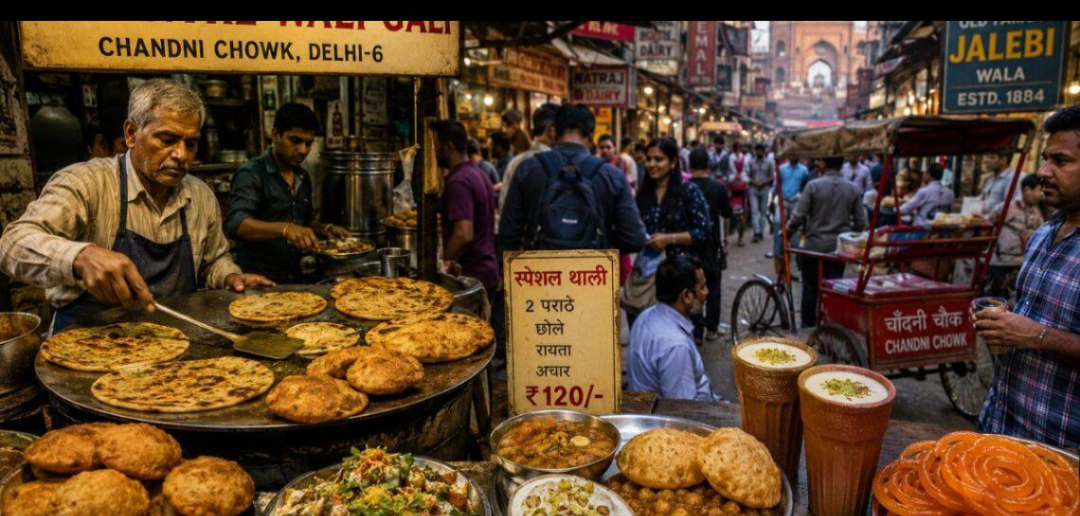
Delhi's food is, perhaps more than any other part of its culture, a map of its history: Mughal court cooking, Punjabi refugee cooking, village food of the Dehat, and dishes brought by every later migrant group all sit side by side.
10.1 Old Delhi and Mughlai Food
The lanes around the Jama Masjid are the home of Old Delhi's Mughlai tradition: slow-cooked nihari eaten at dawn, kebabs, korma, biryani, and breads such as sheermal and bakarkhani. Karim's, founded in 1913 near the Jama Masjid, claims descent from Mughal court cooks. Chandni Chowk is famous for its vegetarian street food: the fried parathas of Paranthe Wali Gali, jalebis, kachori with aloo sabzi, dahi bhalla, and, in winter, the ethereal milk-foam dessert daulat ki chaat. Khari Baoli, often described as Asia's largest wholesale spice market, has supplied the city's kitchens for centuries.
10.2 Punjabi Refugee Cuisine
Partition gave Delhi many of the dishes the world now thinks of as "North Indian". Refugees from West Punjab and the Frontier brought the tandoor into restaurant kitchens, and Moti Mahal in Daryaganj, established by Kundan Lal Gujral after he arrived from Peshawar, is popularly credited with creating butter chicken and dal makhani. Chole bhature, rajma chawal, chole kulche, amritsari-style parathas, and the roadside dhaba culture are all part of this Punjabi layer.
10.3 Village and Everyday Food
Dehat food shares much with rural Haryana: bajra and wheat rotis, kadhi, saag, churma, generous use of ghee, lassi, and milk, which reflect the region's strong dairy traditions. Across the city, everyday meals centre on roti, dal, rice, seasonal sabzi, and curd.
10.4 The Melting Pot
- Chaat: gol gappe, aloo tikki, papdi chaat, and ram laddoo are eaten across the city, from Old Delhi to Bengali Market.
- Momos: brought by Tibetan and Northeastern communities, especially around Majnu ka Tila, momos have become arguably Delhi's most popular street snack.
- Regional kitchens: Bengali fish in Chittaranjan Park, South Indian meals at state bhawans and around Karol Bagh, and Northeastern food in Humayunpur and Safdarjung reflect later migrations.
- Seasonal sweets: gajar ka halwa and gajak in winter; kulfi and shikanji in summer.
11. Traditional Dress and Ornaments
Delhi's clothing reflects its layered population. For women, the salwar kameez with a dupatta, popularised above all by Punjabi families after 1947, is the most common traditional dress, alongside the saree and, for weddings, the lehenga-choli. Women in Dehat villages traditionally wore the ghagra (full skirt), kurti, and odhni or chunder head-covering, with heavy silver jewellery such as the hansli (neck ring) and anklets, much like rural Haryana. Old Delhi Muslim households historically favoured the gharara and sharara for formal wear. Sikh women's dress often incorporates the colourful embroidered phulkari of Punjab.
For men, the kurta-pyjama is the standard traditional dress, with the sherwani and achkan worn for weddings and formal occasions, a style inherited from Mughal and Nawabi court dress. Village men traditionally wore the dhoti, kurta, and a pagri (turban), while Sikh men wear the turban as an article of faith. Delhi is also a major centre of craft and fashion: zardozi (metallic thread embroidery) workshops survive in Old Delhi; Dariba Kalan in Chandni Chowk has been a jewellery market since Mughal times, known for silver as well as kundan and polki work; Chandni Chowk and Karol Bagh are giant markets for bridal wear; and the city is home to many of India's leading fashion designers and the National Institute of Fashion Technology, founded in Delhi in 1986.
12. Housing and Architecture
The Old Delhi house type is the haveli, a courtyard mansion opening onto narrow galis (lanes), organised into mohallas (neighbourhoods), kuchas (streets of a particular trade or community), and katras (enclosed market-cum-residential compounds). Mirza Ghalib's haveli in Gali Qasim Jan, Ballimaran, is one surviving example. Dehat villages traditionally had brick houses around courtyards, with a baithak for men and a chaupal as the village meeting place. New Delhi introduced the spacious bungalow zone of Lutyens' Delhi, while Partition produced compact resettlement colonies, and from the 1960s the Delhi Development Authority (DDA) built large housing estates. Alongside these are hundreds of unauthorised colonies and resettlement colonies that house much of the city's working population.
At the monumental level, Delhi has three UNESCO World Heritage Sites: the Qutb Minar complex, Humayun's Tomb, and the Red Fort complex, together with thousands of other protected monuments, including the Lodi-era tombs of Lodi Garden, the stepwells of Agrasen ki Baoli and Rajon ki Baoli, the ruins of Tughlaqabad, and the colonial grandeur of Rashtrapati Bhavan and India Gate.
[Image suggestion] A haveli courtyard in Old Delhi, or the stepwell at Agrasen ki Baoli.
13. Folklore and Oral Tradition
Delhi's folklore is full of stories about the city itself. A popular legend holds that the city's name comes from dhili ("loose"): Raja Anangpal Tomar, the story goes, doubted a prophecy that his dynasty would last as long as the Iron Pillar stood firm, had the pillar dug up, and found it had become loose, sealing his dynasty's fate. Another famous story tells of the Sufi saint Nizamuddin Auliya and Sultan Ghiyasuddin Tughlaq: when the sultan, returning from a campaign, threatened the saint, Nizamuddin is said to have replied "Hanooz Dilli door ast" ("Delhi is still far away"), and the sultan died before reaching the city. The phrase "Dilli door ast" is still used to mean that a goal is not yet within reach.
The ruins of Feroz Shah Kotla are believed by many to be inhabited by djinns, and every Thursday visitors leave written petitions and lamps there asking for help with their troubles. Amir Khusrau's paheliyan (riddles) and kah-mukarniyan (playful verses) are still recited, and the old Urdu art of dastangoi, the telling of long adventure tales, has been revived in Delhi since the 2000s. In the villages, Haryanvi folk forms such as ragini and saang were long the main entertainment, while in the refugee colonies, family memories of the journey from Lahore, Rawalpindi, or Multan in 1947 form a powerful oral tradition of their own, now being recorded by oral-history projects.
14. Education, Livelihoods, and Economy
Delhi is one of India's richest regions, with a per-capita income that recent Delhi government economic surveys place at roughly two and a half times the national average. Its economy is dominated by services: central and state government employment, trade, finance, education, health, media, hospitality, and IT-enabled services, much of which also spreads into neighbouring Gurugram and Noida. Delhi is a giant trading city, with historic wholesale markets such as Chandni Chowk, Sadar Bazaar, and Khari Baoli, the Azadpur Mandi (one of Asia's largest fruit and vegetable markets), and specialised markets such as Nehru Place for electronics. Industrial estates at Okhla, Naraina, Bawana, and elsewhere host manufacturing, and a large informal sector employs millions of migrants.
Traditional livelihoods still echo through community histories: farming and dairying among Dehat families, many of whom later turned to transport, real estate, and business as the city absorbed their land; trade and finance among Bania and Punjabi families; administration and the professions among Kayasthas and others; and crafts such as zardozi, metalwork, bookbinding, and printing among Old Delhi's Karkhandars. Delhi is also a major education hub, home to the University of Delhi (1922), Jawaharlal Nehru University, Jamia Millia Islamia (which moved to Delhi in 1925), IIT Delhi, and AIIMS, which draw students from across India and beyond. Delhi's literacy rate (86.2 per cent in 2011) is well above the national average.
15. Diaspora
Delhi's diaspora is best understood as the diaspora of its many constituent communities, and it runs along several tracks.
The first and most dramatic was the 1947 exodus of Delhi Muslims to Pakistan. Many Old Delhi families settled in Karachi, Lahore, and other cities, where they are still known as Dehlvi (or Dehlavi) families, preserving Old Delhi's Urdu idiom, cuisine, and customs, as well as community associations such as those of the Delhi Punjabi Saudagaran. For many of these families, and for Delhi's Punjabi families whose own roots lie in Lahore, Rawalpindi, or Multan, genealogy and DNA testing offer one of the few ways to reconnect with relatives separated by the border.
The second track is the modern professional and student diaspora. From the 1960s onward, Delhi families, particularly Punjabi Hindu and Sikh families, emigrated to the United Kingdom, Canada, the United States, and Australia, followed by a large flow of students and professionals, and by business and service-sector migration to the Gulf, especially the United Arab Emirates. Finally, there is an internal diaspora: many families who lived in Delhi for generations have moved to Gurugram, Noida, Ghaziabad, and Faridabad, so a "Delhi family" today may not live within the NCT at all.
16. Prominent Figures
The following figures were born in Delhi or are closely associated with the city's life and history.
16.1 Historical, Religious, and Public Life
- Razia Sultan (r. 1236–1240): the only woman to rule the Delhi Sultanate.
- Hazrat Nizamuddin Auliya (1238–1325): Chishti Sufi saint whose dargah remains one of Delhi's great spiritual centres.
- Shah Waliullah Dehlawi (1703–1762): Delhi-born Islamic scholar and reformer.
- Bahadur Shah Zafar (1775–1862): Delhi-born last Mughal emperor, poet, and symbolic leader of the 1857 uprising.
- Sir Syed Ahmad Khan (1817–1898): Delhi-born educationist and reformer, founder of the college that became Aligarh Muslim University.
- Hakim Ajmal Khan (1868–1927): Delhi-born physician of Unani medicine, nationalist leader, and a founder of Jamia Millia Islamia.
- Sheila Dikshit (1938–2019): the longest-serving Chief Minister of Delhi (1998–2013).
16.2 Literature, Arts, and Culture
- Amir Khusrau (1253–1325): poet, musician, and disciple of Nizamuddin Auliya, often called the father of qawwali.
- Mir Taqi Mir, Zauq, Momin, and Mirza Ghalib: the great masters of the Delhi school of Urdu poetry; Dagh Dehlvi (1831–1905), born in Delhi, was among its last great exponents.
- Ahmed Ali (1910–1994): Delhi-born author of Twilight in Delhi.
- Khushwant Singh (1915–2014) and Krishna Sobti (1925–2019): writers whose careers were rooted in post-Partition Delhi.
- Shah Rukh Khan, Taapsee Pannu, and Sidharth Malhotra: film actors born in Delhi; Dibakar Banerjee, Delhi-born filmmaker whose films often portray the city.
16.3 Sports
- Virat Kohli, Virender Sehwag (from Najafgarh), Gautam Gambhir, Shikhar Dhawan, and Ishant Sharma: Delhi-born international cricketers.
- Manika Batra: Delhi-born table tennis player and Commonwealth Games gold medallist.
17. Conclusion
Delhi is a rare case of a geographic community whose defining feature is not isolation but convergence. Its location at the meeting point of the Aravalli ridge and the Yamuna has made it a capital for Tomars, Chauhans, Sultans, Mughals, the British, and the Republic of India, and each of these regimes, along with the upheavals of 1398, 1739, 1857, and above all 1947, left its mark on who lives in the city. Genetically, Delhi reflects this history precisely: an older north-western Indian population rooted in the villages of the Dehat, overlaid by Sultanate and Mughal-era arrivals, transformed by the Partition migration from Punjab and Sindh, and continuously enriched by migrants from across India. To trace Delhi ancestry is therefore to trace the history of North India itself, from the ancient population of the Indus–Ganga plain to the families who still gather each winter to fly kites, eat nihari, and argue about which Delhi is the "real" one.
References
- [1]1. Census of India 2011. Primary Census Abstract and Religion and Language tables, National Capital Territory of Delhi. Office of the Registrar General and Census Commissioner, India.
- [2]2. Reich, D., Thangaraj, K., Patterson, N., Price, A. L., and Singh, L. (2009). "Reconstructing Indian population history." Nature 461: 489–494.
- [3]3. Moorjani, P. et al. (2013). "Genetic evidence for recent population mixture in India." American Journal of Human Genetics 93(3): 422–438.
- [4]4. Narasimhan, V. M. et al. (2019). "The formation of human populations in South and Central Asia." Science 365(6457).
- [5]5. Shinde, V. et al. (2019). "An ancient Harappan genome lacks ancestry from Steppe pastoralists or Iranian farmers." Cell 179(3): 729–735.
- [6]6. Nakatsuka, N. et al. (2017). "The promise of discovering population-specific disease-associated genes in South Asia." Nature Genetics 49: 1403–1407.
- [7]7. "Genetic variation of 20 autosomal STRs in Jats belonging to Delhi, India." PubMed ID 32918618.
- [8]8. "Allelic database of Delhi population using 15 STR markers." Indian Internet Journal of Forensic Medicine & Toxicology 7(1).
- [9]9. Haque, I. et al. (2022). "An evaluation of inter and intra population structure of Uttar Pradesh, inferred from 24 autosomal STRs." Annals of Human Biology 49(1): 69–79.
- [10]10. Sengupta, S. et al. (2006). "Polarity and temporality of high-resolution Y-chromosome distributions in India." American Journal of Human Genetics 78(2): 202–221.
- [11]11. Gallego Romero, I. et al. (2012). "Herders of Indian and European cattle share their predominant allele for lactase persistence." Molecular Biology and Evolution 29(1): 249–260.
- [12]12. Government of NCT of Delhi, Revenue Department. Notification on reorganisation into 13 revenue districts, 25 December 2025.
- [13]13. Dalrymple, W. (1993). City of Djinns: A Year in Delhi. London: HarperCollins.
- [14]14. Spear, P. (1951). Twilight of the Mughuls: Studies in Late Mughal Delhi. Cambridge University Press.
Frequently Asked Questions
What ethnicity or ancestry are people from Delhi?
People from Delhi are not a single ethnicity but a highly diverse metropolitan population made up of historical layers: long-settled Dehat village communities such as Jats, Gujjars, and Ahirs; Old Delhi Muslim, Bania, Kayastha, and artisan families; Partition-era Punjabi, Sikh, and Sindhi families; and migrants from across India. Genetically, most Delhi residents carry a mix of Ancestral North Indian (ANI) and Ancestral South Indian (ASI) ancestry, with proportions that depend largely on where their family came from.
Is there an "original" Delhi population?
The closest thing to an original population is the community of the Dehat villages, such as the Jats, Gujjars, Ahirs, Brahmins, and Dalit communities of rural Delhi, many of whose villages are centuries old, together with the old families of Shahjahanabad and Mehrauli. Genetically, the village communities belong to a north-western Indian cluster shared with Haryana, Punjab, Rajasthan, and western Uttar Pradesh.
What does "Delhi-6" mean?
Delhi-6 refers to the postal code 110006 of Old Delhi (Shahjahanabad), and is used as shorthand for the walled city's distinctive culture of havelis, bazaars, Mughlai food, and old-fashioned courtesy.
Is Delhi Aryan or Dravidian?
Delhi lies in the Indo-Aryan linguistic zone: Hindi, Urdu, Punjabi, and Haryanvi all belong to the Indo-Aryan family. Genetically, however, no Indian population is purely "Aryan" or "Dravidian". Delhi's people carry a mixture of ANI ancestry (itself a blend of Indus Valley-related and Steppe-related ancestry) and indigenous ASI ancestry, as do people across India, including in the South.
What DNA haplogroups are common among people from Delhi?
Among paternal lineages, North-West Indian populations that form Delhi's core show high frequencies of R1a (especially R1a-Z93) along with deep South Asian haplogroups such as H and L, and smaller shares of J2, R2, and G. Maternal lineages are dominated by indigenous South Asian haplogroup M and South Asian branches of R and U, with smaller shares of West Eurasian lineages such as U7 and H. Because Delhi draws on so many regions, individual results vary widely.
Are Delhi people genetically closer to Punjab, Haryana, or Uttar Pradesh?
It depends on the family. Long-settled Delhi village communities are genetically closest to populations of Haryana, Punjab, Rajasthan, and western Uttar Pradesh. Partition-era families usually show Punjab- or Sindh-related ancestry, and Purvanchali families show eastern Gangetic-plain ancestry typical of eastern Uttar Pradesh and Bihar.
What language do people in Delhi speak?
Hindi is the main language, with Urdu and Punjabi as additional official languages. Everyday speech mixes Hindi with Punjabi, Haryanvi, Urdu, and English, and Old Delhi preserves a distinctive Urdu idiom. The Delhi region is the home of Khari Boli, the dialect on which modern standard Hindi and Urdu are based.
What is the traditional dress of Delhi?
Women most commonly wear the salwar kameez with a dupatta, the saree, or the lehenga-choli for weddings, while village women traditionally wore the ghagra, kurti, and odhni. Men wear the kurta-pyjama, with a sherwani or achkan for formal occasions, and village men traditionally wore the dhoti and pagri.
What is Delhi famous for in terms of food?
Delhi is famous for Old Delhi's Mughlai food (nihari, kebabs, korma) and Chandni Chowk street food (parathas, jalebis, chaat, daulat ki chaat), for Punjabi dishes popularised after Partition such as butter chicken, dal makhani, and chole bhature, and for newer favourites such as momos.
How did Partition change Delhi's population?
Partition roughly doubled Delhi's population between 1941 and 1951, as Hindu and Sikh refugees arrived from West Punjab, the Frontier, and Sindh, while a large part of the city's Muslim population left for Pakistan. Muslims fell from about a third of the population to around six per cent, and Punjabi families became one of the city's largest and most influential groups.
Where have people from Delhi migrated?
In 1947 many Old Delhi Muslim families moved to Pakistan, especially Karachi, where they are known as Dehlvi families. Since the 1960s, Delhi families have emigrated to the United Kingdom, Canada, the United States, Australia, and the Gulf, and many have moved to NCR suburbs such as Gurugram and Noida.
Which communities are found in Delhi?
Delhi includes almost every Indian community. Long-settled groups include Jats, Gujjars, Ahirs (Yadavs), Brahmins, Tyagis, Sainis, Rajputs, Banias, Kayasthas, and Dalit communities such as Jatavs and Balmikis, together with Old Delhi Muslim communities such as Sayyids, Sheikhs, Pathans, Karkhandars, and Punjabi Saudagaran. Later arrivals include Punjabi Khatris and Aroras, Sikhs, Sindhis, Purvanchalis, Uttarakhandis, Bengalis, South Indians, Northeasterners, Tibetans, and Afghans.
What physical traits are typical of people from Delhi?
There is no single Delhi physical type. Because the city combines populations from across India, residents show the full range of South Asian appearance, from the features common in north-western India to those typical of the Gangetic plain, the South, and the Northeast. Differences between communities reflect their regional origins and centuries of endogamy rather than a uniform Delhi phenotype.
Can a DNA test tell me if my family is originally from Delhi?
A DNA test cannot identify a city directly, but it can show which regional populations you are most closely related to. A family long settled in a Delhi village will usually match the north-western Indian cluster; a Partition family will usually show Punjab- or Sindh-related ancestry; and relative matches within a community database can point to specific villages, clans, or neighbourhoods when combined with family records.
What are the "seven cities" of Delhi?
The phrase refers to the successive capitals built on the Delhi site: Lal Kot and Qila Rai Pithora, Siri, Tughlaqabad, Jahanpanah, Firozabad, Dinpanah (Purana Qila), and Shahjahanabad. Some historians count more, including New Delhi as an eighth.
← All Communities · Atlas · GenoConnect